Squirrel Crossing Your Path: Spiritual Meaning, the Real Animal and the Honest Record
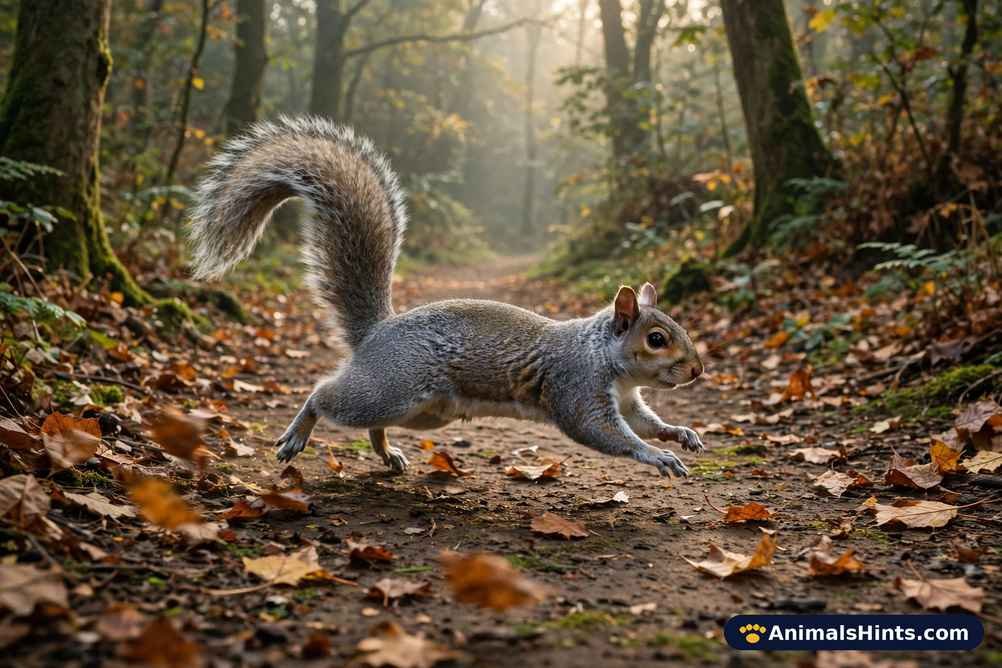
It takes about a second: a grey blur at ankle height, a scrabble of claws on bark or tarmac, and the animal is across and gone. The spiritual meaning of squirrel crossing your path, as the animal-sign traditions construe it, is a prompt about readiness — laying things by for a harder season, keeping your energy aimed, and staying light enough on your feet to change direction when life does.
Folklore has built a generous structure on that one second. The guide this article follows lists eleven separate meanings for the encounter, refines them by the colour of the squirrel, gathers the animal’s place in four cultural traditions, and takes up the dream version as well. All of it stands below, complete, and all of it openly tagged as belief — held and repeated by the traditions that keep it.
Underneath the readings sits an actual animal with practical reasons for crossing in front of you, and this page gives those their full weight too: why squirrels dash and freeze, what their buried acorns quietly accomplish for forests, what the oldest written records really say about this animal, and the straightforward safety notes — for anyone on foot, and for drivers who meet the crossing on a road instead of a trail.
What Does Seeing a Squirrel Mean Spiritually?
The genre’s symbolism gives the squirrel a small cluster of linked qualities. Foresight comes first: here is an animal that spends the fat part of the year storing against a lean season it cannot yet feel, and the tradition takes that for a picture of preparing in good time. Balance comes with it, because the same animal works and plays inside the same hour. And running through both is a bright, restless energy that the folklore treats as a virtue in its own right rather than a distraction from serious things.
The light-hearted strand deserves its own sentence. Squirrels chase each other in spirals up and down trunks for no reason any observer can invoice, and the tradition seizes on exactly that: a reminder that curiosity and play are part of a well-run life, not decorations added once the real work is finished. Readers who have been carrying everything heavily are the ones this reading usually addresses.
When the genre promotes the squirrel to spirit animal or outright messenger, the source guide gathers the message into four strands:
- A stretch of getting ready — a period when planning and preparation take up more of life than usual.
- Stores and energy to guard — a cue to conserve resources instead of spending them as fast as they arrive.
- The playful side asking for air — a nudge back toward spontaneity, and toward your own lighter company.
- A caution against keeping too much — a gentle warning about emotional baggage, or possessions held long past their usefulness.
Crossing signs form a family on this site, and the squirrel’s relatives are worth a glance. The rabbit crossing your path readings work the same quick-dash grammar with a more nervous animal at the centre. The deer in your path guide takes the opposite tempo entirely — an animal that steps into your route and stands there, holding the pause. The squirrel sits between the two: quicker than the deer, steadier than the rabbit, and gone before either would have decided. A third relative arrives from above rather than across — the bird pooping on you belief, in which the sky delivers its message with even less ceremony.
The Real Squirrel in Your Path
Before the meanings, the animal itself — because most crossings stop looking mysterious once the squirrel’s working day is on the table. The path-crosser across most of North America is the eastern gray squirrel (Sciurus carolinensis); across much of Europe it is the red squirrel, and fox squirrels fill the role in parts of the American Midwest and West. All of them are daytime animals, busiest in the first hours after sunrise and again later in the afternoon, which is simply why encounters cluster when they do. That early shift is shared with the dawn chorus — the crows cawing in the morning meaning covers the day’s other early riser.
A squirrel’s world is a circuit. It sleeps in a leafy ball of twigs and leaves wedged into a high tree fork, or in a hollow trunk, and it spends its waking hours travelling a home range between nest, feeding trees and feeding ground. A footpath through a park or wood is not an interruption of that circuit; it is part of the floor the circuit runs across. When a squirrel crosses in front of you, you have not been singled out by the route. You have met a commuter on it.
The commuting serves the storing. Gray squirrels are scatter-hoarders: rather than keeping one larder, a squirrel buries nuts singly, one shallow hole at a time, spread across its whole territory, and finds them again by a mapped memory sharpened by smell. The numbers are industrial. Long-running research by Michael Steele and Peter Smallwood found that in studied oak woods a large share of buried acorns — in some counts as many as three in four — were never dug up again. An acorn left at exactly the depth a squirrel chooses, in open soil away from its parent tree’s shade, sits in near-perfect planting conditions, which makes the forgetful squirrel one of the oak forest’s principal planters. Watched squirrels add theatre: in Steele’s trials, animals being observed sometimes dug, patted the soil down and walked away with the nut still in their cheek — a decoy burial, staged for the audience.
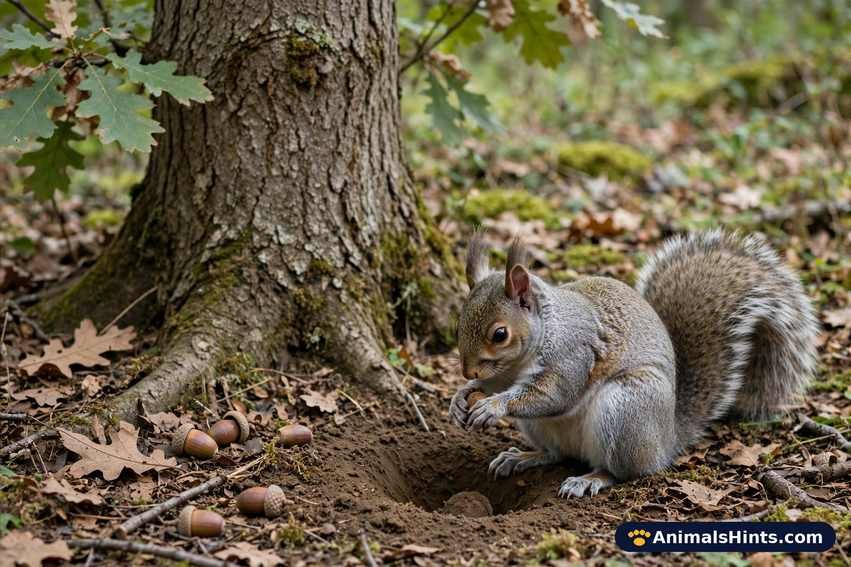
The dash itself is defensive engineering. Open ground is the most dangerous floor in a squirrel’s world, and its way of crossing — a burst, a freeze, a zigzag, another burst — is an anti-predator pattern: a pursuer aiming at where the squirrel is about to be keeps arriving where it was. The freezing is part of the same kit, a full stop to read sound, scent and movement before committing. On a road the pattern misfires badly. A car gets processed as a very large predator, and the dodge that defeats a hawk — double back, change line at the last instant — can carry the animal straight into the path of a wheel it had already escaped. Nothing about the crossing is a message aimed at the driver. It is an old survival routine running on a surface it was never designed for.
11 Spiritual Meanings of a Squirrel Crossing Your Path
Eleven meanings stand under this heading on the source guide, and the count is exact: eleven headings, in his order, each given below. Each carries the tradition’s reading, attributed as such — a lens the folklore offers, not a forecast this page endorses.
1. Preparation and Resourcefulness
The flagship reading grows directly from the animal’s autumn. Just as the squirrel gathers and stores while food is plentiful, the encounter is cast as a directive to secure your own foundations — money, skills, emotional reserves — before the season that will test them. The tradition is careful to widen the store beyond the material: experience, knowledge and hard-won steadiness are also nuts in the ground, the kind that carry a person through a lean stretch. The counsel is modest and practical: begin now, in small units, rather than waiting for a dramatic moment to start.
2. Adaptability and Flexibility
Anyone who has watched a squirrel change trees mid-argument with gravity has seen this reading’s evidence. One instant it is sprinting along a branch; the next it has leapt to another tree entirely and carried on as if the route had always been that way. The tradition treats the crossing as permission to do the same — to treat a changed plan as a new route rather than a ruined one. Flexibility here does not mean surrendering the destination. It means holding the goal loosely enough that a detour can still deliver you to it, sometimes to a better version than the one you mapped.
3. Good Luck and Positivity
In many of the cultures the genre collects, this crossing is filed as a fortunate one — a small, lively affirmation that circumstances are quietly rearranging themselves in your favour. The reading leans on the animal’s manner: quick, bright, apparently unbothered, thriving in plain sight. Taken at its proper strength, it is less a promise than a posture. The tradition suggests that optimism, practised the squirrel’s way — act promptly, trust your footing, do not rehearse disaster — is itself a kind of wisdom, and that a crossing encountered after a hard stretch can reasonably be received as encouragement to keep moving.
4. Balancing Work and Play
The fourth reading watches the whole of the squirrel’s day rather than its busiest hour. The gathering is relentless, yes — and so is the chasing, the tumbling, the long bask on a warm branch. The tradition takes the pair as one lesson: effort and ease are both sacred uses of energy, and a life tilted entirely toward either has misunderstood the animal. A crossing is read as an audit invitation. Too much grind, and the sign points at the neglected joy; too much drift, and it points at the unfilled store. Rest, in this telling, is not a prize handed out after work. It is part of the rhythm that makes the work sustainable.
5. Focus and Energy Management
For all its speed, a foraging squirrel is not scattering effort at random — every dash is toward food, cover or the nest, and the tradition builds this reading on that economy. A crossing is made to pose a question: where is your energy actually going — spread across a dozen half-finished pursuits, or aimed at the few that matter? The squirrel’s version of focus is selective rather than intense. It chooses which nuts are worth burying and leaves the rest on the ground. The reading borrows the standard: doing less, on purpose, outranks doing everything at once.
6. Patience and Persistence
The restless surface hides a plodding method. A squirrel returns to the same trees and the same ground day after day, adding to its stores literally one nut at a time, and the tradition takes a crossing as an endorsement of exactly that tempo. Growth that feels invisible is still growth; a career, a recovery or a long project advances the way a cache fills, by accumulation too gradual to watch. Patience, in this reading, is not idle waiting. It is steady work done in faith that the total is mounting even when no single day shows it.
7. Nurturing and Motherhood
Squirrels raise their young in the nest through several helpless weeks, and the mother works those weeks alone — feeding, guarding, relocating the whole family to a second nest if the first is disturbed. The tradition reads a crossing through that devotion: a sign touching care given to others, and the patience it costs. Its second half turns the same warmth inward. A creature this devoted to its young still eats properly and sleeps when sleep is owed, and the reading takes the hint — the nurturer who never refills her own store runs out of stores. Filling your own cup, in the genre’s phrase, is what makes the pouring possible.
8. Abundance and Prosperity
A gatherer’s animal makes a natural emblem for this reading. The squirrel lives surrounded by evidence that the world provides in seasons and that provision rewards those who collect while collecting is possible. A crossing accordingly gets read as evidence that effort already made — the saving, the building, the quiet planning — is approaching its return. The tradition adds its usual corrective: abundance is measured in gratitude as much as in goods, and the richness already around a person — relationships, skills, chances not yet taken — counts in the total. Trust is the mechanism named: the squirrel buries without anxiety about the winter, certain the ground keeps what it is given.
9. Harmony and Empathy
Squirrels live at close quarters — shared trees, shared parks, a constant negotiation of chases and truces with neighbours of several species — and manage it with remarkably little bloodshed. The tradition aims a crossing at the same standard: listen longer, judge slower, approach a conflict with gentleness before force. Empathy is the specific skill named — sensing what others are carrying without losing your own footing — and harmony is defined sensibly, not as sameness but as different energies managing to occupy one tree. Peace, in this reading, begins with presence: actually attending to the creature, or the person, in front of you.
10. Spiritual Growth and Insight
The tenth reading takes the leap between branches as its picture. A squirrel commits to a gap before it can be certain of the landing, and a crossing counts, in the tradition, as the marker of a similar season in the person watching: growth, heightened awareness, insights arriving in an order that only later makes sense. In some strands, animals crossing a path are treated as messengers from the higher self, and the squirrel’s version of the message is to attend — to dreams, to coincidences, to the small repeated nudge you have been filing under noise. Slowing down is the method prescribed. The clearer the listening, the clearer the signal is said to become.
11. Flexibility in Planning
The last reading circles back to the cache map. A squirrel never trusts a single store: it plants its winter in dozens of places precisely because some will be raided, flooded or forgotten. A crossing, in the tradition’s handling, delivers the same advice to human planners — build the plan, then build the breathing room around it. Control is not the virtue here; recoverability is. When a scheme goes sideways, the squirrel’s answer is not grief over the lost cache but the existence of all the others. Life’s path, in this telling, is rarely straight, and the animal that thrives on it is the one willing to be re-routed without being stopped.
When the Squirrel Stops and Stares: The Pause Mid-Path
Sometimes the dash does not complete. The squirrel halts in the middle of the path, rises on its hind legs, and looks at you — and nearly everyone who has had it happen reports the same small jolt: the encounter suddenly feels addressed to them personally. The source guide’s own introduction makes the observation, and its folklore draws the natural conclusion. A stopped squirrel, in the tradition’s reading, is emphasis: the message, whatever you take it to be, is meant; this is the moment to halt yourself, review the state of your plans and resources, and register whatever thought you were holding when it stopped.
The behavioural record underneath is less personal and more interesting. Freezing is the middle move of the squirrel’s escape sequence — dash, freeze, dash — and a squirrel stopped in the open is working, not posing. From that stillness it reads the wind for scent, swivels its ears for the sound that matters, and watches for movement, all before it commits to the next burst or retreats to the trunk it came from. The stare that feels like eye contact is an animal settling the question of whether you merit a change of route. Both accounts stand here, each at the strength it earned: the folklore’s addressed moment, and the ethology of a prey animal doing its sums in the open. They do not cancel each other. They simply answer different questions.
Symbolism of Different Colored Squirrel Crossing Your Path
The genre’s second grid keys the reading to the animal’s coat, and his four entries follow here in the order he prints them. Colour is home territory for this site’s symbolism pages, and the entries remain inside the folklore’s frame — with one advantage this topic has over most: two of the four colours are real, named colour forms of the same species, and those facts are noted where they belong.
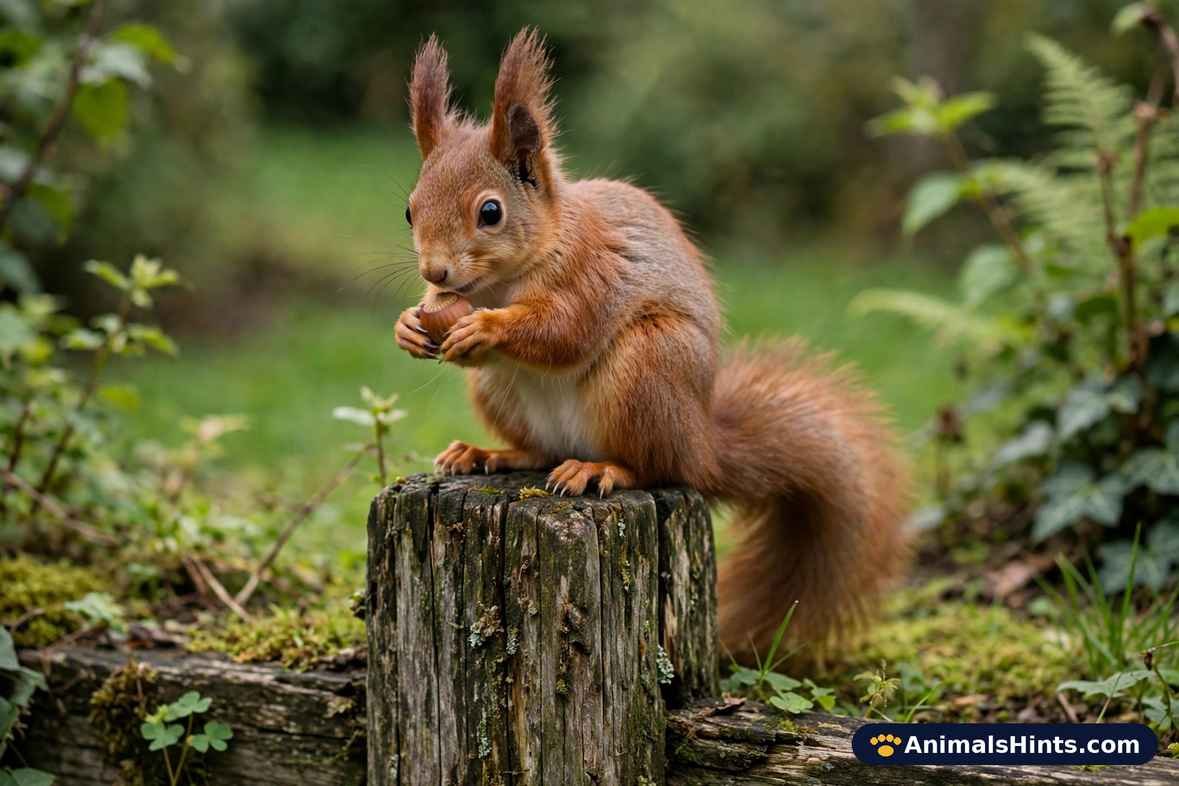
1. Brown Squirrel Crossing Your Path
Brown is the grounding entry. A brown-coated squirrel — the ordinary dress of red squirrels and fox squirrels — is read as a push toward the physical foundations: home, health, money in its unglamorous form, the slow building of stability. The tradition aims this sighting at scattered seasons. Its counsel is deliberately unmagical: do the next thing singly and steadily, collect your resources in the open where you can see them, and let slow-and-sure count as a strategy rather than a failure of ambition.
2. Gray Squirrel Crossing Your Path
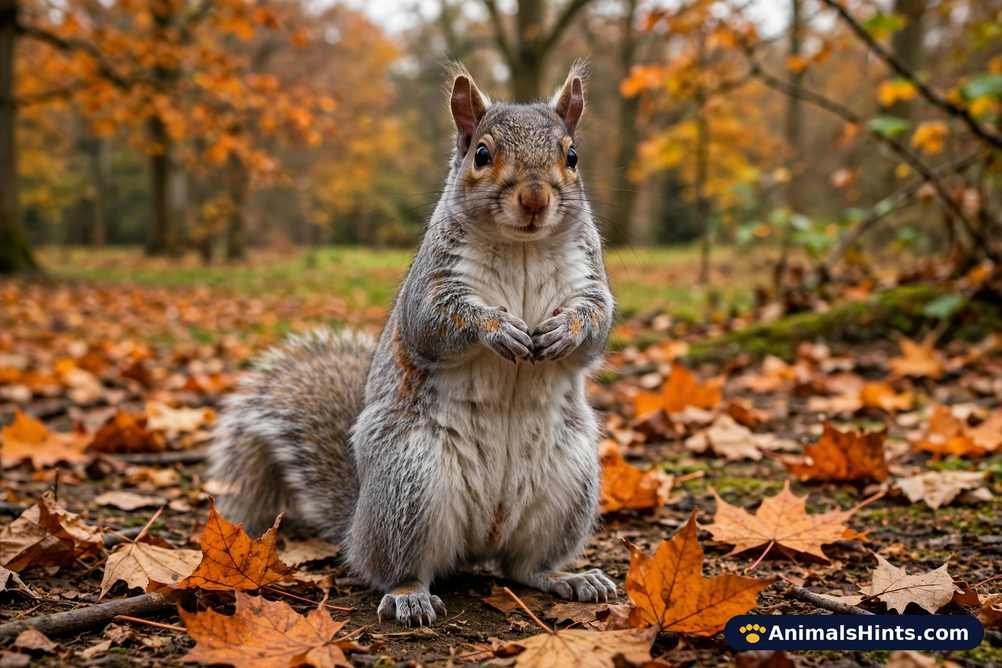
The gray is the default crossing of North American parks and suburbs, and the genre reads its in-between colour as the meaning: balance, neutrality, the wisdom of the middle position. A gray squirrel is taken to speak to opposing pulls — logic against feeling, work against home, action against rest — and to suggest that the answer lies in holding both rather than winning for one. Emotional maturity is the second strand: meeting a confusing stretch with grace and adaptability instead of haste, trusting that a creature this colourless thrives in more environments than any other on the list.
3. Black Squirrel Crossing Your Path
Black carries the register of the unknown: transformation, protection, the blessing that has not shown its shape yet. A black squirrel crossing is read as the marker of a threshold — one chapter closing, another not yet legible — and the tradition insists the darkness of the coat is shelter rather than threat. Shadow work is the modern strand’s name for it: facing the fear, the habit or the old wound directly, on the theory that what is faced loses its ambush. The fact under the folklore is tidy — black squirrels are melanistic gray squirrels, the same species wearing a dark morph that is common in some regions and rare in others. This site’s colour shelf works the same register at length: the black readings gather the traditions in which the darkest colour stands for protection hidden inside obscurity.
4. White Squirrel Crossing Your Path
White is the rarity entry, and for once the folklore and the field record agree on the premise: white squirrels are genuinely uncommon animals, leucistic or albino individuals of the gray squirrel, conspicuous in any landscape. The genre spends that rarity on the strongest reading on the list — purity, clarity, a blessing or a beginning announced as approaching, and in some strands a courier from the spirit world outright. The practical strand is gentler: trust your intuition, stay alert, remain open. The same white register runs across this site’s animal shelf — the white butterfly entries lean on purity, and on the sense of a visitation, in exactly the same key.
What the Older Traditions Actually Record About Squirrels
Squirrel lore circulates online with more confidence than documentation, so here is the checkable residue, one tradition at a time. The record is smaller than the folklore suggests — and more interesting for it.
The Norse record is real, and it is two passages deep. Norse mythology does contain a squirrel, and a famous one: Ratatoskr, who spends eternity running Yggdrasil’s trunk in both directions, carrying words between the eagle perched in its crown and the dragon Níðhöggr gnawing at its roots. He is attested in exactly two places — stanza 32 of the Poetic Edda poem Grímnismál, and chapter 16 of Gylfaginning in Snorri Sturluson’s Prose Edda. Snorri sharpens the job: the words the squirrel carries are öfundarorð, words of envy and spite, which makes the cosmos’s only messenger a stirrer of the feud he serves. It is a genuine, checkable attestation of a squirrel as a between-worlds courier. It is also the whole of it — no omen role, no teaching about squirrels crossing anyone’s path, and none is claimed here.
The Hindu bridge story is a beloved folk telling, not the epic’s text. The tale is famous across India: during the building of Rama’s bridge across to Lanka, one squirrel joined the work in the only way open to it — wetting its fur in the sea, rolling in the sand, and shaking the grains out into the gaps between the great stones — until Rama, moved, stroked its back in thanks, leaving the three pale stripes the Indian palm squirrel wears to this day. Told at that strength, it is a beautiful story about small service honoured. But the documentary bound matters: no squirrel appears in Valmiki’s Ramayana at all. The earliest known mention is a Tamil poem of the eighth century, the Tirumalai of Thondaradippodi Alvar, and the stripes episode belongs to the Telugu Ranganatha Ramayanam of the thirteenth. The story is folk tradition that grew around the epic over centuries — printed here as exactly that, which is honour enough.
The Native American record is printed as a pattern, not a doctrine. No pan-Native squirrel doctrine exists: the nations are hundreds, their animal traditions are their own, and a summary that pretends otherwise has failed before it starts, so this one begins with the limit. Across a number of those traditions, the squirrel figures as a teacher of preparedness — the animal that stores against scarcity — and, in its chattering restlessness, as a counter-example about scattered attention. That broad pattern is all this page asserts. Nation-specific squirrel teachings exist in their own contexts, but none was verified at nation level while this article was being prepared, and none has been dressed up as one.
The Celtic record is thin, and the thinness is the finding. Modern symbolism books assign the squirrel a tidy Celtic portfolio — foresight, cleverness, preparation — but the medieval Welsh and Irish literature that anchors most genuine Celtic animal lore gives the squirrel no comparable role. The documented squirrel of early northern Europe is the Norse one above. The Celtic portfolio therefore appears in the survey below wearing its true label — a modern construction, not an attested old teaching.
Scripture does not mention the squirrel at all. The check is simple and was run directly: a King James Bible search for “squirrel” returns no results — Bible (0), Topical (0). No biblical text names the animal, and no passage treats a crossing squirrel, or any crossing animal of this kind, as an omen. The one verse this page quotes belongs to the stewardship theme the Christian strand draws on, and it is quoted as resonance only, labelled as such: Genesis 2:15 (KJV) — “And the LORD God took the man, and put him into the garden of Eden to dress it and to keep it.” Tending and keeping is a real biblical charge. A squirrel omen is not, and the difference is printed rather than blurred.
Cultural and Religious Explanation
Four strands make up the source guide’s cultural survey; they follow here in his order. Where the written record narrows one of them, the record section above governs, and the strand is carried no higher than the record allows.
1. Native American Beliefs
In the broad pattern described above, the squirrel is admired in a number of Native traditions for the two things it visibly is: resourceful and alert, an animal that plans in the fat season for the lean one and teaches storing as a virtue. The same traditions are said to read its talkative, never-still energy as the counter-lesson — a reminder to settle the mind and spend attention deliberately rather than scattering it. A third strand values the gathering as communal rather than private: stores kept for the group’s survival, sharing ranked above hoarding. All three are carried as the general pattern they are documented at, and no further.
2. Celtic and Norse Mythology
The Norse half of this strand is the solid half, and it is Ratatoskr: the squirrel of the world tree, running his route between the eagle above and the dragon below, a symbol of communication between the earthly and the divine that is genuinely attested in the Eddas, as the record section sets out. The Celtic half — the squirrel as an emblem of foresight and cleverness, a sighting read as a cue to plan, organise and save energy for what is coming — is the modern symbolism tradition’s construction, carried here in that frame. Set side by side, the pair is instructive: one squirrel with a name, two passages and a grudge, against a portfolio assembled by much later books.
3. Eastern Spirituality
The Eastern strand is the Ramayana squirrel, and the reading the tradition draws from it is service, devotion and humility: the smallest worker on the bridge, contributing grains while others carried boulders, and honoured above the strong because the contribution was whole-hearted. As the record section notes, the story is folk tradition layered onto the epic rather than the epic’s own text — but as a teaching about the dignity of small, sincere effort it has done centuries of genuine work in Indian religious life, and it stands in this survey at that same, bounded strength.
4. Christian Symbolism
The Christian strand is interpretive from the start, and this page keeps it labelled so. No squirrel appears in the Bible — the record section’s search is unambiguous — so the strand is a reading drawn from the animal’s habits rather than from any text: diligence, in the creature that prepares for winter without being told; stewardship, in the creature that tends its stores and its territory. Devotional writers extend the picture to spiritual preparation — gathering faith and virtue in the calm seasons against the tested ones. As an interpretation it is coherent and harmless. As a claim about scripture it would be false, and this page does not make it.
Dream About a Squirrel Crossing Your Path
The dream form of the encounter gets its own section on the source guide, carried here in his shape. Dream interpretation follows the dream dictionaries’ folk conventions — customs of the genre rather than tested knowledge — and the strands below belong to that register, attributed as such.
A squirrel that darts across your path in a dream is read, in that register, as a readiness signal from the subconscious: something is approaching — a chance or a demand — that will reward the prepared, and the dream counsels easing off and paying closer attention rather than being caught mid-dash yourself. A lighter dream carries the opposite colouring: playfulness, curiosity, social warmth. And the dictionaries add a question the waking encounter also asks — what is your present relationship with your own stores? Hoarding past the point of use, or failing to lay anything by at all?
The dream’s tone, in his page’s list, does the fine work:
- A calm squirrel in the dream stands for peace and stability — the dreamer’s life aligned with its purpose, the crossing a patrol rather than an alarm.
- A frightened or restless squirrel mirrors the dreamer’s own unsettled, scattered state, wearing fur.
- Multiple squirrels crossing together are read toward teamwork and social bonds — cooperation needed, or cooperation on offer.
What to Do When a Squirrel Crosses Your Path
The folklore’s answers fill most of this page; this short section is the practical one, and it divides by where the crossing happens.
On foot, almost nothing is required of you. Give the animal its room, do not chase it, corner it or try to feed it, and enjoy the second it takes. A healthy wild squirrel needs nothing from a passer-by, and hand-feeding wild squirrels does them no kindness — it teaches them to approach people and traffic, the two most dangerous features of their world. Watch from where you stand; the encounter is complete without your participation.
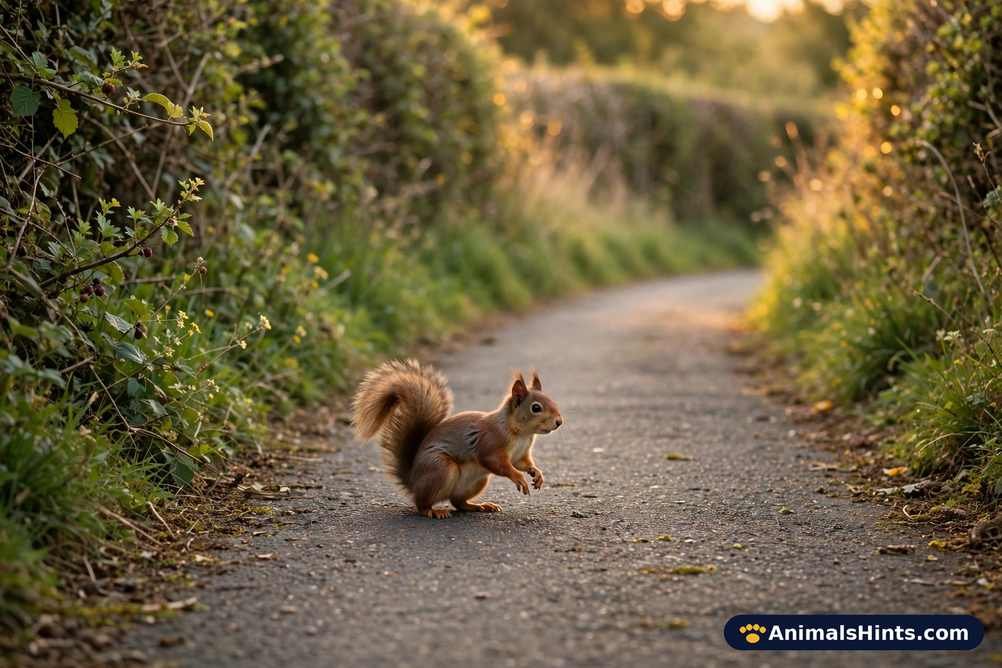
In a car, the safety rule comes before any reading of the event. Ease off and brake in a straight line if you safely can — and never swerve for a squirrel. Road-safety authorities state the rule flatly: the New South Wales government’s road-hazards guidance instructs drivers to slow down, brake in a controlled way, and never swerve to avoid an animal, because swerving risks losing control or meeting oncoming traffic. The numbers behind it are stark. The AAA Foundation for Traffic Safety, analysing animal-collision data from 2020 to 2024, found that in its New Jersey figures drivers who struck an animal were injured in 4.5 percent of cases, while drivers who swerved and hit another vehicle or a fixed object were injured 27 percent of the time. A squirrel weighs about a pound. The swerve is the dangerous encounter; the squirrel is not. The driving literature on this site has a feathered counterpart — the birds flying in front of your car while driving readings — governed by the identical rule: safety first, interpretation later, somewhere safe and stationary.
If a squirrel is plainly injured, the route is professional help, summoned by phone, not a home rescue attempt. Licensed wildlife rehabilitators are consistent on the handling points: do not hold the animal directly, do not offer it food or water, and do not try to treat it yourself — in many places, keeping or treating wildlife without a permit is illegal as well as unwise. If a rehabilitator advises containing it, the pattern is a secure, ventilated box in a quiet place, minimal handling with gloves or a towel, and their instructions from there. One caution specific to this animal: a baby squirrel on the ground is not automatically an orphan, and rehabilitators frequently advise renesting a healthy youngster and watching for its mother before anything else. Call first; act second.
Is Seeing a Squirrel a Good Omen?
In most of the traditions the source guide surveys, yes. The crossing is filed as an encouraging sign — progress, positive change, a phase of renewal or productivity said to be opening — and the folklore’s favourite summary of it runs: prepare now, and the rewards arrive later. The squirrel’s whole existence is offered as the warrant: an animal that gathers in season and rests in season, thriving inside a cycle rather than fighting it.
The same sign is read differently according to the reader’s own condition, and the guide is honest about the mechanism. To the overworked, the squirrel arrives as a reminder to rest and recover the playful register; to the procrastinator, as a spur toward small, consistent steps. That flexibility is worth noticing for what it is — the omen functions as a mirror with good advice in it — and it does not make the advice bad. Prediction is where every strand runs out: a crossing decides nothing about what happens to you next, and this page’s verdict keeps to the tradition’s strongest honest form — count it as luck in the only sense that can be checked, a bright, unplanned moment of attention that asked nothing of you.
The shelf this sign sits on has a sombre opposite, and the contrast sharpens it. The dead bird readings concern an encounter with an animal that crossed nothing and will cross nothing again, and they gather the tradition’s grief and warning registers. The crossing signs are the hopeful shelf precisely because the animal in them is alive, mid-errand and getting on with its work — which is, in the end, the whole content of the squirrel’s good news.
Final Thoughts
A squirrel crossing your path ranks among the smallest complete events in nature: a creature about its business and a human about theirs, and one shared second in which both register the other. The traditions gathered around that second — eleven modern meanings, a messenger on the world tree, a tiny labourer on a bridge in an epic’s long afterlife — deserve to be kept the way this page has kept them: in full, with affection, and never inflated past what the sources carry.
What survives every check is surprisingly practical. Store a little against the lean season. Keep the plan and the breathing room around it. Brake in your lane; never swerve. Leave wild animals to their work, and call the licensed people when one is hurt. Other sudden encounters repay the same double treatment — a butterfly landing on you is the family’s gentlest member, an arrival that asks for nothing but attention — and the squirrel’s version asks for barely more.
And the animal itself will be back across the same path tomorrow, on the same errands, whether or not anyone reads them. Its philosophy is already built and in daily use: stores laid by in a dozen places, a route it trusts, and overhead the leafy drey it returns to when the light goes — preparation kept not as anxiety, but as a home made ready. Of all the versions of this sign, that is the version the evidence carries without qualification, and it is enough.
FAQs
What does it mean when a squirrel crosses your path spiritually?
The tradition’s answer is preparation, resourcefulness and balance — store for what is coming, aim your energy, and leave room for play. Read it as the tradition’s lens, never as a forecast; the animal itself was crossing between its nest, its food trees and its caches.
Is a squirrel crossing your path a sign of good luck?
In most of the traditions surveyed for this topic, yes — it is filed as an encouraging, fortunate encounter, tied to preparation paying off. As fact, nothing about a crossing forecasts anything; take the luck as a prompt to prepare and to pay attention, and the sign has done its work.
What does it mean if a squirrel crosses your path and stops?
The tradition reads the stop as emphasis — the message meant personally, and a cue to halt and inventory your plans. Behaviourally, the freeze is assessment: a stopped squirrel is reading scent, sound and movement before it commits to another dash, which is why the stare feels so deliberate.
How should I respond to a squirrel crossing my path?
On foot: give it room, watch it go, and never try to feed or handle it. In a car: brake in your lane when you can do so safely, and never swerve. If a squirrel is injured, call a licensed wildlife rehabilitator and follow their instructions rather than helping it yourself.