Queen Bee Symbolism: 10 Spiritual Meanings, the Real Queen and What the Bible Actually Says
She is the only bee in the colony who matters in quite this way: tens of thousands of workers orient their whole lives around one long-bodied female, feeding her, grooming her and spreading her scent through the dark of the hive. It is no surprise that queen bee symbolism has grown up around her. Few animals carry a crown in their common name, and fewer still are literally the mother of everyone around them.
The symbolism guides read her as leadership, fertility, order and feminine power, and they read a sighting of her — in a house, on a path, even dead — as a message with a personal address. This page follows their readings closely, and it keeps the labels honest: the meanings are folklore, attributed to the guides who teach them, while the animal underneath them is real, and more remarkable than the folklore built on her.
So the ten house meanings come first in the guides’ own shape, the real queen gets her own sections before and after them, and the colour and culture shelves close the page — including the one record the guides usually skip, which is what the Bible actually says about bees.

The Real Queen Bee: One Fertile Female and the Chemistry That Runs a Colony
Start with the animal, because everything the guides say about her is borrowed from her biology. A honey bee colony holds exactly one queen. She is a fully fertile female in a home of tens of thousands of sterile female workers and a few hundred males, and she is the mother of essentially every bee in the box. Penn State Extension puts it flatly: the queen is the only bee in the colony capable of producing workers, and tens of thousands of workers are what a strong colony needs.
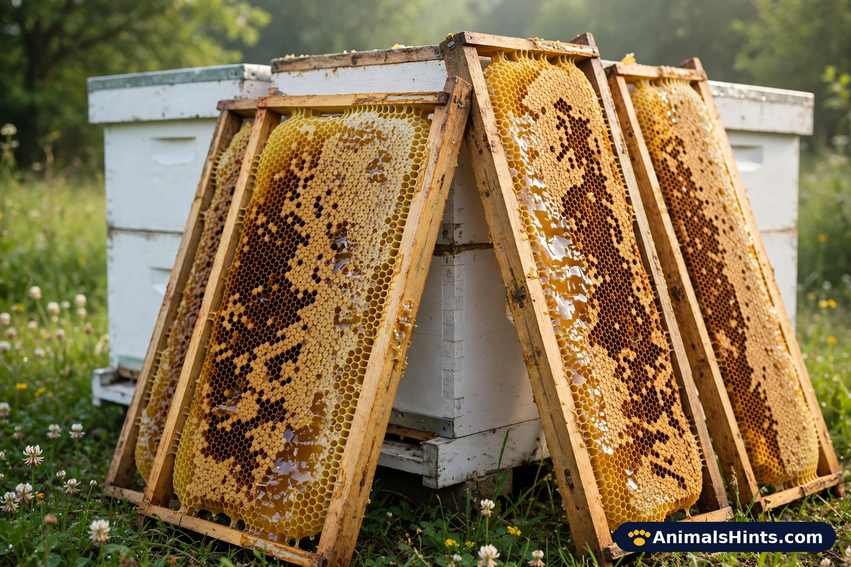
Her working life is egg-laying on a scale that is hard to picture. Penn State Extension records that in peak season a quality queen can lay over 2,000 eggs in a day — more than her own body weight in eggs, daily, for months. She decides the sex of each one as she lays it: fertilised eggs become females, workers or new queens, and unfertilised eggs become drones.
Her second job is chemical. A queen does not give orders, hold court or direct anyone’s work. What she does is produce a blend of pheromones — Penn State Extension describes the best-known part, queen mandibular pheromone, as a set of five chemicals from glands in her head. Workers constantly gather around her in a ring called the retinue, touching and licking her, and in doing so they pick up the blend and carry it through the hive. Where that scent reaches, two things follow: worker ovaries stay switched off, so nobody else lays eggs, and the colony does not start raising a replacement queen. Her authority, such as it is, is a smell that says present and well.
She is also long-lived in a way her daughters are not. Penn State Extension notes that queens can live seven or more years, though their laying usually fades after the first year or two. A summer worker, by contrast, burns through her life in roughly six weeks of work; only the winter generation of workers lasts a few months. The queen outlives generation after generation of her own children.
One identification note matters for every “sighting” section below. A honey bee queen almost never appears alone in the open. She leaves the hive only a handful of times in her life: on mating flights as a young virgin, and once more if she leaves with a swarm. A single large bee wandering around a house is therefore very unlikely to be a honey bee queen. Far more often it is a bumblebee queen — a genuinely solitary royal who does come indoors, hunting for a nest site in spring or a winter shelter in autumn. And a large striped queen found inside in autumn may be a wasp instead; a wasp in the house is a different visitor with its own meanings shelf, and its own sting etiquette.
What Does Seeing a Queen Bee Represent Spiritually?
In the guides’ reading, actually seeing a queen — rather than an ordinary worker — raises the stakes of the encounter. A worker bee is read as diligence and small daily work; the queen is read as the centre the work revolves around. Guides who teach this symbolism tend to read her appearance as a prompt to look at where you stand in your own household or work: whether you are leading, whether you are being led, and whether the people around you are fed, in every sense, by what you do.
Some guides also read a sighting as a season marker — the queen outdoors means a swarm or a mating flight, both spring events — and so they tie her to beginnings, departures and households splitting into new households. That reading, at least, has the animal’s calendar underneath it.
10 Spiritual Meanings of Queen Bee in the House
A queen bee in the house is the encounter this whole topic is built on, so the guides give it their fullest treatment: ten meanings, collected here in their order. The honest note from the section above still applies — the bee indoors is seldom a honey bee queen in the flesh — but the meanings are the meanings, and they are printed as the guides teach them.
1. Divine Connection
The guides place this first: the queen is read as the colony’s link to something above it, the one life every other life in the hive depends on. Brought indoors, she is read as a picture of your own link upward — a prompt, in their language, to pray, meditate or simply pay attention. It is the most devotional of the ten readings, and it belongs entirely to the symbolism tradition rather than to any scripture, as the Bible section below shows.
2. Feminine Leadership and Power
The second meaning reads the queen as leadership in a feminine key. The guides point out that she does not lead by fighting, chasing or punishing — the colony organises itself around her presence. As a house meaning, it is usually read as a call to lead the same way: by being the steady centre people orient to, rather than by force. The biology agrees with the shape of the metaphor, since her real authority is a pheromone blend spread by attendants, not a command.
3. Symbol of Fertility and Renewal
This meaning has the firmest ground under it, because it is simply her job description read as a symbol. The queen is the colony’s only mother; every spring renewal of the hive comes out of her body, at rates above two thousand eggs a day in season. The guides extend that literal fertility outward — to children, to creative work, to any project that needs to multiply — and read her presence in the house as a sign that something there is ready to grow.
4. Sacred Messenger
Bees have carried messages in folklore for centuries, and the queen, as their head, is read as the messenger of highest rank. In this reading, her arrival in the house is not itself the message; it is the announcement that one is coming — through a dream, a letter, a visitor, a piece of news already on its way. The culture section below shows how old the bee-as-messenger idea is; the guides have simply promoted the queen to chief messenger.
5. Embodiment of Community and Cooperation
A colony is tens of thousands of individuals working as what biologists themselves often call a single superorganism, and the queen is its reproductive heart. The guides read her house visit as a picture of your own community: the family, team or street whose work only functions when everyone does their part, and whose centre — perhaps you — has to stay healthy for the whole to hold.
6. Symbol of Prosperity and Abundance
Honey is stored sunlight, and a hive going into winter heavy with it is the oldest picture of abundance there is. The guides read the queen — the one who makes the population that makes the honey — as prosperity at its source rather than at its surface. Read as the guides intend it, this is an encouragement about provision and stores, not a promise about money; no bee, queen or otherwise, can certify an income, and the guides’ stronger versions of this claim should be read as poetry.
7. Patience and Diligence
A queen’s life is the same act repeated beyond counting: cell by cell, egg by egg, for years. The guides pair her here with the worker’s famous diligence and read the pair as one lesson at two speeds — the workers’ visible busyness, and the queen’s invisible, unglamorous constancy underneath it. In the house, the meaning is usually taken as a nudge toward the long task: the one that only gets done daily, or not at all.
8. Representation of Authority and Order
Every guide in this genre reaches for the queen when it needs a picture of order, and the picture is half right. The colony is astonishingly ordered — but the order does not flow from her decisions. Workers choose their own tasks by age and need; the queen contributes eggs and the pheromone that keeps the system queenright. The guides’ reading survives the correction, though: she is authority as presence and continuity, the fixed point that lets everyone else’s work make sense.
9. Connection to Goddess Energy
Here the guides connect the queen to the sacred feminine of the old religions — the bee-priestesses of Greece, the great goddesses the culture section below walks through. Of the ten, this one has genuine ancient roots under it, even if the roots attach to bees generally rather than to the queen specifically. In the house, it is read as an honouring of the feminine centre of the home.
10. Message of Inner Peace and Balance
The last meaning is the quietest. Beekeepers know the sound of a queenright colony — a low, even hum — and know just as well the restless, higher roar of a colony that has lost its queen. The guides borrow that contrast and read the queen’s presence in a house as peace with a centre: balance that comes not from stillness but from everything in its place, doing its part.
How a Queen Is Made: Royal Jelly, Queen Cells, Supersedure and the Swarm
Queens are not born. They are fed into existence, and the feeding is the whole story. Every fertilised egg in the hive is a potential queen, because queens and workers share the same genetics. What separates them is diet. Penn State Extension sets out the record: all larvae are fed royal jelly — a protein-rich secretion from glands in young nurse bees’ heads — for their first three days. Larvae chosen as queens keep receiving it, in quantity, for their whole development. Larvae switched after day three to a plainer mix of jelly, pollen and nectar become sterile workers instead.
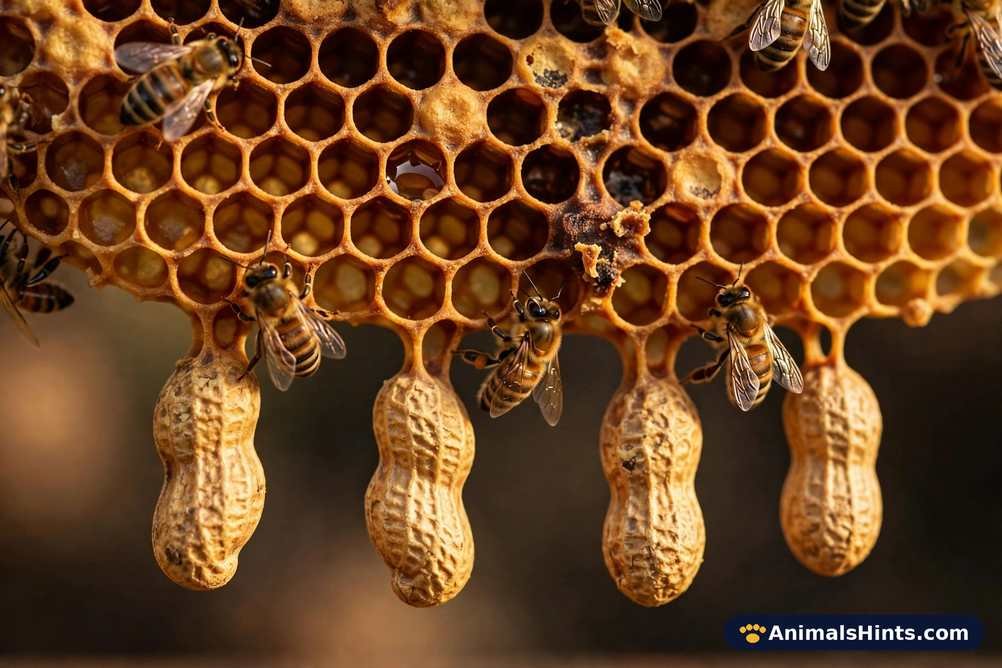
A queen develops in a cell built for her size: a long, rough-walled, peanut-shaped cup that hangs downward from the comb, quite unlike the flat hexagonal cells around it. She is also the fastest of the castes — about sixteen days from egg to adult, against a worker’s twenty-one. That speed is survival equipment. When several queen cells are raised together, the first virgin to emerge goes looking for her sealed sisters and stings them through the cell wall; if two emerge together, they fight until one is left.
A colony starts queen cells for exactly three reasons, and Penn State Extension lists them plainly. The first is swarming: the colony is reproducing, and the old queen will leave with a swarm while a daughter takes over the old home. The second is supersedure: the queen is ageing, injured or failing — her pheromone output drops as her laying does — and the workers quietly raise a replacement in the same hive. The third is emergency: the queen is suddenly dead or missing, her scent fades, and workers convert the youngest ordinary larvae they have into queens against the clock. Every queen who ever reigned arrived by one of those three doors.
Queen Bee Symbolism in Love, Relationship, and Twin Flame
The guides read the queen romantically through her court. She is never alone: a shifting ring of attendants feeds her, grooms her and carries her scent, in the retinue behaviour described above. In love symbolism, that picture becomes devotion with a centre — the partner around whom care organises itself — and the guides read a queen bee encounter during a relationship question as a prompt to notice who gives the care and who receives it, and whether the arrangement is honoured or merely assumed.
The twin flame version of the reading goes one step further, as twin flame readings tend to: the queen and her colony are read as one soul in many bodies, and her appearance is read as the sign of a bond in which two people function as a single organism. That framing belongs to the genre, not to any finding — but it is worth noticing that the biology underneath is real. The retinue is not affection; it is pheromone distribution, work the attendants do because the colony runs on it. The guides have borrowed a true picture of total mutual dependence and hung their meaning on it.
Meaning of Queen Bee Flying Around You or Landing on You
A queen bee flying free is a rare thing to be near, because of the short list of flights she ever makes. The likeliest real encounters are a spring swarm on the move — thousands of bees with the queen somewhere inside the cloud — or a young virgin returning from a mating flight. The guides read being singled out by her flight, and especially a landing, as the most personal form of the symbolism: not a message for the house but for the person, read variously as blessing, selection and a call to step into a leading role.
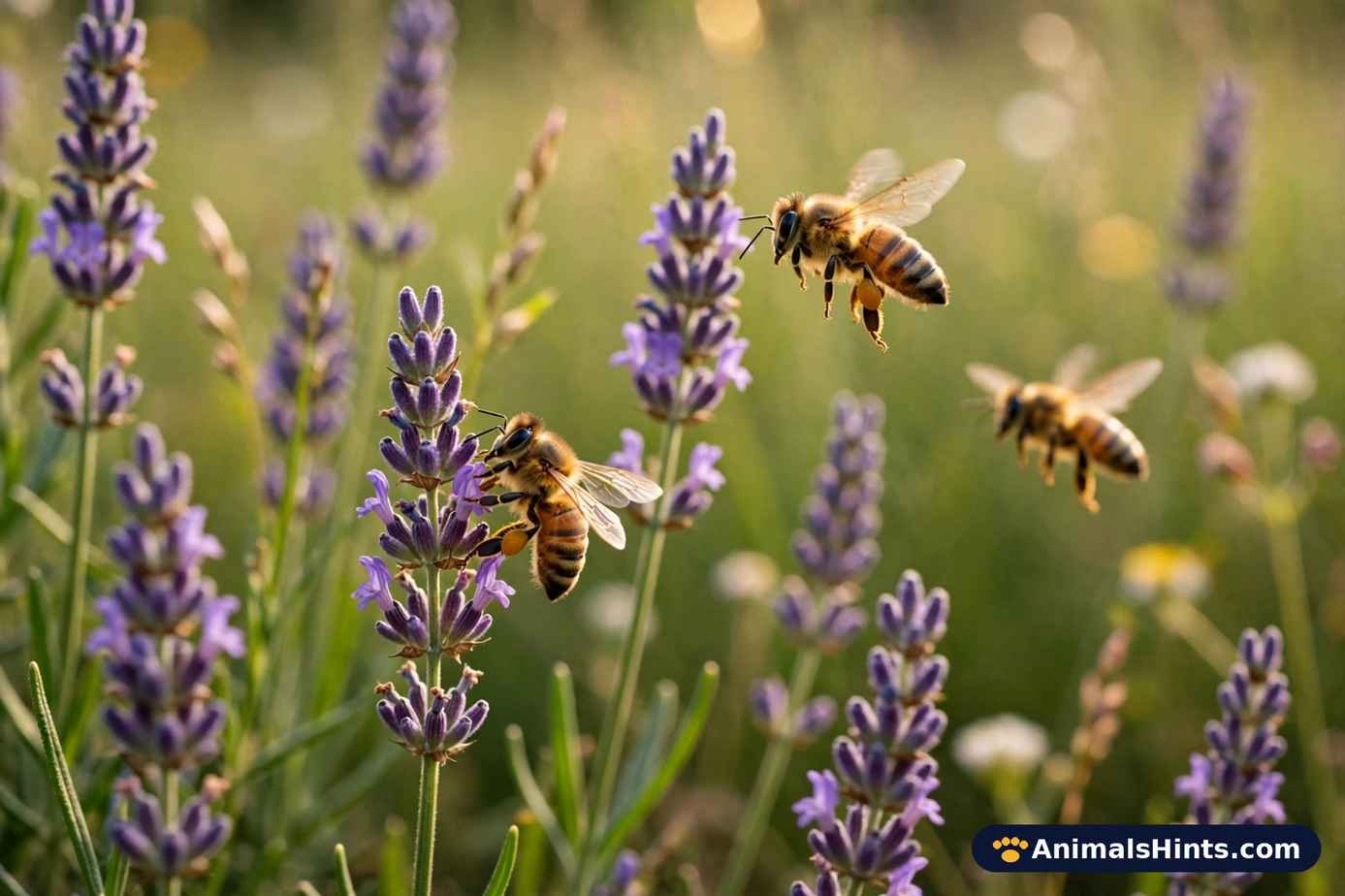
The landing that actually happens to people, though, is a worker’s. A forager may settle on skin for the salt in sweat, exactly as the guide to the spiritual meaning of a bee landing on you sets out, and the guides read that smaller landing with the same shelf of meanings at a smaller scale. A butterfly landing on you is the neighbouring encounter in this family — gentler, commoner, and read by the same guides as transformation rather than sovereignty. If a big bee lands on you and stays calm, the practical notes are the same for all of them: stay still, wait for it to leave on its own, and never swat at a bee whose sting would be the end of her.
Seeing a Dead Queen Bee: Spiritual Interpretation
The guides read a dead queen as an ending with weight on it: a season of leadership closing, a household centre lost, or a warning — depending on the guide — that something you are responsible for is being neglected the way a failing queen’s colony is neglected. Some read it more gently, as rest after long service: she is the hardest-working body in the hive, and her death is the one death the whole colony notices.
Two honest notes belong inside the interpretation. The first is that a dead bee found indoors is almost never a queen; workers die at windows all winter, drawn to light they cannot get through, and the dead bird readings on this site cover the same winter-window pattern in another species. The second is that if the dead bee is large, fresh and found near a hive or a swarm site, she may genuinely be a queen — a virgin lost on her mating flight, or a superseded mother — and the colony record in the next section explains what her death sets in motion.
A Queen on the Ground, a Swarm on a Branch, a Colony Without a Queen
This is the section the symbolism pages usually leave out: what is actually happening, in the colony, at the moments people meet queens.
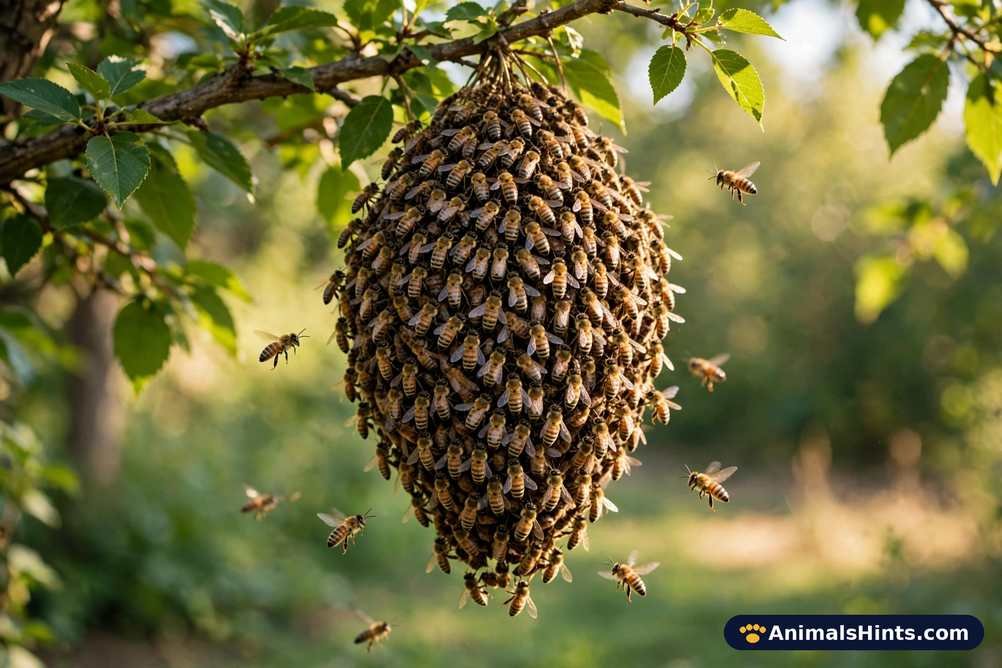
A swarm on a branch is the most dramatic queen encounter there is, and the calmest. When a colony swarms, the old queen leaves with roughly half the bees, and the cloud settles — on a branch, a fence, a post box — as a hanging cluster with the queen protected somewhere inside it. Penn State Extension describes the result plainly: the parent colony is cut by half or more, and the swarm waits while scouts negotiate for a new home. Swarming bees are famously peaceable, being homeless and full of honey, but the correct response is distance and a phone call: local beekeeping associations collect swarms free, gladly, because a swarm is a colony looking for exactly the box they keep spare. Never spray one. A sprayed swarm is a dead queen and thousands of dead workers over a misunderstanding.
A colony that loses its queen behaves differently, and beekeepers can hear it. Within hours, her fading pheromone tells the workers she is gone. If the hive still holds eggs or very young larvae, the workers start emergency queen cells at once — any female larva young enough can still be switched onto the royal diet. If there is no brood young enough, the colony is hopelessly queenless: worker ovaries, no longer suppressed, begin producing unfertilised drone eggs, and the colony dwindles to its end over the following weeks. The guides’ phrase for a dead queen — the centre is gone — turns out to be a plain description of the chemistry.
What the Bible Actually Says About Bees — and Why No Queen Appears in It
This record is short enough to give in full, and it matters because the guides often imply a biblical weight behind queen bee symbolism that the text does not carry. In the King James Version, bees appear in just four places. Twice they are a picture of terrifying pursuit: Deuteronomy 1:44 says the Amorites “chased you, as bees do”, and Psalm 118:12 says of the psalmist’s enemies, “They compassed me about like bees”. Once they are a wonder of sweetness in a strange place — Judges 14:8, where Samson finds “a swarm of bees and honey in the carcase of the lion”. And once, in Isaiah 7:18, a single bee stands for an invading power God will summon: “the bee that is in the land of Assyria”.
That is the whole list. No hive, no honey harvest, no ruler of the bees — and no queen. The word never comes near one. There is, however, one great bee connection, and it is a name. The judge of Judges 4 and 5 is introduced in Judges 4:4 — “And Deborah, a prophetess, the wife of Lapidoth, she judged Israel at that time” — and Deborah, Hebrew Devorah, is simply the Hebrew word for a bee; the lexicons give the name’s meaning as “bee”. Deborah is a prophetess and a judge who leads Israel, summons its general and sings one of the oldest songs in the Bible — a woman of authority whose name is the bee’s name. But the text never calls her a queen bee, never builds a symbol on her name, and never mentions a queen of any hive. The gap is worth stating plainly, because the honest version is more interesting than the inflated one: scripture gives the bee four appearances as swarm, pursuit and sweetness, gives Israel a leader named Bee — and leaves queen bee symbolism entirely to the later folklore on this page.
Different Colored Queen Bee Meanings
Colour is the symbolism genre’s favourite filing system, and the guides apply it to the queen as they apply it to everything else — even though a real honey bee queen comes in one livery: amber and dark banding, longer and glossier than her workers. Truly coloured queens in the guides’ sense are poetic, then, but the five readings below are the standard shelf, in the standard order.
Golden: The golden queen is the colour shelf’s favourite — read as the queen at her most herself: prosperity, solar warmth, a household centre that provides. The reading leans on honey’s colour and on the wider gold spiritual meaning shelf, where gold stands for the incorruptible and the best.
Black: A black queen is read as the shadow side of sovereignty — authority in mourning, hidden power, a centre that rules from out of sight. The reading follows the site’s black shelf, where black carries protection and the unseen as much as it carries grief.
White: A white queen is read as purity at the centre: a clear conscience in the leading seat, a household reset to clean beginnings. White insects in this genre usually arrive as rarity signs — the white ladybug gets the same reading — and the white queen is the rarest entry on this shelf, since no honey bee queen is white at all.
Red: A red queen is read as power with heat in it: passion, urgency, authority that will fight. The reading borrows the red spiritual meaning shelf wholesale — red is the genre’s colour of life-force and alarm at once — and applies it to the one bee who almost never uses her sting.
Brown or Earth-Toned: The brown queen is the realist of the five, and the closest to the animal: amber-brown is her actual colour. The guides read her as grounded authority — provision, soil, stores laid down for winter — along the lines of the color brown spiritual meaning shelf, where brown is humility, earth and honest work.
Cultural and Religious Explanations
Ancient Egypt: Egypt gives the bee its oldest royal paperwork. The bee hieroglyph stood in the king’s own title — nsw-bity, “He of the Sedge and the Bee”, the sedge for Upper Egypt and the bee for Lower — from the First Dynasty onward, so the insect sat inside the pharaoh’s name for three thousand years. Egyptian story added tenderness to the politics: one tradition held that bees sprang from the tears of the sun god Ra as they fell to earth, and the oldest beekeeping relief, in the sun temple of Niuserre around 2450 BCE, shows the work already ancient. The guides often add that bees were sacred to the goddess Neith, whose temple at Sais is called a “house of the bee” in later beekeeping histories; that detail circulates at retelling strength rather than inscription strength, and the king’s title is the firmer anchor.
Greek Mythology: In Greece the bee became a priestess. Melissa is Greek for honey bee, and Melissae — “the bees” — was a title borne by priestesses, above all of Demeter, and in some tellings of Persephone and of Apollo’s temple at Delphi, where bee-maidens called the Thriae were said to have taught the god divination itself. Ephesus added the goddess: Artemis of Ephesus wore the bee as her emblem, and her coins carried it. When the guides speak of queen bees and goddess energy, this Greek shelf — bee-women serving goddesses — is most of what they are standing on.
Christian Mysticism: The Christian strand is real, and it needs one correction the guides rarely make. Medieval Christians believed bees reproduced without mating — no mating flight had ever been observed — and so the bee became an emblem of chastity and of the Virgin Mary, whose candles had to be pure beeswax; theologians of the period tied the bees’ supposed virginity to Christ and Mary directly. But the emblem was the bee, not the queen: through all those centuries, everyone who wrote about hives assumed the ruler of the bees was a king. The hive’s sovereign was only established as female in the seventeenth century, when Swammerdam dissected her ovaries. Queen bee Marian symbolism is therefore a modern arrangement of genuinely old materials.
Celtic Beliefs: The Celtic strand of the guides rests on a documented custom and a gloss. The custom is telling the bees: across Ireland, Wales and the rest of Western Europe, households formally informed their hives of births, marriages and deaths, draping the hives in mourning cloth, on the understanding that uninformed bees would leave or die. The gloss — that bees are bridges between the worlds of the living and the dead — is the symbolism tradition’s way of explaining why the custom existed: creatures who must be told the family’s news are creatures who carry it somewhere. The custom is the record; the bridge is the interpretation laid over it, and the two are worth keeping separate.
Wicca and New Age: The newest strand makes no claim to antiquity, and is the franker for it. In modern Wiccan and New Age practice, the queen bee is worked with as an emblem of the Goddess and of sacred feminine leadership: honey and beeswax appear on altars, the queen is invoked for community, fertility and self-worth themes, and the hive is meditated on as a model of a rightly ordered life. This is living modern religion, a generation or two deep — the guides’ goddess-energy meaning, practised rather than merely read.
Final Thoughts
Read her whole file at once and the queen bee turns out to be two creatures sharing one name. The first is the animal: a fertile female made by a diet, laying her body weight in eggs a day at the height of the season, ruling nothing and deciding little, yet holding forty thousand lives together with a scent. The second is the symbol the guides have built on her — sovereignty, devotion, fertility, peace — and the symbol is honest exactly as long as it keeps the animal underneath it in view. Where the readings on this page agree with the biology, they are strong: she really is a centre, a mother and a presence rather than a commander. Where they wander from it — into coloured queens that do not exist and a Bible that never mentions her — this page has said so, and the meanings still stand, labelled as what they are.
If she has a lesson that survives every shelf, it is the one in the retinue: a colony stays queenright because ordinary workers keep carrying the centre’s scent outward, touch by touch, all day. She was raised for her place on royal jelly and nothing else — the same egg as everyone, fed differently — and she holds her kingdom the way she was made, by being fed, attended and passed hand to hand through the dark. The guides call that feminine leadership. The beekeepers just call it a queenright hive, humming low and even, getting on with the work.
FAQs
What does a queen bee symbolize spiritually?
In the guides’ tradition: feminine leadership, fertility, community held together by a healthy centre, and a connection upward. All of it is attributed folklore built on a real animal — the colony’s only fertile female — and none of it comes from scripture.
What is the significance of the queen bee in different traditions?
Egypt put the bee in the king’s title; Greece made bee-priestesses, the Melissae, serve Demeter and Artemis; medieval Christianity made the bee an emblem of Mary, though it thought the hive’s ruler a king; Celtic households told their bees the family news; modern Wicca works with the queen as a Goddess emblem. Each strand is set out at its own strength in the culture section above.
What does the queen bee teach us about leadership?
The guides’ answer is also the biological one: she leads without commanding. Workers organise their own work; her contribution is presence, continuity and the pheromone that tells everyone the centre holds. Leadership as the fixed point, not the loudest voice.
How can I work with queen bee energy in my life?
The practical versions are the honest ones: tend your own centre first — sleep, food, steadiness — then be findable and consistent for the people who orient around you. Plant for pollinators, buy honey from a local keeper, and leave any actual queen you meet exactly where she is; a swarm needs a beekeeper’s box, not an admirer.