Spiritual Meaning of a Butterfly Landing on You: 10 Meanings, Body Parts and Real Reasons
In the traditions that read animal encounters as signs, the spiritual meaning of a butterfly landing on you is among the warmest files in the whole genre: transformation arriving in person, a departed soul paying a call, luck that chose to sit down on you rather than pass overhead. A butterfly crossing the garden is a sighting; a butterfly settling on your hand is treated as a delivery.
The animal underneath the omen has a plainer errand, and this page keeps both accounts in view. A butterfly that touches down on a person is usually drinking — drawing sodium and minerals out of sweat — or borrowing body heat, or investigating a bright shirt it has filed as a possible flower. None of that cancels the lore. It does mean the lore should be read as lore, and the insect as an insect, and this article keeps the two in separate columns from the first section onward.
What follows gives the verified natural history first: why butterflies really land on people, and which species do it most. Then the tradition in its own order — the lingering visit, ten meanings, the body-part file, eight colours, five cultural strands and the luck question — each reading attributed to whoever holds it. A short honest-verdict section and a practical one close the page before the tradition’s own final word.
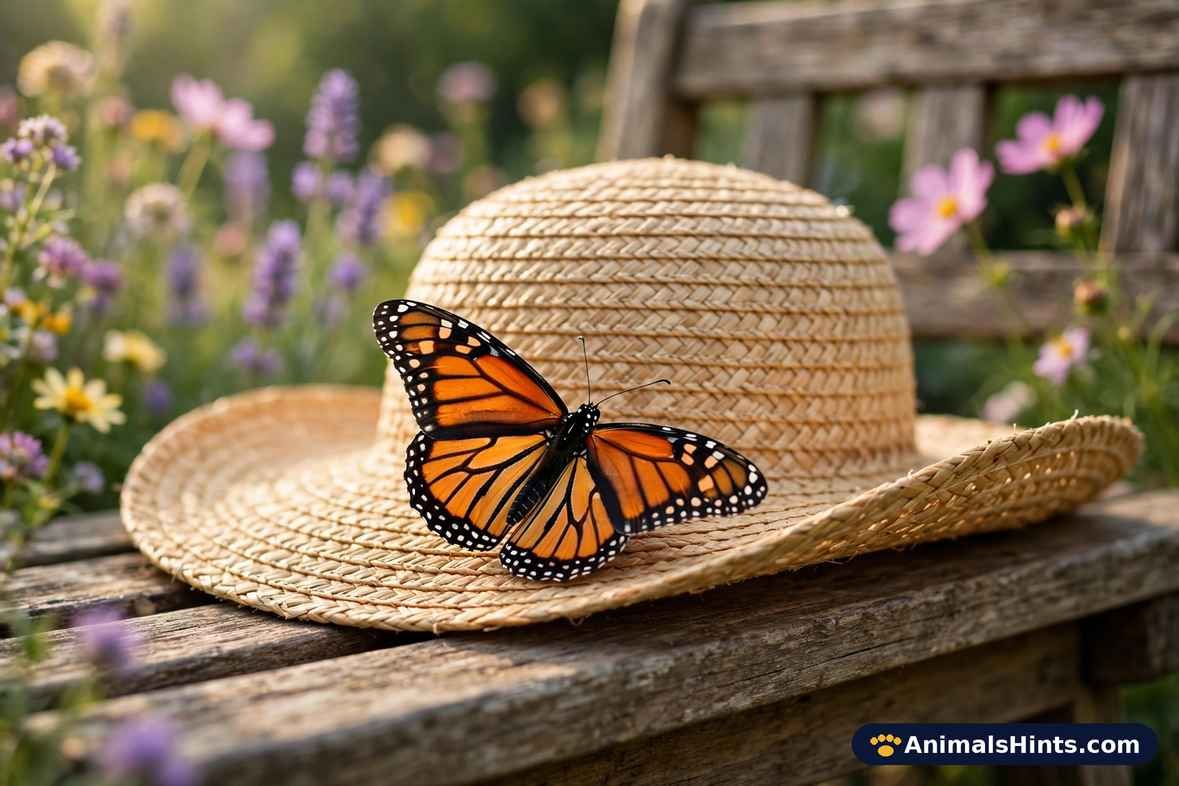
Why a Butterfly Really Lands on You: Salt, Warmth and Mistaken Flowers
Entomologists have a word for the behaviour at the centre of this article: puddling. Nectar, the adult butterfly’s staple, is rich in sugar and desperately poor in sodium, so butterflies top up at mineral sources — mud-puddle edges, damp sand, dung, carrion, and, opportunistically, the thin film of sweat on human skin. Human sweat carries exactly what nectar lacks: sodium above all, with potassium and chloride alongside. A butterfly that settles on your forearm and unrolls its proboscis is not greeting you. It is drinking, and your skin is the puddle that happened to be walking past.
The details of the drinking explain the encounters readers describe. Butterflies taste with their feet — chemoreceptors on the tarsi sample a surface the instant it is stood on — which is why a visitor may touch down, pause, and leave within seconds if the spot offers nothing, or settle in for a long session when it does. Puddling bouts at a good source can run for many minutes, the butterfly slowly pumping fluid through its body and expelling the excess water so the dissolved salts stay behind. The American Museum of Natural History’s behaviour account notes that some butterflies puddle for hours at a rich site, drinking hundreds of gut-loads of water and retaining the minerals.
Most of the drinkers are male, and the reason is reproductive bookkeeping. Sodium is scarce, egg-laying is expensive, and a male who has stocked up at the puddles transfers a share of his minerals to the female during mating, packaged in the spermatophore — the nutrient capsule that accompanies the sperm. Researchers call it a nuptial gift: the salt a male sips from a muddy bank, or from your wrist, is quite literally courtship provisions. The classic study behind much of this, Boggs and Jackson’s 1991 paper, is titled with a warning this page endorses — mud puddling by butterflies is not a simple matter — but the sodium thread runs through all of it.
Salt is not the whole story. Butterflies are ectotherms: they cannot run their flight muscles cold, and on a cool morning a still, sun-warmed person is a serviceable basking perch, body heat included. Colour and scent do the recruiting from a distance. Butterfly vision reaches into the ultraviolet, bright clothing and floral prints register as candidate blooms, and floral perfumes, sweet lotions and sunscreen can complete the impersonation. Put the three together — a sweaty gardener in a yellow shirt, standing still in morning sun — and you have assembled, from the butterfly’s side of the encounter, a warm, salted, flower-shaped landing pad. Where on the body it settles follows the same plain logic: exposed, sunlit, sweat-bearing skin. Hands, arms, shoulders and the top of the head are simply where the resources are.
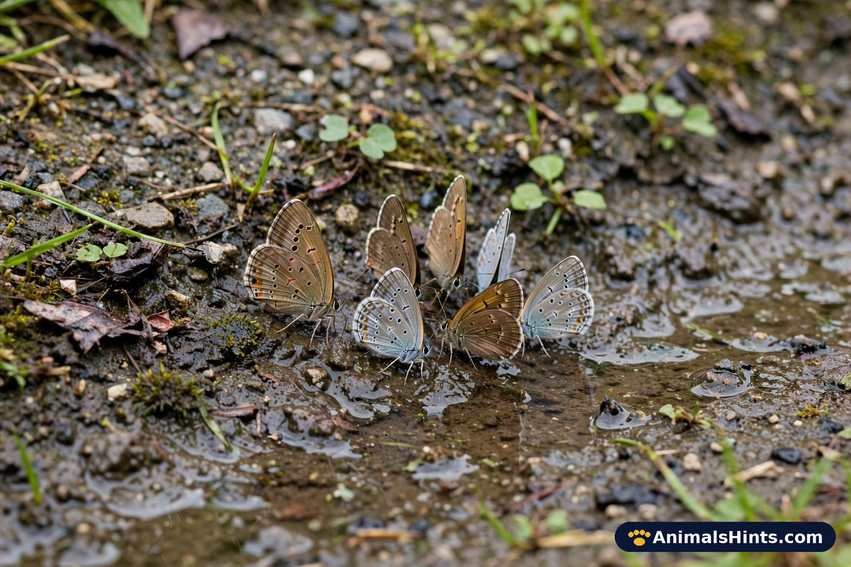
The Butterflies Most Likely to Land on You
Not every species works the puddles with equal enthusiasm, and the ones that do are the ones that land on people. The keenest families at mineral sources are the whites and sulphurs (Pieridae) and the swallowtails (Papilionidae): a campus puddling study published in the Jahangirnagar University Journal of Biological Sciences found those two families favouring mineral-rich water sources above the rest, with human sweat listed among the sources used. Anyone who has watched a muddy track edge in June knows the sight — a fluttering congregation of small white and yellow wings over damp ground, rising and resettling as one.
The small blues (Lycaenidae) puddle so persistently that reviews of the behaviour give them the highest frequency of any family. Among the brushfoots, two North American species are named again and again in the sweat file: the mourning cloak, a large dark butterfly that overwinters as an adult and feeds at sap, fruit and damp ground, and the little pearl crescent — both recorded as drawn to the sodium on perspiring skin. The pattern across all of them is the same: the likelier a species is to work mud, sap and sweat for minerals, the likelier it is to treat a person as a mobile extension of the same menu. The great flower-only aristocrats of the garden — the ones that commute between blooms and rarely touch ground — are correspondingly the least likely visitors to your sleeve.
What Does It Mean When a Butterfly Lands on You and Won’t Leave
The tradition saves its strongest reading for the visit that lasts. A touch-and-go landing is filed as a passing sign; a butterfly that settles and stays — minutes, not seconds — is read as a message underlining itself. In the genre’s telling, duration is emphasis: the universe, a guide or a departed loved one is not merely waving but sitting down with you, and the stillness the moment demands is treated as part of the message. Readers are counselled to notice what they were thinking about when the visitor refused to leave, because the lore holds that the thought and the sign belong together.
The same accounts read the lingering as a compliment to the person’s state: butterflies are skittish animals that flush at vibration and sudden movement, so one that remains is taken as evidence of calm — the sitter’s energy, in the genre’s vocabulary, was quiet enough to keep wild company. Protection is the third strand of the reading: the staying butterfly as a posted guard, reassurance from the departed that the watch has not ended.
The natural history runs parallel without touching the meaning. A butterfly stays on skin for the same reason it stays at a puddle: it has found a resource and no disturbance has ended the session. A motionless person is, to a drinking insect, simply a puddle that has not yet walked away. Neither account cancels the other, and the sections below keep them side by side — the lore in its own voice, the biology in its.
10 Spiritual Meanings of a Butterfly Landing on You
Ten readings follow, in the sequence the genre hands them down. Treat each as what it is — a belief somebody holds, not zoology, and not a prediction addressed to you.
1. Visit from a Loved One
The tenderest reading in the file, and the one readers reach for first. Across the modern tradition, a butterfly that lands on you — rather than merely near you — is filed as a call from someone who has gone: the soul borrowing wings to make a brief, touchable appearance. The landing is what carries the weight. A sighting can be coincidence; a visitor that chooses your hand, in this telling, has an address.
The reading clusters where you would expect: anniversaries, graveside visits, the first spring after a loss, moments of missing someone so sharply that the world seems to answer. Nothing in the tradition asks the bereaved to prove anything. The comfort is the content, and the guides that print this meaning print it gently — love continuing in another form, separation real but not total. It stands here at exactly that strength: a belief that consoles, recorded because millions hold it.
2. Spiritual Awakening and New Beginnings
The metamorphosis reading, applied to timing. A landing that arrives mid-transition — a move, a diagnosis, a decision finally taken — is read as the sign that the change is not an ending but an emergence: the person’s own version of the crawl, the stillness and the wings. The butterfly’s biography is the genre’s favourite proof that a life can be rebuilt into a shape the earlier stage could not have pictured.
Where the first meaning looks backward, toward the dead, this one looks forward. The visitor is filed as a starting gun rather than a message: old habits and attachments are the caterpillar’s diet, and the landing is taken as permission to stop eating it. Printed as the tradition prints it — encouragement wearing wings.
3. Awakening and Guidance to Goals
A close cousin of the second meaning, aimed at direction rather than renewal. Here the landing is read as a compass check: it arrives, in the accounts, during deliberation — a career weighed, a move debated — and is taken as the universe countersigning the option the person was already leaning toward. Intuition and action are said to be merging; the butterfly is the merge made visible.
The guides attach a practical rider, printed here because it shows the genre at its most useful: the sign does not replace the step. A landing read this way is a nudge to begin — to send the application, make the call, book the ticket — not a guarantee about how the step turns out.
4. Recognition of Inner Light
The aura reading. In this strand, the butterfly is said to be responding to the person rather than addressing them: drawn to a calm, open, compassionate state the way it is drawn to light, and landing as a kind of recognition. The encounter is filed as validation — evidence, offered by a wild animal’s unscripted choice, that the sitter’s inner weather is fair.
This page keeps the two registers separate, and this meaning is where they pass closest. What the animal demonstrably responds to is set out in the facts section above: salt, warmth, colour, stillness. The tradition reads the same stillness from the inside, as light. Both accounts agree on the observable — a peaceful person keeps butterfly company longer — and differ, honestly, on why it matters.
5. Symbol of Rebirth and Eternal Soul
The oldest metaphysical frame in the list: the butterfly as the soul’s biography in miniature. A creature that crawls, then lies in darkness as if dead, then rises on wings is almost impossible for a religious imagination to leave alone, and cultures on several continents built the same reading independently — the soul survives its container, and change of form is not extinction.
A landing, in this frame, is the doctrine delivered personally: the cycle is not abstract, it has just touched your arm. Readers mid-way through their own dark stage — illness, grief, the collapse of a plan — are the ones this meaning is filed for, and its promise is continuity rather than rescue: what you are is not finished changing shape.
6. Transformation and Spiritual Evolution
The growth reading — with one error in the usual telling repaired on the spot. The competitor’s version has the caterpillar “retreating into the cocoon”, but no butterfly makes a cocoon. A butterfly caterpillar sheds its skin and stands revealed as a chrysalis, the pupal body itself hardened into a case; cocoons are silk wrappings spun by moth caterpillars around their pupae. The tradition’s point survives the correction and is arguably sharpened by it: the rebuilding happens without any woven shelter, in the open, the crawling caterpillar remaking itself inside its own skin.
Read as evolution rather than event, this meaning is about slope, not arrival: the landing marks a person mid-remaking, outgrowing a phase whose limits have started to chafe. The attached counsel is the genre’s standard one — release what the old shape needed, and do not grade the new one before it has finished emerging.
7. Spiritual Resilience and Hope
The endurance reading. Here the visitor is filed as evidence addressed to people coming through hardship: the creature that survives its own dissolution and flies is taken as a standing argument that damage is not the end of a story. The landing personalises it — hope, in this telling, does not merely exist in the world; it has stopped on you specifically.
Note what the tradition does not claim: it does not promise the hardship was sent, or that it will shortly end. The butterfly is offered as company in the middle of things — a small, bright proof of concept for the idea that a life can pass through a formless stage and come out with wings it did not have before.
8. Powerful Transformation Guide
The spirit-guide reading. In frameworks that assign animal messengers to human lives, the butterfly that lands is filed as a guide reporting for duty at a transition — not a permanent totem but a specialist called in for the change itself. Its curriculum, in the guides’ telling, is lightness: carry less, surrender what cannot be carried, let timing do some of the work.
Printed at the strength its holders give it. Whether the guide is a being, a symbol the mind uses to organise courage, or a coincidence a person chooses to honour is a question this page leaves to the reader’s own framework — the tradition is unanimous only about the advice, which is benign: move through the change gently, and do not navigate it as if you were alone.
9. Symbol of Souls and Cycles of Life
The comparative-religion meaning, where the landing is read through the deepest file of all: the soul-butterfly identification itself. In Japan, butterflies are held to be souls — of the living as well as the dead — a belief documented at length in Lafcadio Hearn’s Kwaidan, where a butterfly entering a house is to be treated kindly because it may be someone’s spirit paying a visit. In Mexico, the monarch butterfly masses that arrive in the oyamel forests around the Day of the Dead are widely received as returning ancestors, and a monarch settling on a person during those days is read accordingly.
The Greek root of the whole file belongs here too: psyche was the ancient Greek word for both the soul and the butterfly, one term doing double duty because the identification was complete. A landing, read through this meaning, is the cycle touching down — life, death and return compressed into thirty seconds on a sleeve.
10. Spiritual Growth and Enlightenment
The capstone reading, gathering the other nine. A landing is filed, finally, as a progress report: awareness widening, intuition trusted more readily, the person’s inner and outer lives coming into better alignment. Enlightenment in this frame is explicitly a process rather than an event — an unfolding the visitor is said to affirm at whatever stage it finds you.
It is the genre’s most comfortable meaning, and deliberately its least testable: any reader, at any point, can be growing. Printed as the tradition’s closing word on the subject — a blessing phrased as a description — and left at that strength.
Spiritual Meaning of a Butterfly Landing on Different Parts of Your Body
The tradition’s most detailed file sorts the message by landing site. Read it as the lore it is: the biology in the facts section above explains most sites more plainly — exposed, sunlit, sweat-bearing skin is where a drinking butterfly has business — but the body-part readings are the ones readers actually arrive carrying, and the lore’s own filing of them follows.
1. Butterfly Landing on Your Hand
The hand reading is about agency: giving, receiving, making. A butterfly on the hand is filed as a blessing on work about to be done — creative energy running strong, an opportunity arriving within reach, a reminder to handle something, or someone, with unusual care. Of all the sites, this is the one the genre reads as most nearly an instruction: act, but gently.
2. Butterfly Landing on Your Head
The crown reading: thoughts, clarity, a mind being addressed. A butterfly on the head is taken as a sign of awakening at the level of belief — limiting ideas loosening, a new perspective being offered, guidance arriving from above in the most literal geography the body offers. It is also, the lore concedes with unusual honesty, the rarest site to experience and the easiest to miss entirely.
3. Butterfly Landing on Your Shoulder
The burden reading, and the kindest. Shoulders are where loads are carried, so a butterfly settling there is read as the load being noticed: support is near, the weight is allowed to be shared, a departed loved one’s presence is filed as a hand on the shoulder translated into wings. The attached counsel is permission — to lighten the load, or at least to stop pretending it is light.
4. Butterfly Landing on Your Arm
The strength reading. Arms are capability in the body’s grammar, and a landing here is filed as confirmation that the sitter’s actions are aligned with their purpose — effort countersigned, progress blessed, a nudge to continue forward with courage. In the genre’s terms, the arm is the shoulder’s message pointed outward: not rest, but supported motion.
5. Butterfly Landing on Your Leg
The journey reading. Legs are direction, so a butterfly on the leg is read as a comment on the path itself: you are on the right one, or a new phase of travel — literal or otherwise — is beginning. The reading is among the most cheerful in the file, attached to confident next steps rather than to anything that must first be healed or released.
6. Butterfly Landing on Your Chest or Heart Area
The love reading, filed at the body’s emotional address. A butterfly near the heart is taken as healing in progress or love arriving from the spiritual side of the ledger — comfort arriving from someone now gone, or the sitter’s own heart reopening after a defended season. Self-love is named explicitly in this strand: the chest landing is read as the heart being asked to be as kind to its owner as it is to everyone else.
Butterflies of Different Colors Land on You
Colour is the tradition’s second sorting system, applied as a filter over every reading above: the site gives the topic, the colour gives the tone. One absence is worth flagging before the list begins — the genre’s colour file runs to eight here, and the red butterfly, the file’s most urgent colour, is carried in its own guide. The eight that follow are the ones this tradition assigns to landings.
White Butterfly
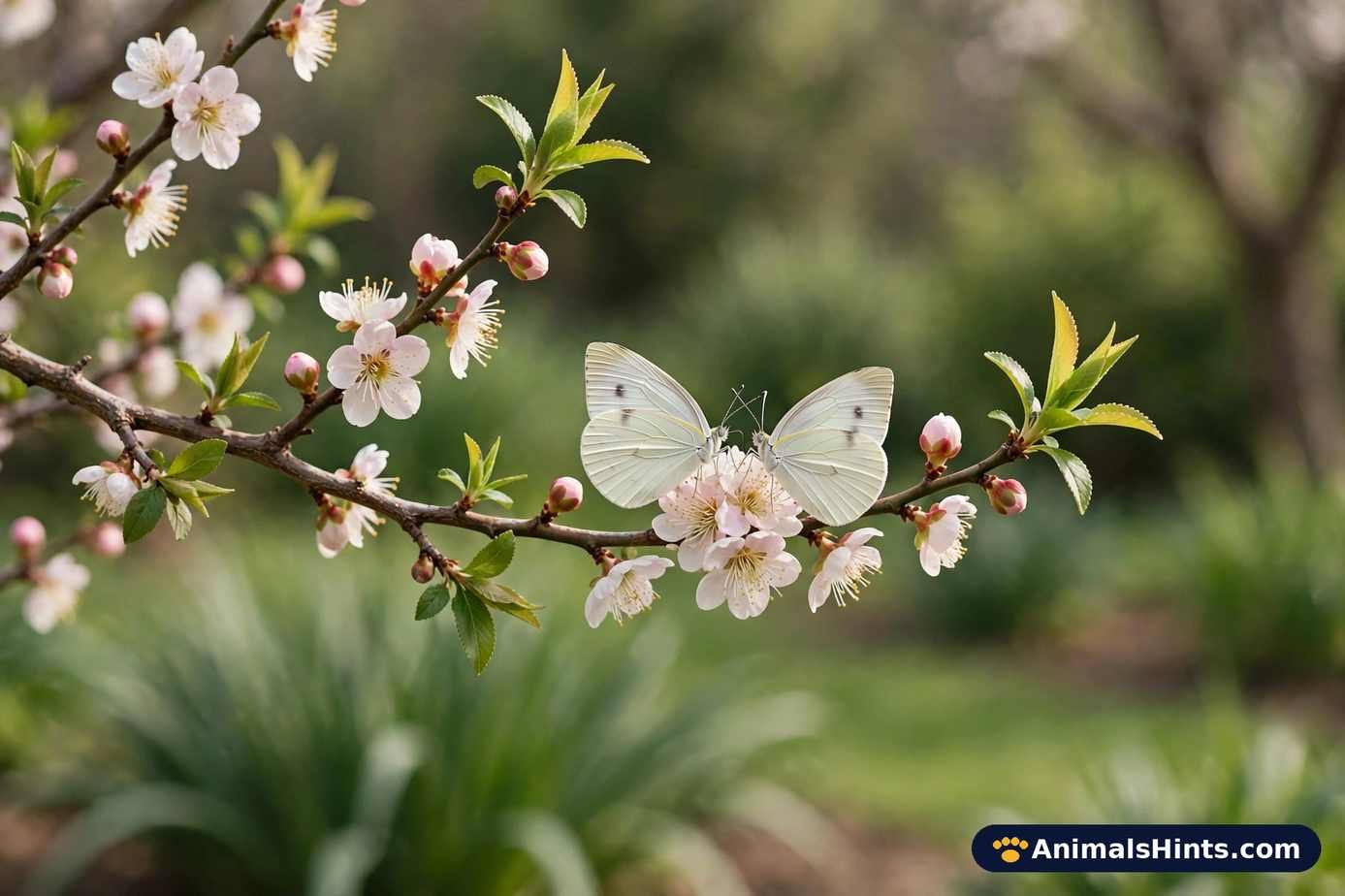
The soul colour, at its most concentrated. When a white butterfly settles on you, the reading is purity with an address: peace, protection, and — in the strand documented from Hearn’s Japan to Wilde’s Ireland — the presence of a departed soul, a child’s above all. Of all the colours, white is the one whose landing is most often filed as a visit rather than a sign.
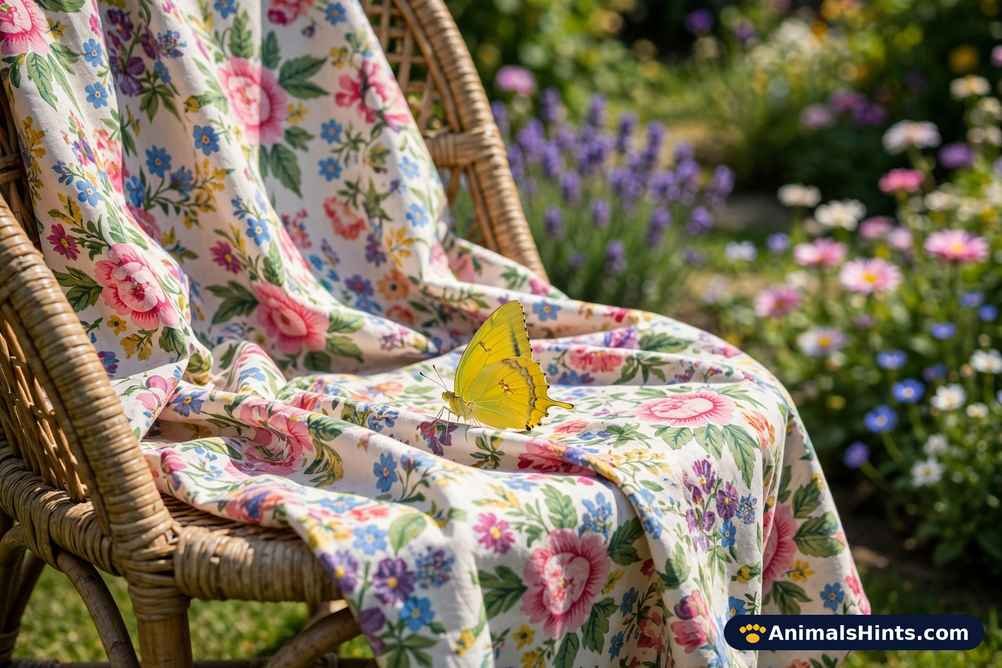
Yellow Butterfly
The joy colour. A yellow landing is read as happiness arriving unscheduled: optimism, clarity, creative weather moving in. The animal behind many of these encounters is the tiger swallowtail — a black and yellow butterfly whose sulphur-and-soot patterning reads as pure yellow at a glance in bright sun — and the sulphurs themselves, named for their brimstone colour, are among the keenest puddlers in this entire article. The joy file and the salt file meet on the same wings.
Black Butterfly
The misunderstood colour, read in this tradition as depth rather than darkness. A black landing is filed as transformation at its most serious: an ending being honoured, a past being released, rebirth approached through the dark stage rather than around it. The genre is firm that black here is the chrysalis colour — the colour of the room where the change happens — and not a warning.
Blue Butterfly
The healing colour. A blue butterfly landing is read as serenity delivered: calm communication, intuition trusted, emotions allowed to be said aloud. Blue is a rare pigment in the animal kingdom — most blue butterflies are wearing structure, not dye, their scales bending light — and the tradition, knowing none of that, nonetheless files the colour as the one that speaks truth quietly.
Orange Butterfly
The enthusiasm colour. An orange butterfly landing is read as a vibrant phase switching on: passion, creativity, social warmth, the appetite for life returning after a grey stretch. Monarchs and fritillaries carry most of these encounters in North America, and the reading attached to them is the genre’s most extroverted — joy not as peace but as energy.
Brown Butterfly
The grounding colour. A brown butterfly landing is read as the sign coming down to earth: stability, home, roots, the simple pleasures audited and found sufficient. Brown visitors are filed as reminders rather than announcements — the tradition’s way of saying that not every message is about change; some are about staying, and tending what is already planted.
Green Butterfly
The growth colour. A green butterfly landing is read as healing with a direction: health recovering, abundance in its early stages, well-being treated as a garden rather than a lottery. True green butterflies are uncommon — most wear the colour by scale structure over dark pigment — and the tradition files the rarity itself as part of the sign’s weight.
Purple Butterfly
The royalty colour, and the file’s most spiritual register. A purple butterfly landing is read as awakening at the highest level the genre uses: wisdom, spiritual authority, transformation powered by faith rather than effort. Purple is the rarest colour in this list in both pigment and lore, and a purple landing is correspondingly the one readers are most likely to write down and date.
Cultural Beliefs and Superstitious Omen
Five strands, printed at the strength the record supports — which varies, and the variation is part of the record.
Native American Beliefs
Butterflies carry transformation and hope through many Indigenous North American story traditions, and a landing is read in the modern genre as a prayer or message arriving from the spirit world. One caution belongs on the record: the specific tribal attributions that circulate in the guides — a named nation assigned a neat one-line teaching — could not be verified from a fetched primary source for this article, and are printed here at the genre’s strength rather than the record’s. The general file is genuine; the tidy quotations are modern work.
Chinese Symbolism
China’s butterfly file is old, literary and centred on love. The Butterfly Lovers — Liang Shanbo and Zhu Yingtai, the star-crossed pair who are reunited as butterflies rising from a grave — anchor a tradition in which paired butterflies mean faithful, lasting love, and the insect more broadly carries joy and longevity. A landing, in the Chinese strand, is filed as good fortune with a romantic accent: harmony arriving, or a departed soul returning briefly to the household it loved.
Japanese Beliefs
Japan’s file is the best documented on this page. Hearn’s Kwaidan records the butterfly as the soul itself — of a dead person, and, more strangely, of a living one, the spirit slipping out in sleep or before death to announce its departure. A butterfly that enters a house, on that record, is to be treated with kindness, never driven out. Two butterflies together carry the strand’s happiest reading: marital bliss, a long affection. A landing in the Japanese file is therefore never trivial — it is somebody, arriving.
Greek and Celtic Traditions
Greece supplies the vocabulary the whole genre still uses: psyche, soul and butterfly in a single word, with Psyche herself pictured winged in classical art. Ireland supplies the record’s most quoted sentence — Lady Wilde’s Ancient Legends of Ireland reports that the first butterfly seen in Ireland was understood to be a scholar’s soul leaving his body, “and now all men know that the butterflies are the souls of the dead.” In both strands, a landing is the soul traffic made briefly visible: a messenger between worlds, resting on the border.
African and South American Views
The widest strand and the thinnest file. Across a number of African and South American traditions as the modern genre reports them, a landing is read as ancestral nearness — change blessed by those who went before, protection with a family name on it. The individual national teachings behind the summary could not each be verified from fetched sources here, and this page prints the strand at that honest strength: a real pattern of ancestor-butterfly belief, reported in general terms, with the specifics left to the cultures that own them.
Is It Good Luck if A Butterfly Lands on Your Body?
The tradition’s answer is the least divided in this entire article: yes. Across nearly every strand the genre collects, a landing is filed as luck — not the lottery kind, but the alignment kind: harmony with nature, a path approved, a wish travelling in the right direction. The reasoning the guides give is worth noticing, because it is the genre’s logic in miniature. Butterflies are timid and easily driven off; one that lands has, in some sense, chosen — and a blessing that chooses you is luck of a higher denomination than one you merely witness.
The luck is then immediately redefined, in strand after strand, away from material gain and toward awareness: the fortune is the moment itself — attention caught, stillness practised, a person reminded that they are part of the living world and currently being treated as a safe part of it. Even the sceptical reader loses nothing by that definition. Whatever else a landing is, it is thirty seconds in which the world was gentle and you were still enough to notice, and the tradition’s final word on luck is that noticing is the luck.
What a Landing Cannot Tell You: Reading the Sign Honestly
One section of plain accounting, so the rest of the page can be enjoyed at its proper strength. No fetched source — scriptural, classical or ethnographic — turns a butterfly landing into a forecast. The Bible names no butterfly at all, and no verse ties one to an omen; the soul identifications in the cultures section are genuine tradition, but they are beliefs about what butterflies are, not evidence about what a landing predicts. The colour and body-part files are the modern genre’s work: internally consistent, widely loved, and not a record anyone excavated.
What a landing can honestly support is narrower and, this page would argue, better. It can support the observation that a wild animal found you harmless and useful. It can support a pause, and whatever reflection a person chooses to do inside it. The meanings above are printed because they are what readers come for and what the tradition genuinely holds — attributed, labelled, and kept out of the biology. Anyone who sells you more certainty than that, in either direction, is selling something the record does not contain.
How to Respond When a Butterfly Lands on You: Keep It Safe
The lore and the natural history give the same first instruction, for once in perfect agreement: stay still. A landed butterfly is drinking, warming itself or resting, and every one of those activities ends the moment the perch moves sharply. Beyond stillness, the practical file is short:
- Do not grab, cup or pick it up. Butterfly wings are covered in fine scales that shed onto fingers, and a handled butterfly can lose the surface it flies and waterproofs itself with. Admire with eyes; if it settles on your hand, let your hand be furniture.
- Let it set the duration. A puddling session ends when the drinker is done — seconds or many minutes. Walking slowly is usually tolerated; sudden motion is not. When it leaves, it leaves.
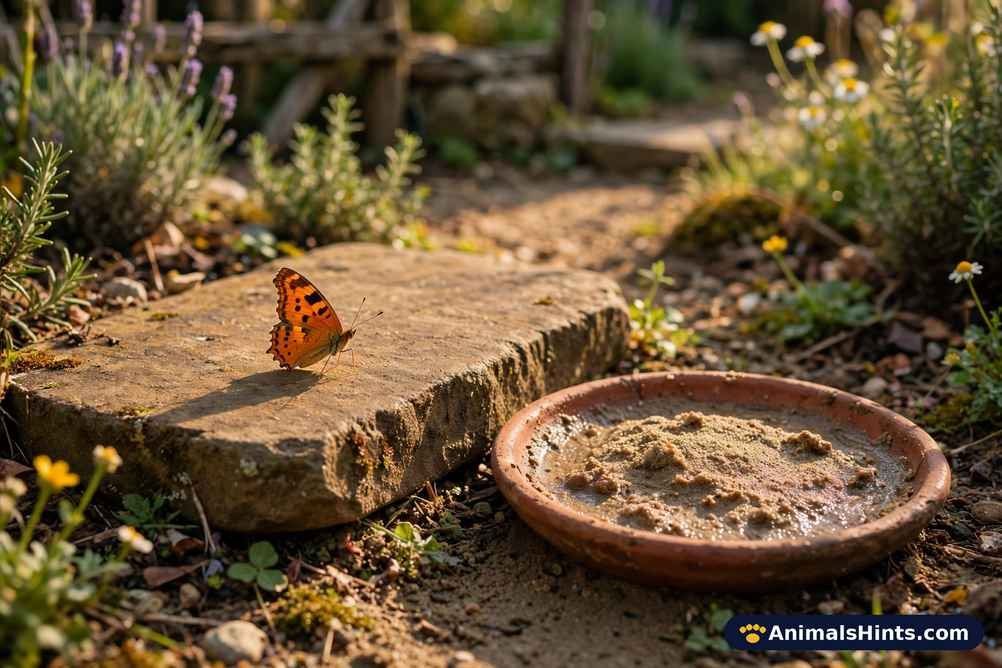
- Offer a better station nearby. If landings keep happening and you would like more of them, the documented lure is a puddling station: a shallow dish of sand and soil, kept damp, set in sun — the garden version of the muddy bank, minerals included. Butterflies cannot bite or sting; there is no defensive risk in hosting one, only the risk of startling it.
- If one is trapped indoors, dim the room’s other lights and open the nearest door or window toward daylight; butterflies navigate toward brightness and will usually find the exit themselves, no handling required.
Final Thoughts
Set the two accounts side by side one last time. The biology: a small, cold-blooded animal with a mineral shortage found salt, warmth and stillness on a large mammal and took what it needed. The tradition: a soul, a sign, a blessing with wings, sorted by colour and landing site into one of the gentlest files in the whole literature of omens. This article has kept both in print because both are true in their own register — the first as fact, the second as something millions of people genuinely believe, and organise real comfort around.
What the encounter asks of you is the same in either register: a moment of stillness, honestly come by. Whether you file it under puddling or under a visit from someone you miss, the butterfly has already delivered the only part nobody disputes — it stopped, it stayed, and for a little while the wild world treated you as a safe place to land.
FAQs
What does it mean when a butterfly lands on you spiritually?
In the traditions that read encounters as signs, a landing is filed as a personal message: transformation under way, a departed loved one’s soul visiting, or luck that chose you specifically. The meanings are beliefs, attributed throughout this page — the animal itself is usually drinking minerals from sweat or resting in warmth.
Is a butterfly landing on you good luck?
By the genre’s near-unanimous verdict, yes — with luck defined as alignment rather than winnings: nature in harmony with you, your direction approved, a quiet moment handed over. No tradition in the record treats a landing as a bad omen.
What does it mean if a butterfly lands on you and stays?
The lore reads duration as emphasis — a stronger message, a calmer sitter, protection posted for a while. The biology matches the observation without the interpretation: a butterfly stays while it is feeding undisturbed, and an unmoving host is, to the insect, a puddle that stays put.
How should I respond when a butterfly lands on me?
Stay still and let it finish. Do not grab or cup it, and never swat — a handled butterfly can shed wing scales it needs, and it cannot bite or sting in any case. If you want more visits, put out a saucer of wet sand somewhere sunny — a homemade version of the muddy puddle banks where the drinking happens.