Monarch Butterfly Spiritual Meaning: What It Means When One Keeps Flying Around You
A monarch crosses your path, circles back, and crosses it again — over the garden gate, around the porch, once more past the same flower bed — and the repetition is what stays with you. The monarch butterfly spiritual meaning tradition has always read that persistence as the point: of all butterflies, this is the one tied to transformation, endurance and word from the other side, and the one that keeps returning is the one people write down.
This guide follows that tradition properly. It works through the thirteen meanings readers look for, what the symbol does in love and in dreaming, and the cultures that built the monarch’s reputation — above all Mexico, where its arrival each autumn is kept as a homecoming of the dead. Every belief below is credited to the tradition that holds it, and the gaps in the record are flagged rather than filled.
The real insect stays in view throughout, because the monarch’s facts outrun most of its folklore: a migration of thousands of miles that no single butterfly completes, a poison borrowed from milkweed, and a winter spent clustered in Mexican fir forests. Where a popular claim could not be checked against a real source, it has been left out.
The Real Monarch Behind the Symbol
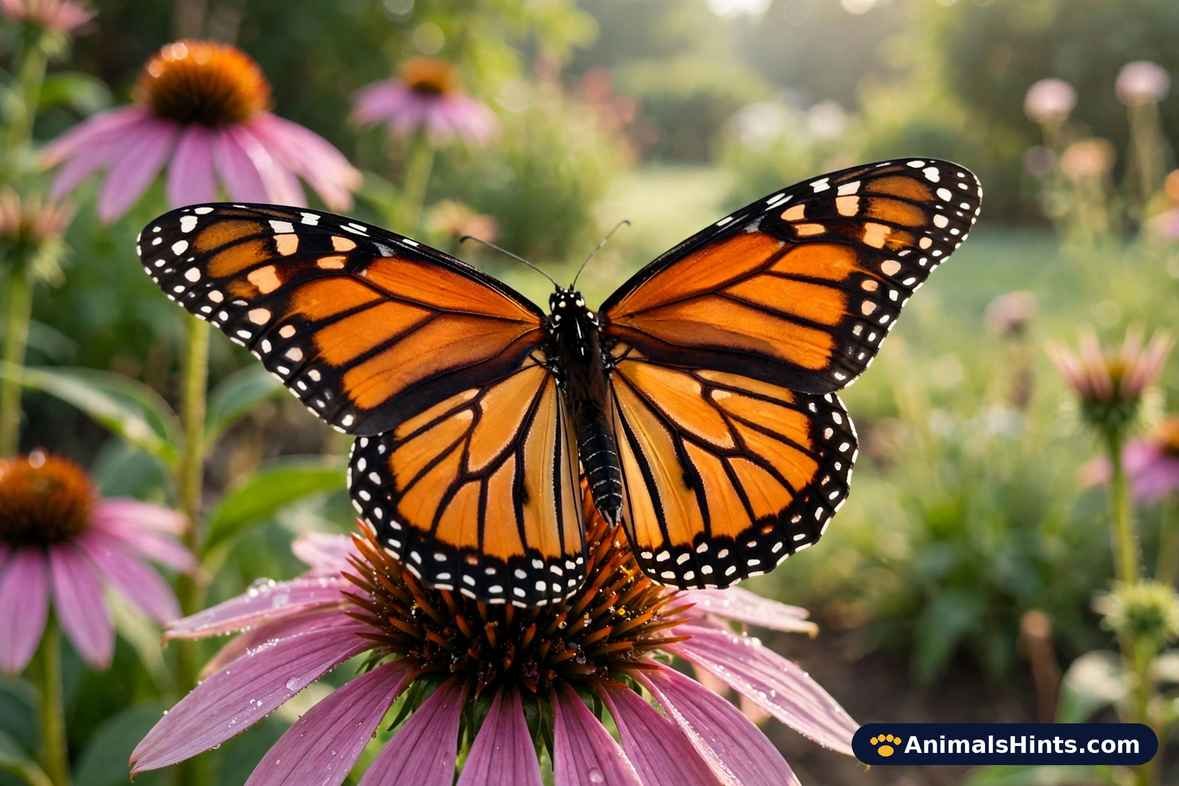
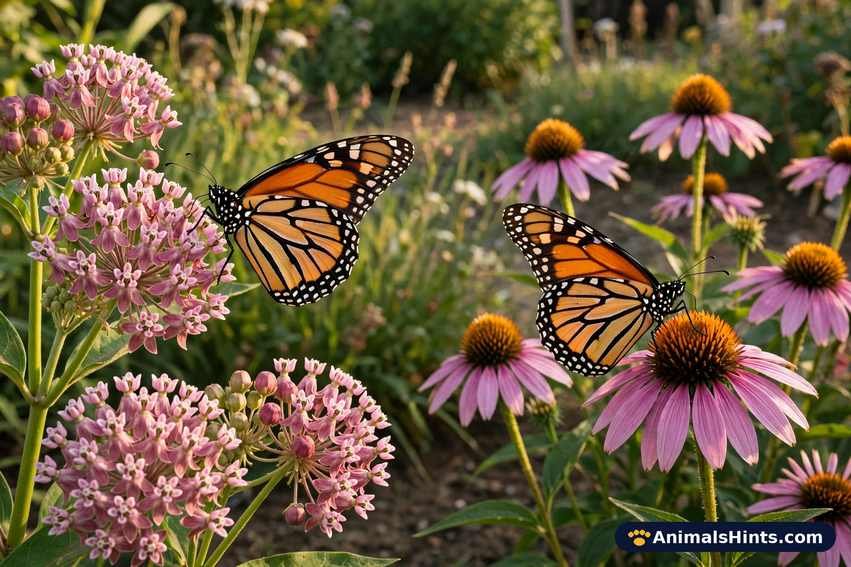
The monarch is Danaus plexippus, a milkweed butterfly in the brush-footed family Nymphalidae, native to the Americas and spread around the world only in the last two centuries. Its wings span 8.9 to 10.2 centimetres (3.5 to 4 inches), and the pattern is unmistakable once it is learned: vivid orange panels cut by thick black veins, wrapped in a wide black border set with a double row of white spots. A male can be told from a female by the black scent spot swelling one of his hindwing veins.
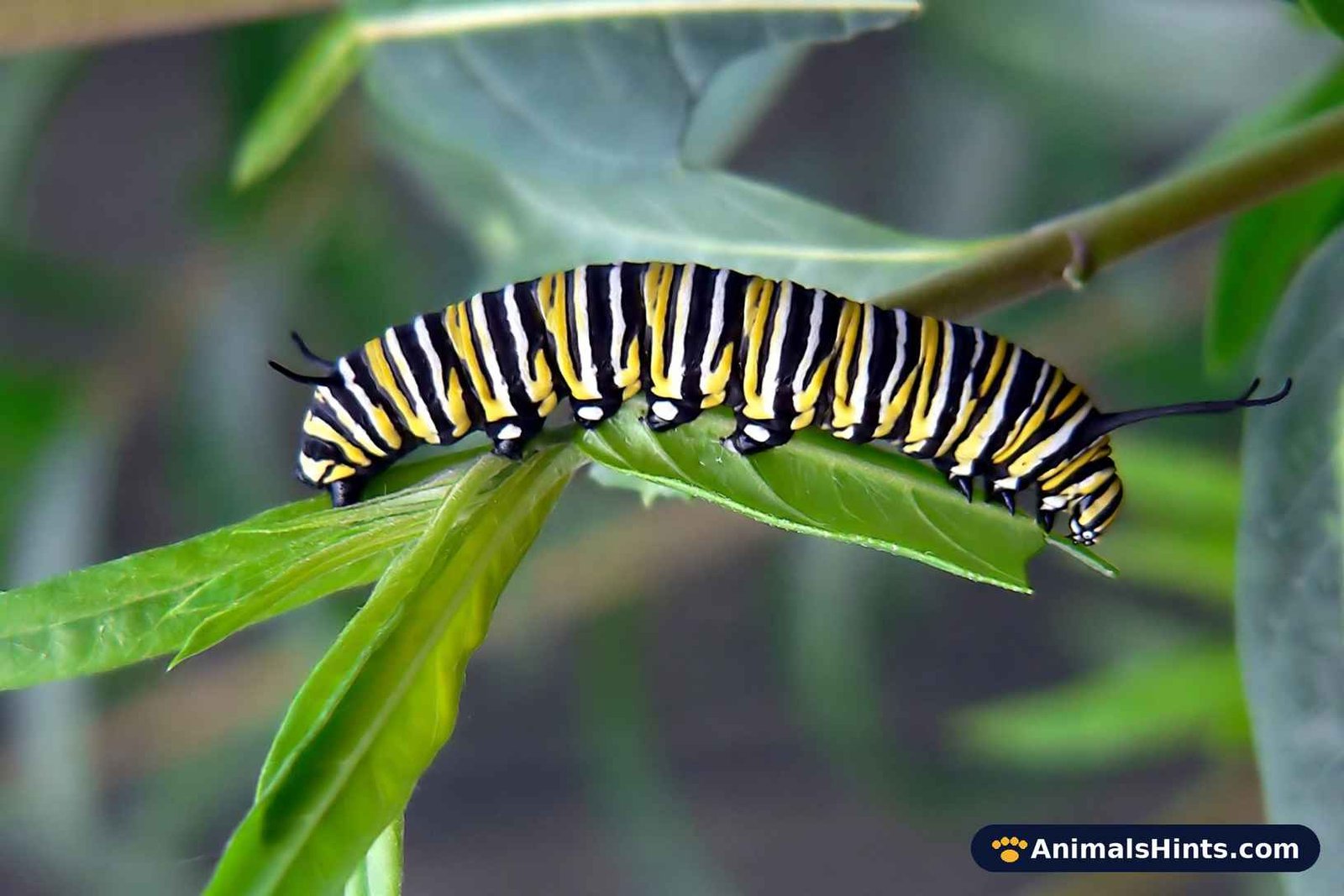
Its caterpillar eats milkweed and nothing else, and the plant is more than food. Milkweed sap carries cardenolides, heart-active compounds of the same chemical family as digitalis, and the caterpillar stores them through metamorphosis into the adult. The result is a butterfly that tastes foul and can sicken a bird that swallows it, advertised honestly in orange — the warning display biologists call aposematism. The protection is real but not total: in the Mexican wintering grounds, black-backed orioles and black-headed grosbeaks have each evolved a way around it.
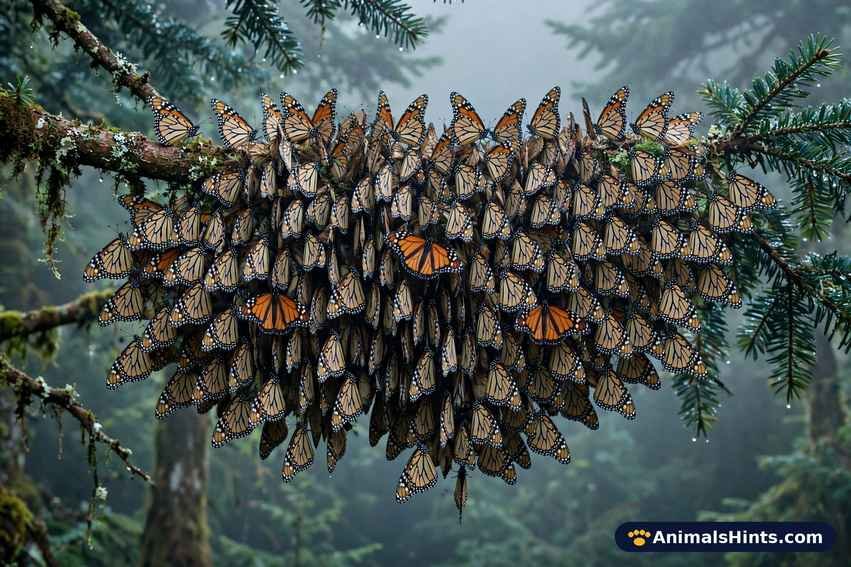
Then comes the journey itself. Monarchs of the eastern population leave the northern United States and southern Canada in late summer and fly between 1,200 and 2,800 miles or more to the oyamel fir forests of Michoacán’s high mountains, where they cluster in winter diapause from the beginning of November to mid-March. No single butterfly makes the round trip. The overwintered generation starts north in spring, and the second, third and fourth generations complete the return through the summer. The autumn generation is built differently, too: where a summer adult lives only a few weeks, a migrant lives for months. Western monarchs run a shorter circuit to overwintering groves on the California coast.
The journey is in trouble, and the record deserves to be stated exactly. The IUCN placed the migratory monarch on its Red List as Endangered in July 2022, then reclassified it as Vulnerable following a 2023 petition; the species as a whole remains Least Concern, so “endangered” is now the outdated shorthand rather than the current listing. Canada listed the monarch as Endangered under its Species at Risk Act in December 2023, and the federal Fish and Wildlife Service followed in December 2024 with a formal proposal to list it as Threatened. The pressures are the familiar ones: milkweed lost from farmland and roadsides, and illegal logging nibbling at the oyamel forests the winter colonies depend on.
What Does a Monarch Butterfly Symbolize?
At its widest, the monarch carries the general butterfly inheritance — the soul, change, the brief bright life — and then adds three things no other butterfly can claim. The first is distance: it is the only butterfly whose symbol is a migration measured in thousands of miles, so it stands for endurance and for journeys completed in stages. The second is return: it comes back, on schedule, to forests and gardens it has never seen, so it stands for homecoming and for the dead who are imagined to travel with it. The third is in its name. In 1874 the entomologist Samuel Hubbard Scudder proposed calling it the monarch because of its size and because, as he put it, it “rules a vast domain” — royalty was built into the insect’s identity from the start.
So the short answer is layered. The monarch symbolizes transformation, because of the chrysalis. It symbolizes endurance, because of the migration. It symbolizes the soul and the returning dead, because of Mexico. And it symbolizes a kind of sovereignty — a small, weightless creature that nonetheless crosses a continent on its own wings and answers to no one.
13 Spiritual Meanings of Seeing Monarch Butterflies
The tradition’s thirteen readings, in the order readers usually meet them. Each is the tradition’s belief, not a fact about the insect — the facts sit in the section above and are remarkable enough on their own.
1. Transformation and Personal Growth
The founding meaning, from which the rest all grow. A creature that begins life crawling and eating ends it flying and migrating is the natural world’s plainest picture of becoming, and the tradition reads a monarch sighting as a marker in your own change: something in you has finished one form and has not yet settled into the next. Growth, in this reading, is not an improvement on the caterpillar — it is a different creature altogether, and the in-between stage is supposed to look like dissolution.
One accuracy note, made once and then left alone: the monarch does not spin a cocoon. Cocoons are a moth habit. The caterpillar sheds its last skin to reveal a chrysalis, a hard case formed from its own body — so the transformation this meaning celebrates happens with nothing woven around it for protection at all, which arguably makes the symbol stronger.
2. Strength and Endurance
A monarch weighs less than a paperclip’s worth of tissue and scale, yet the autumn generation flies up to 2,800 miles on those wings, through weather that grounds larger creatures. The tradition takes the sighting as an emblem of strength of the non-obvious kind: not force, but continuation. Readers in a hard season are the ones who look this meaning up, and the biology backs the comfort honestly — endurance is not a metaphor imposed on this insect; it is the insect’s documented behaviour.
3. Connection Between Life and Afterlife
This is the monarch’s oldest documented layer, and it belongs to central Mexico. In the record kept by the Smithsonian’s Folklife Center, the Indigenous forest peoples of Michoacán and the neighbouring State of Mexico — Purépecha and Mazahua — hold the arriving monarchs in reverence, and their pre-Hispanic folklore treats the migration as the ancestors themselves returning: souls of the dead, come back to visit the living. The butterflies reach those forests as November opens, in the very days when Día de los Muertos is kept, and the two arrivals have been read as one for centuries. The cultures section below gives the record in full.
4. Spiritual Messengers
A messenger reading follows naturally from the afterlife one: if the butterflies carry souls, then a monarch’s arrival can be read as word being carried. Purépecha legend, as the Smithsonian records it, holds that the flapping of the monarchs’ wings relays messages from the afterlife. The same shape of belief appears far from Mexico — Lafcadio Hearn recorded that in Japan a butterfly entering a guest room and perching behind the bamboo screen meant the person you love is coming to visit. Different continents, same idea: the butterfly as a go-between.
5. Symbol of the Soul
Underneath the messenger reading sits the oldest association of all. The ancient Greek word for butterfly, psyche, is also the word for soul and mind; Roman sculpture showed a butterfly leaving the mouth of a dead man, for the soul departing; Diderot’s Encyclopédie cites the butterfly as a symbol of the soul; and in Burmese tradition the leippya, the butterfly, is the soul or consciousness of a person, wandering after death in search of a new body. The monarch, as the most travelled of butterflies, inherits all of this — the soul with the longest journey home.
6. Hope and Renewal
Every spring the colonies break up and fly north, and every year the gardens of two countries are re-colonised by the grandchildren of butterflies that left them. The tradition reads the season’s first monarch as a renewal sign: what winter scattered, spring reassembles. It is one of the few meanings with a calendar attached — it belongs to the year’s first sighting, after months of absence, and its force comes precisely from the wait.
7. Inner Transformation
Where the first meaning is outer change, this one is the hidden kind. For roughly two weeks the chrysalis hangs motionless while, inside, the caterpillar’s body is largely broken down and rebuilt. The tradition uses the monarch for the kind of change that shows nothing on the surface — the wintering migrant in diapause, development suspended, is the same emblem in another season. A sighting, in this reading, counsels patience with a process that looks like nothing happening.
8. Generational Wisdom and Connection
No monarch completes the migration. The butterfly that arrives in Michoacán has never been there; its great-grandparents left. It navigates to the same fir forests its ancestors used — and how the route is carried across generations is, as the Smithsonian puts it, not entirely understood. The tradition reads this as generational connection in its purest form: knowledge handed down without teaching, a family line as a single journey told in chapters. A monarch near a family gathering, a birth or a death is often read through this meaning.
9. Resurrection and New Life
The winter colonies hang in the fir forests like dead leaves for months, barely moving — and then, on a warm late-winter day, they pour off the branches in their millions and fly north to breed. The tradition, and Christian reflection in particular (see the biblical section), reads the arc as resurrection-shaped: the stillness that looked like an ending was a waiting. New life here is the dark season’s sequel, not its opposite.
10. Freedom and Lightness
The monarch answers to no territory in the ordinary sense — its range is a continent, its home is a route. The tradition reads it as freedom’s emblem: unowned, unhurried, crossing borders that exist only on maps. Lightness belongs in the same meaning, because the insect achieves all of it on almost no body at all; the reading for the person who sees one is usually about travelling lighter — carrying less of what the caterpillar stage needed.
11. Ecological Balance and Harmony
The monarch is a thread through a whole community: milkweed feeds its caterpillar, its adults carry nectar visits between coneflowers, asters, goldenrods and Mexican sunflowers, and its poisoned body feeds — carefully, and at a price — a short list of birds. Where monarchs thrive, milkweed-rich habitat is thriving with them, which is why conservationists treat the butterfly as an indicator of the whole system. The tradition’s reading follows the fact: a monarch signals a place in balance, and invites the person who sees it to keep it that way.
12. Joy and Positivity
Not every meaning is solemn. The monarch is also simply the most festive insect in the garden — improbable orange, unhurried flight, an association with summer at full stretch. The tradition keeps a place for reading a monarch as uncomplicated good cheer: a bright day underlined. Readers who resist heavy interpretations of a butterfly sighting usually land here, and the tradition, sensibly, lets them.
13. Guidance and Intuition
The migrant navigates by a sun compass corrected by an internal clock — one of the most studied guidance systems in any insect — and arrives at forests it has never seen. Readers take the sighting as a guidance emblem: trust the instrument you cannot see working. Of the thirteen, this is the reading most often attached to the specific experience in this article’s title — the monarch that keeps crossing your path, as if it were flying a route it knows and you have not seen yet.
Significance in Cultures, Religions, and Mythologies
The monarch’s symbolism is not one tradition but several, layered. They are set out here at the strength the sources support — which means the Mexican record, the only fully monarch-specific one, carries the most detail.
Indigenous and Native American beliefs. Butterfly soul-lore is widespread among the Indigenous peoples of the Americas, and much older than any single tribe’s written record: in ancient Teotihuacan, the butterfly was carved into temples and jewellery and set on incense burners, sometimes with the maw of a jaguar, and some species were held to be the reincarnations of the souls of dead warriors. North of Mexico, butterflies appear in Native traditions as spirit figures and seasonal signs — but the honest position is that a specifically monarch tradition belongs to the peoples of central Mexico, and it is recorded in the next strand rather than borrowed here.
Mexican and Aztec connections. The warrior-soul association persisted from Teotihuacan into the Aztec civilisation, and jaguar-butterfly images survive among the Zapotec and Maya as well. The living monarch tradition, though, is Purépecha and Mazahua. The Smithsonian’s Folklife magazine, recording the culture of the overwintering region, describes how the forest communities there — Purépecha in Michoacán, Mazahua in the State of Mexico — honour the autumn arrivals. In the folklore the magazine preserves, the incoming migration is the ancestors returning from the afterlife; Purépecha legend adds warrior spirits to the company, and hears messages from the dead in the beating of their wings. Because the arrival falls at the start of November, the monarchs are woven into the Day of the Dead — in Spanish, Día de los Muertos — itself: monarch imagery sits on the ofrendas, the home altars, between the candles, the sugar skulls and the marigolds. For centuries, in the Smithsonian’s phrase, Mexico’s monarchs have served as a symbol connecting the living to the dead.
Eastern traditions and symbolism. The monarch itself is an American insect, so Eastern lore attaches to butterflies as a family — and the soul association is there too. For Japan, Hearn’s writings preserve the belief that a butterfly personifies a person’s soul — living, dying or already dead. Japanese tradition also knew the darker edge of the symbol: a vast swarm of butterflies appearing in Kyoto as Taira no Masakado prepared his revolt was taken as a portent of coming evil. The Eastern strand, in other words, agrees with the Western one on the essential point — a butterfly is a soul travelling — while adding a wariness of butterflies in overwhelming numbers.
Western symbolism and Christian influence. The West begins with psyche, the Greek word that means both soul and butterfly, and keeps the association running through Roman sculpture and Enlightenment encyclopaedias. Christianity’s contribution was to fold the insect into its calendar and its hope: the festival as now kept is a syncretic blend of pre-Hispanic practice and the Catholic feasts of All Saints and All Souls, and the monarch’s older spiritual symbolism has survived intact inside it. Western Christian reflection also made the metamorphosis a standing illustration of resurrection teaching — a reading handled, with its limits stated, in the biblical section below.
What Does It Mean When a Monarch Butterfly Lands on You?
Of all monarch experiences, this is the one the tradition treats as personal. A butterfly that merely passes is a sign; one that lands, the reading goes, is a delivery — the messenger meaning with your name on it. In the Mexican record it is read as the visit itself: the ancestor’s soul not just arriving in the forest but pausing on you. Hearn’s Japanese guest-room butterfly is the same shape of belief, half a world away — the loved one is coming, and the butterfly has come ahead to say so. The site’s wider guide — a butterfly lands on you — sets out how that reading is shared across species.
The natural explanation sits comfortably beside it. Monarchs take moisture and minerals from damp soil and wet gravel — the behaviour called mud-puddling — and a warm, slightly salty human being is, to a butterfly, a reasonable place to stop; a resting monarch may also simply be basking, or sheltering from wind. None of that cancels the moment’s effect, and the tradition has never required it to. Practical notes only: keep still, enjoy it, and let the butterfly leave in its own time. Never close a hand on one — the wings are scaled, fragile, and easily damaged.
Why a Monarch Butterfly Keeps Flying Around You
This is the experience the whole topic is named for, and it deserves its own answer, because the natural one is more interesting than most people expect. A monarch that keeps circling one spot is usually working, not wandering. Male monarchs patrol: the standard field-guide account describes males patrolling all day over open corridors, flower patches and milkweed patches, and a patrolling male rises to investigate almost any passing flying object — which means a person crossing his patch gets investigated, circled, and often re-investigated on the next pass. Females fly a different pattern, quartering low over milkweed as they test leaves for egg-laying. Add a third ingredient — a nectar circuit, the same good flowers revisited in sequence — and one butterfly can cross the same garden a dozen times in an hour without anything unusual occurring at all.
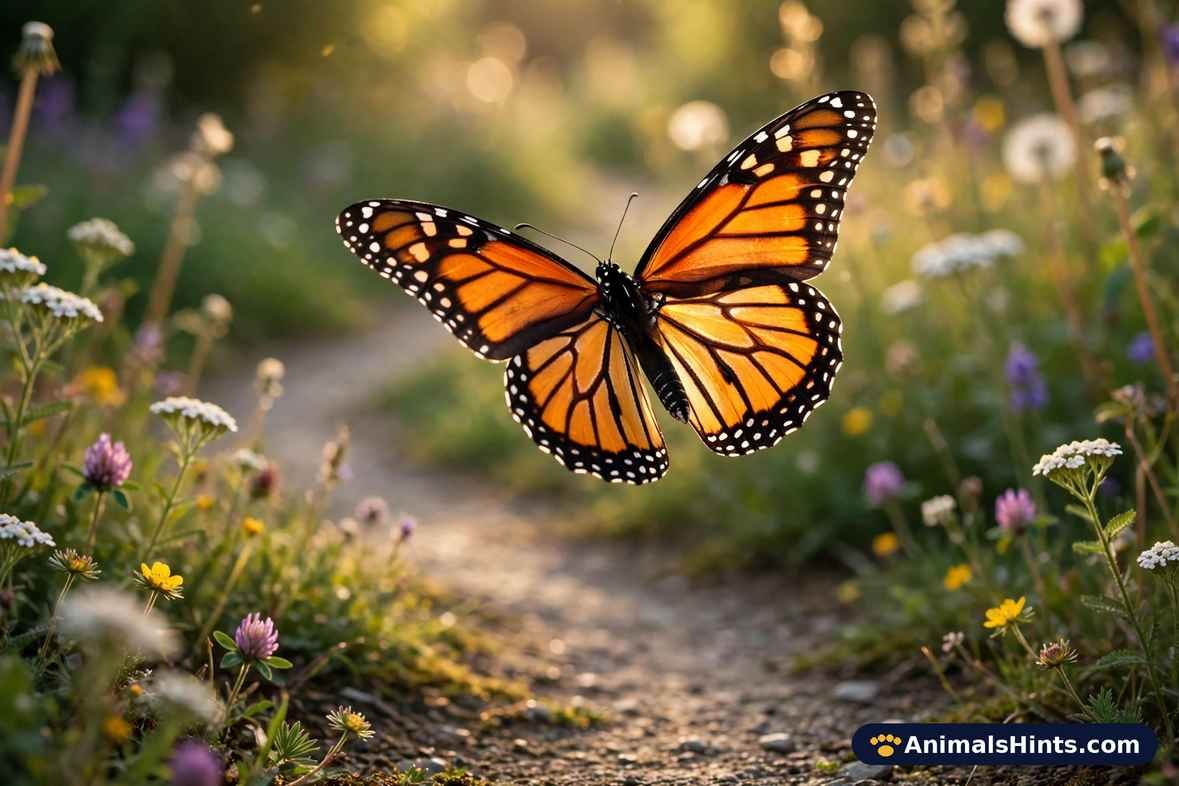
You may also simply be standing in the good place: a sunny, sheltered, flower-rich spot is monarch habitat, and in migration season a resting or refuelling traveller may work one warm corner for a long while. The tradition’s reading of the experience builds on the persistence rather than the mechanism: a message that waits, a change still circling before it lands, a visitor who comes back to check. Whether you file it under patrol behaviour or under meaning, the practical response is the same — the patch is worth keeping. The garden section below shows how.
Monarch Butterfly Symbolism in Love, Relationships, and Twin Flame
In love, the tradition reaches for the two images the monarch does best. The first is the pair in season: courting monarchs spiral together over the summer flowers — love in its light form: attraction, courtship, the beginning of things. The second image is deeper, and it is the migration relay. No monarch completes the journey; the one that leaves is never the one that arrives, and yet the arrival happens. Read as a love emblem, that is commitment across distance and across time — a bond maintained by handing it forward, through seasons when the partners are far apart and circumstances have changed entirely. Long-distance couples and families separated by migration of the human kind have made this meaning their own, for obvious reasons.
The twin flame reading should be labelled for what it is: twin flame is modern, new-age vocabulary, not an old tradition, and the monarch has been adopted into it recently. Writers in that frame point to the wings — two mirrored halves that are one creature — and to the relay: two lines of travellers who never meet yet complete one journey. It is a genuinely fitting image; it is simply a new one, and this guide marks it as such rather than dressing it as folklore.
How the Monarch Butterfly’s Meaning Differs From Other Butterflies
Colour carries most butterflies’ meanings; the monarch’s is carried by a journey. The differences, against the rest of the family covered on this site:
- The blue butterfly trades in calm, rarity and wishes — a still-water meaning. The monarch shares its preciousness but adds motion: not a wish held, but a wish travelling.
- A white butterfly stands for purity, cleansing and new beginnings. The monarch’s new beginning is heavier — it comes at the end of a migration and a winter, not at the start of a spring morning.
- A green butterfly is the luck-and-growth reading, tied to living colour. The monarch’s growth is the chrysalis kind: total, structural, and once-only.
- The orange butterfly is the monarch’s closest colour-kin — creativity, warmth and encouragement without the journey attached. The monarch is what the orange meaning becomes when it is given a continent to cross.
- A brown butterfly belongs to grounding, home and the ancestors close at hand. The monarch handles the ancestors too, but at the far end of a 2,000-mile return rather than at the hearth.
- The purple butterfly shares the monarch’s royalty, but purple’s is a royalty of colour — rare pigment, ceremony, the crown as object. The monarch’s royalty is a title earned by range and endurance.
- Passion and warning belong to the red butterfly; the monarch’s warning is chemical and honest rather than passionate, and its red runs to orange.
- The blue and black butterfly pairs mystery with depth of colour; royal blue is the blue family’s own crowned form. Against both, the monarch reads plainer and travels further.
- The closest match of all is an orange and black butterfly — which, in most North American gardens, is not a comparison at all: it is very often this same species, described by its colours by someone who has not yet learned its name.
Dream About Monarch Butterflies
Dream lore reads the monarch through the same symbols as waking life, with the dream’s own grammar. The common forms:
- A monarch flying free. Dream lore’s plainest good sign: a change completing itself, or a wish finally in motion after a long still period.
- A monarch lands on you in the dream. The messenger reading at full strength — dream lore treats a landed butterfly as a visit, most often connected with someone loved and lost, or with news that is on its way.
- A caterpillar, or a green chrysalis. The change is real but not finished: the dream is set in the hidden stage, and the lore counsels patience rather than forcing.
- A tree covered in monarchs. The winter colonies in dream form — read as ancestors gathered, community, belonging; a comforting image in the lore more often than an ominous one.
- A monarch always just out of reach, migrating. A long goal and the discipline of stages: the dream restates the relay — you are one generation of the journey, not the whole of it.
- A dead or struggling monarch. Dream lore reads this as a change resisted, or grief being carried — gently, and as a prompt to tend to it, not as a prediction of anything.
Biblical Meanings of a Monarch Butterfly
The honest starting point is a double negative: no butterfly is named anywhere in Scripture, and the monarch is a species of the Americas, unknown to the biblical world. There is no biblical monarch to look up. What Christian readers do — and it is a long-standing devotional habit rather than a doctrine — is bring the insect to two transformation texts and read it by their light.
One correction first, because the verse matters: this page’s competitor prints Romans 12:2 in a shortened modern rendering. The King James text, in full, runs: “And be not conformed to this world: but be ye transformed by the renewing of your mind, that ye may prove what is that good, and acceptable, and perfect, will of God.” The word “transformed” translates the Greek metamorphoo — the same root that gives English its word metamorphosis — which is why this verse, of all verses, attached itself to the butterfly.
The companion text is the new-creature promise of 2 Corinthians 5:17 (KJV): “Therefore if any man be in Christ, he is a new creature: old things are passed away; behold, all things are become new.” Read beside the chrysalis, the pairing explains itself, and it is the whole of the monarch’s biblical meaning in practice: the insect preaches nothing, but generations of readers have found their own hope accurately pictured by it. Claims beyond that — a hidden biblical code in the migration, a prophecy in the wing pattern — are not in the text and are not made here.
How to Welcome Monarch Butterflies to Your Garden
The surest spiritual practice this article can offer is a milkweed patch. Grow milkweed — it is the caterpillar’s only food — and pick a kind native to your region. One caution from the research record: tropical milkweed, where it grows year-round in warm climates, can hold monarchs back from migrating and lets the debilitating OE parasite build up; where it does not die back in winter, cut it to the ground in autumn, or plant natives instead. You will find the first striped caterpillars within a season or two, and the caterpillar stage repays meeting at close range, symbolism and all.
Then feed the adults in sequence: coneflowers, asters, goldenrods and Mexican sunflower are among the recorded favourites, and the late-flowering asters matter most, because the autumn migration runs on them. Skip insecticides entirely — a garden sprayed for other insects is a trap for this one. Add a shallow dish of damp sand for minerals, keep a sunny corner sheltered from wind, and leave some stems standing into spring. One thing not to do: buy-and-release. Captive-raised monarchs reach the Mexican forests at markedly lower rates than wild ones; a planted garden outperforms a released box every time, and it keeps helping after you have stopped watching.
Final Thoughts
The monarch carries the heaviest symbolism of any butterfly on this site, and it has earned every ounce of it honestly. No other species arrives trailing a documented migration of thousands of miles, a poison borrowed from its food plant, a winter spent in forests where its arrival is kept as the homecoming of the dead, and a name that means king. The traditions that read meanings into it — the Purépecha and Mazahua record above all — were not inventing a symbol; they were describing, in their own vocabulary, the most remarkable insect they knew. Treat a sighting accordingly: as a wonder first, a meaning second, and an invitation to plant milkweed always.
One last kindness from the field guide, for the next time an orange butterfly circles your garden: the monarch’s famous double, the viceroy butterfly, wears the same orange and black with a single extra black line ruled across its hindwings — and it is no fraud. Older books call it a copycat that borrows the monarch’s protection, but feeding experiments showed birds find the viceroy just as unpleasant; the two species share one honest warning between them. Whichever of the pair has come to circle you, the welcome is the same.
FAQs
What does a monarch butterfly symbolize spiritually?
Transformation, endurance and the soul: the chrysalis gives it change, the migration gives it strength across generations, and Mexican tradition gives it the returning dead. It is also, by its very name, a royalty symbol.
What is the significance of the monarch butterfly in Native American traditions?
Butterfly soul-lore is old and widespread in the Americas, but the documented monarch-specific tradition belongs to central Mexico: the Purépecha and Mazahua peoples revere the arriving monarchs as the souls of ancestors, a belief woven into Día de los Muertos.
What does it mean when you see a monarch butterfly?
Readers of the tradition take it as change under way, endurance rewarded, or — especially in autumn — a visiting presence from the other side. Naturally, it usually means you are standing in good monarch habitat, in season, which the tradition has always counted as part of the point.
How does the monarch butterfly’s life cycle relate to spirituality?
Directly: the four-stage metamorphosis is the tradition’s master image of transformation, and the migration adds a second one — a journey no individual completes, finished by descendants. Between the chrysalis and the relay, the life cycle supplies nearly every meaning in this guide.