Egg Spiritual Meaning: 10 Readings, the Counted Text and the Egg Itself
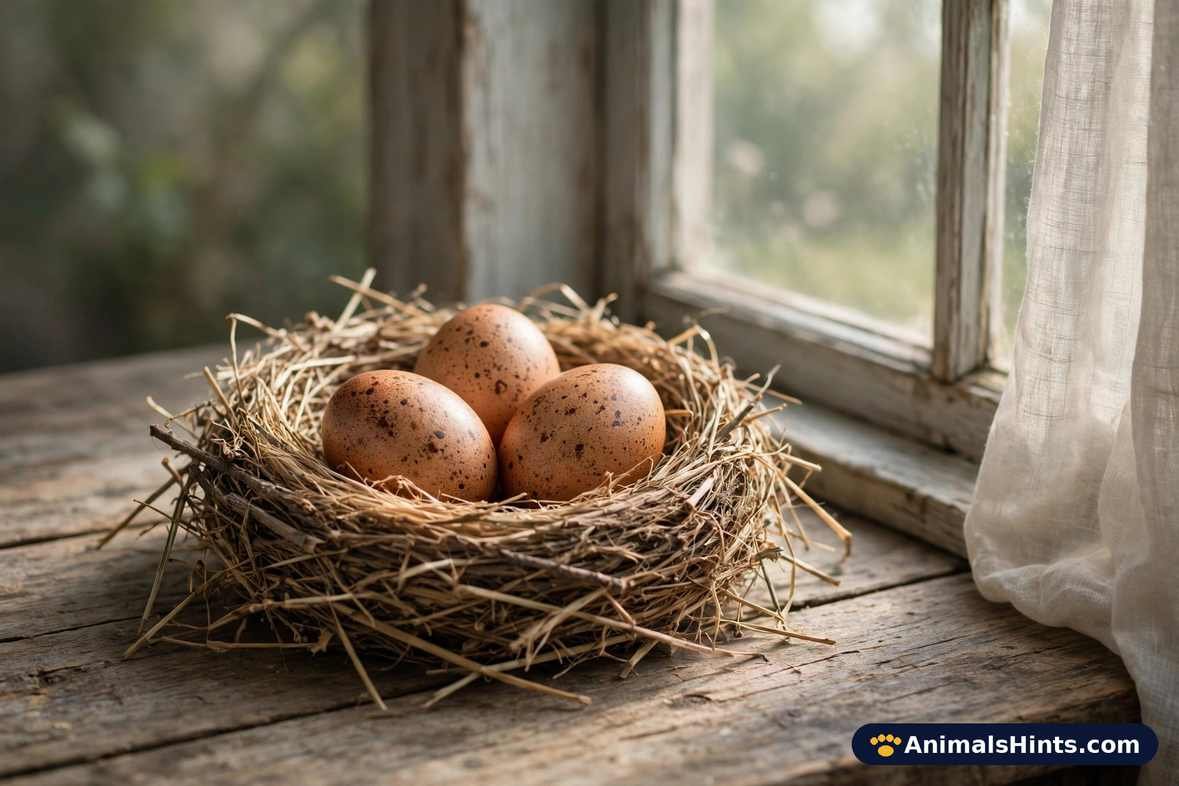
The egg spiritual meaning most pages repeat is simple: an egg stands for new life, for potential waiting inside a shell, for a beginning that has not opened yet. That reading is old, widespread and easy to understand — a sealed shell really does hold a life that is not visible.
This article takes the ten traditional readings one at a time, then sets beside them the records that can be checked at all: what an egg is made of, why it is shaped the way it is, and what the oldest text in this conversation — the Bible — says when the word is counted rather than assumed.
The counted result is bracing. Across the whole King James text the egg family appears nine times, and not one of those nine mentions reads an egg as a sign, a warning or a private message. What those mentions do say is stranger and better than the folklore later piled on them.
What Does an Egg Symbolize Spiritually?
On the competitor page the egg is called a universal emblem of new life, rebirth and creation, and the gloss runs in layers: the shell as protection and the boundary of a safe inner world; the white as purity and clarity; the yolk as the sun, warmth and a hidden core of energy. None of that is quoted from any ancient source on his page — it is presented as the settled reading of the symbol, and it is the reading most modern pages share.
The shape itself does part of the persuading. An egg has no corners and no visible seam; it looks finished and self-sufficient, and his page leans on that — a small, complete world that carries everything a life needs inside one smooth wall. As a piece of visual reasoning it works. As a claim about what eggs meant to the people who first symbolised them, it needs the older record — which is what the cultural and biblical sections below are for.

What an Egg Actually Is: Shell, White and Yolk
Start with the wall. A hen’s eggshell is 95 to 97 percent calcium carbonate crystals, grown inside a framework of protein — closer to a piece of engineered ceramic than to a piece of skin. It is pierced by roughly seven thousand to seventeen thousand microscopic pores, and its outermost skin, the cuticle or bloom, seals the surface against bacteria and dust while letting gases pass. The shell is strong along its curve and weak against a point — which is why a chick can break out from inside while the whole egg survives being sat on.
The shape has a measured explanation. In 2017 a team led by Mary Caswell Stoddard at Princeton analysed 49,175 eggs from about 1,400 bird species and found that how pointed and how stretched an egg is tracks the mother’s flight strength — her hand-wing index — more than it tracks nest type or clutch size. Strong fliers lay more elongated, asymmetric eggs; the room inside a streamlined body is the constraint. The mystique of the perfect oval survives the paper, but the paper gives the oval a cause.
Inside, the white — the albumen — is about nine-tenths water and one-tenth protein, ovalbumin making up just over half of that protein; it cushions the embryo and feeds it. The yolk is the richer store, the nutrient reserve the chick is built from, held in the middle of the white by two twisted cords, the chalazae. Its colour is diet, not destiny: the yellow comes from lutein and zeaxanthin, pigments in the hen’s feed, and a deeper orange yolk does not reliably mean a more nutritious egg.
Nothing in that chemistry mentions a soul, a sign or a season of life — and yet the egg’s double life as fact and symbol starts exactly here, in a package that hides its contents completely. Other beginnings on this site hide the same way: the caterpillar spiritual meanings shelf opens with a creature whose whole transformation is likewise prepared out of sight, inside a case the eye cannot read.

10 Spiritual Meanings of Eggs
These are the competitor’s ten headings, carried in his order. Each reading is given the weight his page gives it — as a traditional interpretation, not a finding — and anything in his telling that reaches for a fact is checked where the fact exists.
1. Fertility and New Beginnings
The foundation reading, and the only one with real biology underneath it: an egg is quite literally where a bird’s or reptile’s new life starts, so its use as an emblem of fertility and fresh starts needs no invention. His page ties it to spring and to the wish for growth in a life or a project; the tie is a modern devotional habit, but the emblem itself is as old as farming.
2. Transformation
His second reading follows the first: what enters the shell is not what leaves it, so the egg becomes a picture of inner change — potential on one side, a new form on the other. The biology agrees with the picture more than with most symbols: the contents of a fertilised egg are reorganised wholesale before hatching. Read as an encouragement to patience during change, the reading is harmless; read as a promise, it goes past anything the shell can certify.
3. Balance and Harmony
The yolk centred in the white gives his page its balance reading: two unlike parts held in proportion inside one whole. The anatomy is real — the chalazae do hold the yolk centred — but the step from anatomy to a doctrine of life-balance is the reader’s, not the egg’s. His page names no tradition for it, and the record fetched for this article holds none either; the reading is entered here as a modern gloss, attributed.
4. Divine Feminine Energy
His page connects the egg to goddess traditions, to Isis and to Aphrodite, as a sign of the creative feminine. The fetched record does carry a female power at the egg’s oldest story — the Finnish world egg breaks on the knee of Ilmatar, a goddess of the air — so the association has at least one genuinely ancient root. The wider claim, that the egg is a standard emblem of the divine feminine across traditions, is broader than the fetched sources support, and it is printed at his strength, not the record’s.
5. Rebirth and Resurrection
The Easter reading — the one carrying a documented church history: eggs were forbidden food during Holy Week in the medieval church while the hens kept laying, so the week’s eggs were set apart, decorated and eaten at the feast — the returning food made a ready picture of the empty tomb. Britannica dates the first record of decorated Easter eggs to the 13th century. The picture is a teaching image the church adopted, not a claim the Gospels make — the counted text below is clear that no egg appears anywhere near the resurrection accounts.
6. Creation and the Origin of Life
The world egg is the strongest documented strand on his whole page: creation-from-an-egg stories are recorded across unconnected cultures — the golden embryo of the Rigveda, the egg of Pangu in China, the eggs that break on Ilmatar’s knee in the Kalevala, the cosmic egg of Egypt’s Hermopolitan tradition. His telling of it is looser than the record, but the record itself is real, and the cultural section below gives it in sourced form.
7. Spiritual Awakening
His seventh reading turns the hatch into a metaphor for waking up: the chick breaks a boundary, so the sleeper breaks an old awareness. It is a preacher’s picture rather than a tradition — no source is named for it on his page, and the fetched record holds no doctrine of awakening-by-egg. It is printed as his reading, on his authority alone.
8. Vitality and Life Force
The egg as concentrated nourishment: a whole animal’s first food supply in a palm-sized package. His page reads that density as life force. The nutritional density is real and measurable; the step to a spiritual force is the symbolic habit this whole article documents. The two registers should not be merged, and his page does not separate them — this article does.
9. Symbol of Wholeness and Unity
The unbroken shell as a picture of completeness: one thing, undivided, containing its unlike parts in peace. It pairs with the balance reading above and shares its footing — a true observation about the object’s form, extended into a claim about the reader’s life. As form-criticism it is accurate; as doctrine it is unattributed, and it is filed that way.
10. Chaos and Prima Materia
His last reading is the alchemical one: the egg as prima materia, the unformed first stuff from which ordered things are made, kin to the chaos that precedes creation in the world-egg stories. Of his ten, this is the one whose ancestry is genuinely old on both ends — the cosmogonies really do start the world as an undivided egg — though the alchemical vocabulary is a later layer, and his page does not separate the two.
Symbolic Meanings of Dropping or Breaking Eggs
His page reads a dropped egg three ways: as lost potential, as a warning to handle fragile plans with care, and as a forced new beginning — the break that releases what the shell was holding. All three are the modern symbolic habit working on an accident; no source is named for any of them, and the fetched record offers none. A dropped egg in the older texts is not an omen either — it is breakfast, lost.
His counsel for the moment is to pause over whatever in your life is fragile, and that is reasonable advice in itself. It is not, though, a reading with a pedigree. The one genuinely documented egg-breaking custom in the fetched record runs the other way: eggs broken deliberately, in celebration — the decorated eggs of Easter cracked open at the feast, the red eggs of a Chinese baby’s first month given to guests to eat. In the record, breaking an egg is a party, not a portent.
Dream Interpretations of Seeing Eggs in Dreams
His survey ends with five dream scenes, carried below in his order. His readings are stated in each case at his strength; the bound that applies to all five is set at the end of the section.
Boiled Egg
His reading: nourishment taken in and strength gathered — a cooked egg as the sign of something made ready. Dream books have graded cooked food for two thousand years, but no classical dream-book entry for a boiled egg was fetched for this article. None is invented here.
Buying Eggs
His reading: investment in a future — resources laid down now for a beginning later. It is the fertility reading wearing a shopkeeper’s apron, and it shares that reading’s footing exactly: a modern gloss, attributed.
Receiving Eggs
His reading: a gift of potential — blessing or opportunity arriving from outside yourself. The cultural record does hold eggs as gifts, literally: red eggs handed to guests at a Chinese full-month celebration, decorated eggs exchanged at Easter. The dream version borrows the custom’s warmth; the custom itself is documented, the dream code is not.
Eating Eggs
His reading: absorbing new strength, taking the symbol’s nourishment into yourself. In the counted text, the one egg-eating scene is a simile about tastelessness (Job 6:6, quoted in the audit below) — a reminder of how far the modern dream code has drifted from the oldest written uses of the egg.
Egg Yolk
His reading: the golden centre as wealth, joy and the heart of a matter. The colour reading leans on the sun; the chemistry leans on the hen’s dinner — lutein and zeaxanthin from her feed, per the anatomy section above. Both can be true in their own registers; only one of them is about the egg.
The bound, stated once for all five: the dream research this site has fetched before treats dreams as continuous with waking concerns, not as coded messages from outside — recurrent-dream studies (Zadra and colleagues, 2006) find threat and preoccupation, not prophecy — and no fetched study grades egg dreams at all. His five readings are a folk code, and they are printed as one.
What Does the Bible Say About Eggs?
His page’s Bible section makes three moves: eggs as emblems of fresh life and divine provision; the serpent’s eggs of Isaiah 59:5 read as a warning about harmful plans; and Jesus’s egg in Luke 11:12 read as a picture of the Father’s good gifts. Two of those three moves rest on real verses, quoted exactly in the audit below — Isaiah’s eggs are indeed a warning, and Luke’s egg is indeed about a father’s good giving. The first move is the one the text does not make: no verse in the counted record calls an egg a symbol of new life. The audit follows.
What the Bible Actually Records About Eggs: Nine Mentions, and None of Them an Omen
The census was script-counted over the full King James text for this article: egg 2 · eggs 7 · egg’s 0 · egges 0 — nine mentions in total. The instrument is the run’s standard one and its controls reproduced exactly: white 75 · yellow 4 · grey 1 · gray 5 · dream 74. Related words were counted too: shell 0 · shells 0 · yolk 0 · hatch 2 · nest 15 · nests 4. The Bible has no word-use for the parts of an egg at all — no shell, no yolk — which is itself a measure of how little the egg figures in it.
Walk the nine. A mercy law: “If a bird’s nest chance to be before thee in the way in any tree, or on the ground, whether they be young ones, or eggs, and the dam sitting upon the young, or upon the eggs, thou shalt not take the dam with the young” (Deuteronomy 22:6) — the eggs matter because the mother does; take the eggs, spare her, “that it may be well with thee”. Natural history inside God’s own whirlwind speech: the ostrich “leaveth her eggs in the earth, and warmeth them in dust” (Job 39:14), a study in heedlessness, not holiness. A conquest simile: the invader gathers a nest of abandoned eggs as easily as spoil (Isaiah 10:14).
A wickedness simile, twice in one verse: “They hatch the cockatrice’ egg, and weave the spider’s web: he that eateth of their eggs dieth, and that which is crushed breaketh out into a viper” (Isaiah 59:5). And an ill-gotten-gains simile: “As the partridge sitteth on eggs, and hatcheth them not; so he that getteth riches, and not by right, shall leave them in the midst of his days, and at his end shall be a fool” (Jeremiah 17:11). In every case the egg is an illustration borrowed from farm and field — the meaning rides on the comparison, never on the egg.
The two singular mentions are the famous ones. Job, reaching for the flattest taste he knows: “Can that which is unsavoury be eaten without salt? or is there any taste in the white of an egg?” (Job 6:6). And Jesus, teaching prayer: “If a son shall ask bread of any of you that is a father, will he give him a stone? or if he ask a fish, will he for a fish give him a serpent? Or if he shall ask an egg, will he offer him a scorpion?” (Luke 11:12). The egg’s role in both is the same: an ordinary, harmless, everyday good — the opposite of a portent.
The word hatch appears twice, both times in Isaiah, both already counted inside the similes above. And that is the whole record. No verse assigns an egg a spiritual meaning; no dream in the text involves an egg; no prophet, priest or apostle reads one. The resurrection-egg symbolism his page assumes is real but later — a tradition the church built on the Easter egg centuries after the text closed, documented in the cultural section below. Scripture’s egg is food, spoil, simile and a father’s kindness. The omen was added by us.
Religious and Cultural Significance
The world egg is documented across unconnected traditions, and the fetched record (Wikipedia’s “World egg” survey, read in full) is specific: the motif is a cosmic egg from which the universe, or a first god, hatches. In the Rigveda the golden embryo, Hiranyagarbha, floats in the waters before creation; in the Chinese telling, the giant Pangu forms inside an egg and, when it opens after eighteen thousand years, its heavy parts sink to earth and its light parts rise to heaven; in Finland’s Kalevala a pochard lays her eggs on the knee of Ilmatar, and when they break, the fragments become earth and sky, the yolk the sun and the white the moon; Egypt’s Hermopolitan tradition likewise begins from a cosmic egg. His page’s summary — that “the shell became the sky and the yolk the sun” — matches the Kalevala fragments closely enough to show where his telling comes from, though he names none of it.
The Easter egg’s record is narrower and firmer (Britannica, fetched): the egg was already an ancient emblem of new life, the church adopted it for the Resurrection, and decorated Easter eggs are first recorded in the 13th century — because eggs were forbidden during Holy Week while the hens kept laying, the week’s eggs were specially identified, decorated, and eaten when the fast broke. Ukraine’s pysanky and the Orthodox custom of exchanging eggs at Easter continue the same adoption. What the record does not show is the egg symbolism coming from the resurrection narratives themselves; it comes from the calendar of fasting.
China’s red eggs are documented at the baby’s full-month celebration — the Man Yue, or “red egg and ginger party”, recorded in university folklore archives among many sources: hard-boiled eggs dyed red, for joy and luck, given to guests a month after the birth, in an era when surviving the first month was itself the achievement being celebrated. His page extends the custom to weddings as well; the fetched record documents the birth custom firmly and the wedding use only at his strength, so the extension is printed as his. His remaining cultural claims — egg-shaped tombs in ancient Egypt, the egg in Hindu ritual beyond the Rigveda’s golden embryo — were not carried by any fetched source and are filed in the gaps, not repeated as findings.

The Egg at Full Stretch: Two Thousand a Day, and a Nest That Decides Sex
If an egg can bear a meaning anywhere in nature, it is at the extremes. A healthy queen bee at the spring peak lays on the order of fifteen hundred to two thousand eggs a day — a day’s laying that can outweigh her own body — and every bee in a colony of tens of thousands starts as one of them. The queen bee page on this site is devoted to the layer; the figure here is the layer’s output, and it needs no symbolism to astonish.
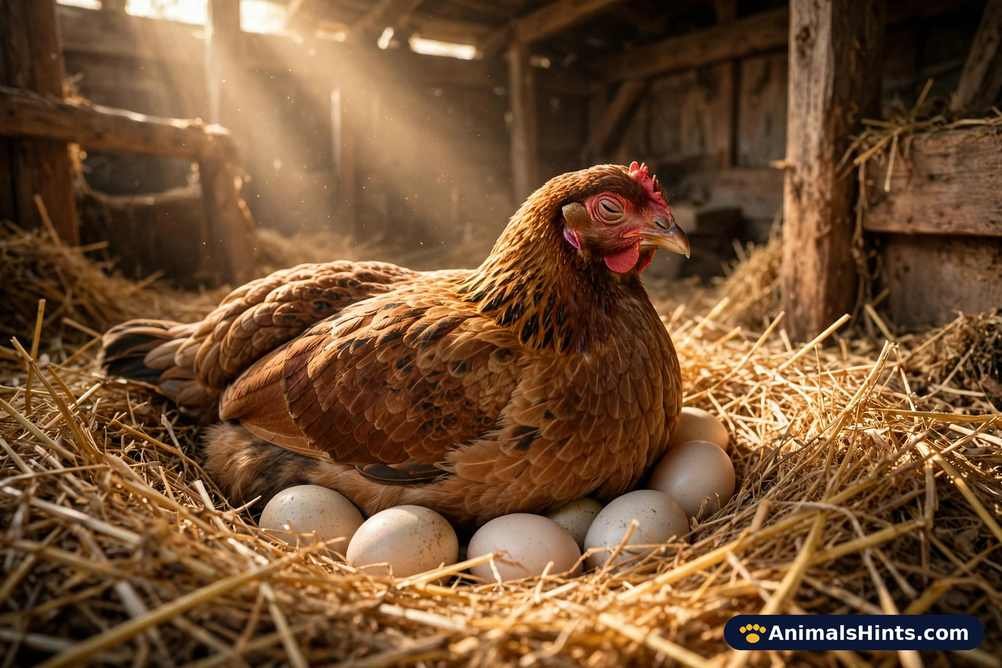
At the other extreme, an American alligator lays twenty to fifty white eggs, each about the size of a goose egg, in a mound of vegetation whose slow rotting warms them for some sixty-five days — and the warmth decides the family: nests that run cool, or very hot, hatch mostly females, while the narrow band in between hatches mostly males. The baby alligator dream audit elsewhere on this site meets the animal in dreams; in the waking record its eggs are a thermostat with a species riding on it.
Two thousand a day from an insect; a sex decided by a degree or two in a composting nest. The real eggs outrun the symbol without trying — which is the honest ground on which the symbol should be read: as human meaning laid over a genuinely remarkable object, not as a message the object is sending.
An Omen, a Breakfast, or a Beginning? The Honest Answer
Three verdicts, one for each register this article has kept apart. As an omen, the egg fails its audit: the counted text gives it nine mentions and no meanings, the classical shelves consulted across this run hold no egg code, and the dream research fetched for this site finds preoccupation, not prophecy, in the night’s imagery. Anyone who tells you a cracked egg forecasts your season is selling you a code that no old book contains.
As a symbol, it is legitimate and often beautiful — the world egg is a real inheritance from at least four unconnected cultures, the Easter egg is a documented seven-hundred-year-old teaching picture, and the red eggs of a baby’s first month are still being dyed. Symbols are how cultures carry meanings; the discipline is only to keep the label on: this is ours, laid on the egg, not the egg’s, laid on us.
And as an object, it needs no help: a ceramic-strong shell you can sit on but a chick can break, a shape fitted by flight itself, a food store so complete it builds a bird. Read the ten meanings above as the first register — human, traditional, attributed — and the article has done its work.
Final Thoughts
The egg earns its place on this site’s shelf of signs the same way the feather and the aura did: by being looked at for a very long time by people who needed beginnings to be visible. The looking produced real treasures — cosmogonies, Easter customs, a newborn’s red eggs — and a modern code of ten readings that this article has carried in full, attributed, in the competitor’s own order.
Keep both halves. Honour the symbol where it is honestly a symbol, and let the object be the object — down to the eggshell itself, ninety-five percent stone, porous as a sieve and strong as an arch, which never once claimed to be anything but what it is.
FAQs
What do eggs symbolize spiritually?
In the traditional readings: new life, fertility, rebirth and potential — the ten readings above. In the counted biblical text, nothing symbolic at all: the egg is food, spoil and simile (see the audit).
What is the significance of eggs in spiritual traditions?
Real and documented in specific places: the world egg of the Rigveda, Pangu, the Kalevala and Hermopolis; the Easter egg from the 13th century; red eggs at a Chinese baby’s first month. Wider claims are modern and attributed.
What does dreaming about eggs mean spiritually?
His page’s folk code grades five scenes (boiled, buying, receiving, eating, yolk). No fetched research grades egg dreams; the honest reading is that such dreams track waking concerns, not coded messages.
How can I use eggs’ spiritual meaning in my life?
The way the record supports: as a chosen symbol, not a received omen — mark a beginning with the object that has carried beginnings for three thousand years, and keep the label honest.