Color Brown Spiritual Meaning: Symbolism, Psychology, Shades and Dreams
If you are asking about color brown spiritual meaning, start with the ground itself: the modern symbolism tradition answers with steadiness, shelter and plain honesty. Brown is read through soil underfoot and timber overhead — the shade a life is built on rather than the shade it is decorated with.
That reading has an unusually solid base to stand on. Brown colours the earth most people actually walk on, the oldest pigments humans ever ground, undyed wool and monastic cloth, and half the animals in a temperate forest. Its meanings were built from those materials, and this page keeps the two sorted — the documented record stated as fact, the symbolism framed as the belief it is.
What follows covers brown’s symbolism and the psychology of favouring it, the fourteen spiritual meanings taken one by one, the cultural and biblical record checked against its sources, the shades from beige to chestnut, dreams, the brown animals, and grounded habits for putting the colour to work.
What Does the Color Brown Symbolize?
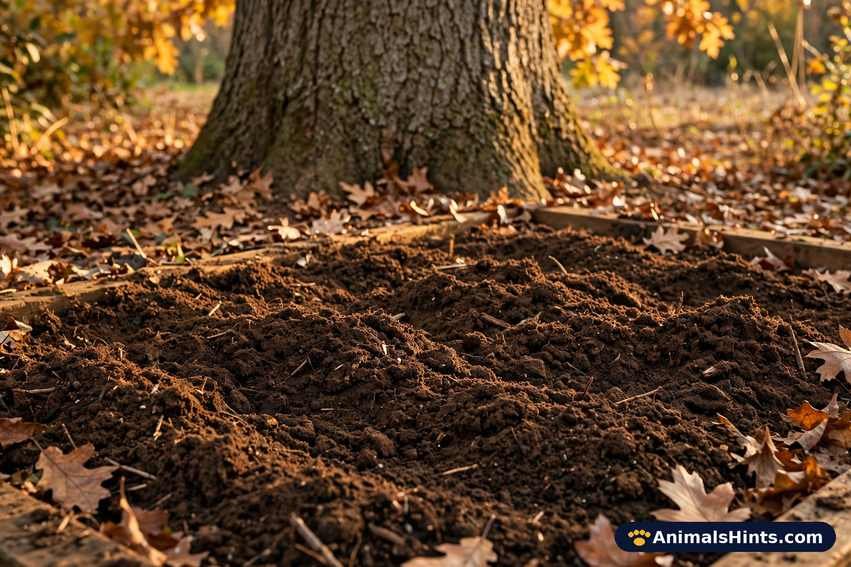
Brown symbolises whatever holds everything else up. It colours the field before the crop, the trunk before the branches, the floor before the furniture. Symbolism writers take the hint from the materials: a colour that spends its life underneath things gets credited with support, patience and the kind of strength that never has to announce itself.
The genre’s standard summary runs to four strands:
- Stability and Security: Brown is read as protection of the unglamorous kind — a roof kept repaired, a promise kept on an ordinary Tuesday; safety as a habit rather than an event.
- Simplicity and Humility: The shade of undyed cloth and unglazed clay is treated as the opposite of display: enough, plainly presented, with nothing spent on impression.
- Nurturing Energy: Soil feeds without being asked and asks for no credit. Brown borrows that reputation and becomes the colour of care given as routine rather than performance.
- Strength and Endurance: Bark takes the weather so the living wood beneath it does not have to. The tradition reads brown as that outer patience — endurance as a surface quality.
Belonging ties the four together. Brown is the tone of the bread crust, the wooden table and the path worn home, and the genre treats it as the colour of places where a person is expected and known. Gratitude is its usual spiritual exercise: not thanks for the exceptional, but for the load-bearing ordinary.
Why Is Brown Brown? A Colour That Exists Only in Context

Brown has the strangest physics of any colour in this family. Colour scientists point out that brown is not a hue the eye finds in a beam of light: there are no brown signal lights, and there cannot be. A surface that looks yellow or orange-yellow when it is brighter than its surroundings reads as brown the moment it is made the darker thing in the scene. Brown, in the laboratory account, is what the yellow-orange family becomes in shadow — a colour that exists only by comparison with something brighter beside it.
That context rule explains the shade’s whole biography. Nothing in nature is brown on its own terms either; browns arrive as mixtures and dimmings. Soil is the type case. Most temperate soils are brown because two colouring systems overlap in them: humus, the dark carbon-rich residue of decayed plants and animals, laid over mineral grains tinted by iron oxides — goethite lending yellow-brown, hematite pushing the same ground toward red. Change the proportions and the one field runs from pale tan to near-black without ever leaving the family.
Painters met the same mixtures first, because brown was humanity’s starter palette. The earth pigments — the ochres, siennas and umbers, all clays coloured by iron oxide — range from yellow through deep orange to brown, and people were grinding them for paint hundreds of thousands of years before anyone ground anything brighter. Brown was not chosen for the first art. It was simply what the ground offered a hand that reached down.
Language noticed the colour late, as it did grey. In Berlin and Kay’s survey of how vocabularies grow, a separate word for brown arrives only in the sixth stage of the sequence — after black, white, red, green and yellow have all been named. Humanity had been painting with the colour since the caves and still took most of its history to name it at all. The genre’s favourite claim about brown — that it is foundational but overlooked — turns out to hold for the word itself.
Brown Color Psychology, and Personality
Colour psychology gives brown the plainest portrait in its catalogue: comfort without excitement, dependability without glamour. In the genre’s account, brown surroundings lower the volume of a room. Nothing in them performs, so the mind stops performing too, and people read brown spaces and brown clothing as honest, settled and safe to approach.
The tradition sketches the brown-leaning personality as a set of working habits rather than glamorous traits:
- Settled under pressure — the person whose manner stays level while a plan is rearranged around them.
- Loyal in the long form — faithful to people, places and obligations across years rather than occasions.
- Drawn to the made and grown over the bought and branded — timber, wool, gardens, bread.
- Protective of household and custom — the keeper of the family’s ways of doing things.
Hold the sketch at the strength it deserves. These are conventions of the colour-meaning genre, not findings; no instrument measures a temperament from a favourite shade, and this page claims nothing stronger. What can be checked is the association underneath the sketch: brown really is the colour of the materials — soil, wood, leather, undyed fibre — that human beings have relied on longest, and a preference for it is at least a preference for the proven.
The genre’s own warning is consistent and worth keeping: brown in excess flattens. A life or a room with nothing in it but brown can slide from grounded into stuck — caution hardening into refusal, comfort into a rut. The shadow side gets its own section below; the psychology in one line is that brown steadies best as a foundation, not as the whole building.
Energy work adds one layer, and it deserves its label. Modern healing practice links brown to the root chakra, the centre it places at the spine’s base and assigns to survival and safety. The documented system underneath is more precise: the root centre, Muladhara, belongs to the earth element, but its colour in both the classical Sanskrit description and the modern rainbow scheme is red — crimson in the Sat-Chakra-Nirupana, red in the twentieth-century ordering. Brown enters as a later, looser association: the earth element’s other colour, borrowed by contemporary practice. Printed at that strength, the link is a modern teaching about an old element, not an ancient colour assignment.
14 Spiritual Meanings of the Color Brown
The competitor’s list runs to fourteen, and they follow in his sequence. Treat each as what it is — a belief held by the modern symbolism tradition, not a finding — and watch for the moments where a meaning rests on something checkable; those moments are pointed out as they come.
1. Stability and Grounding
The root meaning, and the one every other entry leans on. Brown is the colour of the surface that does not move during the earthquake of an ordinary bad week, and the tradition turns that into a practice: when life feels unmoored, return to the physical — feet on actual ground, hands in actual soil, attention on the next concrete task. Grounding here is not a metaphor the colour illustrates. It is the thing the colour is made of.
2. Humility and Modesty
Brown is what cloth looks like before anyone spends money on it, and the tradition reads undyed as unpretending. The meaning is carried by real wardrobes: monastic habits in this colour are documented in the cultural survey further down, and they were chosen to say exactly what this entry says — that the wearer’s value was not meant to be visible at a glance. Modesty here is not self-deprecation; it is the refusal to invoice the world for one’s own importance.
3. Reliability and Dependability
The third meaning is stability applied to people. Brown stands for the friend whose help is boring and total — the lift actually given, the promise actually kept, the shift actually covered. The genre contrasts it with brighter loyalties that flare and fade: brown’s dependability is measured in years and repetitions. Keeping this colour around you is, in the genre’s counsel, a rehearsal: become that person rather than merely admiring them.
4. Nurturing and Connection to Nature
Soil is the only nurse most of the living world ever has, and the fourth meaning generalises her method: feed quietly, hold steadily, expect growth on the fed thing’s schedule rather than yours. The tradition ties brown to gardens, animals and kitchens — the places where care is a daily physical act — and reads the colour as a summons back to them. Its nurture is deliberately unspiritualised: water, food, warmth, presence, repeated.
5. Spiritual Grounding and Faith
Here the list turns explicitly religious, and the reading is of faith at ground level: belief expressed in routine service rather than in intensity of feeling. The tradition pictures this as faith with mud on its boots — prayer kept like an appointment, kindness done like a chore, conviction that survives dull seasons because it was never fuelled by exciting ones. The documented habits and dust texts behind the image are examined in the culture and Bible sections; the meaning itself is the genre’s portrait of devotion that lasts.
6. Warmth and Safety
Brown belongs to interiors: the crumb of the loaf, the heart of the log, the room after the lamps come on. The tradition reads it as safety of the enclosing kind: not rescue, but shelter; not excitement, but the absence of threat. In the genre’s emotional vocabulary this is the meaning people reach for after upheaval, when what is wanted is not a new life but the old one made secure again.
7. Strength and Resilience
The oak is the emblem here, and the reading is precise about the kind of strength meant. Bark and heartwood do not win anything; they persist — through drought years, storm years and the slow insult of insects — by growing a little and holding on a lot. Brown’s resilience, in the tradition, is that unspectacular kind: recovery measured in rings. It is offered as the antidote to a culture of dramatic comebacks; most real endurance, the colour insists, looks like staying.
8. Simplicity and Minimalism
The eighth meaning follows from the second but turns practical. If undyed cloth is humility worn, the uncluttered room is humility lived: fewer objects, each earning its place; fewer commitments, each actually met. The genre is careful to separate this from austerity as punishment. Brown’s simplicity is the farmhouse table, not the empty cell — plainness chosen because the plain thing works, kept because it has proved itself for years.
9. Wisdom and Companionship
Brown is the colour of old wood, old leather and old paper — materials that improve by being used — and the tradition assigns it the wisdom of the long-serving: the elder, the mentor, the friend whose advice is short because their experience is long. Companionship shares the entry because the genre pictures that wisdom as social: it is dispensed across tables, on walks, in workshops — knowledge carried by company rather than by books alone.
10. Earth and Heritage
The tenth meaning faces backwards, toward the family plot, the ancestral field, the house built by hands whose names are still said at gatherings. In the tradition’s hands it becomes a summons to know where you stand in a line: what was handed to you, what it cost, what of it deserves handing on. Its claim is modest and moving at once — that a person, like a topsoil, is largely made of what earlier seasons left behind.
11. Asceticism and Detachment
The sternest of the fourteen — and the one backed by the most literal wardrobe evidence. Brown and its earth-tone neighbours are what several renunciant traditions actually wear, for the documented reason that a dye which imitates dirt cannot flatter anyone. Detachment, so read, is not distaste for the world; it is freedom from needing the world’s applause, practised daily through cloth, food and lodging kept deliberately plain. The cultural record for this is set out below, at its proper strength.
12. Balance and Stability
Distinct from the first meaning: grounding is about contact with the earth, while this entry is about proportion — the physical and the spiritual held in working ratio, neither despised. The genre reaches for the farmer’s year as its picture: seasons for labour and seasons for fallow, hands in soil and eyes on weather. Brown, sitting between the black of earth and the brightness of growth in the family’s own assessment, becomes the colour of that managed middle. Nothing here is maximised; everything is maintained.
13. Foundation and Faith
The thirteenth meaning is architectural. Every tradition in this list quietly assumes it: nothing tall is built first. Foundations are dug before walls, roots before fruit, habits before character. Brown — the colour of the dug earth and the buried footing — is read as the reminder that the invisible early work decides what the visible later work can bear, and that faith, like a footing, is mostly hidden and entirely load-bearing.
14. Psychological Comfort and Warmth
The list closes by folding the colour back into the body. Brown’s final meaning is the felt sense of being held by one’s surroundings: the heavy blanket, the familiar chair, the kitchen that smells of dinner. The tradition treats this comfort as spiritually serious rather than soft — a person who feels safe can afford honesty, patience and generosity, and a colour that manufactures safety at sight is, in its accounting, doing moral work. Rest, on this account, is not the reward for the journey. It is part of the equipment.
Cultural and Religious Significance
His survey gathers four strands. They follow in the sequence he uses, each weighed against what can actually be documented.
In Buddhism, the honest headline is a word rather than a colour. The monastic robe is the kasaya, from a Sanskrit term for a colour that is not pure — a broken, muddy, deliberately unlovely dye. Early robes were sewn from discarded cloth and coloured with whatever roots, bark and plant matter gave, which landed them somewhere on the yellow-to-reddish-brown range; the point was never a shade but the refusal of bright, expensive cloth. What monks wear today varies by land — saffron and ochre in the Theravada south, browns and greys in much of China and Korea, maroon in Tibet — so “Buddhist monks wear brown” is a partial truth. The durable teaching is the one underneath every variant: renunciation you can see.
In Christianity, brown’s claim rests on cloth rather than on scripture. The Franciscan family made undyed-looking brown the most recognisable religious uniform in Europe, and the Capuchin reform of the 1520s wore the shade so distinctively that its name followed the colour out of the cloister: the Capuchins’ simple brown tunic and pointed hood are the documented source of the cappuccino’s name, the coffee’s tone matched to the friars’ dress. Brown in the Christian strand therefore means poverty chosen and humility worn — a meaning assigned by centuries of practice, which the Bible section below keeps separate from anything the Bible itself says.
In Native American traditions, a summary has to start by refusing to summarise: scores of separate nations, each with teachings of its own, and no shared doctrine about this colour exists to report. What the record does hold, widely and concretely, is the use of earth itself as colour — ochre and other ground pigments carried, traded and applied in ceremony and daily life across many nations, over very long periods. A summary that turns that material record into one shared doctrine about the colour brown is a modern construction, and it is named as one here.
In African and Aboriginal traditions, the same discipline applies, and the same material record carries the weight. Ochre has been used as a colouring agent in Africa for more than two hundred thousand years, and in Aboriginal Australian practice the word names both the pigment and its ceremonial use in art and decoration — earth colour as one of the oldest continuous technologies on the planet. The competitor’s gloss about ancestral lands and natural spirits is the genre’s interpretation laid over that record; the record itself — this colour, dug from the ground, in use since before writing — needs no improving.
The Shadow Side of Brown: Dullness, Stagnation and the Over-Deep Root
Brown pays for its virtues in the same coin. Stability that refuses all movement becomes stagnation. Comfort that admits no novelty becomes dullness — brown is the colour English reaches for when it wants to call a thing drab, muddy or stuck, and the genre itself concedes that an excess of the shade reads as heaviness and caution that has outlived its usefulness.
The genre pictures the failure as a root grown too deep for its tree: anchoring past the point where anchoring helps, until the plant can no longer bend toward new light. Read as self-examination, the shadow entries are uncomfortably practical — the routine that has become a hiding place, the loyalty that has become fear of change, the plainness that has curdled into refusal to try. Brown’s medicine, in the genre’s balance, is its neighbours: growth’s colour beside it, light against it, anything alive and changing within reach of the root.
Two limits deserve stating plainly here. Brown holds no seat of its own among the seven rainbow-assigned chakras — the root centre it is borrowed for belongs to red, as the psychology section records — and no classical text consulted sets out a symbolism code for the colour brown itself. What brown has instead is something most colours lack: a material record so long and so consistent that the modern meanings can be checked against it, section by section.
Shades of Brown and Their Symbolic Meanings
His shades arrive as a table, and a table is how they are carried here — his six shade names unchanged, their readings shortened and reworded:
| Shade of Brown | Symbolic Meaning | Emotional Tone |
|---|---|---|
| Beige | Innocence and calm simplicity; the family’s quietest member, neutrality with the warmth left in. | Soft, neutral, comforting |
| Tan | Practicality and unforced honesty; the shade of canvas and working leather. | Friendly and reliable |
| Light Brown | Optimism kept grounded; openness that still has its feet on the floor. | Nurturing and balanced |
| Medium Brown | Strength and dependability in good order; the classic timber tone. | Secure and calm |
| Dark Brown | Wisdom and seriousness; stability deepened toward introspection, one step from the black spiritual meaning. | Mature and introspective |
| Reddish Brown (Chestnut) | Passion and vitality, rooted rather than reckless; endurance with a pulse in it. | Energetic and rooted |
Read the rows in order and a gradient appears: welcome at the pale end, gravity at the deep end, each step down trading openness for weight. Chestnut interrupts the descent — the one row where the family’s warmth turns back up into energy, the autumn leaf and the horse’s coat rather than the soil. A shade choice, in this system, is a decision about how much weight you want the colour to carry.
Brown in the Animal World: Bears, Deer and a Butterfly That Wears It Twice

In the animal world brown is not a message at all. It is matching — fur and feather laid over the same ground the symbolism borrows. The brown bear is the type case, and Britannica’s account carries a useful correction to the name itself — the species’ coat colour is highly variable, running from greyish white through brownish shades to almost black. “Brown bear” names a centre of gravity, not a uniform; the grizzly’s silver-tipped guard hairs and the near-blond coastal bears are the same animal wearing the family’s full range at once.
The white-tailed deer works the shade seasonally. Pennsylvania’s game commission records the pattern plainly: reddish brown above in summer, greyish brown in winter, the coat itself changing build — short and wiry for heat, long and hollow-haired over woolly underfur for cold. The fawn’s version is the famous one: reddish brown dappled with white spots, a pattern that reads as sunlight through canopy on a forest floor, which is exactly where the hider spends its first weeks. A deer met standing in your way is wearing this colour at work; readings for the encounter itself are gathered in our companion piece on the spiritual meaning of a deer in your path.
And the family’s smallest exhibit closes the section. Most butterflies that look brown are brown the honest way, in pigment — our separate guide to the brown butterfly spiritual meaning holds the full account of the browns, their meadow species and their seasonal forms. Nature’s browns, taken together, teach the symbolism a consistent lesson: this is the colour of not being seen, of lasting, and of being exactly the colour of where you live.
What is the Biblical Meaning of the Color Brown?
Nowhere does checking the sources change the picture more than here, so take this section slowly. The competitor builds a biblical meaning for brown out of dust — and the dust texts are real. “And the Lord God formed man of the dust of the ground” (Genesis 2:7, KJV), and, to Adam: “for dust thou art, and unto dust shalt thou return” (Genesis 3:19, KJV). Humility, mortality and earthiness genuinely are the dust texts’ themes, and the tradition that reads brown through them is reading something true about dust.
But dust is not a colour, and the Bible’s actual uses of the word “brown” say something narrower and more interesting. In the King James text the word occurs exactly four times, every one of them in a single chapter — Genesis 30, in Jacob’s wage bargain with Laban: “all the brown cattle among the sheep” (Genesis 30:32, KJV). Brown there is a flock description, a way of sorting sheep by coat so that wages can be counted. The other occurrences — verses 33, 35 and 40 — repeat the sorting. No verse attaches a virtue, a warning or a symbolism to the colour; brown is livestock bookkeeping, and the honest biblical meaning of the colour brown is that the Bible does not give it one.
What Scripture gives this colour family, then, is two separate things that later tradition stitched together: earth and dust as the material of human life and the limit of it, and one chapter where brown sheep are simply brown sheep. The monks’ brown of the culture section is a church practice of later centuries, not a biblical instruction. Held apart, each piece keeps its value: the dust passages lose nothing by being about dust, and the colour loses nothing by admitting that its biblical record is four verses about Jacob’s pay.
Dream Interpretations of the Color Brown
Nobody’s dream dictionary outranks anybody else’s — the field is folklore all the way down. His four cases follow in the sequence he prints them:
- Brown clothes: Read as humility and practicality in the dreamer’s current season — or, in the genre’s diagnostic mood, as a wish to stop performing and be taken as one is.
- Brown soil: Read as preparation rather than harvest: fertility, opportunity and ground being made ready for something not yet planted in waking life.
- Brown animals, horses and dogs among them: Read as the loyal company of the dreamer’s world — strength and dependable relationships, pictured in the animals proverbially credited with both.
- A brown room or house: Read as the security register — comfort, shelter and emotional safety, the dream staging a place where the dreamer is held.
The competitor adds the necessary counterweight, and it is kept: a dream heavy or dull with brown is read in reverse, as emotional fatigue or a resistance to change — the shadow side of the colour appearing at night. Notice how faithfully the whole list follows the waking one. Brown dreams, in this system, are the day’s symbolism with the lights off, which is a reason to treat them as the mind reusing a familiar language rather than receiving a coded one.
How to Use Brown’s Meaning in Everyday Life

Begin with rooms, where the colour does its most measurable work. Feng shui gives brown a formal address: in that system brown belongs to the Earth element — its colours are the yellows, ochres and browns — placed at the home’s centre and in its northeast and southwest corners, and assigned to stability, nourishment and care. An earth-toned rug or a heavy wooden piece at a room’s centre is the system’s literal grounding move. The same tradition warns, in effect, against the shadow side: warm the browns with living things, and set a plant where its growth can argue with the stillness — the pairing examined in the green spiritual meaning.
Dress with the genre’s standard intent. Brown clothing is its recommendation for being read as dependable rather than dazzling — negotiations, difficult family business, any room where trust matters more than attention. In jewellery and stone, the genre reaches for the earth-toned crystals; treat those as costume with a story attached, which is all the tradition can honestly claim for them.
For reflection, treat the colour as a practice of return. Work with your hands in actual soil; walk the same path until it becomes yours; finish the small kept promise before making a large new one. If this page has a single lesson, it is brown’s: the sacred and the ordinary turn out to be the same address.
Pair it deliberately. Brown is the great ground colour of a palette: it steadies the heat of the red spiritual meaning held in accents, gains depth next to the gold spiritual meaning, and finds its classic counterweight in the neutrality of the grey spiritual meaning. Let brown be the floor of the palette rather than its headline, and the other colours stand out more clearly against it — the supporting role the tradition always assigned it anyway.
Final Thoughts
Brown’s symbolism persuades because so little of it was made up. It gathered, layer by layer, around things that were already standing there — the field, the trunk, the undyed robe, the bear in the autumn woods — and the genre’s vocabulary of steadiness, humility and endurance is mostly those things renamed.
Keeping that distinction straight has been this page’s method throughout: the meanings and the dream readings are presented as one modern tradition’s beliefs, while the colour science, the soil, the broken dye, the friars’ tunic and Jacob’s sheep are presented as record, because record is what they are.
For most of human history this colour travelled in one form: a pigment dug straight from the ground. Ochre — an iron-stained clay whose range covers the family’s warm half, ground for paint since before our species had a word for brown at all — was the colour’s first form, and it still says, in one word, everything the shade came to mean: the earth, offering itself as the medium, and asking only to be used plainly.
Frequently Asked Questions
What does the color brown symbolize spiritually?
Spiritually, brown symbolises grounding, steadiness and a living connection to the earth. Read alongside are humility, dependability and the comfort of home — strength of the quiet, load-bearing kind.
How does brown affect our psychology?
Colour psychology reads brown as settling: rooms feel quieter in it, and people and spaces seem plainer and safer. The caution attached is about quantity — a whole life in brown can go flat and feel becalmed.
What does liking the color brown say about your personality?
In the genre’s portrait, brown lovers are settled, loyal and practical — people who value kept promises, natural materials and substance over show. That is a portrait the genre paints, not a measurement anyone took; what you reach for on a shelf says something about taste and nothing provable about character.
How can I use brown’s spiritual meaning in my life?
Use brown where steadiness is wanted: earth tones and natural materials in the room you live in most, brown clothing when trust matters, and time with hands in soil or feet on a familiar path. Balance it with living colour so its grounding never turns into a rut.