September Symbolism: Spiritual Meaning, Significance and the Equinox Month
September is the hinge of the year, and the september spiritual meaning follows the hinge: balance, harvest and honest stock-taking. Tradition associates this month with the equinox, where daylight and darkness stand nearly level, with fields being gathered in, and with a quieter, more reflective pace after the height of summer.
That reading rests on real anchors. The month carries the September equinox, the sapphire as its birthstone, the aster and morning glory as its birth flowers, and a name that reaches back to the Roman word for seven. Each of those facts is checked in this guide, and each is kept separate from the symbolism layered over it.
What follows sets out what September symbolizes, the ten spiritual meanings modern writers assign it, its place across cultures and faiths, its two zodiac signs, its biblical neighbourhood, and its stone, colour and flowers — with the verified record first and the folklore labelled as folklore throughout.
What Does the Month of September Symbolize?
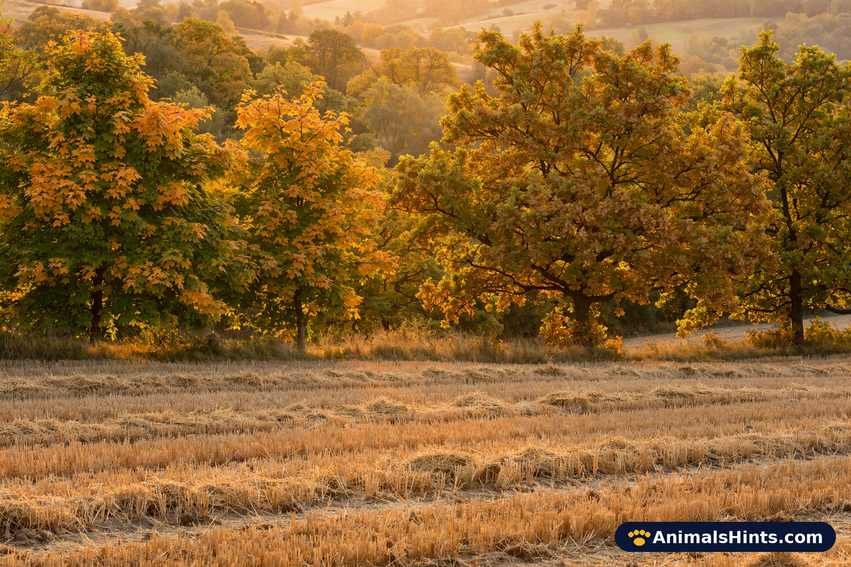
In modern spiritual writing, September symbolizes transition held in balance. North of the equator it closes the summer and opens the autumn; the crop that was growing all season is gathered now, daylight shortens week by week, and the year’s work can be weighed with most of its results visible. Writers in this tradition read that landscape inwardly: maturity, gratitude for what ripened, and willingness to release whatever did not.
The month’s emblem is the equinox, the moment around 22–23 September when the Sun crosses the celestial equator heading south. Day and night run close to equal then — close, not exact, as the verified section below explains — and that near-balance is why September’s symbolism leans so heavily on equilibrium: effort and rest, holding on and letting go, the bright half of the year and the dark half arriving.
Leaves supply the second emblem. A leaf that flames orange in September was green all summer; the pigments behind the colour were present underneath the whole time, unmasked as the green fades. The growth side of that story is covered by this site’s green spiritual meaning guide, while the turning itself — toward the color orange spiritual meaning — is this month’s signature. Tradition reads the turn as ripeness rather than decline, and the harvest as proof that patience compounds.
Held at that strength, September’s symbolism is a discipline, not a forecast. The month symbolizes a point of weighing and choosing. Nothing in the calendar promises any reader a particular September; the tradition simply offers this one as a good month for telling the truth about the year so far.
September, Verified: The Equinox, the Name and the Two Hemispheres
Before the meanings, the facts — because several popular claims about this month are wrong in small, fixable ways, and the symbolism reads better standing on the corrected record.
The September equinox falls on 22 or 23 September in most years. It is the instant the Sun, travelling south, crosses the celestial equator. Astronomically it opens autumn in the Northern Hemisphere — and spring in the Southern Hemisphere, at the very same moment. September is therefore not “the start of autumn” for the whole planet. For readers in Australia, South Africa or Argentina, this is a spring month of lengthening days, and any September symbolism built on falling leaves is a northern tradition, honestly labelled.
Day and night are not perfectly equal on the equinox, despite the name — equinox comes from Latin words for “equal night.” Because the Sun is a disc rather than a point, and because the atmosphere bends its light, daylight on the equinox actually runs a few minutes longer than darkness at most latitudes. The date when day and night truly match, called the equilux, arrives a few days after the September equinox in northern latitudes. The balance September symbolizes is real but approximate — a near-level scale, not a frozen one — and the tradition loses nothing by admitting it.
The name is a fossil. September comes from Latin septem — the word for seven — because in the early Roman calendar — a ten-month year that began in March — September genuinely was the seventh month. January and February were later placed ahead of March, the numbered months slid two places down the year without being renamed, and September has been the ninth month carrying a seventh month’s name ever since. October, November and December preserve the same off-by-two pattern, from the Latin for eight, nine and ten.
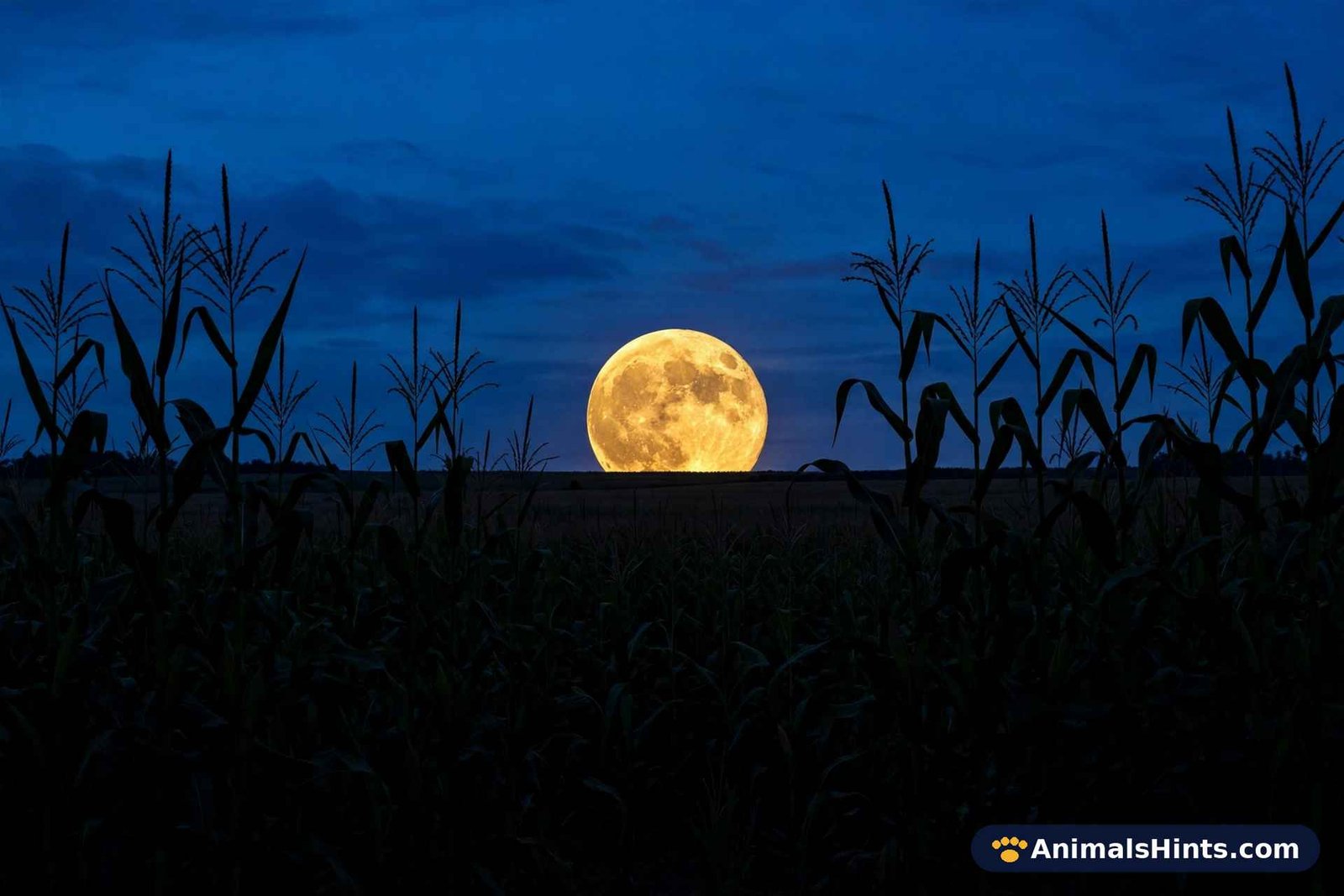
One more anchor belongs here, because the meanings list leans on it: the full Moon of this season. The Old Farmer’s Almanac calls September’s full Moon the Corn Moon, for the corn harvest it lit. A separate title, the Harvest Moon, belongs to whichever full Moon falls nearest the equinox — usually September’s, but in some years October’s instead. The two names overlap often and are not interchangeable, a distinction the Corn Moon entry below keeps.
10 Spiritual Meanings of the Month of September
Modern spiritual writers return to the same ten readings for this month. Each is given here at the strength its own tradition gives it — as belief and association, offered for reflection — never as a property September can be shown to possess.
1. Release and Letting Go
The first reading follows the trees. A deciduous tree drops its leaves as a survival measure, sealing off what it cannot afford to feed through winter, and the tradition borrows the image for habits, grudges and commitments that have stopped earning their keep. September, in this reading, is the month to set down deliberately rather than cling by default.
The reading’s practical edge is its honesty about timing. Release in September is pictured as seasonal maintenance, not drama: the tree lets go of the leaf in the ordinary course of the year, and grows a new one when conditions return. Whatever a reader releases under this heading is framed the same way — a clearing that protects future growth, undertaken calmly and on schedule.
2. Harvest and Maturity
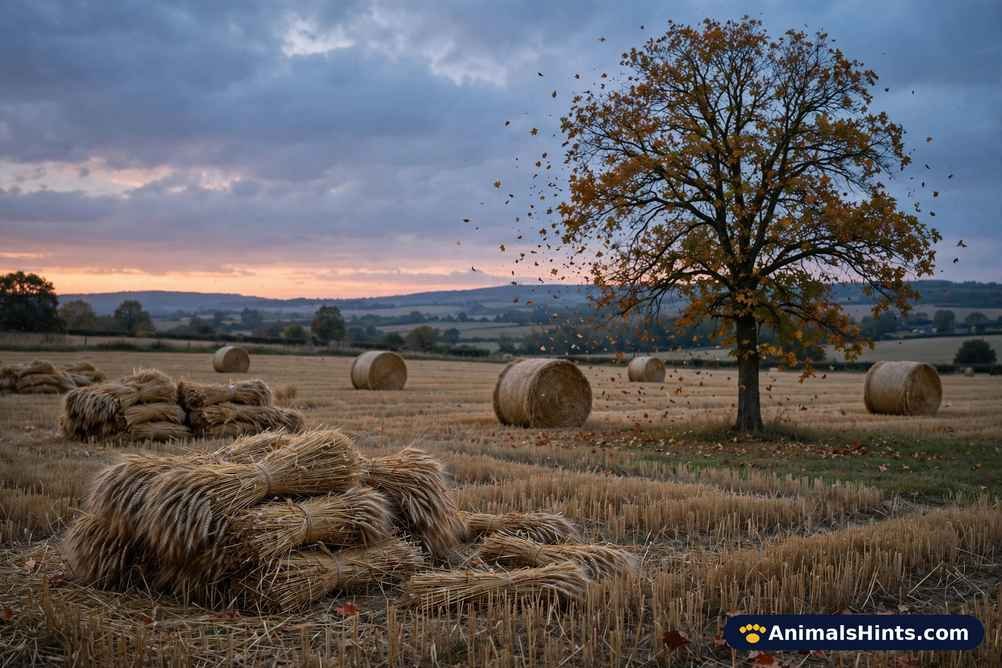
September is harvest month across the northern farming calendar: grain cut, corn gathered, orchards picked. Spiritual writers extend the picture to a life — the point in the year when effort started months earlier becomes visible as result. Maturity, in this reading, is not age but evidence: the capacity to look at what actually grew, including the thin rows, without flinching.
Gratitude is built into this meaning rather than added to it. A harvest is received as much as achieved — weather, timing and other hands all contributed — and the tradition treats thankfulness as the accurate response, not a decorative one. The animal calendar agrees in its own register: this is the season the site’s guide to the monarch butterfly spiritual meaning follows south, as mature travellers act on a timetable older than any farm.
3. Completion and Reset
Because September once stood seventh in Rome’s year, and because seven carries a long cultural association with completeness, modern numerology reads this month as a place of finishing: projects closed, accounts settled, loose ends tied before the year’s final quarter. That is a modern spiritual-writing tradition built on a real etymology — the Roman fact is verified above; the “energy of completion” is the tradition’s interpretation of it, printed here as interpretation.
The reset half comes from the school year. In much of the northern world September restarts routines — terms begin, work rhythms resume after summer — and writers fold that social fact into the spiritual one: a natural moment to restart a practice, repair a schedule, or begin again with the evidence of the harvest in hand.
4. Self-Love and Care
This reading takes the season’s slowdown as permission. After the longest days and the busiest months, September’s shortening evenings are framed as an invitation to rest deliberately: earlier nights, plainer food, fewer obligations carried out of habit. In the tradition’s language, care for the self in this month is tending the soil the rest of the year grows in.
Bounded honestly, the claim is modest. No month confers rest by itself, and September plainly arrives with heavy workloads for farmers, teachers and parents alike. The meaning works as a chosen emphasis — a reminder scheduled by the calendar — rather than as a description of how the month will feel.
5. Reflection and Gratitude
Reflection is September’s most defensible meaning, because the calendar itself prompts it: two-thirds of the year is measurable by now. Writers in this tradition prescribe a review — what was attempted, what ripened, what failed, what was never really wanted — conducted as inventory rather than judgement. Gratitude then names the parts of the inventory that arrived as gift.
The pairing matters to the tradition. Reflection without gratitude curdles into scorekeeping; gratitude without reflection stays vague. September’s version insists on both, in that order, and treats the result — a clear-eyed, thankful account of the year — as the month’s real harvest.
6. Spiritual Symbolism of Saints
September’s place in the Christian calendar gives this meaning its record. The month closes with the feast of the archangels Michael, Gabriel and Raphael on 29 September — Michaelmas in the older English naming — and keeps the Nativity of the Blessed Virgin Mary on 8 September, early in its second week. Both dates are fixed points of the Roman calendar, verifiable in any liturgical listing.
Spiritual writers read the archangels’ feast as the month’s emblem of protection during transition: Michael pictured as a defender, Gabriel as a messenger, Raphael as a healer and guide for travellers. That reading belongs to devotion and folklore built on the feasts; the feasts themselves, and their dates, are the documented part, and this guide keeps the two layers separate.
7. The Corn Moon (Full Moon in September)
September’s full Moon carries the name Corn Moon in the Old Farmer’s Almanac tradition, for the crop its light helped gather. It is often also the Harvest Moon — but not by definition, and not every year. The Harvest Moon is the full Moon nearest the equinox; most years that is September’s, and in the years when it falls in October, September’s Moon keeps the Corn Moon name alone. Popular writing that treats the two titles as synonyms is blending two different naming rules.
In modern spiritual writing, this full Moon is read as the harvest made visible: a bright checkpoint for gratitude, stock-taking and releasing what the season has finished with. It belongs to a different family from the eclipsed blood moon, whose colour and folklore are their own topic. Read at tradition strength, the Corn Moon’s lesson is agricultural before it is mystical — light provided at exactly the season when the work ran past sunset.
8. Serenity and Spiritual Truth (September Birthstone: Sapphire)
Sapphire is September’s birthstone — that much is the gemological record, set out in the correspondences section below. Modern spiritual writing builds its reading on the stone’s deep blue: serenity, steadiness and truth-telling, a calm surface over depth. The Gemological Institute of America records the stone’s traditional symbolism as sincerity, truth, faithfulness and nobility, which is the documented core the modern reading decorates.
One popular addition needs its bound stated. Claims that sapphire “resonates with the throat chakra” belong to the modern chakra-colour scheme, in which stones and centres are matched by colour in recent practice; the classical chakra texts assign no gemstones. The association is printed here as modern practice, which is all it claims to be once examined.
9. Spiritual Symbols and Inner Awareness
The tradition’s September symbols are the season’s own objects: the falling leaf for release, grain and seed heads for stored potential, the circle for the year turning on itself. Writers use them as prompts for attention — a leaf noticed on a walk becomes an occasion to ask what is finished; a seed head, to ask what is being kept for later.
The balance symbol underneath them all is light against dark, the equinox’s near-even split. The wider treatment of the black spiritual meaning on this site sets out how darkness is read across these traditions — rarely as evil, more often as rest, soil and the unseen half of a cycle — and September is the month that reading comes due, as the dark half of the year begins its climb.
10. Divine Messages and Guidance
Hold this final meaning more lightly than the other nine. The genre often claims that guidance arrives more noticeably in September — through dreams, repeated numbers, found feathers or sudden clarity — on the theory that a transitional season sharpens attention. Feathers found at this season are read in that literature as reassurance, white for peace and grey for balance in uncertainty; readers can follow that colour further in the grey spiritual meaning guide.
The honest version of this meaning is psychological, and it is enough: people crossing a threshold do pay closer attention, and a mind primed to notice will notice. Whether a reader files that noticing under guidance or under attention, the tradition’s practical counsel is identical — slow down, keep a record, and let any decision wait until it survives an ordinary day.
Cultural and Religious Significance
September’s themes recur across cultures largely because its astronomy does: an equinox and a harvest season are shared northern experiences, and many traditions built observances on the same few weeks. The strands below are stated at the strength their records support.
Harvest Festivals and Thanksgiving Traditions
In England, the harvest season was traditionally closed by Michaelmas on 29 September, the archangels’ feast doubling as a quarter day when accounts were settled and harvest labourers were paid — gratitude with paperwork attached. Harvest Home suppers marked the last load brought in. In East Asia, the Mid-Autumn Festival gathers families under the full Moon of the lunar eighth month, sharing mooncakes as emblems of reunion; because it follows a lunar calendar it lands in September in many years and in early October in others. North American Indigenous traditions include harvest and green-corn ceremonies of thanksgiving in this season, varying by nation, and this guide names the pattern without inventing a single shared rite.
Jewish High Holy Days
The Hebrew month of Tishrei hosts Rosh Hashanah (the New Year) and, ten days later, Yom Kippur, the day set aside for atonement — a season of review, repentance and repair that mirrors September’s stock-taking themes closely. The overlap is frequent but not fixed: Tishrei follows a lunar calendar, so the High Holy Days land in September in most years but slide into October in others. Printing them as “September festivals” without that qualification, as much popular writing does, overstates a real but drifting correspondence.
Christian Traditions
Two fixed feasts frame the month in the Roman calendar: Mary’s Nativity on 8 September and the three archangels on 29 September. Eastern churches keep the Nativity of the Theotokos on the same September date. Around Michaelmas, older European custom layered harvest customs, goose dinners and hiring fairs onto the feast, making the month’s end a civic as well as a sacred hinge — the point where the agricultural year was audited and the next one staffed.
Hindu and Buddhist Significance
Ganesh Chaturthi, honouring Ganesha as remover of obstacles and patron of beginnings, falls in the Hindu lunar month of Bhadrapada — which means late August or September in most years rather than September by rule. Its themes of cleared paths and fresh starts sit naturally beside this month’s reset reading, and the correspondence is seasonal, not calendrical. Buddhist observance in this season turns on impermanence in several regional calendars — the changing leaves used as a teaching image — a framing offered here in general terms, since no single September festival spans the Buddhist world.
Astrological Significance of September Month
Astrology divides September between two signs, and the division is the month in miniature: Virgo’s earth giving way to Libra’s air at almost exactly the equinox. The date ranges below are the commonly published Western (tropical) convention; the boundary can shift by a day between years and sources, which is why cusp birthdays are checked against an ephemeris rather than a chart in a magazine.
Virgo Season (August 23 – September 22)
In astrological convention, Virgo belongs to the earth signs and answers to Mercury, and its season covers most of September’s first three weeks. Tradition describes it in harvest terms that fit its symbol, the maiden holding a sheaf of grain: sorting, refining, separating what nourishes from what does not. Writers in this system read Virgo season as the year’s editing pass — schedules repaired, workrooms ordered, intentions clarified — and whether or not a reader credits the astrology, the description matches the month’s social reality of resumed routines.
Libra Season (September 23 – October 22)
Libra, an air sign ruled by Venus in the same convention, begins on or beside the equinox — its zero point in the tropical zodiac is defined by the equinox itself, an unusually literal anchor for an astrological claim. Its symbol is the scales, and its assigned themes are balance, fairness, partnership and the weighing of one claim against another. Read as symbolism, the sequence is tidy: Virgo sorts the harvest, then Libra weighs it. Read as anything more than symbolism, it exceeds what the convention itself can support, and this guide leaves it there.
September Meaning and Symbolism in the Bible
The Bible knows no September. Its calendar is the Hebrew one, and the honest starting point for this section is that every “September in the Bible” reading is a correspondence drawn afterward, between the Gregorian month and the season of Tishrei that frequently overlaps it.
At that strength, the correspondence is a fair one. Tishrei is the seventh month of the Hebrew religious year, and it opens with the season of repentance and renewal described above — review of the year, atonement, and the Feast of Tabernacles, a harvest festival of ingathering, following within the same month. A reader looking for biblical themes that rhyme with September’s symbolism will find them genuinely present in that cluster: harvest completed, accounts examined, a community beginning its year under judgement softened by mercy.
The harvest text most often quoted for this month survives the checking. Paul’s line to the Galatians, in the King James Version, runs: “And let us not be weary in well doing: for in due season we shall reap, if we faint not” (Galatians 6:9, KJV). The verse promises a reaping tied to perseverance, not to a calendar page; applying it to September is devotional reading, labelled as such. Likewise the number seven: Scripture gives it real prominence — the seventh day of rest at creation’s close among much else — but the step from that prominence to a “vibration” carried by the seventh-named month is modern numerology’s step, not the text’s.
Spiritual Symbolism of September Gemstone, Color, and Flower
September’s standard correspondences are unusually well documented, because two of the three are maintained by named authorities rather than by folklore alone. The third — the month’s colour — is a modern convention built on the first, and is labelled accordingly.
September Birthstone: Sapphire
Sapphire is the September birthstone on the modern list, full stop: the Gemological Institute of America names it as the birthstone for September and the gem of the 5th and 45th anniversaries. The stone is corundum — the same mineral family as ruby, which is simply its red member — and it ranks 9 on the Mohs hardness scale, second only to diamond. Though blue made it famous, sapphire occurs in nearly every colour except red.
GIA records the symbolism tradition attaches to it: sincerity, truth, faithfulness and nobility, with a long history in royal and clerical settings — medieval clergy wore sapphire rings as an emblem of heaven. The serenity and spiritual-truth readings in meaning 8 above are a modern layer set over that documented base.
September Color: Blue
Blue is September’s colour by association rather than by any official list: it is the sapphire’s signature colour, extended to the month as a whole by modern correspondence tables. Within colour symbolism, blue is read for calm, depth and clear communication — the sky after harvest haze clears, deep water rather than shallow. Readers who want the neighbouring treatment of the same hue will find blue’s deeper register followed through its own record in this site’s royal blue spiritual meaning guide.
September Flower: Aster
Here the popular record needs one correction, and it is a friendly one: September has two birth flowers, not one. The Old Farmer’s Almanac lists the aster and the morning glory together for this month. The aster leads most arrangements of the pair — a star-shaped, daisy-family bloom of late summer and autumn, its name taken from the Greek word for star; folklore attaches it to Astraea, the star-maiden of Greek myth, whose tears the flowers were said to spring from. Tradition reads the aster as love, patience and wisdom held late in the season — a flower that blooms as the year turns.
The morning glory is the aster’s counterweight: a vine whose trumpets open at sunrise and close the same afternoon, read in the language of flowers as affection and as love’s brevity. Between them, the pair states the month’s whole argument in flowers — one bloom that lasts, one that lasts a day — and any September bouquet that carries only asters is telling half the assigned story.

Is September a Lucky Month? An Honest Verdict
Nothing in the sources checked for this guide rates one month luckier than another, and no evidence ranks September above or below any other month in outcomes. The record supports something narrower and more useful. September contains a real astronomical hinge, a real harvest season in the northern world, real festivals of review and thanksgiving across several faiths, and a body of modern spiritual writing that reads all of that as an invitation: weigh the year, give thanks accurately, release what is finished, restart what matters.
That invitation is the month’s symbolism at its strongest — chosen reflection, not forecast. A reader who treats September as a scheduled audit will likely end it better organised than they began it, and the credit belongs to the audit, not the month. Claims that September will bring love, money or breakthroughs to particular signs or birth dates are prediction dressed as symbolism; this guide does not carry them, and readers are better served by the version that leaves the agency with them.
September in the Animal World: Migration Season
This site’s home ground notices September as movement. North of the equator it is one of the great travelling months: songbirds slip south in waves, hawks ride the new cool air along the ridges, and the monarch butterflies described in meaning 2 begin the long flight toward their wintering forests — a journey no single generation finishes, since the northward return is flown by the travellers’ descendants. South of the equator the same weeks run in reverse, toward spring breeding and first growth.
Late-season gardens still work hard in this month. One of the last bright fliers of the northern year is followed in this site’s green butterfly meaning guide, and asters — the month’s own flower — are among the final nectar sources that fuel all of this traffic. Planting for September, in the animal register, means planting for travellers: late blooms, uncut seed heads, and water left out as the days cool.
How to Mark September: Simple Ways to Observe the Month
None of the month’s practices requires equipment, purchases or belief — they are the tradition’s readings converted into actions small enough to survive a busy season.
Walk the equinox. In the equinox week, take one walk at sunrise or sunset and notice the light’s angle and the first turned leaves; in the Southern Hemisphere, notice the opposite — the returning light and first blossom. The observation is the practice.
Write the harvest list. One page, three columns: what ripened this year, what failed honestly, what was never planted and should be. Gratitude gets its column’s evidence; reflection gets its facts; next season gets its seed order.
Set down one thing. Choose a single finished commitment, object or grudge and release it deliberately this month — returned, donated, archived or simply declared closed. September’s first meaning works at the scale of one item far better than at the scale of a whole life.
Plant or feed forward. Sow a late crop where the climate allows, set out asters for the last butterflies and bees, or leave seed heads standing for birds. In spring hemispheres, the same impulse plants the season’s first bed instead.

Final Thoughts
September’s symbolism rests on unusually solid ground, which is rarer than it sounds. Its equinox is real, its harvest is real, its name really does preserve a two-thousand-year-old counting error, and its festivals of review and thanksgiving really are kept, this season, by millions of people who have never read a symbolism page. The meanings modern writers build on that ground — release, gratitude, completion, care — are at their best when they stay visibly built on it.
So take the month at its verified strength. Let the near-balance of its light prompt an actual weighing of your year; let its stone, its colour and its two flowers remind you that endurance and brevity share this season, aster and morning glory side by side. Even the month’s favourite fact improves under checking — day and night are not exactly equal at the equinox, and the true day of equal light, the equilux, arrives quietly a few days later, asking nothing but to be noticed. September, noticed properly, is enough.
FAQs
What does September symbolize spiritually?
In modern spiritual writing, September stands for balance, gratitude and preparation — the equinox’s near-equal light and dark, the northern harvest gathered in, and a stock-taking pause ahead of the year’s last quarter. The symbolism is a tradition of reflection, not a prediction about anyone’s month.
What is the significance of the autumn equinox in September?
Astronomically, the equinox around 22–23 September is the moment the Sun’s path crosses the celestial equator southward, opening autumn north of the equator and spring south of it. Day and night are nearly — not exactly — equal; the true equal day, the equilux, follows a few days later in northern latitudes.
How can I use September’s spiritual energy in my life?
As a prompt rather than a force: review the year’s results honestly, write down what you are grateful for, release one finished thing, and restart one routine that matters. Those four actions are the tradition’s meanings — harvest, gratitude, release, reset — converted into practice.
What spiritual practices are good for September?
The ones this tradition returns to: an equinox walk to observe the light, a written harvest list of the year so far, gratitude named specifically rather than generally, and time among the season’s own signs — late flowers, seed heads and migrating birds. Keep them small, dated and repeatable next year.