Green Spiritual Meaning: Symbolism, Psychology, Shades and the Heart Chakra
The green spiritual meaning, in nearly every tradition that reads color, comes down to three words: growth, healing and balance. Green is the color of living things renewing themselves, of spring after dormancy, and of the heart chakra, the center that yogic tradition ties to love and compassion. If green keeps appearing in your life, the traditional reading is an invitation to grow steadily rather than force change.
That reading is not an accident of poetry. Green is the color of chlorophyll, the pigment that feeds almost all life on earth, and it sits in the middle of the visible spectrum, exactly where the human eye sees best. Religions have dressed their deepest hopes in it for centuries: the Quran describes the garments of Paradise as green silk, and the Catholic Church wears green through the long growing season of Ordinary Time. The color also has a shadow, and it is just as old: envy, greed and inexperience wear green too.
This guide walks through what the color green symbolizes, the psychology of wearing it, and all thirteen of its spiritual meanings. It then reads the shades one by one, follows green through the animal world and the world’s cultures, covers green in dreams and in heart chakra practice, and finishes with honest ways to use the color’s meaning in daily life. Where research exists, it is named. Where a claim is tradition rather than fact, it is labeled as tradition, so you can hold every part of this color at its proper weight.

What Does the Color Green Symbolize?
At its core, green symbolizes life and renewal. It is the first color of spring, the signal that the dormant season has ended and growth has resumed. Almost every symbolic meaning green carries grows out of that single observation: what is green is alive, and what is alive is becoming something more.
Spiritually, green is read as the color of healing, abundance and harmony. In the language of color symbolism it stands for emotional equilibrium, the state in which the heart and the mind stop pulling against each other. Traditions that work with the chakra system make the connection explicit: green is the color of the heart chakra, Anahata, the energy center held to govern love, compassion and forgiveness. A full section below is devoted to that practice.
Green also symbolizes empathy and compassion. People drawn to green are described in color lore as nurturing personalities who value peace, stability and connection, the friends who stay calm in a crisis and steady in an argument. Like all personality readings in this guide, that is a sketch from color tradition, not a diagnosis, but it is one of the most consistent sketches the tradition draws.
Finally, green symbolizes wealth and prosperity, in both the material and the spiritual sense. In the United States the association is literal: green is the color of money, because dollar bills are printed green. In the wider reading, prosperity means abundance of every kind, love, creativity, health and opportunity included, and many cultures treat green as a lucky color for exactly that reason.
Why Is the Living World Green? The Science Underneath the Symbol
Every spiritual meaning in this guide rests on a physical fact, and the fact is worth stating plainly, because it explains why this color, of all colors, came to mean life.
Plants are green because of chlorophyll, the pigment inside their cells that runs photosynthesis. Chlorophyll absorbs light most strongly from the blue and red ends of the spectrum and reflects the green light it does not use, and that reflected green is what reaches your eyes. In plain terms, the living world is green because green is the color life throws back at the sun. When autumn comes, the chlorophyll in a leaf breaks down first, and the yellow and orange pigments that were there all along, the carotenoids, finally show through. Even the colors of fall are a story about green leaving.

Your eyes are built for this color. Sunlight’s visible spectrum runs from violet at roughly 400 nanometers to red at roughly 700, and green sits in the middle of it. Vision science measures the eye’s daylight sensitivity with a standard curve, the CIE luminosity function, and it peaks at 555 nanometers, a yellow-green, the wavelength at which the eye needs the least light to register brightness. Green is, quite literally, the color human beings are tuned to see.
None of this proves the spiritual readings that follow, and this guide will not pretend otherwise. But it does explain their shape. A color that feeds the world, returns every spring and sits at the center of human vision was always going to collect meanings about growth, balance and renewal. The symbolism grew out of the biology, and it grew in the same direction everywhere on earth.
Psychology of Wearing Color Green
What you wear speaks before you do, and green has a distinctive accent. In color psychology, wearing green is read as a signal of stability, trust and calm. It is the color of someone grounded, the person in the room who seems connected to the ground under their feet.
Other people tend to receive it that way. Green wearers are commonly perceived as approachable and empathetic, steady rather than flashy, and the color is a frequent choice in the caring professions, among therapists, nurses, teachers and healers, because it projects exactly that reassuring steadiness. Choosing green for yourself can also be a private signal: color psychologists read it as a wish for renewal, a need to heal, rebalance or reconnect with the natural world.
The research underneath the reputation is more modest than the reputation, and worth hearing accurately. The standard review of color psychology, Elliot and Maier’s 2014 survey in the Annual Review of Psychology, places green and blue at the calm end of the spectrum, colors associated with peace and openness because they are the colors of foliage, sky and water. In an often-cited 2004 survey by Kaya and Epps, American college students gave green the highest share of positive responses of any color, naming relaxation, calmness and happiness, and giving nature as the reason. The same survey carries the warning that shade decides everything: yellow-green drew the most negative responses of all, because students associated it with sickness.
Wearing green has a flip side, and the tradition has always known it. An excess of green, or a hunger for it, is read as envy, possessiveness or materialism, the wish to have what is growing in someone else’s garden. English has carried that warning since Shakespeare put it in Iago’s mouth in Othello: beware “the green-eyed monster which doth mock the meat it feeds on.” Used in balance, though, green remains what the research and the folklore agree it is: the most restful, harmonizing color most people own.
13 Spiritual Meanings of Green Color
Thirteen readings of green recur across spiritual traditions, and they are gathered here in one place. Some are near-universal, because they grow out of spring itself. Others belong to a single tradition, and those are credited to it. Read them as what they are: the accumulated symbolism of the color of life.
1. Balance and Harmony
Green’s first meaning is balance, and it is built into the color’s position. Green sits in the middle of the visible spectrum, midway between the heat of red and the cool of blue, and tradition reads it as the midpoint of the emotional spectrum as well: the equilibrium between heart and mind, feeling and logic, ambition and peace.
In the chakra system this balance has an address. Green governs the heart chakra, the center where the lower, physical chakras meet the upper, spiritual ones, and a heart center in balance is experienced in that tradition as emotional stability, forgiveness and connection. The practical teaching is simple: peace comes not from controlling life but from moving with its cycles, the way a plant does.
2. Life and Growth
Green is the color of life itself, the one color no living landscape is without. Spiritually it stands for vitality in both its forms, the body’s health and the soul’s development, and it is the emblem of personal growth in almost every modern spiritual vocabulary.
The growth green promises is the plant kind: quiet, steady and seasonal. Just as spring follows winter without negotiation, this meaning holds that rejuvenation follows hardship on the same terms, one small act of care at a time. Green encourages patience with that pace. Nothing in a garden is improved by being pulled.
3. Healing and Vitality
Few colors are tied to healing as strongly as green. The association begins with the natural world, where green is the color of the plants that traditional medicine was built from, and it continues in spiritual practice, where healers and energy practitioners use green light and green imagery to represent restoration, recovery and the return of strength.
Read honestly, the healing meaning is a meaning, not a medicine. What modern research does support is the smaller, sturdier claim underneath it: looking at greenery is restful for human beings, a finding this guide returns to in its final sections. The tradition’s larger claim, that green restores the spirit as nature restores a field, belongs to belief, and generations of believers have found it true in the only way such claims can be tested, by living with them.
4. New Beginnings
Green is the color of the fresh start. It is the first color of the year in any climate with seasons, the shoots that announce the old cycle has ended and a new one has been given. When green shows up persistently in a person’s life, dreams or meditation, spiritual tradition reads it as a sign that a new chapter is opening, one organized around growth rather than repair.
The encouragement inside this meaning is specific: release the old burden before the new growth arrives, the way a tree drops leaves it can no longer feed. Green asks for hope with its sleeves rolled up, optimism that plants something.
5. Nature and Rebirth
Green is inseparable from nature, and nature’s deepest pattern is rebirth: birth, death and transformation turning in an endless cycle. Fallen leaves feed the soil that feeds the spring, and spiritual readings of green take that cycle as the color’s central lesson, that endings are a stage of growth rather than its opposite.
This is why green appears so often in teachings about grief and recovery. The color does not promise that nothing will be lost. It points at the field after the fire and the wood after the winter and says that loss is not the last entry in the ledger. Connecting with actual greenery, walking among trees, tending plants, is the traditional way of absorbing that lesson, and it is available to anyone with a window box.
6. Hope and Prosperity
Green is a symbol of hope in the plainest sense: it is the color the world turns when conditions improve. A green field after drought, a green shoot in a burned wood, these are the images behind the meaning, and they give green its forward-looking energy, the faith that better times are not only possible but already quietly underway.
Prosperity travels with hope in this color. Many traditions treat green as a color of good fortune and abundance, of pathways opening and efforts being rewarded, and the prosperity meant is usually the garden kind rather than the lottery kind: wealth that grows because it is tended, in money, in love and in work. Green teaches that abundance is cultivated, not seized.
7. Spiritual Growth
As a meaning, spiritual growth is green’s home ground. Just as a plant reaches for light without being able to hurry, the soul in this reading expands through experience, challenge and self-awareness at the pace growth actually happens. Green is the color teachers reach for when they want to describe progress that is real but not dramatic.
This meaning prizes emotional maturity, mindfulness and patience over speed and display. Success, in the green sense, is not arriving somewhere impressive. It is becoming more authentic, more compassionate and more rooted than you were last season, and being able to tell the difference.
8. Transformation and Alchemy
Green is also the color of transformation, and the alchemical tradition gives this meaning its sharpest image: growth out of decay. In alchemical symbolism, the living, vegetative stage of the work is the stage where dead matter becomes fertile again, where what has broken down begins, unmistakably, to live. Spiritual writers have read green through that lens ever since: the color of the process, not the product.
Applied to a life, the teaching is that transformation is rarely clean or quick. Pain becomes wisdom and loss becomes strength the way compost becomes soil, slowly and out of sight. Green’s promise in this meaning is not that change will be easy. It is that change is the most natural thing there is, and that surrendering to it is how the next form arrives.
9. Fertility and Fruitfulness
Green is the color of fertility across the agricultural world, for the obvious reason that it is the color of everything that bears. It embodies the nurturing energy of the earth, the force that brings seeds to life and sustains them to harvest, and spiritual tradition extends the meaning from fields to everything a person is trying to bring into being: children, work, ideas, art.
The second half of this meaning is timing. Gardeners do not dig up seeds to check on them, and the fertility reading of green carries the same instruction: plant, nurture, and trust the season. Fruitfulness, in this color, is what patience looks like from the outside.
10. Compassion and Balance (Buddhism)
In Buddhism, green holds a precise and honored place. In the Vajrayana tradition, green is the color of Amoghasiddhi, one of the Five Dhyani Buddhas, the Buddha of the north and of the Karma, or action, family. He embodies what the tradition calls all-accomplishing wisdom: fearless, effective action, the ability to turn intention into result. His consort is Green Tara, among the most beloved figures in Tibetan Buddhism, a Buddha of compassion in action.
The detail that makes this meaning cut deepest is what Amoghasiddhi’s green transforms. In the five-Buddha system, each Buddha transmutes a poison of the mind into a wisdom, and green Amoghasiddhi’s poison is jealousy. Green, in Buddhist teaching, is what envy becomes when it is fully worked through: not suppressed feeling but accomplished, compassionate action. Few color traditions anywhere make their color answer for its own shadow so directly.
11. Divine Blessing and Provision
In Christian symbolism, green represents hope, eternal life and God’s provision, the sustaining care pictured in the most quoted pasture in scripture, the “green pastures” of Psalm 23. The association is built into the Church’s year: in the Roman Catholic liturgy, green is the color of Ordinary Time, the long season of Sundays devoted not to feasts but to steady growth in faith, and the Church’s own rule for vestments, the General Instruction of the Roman Missal, sets green for that season as the color of hope and life.
The devotional reading follows naturally. As the earth provides through green and growing things, so, in this tradition, does God provide for those who trust the timing. Green becomes the color of gratitude: for sustenance received, for growth underway, and for the promise that the season of drought is never the final season.
12. Peace and Tranquility
Green radiates peace, and this is among its best-attested meanings, in the laboratory as well as in the tradition. It is the color of stillness after effort, of the mind settling the way light settles in a wood at evening. Spiritually it is read as serenity: not the absence of challenge but the calm of being in right relation to the natural world and to one’s own heart.
The practices attached to this meaning are the gentlest in this guide. Immersing yourself in green, through a walk among trees, an hour of gardening, or simply a room that borrows the color, is the tradition’s standard prescription for mental restlessness. Its deeper teaching is acceptance: tranquility arrives when the cycles are trusted rather than resisted.
13. Loyalty and Logic
The last of the thirteen meanings is the quietest. Green symbolizes loyalty, sincerity and grounded logic: steadfastness that comes from emotional stability rather than stubbornness, and reasoning that has been harmonized by empathy. It is the color of the person whose yes means yes across seasons.
In relationships and communities, this meaning shows up as peaceful coexistence and durable trust. People who resonate with green are pictured in color lore as the anchors of their circles, dependable, patient and fair, the friends whose judgment others borrow when their own is overheated. Loyalty, in green, is not intensity. It is duration.
Different Shades of Green and Their Meanings
“Green” names a whole family, and the family members do not mean the same thing. Shade is where the symbolism gets precise, and where the research warning from earlier applies most: the same survey respondents who loved true green most found yellow-green the most disliked color of all. Six shades carry distinct readings.
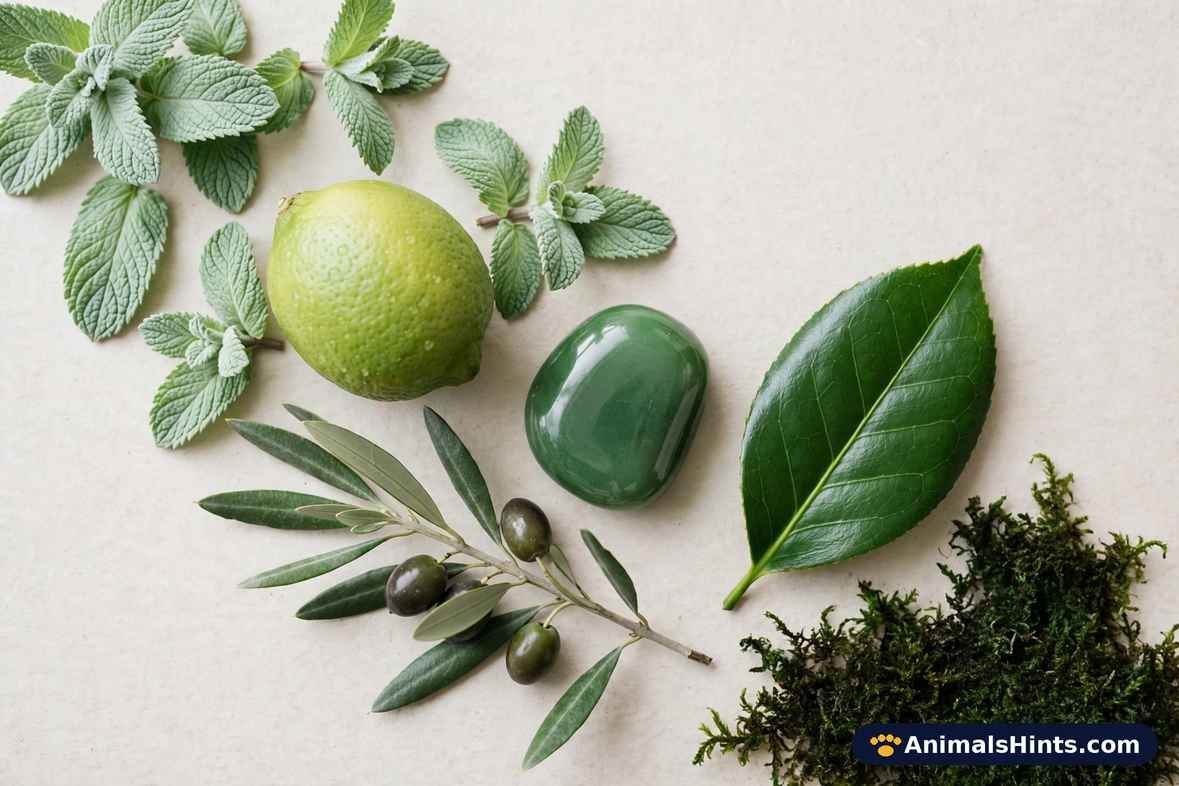
For the new-growth end of the family: think of the first shoots after rain, and keep in mind that pale can read as tender rather than weak. A true, saturated mid-green is the balanced center of the family, the color this whole guide is mostly about. Moving darker, expect more gravity: the deep shades carry authority and, in the wrong light, foreboding. Moving toward blue, the message shifts from growth to flow, the cool, renewing calm of water. And the vivid, acidic end of the family is the loudest of all, so use it where you want attention rather than rest.
Emerald Green
Emerald is the jewel of the family, the rich, slightly blue green of the precious stone, and spiritually it has always meant luxury, refinement and abundance. Ireland took the stone’s name for itself as the Emerald Isle, a title popularized by the poet William Drennan in 1795. In spiritual practice emerald green is read as concentrated prosperity: wealth and success pursued through balance rather than greed, the abundance of the meadow distilled into a gem.
Mint Green
Mint is the pale, cool green of new leaves and iced drinks, and it means freshness, clarity and new beginnings. It is the gentlest reading in the family: renewal without drama, a cleared head and a restarted heart. In color psychology, pale greens like mint are read as soothing and stress-relieving, the shade people reach for when they want a room, or a state of mind, to feel aired out.
Sage Green
Sage takes its name from the herb, and from a deeper pun the tradition enjoys: the Latin name of the plant, Salvia, comes from salvare, to save or heal, and its English leaves share a name with wisdom itself. Sage green means wisdom, experience and peace: the muted, gray-green of someone who has lived through seasons and kept the lessons. It is the color of the reflective life, calm, mature and quietly confident.
Forest Green
Forest green is the deepest common shade, the color of old trees and shaded ground, and it means power, mystery and grounded strength. It is green at its most serious: endurance, protection and the long view, the shade of things that outlast fashion and weather. In the ancient world it carried a sterner meaning too: the Greek word for green things, chloros, could describe a corpse or a man scared pale, and that deathly cast clung to deep green for centuries.
Teal Green
Teal takes its name from the teal duck, whose males carry a stripe of it across the eye, and it means clarity, rejuvenation and communication. Sitting between green and blue, it reads as growth turned toward expression: the cool, refreshing calm of water carrying the life-energy of green. It is the color of the open mind and the honest sentence, and in chakra terms it sits near the throat, the center of speaking one’s truth.
Lime Green
Lime is the vivid, yellow-heavy green of the citrus fruit, and it means energy, youth and creativity. It is the green of spring at its most exuberant, and also the green most likely to be misread: Kaya and Epps found yellow-green the most disliked shade of all, associated with sickness and disgust. Lime is therefore the family’s risk-taker: brilliant for a spark of life in a small dose, overwhelming in a room, and never restful.
Green in the Animal World
Color means things to animals too, and in the animal world green does the hardest work of any color: it keeps creatures alive, and it gets them noticed, which are nearly opposite jobs.
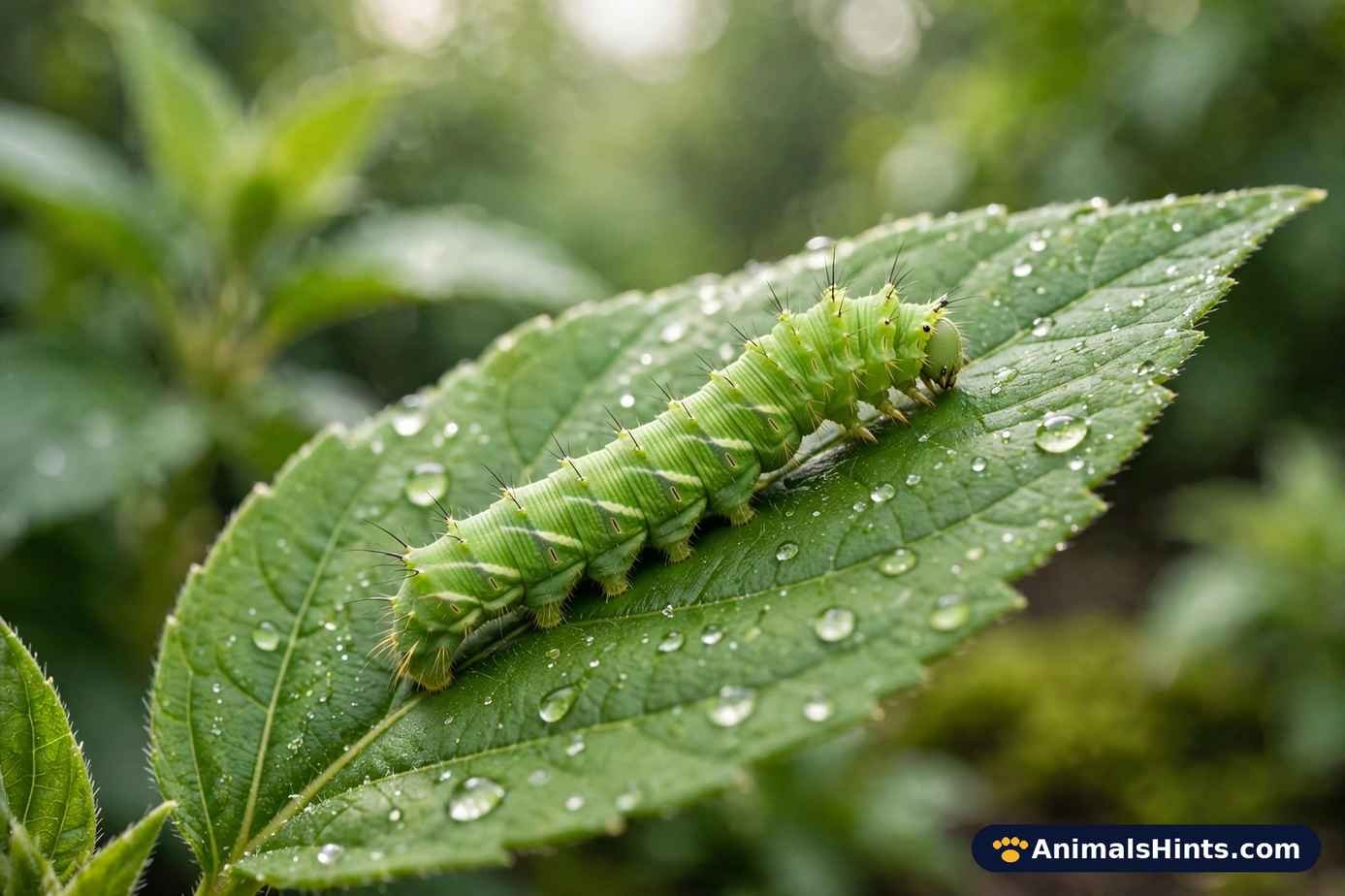
Brown may be camouflage’s commonest cloth, but green is its classic. Across the world’s forests, green is the background itself, and the animals that wear it disappear into their own homes. Tree frogs vanish into leaves, green anoles match the foliage they hunt from, and the green sea turtle takes its very name not from its shell, which is brownish, but from the green fat beneath it. Green here means shelter: safety bought by blending with the living world.
The other job is display. The males of many bird species wear green exactly because it stands out: a greenfinch at a feeder, a peacock’s iridescent neck, a quetzal’s legendary tail, all use green to be seen. Some of those greens are not even pigment. Turacous are the only birds known to carry a true green pigment, turacin; nearly every other green bird is engineering instead, blue structure scattering light through yellow pigment to make green where no green pigment exists.
Wearing green for kinship is a third job, rarer and stranger. Birds flock by color: greenfinches hold their ground at feeders in chattering groups, and caterpillar spiritual meanings include kinship among their themes, the company of like kinds growing together. Even the garden knows the pattern: leaf-green insects such as the garden spider’s green cousins gather where their food gathers, and the animals of a green world sort themselves, like the leaves around them, by shade and company.
Kinship has a deeper layer still. spiritual meanings of toads cross paths with this guide at the kinship point: traditionally, toads are read as signs of adaptability and fortune, and both animals live their lives at the green edge between water and leaf. A gardener meeting either one is meeting the living green in animal form, sheltered, slow and lucky by tradition.
Cultural and Historical Meanings of Green
Green’s cultural history is as old as civilization, and it runs in both directions at once: the color of paradise and the color of poison, of hope and of envy.
Islam honors green above every other color. The Quran (76:21) describes the people of Paradise dressed in “green garments of fine silk and brocade”, and green appears again for the cushions and carpets of Paradise (Quran 18:31 and 55:76). In Islamic tradition the color is tied to the Prophet: flags, book covers and mosque domes follow that devotion across the Muslim world, and the holy city of Medina is known as “the Green City.”
The medieval West honored and feared green in equal measure. Green dye was the hardest color to fix permanently because it required two baths, of woad blue and weld yellow, because no single medieval dyestuff gave a lasting green, so the color became a sign of instability, of fortune and its reversals, and of wild things and fairies. Ireland gives the tradition its permanent home. In Irish folklore, green is the fairies’ color, and wearing green on St Patrick’s Day is said to make a person invisible to leprechauns, who pinch anyone they can see; the same color stands on the national flag as the color of Catholic Ireland. The modern habit of wearing green for luck on that day is a living piece of that old folklore.
In China, green carries a double reading as plainly as any culture’s. On one side it is the color of spring, fertility and harmony, the east, and the Azure Dragon of the Five Elements, one of the four directional animals. On the other side, a green hat, dai lü maozi, is the classic symbol of a cuckolded husband, a warning that in Chinese the same color can carry opposite fortunes on the same head.
Japan reads green with famous restraint. The language historically did not separate green from blue at all: the word ao once covered both, and the traffic light the world calls green is still called ao in Japanese, blue, a holdover of the era before the word midori became the standard name for green. A culture that took centuries to name the color apart from blue reads it, unsurprisingly, as eternal youth and vitality, with none of the instability the medieval West feared.
The Dark Side of Green: Envy, Greed and Poison
Every color has a shadow, and green’s is among the oldest on record.
Envy is the oldest resident. Shakespeare’s Iago calls jealousy “the green-eyed monster” in Othello (c. 1603), and in A Midsummer Night’s Dream Lysander calls envy “the green sickness”: two plays, two green illnesses of the soul, within a single generation. Chaucer had reached for the same image two centuries earlier, calling jealousy green in The Romaunt of the Rose.
Greed wears the same color in English: green is the color of money, so jealousy of money becomes, simply, green. The same family of meanings gives us the greenhorn, the inexperienced newcomer, first recorded in the 15th century as the young animal’s new horns, and the color’s association with youth, inexperience and gullibility follows it ever since.
And then there is poison, which is not a metaphor. Scheele’s green, invented in 1775 by the Swedish chemist Carl Wilhelm Scheele, was a vivid copper arsenite green that colored wallpaper, fabrics, candles and artificial flowers across the Victorian world. It was also, literally, arsenic. In damp rooms the pigment shed arsenical gases, and in 1861 a London doctor named Henry Letheby attributed to it the deaths of nineteen children in Limehouse. Arsenic went on coloring wallpapers long after that report, and a second arsenic green, Paris green, colored American bookbindings well into the late 19th century, with detectable arsenic still measurable in those bindings today.
Green in Dreams
Dreams speak in the dreamer’s own associations first, so treat what follows as the tradition’s reading, not a diagnosis. With that caution, the tradition is consistent: a dream of green is usually an encouraging dream, of growth, hope and healing.
A green landscape, meadow, field or garden, reads as prosperity and fertility: the dreamer’s projects are growing and the season is favorable. A green snake is read the same encouraging way by this tradition, and those who are interested in the snake itself can look at the symbolism behind seeing a white butterfly next, a closely related sign-symbol. Green eyes in a dream are read in this tradition as jealousy, and a green light, when it appears, is permission, the go-ahead for a plan held back too long.
A dream of green clothing is also read as an encouraging sign, traditionally an increase of prosperity and happiness, just as it is in many dream books, and it stands in deliberate contrast to the gnawing shadow meanings the waking tradition gives the color in the section above. The tradition can afford to be generous here: in dreams, green reads best when the dreamer is growing into it.
Green and the Heart Chakra
Green is the color assigned to the heart chakra, Anahata, which yogic tradition places at the center of the chest. Anahata is the fourth chakra, counting from the base, and the middle one of the seven in the modern system: the bridge between the lower, physical chakras and the upper, spiritual ones. Its element is air, its sound or bija mantra is YAM, spoken Yam, and its seed syllable is written Yam with a dot over the m. Its emblem is the twelve-petalled lotus.
The system has an honest history, and the guide owes you the history rather than the system alone. The seven-chakra rainbow system, with a different color for each chakra, is modern: it took the shape most people know today in the twentieth century, through English-language works such as Arthur Avalon’s 1919 translation of the Sat-cakra-nirupana and C. W. Leadbeater’s 1927 book The Chakras. In that early sixteenth-century Sanskrit text itself, Anahata’s own lotus is not green at all: it is the color of the bandhuka flower, a deep red, with the element air and the mantra Yam. The green heart comes from the modern system, and the modern system is where its meaning lives: love, compassion, empathy, empathy’s balance, love without condition.
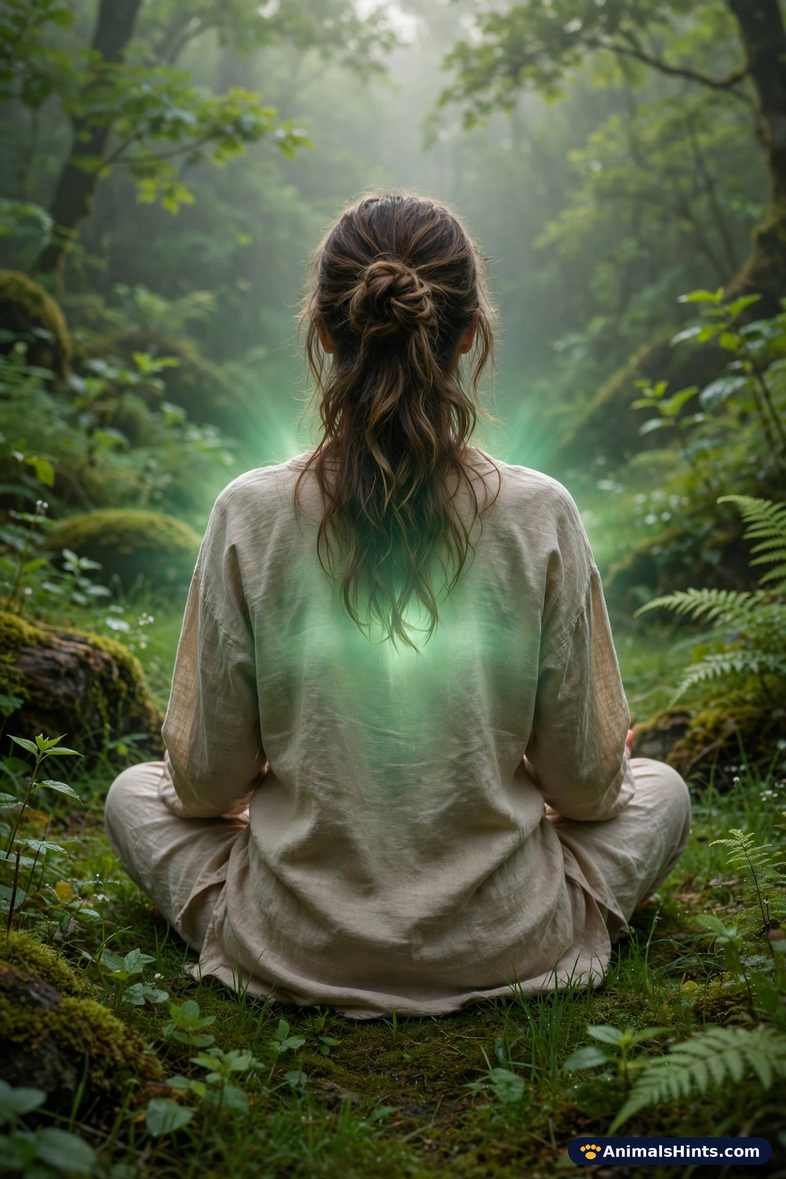
The practice attached to green and the heart is gentle and specific. Surrounding yourself with green, walking in green places, wearing the color, meditating on green light at the chest, are the tradition’s standard ways of working on love, forgiveness and emotional openness, when a love chakra is blocked or dull. The color’s work, in this tradition, is done by exposure and repetition, not by force: a green walk a day is the dose.
How to Use the Color Green in Daily Life
Green’s meanings become more than trivia when the color is put to work, and the tradition’s advice is consistent: use it gently, steadily and where the feeling of balance is wanted.
Bring it indoors first. Houseplants are the standard prescription, and they are not only symbolic: a peer-reviewed study published in the Journal of Physiological Anthropology (Lee et al., 2015) found that working with houseplants measurably lowered psychological and physiological stress in young men compared with a computer task. The 2015 study is the named evidence here; what it supports is the modest, honest claim that time with living green things can steady a person.
Wear it when you want the qualities it stands for. Green is read as a sign of steadiness and calm, so it is the color to choose for a difficult conversation, a negotiation, a classroom or a hospital visit, anywhere trust and balance matter more than display. The color that research places at the calm end of the spectrum is also the color tradition trusts to carry a message of groundedness to others.
Use it at work and in study. Green backgrounds and green-lit rooms are read in the literature as aiding concentration and calm focus, a claim that sits somewhere between psychology and folk practice, but one many people test for themselves when they look away from a screen toward a plant or a window. Even a green notebook cover, say some practitioners, functions as a kinship symbol for the learner, kinship with the thing being learned.
Use it for rest. When you need sleep or recovery, surround yourself with the muted end of the family, the sages and mints, and keep the acidic limes cleared away. The milder greens are, by the research discussed above, the most likely to help, and they are also what Wearing Psychology already counsels: the most restful, harmonizing color most people own.
Green in Spiritual Practice and Meditation
The practice that gives green its daily work is meditation, and it is the simplest practice in this guide. Visualizing green light at the heart is the tradition’s core technique for this color: sit quietly, bring attention to the center of the chest, and picture green light growing there with each breath, carrying the meanings the color holds, love, compassion, healing and balance, into feeling.
Guided traditions extend the same image outward. Pictures of green light pouring from the heart of Green Tara, the Buddhist figure of compassion in action introduced in meaning 10, are standard in Tibetan practice. The Western offshoot of the same practice is the forest walk as meditation, moving slowly through living green with attention on the senses, the shinrin-yoku, or forest bathing, that Japan’s forestry agency promoted from 1982 onward.
The honest footnote belongs in the guide too. Forest bathing’s measured benefits in studies are real but modest, and the practices in this section belong to the faith and wellbeing traditions that teach them. Green meditation is not treatment for any condition, and a person whose heart needs medical attention should give it exactly that.
Why the Color Green Captures People
Here is the larger point this whole guide has been making, quietly, in sections: the color green captures people because it is the color of their own biology. Eyes tuned to it, bodies fed by it, seasons timed by it. Meaning, in green’s case, is not decoration laid over nature. It is attention paid to nature, and the memory of what has been paid attention to.
That is why the same color can hold paradise and poison, growth and greed, healing and the green sickness, without contradiction. Green captures people because green is what being alive looks like, and being alive has never been a single simple thing. Even the color’s name testifies to it: “green” descends from the Old English grene, from a Germanic root that also gives the word “grow”. The meaning was in the word from the start.
Final Thoughts
After thirteen meanings, six shades, the animal world, four cultures, dreams, the heart chakra and the shadow side, green ends where it began: with life renewing itself, and a person watching closely enough to catch it. The color’s spiritual meaning is a discipline as much as a symbol: growth by season rather than force, compassion worked through rather than performed, equilibrium kept by attention rather than by control.
If green keeps appearing in your life, take it the way this article has taken it: as an invitation to tend what is growing, forgive what is blocked, and rest in the balance the color keeps pointing at. The world’s own green is patient, and so, in the end, should we be.
And if you have a butterfly sign to decode next, blue butterfly meaning is a useful place to start.
The science under all of it is just as plain as the symbol: the living world is green because of chlorophyll, and the eyes reading these words are tuned to see it better than any other color.
Frequently Asked Questions
What is the spiritual meaning of the color green?
Green’s spiritual meaning is growth, healing and balance. It is the color of life renewing itself in spring, of the heart chakra and its love and compassion, and of equilibrium between heart and mind. Traditions across the world read it as an invitation to grow steadily, heal patiently and live in balance rather than force outcomes.
What does the color green symbolize?
Green symbolizes life, renewal, harmony and hope. It is the color of chlorophyll and of spring, sits in the middle of the visible spectrum where the eye sees best, and stands for abundance, emotional balance and prosperity in most traditions. Its shadow meanings are envy, greed and inexperience.
What is the meaning of green in the Bible?
In biblical symbolism, green is the color of life, growth and God’s provision. The Bible’s own central image is the “green pastures” of Psalm 23, where God leads the psalmist to rest and sustenance. Green stands in the Christian tradition for hope, eternal life and steady growth in faith, which is why the Catholic Church wears green through Ordinary Time.
Is green a lucky color?
In many traditions, yes. Green is the color of Islam, of Ireland and of luck on St Patrick’s Day, and is read in many cultures as a color of prosperity, fertility and good fortune. The caution travels with it: in China a green hat carries an unlucky meaning for a husband, so even luck has its local exceptions.
What does it mean when you see green everywhere?
Tradition reads repeated sightings of a green as an invitation to growth and balance. In this article’s terms, it means the color is doing its work: catching your attention and pointing you toward healing, renewal and steadiness. If the color keeps returning, the traditional response is to tend what is growing in your life and to forgive what is blocked.