Gold Spiritual Meaning: Symbolism, Psychology, Shades and Sacred Gold
Ask what does the color gold mean spiritually and nearly every tradition answers with the same three ideas: divinity, worth and light that does not fade. In modern symbolism writing, gold stands for abundance, enlightenment and divine favour — the colour of the sun at full strength and of the one metal that never rusts, dulls or decays.
That reputation is anchored in an unusually solid record. Gold was the flesh of Egypt’s gods and the sweat of the Inca sun, it covered the Ark of the Covenant and the dome of a hundred temples, and alchemists made it the finish line of their whole art: the perfect metal, the one nothing could corrupt.
Below you will find what gold symbolises, what colour psychology claims about the people who love it, the ten spiritual meanings in turn, the shades — bright yellow gold, black gold, brown gold — the cultural and biblical record, gold in dreams, and honest ways to work with the colour well.
What Does the Color Gold Symbolize?
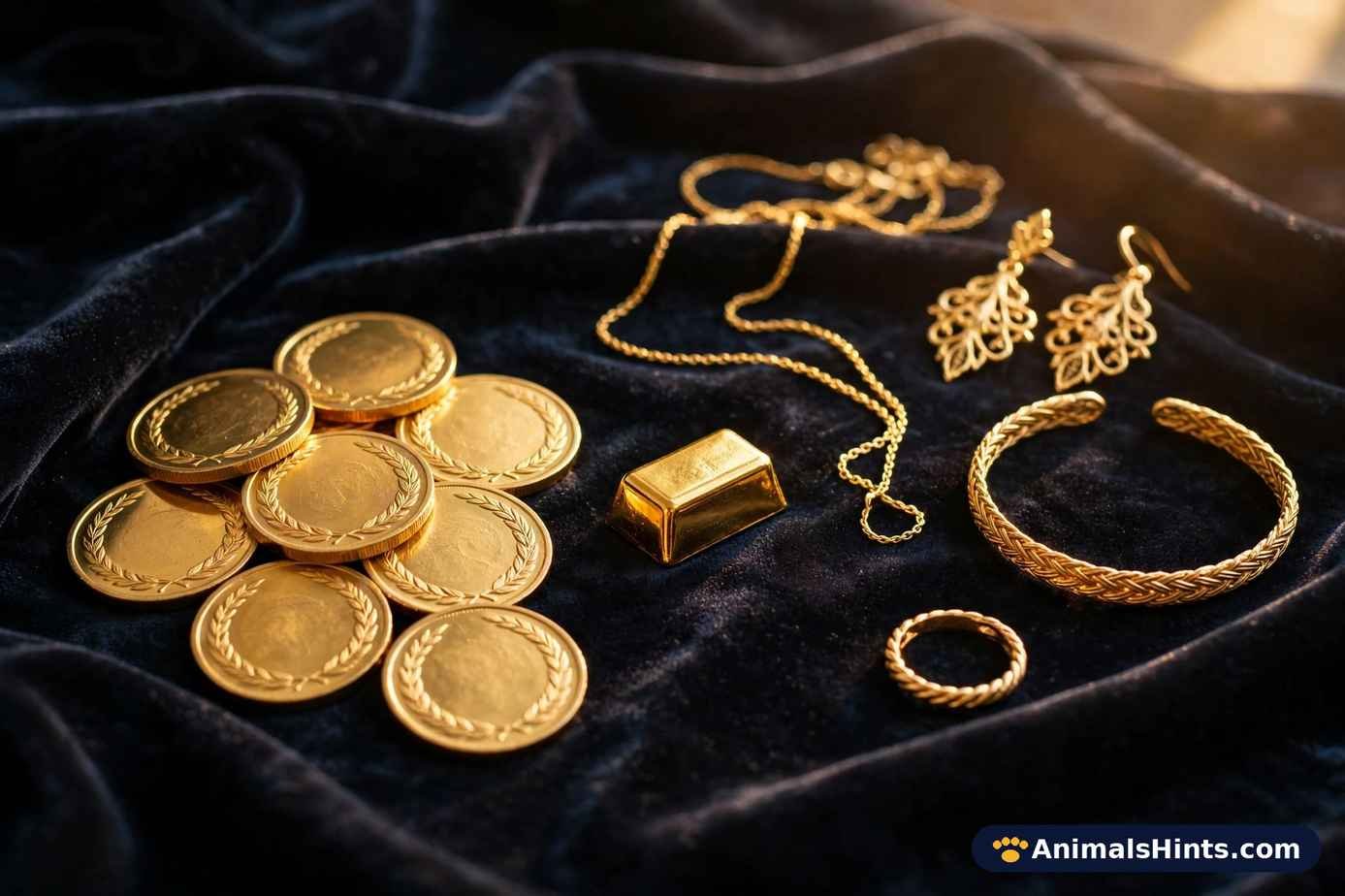
Gold symbolises the highest value a culture can name. Before it means wealth in the money sense, it means worth in the absolute sense: success, achievement, enlightenment and divine wisdom, the things a society points to when it wants to show its best. It glows with the warmth of the sun, and traditions on every continent have read it as the giver of life made visible.
From that root, gold is read as a bridge between the material and spiritual worlds. Its lesson, repeated across the symbolism literature, is that true abundance is not only material: the same colour that fills a treasury is used to picture a soul arriving at the end of a long journey, refined into enlightenment or union with the divine.
Underneath both readings sits the metal’s strangest property. Gold is one of the very few metals that does not tarnish, so symbolism writers read it as perfection, purity and incorruptibility — a thing time cannot touch. To wear gold or visualise it, in the genre’s language, is to align yourself with confidence, vitality and the wish to make something real.
In emotional and spiritual terms, the colour is conventionally read four ways. It stands for divine protection, a shield of light around the person who carries it. It stands for prosperity and abundance, a reminder that the world can be generous. It stands for wisdom and illumination, higher truth shining into ordinary experience. And it stands for courage and self-worth, the nerve to shine without apology. The balance the tradition asks for is always the same: power with humility, wealth with generosity, ambition with gratitude.
Why Is Gold Gold? The Metal That Never Tarnishes
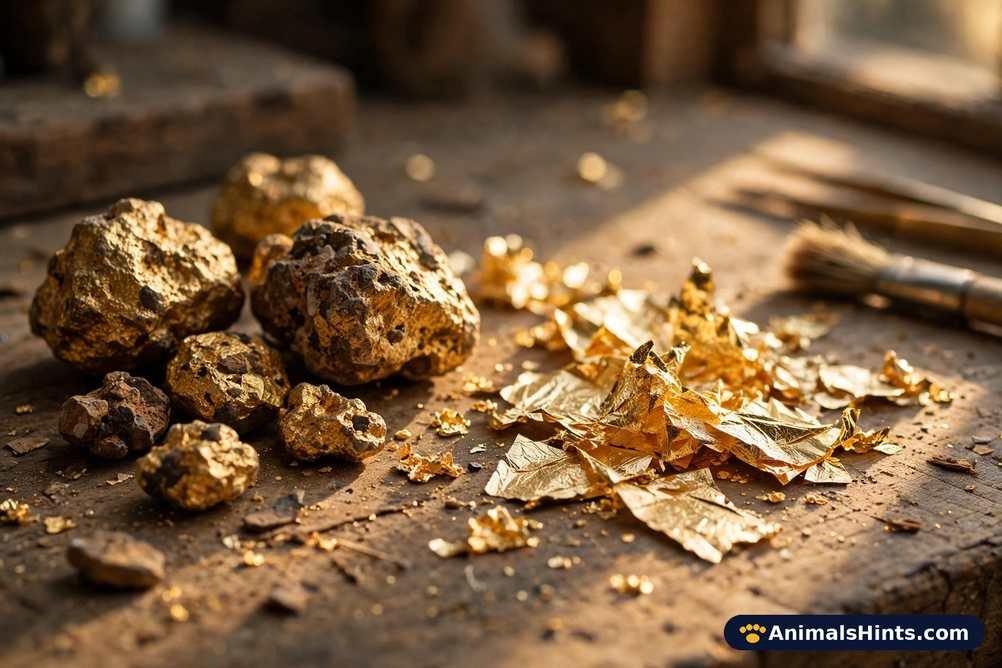
Start with the element. Gold is chemical element 79, symbol Au, from the Latin aurum. Chemists class it among the noble metals because it barely reacts with anything: it does not rust in air, does not dissolve in most single acids, and comes out of the ground already metallic, needing no smelting to shine. A gold object buried for three thousand years comes up bright. Almost every spiritual claim ever made about this colour is a footnote to that one behaviour.
Its colour is just as singular, and physics explains it with Einstein’s help. Most metals reflect every wavelength evenly and so look silvery white. In gold, the electrons orbit so close to a heavy nucleus that they move at a significant fraction of the speed of light, and relativistic effects shift the atom’s energy levels until the metal absorbs blue light. What reflects back is the rest of the spectrum — reds and greens combining in the eye as the warm yellow we call gold, close to the spectral yellow the eye registers around 570 to 590 nanometres. Silver, gold’s lighter cousin, absorbs only in the ultraviolet, which is why it stays colourless and gold does not. The green half of that reflected mixture has an article of its own in this series, the guide to the green spiritual meaning — gold is what happens when that green is married to red light and a metal’s shine.
Gold is also the most malleable metal known. A single gram can be beaten into leaf about a tenth of a micrometre thick — hundreds of times thinner than a human hair — covering close to half a square metre, and the craft of goldbeating has changed little in five thousand years. That is how a scarce metal came to cover domes, statues, picture frames and the pages of illuminated manuscripts: a whisper of real gold, spread almost to nothing, still reads as solid splendour.
Egypt shows what civilisations did with it. Egyptian teaching held that the flesh of the gods was gold and their bones silver; the aged sun god’s body, in the myth of the Celestial Cow, turns to gold flesh, silver bone and lapis lazuli hair. Tutankhamun’s funerary mask, hammered from two sheets of high-karat gold and weighing 10.23 kilograms, still sits in a Cairo museum looking newly made — the incorruptibility claim, demonstrated in a single object.
Alchemy built a philosophy on the same facts. In the planetary scheme the alchemists inherited, gold belonged to the Sun and silver to the Moon, and gold stood as the perfect metal: pure, incorruptible, complete. Turning base metals into gold was the famous goal of the Great Work, and later readers have taken it as the tradition’s own metaphor — the imperfect self worked on, stage by stage, until it reaches the one state nothing can corrode.
One honest distinction belongs in this section, because the rest of the article depends on it. Most of the gold colour you will see today is not the metal. Gold paint is usually a metallic pigment, gold print is ink, gold fabric is dyed thread, and imitation leaf — the cheap gilder’s sheet made of copper and zinc — contains no gold at all and dulls with time exactly as real gold refuses to. The colour borrows the metal’s meanings; only the metal itself has earned them.
Psychology of Color Gold, Personality and Love
Colour psychology reads gold as prestige made visible. In the popular literature it evokes confidence, warmth and sophistication, and it attracts attention in a different register from red’s alarm: gold does not shout, it presides. People drawn to it are described as self-assured and purposeful, ambitious yet grounded, motivated by success and by the wish to make a mark that matters.
Personality Traits Associated with Gold
The genre’s portrait of the gold personality begins with self-worth. Gold lovers are pictured as people with a strong sense of their own value and inner strength — leaders, visionaries and steady guides who are generous with time, knowledge and money, and who naturally end up teaching, mentoring or organising others.
They are said to value quality, authenticity and loyalty, to keep a refined taste, and to prefer excellence quietly achieved over noise. At their best, in this reading, they are wise, compassionate and dependable. The imbalance is named just as plainly: the same drive can curdle into materialism or arrogance, and the tradition’s standing advice to gold personalities is to balance worldly ambition with humility and gratitude.
Hold all of this at its proper weight. These are sketches from colour tradition, consistent across the symbolism books, not findings from personality science — no laboratory test sorts people by favourite colour. What research does support is narrower: gold’s association with prestige is real because the metal’s value is real, and people reliably read gold surroundings as expensive. The personality portrait is the folklore built on top of that fact.
Gold and the Psychology of Love
In love, the colour tradition gives gold the long game. Where red is read as desire at first sight, gold is read as affection that has been tested and kept: deep, enduring love, emotional maturity, and partnerships resting on trust, loyalty and respect between equals, rather than on a passing attraction.
The metal supplies the metaphor, as it does everywhere in this article. Gold does not tarnish, so gold is the colour of the fiftieth wedding anniversary — the golden anniversary is the one a marriage reaches after fifty years — and of vows pictured as bands that cannot corrode. In the genre’s language, gold energy in a relationship means warmth, generosity and open communication: love that illuminates rather than possesses, bringing out the best in both people the way sunlight reveals whatever it touches.
10 Spiritual Meanings of Gold Color
The ten readings that follow reproduce the standard list the modern symbolism genre gives this colour, in the order the competitor prints them. The list itself is young; the record it stands on — set out in the sections before and after — is thousands of years older.
1. Purity Through Trials
Gold’s first meaning is purification by fire. Real gold is refined by intense heat: the impurities burn or float away, and what survives the furnace is the metal at its purest. The genre reads a life the same way — the soul, like the metal, is purified through challenges rather than despite them, and hardship is treated as a pathway, not a punishment.
The image is ancient and it is also scriptural. The First Epistle of Peter measures faith against exactly this process: “the trial of your faith, being much more precious than of gold that perisheth, though it be tried with fire” (1 Peter 1:7, KJV). The fire that melts gold does not destroy it; it reveals its grade. Symbolism writers use the meaning for patience, endurance and trust in timing — the difficult season as the refinery, not the end.
2. Wealth and Success
Gold is the world’s oldest shorthand for prosperity, abundance and achievement, and this meaning needs no excavation: it is the colour of treasure because it is treasure. The genre widens it beyond money, reading true wealth as emotional richness, wisdom and gratitude alongside the bank balance.
When the colour turns up in a meditation, a dream or a painting, the tradition reads it as a season of manifestation and growth — with the standing condition attached. Gold teaches balance inside its own meaning: pursue success ethically, hold it generously, and remember that abundance, in this colour’s teaching, flows toward people aligned with a purpose larger than appetite.
3. Wisdom and Enlightenment
Gold’s shine makes it the natural emblem of illumination, and symbolism writers read it as spiritual wisdom and divine understanding — the inner light of consciousness recognising truth beyond illusion. Sages, saints and mystics are pictured with it for a reason: in sacred art across cultures, the halo and the gilded aura mark the person who has woken up.
The distinction the tradition insists on is between knowledge and knowing. This meaning is not about information collected but about recognition — the moment the sacred is seen inside ordinary things. Gold invites the reader to open both mind and heart, and treats enlightenment as beginning with the courage to see yourself truthfully.
4. Optimism and Positivity
Gold is sunlight with a memory. The genre reads it as joy, vitality and warmth — hope, happiness and positive transformation in colour form — and uses it as the antidote shade: the colour prescribed against negativity, low confidence and the flat grey seasons of a life.
The practical suggestions follow the reading. Surround yourself with golden tones, in clothing, in a room, in visualisation, and the tradition promises a lift in emotional resilience and a higher view of difficult circumstances. Psychologically, this is the colour of looking forward: the sunrise argument that, since the sun comes up every morning without fail, the inner light can be trusted to do the same.
5. Divine Power and Spirituality
In nearly every major religion, gold marks the presence of the divine. It is the material of temples, altars, chalices, crowns and halos — sacred power and heavenly glory rendered in the one substance that cannot decay. The logic is consistent everywhere: if you are building for eternity, you build with the metal that behaves like eternity.
Christian art gilds its mosaics and altarpieces to picture the light of God; Buddhist statues are cast and leafed in gold to embody enlightenment and perfection — traditional descriptions even give the Buddha himself a golden complexion, one of the marks of a great being. The genre’s conclusion is personal: the divine spark is read as something carried within each person, and gold’s power is never, in the careful versions of this teaching, about domination. It is about alignment with something higher.
6. Symbol of New Beginnings
Dawn is gold’s daily argument. The genre reads the colour as renewal and rebirth — the golden light that ends the night standing for the start of a new spiritual chapter, with clarity and purpose arriving together.
When someone feels drawn to gold during a transition, the tradition reads it as an awakening unfolding: a beacon colour, guiding the person toward self-discovery and a truer path. The counsel attached is active rather than passive — release the old deliberately, the way the night releases the dark, and expect to rise from hardship stronger and more radiant than before, as the refined metal of the first meaning does.
7. Knowledge and Spiritual Awakening
Closely paired with the third meaning, but turned inward: gold here signifies the illumination of consciousness itself, knowledge passing over into understanding. The glowing aura in sacred art and sacred geometry is this meaning drawn — divine intelligence pictured as a light that ignorance and fear cannot dim.
When gold appears in dreams or meditation, the tradition reads a phase of heightened intuition and insight beginning. Its ethical clause is the same one the wisdom meaning carries: knowledge counts as sacred, in this colour’s teaching, only when it serves enlightenment and compassion, and the answers it promises are found by looking within, where the genre insists the wisdom already resides.
8. Healing and Luck
Gold’s healing reputation is old. Ancient healers associated the metal with the life-giving energy of the sun, and the association never entirely left the metal — gold compounds genuinely were prescribed against rheumatoid arthritis well into the modern era. The metaphysical tradition runs further, reading gold as universal healing light that strengthens the aura, restores vitality and wards off negativity; those claims are printed here as the tradition’s own, not as medicine.
The luck half of the meaning is the prosperity meaning wearing its festive clothes. Gold is read as good fortune and divine favour — abundance in opportunities, love and joy as well as money — and its presence in jewellery and sacred spaces is traditionally meant to attract blessing and protect against misfortune. Healer and luck-bringer in one colour: balance and blessing, in the genre’s summary.
9. Divine Beauty and Glory
Gold is sacred art’s background colour — literally. In Byzantine icons and medieval altarpieces, the gold ground behind the figures is not decoration; it is the uncreated light of heaven, the space where divine things happen. Halos, crowns and the gilded frames of a thousand altarpieces all make the same claim: this beauty is not merely physical, it is glory made visible.
The Bible’s own picture is the largest version. Revelation describes the New Jerusalem with a street of “pure gold, as it were transparent glass” (Revelation 21:21, KJV) — gold so perfected it turns clear. The genre extends the image to the human soul, read as a reflection of the same glory: beauty as the radiance of a spirit expressed through love, compassion and virtue, and an invitation to reverence for the sacred inside ordinary life.
10. Prosperity and Luxury in Hinduism
The list ends where gold’s living devotional record is strongest. In Hindu tradition, gold symbolises wealth, prosperity, purity and divine blessing, and it belongs above all to Lakshmi, goddess of abundance and fortune, pictured adorned in gold and showering coins. Gold bought and worn at festivals such as Akshaya Tritiya and Dhanteras is traditionally held to invite her blessing and lasting prosperity.
The tradition treats the metal as auspicious and protective, not merely expensive: gold jewellery at rituals and weddings is worn to attract positive energy, good luck and divine protection, and temple deities are dressed and crowned in it. The philosophy underneath is the genre’s favourite lesson in its oldest home — gold’s brilliance read as inner richness, the purity of the heart, so that true luxury is finally defined as spiritual wealth: the ability to give, to love and to lift others.
Shades of Gold and Their Spiritual Significance
Not all golds carry the same charge, and the shade shifts the reading. Bright yellow gold is the metal at full sun — the standard of coins, wedding bands and temple leaf. Paler golds, alloyed toward silver, read cooler and quieter; deep, copper-warmed golds read richer and older. The competitor’s page singles out the two darkest members of the family, and they are kept here in its order.
Black Gold
Black gold pairs the family’s richness with the mystery of black, and the genre reads the result as hidden wisdom and transformation — the alchemy of the soul, life’s challenges worked into enlightenment. It is associated with depth, resilience and rebirth: the reminder that the divine light keeps shining inside the dark part of the process.
In personal symbolism, black gold is the shade of people who have walked through adversity and come out wiser — power in its grounded form, formidable without display. The pairing with the colour black is a real one in this run’s family of articles, and our guide to the black spiritual meaning follows the dark half of the combination in full.
Brown Gold
Brown gold, the shade of antique jewellery and aged decor, marries the earth’s steadiness to the spirit’s brilliance. The genre reads it as stability, maturity and grounded prosperity — spiritual wisdom integrated into practical life rather than admired from a distance.
Where pure gold soars, brown gold stays rooted. It is prescribed, in the tradition’s language, for people trying to hold financial success and soulful purpose in the same pair of hands: the balance of the material and spiritual realms struck in a single, wearable shade.
Gold in the Animal World: Eagles, Finches and a Monkey in a Golden Mane

Animals wear this colour honestly, and the three best-known golden animals earn it three different ways — none of them with the metal itself.
The golden eagle carries the colour in its name twice over. Its scientific name, Aquila chrysaetos, is built from the Greek chrysos, gold, and aetos, eagle, and the bird is named for the pale golden feathers on the back of its crown and nape, which catch the light against an otherwise dark brown body. Greek tradition made this eagle the companion and messenger of Zeus, and it is not hard to see why the symbolism of majesty attached itself here first: a huge, silent hunter, crowned in gold, ruling empty mountains.
The American goldfinch earns its gold the way the red meanings in this series earn theirs — through dinner. The breeding male’s lemon-yellow plumage is built from carotenoid pigments in the seeds it eats, laid down at the spring moult, and Cornell’s ornithologists note the same honest-signal logic found in brighter birds everywhere: the colour can only be as good as the diet behind it. Come winter, the male moults back to drab olive-brown. Gold, in the finch, is a season, not a possession — which may be the most truthful sentence in this whole article.
The golden lion tamarin wears the family’s most extravagant version: a small Brazilian monkey, Leontopithecus rosalia, draped head to tail in silky red-gold fur, with a long mane framing its dark face — the mane that gives it the lion in its name. Researchers attribute the coat’s richness partly to carotenoids in its diet and partly to sunlight on the hair. The species is endangered in its Atlantic Forest home, which lends this golden animal a meaning the symbolism books never list: gold as something that can be lost, and is worth protecting while it shines.
Cultural and Religious Significance

Ancient Civilizations
In ancient Egypt, gold was the flesh of the gods — the sun god Ra’s above all — and pharaohs were buried inside it to carry them into eternal life: masks, coffins and whole chambers of gold, in a tomb culture whose burial room was called the house of gold. The gleam meant immortality, and the metal’s refusal to decay was the proof of concept.
In Greece and Rome, gold crowned victors, filled temples and made offerings to the gods — divine favour, heroic virtue, victory and honour in one material. The Americas kept the most beautiful version of the idea. The Inca of Peru held gold to be the sweat of the sun, Inti, and silver the tears of the moon, and worked both into discs, figurines and ceremonial objects for the nobility and the gods. Their neighbours in Mexico went further into poetry: the Nahuatl word for gold, teocuitlatl, means the excrement of the gods — the sun’s own leavings, dropped to earth, precious precisely because they fell from heaven.
In Asia, gold settled into celebration: weddings, festivals and sacred ceremonies across China and India, where it carries luck, prosperity and purity together. China’s New Year makes the pairing visible — money travels in red envelopes stamped with gold characters, the two luck colours of this run’s family working as one, a partnership examined from the other side in our guide to the red spiritual meaning.
Religious Symbolism
In Christianity, gold is God’s glory, purity and unfading light: it overlays the Ark of the Covenant in Exodus, arrives among the gifts of the Magi, gilds chalices, crosses and altarpieces, and backs the halos of saints in a millennium of art — the incorruptible material for an unchanging truth.
In Hinduism, as the tenth meaning records, gold is Lakshmi’s own metal: sacred, auspicious and protective, worn at rituals to attract positive energy and divine blessing. In Buddhism, gold embodies enlightenment and compassion — Buddha images are cast, painted and leafed in it across Asia, and devotees still press small squares of real gold leaf onto statues as an act of merit, adding their own thin layer to a surface brightened by centuries of hands. Across all three traditions the claim is the same one the metal makes in the ground: what is gold does not decay, so gold is what you use for the things that must not.
Modern chakra writing adds a footnote the older record does not contain: gold is often linked to the crown chakra, the centre of connection to the divine, though other systems assign gold’s yellow to the solar plexus instead. The systems disagree with each other, and the disagreement is worth knowing — the gold-chakra link is a modern convention, not an ancient one.
The Shadow Side of Gold: Greed, Glitter and the Gilded Cage
Gold casts a shadow as strong as its shine, and literature gave it the most famous one of all. Greek myth gives it King Midas, whose wish that everything he touched would turn to gold was granted in full — food, drink and, in later tellings, his own daughter included — until the gift stood revealed as a curse and he begged to have it taken back. Ovid’s telling in the Metamorphoses is the genre’s permanent warning label: gold pursued without limit converts the whole world, including everything you love, into the one thing you cannot eat, drink or embrace.
Language keeps the same ledger. A gilded cage is a luxurious prison. A golden handshake is money paid to make someone leave. Fool’s gold is pyrite, the glittering mineral that bankrupted hopeful prospectors — value’s costume with nothing inside. Even the compliment gold-plated cuts both ways, and the gilding idiom gives the shadow its sharpest form: to gild is to cover a base thing with a shining surface, and a gilded age is remembered as much for the corruption under the shine as for the shine itself.
The symbolism tradition itself names the imbalance plainly, in its own personality section: gold unbalanced tips into materialism and arrogance, the belief that worth is measured by display. The honest way to hold both sides is the one this article has used throughout — gold is value, and value is neutral. The metal in the treasury, the statue and the wedding band is the same metal as the one in the Midas story. What differs is whether the person holding it knows what it is for.
Interpretations of Dreaming About the Color Gold
Dream lore reads gold the way waking tradition does, as the colour of value surfacing. Gold appearing in a dream is traditionally read as spiritual awakening, success and inner worth — hidden talents or gifts coming to light, a period of transformation, or a new awareness of your own guidance and self-respect.
The form refines the reading. Receiving gold in a dream — jewellery, coins, a golden key — is the genre’s classic image of blessing and opportunity: reward, abundance and recognition arriving for perseverance. Losing gold is read the opposite way, as a warning about misplaced priorities or a self measured too much by possessions, and a prompt to rediscover worth that is not worn or spent. Golden light and golden auras are read as spiritual protection and divine connection, among the most positive signs the dream books recognise.
Context steers every version, as it does with every colour in this series. No dream dictionary settles what your gold meant — a dream book offers associations; it cannot translate. The reading that matters most is usually hidden in what the dream’s gold was doing: arriving, being given, being hoarded, being lost. The genre’s closing summary is consistent, though: in dream after dream, the treasure turns out to be inward — wisdom, compassion and the spiritual essence the waking colour has been pointing at all along.
Biblical Meanings of the Color Gold
Gold runs through the Bible from its second book to its last, and its meanings cluster in three places: sacred construction, tested faith and final glory.
The construction comes first. Exodus describes the Tabernacle and its furniture overlaid with gold — the Ark of the Covenant above all, plated inside and out — and Solomon’s Temple carries the programme to its limit, its inner sanctuary overlaid with fine gold and its great carved cherubim gilded. Gold is the Bible’s building material for the places where heaven and earth meet, chosen for the same reason Egypt chose it: it does not tarnish in the presence of holy things.
The testing is the first spiritual meaning of this article wearing scriptural dress. Peter’s image of faith “much more precious than of gold that perisheth, though it be tried with fire” makes the refinery the Bible’s own metaphor for what trials do to a believer, and the prophets and psalms return to it — gold proved in the furnace as the picture of a person proved in adversity.
The glory closes the book. Gold arrives at the Nativity among the Magi’s gifts, fit for a king, and Revelation ends with the New Jerusalem: a city of pure gold, its street “pure gold, as it were transparent glass” (Revelation 21:21, KJV). Read in order, the Bible’s gold travels from sanctuary to furnace to city — holiness built, faith refined, and a final state so perfected that the most incorruptible material on earth has become clear as glass. Quotations follow the King James Version.
How to Use Gold’s Meaning in Everyday Life

Begin where the metal itself points: with what lasts. Gold’s whole symbolism rests on permanence, so its most honest daily use is as a filter — spend time, money and attention on the things in your life that do not tarnish, and notice how much of the rest is imitation leaf, bright this season and dull the next.
Wear the colour on purpose. The psychology section sets out what gold signals — prestige, confidence, quiet authority — and you can spend that signal deliberately: gold for the presentation, the negotiation, the day you want to be received at full value. Choose the shade for the room, as the shades section suggests: bright gold where celebration is the point, brown gold’s antique register where steadiness matters more.
Use it at home as the tradition prescribes, in accents rather than avalanches. A gold frame, a brass lamp, a single gilded object in a calm room borrows the colour’s associations with warmth and worth without tipping into display. Symbolism writers are consistent on the dose: gold rewards restraint, because the metal’s real lesson is that a tenth of a micrometre, rightly placed, outshines a wall of glitter.
For the contemplative side, gold’s hour is built into the day. Sunrise and the golden hour before sunset are the colour’s natural meditation setting in every tradition that uses it — sit in that light, literally, when you want the optimism and new-beginnings meanings in their original form. Whether or not you accept the crown-chakra framing, the practice it recommends is simple: stillness, in warm light, while the day is being refined.
Give gold deliberately, too. A gold-wrapped gift, a coin for a child’s keeping, gold at a wedding or a festival — each borrows the colour’s old associations with blessing, permanence and honour, and the Hindu festival custom of buying gold to invite prosperity is the same instinct in its most developed form. Used with intent, the decoration becomes a small ceremony of valuing.
Final Thoughts
Gold’s spiritual meaning is unusually easy to defend, because here the symbolism grew straight out of the substance. This is the one common metal that comes out of the ground already shining and stays shining for millennia, the colour physics itself had to bend relativity to explain — and so the genre’s talk of divinity, permanence and tested purity turns out to be modern language wrapped around very old facts.
Set the documented history beside the meanings and the two strengthen each other. The record keeps the symbolism honest: flesh of Egypt’s gods, sweat of the Inca sun, the alchemists’ perfect metal, the street of the New Jerusalem. And the symbolism explains why the record was written at all — why a pharaoh, a temple builder and a bride all reached for the same unchanging yellow to say the most important thing they had.
It is fitting that gold’s most widespread sacred use is also its thinnest. For well over two thousand years, craftspeople have beaten this metal into gold leaf — sheets a tenth of a micrometre thick, laid over statues, domes, frames and altarpieces until whole buildings seem made of light. Almost everything gold has ever meant is in that craft: value spread without waste, splendour that asks for almost nothing, and a surface that, once laid, simply refuses to fade.
Frequently Asked Questions
What does the color gold symbolize spiritually?
Spiritually, gold symbolises divine wisdom, enlightenment and the highest human potential: the sun’s life-giving energy, success and abundance, and a self refined by trials into something incorruptible.
How does gold affect our psychology?
In colour psychology, gold is read as promoting confidence, optimism and a sense of achievement and worth. Too much of it tips the other way, toward materialism, so the tradition pairs it with humility and grounding.
What does liking gold say about your personality?
Colour lore describes gold lovers as ambitious, quality-minded and generous, with a strong sense of purpose and self-worth. It is a personality sketch from the colour tradition, offered for reflection, not as a reading of anyone’s character.
How can I use gold’s spiritual meaning in my life?
Wear gold when you want confidence and presence, use it in small accents at home, meditate in the golden light of sunrise, and let the metal’s permanence guide the larger choice: invest in what does not tarnish.