
Top 18 Small Monkey Breeds In The World
A small monkey is a primate that weighs less than two pounds as an adult. These tiny animals fit easily in your hand. They belong mainly to the marmoset and tamarin families of South America.
Imagine walking through a rainforest and hearing high-pitched chirps above you. You look up to see a creature no bigger than a butter stick staring back. That magical moment captures why people love these miniature primates so deeply.
Small monkey breeds live in tight family groups where everyone helps raise the babies. They eat fruits, insects, and tree sap in the wild. Some species are so rare that only a few hundred remain on Earth today.
Read this too: Seeing 3 Crows Spiritual Meaning
List of Small Monkey Breeds
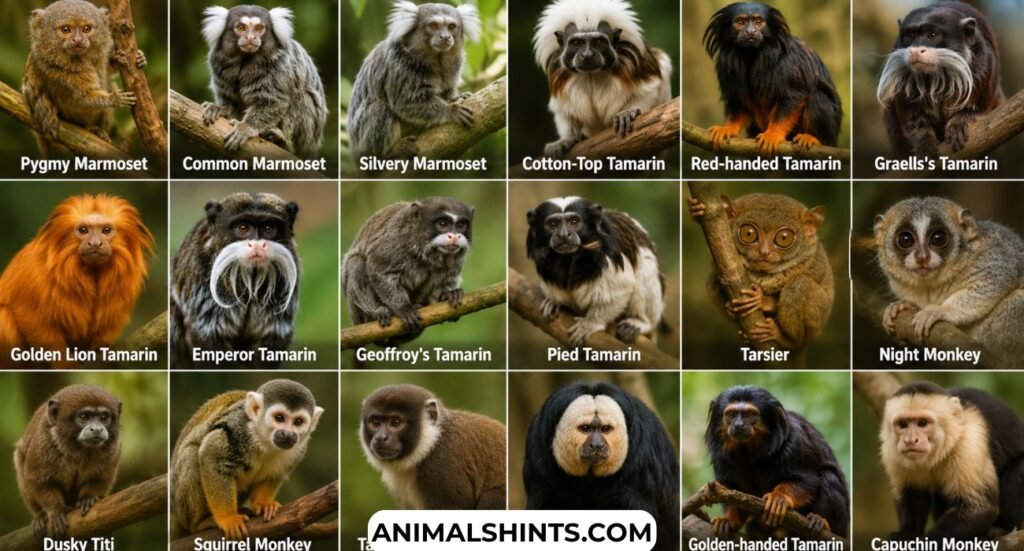
When people talk about types of small monkeys, they are usually referring to a specific group of New World primates. These animals are native to the forests of Central and South America.
They belong to families like Callitrichidae, which includes marmosets and tamarins. These families contain the most well-known tiny monkey breeds on the planet.
However, the internet often adds other species to these lists. Some of them are not monkeys at all. Others are simply not small enough to qualify.
Below is a corrected overview of eighteen species often discussed in this context. We have reordered them by true size and included crucial notes where biological corrections are needed.
| Rank | Common Name | Average Weight | What Makes It Special |
| 1 | Pygmy Marmoset | 100–140 g | The true world’s smallest monkey |
| 2 | Common Marmoset | 250–350 g | Widespread in research and the exotic trade |
| 3 | Silvery Marmoset | 300–400 g | Striking bare skin and silver fur |
| 4 | Cotton‑Top Tamarin | 400–450 g | Critically endangered with a white punk-rock crest |
| 5 | Red-handed Tamarin | 400–550 g | Bold golden hands and feet |
| 6 | Graells’s Tamarin | 300–500 g | A lesser-known forest seed disperser |
| 7 | Golden Lion Tamarin | 450–800 g | A blazing orange conservation icon |
| 8 | Emperor Tamarin | 400–500 g | Famous for its dramatic white mustache |
| 9 | Geoffroy’s Tamarin | 350–450 g | A vibrant Central American gem |
| 10 | Pied Tamarin | 400–550 g | One of the most endangered Amazonian primates |
| 11 | Tarsier | 80–160 g | Not a monkey, but a primitive prosimian |
| 12 | Night Monkey | 700–1,200 g | The world’s only nocturnal monkey |
| 13 | Dusky Titi | 800–1,200 g | Famous for tail-twining monogamous pairs |
| 14 | Squirrel Monkey | 500–1,100 g | Extremely social and energetic |
| 15 | Talapoin Monkey | 800–1,200 g | Africa’s smallest monkey |
| 16 | White-faced Saki | 1.5–2.5 kg | A powerful leaper with a shy disposition |
| 17 | Golden-handed Tamarin | 400–550 g | A close relative of the red-handed tamarin |
| 18 | Capuchin Monkey | 1.3–4.8 kg | Not a small breed, but often mislabeled |
This table sets the record straight. Now, let’s explore each species in detail starting with the tiniest of them all.
Pygmy Marmoset
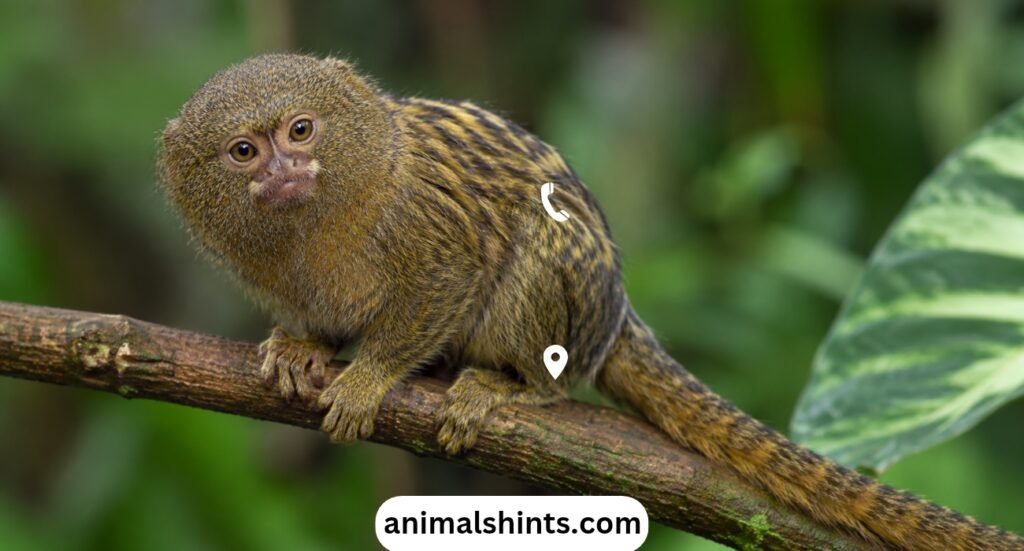
The pygmy marmoset is the undisputed champion of small.
Weighing just over 100 grams as an adult, it truly is the smallest monkey in the world. It is smaller than a human hand and lighter than a stick of butte as well.
These tiny monkeys live in the rainforests of the Amazon basin. They are gum-feeding specialists. Their teeth are adapted to gouge holes in tree bark, so they can drink the sap that flows out.
This specialized primate diet means they spend their days clinging vertically to trees, waiting for their meals to exude. It is a life that requires a specific, vast, and complex monkey habitat.
Their social lives are equally intricate. They live in small family groups where everyone helps care for the dominant female’s twin infants. The father carries the babies most of the time, handing them to the mother only to nurse.
In the wild, they communicate with a range of high-pitched squeaks and ultrasonic calls that humans cannot even hear. Their primate social structure is built entirely around cooperation and survival in a dangerous, fast-moving forest world.
Common Marmoset
The common marmoset is slightly larger than its pygmy cousin.
Native to the eastern coast of Brazil, this tiny monkey breed has become well-known for a reason that is often to its detriment. It is frequently trapped for the exotic trade and widely used in scientific research.
What makes it so exploited? Its small size and rapid breeding rate in captivity.
But understanding their natural life reveals why captivity is so cruel for them. Common marmosets live in tight family units of up to 15 individuals. Their entire world is governed by scent markings and complex vocalizations that keep the group bonded.
They typically give birth to non-identical twins, a rare trait among mammals. The entire family participates in cooperative breeding, a hallmark of marmoset and tamarin societies. The male and older siblings do the heavy lifting of infant care.
Removing such a deeply social animal from its family group causes profound psychological stress. Their psychological well-being depends entirely on the presence and interaction of their own kind. No human companion can replace that.
Silvery Marmoset
The silvery marmoset is a jewel of the Brazilian Amazon.
It gets its name from its striking, almost pure silver-white body fur. But its most unusual feature is its naked, flesh-colored ears, which stand out dramatically against its pale coat.
Like other marmosets, the silvery marmoset lives in highly organized family groups. Their days are spent foraging for insects and fruits while keeping a constant lookout for predators like hawks and snakes.
They play a vital ecological role as a seed disperser. When they eat fruit, they pass the seeds through their digestive system and deposit them across the forest floor, helping new trees grow.
This function makes them essential to the health of their rainforest home. Losing them to deforestation or the pet trade is not just a loss of a beautiful animal. It is a crack in the foundation of an entire ecosystem.
Cotton‑Top Tamarin
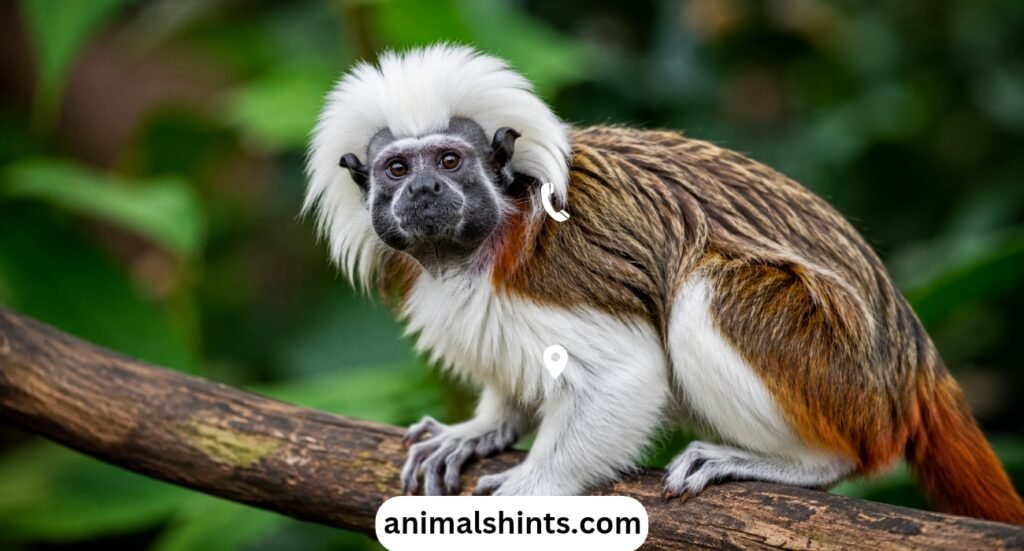
No list of small primates is complete without the cotton-top tamarin.
It is one of the most visually distinctive animals on Earth. A wild crest of long, white hair erupts from its head, framing a tiny, intensely intelligent face.
This species is found only in the tropical forests of northwestern Colombia. And it is in deep trouble. It is classified as critically endangered, with only a few thousand individuals believed to remain in the wild.
The cotton-top tamarin is a prime example of why endangered primates need our urgent attention. By the late 20th century, tens of thousands had been captured for biomedical research. Today, the primary threat is habitat loss and the ongoing illegal wildlife trade.
These are arboreal primates that travel through the forest canopy in boisterous family groups. They are highly vocal, using a sophisticated language of chirps and whistles to warn of danger, declare territory, and communicate with one another.
Work to save them has become a model for primate conservation. Local communities in Colombia are now involved in protecting the forests, using the cotton-top as a symbol of their natural heritage.
Red-handed Tamarin
The red-handed tamarin looks like it has dipped its hands and feet in bright orange paint.
This bold coloration against its dark body makes it unmistakable. It is found in the Amazonian regions of Brazil, Guyana, and Suriname.
Red-handed tamarins are energetic and opportunistic feeders. They move quickly through the mid-canopy, hunting for insects, spiders, small lizards, and soft fruits.
Their social world is built around a dominant breeding female. Other females in the group often suppress their own reproduction, devoting their energy instead to carrying and feeding the dominant female’s offspring.
This intense cooperative breeding strategy ensures that the group’s energy is focused on raising a small number of healthy, well-cared-for infants. It is a remarkable example of how primate social structure can evolve to maximize infant survival in a competitive environment.
Graells’s Tamarin
The Graells’s tamarin is a quiet mystery of the upper Amazon.
Found in parts of Bolivia, Peru, and Ecuador, it is less flashy than some of its relatives. Its coat is a subtle mix of dark brown and black, often with a reddish mantle.
What it lacks in bright colors, it makes up for in ecological significance. This is a true forest gardener. As it forages through the treetops for fruit, insects, and nectar, it plays a powerful role in shaping the forest.
A large percentage of the seeds it consumes pass safely through its gut and are deposited in new locations. This seed disperser function connects the tamarin to the health of hundreds of plant species.
The Graells’s tamarin reminds us that even the less famous members of the animal kingdom are performing vital tasks. Protecting them means protecting the lungs of our planet.
Golden Lion Tamarin
The golden lion tamarin is a living ember in the green forests of Brazil’s Atlantic coast.
Its long, silky, reddish-gold coat and impressive mane give it the regal name it carries. It is one of the most beautiful monkey species on the planet.
By the 1970s, it was also one of the rarest. Habitat destruction had reduced its wild population to just a few hundred individuals. The species was staring extinction in the face.
What happened next is one of the greatest success stories in primate conservation. A massive international effort brought together zoos around the world, scientists, and the Brazilian government.
Through a carefully managed captive breeding and reintroduction program, golden lion tamarins bred in zoos were prepared for life in the wild and released into protected forest reserves. Today, their population has recovered to several thousand.
They live in family groups, sleeping in tree holes at night and foraging for insects and fruit during the day. They need a connected forest to survive, so protecting their remaining habitat corridor in Brazil is an ongoing fight.
Emperor Tamarin
If there was an award for the most distinguished-looking small monkey, the emperor tamarin would win it hands down.
This species is famous for its long, drooping white mustache. The story goes that it was named after Emperor Wilhelm II of Germany, who sported a similar facial hair style.
Emperor tamarins live in the lush rainforests of Peru, Brazil, and Bolivia. They move through the canopy in mixed-species groups, often traveling alongside saddle-back tamarins for added protection against predators.
This arboreal primate behavior is a brilliant survival strategy. By teaming up with another tamarin species, they gain more eyes to spot hawks and snakes. It is a living example of cooperation between species.
Their diet is a mix of fruits, flowers, nectar, and small insects. They play their own quiet role as pollinators when they dip their faces into flowers to drink nectar, transferring pollen from bloom to bloom.
Despite their charming appearance, emperor tamarins are delicate, high-strung animals. They need the safety of a family troop and the endless green corridors of the rainforest to truly thrive.
Geoffroy’s Tamarin
The Geoffroy’s tamarin brings a splash of color to the forests of Panama and Colombia.
It is sometimes called the rufous-naped tamarin or the Panamanian tamarin. Its coat is a striking mix of black, white, and warm reddish-brown on the back of its neck.
This is one of the few tamarin species found in Central America. It thrives in a range of forest types, from dry scrub to lush tropical rainforests.
Geoffroy’s tamarins are highly communicative. They use whistles, trills, and sharp alarm calls to keep their family group coordinated and safe. Their social bonds are intense and lifelong.
They face growing pressure from deforestation as land is cleared for agriculture and development in their narrow range. Conservationists are working to establish protected corridors that allow these small monkeys to move safely between forest patches.
Their existence is a reminder that Central America, not just the Amazon, holds irreplaceable primate diversity worth fighting for.
Read also: Spiritual meaning of a bird flying into a window
Pied Tamarin
The pied tamarin is one of the most endangered monkeys on Earth.
It is found only in a tiny area of Brazil, in and around the city of Manaus. Its range is so small and so threatened by urban sprawl that it is literally being squeezed out of existence.
What makes it visually stunning is its bold pattern. It has a dark, hairless face, a white upper body, and dark brown or black lower body fur. The contrast is dramatic and beautiful.
Pied tamarins live in family groups of up to ten individuals. They are territorial and will defend their patch of forest with loud calls and aggressive displays toward rival groups.
The expansion of Manaus has been devastating for this species. Roads, suburbs, and power lines fragment their habitat into smaller and smaller islands. The conservation status of the pied tamarin is dire, and without urgent intervention, it could become the first primate driven extinct by a growing city.
Supporting urban planning that incorporates wildlife corridors is one of the few hopes left for this tiny, bold-patterned monkey.
Tarsiers
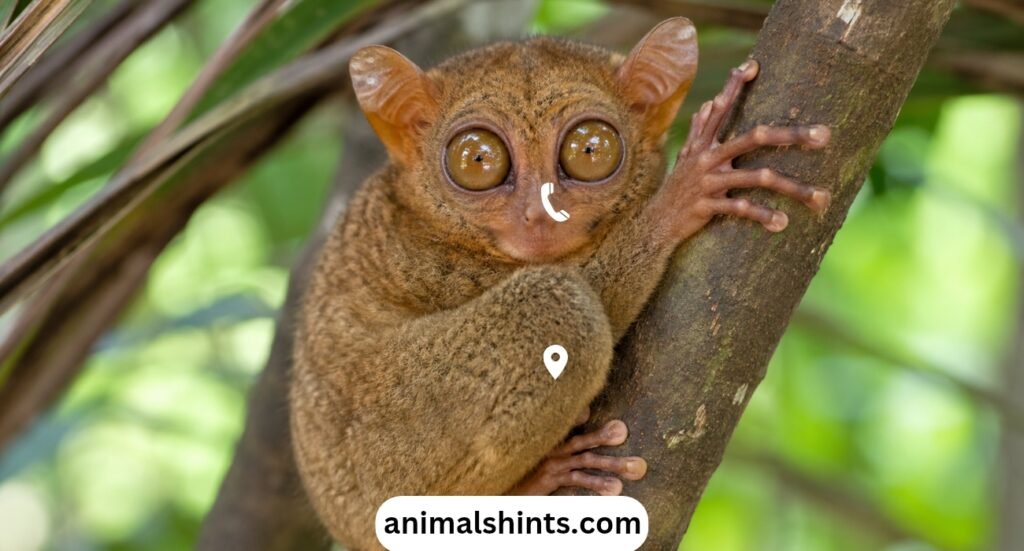
We need to stop here for an important correction.
If you have been searching for tiny monkey breeds, you have probably seen the tarsier. With its enormous, fixed eyes and long, bony fingers, it looks like a creature from a fantasy film.
But tarsiers are not monkeys. They are not even classified as New World or Old World monkeys.
They belong to a more primitive group of primates called prosimians. This group is more closely related to lemurs and lorises.
Why does this matter? Because their needs are even more alien and extreme than those of a true monkey.
Tarsiers are obligate carnivores. They eat only live prey: insects, lizards, and even small birds. They are intensely solitary and territorial.
Most critically, they have a documented and fatal stress response to captivity. When confined, they will bang their heads against cages, refuse to eat, and die quickly. There is no ethical way to keep a tarsier as a pet or even in many zoo settings.
This nocturnal primate is a perfect example of why responsible information matters. Mislabeling them as a potential exotic pet leads directly to animal suffering.
Night Monkey
The night monkey holds a unique biological title.
It is the world’s only truly nocturnal monkey. Found in the forests of Central and South America, it has evolved massive, owl-like eyes that give it excellent vision in the dark.
Also known as owl monkeys, they spend their days sleeping in tree hollows and emerge at sunset to begin their foraging.
Night monkeys are notable for their powerful pair bonds. A male and female will mate for life, producing a single infant each year. The father is the primary caregiver, carrying the baby almost exclusively from the moment it is born.
This pair-bonding behavior is beautiful and vital to their survival. The intense parental investment by the male ensures a high infant survival rate.
To take one of these animals from its partner and the forest is to destroy a family unit. Their gentle, deliberate movements in the dark canopy belong to the wild night, not to a lit living room.
Dusky Titi
If there is a romance story in the primate world, the dusky titi is its star.
These medium-small monkeys from the Amazon basin are famous for their displays of affection. When a mated pair sleeps or rests, they sit side-by-side with their long, fluffy tails intricately intertwined.
This tail-twining is a physical expression of their strong, lifelong pair-bonding. They live in small, devoted family groups consisting of the parents and their immature offspring.
Dusky titis are primarily fruit-eaters. They move deliberately through the dense lower levels of the forest, picking ripe berries and soft fruits.
Their gentle nature and expressive faces have made them a target for those looking for a cute pet monkey. But their need for a stable, bonded partner and a specific home range means they cannot thrive in human homes.
Squirrel Monkey
The squirrel monkey is a whirlwind of energy.
These are not calm, cuddly animals. They are among the most active and socially demanding of all the small primates.
Squirrel monkeys live in massive troops that can number up to 100 individuals in the wild. They are constantly on the move, chattering, leaping, and foraging through the trees of Central and South America.
Their diet is varied. They eat fruit, flowers, insects, and small vertebrates. They need a massive amount of space and a rich social environment to stay mentally healthy.
In captivity, squirrel monkeys are often noted for their messy habits. They engage in urine-washing, where they urinate on their hands and feet and spread it around their territory. This scent-marking behavior is natural and uncontrollable, making them highly unsuitable for indoor life.
A single squirrel monkey kept without a troop is a tragedy. It will likely develop stereotypic behaviors, pacing and rocking endlessly from stress.
Talapoin Monkey
The talapoin monkey is Africa’s entry into the small monkey conversation.
It is the smallest Old World monkey on the continent. Found in the swampy forests and riverine habitats of Central Africa, it is an excellent swimmer, a rare trait among monkeys.
Talapoins have a unique reproductive strategy. The female’s sexual skin swells dramatically to signal her fertility, a visual cue that coordinates the social group’s mating dynamics.
They live in large communities and forage along waterways for fruits, seeds, and aquatic insects.
Compared to their South American counterparts, talapoins are rarely seen in the exotic pet trade in the USA. Their need for a semi-aquatic environment and their specific social requirements make them exceptionally difficult to maintain in captivity.
White-faced Saki
The white-faced saki is a monkey that seems to live in a permanent state of surprise.
Males have a striking jet-black body and a creamy white face that looks almost like a mask. Females are more subtly colored with brownish-grey fur and lighter facial stripes.
These monkeys are built for leaping. They have powerful hind legs that allow them to launch themselves incredible distances between trees. When startled, they can clear gaps of up to ten meters in a single bound.
White-faced sakis live in small family groups in the forests of Venezuela, Guyana, Suriname, and Brazil. They are shy and quiet compared to the noisy squirrel monkeys they sometimes share the canopy with.
Their diet consists mainly of seeds and hard-shelled fruits. They have specialized teeth that can crack open tough pods that other monkeys cannot access.
These gentle, athletic monkeys remind us that not every small primate is hyperactive and bold. Some prefer a quiet life in the treetops, moving with grace and minding their own business.
Golden-handed Tamarin
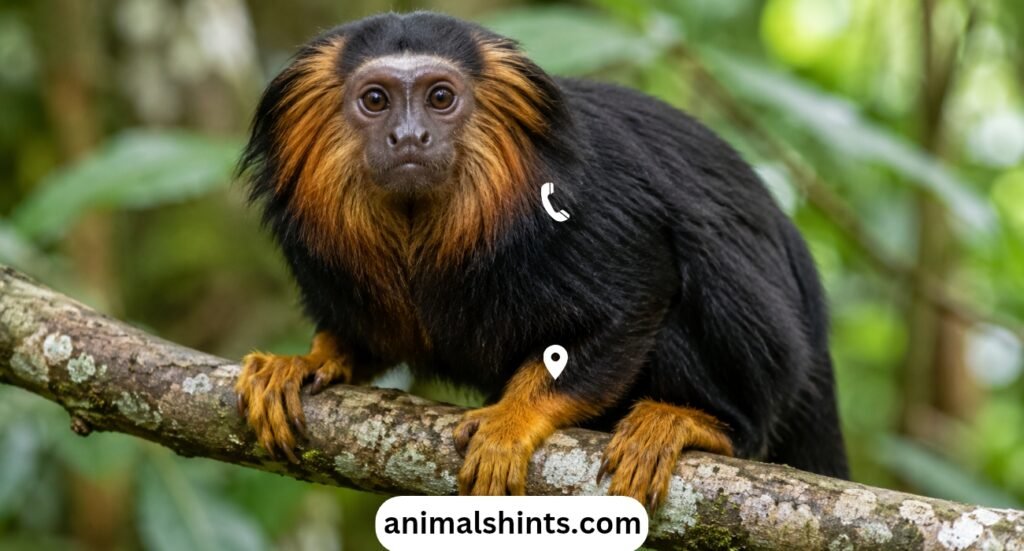
The golden-handed tamarin is often confused with its close relative, the red-handed tamarin.
The difference is subtle but beautiful. Instead of bright orange-red, its hands and feet are coated in a rich, gleaming gold. Against its dark body, the effect is stunning.
This species is found in the northern parts of Brazil, in the forests north of the Amazon River. It shares much of the same behavior and social structure as other tamarins.
Golden-handed tamarins are cooperative breeders. Only the dominant female in the group reproduces, and every member of the family helps raise the young.
They need large territories of intact forest to find enough fruit and insects to sustain their group. Habitat fragmentation breaks these territories apart, isolating families and cutting them off from food sources.
The golden-handed tamarin is not yet critically endangered, but it is facing the same relentless pressures that have pushed other tamarin species to the brink. Its future depends on the preservation of the northeastern Amazon.
Capuchin Monkey
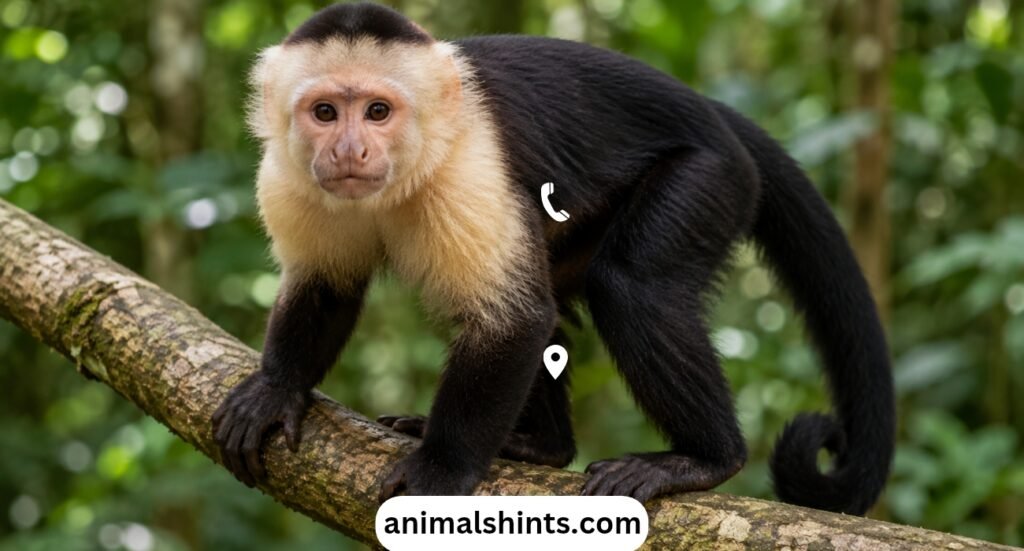
This is the most important correction on the list.
The capuchin monkey is not a small monkey breed. It is a medium-sized primate.
When you see capuchins in movies or television commercials, you are looking at a juvenile. An adult capuchin can weigh up to 10 pounds and has the strength, intelligence, and willfulness to cause serious harm.
Capuchins are renowned for their tool-using abilities. They crack open nuts with stone hammers and anvils in the wild. This cognitive power makes them fascinating to scientists.
But it also makes them a disaster as a pet monkey. When a capuchin reaches sexual maturity, it often becomes aggressive. It will challenge its human owners for dominance, using its sharp canine teeth.
The consequences are heartbreaking. Sanctuaries across the United States are filled with unwanted capuchins who were surrendered after biting someone or simply becoming too difficult to manage.
Their appearance on lists of small monkey breeds is marketing, not biology. It is a tactic used by unethical sellers to move babies before they grow into their adult strength.
The Hard Truth About the Exotic Pet Trade
You have probably noticed a theme running through every single species profile.
None of these animals makes a suitable pet monkey.
The exotic pet trade is built on a foundation of misrepresentation. Cute images and viral videos show infant primates in diapers or being bottle-fed. These images are carefully curated to hide the dark reality.
The mother of that infant was likely shot in the wild. Primates do not give up their babies voluntarily. To capture an infant for the trade, poachers must first kill the protective mother.
After surviving this trauma, the baby is smuggled across borders in horrific conditions. Many die before they ever reach a buyer.
Those that survive become an unsolvable problem for their new owners.
As the monkey reaches adulthood, its natural instincts take over. It wants to establish a hierarchy. Also, it wants to mate. It wants to patrol a territory. Your home becomes its battleground.
The primate does not understand why it is alone. It was born to live in a complex primate social structure, surrounded by its own kind. Isolation leads to profound psychological damage. Self-mutilation, endless screaming, and sudden, unpredictable aggression are common outcomes.
Finding veterinary care is another immense hurdle. Most vets in the USA will not treat a primate. Exotic pet laws USA regulations are complex and vary wildly by state. You could spend thousands of dollars on an animal, only to have it confiscated and euthanized by local authorities.
This is not theoretical. It happens every year.
Conservation: How to Truly Appreciate Small Primates
There is a better way to express your fascination with small primates.
You can channel that passion into primate conservation and ethical animal care.
The species we have discussed face immense pressures in the wild. Deforestation is destroying their monkey habitat at an alarming rate. The palm oil industry, cattle ranching, and logging are chewing up the forests they need to survive.
The illegal wildlife trade is the second major threat. For every monkey that ends up in a private home, many more have died along the supply chain.
You can fight back by supporting organizations that are working on the ground. Groups that protect habitat. And groups that rescue and rehabilitate victims of the pet trade. Groups that work with local communities to provide alternatives to poaching.
When you visit a responsible, accredited sanctuary, you are not buying an animal. You are funding its care. A true sanctuary vs pet comparison is stark. A sanctuary provides space, proper diet, and the company of other monkeys. A private home provides none of these things.
The conservation status of many of these species is alarming. The cotton-top tamarin and pied tamarin have stared down extinction. They are still not safe. Your support can help fund the next chapter of their recovery.
Observing these animals in the wild, on an ethical ecotourism trip, is a life-changing experience. You see them not as props or playthings, but as what they really are: intelligent, wild societies going about their complex lives.
That is how you honor a small monkey. Not by owning it, but by protecting its world.
Understanding Marmoset vs Tamarin Differences
Many people confuse marmosets and tamarins, but they are distinct branches of the New World monkeys family. The easiest way to tell them apart is by looking at their teeth. Marmosets have elongated lower incisors designed for gouging tree bark to access sap and gum. This is their primary food source.
Tamarins, on the other hand, lack these specialized teeth. They have regular, rounded canines. Their diet relies more heavily on soft fruits, flowers, nectar, and insects. Both engage in cooperative breeding, but their foraging strategies separate them in the wild. Knowing this marmoset vs tamarin distinction helps you appreciate their unique ecological niches.
The Reality of Primate Care in Captivity
Even if it were legal, the daily reality of primate care is overwhelming. A monkey as a pet requires a specialized, expensive diet that changes as it ages. You cannot just feed it bananas. Metabolic bone disease from poor nutrition is a common, painful fate for privately owned monkeys.
Then there is the social trauma. These animals need constant engagement from their own species. A lonely monkey develops severe neuroses. It may scream endlessly, bite itself, or become dangerously aggressive. The fantasy of a cuddly companion is a myth. The reality is a lifetime of managing a wild animal’s profound distress inside your home.
See also: 20 Spiritual Meanings of Seeing A Coyote
Ethical Alternatives to Private Ownership
The good news is that your passion can be fulfilled ethically. Across the USA, accredited sanctuaries offer ways to connect with these animals through responsible, ethical animal care models. You can symbolically adopt a rescued cotton-top tamarin or a capuchin living out its life in a safe, naturalistic environment.
Your donation funds food, veterinary care, and large habitats. You can even visit to observe their natural behaviors without causing harm. This sanctuary vs pet approach allows you to make a real difference. It respects the animal’s wild nature while satisfying your desire to connect with a species you love.
FAQ’s
What are the small monkeys called?
Small monkeys are generally called marmosets and tamarins, which belong to the Callitrichidae family of New World monkeys. The tiniest among them is the pygmy marmoset, officially recognized as the world’s smallest monkey.
What are the top 10 smallest monkeys?
The top 10 smallest monkeys, ranked by weight, are the pygmy marmoset, common marmoset, silvery marmoset, cotton-top tamarin, red-handed tamarin, Graells’s tamarin, emperor tamarin, Geoffroy’s tamarin, pied tamarin, and golden-handed tamarin. All are tiny primates under one pound.
What are the cutest monkeys?
Cuteness is subjective, but the emperor tamarin with its curled white mustache and the golden lion tamarin with its blazing mane are fan favorites. The dusky titi, famous for tail-twining with its lifelong mate, also captures hearts worldwide.
Is there a dwarf monkey?
There is no species officially called a dwarf monkey, but the term is often used to describe the pygmy marmoset. This tiny monkey breed weighs just over 100 grams and fits in a human palm, making it the closest thing to a true dwarf monkey.
Final Thoughts
We have explored eighteen remarkable Small Monkey Breeds in this guide. Each one lives a fascinating life in the wild forests. They jump, play, and care for their families in ways that deserve our respect. These animals are not toys or pets. They are intelligent wild creatures with complex needs that only the forest can provide.
You can help protect these Small Monkey Breeds by learning more and sharing the truth. Support groups that save forests and rescue monkeys from the illegal pet trade. Your choices truly matter. When we protect their homes, we give these tiny wonders a future in the treetops where they truly belong.