Orange and Black Butterfly Meaning: 12 Meanings, Cultures, Dreams and Omens
The orange and black butterfly meaning, as the sign-reading traditions give it, is change carried boldly: creative fire and joy in the orange, mystery and protection in the black. Few insects announce themselves like this one does. The tradition reads that confidence as the message — a transformation that is not hiding, and a new season that expects to be lived out loud as well as weathered in the dark.
There is a real animal under the symbol, and it is more interesting than any single reading. Orange and black together is not one species but a shared uniform, worn most famously by the monarch — and worn so well by its look-alike, the viceroy, that the two were confused for a century. In nature the pattern is a warning backed by real chemical defenses, and this guide keeps that honest biology in view alongside the folklore.
What follows gives the tradition’s own twelve spiritual meanings of the orange and black butterfly, then walks through its place in cultures and religions, what a circling or landing butterfly is read to mean, the love and twin-flame readings, dreams, and the good-or-bad-omen verdict. It also meets the real orange-and-black species — and shows you the one black line that tells the two most famous of them apart.
What Does Seeing an Orange and Black Butterfly Symbolize?
At its core, an orange and black butterfly symbolizes growth that has passed through something. Every butterfly carries metamorphosis inside it — egg, caterpillar, chrysalis, winged adult, a whole life dismantled and rebuilt — and the colors decide the character of the change. Orange brings the warmth: creativity, enthusiasm, appetite for life. Black brings the depth: mystery, protection, the part of the story that happens out of sight. Read together, the tradition says, the sighting speaks of renewal with its eyes open — joy that has done its shadow work, not joy that skipped it.
In modern spiritual teaching, the orange half of this butterfly belongs to the sacral chakra. The seven-chakra system taught today sets orange at the second energy center, seated below the navel, whose territory is creativity, pleasure, feeling and desire. Inside that system, an orange and black butterfly is read as that center stirring under guard: feelings and creative energy moving again, with the black standing for the grounding that keeps the surge honest. One caution belongs with the frame. The chakra system is a map of the inner life, not a diagram of the body, and the neat scheme of one rainbow color per center is a recent tidying of older teachings that varied far more. Practitioners use the map as a vocabulary for feelings and states — and read in its own vocabulary, the orange assignment is exact.
The orange color carries a symbolism of its own — joy, encouragement, creativity, success and harvest warmth among them. Our companion guide to the orange butterfly spiritual meaning explores the single color in full, including its eleven meanings. This page is about the combination: what the orange comes to mean once black is woven through it. The tradition’s headline readings for the pair gather into five:
- Transformation with courage — the sighting is read as a change already underway, asking to be met bravely rather than resisted.
- Creative awakening — orange is the maker’s color, and a sighting is read as a prompt to begin, resume or finally show the work.
- Emotional healing — warmth returning after a cold season, with the black honoring what the healing cost.
- Protection while you change — the dark wings are read as a guard around a vulnerable in-between stage.
- Balance of light and dark — neither color cancels the other; the tradition reads the pair as wholeness, not conflict.
All five are readings, and readings are what they stay — symbolism the tradition offers, not facts it can prove. The facts begin with the animal itself, which turns out to be two animals sharing one famous disguise.
The Real Orange and Black Butterflies Behind the Symbol
“Orange and black butterfly” is not a species name. It is a color pattern — one of the most successful patterns in the insect world — and several unrelated butterflies wear versions of it. In North America, the overwhelming majority of sightings come down to two of them, and telling those two apart is one of the classic field skills of butterfly watching.
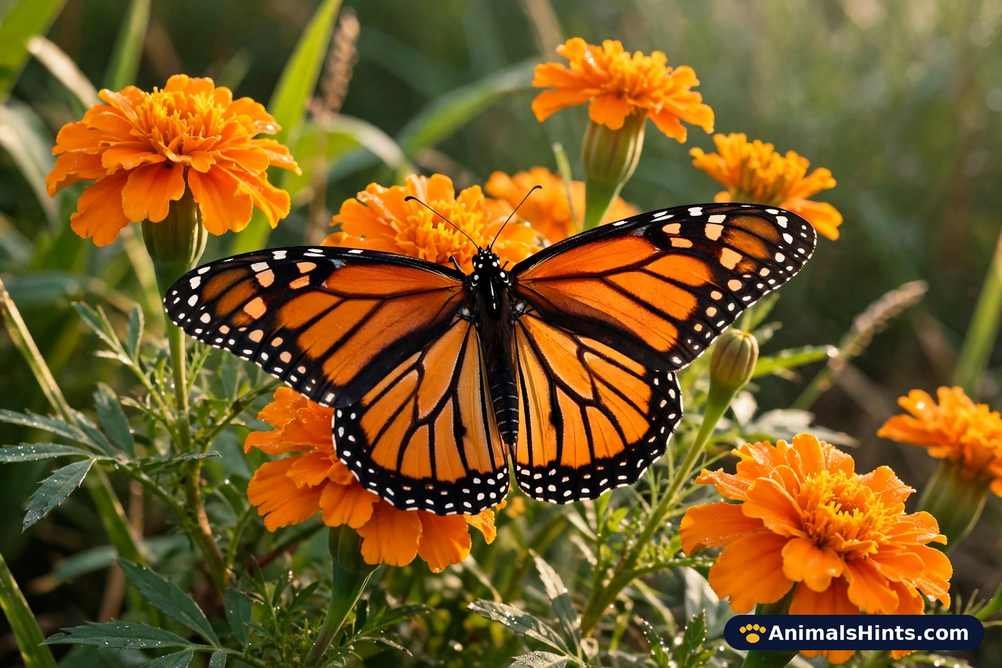
The monarch (Danaus plexippus) is the pattern’s owner, the butterfly on the posters. Its wings span roughly 3.5 to 4 inches (9–10 centimetres), bright orange above, divided into panels by heavy black veins and ringed by a broad black border carrying two rows of white spots. Males carry a small dark scent patch on one hindwing vein — an easy way to sex a monarch in a photograph. Its flight gives it away at a distance: monarchs sail, holding their wings up in a shallow V and gliding between unhurried wingbeats, riding the air like tiny orange kites. The color is earned honestly. Monarch caterpillars eat nothing but milkweed, and milkweed’s bitter cardenolide poisons pass into the butterfly’s body and stay there for life, so the shouting orange is a truthful advertisement: eat me and regret it. Biologists call that arrangement aposematic coloration, warning color backed by a real defense.
The viceroy (Limenitis archippus) is the monarch’s double — so close a double that for over a century it stood in textbooks as the perfect harmless impostor, a tasty butterfly supposed to be bluffing its way through life in a borrowed uniform. Look closer and it separates. A viceroy is noticeably smaller, at roughly 2.5 to 3.4 inches across, its black border carries a single row of white spots, and it flies lower and busier, a few quick flaps and a flat-winged glide. But the mark that settles every argument is on the hindwing: a viceroy carries one extra black line arcing across the wing, cutting straight over the veins about halfway out. No monarch has that line. And the old story underneath the resemblance turned out to be wrong anyway. Feeding experiments by David Ritland and Lincoln Brower, published in Nature in 1991, found that birds reject viceroys just as firmly as monarchs — the viceroy’s own willow- and poplar-feeding caterpillars load it with bitter defensive compounds of its own. The relationship now carries a different name: Müllerian mimicry — no cheat and no copied warning, but two honestly defended species wearing a single uniform, each halving the other’s cost of teaching predators to leave the pattern alone.
Both colors, unusually, are honest paint. Where many famous butterfly colors are built from microscopic structures that bend light — the way the blue and green species make theirs — this pattern is laid down as pigment and looks the same from every angle. The black is melanin, the universal dark pigment of the animal kingdom, the same chemistry that darkens a bird’s wingtips and a mammal’s coat. The orange belongs to the ommochrome family of pigments; chemical analysis of monarch wing scales has identified xanthommatin-type ommochromes doing the work. Paint, not light-play — which is fitting for a warning that has to read identically in sun and shade.
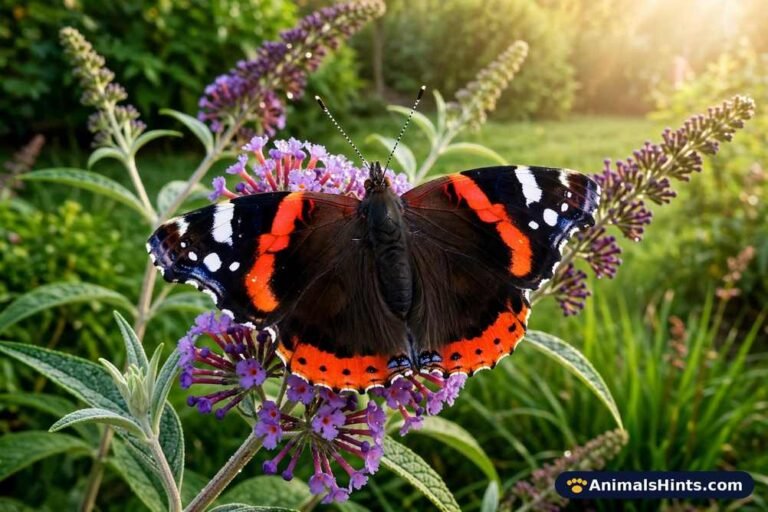
Beyond the famous two, the pattern has a wider cast. The painted lady (Vanessa cardui) adds white to the mix — orange, black and white above, marbled below — and is the most widely distributed butterfly on the planet, a restless migrant found on every continent except Antarctica. The Gulf fritillary (Dione vanillae) runs a cleaner, more silvery orange with black marks above and spangled silver spots beneath, a southern garden regular whose caterpillars feed on passion vines. The common buckeye (Junonia coenia) is the honest borderline case: mostly brown, but barred with orange on the forewings and banded with it on the hindwings, and unmistakable for the big rainbow-ringed eyespots it flashes from both wing pairs. And the Baltimore checkerspot (Euphydryas phaeton) inverts the whole arrangement — a black butterfly first, checkered with cream and rimmed with orange-red crescents, named for the colors of Lord Baltimore’s crest and honored since 1973 as Maryland’s state insect, though it has grown scarce in the wet meadows where its caterpillars feed on white turtlehead. So the field test for any orange and black sighting is a simple question: is the butterfly orange with black marks, or black with orange ones? The answer usually names the animal you are actually looking at.
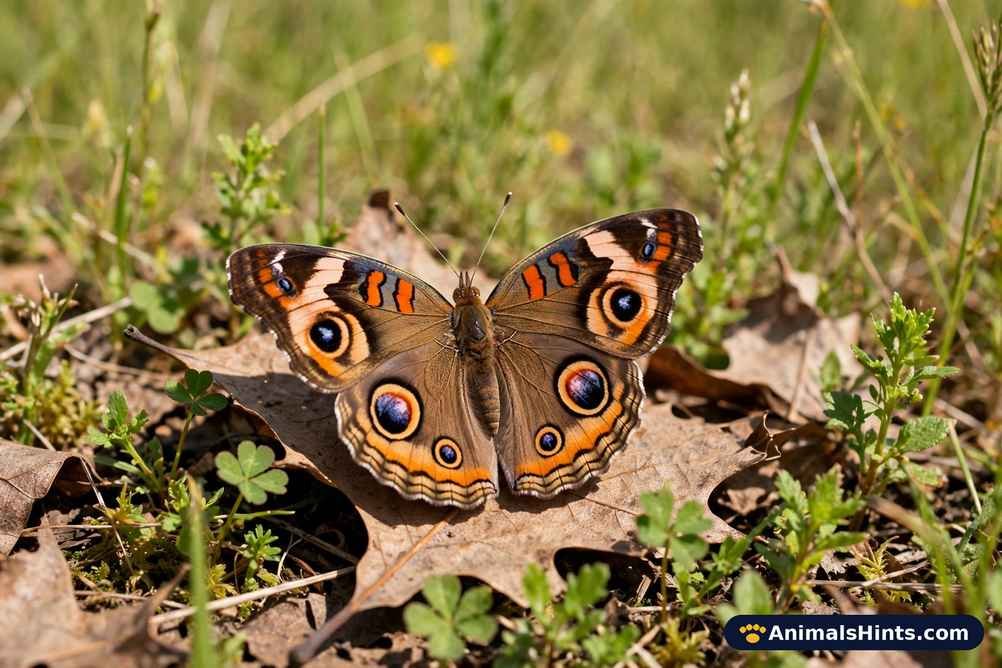
12 Spiritual Meanings of Orange and Black Butterflies
Twelve readings make up the tradition’s standard set for this butterfly, and they follow below in the tradition’s own order. Take them as they are offered — material for reflection, not forecast. Every one of them grows out of the same two roots: the metamorphosis all butterflies share, and this pairing of fire with shade.
1. Transformation and Rebirth
The first reading is the one every butterfly carries, deepened by the colors. The tradition reads the orange and black butterfly as personal transformation at full strength: a self being shed and a self arriving, with the black standing for everything the old life honestly contained — the grief, the waiting, the chrysalis dark — and the orange for the enthusiasm the new life opens with.
A sighting is read, in this strand, as a marker that the change is not coming but underway. Endings inside it are treated as beginnings wearing work clothes. It is the least surprising meaning on the list and the one all the others lean on.
2. Luck and Creativity
The second reading joins fortune to making. Through the sacral-chakra link, orange is the current of creativity, inspiration and pleasure, and the tradition reads a visit from this butterfly as that current switching on: a project asking to be started, a block asking to be walked around rather than through.
The luck in this reading is not the lottery kind. It is the luck that is said to follow self-expression — opportunities that appear once a person starts showing the work, saying the thing, sending the piece out. The black adds the footnote: protect the young idea while it is still soft.
3. Emotional Growth and Healing
Here the pair works as a diagram of recovery. The black holds the wound and the orange holds the warmth returning to it, and the tradition reads the sighting as a heart ready to heal in that order — feelings faced first, joy readmitted after, neither stage skipped.
It is read as an especially apt sign after emotional turbulence: loss, a hard ending, a long flat season. The teaching inside the reading is resilience rather than speed. Healing, in this symbolism, is not the dark being deleted; it is the dark being carried differently, inside a life that has color in it again.
4. Joy and Vitality
Orange is the sunniest color a butterfly can wear, and the fourth reading is sheer life force. The tradition reads this butterfly as a summons back to appetite: for work, for people, for ordinary pleasures that have been postponed too long. Joy here is not treated as a reward for finishing the serious business; it is treated as fuel for it.
The butterfly’s own flight is used as the illustration — light, unplanned, impossible to schedule — for the way gladness actually arrives: in unscripted moments, to people who have left a little room for it. A sighting, in this reading, is permission to laugh more and grip less.
5. Mystery and Spiritual Protection
The fifth reading belongs to the black. In the symbolism of this tradition, black absorbs and shields, and on a butterfly’s wings it is read as protection worn openly: a guard around someone mid-change, when they are between forms and most exposed.
Paired with it is black’s other office — mystery, and the shadow work it points to. This butterfly is read as an invitation to look at the unlit parts of the self: the old fears, the buried ambitions, the memories that still steer from underneath. The protection and the invitation are the same gesture in this reading: you are covered, so you can afford to look.
6. Divine Guidance and Messages
Across many folk traditions, butterflies are treated as couriers — creatures thin enough, in the old imagination, to move between the world of the living and whatever lies past it. The orange and black butterfly inherits that office, and this reading frames a sighting as a message arriving: from a departed loved one, from a guide, from God, depending on the tradition doing the reading.
The message, in this strand, is rarely treated as a sentence. It is read through timing and feeling — the thought in your mind when the wings crossed it, the question you had just asked, the grief that had just eased. The standard content attributed to it is simple reassurance: you are seen, and you are not walking this stretch unattended.
7. Symbol of Perseverance and Life’s Journey
This reading is the monarch’s own biography, promoted into a teaching. The species crosses a continent on paper-thin wings — thousands of miles, through storms and exhaustion, on a journey no single butterfly completes — and the tradition reads the sighting as endurance made visible: proof that a fragile-looking thing can be built for a very long road.
It is the reading people reach for mid-struggle, when effort has stopped producing visible results. The black is assigned to patience and discipline; the orange to the passion that keeps the wings moving anyway. Together they are read as a promise that the stage you are in is a stage — not the destination, and not the whole story.
8. Encouragement to Embrace Present and Future
The eighth reading is about time. A butterfly lives its winged life in weeks, and the tradition reads its brief, bright flight as a standing lesson in presence: the past is a chrysalis that has already done its work, the future is a direction rather than a residence, and life happens in the airborne now.
The orange is read as optimism facing forward; the black as the grounding that plans without panicking. A sighting in a season of transition — a move, a career change, an ending inside a relationship — is read as counsel to release the old outcome and stay open to the one still forming.
9. Balance of Light and Dark
The ninth reading is written into the wings themselves. Orange and black occupy the same small surface without either one winning, and the tradition reads the pair as the picture of integration: enthusiasm and introspection, action and rest, the shown self and the hidden one, held in a single working design.
The reading is aimed at people living at extremes — all drive or all retreat, all optimism or all dread. Its teaching is that the shadow is not joy’s enemy but its depth charge: pain acknowledged makes gladness sturdier, and rest makes effort sustainable. Finding your center, in this symbolism, looks exactly like the wing — both colors, fully saturated, side by side.
10. Creative Thinking and Playfulness
Where the second reading is about creative fortune, this one is about creative method. The tradition reads the orange and black butterfly as the patron of play: experiment, improvisation, the draft made for the pleasure of making it. Orange supplies the spark; black supplies the focus that keeps play from scattering.
It is read as a sign for the over-serious — the person whose work has gone all discipline and no wonder. Hidden talents, shelved projects and half-serious ideas are this reading’s territory, and its claim is that playfulness is not the opposite of depth but one of its sources: the wing’s most serious message is delivered by the lightest creature in the garden.
11. Symbol of Positive Change and Revolution
The eleventh reading scales the first one up. Transformation here is not adjustment but overturning: patterns broken, systems left, a life reorganized around a truer center. The tradition reads this butterfly — the boldest-colored of the common butterflies — as the sign of a turning point approached rather than avoided.
Orange is assigned the courage such turns require; black, the discernment to know what actually has to go. The reading speaks to thresholds in mindset, work and belonging, and its tone is bracing rather than soothing: the change may not be comfortable, but it is read as liberation, and the butterfly is taken as the all-clear to begin it fearlessly.
12. Connection to Nature’s Beauty and Optimism
The last reading steps back from the self entirely. This butterfly is, before it is anything else, a piece of the living world at its most gratuitously beautiful — pattern and color far beyond what survival strictly requires — and the tradition reads an encounter with it as an invitation to reconnect: to slow down, look properly, and let the non-human world back into attention.
In some tellings the butterfly is cast as an emissary of the earth itself, a reminder that humanity’s balance with nature is part of the same balance the wings display. Gratitude is the practice this reading assigns — for small moments, exact light, ordinary wonder — and optimism is its fruit: beauty persisting, visibly, in a world that also contains hardship.
Significance of Orange and Black Butterflies in Different Cultures and Religions
The readings above are the modern tradition’s set. Older cultures came to this butterfly by their own roads, and their strands are worth keeping separate, because they do not all say the same thing. What follows keeps the competitor traditions in their order — each one attributed to the culture that holds it, and each one framed as that culture’s belief rather than as fact about the world.
In Native American traditions, butterflies broadly hold honored places as emblems of change, renewal and the nearness of the spirit world, though the teachings vary from nation to nation and no single doctrine covers peoples this diverse. Within that broad frame, an orange and black butterfly is read as vitality held in balance with mystery, and in some tellings a sighting at a turning point in a life is received as word from the ancestors — encouragement, delivered quietly, to keep going through the change rather than around it.
In Mexican culture, this butterfly is not a generic symbol at all; it is one particular animal arriving on one particular week. The monarchs reach the highland fir forests of central Mexico at the end of October and the beginning of November, exactly as Día de los Muertos — the Day of the Dead, November 1 and 2 — is being prepared. In the pre-Hispanic folklore of the Indigenous forest communities of that region, the Purépecha of Michoacán and the Mazahua of the State of Mexico among them, the returning monarchs are held to carry the souls of ancestors coming back to visit the living; Purépecha legend adds that they bear the spirits of warriors, and that the beating of their wings relays messages from the world of the dead. The belief is still alive in the holiday itself, where monarch images sit on home altars among the candles and the marigolds — flowers the same orange as the wings. It is printed here as what it is: a living tradition, held with love, and the strongest cultural reading this butterfly has anywhere on earth.
In Chinese symbolism, the butterfly arrived early and stayed. The most famous butterfly in Chinese thought belongs to the philosopher Zhuangzi, who dreamed he was a butterfly and woke unsure whether he was a man who had dreamed of being one, or a butterfly now dreaming it was a man — a story that made the creature a standing emblem of transformation and of the thinness of the line between states of being. In folk symbolism the butterfly is further linked with joy, with love and marriage, and with long life. An orange and black one, read inside that frame, suggests passion steadied by stability — the pairing the wider tradition calls harmony between the yin and yang sides of a life.
From a Christian perspective, the butterfly’s career in the faith is a teaching tradition rather than a text: no butterfly appears anywhere in Scripture, in any translation. What the church made of the animal came later, from watching it — the caterpillar, the still chrysalis and the winged creature rising out of it became a natural picture of death and resurrection, and butterflies worked their way into Christian art as a resurrection emblem on exactly that strength. Read through this strand, the orange suggests divine light and new beginnings, and the black the trials and the tomb that the rising passes through — hope, in this framing, that has a grave in its story and is not finished there.
In Hindu beliefs, the butterfly is read inside a worldview where the soul’s journey runs through many lives. The creature’s passage through its forms — crawling, sealed, flying — maps naturally onto the soul’s evolution through stages of growth, and an orange and black sighting may be taken as a marker on that road: the bright color for the life force moving forward, the dark for the mystery of what carries over. The strand’s counsel, as the tradition gives it, is awareness — to live the present stage of the journey on purpose, since it is one stage of a much longer road.
What Does It Mean When an Orange and Black Butterfly is Flying Around You?
A butterfly that circles you is doing something specific, and both the natural and the traditional readings of it are worth hearing. The natural one first: butterflies patrol. Males of many species hold loose territories and investigate movement; any butterfly may be working a patch of flowers you happen to be standing in; and the behavior called puddling — settling on damp ground, sweat-wet skin or the rim of a drink to sip salts and minerals — brings them close to people for reasons that are entirely about lunch. An orange and black butterfly around your shoulders is usually a monarch or viceroy on its rounds, or a painted lady blown in on its travels.
The tradition, untroubled, reads the same event as address rather than accident. A circling butterfly is read as transformation keeping company with you — change not just somewhere in your life but in your immediate weather — and a repeated visitor, one that crosses your path on several days, is classically read as a message-bearer checking in: in the ancestor strands of the tradition, a loved one reassuring you that they are at peace and that the difficult passage is being accompanied. The sacral framing adds its line: the orange circling close is read as your creative and emotional life asking for room, the black as the protection already around the asking.
If the butterfly does more than circle — if it settles on you and stays — the reading intensifies, and it has a guide of its own on this site: the spiritual meaning of a butterfly landing on you. This page keeps to the circling case, and its honest summary: the animal has ordinary reasons to be near you, and the tradition has its own reasons for finding that nearness meaningful. Both can be true at once, and the second costs the first nothing.
Orange and Black Butterfly Symbolism in Love, Relationship, and Twin Flame
The love reading of this butterfly is passion with a spine. Orange is assigned to attraction, warmth and the appetite to begin; black to depth, loyalty and the parts of a bond that are built in difficulty rather than in weather. Together they are read as a love that is meant to mature — intensity that is expected to deepen into something with staying power, not burn through its fuel and end.
Inside an existing relationship, a sighting is read as a sign the bond is entering a new stage: communication asking to be renewed, changes inside the partnership to be embraced rather than resisted, a reminder that the couple who met are not the couple who will finish, and are not meant to be. For someone single and healing, the same butterfly is read the other way — as readiness: the heart reopening after a closed season, the orange returning before the circumstances do.
The twin-flame reading, which belongs to a modern spiritual framework rather than to any old tradition, gives the two colors to the two people: light and shadow, energy and rest, the runner’s fire and the chaser’s dark, held on one pair of wings. A sighting while thinking of that person is read inside the framework as alignment — two halves of a pattern converging after a season of separate growth. It is printed here as that framework presents it, for the readers who work within it.
What It Means to Dream About Orange and Black Butterflies
Dream readings follow the same grammar as waking ones, with the dream’s action deciding the sentence. The tradition’s scenarios for this butterfly, recast plainly, are these:
- Flying freely — read as liberation in progress: fears loosening, old attachments coming undone, emotional healing that has moved from intention to fact.
- Landing on you, or hovering close — read as encouragement delivered personally: the change is underway, you are on the path the change requires, and unseen support is part of the picture.
- Many orange and black butterflies together — read as a shift wider than yourself: movement in your relationships or your whole environment, expansion and creative energy arriving as a group rather than a trickle.
- Still, grounded or lifeless — read as the one cautionary image in the set: stagnation, or a change being resisted past its season. The dream is taken as a prompt to find what is being held shut and to reconnect with your own vitality.
As with all dream symbolism, these are the tradition’s readings, not diagnoses — the same dream that reads as liberation in this frame may be doing ordinary memory work in another, and the frame you use is a choice, not a fact.
Seeing an Orange and Black Butterfly: Good or Bad Omen?
The verdict of the tradition is not close: this is a good omen, and one of the steadier ones in the whole butterfly catalogue. The reasoning is built into the colors. Orange alone can read as restless; black alone can read as heavy. Together they are read as optimism with wisdom inside it — good fortune that has been briefed on reality. Seen in a hard season, it is read as relief and clarity on approach: the struggle is assigned a direction, and the direction is growth.
The uneasy version gets an answer too. If the butterfly’s appearance leaves you unsettled rather than cheered, the tradition does not reverse the verdict; it reads the black wing as the message instead of the orange one — a call to introspection, an invitation to confront the fear or the outdated belief that is standing in the light’s way. The omen stays good; only its assignment changes, from celebrate to examine.
One honest footnote belongs to the verdict. Omens are a way of reading the world, not a mechanism in it, and this guide prints them as the tradition’s interpretations throughout. The butterfly in the garden is a real animal with real reasons to be there. What it means is the part you bring — and this tradition, on balance, brings hope.
When Orange and Black Butterflies Appear: Migration and the Turning Seasons
There is a reason this butterfly rules the autumn imagination, and it is written in airline routes. The eastern monarch population spends its summers spread across the fields and gardens of the United States and Canada, then funnels south through the autumn on one of the longest journeys any insect makes — down the continent’s flyways, across Texas, and into a few high oyamel fir forests in Mexico’s central mountains, arriving as October turns into November. The butterflies that make that flight are a single long-lived generation, living months where their summer parents lived weeks; they cluster on the firs by the million, bend the branches with orange, and wait out the winter in the cold mountain air. The spring journey north is a relay run by their children and grandchildren, generation laying eggs on fresh milkweed generation by generation, until the map fills again. No butterfly that winters in Mexico ever sees Canada — and no summer monarch needs to, because the route is rebuilt fresh every year by a chain of short lives pointing the same way.
The western population runs a shorter version of the same story, down to groves along the California coast. Painted ladies keep their own calendar, pushing north with the spring and the rains and draining south again in the autumn, which is why an orange and black flash in a cooling garden so often belongs to one traveler or another. The Baltimore checkerspot keeps the opposite schedule — a creature of early summer, flying its few weeks over wet meadows — and the buckeye pushes north as the year warms and is killed back by frost, an annual colonist. Put together, this is why the sightings cluster when they do: orange and black is, in North America, the livery of the traveling season. The tradition noticed the timing long before it knew the routes, and it is no accident that its readings for this butterfly are all about journeys, endurance and arriving somewhere changed.

The travelers could use the regard. The migratory monarch was assessed as Endangered on the IUCN Red List in 2022 and reclassified as Vulnerable in 2023 when the population models behind the first assessment were challenged — a change in the arithmetic, not a recovery in the butterflies — and in December 2024 the US Fish and Wildlife Service proposed protecting the monarch as a threatened species. The fir forests, the milkweed and the flyways between them are the whole machine; the symbol’s future is a gardening and land-use question as much as a spiritual one.
How the Orange and Black Butterfly’s Meaning Differs From Other Colors
Butterfly symbolism is organized by color, and each color in the family asks its own question. Orange and black’s question is the boldest of the set: what are you ready to change out loud? Set it beside its siblings and the differences sharpen.
The blue butterfly meaning runs to rarity, truth and wishes — blue is the color almost no butterfly can make honestly, a light effect rather than a pigment, and its tradition is about the precious and the nearly impossible. The symbolism behind seeing a white butterfly is purity, peace and messages from the departed carried gently; white is the quietest voice in the family. The brown butterfly spiritual meaning is the grounding wing of the family — earth, stability, foundations, the color of bark and leaf litter worn on purpose. The green butterfly spiritual meaning is renewal in its growing form: healing, the heart reopening, the spring of the set.
Orange and black stands apart from all four by being a warning that means well. It is the only common pairing in the family built on contrast itself — two colors that argue on the wing and resolve there — and its tradition is correspondingly about integration and courage rather than any single mood. Blue asks what is true; white asks who is near; brown asks what is solid; green asks what is healing. Orange and black asks what is next, and insists the answer be lived in both registers at once: the fire and the shade, carried on the same two wings.
How to Welcome Orange and Black Butterflies to Your Garden
Welcoming this butterfly is mostly a matter of feeding its children. Adult butterflies will visit almost any sunny flower patch, but the orange and black regulars return — and stay, and breed — only where their caterpillars’ one food is growing. The host list is short and specific:
- Milkweed (Asclepias) for monarchs — the only plant monarch caterpillars can eat. Choose a species native to your region, plant it in sun, and leave the chewed leaves alone; a stripped milkweed in August is a success, not a failure.
- Willows and poplars for viceroys — a small native willow at a damp corner covers the monarch’s double as well; viceroy caterpillars overwinter on the tree in tiny rolled-leaf shelters.
- Passion vines (Passiflora) for Gulf fritillaries, in warm regions — maypop is the hardy northern choice.
- White turtlehead (Chelone glabra) for Baltimore checkerspots, in soil that stays wet — the one garden on the street with a boggy corner is the one that can host Maryland’s emblem.
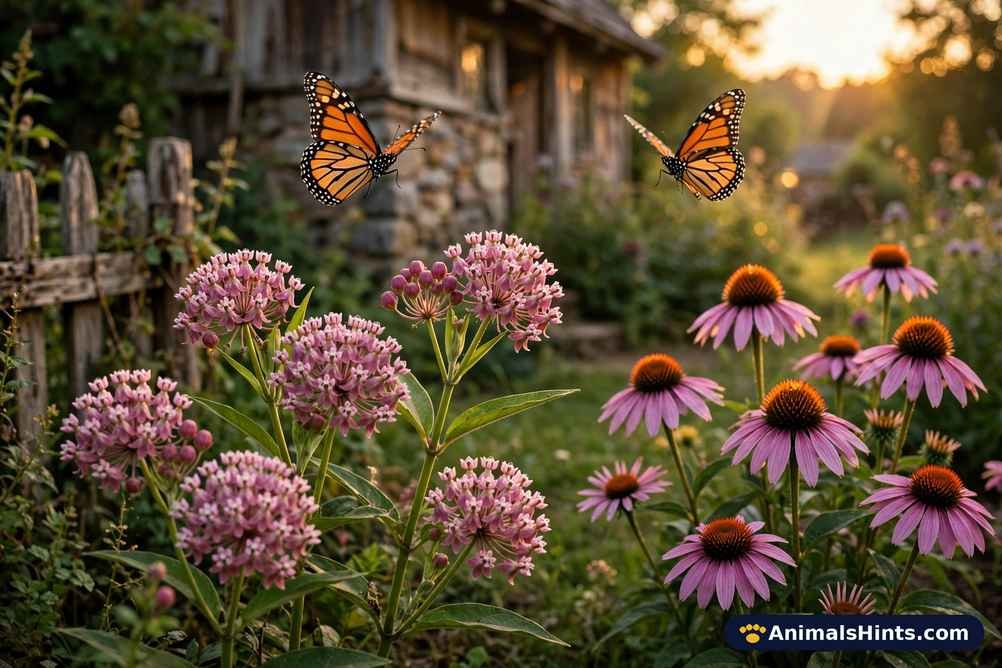
- Nectar flowers with orange in them — marigolds, zinnias, coneflowers and asters — for the adults, in sequence from spring to frost, so something is always open.
Three working rules finish the welcome. Skip the insecticides entirely, including the ones marketed as caterpillar-specific, since the caterpillars are the point. Leave some leaf litter and standing stems over winter, because this family overwinters in the garden’s untidy edges. And keep a shallow water dish with stones in it through the hot months — the puddling instinct described earlier is real, and a mineral sip is part of the hospitality. If you are new to the caterpillar end of the contract, this site’s guide to caterpillar spiritual meanings covers what the tradition makes of the before-stage — the garden will supply the during and the after.
Final Thoughts
Taken for what they are — one tradition’s way of paying attention — these readings earn their place: they send you back into a change braver, into a healing more patient, into joy less apologetic. And underneath all of it stands a fact that owes nothing to folklore. The orange and black wing is a survival instrument — a warning signal so effective that two unrelated species converged on the same design and now share it, each backing the pattern with its own poisons, so that a bird taught once by either leaves both alone forever. Biologists call that arrangement mimicry of the Müllerian kind, and it may be the most honest piece of symbolism on this page: the boldest pattern in the garden is not a bluff. It is two small lives telling the same truth in the same colors. If one crosses your path this season, take the blessing at face value — and then spare a thought for the milkweed, the willow and the fir forest that the whole magnificent signal stands on.
FAQs
What does an orange and black butterfly symbolize spiritually?
In the tradition, it symbolizes transformation carried boldly — creativity, passion and joy in the orange, mystery and protection in the black. The pairing is read as growth that comes through challenges rather than around them, and as balance: a life integrating its light and its shadow on the same wings.
What does it mean when you see an orange and black butterfly?
The tradition reads it as a change underway and an invitation to meet it creatively — emotional renewal, a project or feeling asking for room, old patterns ready to be released. In nature it usually means a monarch, a viceroy or another orange-and-black traveler is working your garden, which is reason enough to stop and look.
Is an orange and black butterfly a sign of emotional healing?
In this symbolism, yes — it is one of the readings the tradition returns to most. The black is taken to hold the wound and the orange the warmth coming back to it, so a sighting after loss or a hard season is read as healing in progress: feelings faced honestly first, joy readmitted after.
How can I work with the energy of an orange and black butterfly?
The tradition’s practices are simple ones: reflect on where your creative and emotional life has gone quiet, start the shelved project, and let yourself be playful on purpose. The practical version is just as honored here — plant the milkweed, skip the spray, and give the real butterfly a reason to keep visiting.