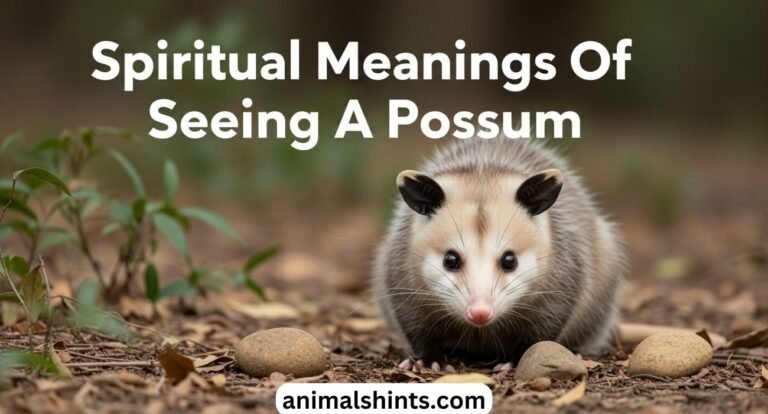
Dog Crossing Your Path: Spiritual Meaning, the Real Animal and the Honest Record
It is the only crossing on this site’s whole shelf that can arrive with a wagging tail. A dog trots out of a gateway, cuts across the path in front of you and carries on about its business — or stops, looks at you properly, and waits to see what you will do. The spiritual meaning of a dog crossing your path, in the reading the animal-sign tradition gives it, grows out of that familiarity: loyalty turning up uninvited, protection on four legs, and a working friendship between humans and an animal that is older than farming, older than writing, older than the wheel.
Ten meanings come first. Then the same encounter is sorted twice more — by the colour of the dog, and by what the dog was doing when it crossed — and finally set inside five cultural frames. All of it appears below in full. All of it is also labelled, section by section, as the thing it actually is: a body of belief, cherished by its holders, which this page reports without pretending to have demonstrated.
Underneath the symbolism stands an animal with a record of its own. The dog is the first species human beings ever brought into their homes, its nose reads the world in a chemical detail we can barely imagine, and the oldest writings that mention it — scripture included — are considerably less cosy than the greeting-card version. So this article gives the crossing all three treatments: the ten meanings as the tradition states them, the real animal and the safe way to behave around one you do not know, and the older record checked line by line against what it actually says.

What Does It Mean When a Random Dog Crosses Your Path?
Begin with the quality every version of this reading shares: the dog is not a stranger species. A deer on your path is a wild neighbour pausing at the edge of its world and yours; a dog is a member of the household of humanity, out on an errand. The tradition builds its whole interpretation on that membership. Where other crossing animals are read for what they are, the dog is read for what it is to us — the companion, the guard, the one that chose our firesides and never entirely left.
From that root the guides draw three strands. The first is allegiance. When a tradition wants an emblem for faithfulness, it reaches, sooner or later, for the dog — and so this strand treats an encounter as an occasion to look hard at your own allegiances: the friendships you have let go slack, the promises aging unkept, the people who would notice if you vanished for a week. The second strand is watchfulness. A dog experiences a street as a bulletin of smells and sounds long before it is a view, and the tradition takes an encounter with that kind of attention as a nudge toward your own: something nearby may deserve a second look, in your house, your work or your health. The third is direction. Dogs are followers and leaders by turns, creatures that hold a line across country by nose and habit, and an encounter, in this strand, becomes the picture of a route being confirmed — or of a guide animal briefly showing you the way it walks its own.
Set beside its shelf-mates, the dog’s character comes into focus. The deer in your path pages concern a wild animal that stops at range and studies you before leaving; a dog is far likelier to walk straight up and conduct its own inspection. The rabbit crossing your path article follows a creature whose entire safety strategy is disappearance; a dog’s strategy is the reverse — to be recognised, named, and expected home for dinner. The squirrel crossing your path article admires an animal that insures itself against the future by burying it; the dog buries nothing. It operates entirely in the present tense and leaves tomorrow to the household. That temperamental difference is what the ten meanings below keep circling back to.
The Real Dog in Your Path
The dog is the only animal in this run of articles that is not wildlife, and the fact rearranges everything about the encounter. Canis lupus familiaris is a subspecies of the gray wolf, reshaped by the longest partnership any species has kept with ours: Britannica puts the companionship at more than 12,000 years, and the genetic evidence places the first domestication events in northern Eurasia somewhere between roughly 14,000 and 29,000 years ago. Long before there were paths in any formal sense, dogs were already walking the informal ones beside us — hunting, guarding, hauling, herding. A dog crossing your path today is the current shift of the oldest working arrangement in human history reporting for duty, whether it knows it or not.
So what, in plain terms, is this animal doing in your way? In most cases, one of three ordinary things. It has slipped a yard, a lead or an open gate and is ranging a little further than its permissions allow. It is genuinely homeless and working a route between food, water and shelter, the way free-ranging dogs do on every continent. Or it belongs to someone a hundred yards behind you and is simply ahead of its person, off the lead, conducting the advance reconnaissance. In all three cases its itinerary is written by its nose. A dog’s nasal cavity holds more than 220 million scent receptors, against the five or six million in a human one, and the share of its brain given over to analysing odour is proportionally some forty times ours — figures from a 2018 review in Frontiers in Veterinary Science that veterinary colleges have been repeating ever since. Where you cross a path through a picture, a dog crosses it through a newspaper: who passed, when, in what mood, eating what.
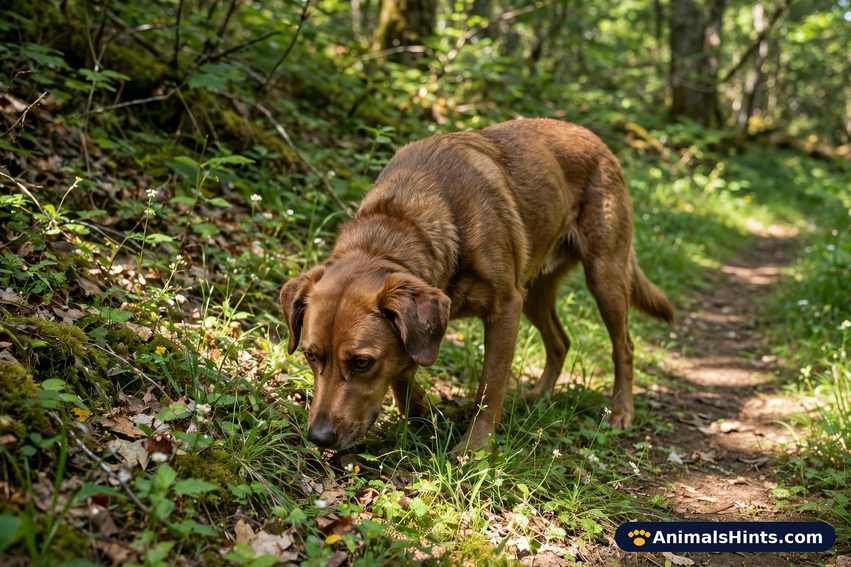
That sensory world explains the behaviour that makes this crossing feel personal. A dog that slows, turns its head and studies you is not passing judgement on your character; it is reading you — your scent picture arriving well before your face does. One that falls in beside you for a few yards is doing the social thing its species has practised for fifteen millennia: joining a walking party temporarily, the way dogs attach themselves to whoever is going somewhere interesting. And one that crosses at a distance, nose down, without a glance, is not snubbing you. You simply were not the news that morning. The meanings come next, and they are the tradition’s to state — but they all stand on this animal: domestic, nose-led, and social to the bone.
10 Spiritual Meanings of a Dog Crossing Your Path
Ten meanings are promised by the heading above, and his page is true to its arithmetic — all ten are here, in his sequence. Take each one the way this site takes the whole genre: as an interpretation belonging to the tradition that produced it, attributed to that tradition at every step, and never as a prediction with this page’s signature on it.
1. Life Guidance
The first meaning takes the dog as a navigator. This is an animal that crosses unfamiliar country without a map and arrives anyway, holding a line by scent, memory and an unembarrassed willingness to check its bearings at every fence post. The tradition reads a crossing in that image: guidance pictured not as a lightning flash of certainty but as a route walked one verified stretch at a time. Aimed at anyone standing at a genuine crossroads, the reading’s advice is procedural rather than mystical — pick the next leg you can actually smell your way along, walk it attentively, and let the leg after that become visible when you get there.
2. Love
The second meaning is the shelf’s simplest. Dogs attach without keeping accounts, and the tradition holds that attachment up as the pattern of love in its least defended form: uncalculated, quickly forgiving, and expressed mostly by turning up. The reading aims the encounter at the heart’s current state of repair — at affection being rationed where it used to flow, at a grudge being fed past its usefulness, at the possibility that the next right thing is not an achievement but a softening. It is carried here exactly as the guides state it, as an encouragement rather than a claim about the universe.
3. Spiritual Protection
The third meaning casts the dog as a guard posted at a boundary. Of all the strands in this list, this one has the longest documented pedigree behind it: dog guardians at the gates of the dead are genuinely old, turning up in Egyptian, Greek and Norse dress, and the record section below sets that evidence out at its proper strength. The modern reading built on it runs as follows — that a crossing dog signals watchfulness being exercised on your behalf, and reminds you to exercise some of your own: over your attention, your household, and the list of things you let walk straight into both.
4. Message from the Afterlife
The fourth meaning is the tenderest on the list, and this page handles it at the gentleness it asks for. In the tradition’s telling, dogs pass easily between the household of the living and the country of the dead, and a dog appearing unexpectedly — above all in a season of grief — is read by many as a visit in animal form: reassurance that a bond has not been cancelled by a death. There is no evidence for that reading, and this page offers none. What can honestly be said is that the belief is widespread, that it comforts people who hold it, and that comfort, in the first raw weeks of mourning, is not a small thing to be given by a stray dog on a path.
5. Loyalty and Companionship
The fifth meaning is the load-bearing wall of the entire list — the one the other nine keep orbiting. Loyalty is the dog’s documented trade: the animal story nearly every old culture tells about it is a story of a dog that would not leave — a post, a grave, a road home, a master who had become, unknown to the dog, a god testing it. The record section carries the most famous of those stories at its real strength. What the tradition builds on them is a reckoning of allegiance, run in both directions — who has kept faith with you at cost to themselves, and where your own faithfulness has quietly been allowed to lapse.
6. Intuition and Trust
The sixth meaning leans on the animal’s instrumentation. A dog knows things about a room — who is frightened, who is unwell, who arrived angry — through channels that bypass everything we call evidence, and it acts on that knowledge without apologising for the method. The tradition turns that instrumentation into a brief for your own neglected instruments: the unease you keep overruling, the first impression you later disowned, the quiet certainty that arrived before its paperwork. Held to its honest weight, the reading asks for something narrower than surrendering your judgement — it asks you to stop discounting the channels judgement does not use. The dog prospers by believing all of his senses at once. The suggestion is that you might try believing more than one of yours.
7. New Beginnings
The seventh meaning reads the crossing as a threshold being marked. In the genre’s grammar, anything that crosses your path interrupts the route you were on, and an interrupter this friendly is read as an opening rather than an obstacle: a phase beginning, an offer forming, a door standing ajar with something enthusiastic on the other side of it. The dog’s own temperament supplies the recommended attitude — beginnings, in this reading, are to be entered the way a dog enters a new field, at a trot, nose first, without a committee meeting about what might go wrong.
8. Transition and Transformation
The eighth meaning neighbours the seventh but is not the same one, and the tradition keeps them separate for a reason. A beginning is a door; a transition is the corridor — the stretch where the old arrangement has ended and its replacement is still only a rumour. Dogs are the folklore’s appointed escorts for exactly that stretch, the guides of souls between one state and the next, and this strand reads an encounter as company for the corridor: not a promise about what waits at the end of it, but a refusal to let you walk the unsettled part unattended.
9. Death and the Afterlife
The ninth meaning is the list’s most solemn, and it needs its boundary stated before its comfort. The association between dogs and the dead is ancient and real — the record section gives it its evidence — but the tradition itself never handles a crossing dog as a prediction that anyone is about to die. It is the opposite kind of sign: the escort, not the summons. Read at its strongest, this meaning addresses the fear underneath a transition — a diagnosis being waited on, a parent aging, a life being dismantled — and answers it with the oldest picture the shelf owns: whatever the crossing ahead of you is, you do not make it unaccompanied.
10. Trust and Surrender
The last meaning ends the list in the place the dog itself lives: in the present tense, without a rehearsal. Dogs do not spend the walk worrying about the walk, and the guides take the encounter as a small enacted sermon on the subject — an invitation to set down the attempt to pre-live every outcome and meet the day at the resolution it actually arrives in. Surrender here is not the passive thing it sounds like. It is the dog’s own working arrangement: full attention to whatever is in front of the nose, full trust in the legs, and the future left to become the present before it is dealt with.
Symbolism of Different Colored Dogs Crossing Your Path
His page refines the reading by coat, and the refinement is carried here in his order — five colours, each glossed in the tradition’s terms and kept inside what can honestly be said about each.
White Dog
A white dog gets the cleanest reading of the five: sincerity, a clear conscience, protection without menace. White animals carry a purity association across a great many folk systems, and the dog version inherits it whole — the encounter read as reassurance that your current road is an honest one and that nothing in it needs hiding.
Black Dog
The black dog carries the most layered file of the five. In British folk tradition, spectral black hounds — the Black Shuck of East Anglia, the barghest of Yorkshire — haunt lanes and churchyards as omen figures, and the phrase “the black dog” has served English as a metaphor for melancholy since at least the eighteenth century. The modern guide’s reading is gentler than either inheritance: protection operating in the dark, and transformation that begins by facing the shadowed material rather than skirting it. The colour itself is treated at article length elsewhere here — the black pages give it the full hearing: mystery, reserve, and power kept out of sight until it is needed.
Brown Dog
A brown dog is the grounded member of the five: steadiness, the practical affections, the claims of home and body and routine maintenance. Where the white dog speaks of the spirit and the black of the shadow, the brown dog, in the tradition’s handling, speaks of the ground under both — food in the bowl, fences mended, the unglamorous loyalties that are kept daily rather than declared once.
Golden or Yellow Dog
The golden dog is read as the fortunate register: warmth, plenty, good humour arriving in animal form. Gold is the colour the whole shelf associates with value that does not tarnish, and a golden-coated dog doubles the symbolism with the animal’s own — prosperity, in this reading, that behaves like a companion rather than a vault: it walks with you, and it is meant to be shared at the door.
Gray Dog
The gray dog closes the colour list at the register of balance: neither the white’s clarity nor the black’s depth, but the seasoned middle — judgement that has seen both, enthusiasm with the volume adjusted by experience. A gray crosser, in the tradition’s terms, is advice toward equilibrium: hold the decision a moment longer, let the extremes finish arguing, and take the reading that survives both.
The Behavior of a Dog When It Crosses Your Path Spiritually
Conduct is his second sorting system. Four behaviours follow, in his order and in his terms. The section after this one gives the same four behaviours their second, plainer reading, because a dog’s conduct is information as well as symbol, and on a real path the information matters first.
- Calm and friendly. A dog that crosses easily, tail swinging at a comfortable height, body loose — the tradition takes it for the sign at its most benign: goodwill in the neighbourhood, your own road in good order, nothing being asked of you except to notice that not every interruption is a problem.
- Excited or playful. A bouncy, wriggling crosser — the kind that play-bows, spins, or tries to start something joyful with a stranger — is read as an instruction in the other direction: toward appetite for the day, toward the part of life that is not a task. The tradition files it under reminders, and aims it at people who have been all duty for too long.
- Protective or alert. A dog that crosses and then stations itself — watchful, oriented outward, treating you as the thing being guarded rather than greeted — is read as the boundaries entry in behavioural form: vigilance being modelled for you, and a suggestion that some perimeter of your own wants the same attention this week.
- Agitated, fearful, or aggressive. The difficult crosser is treated by the guide as a reflection of the reader rather than a threat aimed at them: friction somewhere in your own arrangements, fear being carried at a level where it has begun to announce itself. Whatever the symbolism, the practical rule outranks it, and it is absolute — a dog behaving this way is not to be approached, comforted or interpreted at close range. The next section explains why, from the handler’s side of the lead.
Reading the Dog in Front of You: Body Language Before Symbolism
Everything in this section comes from the people who handle unknown dogs for a living, and it outranks every other section in this article. A loose dog is the one crosser on this shelf that can make a decision about you — quickly, and with equipment — so the encounter has a correct procedure, and the procedure starts with reading the whole animal rather than its tail.
The ASPCA’s body-language guidance is the standard summary, and its first lesson is that no single part reports honestly on its own. A relaxed dog is loose all over: soft eyes with no white showing, mouth open and easy, ears in their natural position, weight distributed without intention. A frightened dog makes itself small — ears pinned back and down, tail low or tucked, body hunched, eyes wide enough to show the whites, sometimes trembling, and often licking its lips or yawning in the displacement behaviours animals use to calm themselves. A dog moving toward trouble makes itself large instead: muscles hard, weight shifted forward over the front legs, gaze fixed and direct, muzzle wrinkling, the hair along its shoulders and spine raised. A wagging tail appears in more than one of those pictures, which is precisely why the tail alone is not a reading.
The ASPCA’s rule for the frightened end of that scale deserves quoting in spirit if not in letter: the correct way to approach a fearful dog is not to approach it. The greetings humans perform automatically — walking straight at the animal, holding its gaze, leaning over it, reaching a hand toward its head — are, in the dog’s own language, a sequence of threats, and they are how friendly intentions get people bitten by frightened dogs. Run the encounter the other way. Stop. Turn slightly sideways. Keep your hands still and your gaze soft and averted, and let the dog make every decision about distance. Never run from a loose dog — running converts you into the most interesting thing in its world and invites a chase you will lose. Never corner one, and never reach for one that is injured: pain shortens a dog’s manners to nothing, and an injured stray is a job for animal control and a veterinarian, not for a passer-by’s kindness. If you are walking your own dog, shorten the lead and walk away at an unhurried pace; most loose dogs are looking for information, not a fight, and a retreating party is poor entertainment.
This site’s skunk crossing your path page deals with the opposite arrangement — an animal whose entire policy is a warning followed by a weapon, and whose etiquette is therefore all distance. A dog’s etiquette is social, which makes it more forgiving and less predictable at once: the same animal that trots past a hundred walkers may object to the hundred-and-first for reasons written in a scent-picture nobody else can read. Respect the variability. It is not a flaw in the dog; it is the dog.
One hazard belongs in this section at full strength, because it is the reason unknown dogs are never a petting opportunity. Worldwide, the dog is rabies’ great carrier: the World Health Organization attributes up to 99 percent of human rabies cases to dog bites and scratches, and the CDC puts domestic dogs behind more than 95 percent of the roughly 70,000 human rabies deaths a year across the globe. The same CDC record carries the balancing fact for American readers — rabid dogs are uncommon in the United States, where vaccination programmes have done their work and more than 90 percent of reported animal rabies is in wildlife. Both halves belong in the same paragraph, because both are true: the risk at home is low, it is not zero anywhere, and the protocol costs nothing. A bite or a scratch from any dog whose history you do not know gets washed with soap and water — the WHO’s instruction is a full fifteen minutes of washing — and assessed by a medical professional the same day, and the dog gets reported to animal control, which is also how it gets found, caught and checked.
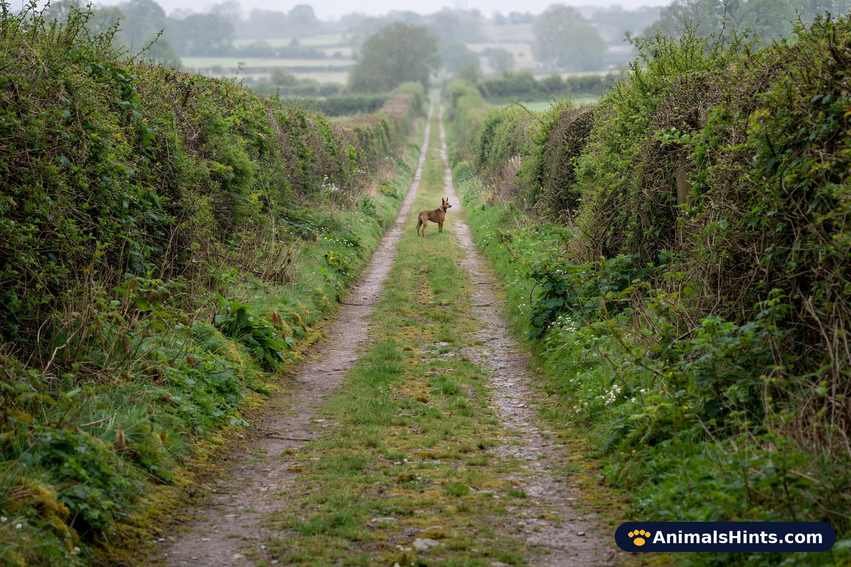
What the Record Actually Shows: Dogs in Older Lore and Scripture
Few animal topics attract as much confident repetition, and as little verification, as this one. What follows sorts the tradition into its two real piles: the strands that can be pointed to in old documents, and the strands that were written recently and then dressed in antique clothing. The evidence comes in three bodies — the Bible’s own treatment of the animal, the roles the old mythologies genuinely assigned it, and the additions of modern retelling.
Scripture mentions dogs often — and almost never kindly. The test is quick and anyone can repeat it: search the King James text for the word, and BibleGateway counts 40 Bible results for “dog” — 23 of them for the plural “dogs” alone. Read down the list and a consistent animal emerges — not the companion of the fireside but the scavenger of the street and the city wall. Dogs lick the blood of Naboth and are promised the flesh of Jezebel (1 Kings 21–22; 2 Kings 9). They prowl the city at evening in the Psalms: “they make a noise like a dog, and go round about the city” (Psalm 59:6). “Dead dog” is the period’s idiom for a worthless man, used by Mephibosheth of himself (2 Samuel 9:8). The single working reference is a shepherd’s tool, and even it is quoted as an insult — Job, complaining of the men who mock him: “whose fathers I would have disdained to have set with the dogs of my flock” (Job 30:1, KJV, verified word-exact). The New Testament keeps the register. Paul’s “Beware of dogs, beware of evil workers, beware of the concision” (Philippians 3:2, KJV, verified word-exact) is aimed at people, using the street dog as the picture of the unclean outsider; Revelation 22:15 leaves “dogs” outside the city in a list of the excluded. The one exchange where the image softens is a plea bargain at a dinner table — the Syrophoenician woman answering Jesus: “Truth, Lord: yet the dogs eat of the crumbs which fall from their masters’ table” (Matthew 15:27, KJV, verified word-exact) — and even there, the dogs are under the table, not beside it. BibleGateway’s own topical index files the animal in the same spirit: shepherd dogs at Job 30:1, and “wicked people compared with dogs” at Proverbs 26:11, Matthew 7:6 and 2 Peter 2:22. No verse in either testament addresses a dog crossing anyone’s path, treats a dog as an omen, or reads anything at all into meeting one. That gap is worth stating outright, because the genre almost never does: the Bible’s dog is a figure of the margins, and every friendly meaning in this article arrives from somewhere else.
The one companion dog in the biblical library lives in the deuterocanon. In the book of Tobit — scripture for Catholic and Orthodox readers, Apocrypha for Protestant ones — a dog accompanies the young Tobias on his journey and comes home with him, the single uncomplicated instance of a dog as a travelling companion in the whole collection. It is a genuinely charming exception, entered here at precisely the weight it can bear: one dog, in one book, whose canonical address depends on the reader’s tradition.
The threshold-guardian dog, by contrast, is as old as the record gets. His page’s protection and afterlife meanings are often presented as modern embroidery; on this strand, unusually, the embroidery is antique. Egypt gave the dog sacred standing in the age of the pharaohs (Britannica states it flatly), and its canine-headed god Anubis — the head usually identified as a jackal’s — presided over embalming and the care of the dead. Greece posted Cerberus, the hound at the gate of Hades, to make sure the dead stayed dead and the living stayed out. Norse myth set the hound Garmr at the entrance to Hel. Three civilisations, three dog-shaped locks on the same door: the guides who say dogs have always stood at the boundary between the living and the dead are, on this one point, simply reporting.
The loyalty story with the deepest roots is India’s. In the Mahabharata’s closing movement, the hero Yudhishthira makes his final journey accompanied by a dog that has attached itself to him, and at the very gate of heaven refuses to enter without it — whereupon the dog is revealed as the god Dharma, his father, who had been testing whether his righteousness extended to the least regarded of his followers. The Rigveda’s Sarama, the divine hound who tracks down stolen cattle, gives the tradition an even older dog still: a finder, a negotiator, a creature whose nose serves the gods. Set beside these, the modern genre’s loyalty meaning is not an invention at all. It is a summary.
One item in his cultural survey fails the check outright, and it is dealt with here instead of being passed along. The line “dog is God spelled backward” is offered on his page as Christian symbolism. It is not symbolism, doctrine or tradition of any church; it is a piece of modern English wordplay, possible only in a language where the two words happen to be anagrams, and unknown to the centuries of Christian art in which dogs actually do appear — at the feet of tomb effigies, where they signified the fidelity of the person buried above them. That real usage is better than the pun, and it is the one this page keeps.
Cultural and Religious Significance
Five strands make up his cultural survey. They follow in his order, and each one is capped at the height the evidence in the record section can actually support — a strand that runs past its documentation gets stopped at the border and labelled.
- Ancient Egypt. The strand survives the check in good order. Dogs held sacred standing in pharaonic Egypt, and the canine-headed Anubis — embalmer, cemetery guardian, escort of the dead — is the ancient world’s most developed version of the dog at the threshold. Where the guide calls the dog a guide of souls, Egypt is the address he is remembering, whether he knows it or not.
- Celtic mythology. The hounds are genuinely there. Ireland’s greatest hero took his very name from a dog — Cú Chulainn, “Culann’s Hound”, earned by offering himself as replacement for the guard dog he had killed — and Welsh tradition keeps its own otherworld hounds, the Cŵn Annwn, white with red ears, heard hunting at night. Bravery and loyalty are the strands the stories themselves support. The healing association his page adds is the thinner thread: dogs do appear around healing sanctuaries in the Celtic-Roman world, but as a presence, not a doctrine, and the strand is filed accordingly.
- Native American traditions. The documentary floor under this strand is solid and practical: the dog was the only domesticated animal in North America before European contact, hauling the travois across the Plains, hunting, guarding camps, and living inside the circle of the community as no other animal did. Spiritual roles beyond that companionship belong to individual nations — hundreds of them, each with its own teachings — and no one nation’s account is passed off here as a continent’s. The strand stands at that strength: the partnership is pan-American and ancient; the doctrines are local, and are left to their owners.
- Hinduism. This strand checks out at full strength and gains a member his page does not mention. Bhairava, the fierce form of Shiva, does ride with a dog as his mount, and dogs are fed at his festivals to this day. But the tradition’s great dog is the one in the record section: the unnamed dog of the Mahabharata who would not be left outside heaven, and Sarama of the Rigveda before him. Protection and the destruction of evil are Bhairava’s register; loyalty tested at the gate is the epic’s; between them, the Hindu file on dogs is the richest any single tradition keeps.
- Christian symbolism. Held to the record, this strand divides in two. The Bible’s own dog is the margin animal of the census above — scavenger, insult, outsider — and no amount of affection for the species should be allowed to airbrush that into a fireside portrait the text never paints. What Christianity genuinely added came later and visually: the dog at the foot of the medieval tomb, signifying fidelity, and the companion in Tobit walking Tobias home. The anagram his page quotes is modern wordplay, dealt with in the record section above, and it earns no place in the survey itself.
What to Do When a Dog Crosses Your Path
Symbolism aside, crossings end in conduct. What remains is a short field manual, arranged by the only distinction that matters at the time: which kind of dog has just crossed in front of you.
On foot, the protocol is courtesy and distance. Let the dog finish its crossing; do not step into its line to make the encounter happen, and do not try to call a strange dog over for the pleasure of the meeting. If it approaches you, run the safety section’s procedure — sideways stance, soft gaze, still hands, and let it sniff and decide. If it simply passes, the encounter is complete, and the correct response is the one the skunk and the squirrel also ask for: nothing. Most crossings need no sequel.
If the dog follows you, it is probably asking for something specific. A dog that falls in and stays is usually lost, hungry, or both, and has selected you as the most promising adult in sight — an honour with a small duty attached. Do not lead it further from where you met it than you must. If it wears a collar and lets you near calmly, a tag may solve everything in a minute. If it will not be approached, note exactly where it is, and report it — animal control or the local shelter, with the location, the description and the direction it was travelling. That report, unglamorous as it is, is how most lost dogs in America actually get home.
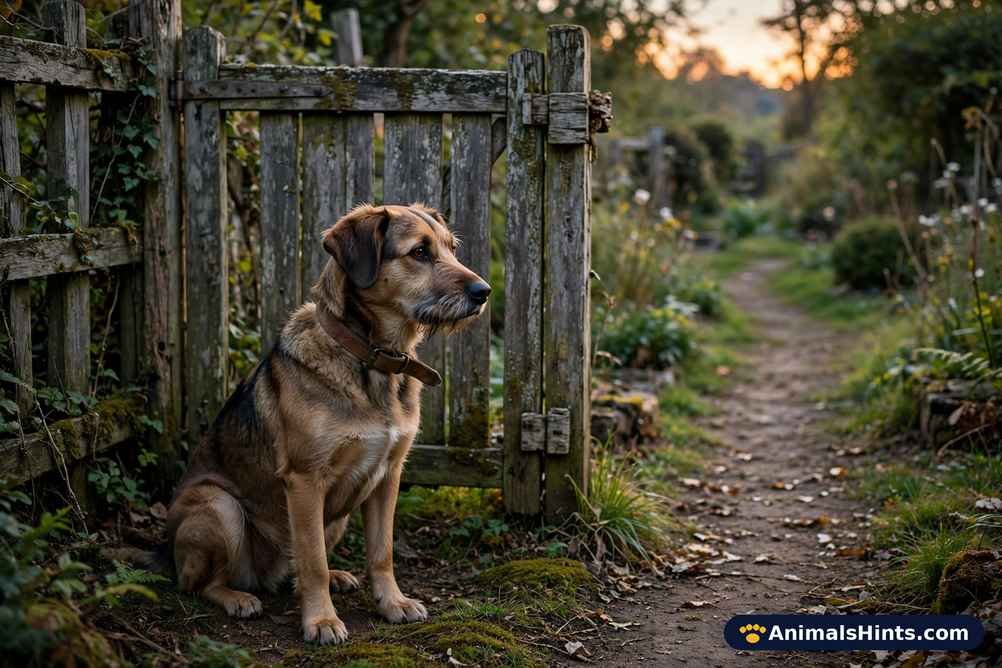
If the dog seems lost or hurt, escalate rather than improvise. A vet’s office or shelter will scan a found dog for a microchip without charge — that is the standing arrangement, and it turns an anonymous stray back into somebody’s dog faster than any poster. An injured dog is the exception to every kindness above: do not lift it, do not splint anything, do not offer food or water to an animal in shock. Keep people and other dogs away from it, keep it in sight if you safely can, and let animal control or an emergency veterinarian do the handling. Compassion, at that point, is a telephone call.
In a car, the dog’s domestication becomes the driver’s problem. A loose dog near a road has none of a wild animal’s traffic sense and all of a child’s unpredictability: it may cross, recross, or stop in the lane to investigate the vehicle itself. Slow down early, expect the second movement rather than the first, and brake in your lane if the traffic behind permits. Do not swing the wheel. A swerve converts a dog-sized emergency into a car-sized one — the ditch, the tree and the oncoming lane are all worse trades, and crash reports are consistent about which choice injures people. The birds flying in front of your car while driving article on this site works from the identical rule, because the physics does not care what species is in the headlights. If the dog is standing in the road and traffic permits, a call to animal control from a parked car is worth more than a rescue attempt in moving traffic.
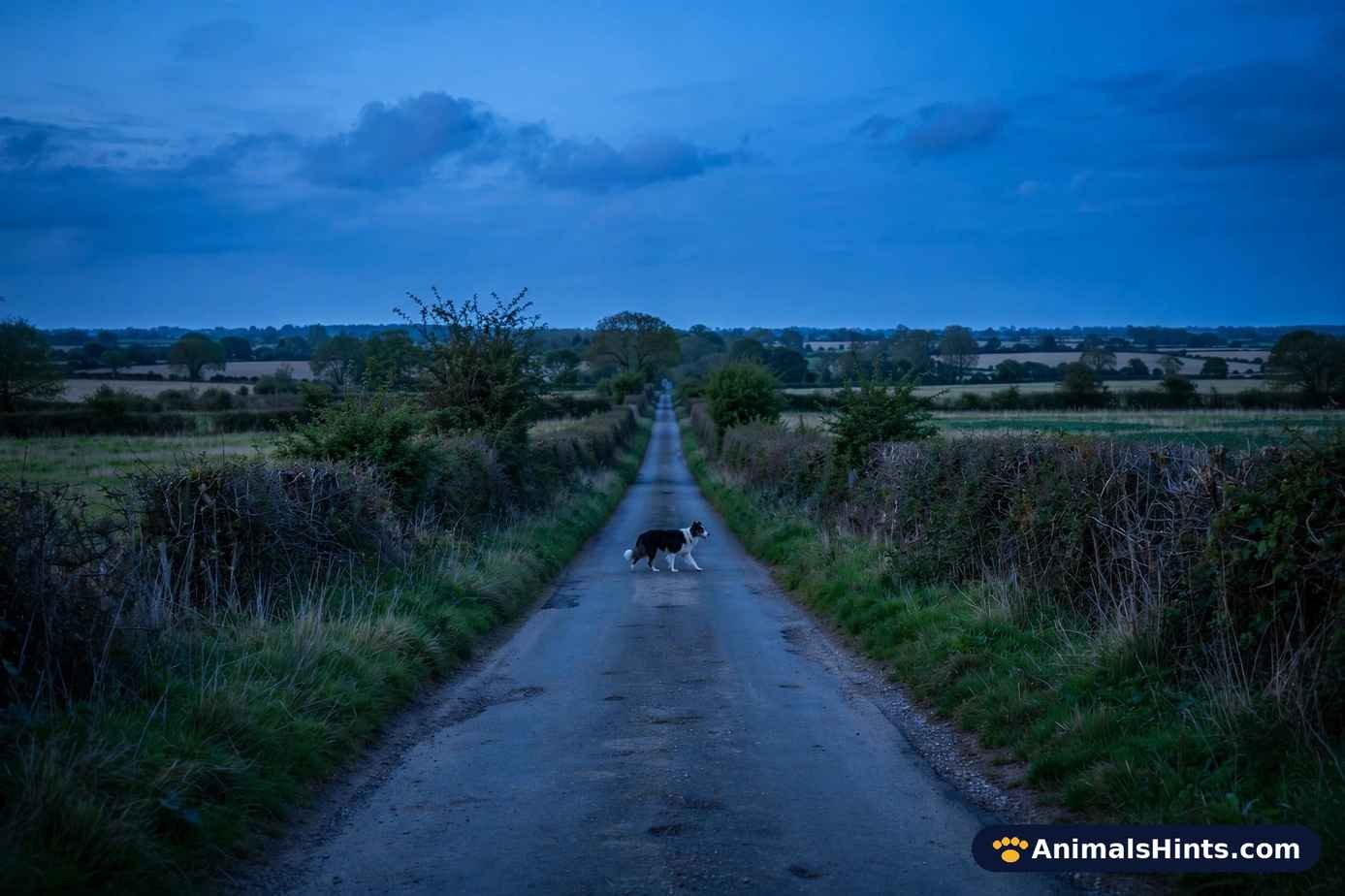
Dog Crossing Your Path: Good or Bad Omen?
His page answers this question more one-sidedly than any other on the shelf: the dog crossing leans favourable in nearly every tradition that keeps a version of it, and the reason is the animal itself. A sign is read through the character of its messenger, and this messenger is the species that chose us — the guard, the companion, the finder of lost things. Loyalty arriving on your path gets filed as good news by the same logic that files a friend’s knock at the door as good news, and the tradition sees no reason to overcomplicate the filing.
The honesty clause is the standard one for this shelf. Whatever favour the sign carries lives in the interpretation, not in the occurrence: the crossing itself promises nothing, underwrites nothing and schedules nothing. What the tradition is distributing, under the name of luck, is an interpretation of company — the sense that the road is shared, watched and walked by more than yourself. A reader who takes the encounter that way has received everything the sign honestly holds. A reader who takes it as a promise has added something the dog never said.
Set it beside the shelf’s opposite number. This site’s dead bird article handles the grief end of animal symbolism — a creature met only after its travelling is done. A crossing dog occupies the far pole from that: alive, mid-errand, probably expected home for dinner, and — alone among the crossers — quite possibly pleased to see you. If omens are graded by the company they bring, this one brings the best company there is.
Final Thoughts
A dog crossing your path is the warmest encounter on this site’s crossing shelf, and the aim here has been to keep it warm without letting it melt. The tradition’s ten meanings are carried complete above — guidance, love, protection, loyalty, the afterlife twice over, and trust at both ends of the list — and they are good meanings, held by good people, about an animal that genuinely earns more of them than most. What the checking added, rather than subtracted, is a spine: the threshold dogs of Egypt, Greece and the Norse north are real; the Mahabharata’s dog at the gate of heaven is real; the Bible’s street scavenger is real too, and the modern fireside portrait is more honest for knowing it descends from only some of those.
Set the symbolism aside entirely and what is left, on this topic, is a short course in being a decent neighbour to the oldest neighbour we have. Read a strange dog before you greet it. Let the frightened one keep its distance and the lost one borrow your telephone. Wash a bite, make the call, slow down in your own lane. None of that requires believing anything at all, and all of it is what the animal itself would presumably vote for, if the franchise were ever extended.
Meanwhile the dog has already finished the encounter and gone back to work. Somewhere ahead of you on the path it is conducting its real business — quartering the ground with a nose carrying more than two hundred million scent receptors, reading a world written in olfaction that you and I cross blind, in pictures. The traditions call that animal a messenger. On the evidence of the nose alone, it is certainly receiving messages we are not. What they say is its own affair, and it crosses the next path, and the next, entirely unbothered by our interpretations.
FAQs
What does it mean when a dog crosses your path spiritually?
In the tradition’s reading: loyalty, protection and guidance arriving uninvited — an invitation to examine your own faithfulness and to trust the route you are on. As plain fact, the dog was crossing for reasons of its own, and no text in any scripture reads an omen into it.
Is a dog crossing your path a sign of good luck?
In nearly every tradition this article drew on, yes — the most favourable verdict on the crossing shelf, because the messenger is the companion species itself. Hold it as the tradition’s interpretation rather than a promise: the encounter forecasts nothing, but it is company of the best kind.
What does it mean if a friendly dog crosses your path?
The guide’s reading is the warmest on the list: goodwill nearby, loyal people in your life, an invitation to receive both more openly. Practically, a friendly loose dog is also the likeliest to be a lost one: if it lets you, check for a tag, and give animal control the location either way.
What does it mean if a protective dog crosses your path?
In the tradition: vigilance being modelled for you — a nudge to guard your own boundaries as faithfully as the dog guards its ground. In the animal’s own terms, a protective or alert dog is asking for distance, and the correct answer is to give it, promptly and without taking offence.