Candle Wick Mushroom Spiritual Meaning: 10 Meanings, the Carbon Cap and the Counted Text
It begins as a small black swelling at the very tip of the wick, and by the end of a long burn it has rounded into something with a stalk and a cap — the shape that gives candle wick mushroom spiritual meaning its name. The flame above it stands taller and dirtier than it should, a thread of smoke leans off the rim of the glass, and a candle lit for quiet, for prayer or for grief starts to look as though it is trying to say something.
The guides who answer the search have their reading ready. In it, the wick is the channel the light travels through, so a distortion at the wick is interference in the channel: energy blocked, feeling accumulated, a cleansing under way, a message pressing to get through. His ten meanings, his five-culture survey, his myths and his good-or-bad verdict are all set out below, following his order and his headings, each marked plainly as a modern tradition speaking, rather than shortened because it is one.
Around the reading stand three records that can actually be checked. Candle makers measure this object for a living, and their account says exactly what the cap is made of, what feeds it and what removes it. The King James Bible, counted in full, talks about candles, lamps, flames and trimming at length and never once uses the word “wick”. And people really have read flames and wax for omens over long centuries — without, in any source consulted, ever grading this particular shape. One rule runs through the whole page: a tradition’s reading is labelled as that tradition’s, a measurement is labelled as a measurement, and each keeps its own authority.
Why Does My Candle Wick Mushroom?
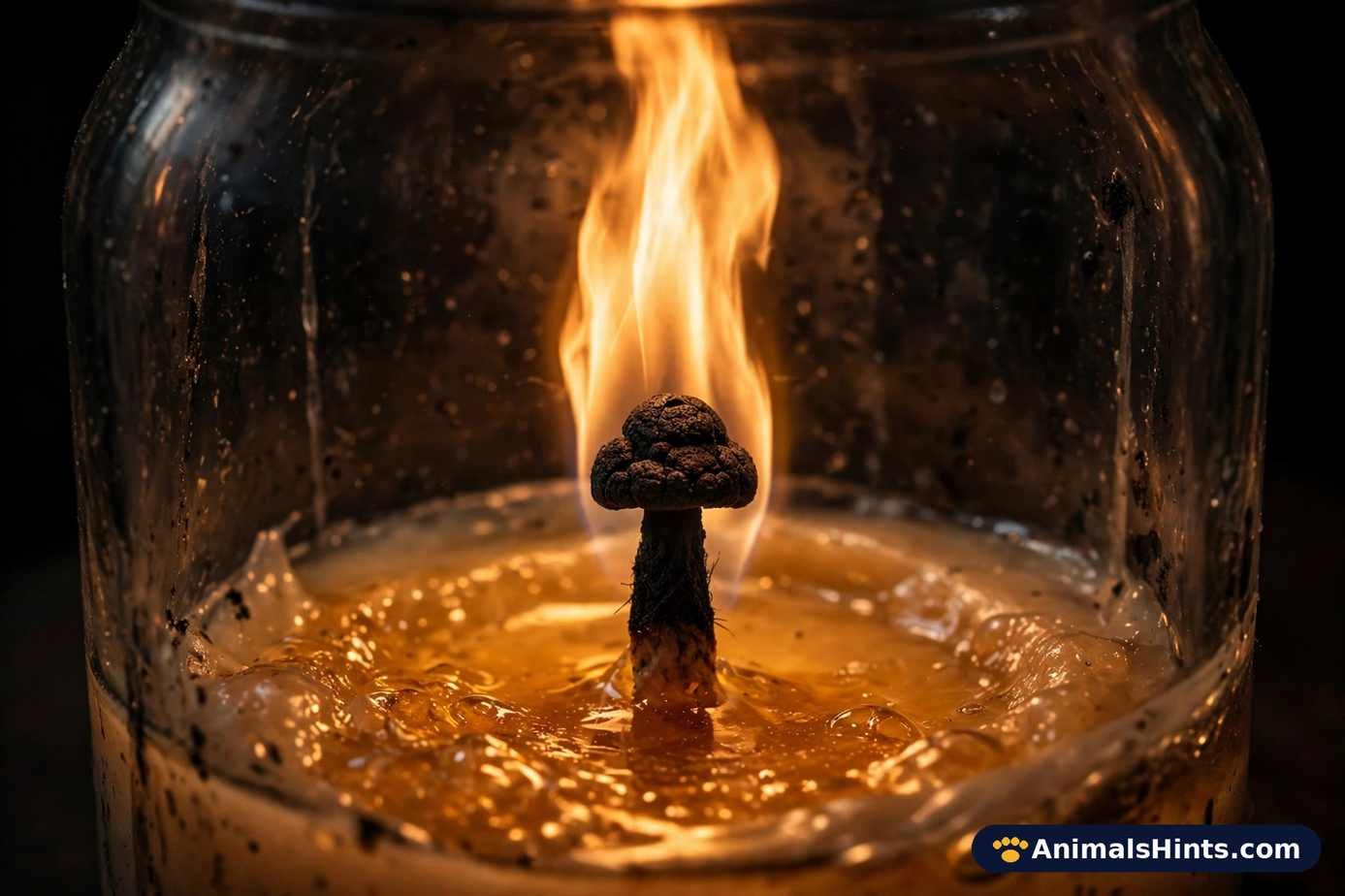
The guide’s own answer starts, to its credit, with physics: carbon collecting at the tip. In his telling it forms behind a wick left too long and a candle rich in heavy fragrance oils, with uneven wax and impurities making the flame work harder than it should and leave a small black bulb behind, which hardens into the curl as it cools. That is his explanation, and as far as it goes it points the right way — the next section gives the same event at the depth the candle trade itself records it.
From there his page turns, as the genre always turns, to the occasions. Candles are rarely lit for no reason: they burn through reflection, prayer, meditation and grief, at altars and sickbeds and birthday tables. Practitioners in his account hold that a flame does not burn in isolation from those occasions — that it answers the room around it, the feelings of the person who lit it, and the intention they brought to it. Watching a candle burn then becomes a meditative discipline in itself, in which the wick’s behaviour is read as communication from the unseen or as a reflection of shifts in the watcher’s own energy.
The Carbon Record: What the Mushroom Actually Is
Strip the occasion away and the object itself is simple, and the trade that makes it describes it without any mystery. A candle wick is a pump. Its braided fibres draw melted wax upward by capillary action into the flame, where the wax vapourises and burns. A mushroom forms when that pump delivers more fuel than the flame can finish: the unburned surplus is cooked, at the hottest point of the wick’s tip, into a ball of nearly pure carbon. The cap is not something the candle has caught from the room. It is something the candle has failed to burn.

The causes, on which maker and supplier technical pages agree closely, are a short list of mismatches. A wick sized too large for its vessel and wax pulls fuel faster than its flame can use it. A wick left untrimmed starts each burn too long, with the same result. A heavy fragrance load loads the fuel itself — the trade’s working band is roughly six to ten percent fragrance oil by weight, and past the top of that band the flame falls behind the supply. Long sessions feed the growth too: a cap builds as a burn stretches past about four hours, and drafts make any of it worse by bending the flame off the wick it should be consuming. His page’s version — too long, too fragrant — is the first two entries of this list in shorter dress.
Size and speed are what separate a fault from a habit. A small cap after a long evening’s burn is a common sight on cotton wicks and no maker’s alarm. A large one — around five millimetres across — or one that has formed inside the first hour, is the signature of a wick too big for its candle or a fuel load too rich for its wick. The consequences are equally unglamorous: the flame grows taller and unsteady, the burn throws soot and smoke, and the inside of the glass blackens. Everything the spiritual reading treats as the candle speaking, the carbon record treats as the candle struggling — the same tall flame, the same smoke, read in two vocabularies.
One thing the cap is not is a fungus. It earns its name from silhouette alone: a dark stalk, a rounded head. This site keeps its filing honest on the point — the real fungi, and what tradition has made of them, live under spiritual meaning of mushrooms; the object on a wick borrows only the outline, and the resemblance is a naming accident, not a kinship.
What Does Candle Wick Mushrooming Symbolize?
His symbolism starts from fire itself. A curling wick, in the frame the guides share, stands first for energy released and matter transformed. Fire is the old emblem of change because it visibly does what change does: it consumes, it clears, it turns a solid thing into heat and light. A wick that mushrooms is read, in that frame, as the candle burning through more than wax — through emotional weight lodged in the room, through spiritual resistance, through negativity that has been lingering past its welcome.
The curl itself carries a second layer of the symbol. Energy, in this teaching, does not travel in straight lines: it flows, shifts and adapts, as the wick bends and adapts. Observers read the bent tip as notice that change is already under way, and that a life, an emotion or a piece of growth is under no obligation to proceed neatly. A third layer is the mirror. The candle is held to reflect the intention of whoever lit it, so a wick that builds its small bulb can be read as efforts amplified — progress under way, an obstacle being cleared, an encouragement to continue the practice rather than abandon it.
His section ends by calling the mushrooming wick a silent dialogue between the seen and the unseen, an invitation to mindfulness — to notice the small detail and treat it as carrying a hidden message. That is the symbol as the tradition states it. What can be checked about it is only its shape: the readings are coherent inside their system, and their system’s paperwork is examined in the record sections below.
10 Spiritual Meanings of Candle Wick Curling or Mushrooming
Here is his ten, in his order and under his titles. Each entry speaks in the tradition’s voice. Where one of them touches something that can be checked — a physical event, a date, a piece of paperwork — the check happens inside that entry, on the spot.
1. Release of Negative Energy
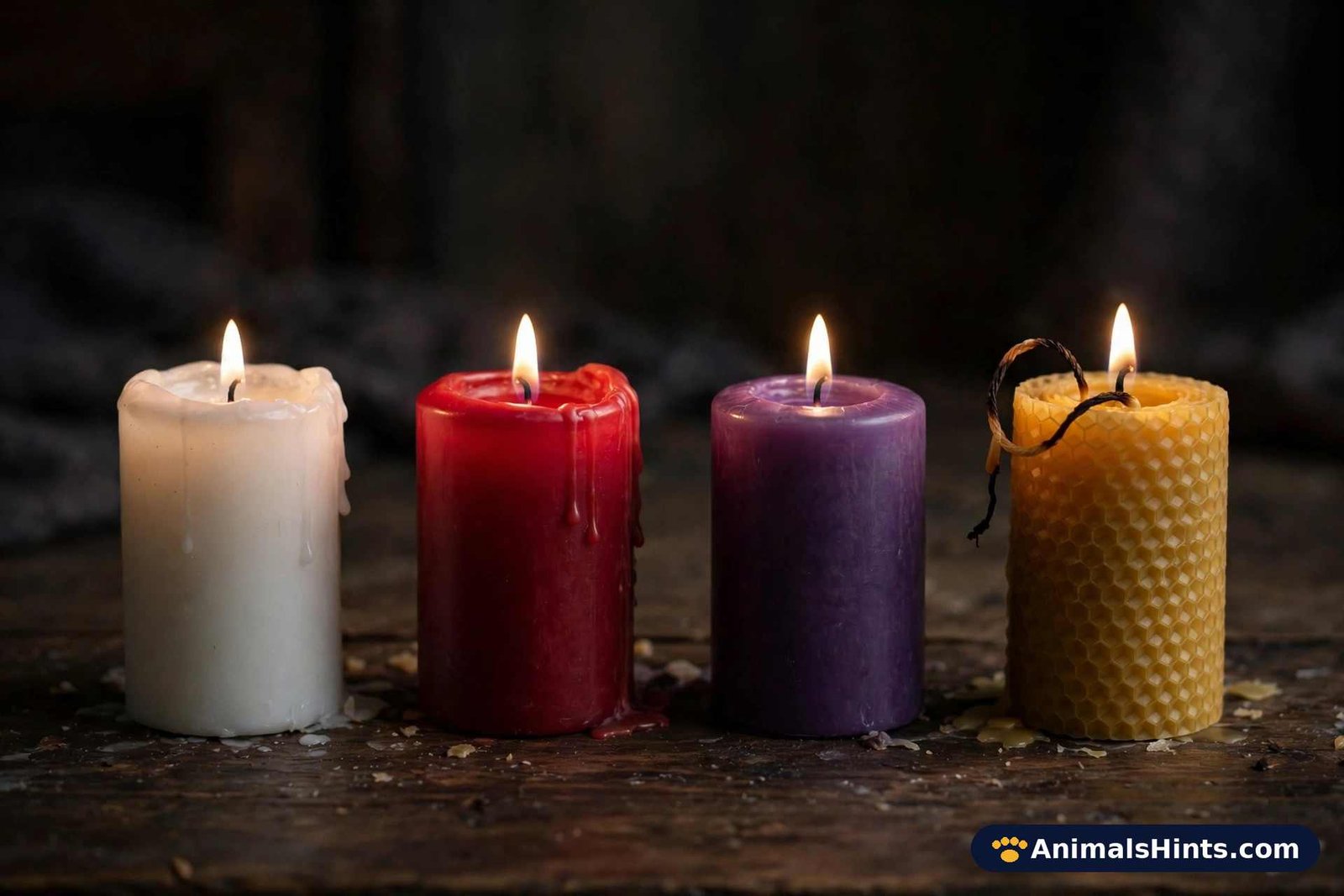
The list opens with the reading the whole genre reaches for first: the mushroom as discharge. Trapped or stagnant energy, in this account, is finally letting go — the candle absorbing the heaviness of a room or of a person’s aura and expelling it through the flame. His illustration is a room after a quarrel: light the candle then, watch the wick cap heavily, and read the tension leaving the air, the space cleared and ready for fresh energy.
Beneath the reading sits a real physical event, and the two deserve to be held apart. Carbon on a wick does build, and pieces of a cap do flake and fall as the burn goes on. That much is combustion. The step from a flaking cap to a discharging room belongs to the tradition alone — a vocabulary for the feeling that a quarrel has left the air, attached to the nearest object that changed while it happened.
2. Strong Spiritual Protection
The second reading makes the capped wick a shield. In traditions where candles stand as guardians, the curl or cap is taken as a protective field forming: interference caught and transformed before it reaches the person the candle guards. Practitioners who light candles with protection as the stated intention read the mushroom, when it comes, as confirmation that the watch is being kept and the defences are working.
This entry makes no claim that can be tested, so this page tests none of it. It stands complete on its own terms as the tradition’s reassurance — a sign whose content is that the sign-seeker is not alone. What the record sections below can date is the shelf the reassurance sits on: the paperwork for reading wicks at all is modern, which describes the literature, and argues against nobody’s comfort.
3. Manifestation in Progress
The third reading belongs, on his page’s own attribution, to modern interpreters in Wiccan and Pagan practice: the mushrooming wick as energy intensifying, a spell, prayer or intention gaining momentum and beginning to take visible shape. His analogy is the mushroom itself — hidden growth underground suddenly fruiting into view — so that the cap’s appearance mirrors the intention’s: what was invisible is arriving.
The analogy is the genre’s best piece of writing on this page, and it deserves its boundary stated kindly. A real mushroom is the fruit of a living network that has been growing unseen; the wick’s cap is a residue that has been accumulating unburned. The two events share a silhouette and nothing else — which is precisely what a symbol is, and the entry is carried at symbol strength, neither promoted to mechanism nor mocked for not being one.
4. Spiritual Resistance Being Cleared
The fourth reading takes the same shape as a work report: resistance being engaged rather than bypassed. Something in the person’s field is blocked, the flame burns unevenly against it, and the curling wick signals that the ritual or meditation has reached the obstruction and is working through it. His scale runs by size: the bigger and more pronounced the cap, the bigger the blockage it is said to be working on — and his counsel is patience: the mess is the process, and the way through is being cleared.
The size claim is the one part of this entry the physical record can speak to, and it speaks plainly. A cap’s size does grade something: how far the fuel supply has outrun the flame. It grades a mismatch between a wick and a candle. Whether it also grades a blockage in a life is not a question the measurement can reach, and this page leaves the two scales side by side without letting either impersonate the other.
5. Presence of Powerful Emotions
The fifth reading turns the candle into a mirror of feeling. Strong emotions — anger, grief, anxiety, passion — are said to imprint themselves on the candle’s energy, and a flickering flame or smoke alongside the mushroom is read as the imprint showing. In settings like shadow work, a journaling session or prayers centred on the heart, the sight is used as a prompt: acknowledge what is being felt, and release it safely rather than leave it unexpressed.
As a prompt, the entry needs no energy system to function; a person who notices their own state while watching a flame has done the useful part already. The further claim — that the feeling travelled into the wax and altered the burn — is where the record has to decline politely. Flames flicker for air currents and fuel supply, and no consulted source in the candle trade or out of it measures an emotion in a melt pool. The mirror is a practice. It is printed as a practice.
6. Ancestral or Spirit Guidance Nearby
The sixth reading gives the curl company: guides or ancestors drawing near, the unseen leaning across the boundary to reach you. The swelling wick becomes the sign that a petition has been heard in the spirit realm and an answer is travelling back, and the counsel attached is attentiveness — watch omens, dreams and intuitive insights in the days around the burn, because the candle has acted as a bridge.
Candlelight genuinely is old ancestor furniture in more than one culture, as the survey below records, and the bridge image belongs to that long history of vigils and offerings. The specific instrument — a carbon cap as the signal of arrival — belongs to the modern reading, and the entry is held at exactly that division: an old setting, a new signal, each dated as what it is.
7. Blocked Energy Breaking Free
The seventh reading covers nearly the same ground as the fourth, and the guide prints both anyway. Where the fourth watches resistance being cleared, the seventh watches the blockage itself begin to move — whether the blockage sits in the body, the feelings, the finances or a relationship, the obstruction becomes visible in the distorted wick as it starts to find an outlet. Its advice is the most down-to-earth on the list: act. Boundaries, adjusted routines, help sought — the energy’s movement is to be supported by the person’s own steps.
Set the two entries side by side and the list’s joinery shows. Effort in one, release in the other — but the human material underneath is a single experience, being stuck and then less stuck, written up twice. A list that does that is not lying about the experience; it is padding its count with it. Both entries stay on this page, held at the strength that recognition gives them: a well-made vocabulary, not two separate findings.
8. A Message Trying to Reach You
The eighth reading makes the wick a flag planted by the higher self or the unseen realms: an unusual shape — leaning, curling, capping again and again — is an attempt to catch attention. His method for receiving the message is the entry’s substance: write down what had been in your thoughts, your prayers or your focus at the moment the cap formed, journal around it, and let patterns surface over time. Practitioners, in his account, find that the habit sharpens intuition and deepens their sense of how subtle communication works.
The discipline inside this entry is real whether or not its premise is: writing down the moment, in context, at the time, is how any pattern — spiritual or otherwise — gets separated from hindsight. The record’s only addition is about the sender. A cap that forms again and again is, in the combustion record, a candle asking for a smaller wick; a reader is free to hear a second message in it, provided the first one is not left unread.
9. Spiritual Cleansing Underway
The ninth reading casts the mushrooming as purification in progress: heavy vibrations absorbed and transformed, the candle a conduit carrying impurities away, as smoke has carried them in purification rituals across history. Combined with incense, salt or prayer, in his account, the effect strengthens — the sign affirms that clarity is being maintained and the work supported.
Here the two vocabularies meet head-on over the same black substance, and the meeting is worth one plain sentence. What this reading calls impurities leaving the space, the combustion record calls fuel that never finished burning — soot is not the room’s burden departing; it is the candle’s own supply, incompletely spent. Both sentences can be held by the same reader. Only one of them is about the soot.
10. Transformation and Inner Change
The list closes where the symbol section began: the mushroom as inner change made visible. Old patterns and outdated beliefs, in this reading, surface in the wick’s growth before they are released, and the sign tends to appear at thresholds — the edge of a new chapter — where the friction of growth is highest. His closing image ties the whole list back to the object: the trim, and the burning down, are his mirror for shedding what has outlived its use.
It is the one point where the tradition and the manual prescribe the same act for different reasons. The combustion record also ends at the trimmer: the cap comes off, the wick goes back to a quarter inch, and the candle burns clean. A reader who performs the small maintenance as a deliberate ritual of release is doing both literatures at once, and neither is harmed by the company.
Cultural and Religious Significance
His survey crosses five traditions, and its strands are set out here as he gives them. In each case the candle or lamp itself is genuinely old sacred furniture; the wick-curl gloss laid over it is the modern layer, and the survey is printed with that division visible.
- Christianity. His strand gives candles the role of divine light and a vehicle for prayer. A wick that curls during prayer is read by many believers, in his account, as the prayer carrying extra weight — the flame alive and responsive, the worshipper’s words heard — and the watching itself deepens the calm and focus of the devotion.
- Hindu traditions. The oil lamp, the diya, is central to ritual and puja, calling the divine into houses and temples and hallowing the space. A curling wick during the ceremony is often read as the offering acknowledged.
- Buddhism. The flame is a mirror of impermanence: it dances, shifts and changes, displaying how brief and fluid everything is. A curling wick extends the lesson — nothing is fixed, not thoughts, not emotions, not circumstances.
- European folk spirituality. Candles serve divination and ritual work, and their behaviour, wick curling included, has long been read as messages from unseen forces — energy shifting, guidance at work, during spells and intention-setting.
- African spiritual systems. Fire is bound to ancestors and protective spirits, and a mushroomed or curled wick is read as those realms actively communicating — ancestors watching, guiding, protecting through the ritual.
One audit note belongs to the whole survey, and the next section supplies its evidence. Every tradition named here really does keep lamps or candles at the centre of devotion — that part of his account is sound, and for the Christian shelf it can be checked against the tradition’s own text, which turns out to talk about lamps constantly. What none of the five shelves supplies, in any source consulted for this page, is a graded reading of a wick’s shape. The furniture is ancient on all five. The gloss is new on all five.
What the Bible Actually Says About Candles, Lamps and Wicks
The Christian strand of the survey invites an exact audit, because its vocabulary is small enough to count. Run the count across the complete King James text and “candle” stands 16 times, “candles” once, with “candlestick” at 40 and “candlesticks” at 13 — the candle of that text being a lamp and its stand. “Flame” stands 33 times, “flames” 4, “flaming” 9; “lamp” 13 times and “lamps” 37; “light” 272 times. It is a book saturated with lamplight. And at the centre of the count sits the finding this article is built on: “wick” stands zero times. “Wicks”, zero. The word does not exist in the text.

The fuel line of the Bible’s lamps is named, once, under a different word. Isaiah’s servant song promises of the coming figure that “the smoking flax shall he not quench” (Isaiah 42:3, KJV) — flax being the wick material of the ancient lamp, its smoking the sign of a flame nearly out, and the verse’s point being gentleness toward what is almost extinguished. Wick care itself exists in the text under its working name, trimming. The parable of the ten virgins turns on it: “Then all those virgins arose, and trimmed their lamps” (Matthew 25:7, KJV) — the bridegroom’s arrival finding the prepared with their lamps dressed and burning. It is the only lamp-trimming in the book; the word’s only other occurrence is a beard, in 2 Samuel. And the tools of that care are named where the furniture of the Tabernacle and Temple is inventoried: “snuffers” stand six times in the lists, gold in Exodus — “his seven lamps, and his snuffers, and his snuffdishes, of pure gold” (Exodus 37:23, KJV). The ancient world trimmed its lamps as a sacred duty and kept golden instruments for the work. It simply never called the thing trimmed a wick, and never read it.
What the candle verses themselves do with their lamps is metaphor of a different kind. “The spirit of man is the candle of the LORD, searching all the inward parts of the belly” (Proverbs 20:27, KJV) — the candle as God’s instrument for searching a person, not a person’s instrument for reading signs. “For thou wilt light my candle: the LORD my God will enlighten my darkness” (Psalm 18:28, KJV) — lighting as rescue. “Neither do men light a candle, and put it under a bushel, but on a candlestick; and it giveth light unto all that are in the house” (Matthew 5:15, KJV) — the candle as witness, made to be seen. Search all sixteen “candle” verses for a flame’s behaviour read as a message, a wick’s shape graded, a lamp’s soot interpreted, and the search returns nothing. The census’s remaining zeros complete the point: “mushroom” 0, “fungus” 0, “soot” 0, “carbon” 0. The phenomenon’s entire vocabulary is absent because the object is absent — a braided cotton wick standing in wax is a modern device, and paraffin wax itself was first made in 1830. Scripture’s bounded answer to this page’s question is therefore a clean one: it commends the trimmed lamp, and it reads nothing in it.
Myths and Superstitions Associated with Candle Wick Curling
His folklore shelf holds three strands, and they are set out here as he gives them. In some traditions a curling wick means that someone is speaking about you — the flame’s movement bound to human talk, a bridge between fire and conversation. In others, a mushrooming wick announces an impending visitor, the room’s energies shifting ahead of an arrival. And a third strand warns against the remedy itself: trimming a wick at the wrong time may interrupt the messages it is carrying, so practitioners let the wick burn naturally through a ritual and read its movement, curling and mushrooming as an ongoing exchange. Around the three sits his general gloss: fire speaks in symbols, a calm gentle curl suggests smooth energy and a harmonious room, a wild erratic flame suggests tension — and the myths, taken together, serve as tools of mindfulness, training observation, patience and attention.
Two of the three strands can be placed, and placing them is this page’s work. The speaking-about-you belief is not native to candles. It is the burning-ear omen wearing a new object: the folk rule that an ear burning means someone is talking about you, which Pliny already records in the first century, and which this site files in its own right at left ear burning spiritual meaning. Beliefs of this family migrate from body to object and back across the centuries; the migration is documented, and it dates the candle version as a borrowing, not a root. The trimming strand is the more interesting collision, because the manual and the myth give opposite orders. The combustion record prescribes the trim as the whole cure; the superstition forbids it mid-rite as an interruption. The practical section below resolves them the way practitioners in fact resolve them — the trimming belongs between burns, which is where the manual always put it.
Flame Reading Is Ancient. Wick Reading Is Not.
It would be easy, and wrong, to conclude from the census above that reading candles is a modern hobby. Reading them is old. What is modern is the chapter of the book this article is about.
The practice classes are genuinely ancient. Flame reading has its own classical name, lychnomancy, and wax reading another, ceromancy or carromancy; reference works trace flame divination to the ancient Near East and Greece, and wax divination is documented in old Russian Christmas ritual with scraps reaching back to Celtic and Roman practice around the fifth century. People have poured wax, watched flames and taken omens from both for a very long time. What no consulted classical source contains — not the flame readers, not the wax pourers, not the omen lists this site spends its life auditing — is a grade for the shape of a wick. The classical instrument was the flame and the wax. The wick was the part you trimmed so the instrument worked.
The wick-specific vocabulary has paperwork, and the paperwork is young. The modern system of candle-behaviour reading — flames tall and weak, wicks knotting and capping, wax running in coded shapes — developed inside Hoodoo practice and was codified in print by Henri Gamache’s Master Book of Candle Burning in 1942, the book that carried the system to its modern readership. The cleanest single piece of evidence sits on the competitor’s own page: his reference list, the sources his ten meanings rest on, is five entries long, and all five are modern spiritual websites and a video. A reading with ancient roots shows ancient sources. This one’s own bibliography dates it — which is not a refutation of the readings, only of their claimed antiquity, and the distinction is the one this page exists to keep.
Candle Wick Mushrooming or Curling: Good or Bad Omen?
His answer is the genre’s most reasonable paragraph, and it is carried as he gives it. The sign is not fixed, and its value depends on context; in most of the traditions he surveys, mushrooming is neutral to positive — activity, movement, energy present in the space — and the observer is urged toward attention instead of fear. Intention colours the interpretation: a calm flame whose wick curls gently reads as reassurance, a flame throwing heavy smoke or burning erratically reads as strain or blockage. His behaviour key runs the same way — a gentle curl for energy in free motion; a big cap for a strong release; heavy smoke for blockage; a steady flame for balance and clarity. The recommended response is a pause: recall what you were feeling when you lit the candle, and what you hoped for, and let the flame be a mirror of inner states as much as of outer conditions.
The record’s answer to the same question is shorter, and it is not a rival so much as a refusal of the question’s shape. “Good omen or bad” presumes an omen shelf, and for this object — as the census and the divination audit both found — the old shelves hold no entry. What the sight is, in the one record that can measure it, is neither a blessing nor a warning but a diagnosis of the burn itself: a fuel-rich flame announcing itself early, while the fix is still a thirty-second trim. A candle owner who files it under maintenance loses nothing the tradition offers, because everything the tradition offers — the pause, the attention, the honest look at one’s own state — survives the filing.
What to Do When Your Wick Mushrooms
Suppose the cap is on your candle and it is tonight. The manual’s order of business is short, and none of it conflicts with anything else on this page.
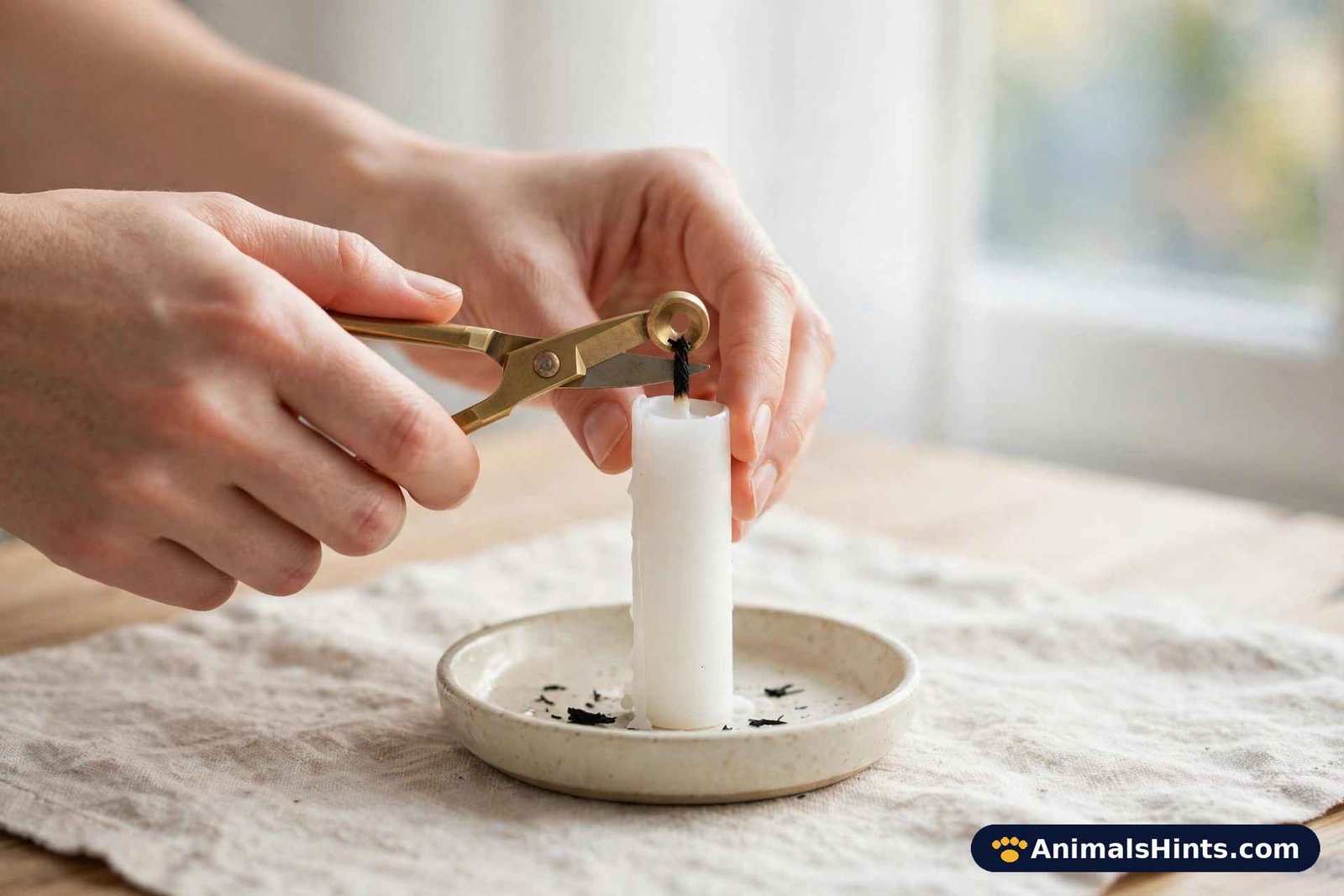
Let the candle cool first, then lift the carbon ball off the wick’s tip — it comes away easily once cold — and trim the wick to about a quarter of an inch, five or six millimetres, before the next burn. That quarter inch is the trade’s standing figure, and it applies before every burn, not only after a mushroom: a short wick makes a flame the size the candle was wicked for. Keep sessions to roughly four hours at a stretch, since the cap is partly a long-burn growth, and keep the flame out of drafts, which bend it off its work. If a large cap is back within the first hour of the next burn, the verdict is in the sizing: the wick is too big for that candle, and the maker’s fix is a size down. And the standing rule that outranks every other line in this section — never leave a burning candle unattended — belongs to ordinary fire safety, not to any tradition.
The myth’s contrary instruction, recorded above, is answered by the timetable rather than by argument. Nothing in the manual asks for a trim mid-burn; the trimming is preparation, done cold, before the match. A practitioner who wants the rite uninterrupted and the wick maintained can have both, in that order — which is, not coincidentally, the order the virgins in the parable used: the lamps were trimmed before the cry came, not after.
Final Thoughts
A small black cap on a wick can be three things at once, and this page has kept the three apart. Measured, it is unburned fuel: a pump outrunning its flame, in a device whose makers can name every cause and the one cure. Heard in the modern tradition, it is a sign — energy releasing, protection standing, a message pressing through — in a vocabulary millions of readers use. Searched for in the oldest records, it is absent: the counted text that names candles sixteen times never names a wick, and the ancient flame-readers graded the flame and the wax while the wick waited, ungraded, for its trimming.
The ten meanings stand above exactly as their tradition states them. Anyone who finds a stuck season, or a loosening one, named by the first, the seventh or the tenth has gained a vocabulary for something real — and a vocabulary earns its keep as long as nobody promotes it into a finding. The record’s contribution is a filing system. Soot goes to the trimmer. Antiquity goes to the bibliography. And what a person felt while lighting the candle goes to the person, who never needed the candle’s permission to ask.
Underneath all of it, the machinery that predates every reading: a cotton braid drawing melted paraffin up into a flame a little faster than the flame can finish it, in a jar, on a table, in a room where someone wanted light. Trim the wick, and the candle returns to what it was for all the centuries that read flames without reading wicks — not a fault, and not an oracle, but a light to sit with, tended the way lamps have always been tended: before the dark, and without fear.