Color Orange Spiritual Meaning: Symbolism, Psychology, Shades and Dreams
Orange is the colour of the last light of the day and the first fruit of the harvest, and the orange spiritual meaning follows that double life: warmth and energy on one side, warning and ripening on the other. It is the only colour on this site named after something you can eat. English speakers called this hue “yellow-red” until the orange fruit arrived and gave it a name of its own — and the meanings people have layered onto it since run from saffron robes and sacred fire to traffic cones and Halloween pumpkins.
This guide works through the colour the way the colour deserves: what orange actually is, as light and pigment; the eleven spiritual meanings the tradition assigns it, each stated as strongly as the evidence honestly allows; its shades from pale peach to burnt orange; its psychology; its place across cultures and religions; what it means in dreams; and what the Bible genuinely says — which, on this colour, is a more interesting answer than the quote sites suggest. Where a popular claim about orange checks out, it is printed plainly. Where it does not, the correction is printed instead.
Orange asks for balance by its very nature: it sits between red’s fire and yellow’s light, and every tradition that uses it puts it to work holding two things at once — joy and caution, ripeness and warning, the material harvest and the spiritual one. Read it with that balance in mind.
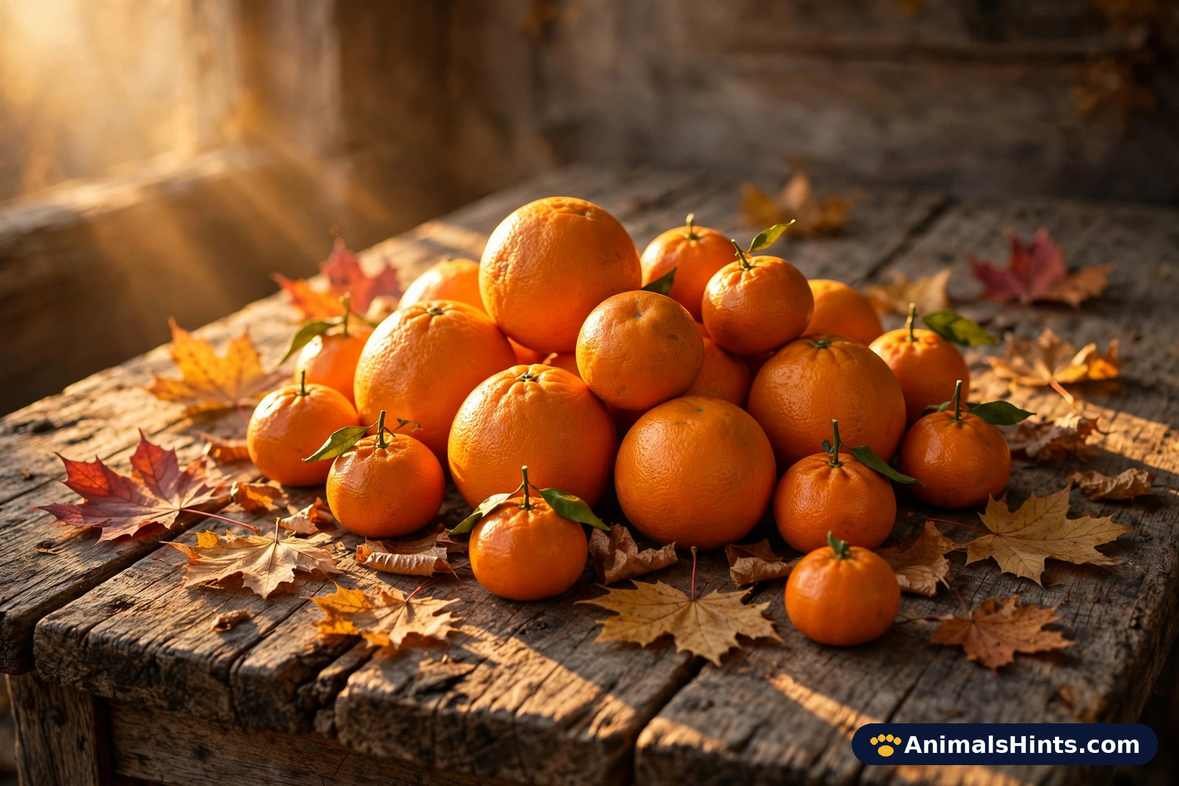
What Does the Color Orange Symbolize?
Orange symbolises energy held in balance. Across the traditions that use it, the colour stands for enthusiasm, creativity, warmth and sociability — the glow of a fire people gather around rather than the blaze that drives them back. It is the colour of autumn leaves and harvested fields, so it carries ripeness, gratitude and change: the moment something is ready, and the moment it begins to turn.
The same colour also works the other shift. Orange is an attention colour, chosen for life jackets, roadworks and warning signs precisely because the eye cannot ignore it, so its symbolism has always included a thread of caution — energy that announces itself, for celebration or for safety. And in the modern chakra system, orange is the colour assigned to the sacral chakra, the second energy centre, which that system links with creativity, emotion and sensuality. One honest bound belongs with that assignment: the classical Indian text behind the chakra system, the Ṣaṭ-Cakra-Nirūpaṇa of 1577, describes the sacral lotus with six vermilion petals, not orange ones. The neat rainbow ladder of chakra colours, orange included, is a later scheme, standardised in the Theosophist era and after. The association is real as a modern practice; it is not an ancient one.
Put together, orange symbolises the threshold between comfort and change: the fire lit for friends, the leaf at its most beautiful in the week it falls, the fruit at the day it ripens. Every meaning in the list further down is a version of that threshold.
Why Is Orange Orange? A Colour Named After a Fruit

Orange begins as physics. Light the eye reads as orange falls between roughly 585 and 620 nanometres on the visible spectrum — the band between yellow and red — and in pigment, orange is a secondary colour, mixed from those same two neighbours. It is a colour that exists by standing between things, and its history is stranger than any other colour’s on this site.
Orange is the only basic colour term in English named after an object. The fruit travelled west from Asia along trade routes — its name descends through Persian and Arabic from a Sanskrit word for the orange tree — and the colour took the fruit’s name because nothing else in English life was reliably that colour. The earliest recorded use of “orange” as a colour name in English dates to 1502, in accounts for clothing bought for Margaret Tudor. Before that, English speakers who needed the word made do with the Old English ġeolurēad — literally “yellow-red” — the same workaround the language used for a red-haired animal it still calls a robin redbreast. In the Berlin and Kay sequence of how languages acquire basic colour terms, orange arrives at the final stage, alongside purple, pink and grey: it is one of the youngest colour words English has.
Nature makes the colour two ways, and the article’s two most famous oranges use different ones. Autumn leaves turn orange when the green chlorophyll in them breaks down and unmasks the carotene pigments present underneath the whole time — the orange was in the leaf all summer, waiting to be revealed. And the earliest human oranges were mineral: the pigment realgar, a glowing orange arsenic mineral, coloured tomb paintings in ancient Egypt, while orpiment, its yellow-orange cousin, was traded across the ancient world. Orange sits opposite blue on the colour wheel — the royal blue spiritual meaning is its complement — which is why the two intensify each other wherever painters and designers put them side by side.
Psychology of Color Orange and Personality
Psychologically, orange is read as the extrovert of the spectrum. Surveys of colour associations in Europe and the United States link it most strongly with amusement, extroversion, warmth, fire, energy, danger, taste and aroma, and the autumn season — a list that captures the colour’s split personality better than any single adjective: it is the only colour that large numbers of people associate with both a party and a warning.
People who name orange as a favourite colour are described in the colour-psychology tradition as enthusiastic, spontaneous and confident — warm communicators who enjoy novelty, company and change, and who would rather begin than wait. The same tradition is honest about the shadow: a love of orange can run with restlessness, impatience and a dislike of routine, and too much of the colour in a room can feel loud rather than warm. Restaurants and food brands reach for orange on the belief that it stimulates appetite; treat that as design-world lore rather than settled psychology — the documented survey associations run to taste and aroma, not to measured hunger. Colour therapists, for their part, traditionally use orange against lethargy and low spirits; that is a practitioner’s tradition, printed here as one, and not a medical treatment for anything.
The balanced summary is the one the surveys support: orange raises the temperature of a space and a mood. In small doses it reads as welcome; in large ones it reads as alarm. The colour itself does not change — the dose does.
11 Spiritual Meanings of Orange Color
The tradition reads orange as a colour of ripening — of things, people and seasons arriving at their fullest point and beginning, in the same moment, to change. The eleven meanings below are the standard list for this colour, carried in the competitor’s order and carried honestly: the well-documented strands are printed plainly, and the two places where the popular version of this list outruns the record are corrected inside the entries themselves.
1. Balance and Transformation
Orange holds the middle of the warm spectrum, and the tradition reads that position as balance: fire that warms without burning, light that glows without blinding. As a transformation symbol it belongs to the turning points — the autumn leaf, which is never more vivid than in the week it lets go, and the butterfly, whose orange wings appear only after the hidden work of the chrysalis is done.
Read personally, it belongs to seasons of change: not the violence of an ending or the blankness of a beginning, but the coloured middle where both are true at once.
2. Enlightenment and Maturity
Where yellow is read as the spark of the mind, orange is read as its ripening — wisdom with warmth in it, understanding that has been lived rather than merely learned. It is a fitting colour for the association: saffron-orange robes mark the renunciant traditions of Asia, worn by people who have stepped away from ordinary life in search of exactly that maturity.
One correction belongs inside this entry, because the popular version of this list usually adds that orange “resonates with the third eye.” It does not, even on the tradition’s own terms: the chakra system assigns orange to the sacral chakra, the second centre, and the third eye to indigo. The claim is a conflation, and it is not carried here.
3. Courage, Strength, and Harvest
Orange is the harvest colour, and the tradition reads harvest as earned strength: grain, pumpkins, persimmons and marigolds all arrive orange at the moment of gathering, the colour of work completed and stores laid in. The courage in this meaning is the steady kind — the strength to finish a season — rather than the charge of red.
The colour’s working life agrees. Orange is the colour of high-visibility clothing and rescue equipment, the dress of people whose strength is practical; few colours are worn by so many who are literally standing in harm’s way to be seen.
4. Emotional Strength and Positivity
Orange is read as emotional resilience in colour form: the warmth to recover, the brightness to begin again. In the psychology surveys it clusters with amusement, warmth and extroversion, and the tradition builds on that real association its reading of orange as the colour of a good mood defended — joy chosen on an ordinary day, not only felt on a perfect one.
Its honest limit is part of the meaning. Orange does not deny difficulty; it is an autumn colour, and autumn includes the fall. The positivity it stands for is the kind that knows the season turns.
5. Spiritual Practices and Compassion
No colour is worn by more of the world’s spiritual practitioners. Saffron-orange is sacred in Hinduism — the colour of the setting sun and of fire, symbolising sacrifice, light and the search for salvation — and Hindu, Jain and Buddhist renunciants have worn saffron-toned robes for centuries as the outward sign of a life given to practice. The compassion in this meaning follows from the renunciation: the robe announces someone who has set down their own store in order to serve.
The record under the robe is more workmanlike, and more interesting, than the legend. Buddhist monastic robes were originally kasaya — cloth dyed in deliberately broken, impure colours, often from bark, roots and leaves — and the shades still vary by school and region, from Theravada saffron to Tibetan maroon. The colour’s sanctity was built by practice, not handed down as a single chosen hue.
6. Caution and Safety Indication
Orange is the world’s warning colour, and the tradition reads that as a spiritual meaning in its own right: the pause before the step, attention as a form of care. The choice is official, not decorative — the ANSI/ISEA 107 standard for high-visibility clothing recognises fluorescent orange-red as one of its three approved background colours, and traffic cones, roadwork signs, life jackets and hunters’ vests all wear the colour for the same reason: nothing else at a distance says “look here” faster.
Read inwardly, this is the meaning that balances the list. Not every orange sign is an invitation; some are instructions to slow down, look twice and proceed awake.
7. Purification and Judgment
This is the entry where the popular list most needs its bound stated plainly. Orange pages often announce that “in biblical symbolism, orange represents purification and judgment.” The Bible, checked directly, names no colour orange at all — the full record is set out in the Biblical section below — so no biblical doctrine of orange exists to quote. What does exist, and what this meaning honestly rests on, is fire: flame is orange to every eye that has seen it, and in Scripture fire is the great instrument of both purifying and judging. Printed as that — an interpretation built on fire’s colour, not a teaching drawn from a text — the meaning can stand.
Within devotional reading, then, orange fire stands for the testing that refines rather than destroys: the furnace that burns off what is false and leaves what is real. It is a powerful reading. It is a reading, and this article labels it as one.
8. New Beginnings and Inner Light
Orange is a dawn colour before it is a dusk one, and the tradition reads it for beginnings: the first light on a horizon, the coal catching, the idea warming into a plan. Its “inner light” is not the white blaze of revelation but the steadier thing — a glow carried inside, visible to others as warmth before it is visible as brilliance.
New-season symbolism gathers here naturally. Spring’s first marigolds and autumn’s first leaves are the same colour at opposite ends of the year, and the tradition treats that as the point: beginnings wear orange at both gates of the seasons.
9. Energy, Confidence, and Courage
This is orange in its social register: the colour of the person who walks into the room awake. Colour psychology associates it with extroversion and amusement more than with any other single trait, and designers use it where energy is the message — gyms, calls to action, festival branding — because the association is real and reliably read.
The confidence it stands for is warm rather than armoured: not red’s dominance, but the ease of someone comfortable being seen. Its excess is the caution of the psychology section — confidence at full volume becomes noise — and the tradition’s pairing of this meaning with the balance of the first is deliberate.
10. Balancing Positivity and Caution
The list returns, near its end, to the colour’s central discipline: holding the welcome and the warning together. Orange is the colour of the celebration and of the safety vest at the celebration’s edge; of the harvest feast and of the sign on the road home. The tradition reads that doubleness as maturity — enthusiasm that has learned to look both ways.
Practically, this is the meaning people cite for decisions: orange moments, in this reading, are the ones that deserve both a yes and a second look.
11. Vibrancy and Passion
The list closes at full saturation. Orange at its most vivid — tangerine, marigold, the heart of a flame — stands in the tradition for appetite for life itself: passion for experience, for flavour, for company, for colour. It is the least solemn meaning on the list and, the surveys suggest, the best documented: amusement and warmth are what the world’s respondents actually say this colour makes them feel.
Vibrancy is also the meaning with the shortest life if it is faked. Orange shows dullness instantly, in fruit and in mood alike; the tradition’s advice embedded in this entry is to keep the real thing fed — with rest, with seasons, with actual firelight — rather than performed.
Shades of Orange and Their Spiritual Significance
Orange is a family, not a point, and its shades read as a scale of intensity — the same fire at different distances. The tradition assigns each of the standard five its own register.
Light Orange:
The gentlest form of the colour: warmth at low volume. Light orange is read as friendliness, openness and the first stage of enthusiasm — the apricot light of early morning, sociable without demanding anything. It is the shade of welcome rather than celebration.
Peach Orange:
Peach softens orange with pink, and the tradition takes it as tenderness: sincerity, gratitude and gentle affection. Where full orange announces, peach reassures; it is the shade chosen for thanks and for comfort, warmth with its voice lowered.
Amber or Golden Orange:
The deepest luminous shade, and the one with a text behind it: the King James Bible’s word for the glow at the heart of Ezekiel’s visions of fire is “amber,” three times over. Amber and golden orange are read as preserved light — value, endurance and the sacred glow — the colour of resin that has held sunlight since before there were people to name it. The gold spiritual meaning covers the neighbouring shade this one deepens toward.
Burnt Orange:
Orange darkened toward earth: maturity, humility and the harvest at its end. Burnt orange is read as passion that has been seasoned — ambition with patience in it, comfort without novelty. It sits one step from the color brown spiritual meaning, and shares brown’s register of groundedness while keeping a coal of warmth alive inside it.
Coral Orange:
Orange lifted with pink toward the sea: coral is read as sociability and emotional warmth, the playful end of the family. Named for the marine animal whose skeletons were treasured as protective amulets long before “coral” named a colour at all, coral orange carries the family’s joy in its most decorative form.
Orange in the Animal World: A Warning Written in Colour
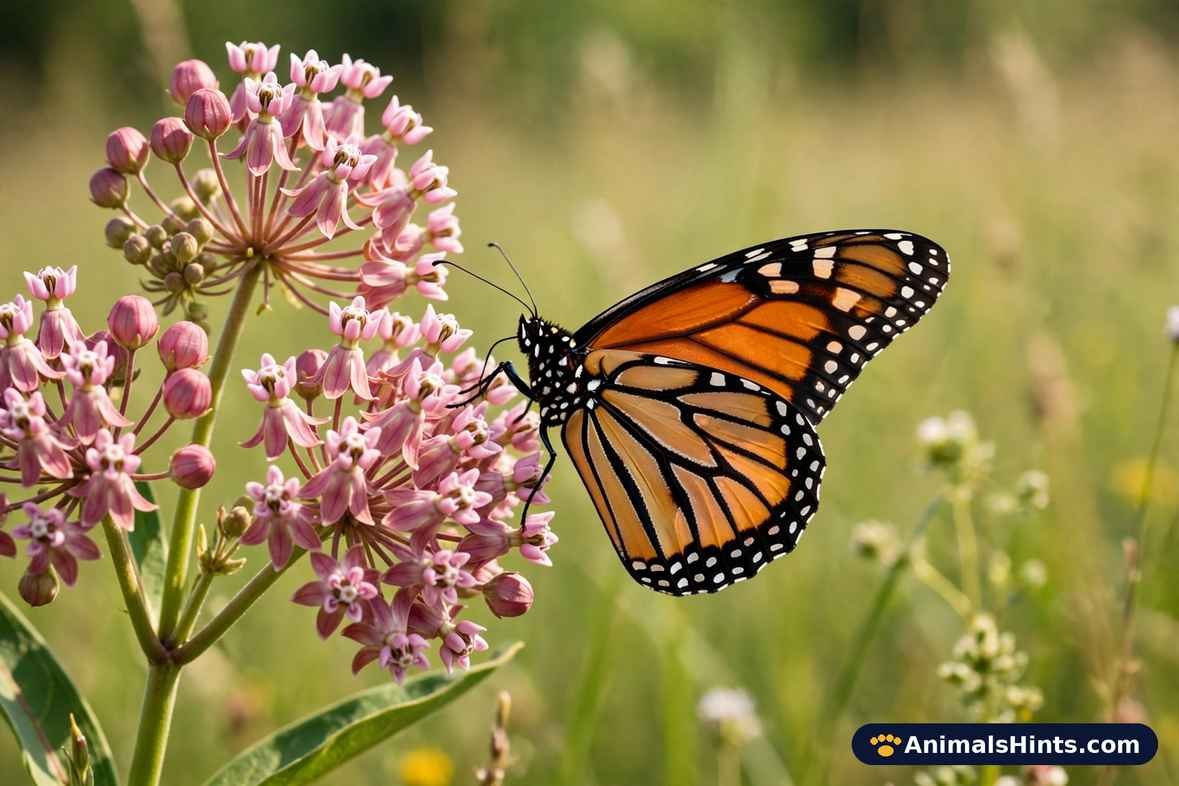
This site’s readers meet orange most often on wings, and nature’s use of the colour is the caution meaning made flesh. The monarch butterfly is the textbook case of aposematism — warning colouration. Monarch caterpillars feed on milkweed and sequester its bitter cardenolide toxins in their own bodies; the adult’s saturated orange-and-black wings are the advertisement of that defence, and research published in the Proceedings of the Royal Society B in 2023 confirmed that the brightest, most saturated monarchs are precisely the ones predators learn fastest to leave alone.
The pattern repeats wherever orange appears on a small animal: the colour says the wearer can afford to be seen. It is an honest signal backed by chemistry, which may be why human safety culture, arriving much later, chose the same colour for the same job. For the butterfly itself rather than its colour, this site’s guide to the orange butterfly spiritual meaning follows the monarch and its cousins through their own symbolism — and its lesson is this section’s in miniature: in the animal world, orange is beauty that is also a notice.
Cultural and Religious Significance

Orange carries official and sacred weight in more cultures than any colour except gold, and its meanings differ instructively from place to place.
- Hinduism. Saffron — orange’s deepest sacred shade — is the colour of the sun at its rising and setting and of Agni, fire; it symbolises sacrifice, light and the quest for salvation, and it is worn by those who have renounced ordinary life for that quest. Marigold garlands in the same register dress temples, weddings and thresholds across India.
- Buddhism. Monastic robes in the saffron-orange range are the tradition’s most visible sign, and their real history is the kasaya record described in the meanings list: cloth dyed in deliberately broken, impure colours from natural materials, with shades varying by school and region — Theravada monks typically in saffron, Tibetan monks in maroon and saffron together. The popular claim that the Buddha personally chose orange as the colour of the middle path is a modern retelling, not a canonical one; the documented meaning is humility in the dye itself.
- Western culture. In the West, orange runs the autumn register — harvest, Halloween and Thanksgiving — and one national register: it is the colour of the Dutch royal House of Orange, and so of the Netherlands itself, worn by crowds who could not name a chakra between them. Its sacred Western use is thinner than its festive one, which is itself a cultural fact about the colour.
- China and East Asia. The best-documented Chinese orange symbolism belongs to the fruit rather than the dye. Mandarins and tangerines are the classic Lunar New Year gift because the Cantonese word for tangerine, gam, sounds like the word for gold, and the character for tangerine contains the character for good fortune — a visual and verbal blessing in one object, exchanged by the pair. Orange as good fortune in this tradition is carried on the fruit’s name, exactly as the colour’s English name is.
- Ancient Egypt. Egypt’s orange was mineral and practical: realgar, the glowing orange pigment, was worked into tomb paintings among the earliest colour palettes on earth. Glosses that assign the pigment a doctrine — energy of the sun, vitality of the afterlife — circulate widely but are not documented at that strength, and this article does not carry them; what Egypt proves, on the record, is that human beings reached for manufactured orange as early as they reached for any colour at all.
The Shadow Side of Orange: When the Colour Shouts
An honest colour guide owes every colour its shadow, and orange’s is volume. The same saturation that makes it the colour of welcome makes it, in excess, the colour of overstimulation — the reason it is used in fast-food signage and sale banners, environments engineered to hurry you. In the colour-psychology tradition, too much orange tips enthusiasm into restlessness, warmth into noise, confidence into pushiness.
It is also, in parts of the design world, read as the cheap colour — the discount colour — which is the carnival side of its survey association with amusement. None of this cancels the meanings above; it completes them. Orange is a colour of dosage. Every tradition that honours it uses it the way cooks use chilli: as the accent that wakes the dish, in robes and garlands and festival days — set against brown earth, green leaves and a great deal of ordinary life.
Interpretations of Dreaming About the Color Orange
Dream dictionaries are folklore, not science, and this section is printed in that register — but the folklore for orange is consistent, because it simply follows the waking symbolism of ripening, warmth and warning into sleep.
- Orange appearing in a dream. In the standard dream-reading tradition, a dream washed in orange is read as a season turning in the dreamer’s favour: optimism rising, a project ripening, creative energy returning. The colour’s harvest register dominates — things approaching readiness.
- Wearing orange clothes. To dream of wearing orange is read as self-expression asking for room: confidence, sociability and a wish to be seen as yourself. In the folklore’s finer grain, choosing the clothes gladly is the good sign; being dressed in orange by others leans toward other people’s expectations.
- An orange sky. An orange sky in a dream borrows the waking sky: dawn reads as beginning and relief after a dark stretch, while a burning, sunset-orange sky leans toward endings, intensity and matters reaching their peak. The time of the sky in the dream decides the reading, as it does on this site’s sunrise and sunset pages.
- Overwhelming or aggressive orange. Orange that floods a dream unpleasantly is read through the caution meaning: overstimulation, a situation running too hot, a warning the waking mind has been postponing. The folklore’s advice is the safety colour’s advice — slow down and look at the thing directly.
Biblical Meanings of the Color Orange
This section can be shorter than most, because on this colour the Bible’s record is exact, and it is checked here directly rather than repeated from other colour sites.
The word “orange” appears in the King James Bible zero times. A full-text search of the KJV returns no verse containing it — which could hardly be otherwise, since the English colour name itself dates only to 1502 and the fruit was unknown in the lands of the Bible. Any list of “biblical meanings of orange” is therefore a modern construction, and honesty requires the construction to be labelled.
What the KJV does contain is orange’s territory, under the period’s own word for it. Three times — all in Ezekiel, all for the glow at the heart of fire — the KJV’s colour word is “amber”: “And I looked, and, behold, a whirlwind came out of the north, a great cloud, and a fire infolding itself, and a brightness was about it, and out of the midst thereof as the colour of amber, out of the midst of the fire” (Ezekiel 1:4, KJV). The Hebrew word behind it, hashmal, is rendered “electrum” or “gleaming metal” in other translations; what every version agrees on is the picture — the radiant orange-gold heart of a holy fire. Fire itself is everywhere in the text: “And the angel of the LORD appeared unto him in a flame of fire out of the midst of a bush” (Exodus 3:2, KJV).
So the devotional reading of orange — purification, judgment, divine glory — is best understood as a reading of fire’s colour, assembled by modern writers rather than taught by the text, sometimes by a symbolism arithmetic (red for sacrifice, yellow for glory, blend them and read the result) that no verse performs. The fire is biblical. The colour name is 1502. Held at that strength, the association is a legitimate piece of modern devotion; printed as ancient doctrine, it is an error, and this article prints it the first way.
How to Use Orange’s Meaning in Everyday Life

Orange is the easiest colour on this site to use deliberately, because its recipe is dosage.
At home, use it as the accent it is in nature: cushions, a throw, a bowl of actual oranges on the table — the fruit is the cheapest correct orange object in the world. Warm rooms and social rooms take it best; a whole orange bedroom fights sleep the way the black spiritual meaning warns an all-black one can. Balance it with neutrals and with grey spiritual meaning tones, which exist precisely to give strong colours somewhere to rest.
In the wardrobe, one orange piece does the confidence work of the ninth meaning without the volume problem of the shadow side. In the garden and on the table, follow the seasons: marigolds and nasturtiums in summer, pumpkins and persimmons in autumn, and mandarins at the New Year given in pairs, the way the blessing has been given for centuries. And where the colour must work rather than charm, respect its day job — orange gear in the workshop, on the water and on the road is not symbolism at all, and it saves the lives the symbolism borrows from.
Final Thoughts
Orange is the colour the English language almost forgot to name, and the one it now cannot stop using — for its sacred robes and its traffic cones alike. Its meanings hold together because they all come from the same sight: ripeness. The fruit ready to pick, the leaf at its peak, the fire at its most useful glow, the dawn and the dusk sharing one colour between them.
Hold the colour the way its own best traditions do. Take the warmth, the creativity and the harvest confidence at full strength; keep the caution thread woven through them, as the safety standard and the autumn both insist; and let the claims made for the colour be as honest as the colour itself — the Bible’s fire, the dyers’ broken colours, the surveys’ amusement and warmth are a better inheritance than any invented doctrine. Between the green spiritual meaning of growth and the red of fire, orange stands for the moment things come ripe — and the wisdom, older than its name, of gathering them in season, the way Ezekiel’s fire still glows at the colour of amber.
Frequently Asked Questions
What does the color orange symbolize spiritually?
Spiritually, orange symbolises warmth, creativity, ripening and balanced energy — enthusiasm with a thread of caution running through it. It is the colour of harvest and sacred fire, and in the modern chakra system it belongs to the sacral chakra, the centre of creativity and emotion.
How does orange affect our psychology?
Surveys in Europe and the US associate orange with amusement, extroversion, warmth, fire, energy, danger, taste and autumn — it lifts sociability and mood in small doses, and reads as alarm or noise in large ones. The colour’s effect is real but dose-dependent, which is why it serves both parties and roadworks.
What does liking orange say about your personality?
In colour-psychology tradition, people who favour orange are enthusiastic, spontaneous and sociable — warm communicators who enjoy novelty and change. The same tradition notes the shadow: restlessness and impatience can travel with the type. It is a portrait from the genre, not a diagnosis.
How can I use orange’s spiritual meaning in my life?
Use it in doses: an orange accent in a social room, one confident piece in a wardrobe, marigolds and mandarins in their seasons, and orange worn for visibility wherever safety is the point. The colour rewards intention — a little, placed deliberately, carries the whole meaning.