Bird Pooping on You: Spiritual Meaning, the Good-Luck Belief and the Real Record
When a bird leaves a white splash across your shoulder, the bird pooping on you spiritual meaning most people reach for is the famous one: in the folklore of several countries, that mess is money and good luck already on its way. It is a genuinely held belief, repeated everywhere this happens — but a belief is all it is, not a mechanism.
The readings multiply quickly from there. The genre assigns the event ten spiritual meanings, refines them by where the dropping lands and by the colour of the bird, and interprets the same scene when it turns up in a dream. This page carries all of that material in full, attributed throughout to the traditions and writers who hold it.
It also sets out the parts the meaning pages usually skip: what a dropping actually is, what public-health sources say droppings can carry, what the Bible’s one passage about bird dung really records, and how to clean up afterwards — skin, clothing and car paint alike.

What Does It Symbolize When a Bird Poops on You?
In the symbolism this genre works with, birds belong to the sky — messengers, in story after story, moving between heaven and earth. Anything a bird delivers is read inside that frame, and a dropping is simply the least dignified delivery a messenger can make. The tradition’s answer is that the message matters more than the packaging: blessing, warning or reassurance arriving in a form nobody would choose.
Two strands of symbolism do most of the work. The first is release: the bird lets go of what it no longer needs, mid-flight, without ceremony, and the genre reads the event as a picture of cleansing — something in the person’s own life ready to be dropped the same way. The second is fortune: a hit from a moving bird, out of an open sky, is rare enough to feel chosen, and rarity is the raw material omens are built from.
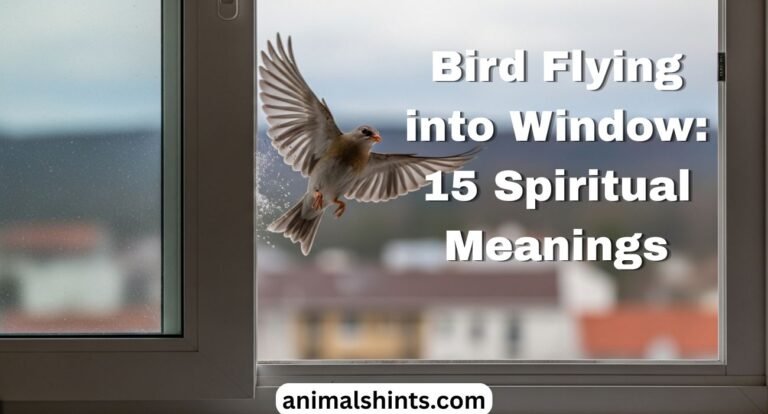
Other sudden bird events collect their own shelves of readings — a bird flying into a window among them — but the dropping is the only one that leaves physical evidence on the person. The grimmer shelf sits nearby without overlapping: the dead bird readings concern a bird’s life ending, while a dropping comes from a bird very much alive and getting on with its day. That aliveness is exactly why the dropping’s register runs lucky rather than mournful.
What a Bird Dropping Actually Is
Before the meanings, the material itself — because the real anatomy explains the mess better than any symbolism does. Birds do not produce separate liquid urine. With rare exceptions, a bird has no bladder; the kidneys send their waste to a single rear opening, the cloaca, and everything leaves together in one dropping.
That is why the dropping looks the way it does. The dark centre is the faeces, the genuine gut waste. The white paste around it is the urinary fraction — urates, the bird’s version of urine. Where mammals flush nitrogen waste away as urea dissolved in water, birds convert theirs into uric acid, which leaves the body as that white paste using very little water. The Natural History Museum’s account gives the two reasons: it conserves water, and it keeps a flying animal light. The same museum notes that the paste barely dissolves in water and sets almost like cement, which is why droppings cling so stubbornly to statues, ledges and windscreens.
One refinement is worth recording at the strength the research states it. A 2019 study from the University of Texas at Austin, published in Science Advances, analysed the crystals and found the white fraction is not a single pure compound — it is mostly ammonium urate, with struvite and other crystals present. “Uric acid” remains the standard shorthand, and this page uses it as such; the chemistry underneath is a mixture.
10 Spiritual Meanings of Bird Pooping on You
His page promises ten meanings, and the count checks exactly — ten meaning headings, all carried here in his order, each rewritten and each framed as what it is: the tradition’s reading, not a finding.
1. Spiritual Enlightenment in Progress
The first reading treats the moment as a progress report. Growth, in this telling, rarely arrives looking dignified; it arrives as interruption. Being singled out by a bird becomes a small, comic proof that the person’s inner work is underway rather than finished — enlightenment pictured not as a mountaintop but as a stained shirt and a lesson in not taking oneself too seriously.
2. Receiving Divine Message of Inspiration
The second reading leans on the messenger frame. If birds carry words between heaven and earth, then even this delivery counts as correspondence, and the genre connects it with ideas that arrive uninvited — the thought that lands, like the dropping, from nowhere in particular. The advice pinned to this entry is simple: pay attention to what you were thinking at the moment it happened.
3. Prosperity Is Near
This is the flagship reading, the one the whole belief is famous for. Russian folk speech ties a bird strike directly to money — the saying amounts to “money is coming” — and the genre extends it into a general forecast of finances improving: an opportunity, a payment, a piece of luck with a cash value. As a claim it belongs to that folklore, and it is filed here as exactly that. Nothing about a dropping moves money; what the saying moves is the mood of the person who has just been splashed, and the tradition is content with that.
4. Spiritual Cleansing and Renewal
The fourth reading works from the release strand. The bird sheds weight it does not need and flies on lighter; the person is invited to read the splash the same way, as a prompt to set down a grudge, a habit or a worry that has been carried past its usefulness. Renewal, in this entry, is not something the dropping does to you — it is something the dropping reminds you to do yourself.
5. Good Health Assurance
His page’s fifth reading takes the event as reassurance about the body — lingering worries, in its telling, are about to lift. That claim is carried here as his, and it is the one entry on this list this page will not cosign. No dropping can certify anyone’s health, and the documented health facts about droppings point the other way: the real record, set out in the hygiene section below, is about washing, not reassurance. Read the first four meanings as folklore if you enjoy them; get your health assurances from a doctor, and wash the shoulder either way.
6. Protection and Guidance
The sixth reading answers the near-miss question: of everywhere the bird might have been, it passed here, above you — and the tradition reads that precision as a watch kept over you rather than a targeting. Guidance enters the same way; the jolt is framed as a nudge from a guardian presence, redirecting attention at a moment when the person, in the genre’s phrase, needed redirecting.
7. Personal Transformation
Where the cleansing entry is about shedding, this one is about what follows. The genre treats the splash as a before-and-after marker — the day divides into the part before the bird and the part after — and reads it as the visible receipt for an inward change already in motion: a new chapter announced by the least ceremonial herald available.
8. Heart Healing and Emotional Growth
The eighth reading is the list’s gentlest. Being pooped on is almost impossible to meet with dignity, and the folklore suggests that is the point: laughter dissolves what solemnity cannot. The entry frames the moment as emotional first aid — a small humiliation that loosens grief’s grip and lets the heart get on with healing at its own pace.
9. Mental Clarity and Mindfulness
The ninth reading is about attention. Nothing returns a wandering mind to the present like an unexpected splash; the genre builds a mindfulness lesson on that jolt. The moment is framed as an enforced pause — stop, breathe, clean up, notice where you actually are — and clarity is presented as what becomes available once the noise drops away.
10. Alignment with Divine Purpose
The last reading resolves the paradox the others circle: the person was, by definition, in exactly the spot the bird passed over. The tradition reads that precision as alignment — being where you were meant to be, however unglamorous the confirmation. Purpose, in this telling, does not announce itself with trumpets. Sometimes it announces itself with laundry.
Meaning of Bird Poop Landing on Various Parts of the Body
The genre’s second grid refines the message by landing site. Seven locations stand on his page and all seven are carried here; the readings follow the body’s own symbolism — head for mind, hands for work, the car for the journey — and they stay inside the folklore throughout.
1. On Your Head
The head is the folklore’s prime seat for this sign, and the Russian money saying attaches most strongly to a hit here. Crowned by the sky’s messenger, the person is read as marked for the full-strength version of the luck — the entry where the tradition puts its strongest claim, and the one that sends most people to check their bank balance with a smile.
2. On Your Face
A facial hit is the rarest and the hardest to laugh off, and the readings match that intensity: the face is identity, the self the world meets, so the genre reads the splash as a confrontation with how one is seen — and, in its kinder strand, as a prompt to stop performing and be met as one is.
3. On Your Shoulder
The shoulder carries burdens in every idiom, and the folklore follows the idiom. A dropping here is read against whatever the person is currently shouldering — work, family, a decision — with the splash framed as the load being noticed from above, and help, in the tradition’s telling, already dispatched.
4. On Your Arm or Hand
Hands handle money, sign papers and do the world’s work, so the genre reads a hit on the arm or hand in practical coin: opportunities to be grasped, payments passing through, skill noticed. Of all the body entries, this is the one his page ties most directly to career and craft.
5. On Your Clothes
Clothing is the outer self, the layer presented to the street, and a splash on it is read as luck that attaches to one’s public life — reputation, first impressions, the day’s dealings. Part of the folklore even counsels against changing the garment too quickly, so the fortune can stay close a while. This page files the counter-advice plainly: the hygiene guidance below wins. Wash the shirt; keep the story.
6. On Your Car
The car is the journey made metal, and the folklore reads a decorated windscreen accordingly — fortune connected with travel, movement and the road ahead, money in motion rather than money at rest. Drivers meet the moving version of the same encounter in the birds flying in front of your car while driving readings; the parked version, on this page, is the one that also comes with cleaning instructions, which the practical section below supplies.
7. On Your Home or Balcony
A dropping that lands on the house rather than the person moves the reading indoors: the genre frames it as a household blessing, protection pronounced over the address itself. Balconies and windowsills are where the birds actually sit, which makes this the most frequently delivered version of the sign — and the one most often followed by someone fetching a cloth.
The Honest Hygiene Record: What Droppings Can Actually Carry
The meanings above are folklore. This section is the factual floor under them, and it is more reassuring — and more specific — than either alarm or dismissal.
Start with proportion. A single fresh dropping on skin or clothing is a laundry problem, not a medical event: wash the skin with soap and water, change the garment, and the episode is over. Public-health fact sheets on histoplasmosis, the fungal disease most associated with droppings, make the distinction explicit — fresh bird droppings have not been shown to present a risk of that infection. The documented risk lives somewhere else entirely: in accumulation.
The fungus Histoplasma capsulatum grows in soil and material enriched with large amounts of bird or bat droppings, the CDC explains, and people are infected by breathing its spores when that material is disturbed — sweeping out an old roost, clearing a long-used ledge, demolishing a structure where droppings have built up. Most infections are mild or silent; the disease, histoplasmosis, can be serious where immune systems are weakened. The CDC’s practical line follows from the mechanism: large accumulations should be removed by professional companies that specialise in hazardous-waste removal, not tackled dry by householders.
The second named risk is bacterial. Psittacosis, caused by Chlamydia psittaci, reaches people most commonly, the CDC says, when dust containing dried droppings or respiratory secretions from infected birds is breathed in. It is associated mainly with pet birds such as parrots and cockatiels and with poultry, it is rare in people, and it usually presents as a mild respiratory illness, though it can cause pneumonia. Again the exposure pattern is dust from dried material — not a fresh splash on a sleeve.
The working rules that follow from the record are short. Never dry-sweep or blast an old accumulation of droppings; wet the material down first so dust stays out of the air, wear gloves and a fitted mask for small jobs, bag the waste, and wash afterwards. Leave big roosts, attics and demolition sites to professionals. And whatever the folklore says about luck, wash skin and clothing promptly after any hit — the good-luck story survives soap perfectly well.
Meaning of Bird Poop Based on the Color of the Bird
His page’s third grid keys the reading to colour — the heading says the colour of the bird, while the entries are named for the dropping, and the five are carried exactly as he names them. Colour symbolism is this site’s home ground, and the bird-colour entries below stay inside the folklore’s own frame.
1. White Bird Poop
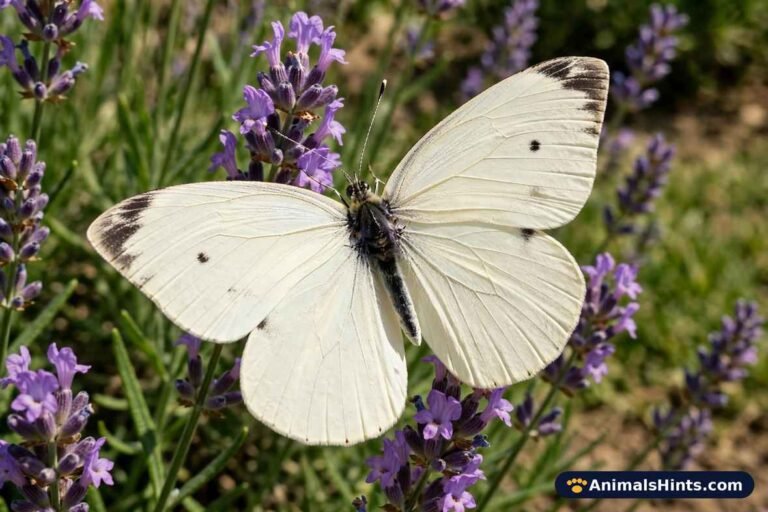
White carries the purity register, and the genre reads a white bird’s mark as the cleanest version of the sign — peace, blessing, a conscience-clearing fresh start, with the dove’s long association behind it. The same colour works the same register across the animal shelf: the white butterfly readings build on purity and visitation, and the white ladybug carries it at insect scale. Strictly as chemistry, of course, almost every dropping is partly white — the urate fraction again — and the folklore’s white bird is about plumage, not paste.
2. Black Bird Poop
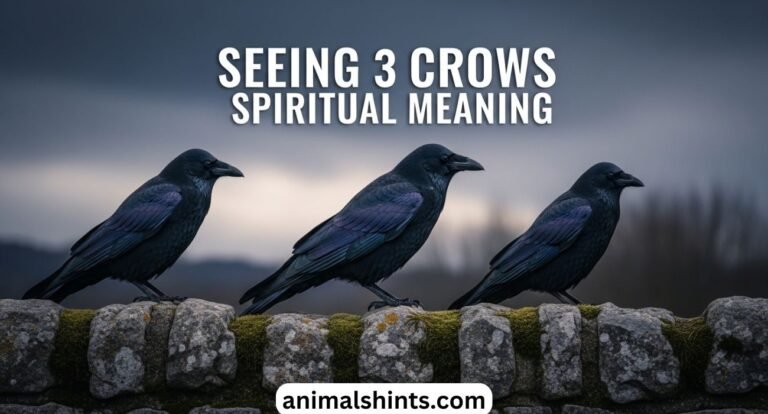
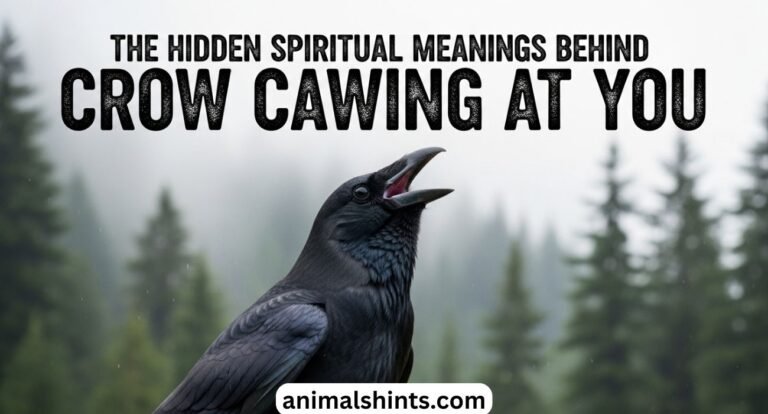
The likeliest black author of a dropping is a crow, and the crow arrives with its own dossier: the crows cawing in the morning meaning guide covers that bird’s dawn messages, which run intelligent, watchful and not at all simple. The genre reads the black bird’s mark in the same key — shadow material, mystery, a message with an edge — and the colour shelf this site keeps separately, black among its entries, works the same register of protection hidden inside darkness.
3. Brown or Earth-Toned Bird Poop
Brown belongs to the sparrows, starlings and pigeons of the pavement — the commonest birds and therefore the commonest authors. The folklore reads their mark as the grounded version of the sign: earth, steadiness, provision — ordinary, repeatable good fortune, the payslip rather than the jackpot. If the white bird gets the poetry, the brown bird gets the wages.
4. Blue Bird Poop
True blue plumage is the rarest on this list — bluebirds, jays, the flash of a kingfisher — and rarity raises the reading’s value in the genre’s economy. The blue bird’s mark is framed as joy and communication, happiness delivered from the sky’s own colour; this site’s colour shelf treats the shade at length, the royal blue readings among them, and the bird entry borrows that register of calm authority.
5. Multicolored Bird Poop
The iridescent birds — starlings with their oil-slick greens and purples, pigeons with emerald necks — close the list. A multicoloured author is read as a mixed message: several strands of fortune at once, creativity and change in the same delivery, the sign refusing to be only one thing. The tradition keeps this as its playful entry, and the footnote worth adding is that the most spectacular plumage in the park belongs to birds most people walk straight past.
Interpretations of Dreaming About a Bird Pooping
His page gives the dream form of this event a section of its own, carried here in his shape: no sub-headings, a short list of interpretations. Dream-reading is a folk art, not a clinical discipline, and the five strands below are the dream dictionaries’ register, attributed as such.
- Release and cleansing — the commonest dream reading: the mind picturing itself setting something down, the dreamer’s own waste worry leaving by air.
- Good luck or prosperity — the waking folklore imported whole into sleep; the dream hit carries the same money-and-fortune gloss as the real one.
- Embarrassment or vulnerability — the strand the dictionaries add for dreams specifically: being caught exposed, laughed at, unprepared in public.
- Divine message — the messenger frame again; a dream bird is read as correspondence, its delivery as the content.
- Personal growth — the transformation meaning in dream form: the splash as the marker between the dreamer’s before and after.
What the Bible Actually Records About Bird Droppings
Scripture gets checked on this page the way it is checked across this run: for what the text actually contains, quoted exactly, and bounded by what it is. The King James Bible does contain a bird-dropping passage — exactly one, and it is not an omen teaching. It is a price list from a starving city.
Second Kings 6:25, in the KJV’s words: “And there was a great famine in Samaria: and, behold, they besieged it, until an ass’s head was sold for fourscore pieces of silver, and the fourth part of a cab of dove’s dung for five pieces of silver.” The context is Ben-hadad’s siege of Samaria. The verse measures how bad the famine was by what foodstuffs fetched: a donkey’s head at eighty pieces of silver, a small measure of dove’s dung at five. Whatever precisely the commodity was, the passage records it as something sold and bought in a besieged market — economics under starvation, not a sign to be read.
That is the complete biblical record on the subject. No KJV text addresses the belief this page is about; nothing in Scripture calls a bird’s dropping lucky, unlucky or meaningful. The Bible’s bird-sign world runs through doves, ravens and sparrows — creatures watched, fed and offered — and droppings enter it once, as merchandise in a famine. Readers who want a biblical blessing for the good-luck reading will not find one, and this page declines to pretend otherwise: the luck belief stands on folklore, where it is genuinely at home, and not on a text that never mentions it.
Is Bird Poop a Sign of Good Luck?
This is the question the whole page turns on, and the honest answer has two halves. As folklore: yes — famously, across several countries, this is one of the best-known animal superstitions in the world. As fact: no mechanism connects a dropping to fortune, and nothing below is offered as a forecast. What follows is the belief, documented as a belief.
Folklore and Cultural Beliefs
Russia holds the strongest version. In Russian folk speech a bird strike is tied directly to money — the saying runs, roughly, “a bird has marked you: money is coming” — and his page repeats the tradition’s favourite detail, that the messier the hit, the greater the fortune attached. Lottery tickets get bought on the strength of it, half in jest and half not.
India, in his page’s telling, frames the event as grace rather than accident — the mark of a sacred bird, pigeons and crows among them, read as a blessing delivered from the divine side of the world. The framing fits the wider pattern in which birds move between the human world and the gods, and a delivery from them, however unglamorous, arrives as contact.
Italy and parts of Turkey complete his page’s map. Italian folk speech carries a saying to the effect that bird droppings bring luck, and Turkish popular belief runs the same direction — a hit read as a wish on its way to being granted, with the same lottery jokes attached that follow the belief in Russia. Three regions, one shape: the unpleasant surprise is reclassified, on the spot, as a gift.
A note on age, because the genre rarely supplies one: as documented, this is folk-level, largely modern urban belief — the consolation people reach for in squares and streets — rather than ancient doctrine from any tradition. That does not make it insincere. It makes it what it is: a living superstition, still doing its work.

A Spiritual Perspective
The spiritual writers who keep this belief give it a consistent shape. The blessing, in their framing, arrives in an envelope nobody would open voluntarily — humility first, fortune second — and the event’s rarity does argumentative work: a moving bird, an open sky, one person standing in the one spot. The crossing family of animal signs works identically: the rabbit crossing your path readings, for instance, take a chance encounter and read it as addressed to the person it crossed. The dropping is simply that family’s messiest member — the only one whose message has to be washed off before it can be pondered.
How to Clean Up — and What to Do About the Car
Folklore first, said this page throughout; soap first, says this section. The two are not in conflict, but only one of them involves detergent.
For skin and clothing, the routine is ordinary: rinse and wash skin with soap and water, change the garment, and put it through a normal wash. Nothing in the public-health record asks for more after a single fresh hit, and the folklore’s occasional advice to leave the garment on and let the luck linger is respectfully declined here.
For old accumulations — the ledge, the loft, the long-used roost — follow the hygiene section’s rules rather than improvising: wet the material down before touching it so dust never gets airborne, wear gloves and a fitted mask, bag the waste, and wash afterwards. Accumulations of any size belong to professional cleaners, per the CDC’s guidance; that is the one part of this topic where the correct move is a phone call, not a cloth.

For the car, the practical core is speed. The car-care manufacturer Autoglym tested the familiar claim that a dropping’s acidity burns paint and reported a different mechanism: in heat, paint lacquer softens and expands while the deposit dries hard on top of it, and as the panel cools the lacquer contracts and moulds itself to the deposit’s uneven texture — which is what the dull, etched-looking mark actually is. In Autoglym’s tests, the acidity of the substitute deposits made negligible difference; texture and time did the damage. The advice that follows is theirs and it is simple: remove the deposit at the earliest opportunity, soften a dried one first with a damp cloth left over it for about ten minutes, lift rather than scrub — dried droppings carry grit that scratches — then bin the cloth and wash your hands, since, as Autoglym itself notes, bird lime can harbour disease.
Final Thoughts
Strip the story away and the event is plain biology: a flying animal lightening itself through the only opening it has, over a world it does not consult. Keep the story, and it is also, culturally, one of the most durable good-luck beliefs on earth — held from Russian streets to Turkish coffee houses, repeated by his page and this one, and sturdy enough to survive every debunking, because the claim was never really about birds at all. It is a claim about how to receive a small public humiliation: as a story that pays you back.
The honest summary keeps the page’s two registers separate. The folklore is real folklore — documented, attributed, and carried here in full, all ten meanings and every grid his page builds. The facts are real facts: fresh droppings are a wash, old accumulations are a hazard to leave to professionals, scripture records dove’s dung once as famine merchandise and says nothing about luck, and paintwork wants a damp cloth, not a superstition.
So take the story if it pleases you; it costs nothing and it has cheered up a great many laundry days. Take the walk under the trees a little more carefully, enjoy the company of the birds — the polite counterpart encounter, a butterfly landing on you leaves nothing to wash off at all — and if the splash does come, let it remind you of the small chemistry underneath it all: that white paste is uric acid, the water-saving invention that lets a bird fly light, and you are simply where it landed.
FAQs
What does it mean when a bird poops on you spiritually?
In the folklore recorded here, it stands as a sign — most famously of luck and money coming, and beyond that as cleansing, a divine message or a transformation under way. That register is the tradition’s own, attributed as such throughout; the event itself is a bird being a bird.
Is bird pooping on you good luck?
In Russian, Italian, Turkish and other folk traditions, yes — it ranks among the best-known luck superstitions anywhere, often tied specifically to money. As fact, no: nothing connects a dropping to fortune, and no scripture backs the belief. Enjoy it as folklore; wash up as hygiene.
What does bird poop symbolize spiritually?
The genre’s symbolism runs on two strands: release — the bird shedding what it no longer needs, pictured as cleansing for the person — and delivery, the sky-messenger leaving a message. Around those, the tradition builds its ten meanings, from enlightenment in progress to alignment with purpose.
How should I respond when a bird poops on me?
Practically: wash skin with soap and water, change and wash the garment, and clean it off car paint promptly with a damp cloth. Spiritually, the folklore’s answer is to laugh and take the story with you. Both responses can be completed within the hour, in that order.