Craving Peanut Butter Spiritual Meaning: 6 Meanings, Real Causes and What It Signals
The craving peanut butter spiritual meaning is a search people usually make mid-craving, standing in the kitchen with the jar already open, wondering why this one food keeps calling. In spiritual writing, the answer given is consistent: peanut butter stands for grounding, comfort and reserves running low — a dense food from a plant that grows underground, read as a sign that you need to anchor yourself and refuel.
That reading belongs to a family. The page this article answers treats peanut butter alongside cheese and dairy, and reads all three as comfort foods with messages about nourishment, security and care. This article keeps that family in view but centres the peanut butter jar, because it is the food in the keyword and the food with the richest reading of the three — while being upfront that the whole tradition here is modern. No scripture, classical text or old folk record assigns meanings to a peanut butter craving; the interpretations come from today’s spiritual writers, and they sit alongside a second, better-documented story about why cravings happen at all.
So this article works on both tracks. It gives the six peanut butter meanings in full, the cheese and milk readings in brief, and the cultural notes behind them — and it also gives the honest health explanation early: what cravings actually are, why the popular “you are missing a nutrient” chart does not hold up, the one craving pattern doctors do take seriously, and the point at which a craving stops being a curiosity and becomes a reason to book an appointment.
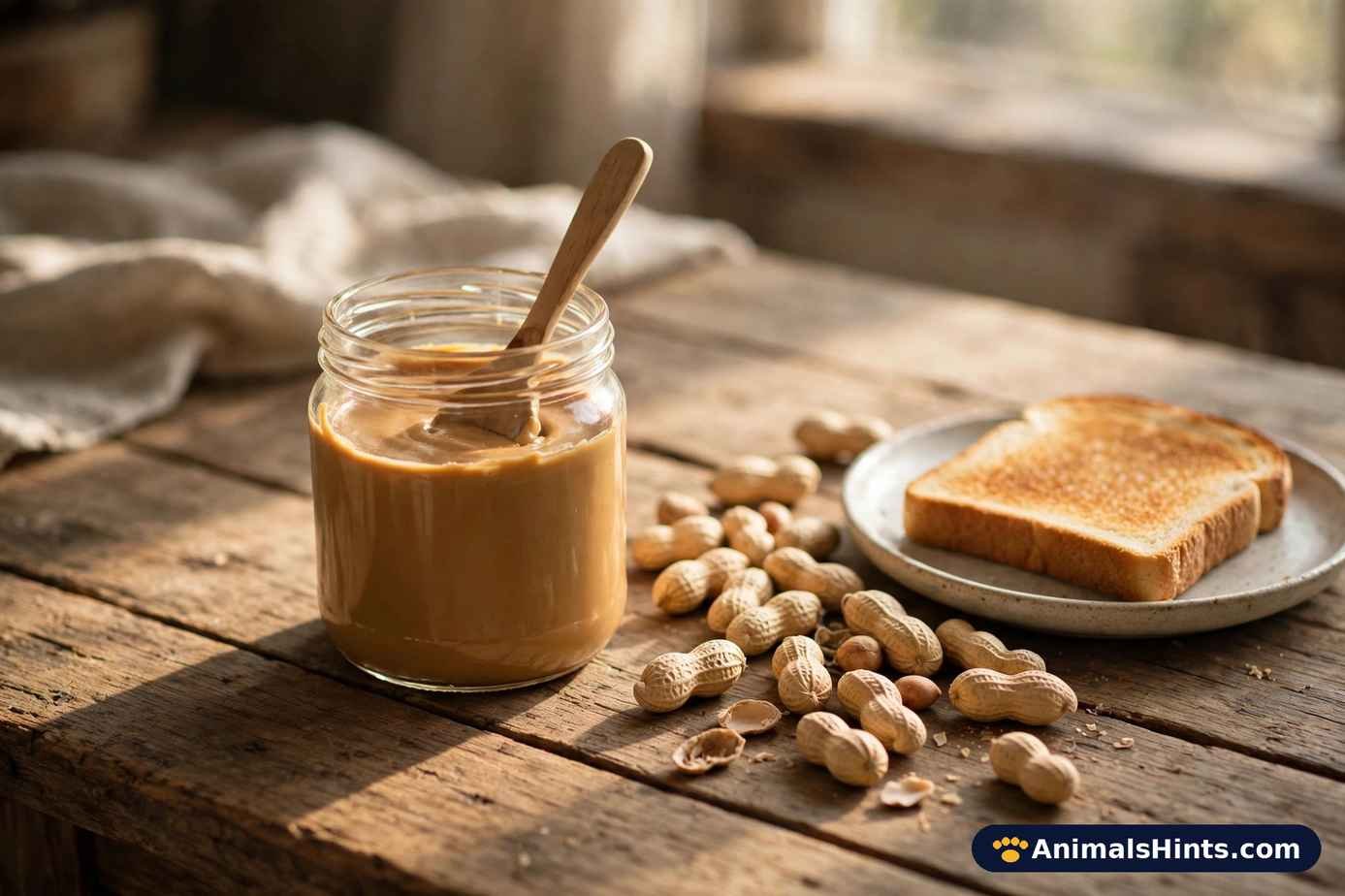
Why Do Some People Crave Cheese, Peanut Butter, or Dairy Products?
Start with what the three foods share, because the spiritual readings all grow out of it. Cheese, peanut butter and dairy are rich, calorie-dense, and soft or creamy in texture; they are among the first foods many people ever ate, and they turn up at the table precisely when comfort is the point — in childhood lunches, in family cooking, in the snack eaten standing up at the end of a hard day. Foods like that collect symbolic readings the way magnets collect filings. Everyday foods gather whole symbolic literatures of their own: the spiritual meaning of mushrooms is an example from this same catalogue, and cheese, milk and peanut butter have each attracted one too.
Spiritual writers read the three foods as variations on one theme. Dairy, the first food of mammals, is read as nurturing and the wish to be cared for. Cheese, aged and flavour-packed, is read as emotional nourishment, belonging and the wish for life to feel stable and rewarding. Peanut butter — the densest of the three, and the one this article centres — is read as grounding and stored energy: a food that sticks, lasts and sustains.
The physical pull underneath the symbolism is just as shared. All three foods deliver fat and protein in a form the brain finds rewarding, all three are woven into habit (the evening cheese, the spoonful from the jar, the glass of milk before bed), and all three tend to be craved at the same moments: tired, stressed, low, or simply not fed enough during the day. The sections below take the spiritual readings food by food — peanut butter in full, cheese and milk in brief — and the medical explanation comes first, because it explains more of the craving than any symbol does.
Why You Actually Crave It: The Medical Explanation
A craving is not ordinary hunger. Hunger builds gradually and can be answered by a range of foods; a craving is specific, sudden and aimed at one food, and it can arrive on a full stomach. Dietitians who study cravings describe them as a product of the brain’s reward system, memory and circumstance far more than of the body’s shopping list — and peanut butter, sweet-salty, fatty and familiar, is almost engineered to be craved.
Cleveland Clinic’s dietitians give the basic machinery. Foods we enjoy stimulate the feel-good centres of the brain, and the pleasure teaches the brain to want a repeat: in registered dietitian Beth Czerwony’s summary, sugar makes us want more sugar and fat makes us want more fat. Habit then wires the craving to a setting — the same sofa, the same late hour, the same stressful commute — until the setting alone can trigger it. Stress does similar work chemically: ongoing stress raises cortisol and other hunger-linked hormones, and the appetite that rises is aimed at sugary and fatty foods in particular. Poor sleep turns the same dials — lack of sleep raises ghrelin, the hormone that stimulates appetite, lowers leptin, the one that signals fullness, and leaves the brain more responsive to high-calorie foods the next day.
Peanut butter also answers a plain fuel equation. Two tablespoons of smooth peanut butter carry roughly 190 calories, about 7 grams of protein and about 16 grams of fat on standard USDA figures — a lot of energy in a small, fast, no-cooking portion. A body that has undereaten, skipped lunch or finished a hard training session is not being mystical when it reaches for the most energy-dense thing in the cupboard; it is doing arithmetic. Dieting and restriction sharpen this: Cleveland Clinic’s dietitians note that cutting foods out is one of the most reliable ways to make the forbidden ones louder, and premenstrual and pregnancy hormone shifts can raise cravings for whole categories of food at once.
Then there is the chart — the one that circulates in wellness spaces claiming each craving decodes a deficiency: chocolate means magnesium, salt means sodium, peanut butter means protein or healthy fats. It is the claim this article was specifically asked to test, and it does not survive. Physician-reviewed guidance is blunt about it: despite popular myths, most cravings are not linked to specific nutrient deficiencies — craving chocolate does not mean you are low in magnesium, and craving chips does not mean you need sodium. Reviews of the evidence find the same pattern from the other side: habit, reward, sleep, stress and hormones explain the great majority of cravings, and genuine nutrient shortages account for only a minority. A craving is a weak signal of a shortage and a strong signal of a pattern. If a deficiency is ever genuinely in question, the test is a blood test, not a snack preference — and no supplement should be started on the say-so of a craving chart.
One craving pattern is different, and it has a name: pica. Cleveland Clinic defines pica as an eating disorder in which a person compulsively eats things that are not food and carry no nutritional value — ice, clay, dirt, chalk, raw starch, hair and similar substances. Pica is the pattern doctors do connect with deficiencies: iron, calcium and zinc shortages are among its most common associations, and it appears most often in pregnancy and in young children. Chewing ice compulsively, known as pagophagia, is its best-known form and is frequently tied to iron-deficiency anaemia. None of this describes craving peanut butter, cheese or any other actual food — an ordinary food craving is a normal experience, not pica, and the two should never be merged. But if the thing being craved is not food at all, that is a medical matter, not a spiritual one, and it belongs in a doctor’s office promptly.
Why this food, though, and not another? Part of the answer is formulation. Most commercial peanut butter is built on the combination the reward system finds hardest to ignore — fat, salt and a little sweetness in one spoonful, in a food that needs no cooking, no preparation and no decision beyond opening a jar. Availability is a craving driver in its own right: the foods people crave are usually the foods within arm’s reach, and peanut butter is shelf-stable, cheap and present in most kitchens year-round. Layered on top is memory. A food eaten in childhood — in lunchboxes, at grandparents’ tables, as the default snack of several generations — acquires a familiarity no new food can match, and cravings preferentially target the familiar. None of that requires a symbol to explain the pull of the jar; it only requires a brain doing what brains do with rewarding, available, well-remembered food.
Three further lines of plain sense. First, an allergy outranks everything in this article: peanut allergy is one of the most common serious food allergies, and no craving — spiritual, hormonal or otherwise — is a reason for someone with a peanut allergy to eat peanut butter. Second, pregnancy cravings for ordinary foods are common and usually harmless, but cravings for non-food items during pregnancy are exactly the pica pattern above and should be raised with the midwife or doctor. Third, the thresholds: a craving that is new, intense and persistent, cravings that arrive with unexplained weight change, excessive thirst or fatigue, or eating patterns that feel out of control and distressing, are all worth discussing with a doctor, who can check the things a craving cannot diagnose — iron, thyroid, blood sugar and the rest. Nothing in this section is personal medical advice; it is the general picture doctors and dietitians describe, and it is the ground everything else in this article stands on.

Peanut Butter Cravings Spiritual Meanings
The six readings below are the genre’s standard set, kept in the competitor’s order. One framing note applies to all six: they are modern interpretations, written by contemporary spiritual writers reasoning from the food’s nature — an earth-grown legume, ground into something dense, sticky and sustaining. The peanut plant itself gives them their material: unlike tree nuts, peanuts ripen underground, the plant’s pegs pushing into the soil after flowering so the pods mature buried in the earth. A food that literally develops out of sight, in the ground, was always going to attract readings about hidden growth and rootedness.
1) Grounding Need
The first and most repeated reading takes the peanut’s buried life literally. Because the nut grows in the earth, spiritual writers treat a craving for peanut butter as a pull toward the ground in the reader’s own life: a need to feel anchored, settled and secure when circumstances feel unsteady. The craving is said to arrive during unsettled stretches — moves, job changes, money worries, general drift — and to point at the remedies of the earth register: routine, sleep, physical work, time outside, the basics done in order.
The same earth-first logic runs through the colour readings in this catalogue, where green spiritual meaning is built on growth, renewal and the natural world’s steadiness. Read in that company, the grounding interpretation is less a prediction than a prompt: it asks whether the craving is shadowing a life that currently has too little structure in it, which is a question worth answering whether or not any symbol sent it. It also has a checkable shadow. Feeling ungrounded and craving dense food arrive together most often in exactly the weeks when sleep, meals and routine have slipped — so the reading, followed honestly, tends to send you to the same repairs the medical section prescribes.
2) Growth Potential
The second reading turns the buried pod into a picture of development. A peanut matures hidden, in the dark, before anything shows above the surface — and the craving is read as a sign of the same stage in a person: skills, plans or changes growing underground, not yet visible, asking for patience and feeding rather than exposure. Writers in this genre connect it to creative projects in their early stages, to study and training, and to any intention that needs a protected season before it can be shown.
As with the grounding reading, the useful core is practical. A craving that shows up while you are quietly building something can be taken — if the frame appeals to you — as encouragement to keep the building private a while longer and nourish it steadily.
3) Mental Clarity
The third reading is the genre’s most physiological: because peanut butter is nutrient-dense, the craving is said to signal a mind running low — a call for focus, clarity and mental nourishment when thinking feels foggy or overloaded. It is usually framed gently, as the body asking for fuel for thought.
The honest note belongs here, because this is the point where the spiritual reading borrows a lab coat. Peanut butter contains the ordinary nutrients of a protein-and-fat food, but no study shows that eating it, or craving it, sharpens thinking — and the foggy, overloaded feeling has well-documented drivers that the medical section above covers: too little sleep, too little food, too much stress. If the craving feels like a request for clarity, the request is real; the answer is likelier to be a night’s sleep and a proper meal than the jar itself.

4) Inner Child Care
The fourth reading is built on memory rather than botany. For many American readers, peanut butter is a childhood food in its purest form — the sandwich in the lunchbox, the spoon licked in someone else’s kitchen, the snack that required no cooking and no permission. A craving for it, in this reading, is the adult self registering a need for the things that food stood for: simplicity, play, being looked after, a break from carrying everything.
Here the genre and the clinic end up describing one occurrence in two different vocabularies. Comfort foods get craved because they are remembered, and they are remembered because they were comfort. Whether a returning craving is answered with the sandwich itself or with the rest and gentleness it symbolises is, in this reading, the actual choice on offer.
5) Vitality Boost
The fifth reading takes the food’s density as its text. Peanut butter is one of the most energy-concentrated ordinary foods in the kitchen, and the craving is read as the spirit’s version of a low-battery light: reserves depleted, stamina short, a need to recharge and rebuild strength. It tends to be attached to periods of overwork, recovery from illness, or long stretches of giving more than is coming back.
This reading also happens to be the one where symbol and body most often agree. Actual depletion — of sleep, of calories, of protein across a thin week of eating — is among the commonest real drivers of cravings for energy-dense food, which is why the practical sections below treat a recurring vitality craving as a checklist first (sleep, meals, workload) and a symbol second.
6) Soul Nourishment
The sixth reading is the broadest: the craving as a wish not for calories but for depth — richer experience, more meaningful work, relationships and practices that feel sustaining rather than thin. The sticky, dense texture becomes the metaphor: a life that holds together and nourishes, against days that feel like they slide off. In this frame the craving often arrives in reflective seasons, alongside questions about direction and purpose.
It is the least testable of the six readings and the genre knows it; it functions as an invitation to audit where nourishment actually comes from. Taken that way, it costs nothing and occasionally lands — a craving that keeps returning during a flat, underfed stretch of life is at least a well-timed question about the stretch itself.
Cheese Cravings Spiritual Meanings
Cheese is the wider context of this article rather than its centre, so its three readings are kept in the competitor’s order but treated briefly. They overlap the peanut butter set at several points — which is itself the honest observation: the genre reads all rich comfort foods through the same small set of human needs.
1) Emotional Nourishment
The lead cheese reading is comfort itself: the craving as a sign that the emotional reserves, rather than the physical ones, are running low — a wish for warmth, reassurance and tenderness, often surfacing during stress, loneliness or transition. Cheese’s richness and softness make it the genre’s standing symbol for being fed in the non-literal sense.
2) Sense of Belonging
The second reading is social. Cheese belongs to shared tables — boards passed around, family dishes, celebrations — and the craving is read as a wish for inclusion and closeness: to be inside a circle rather than outside one. In this frame the remedy the reading points to is not the food but the company it is usually eaten in.
3) Stability Seeking
The third reading treats cheese’s solid-yet-yielding character as an emblem of steadiness with flexibility: the craving as a wish for a secure base — routines, a settled home, predictable ground — during periods when life feels chaotic. It is the cheese version of peanut butter’s grounding reading, arrived at from texture rather than from the field.
Why Do I Crave Cheese at Night?
Night is when this family’s cravings do most of their work, and the spiritual reading leans on the hour: the evening as the subconscious’s shift, when the day’s suppressed wants come up for air. A cheese craving after dark is read, in that frame, as unresolved feeling surfacing — a wish for comfort, reward or indulgence that the busy day kept postponed, and a prompt to notice what the day did not provide.
The folklore behind cheese and the night is genuinely old, older than anything else in this article. English letters have linked cheese to vivid dreaming for centuries — Dickens gave the idea its most famous form in 1843, when Scrooge tries to dismiss Marley’s ghost as the product of an undigested crumb of cheese. The belief that a late cheese plate stirs the night’s dreams was a commonplace long before anyone gave it a mechanism.
The mechanism the modern genre reaches for does need one correction. Cheese is often described as sleep-promoting because it contains tryptophan, the amino acid the body uses to build serotonin and melatonin. Tryptophan is present, as it is in most protein foods — but in ordinary amounts, and there is no good evidence that a serving of cheese acts as a sedative or engineers dreams. What demonstrably drives the late craving is the machinery from the medical section: the day’s accumulated tiredness and stress, the end-of-day reward habit, an evening spent near the kitchen, and — for peanut butter as much as cheese — the simple fact that the jar is the easiest satisfying food in the house at 10 p.m. The night craving is real; its chemistry is mostly routine.
Craving Milk Meaning: Spiritual and Symbolism
Milk carries the oldest symbolism of the three foods, because it needs no tradition to explain it: milk is every mammal’s first food, and its meanings — purity, nourishment, protection, beginnings — are read off that fact in culture after culture. A craving for milk is read by spiritual writers as a wish to return to that register: to be cared for without having to ask, to recover an innocence or simplicity felt to be lost, or to receive support during a stretch when everything has to be done for oneself.
Modern chakra writing adds its own layer, associating dairy cravings with the heart and solar plexus centres and their themes of love and personal power; that framing belongs to contemporary energy writing rather than to any older source, and it is printed here as such. What can be said without any frame at all is the plain version: milk is the food of being looked after, and craving it tends to track periods when being looked after is exactly what is scarce.
Cultural Beliefs, Myths, and Superstitions
The cultural record divides sharply by food, and the division is instructive. Milk has a documented sacred history. In Hindu tradition, milk and ghee — the clarified butter offered in fire rituals and used to bathe sacred images — stand for purity, prosperity and divine nourishment, bound up with the revered cow and with Krishna, the butter-stealing child god of Hindu devotion. When spiritual writers call milk sacred, this is the tradition they are standing on, and it is a real one.
Cheese’s record is humbler and mostly European: a festival and farmhouse food, the centrepiece of shared rural tables, and — as the Dickens passage shows — a byword in folklore for rich dreaming and a full stomach’s strange humours. The same folk imagination made the moon out of green cheese in a proverb recorded since the 1500s, a joke about tall tales rather than a belief anyone held. Its spiritual meanings are modern extrapolations from that comfort-food standing, not survivals of a cheese cult; there wasn’t one.
The peanut’s own food history is older than the spread made from it. Peanuts were cultivated in South America long before Europeans arrived, then carried to Africa and Asia by traders in the 1500s, where they took deep root — groundnut stews remain a West African staple to this day. None of that history contains a craving omen; it is a record of a useful, nourishing crop being adopted wherever it landed. The meanings arrived only with the modern jar.

Peanut butter’s record must be stated plainly, because the genre rarely states it: there is no old record. Peanuts themselves are an ancient South American crop, but peanut butter in its modern form is a recent, largely American invention — patented in the 1880s and 1890s and popularised in the century that followed. No culture’s folklore, scripture or superstition addresses craving it, for the simple reason that the food has not existed long enough to gather any. Every peanut butter meaning in this article is a contemporary interpretation, created within living memory by spiritual writers reasoning from the plant and the texture. That does not make the interpretations worthless — the catalogue this article belongs to is full of modern readings honestly labelled — but it does fix their status: they are a modern mirror held up to a craving, not an ancient message decoded from one.
Craving Peanut Butter vs Cheese vs Milk: The Readings Side by Side
Set next to each other, the three foods show how the genre thinks — one small set of needs, dressed in each food’s character — and how differently the everyday record explains the same urge:
| Food | What the spiritual writers say | What the everyday record says |
|---|---|---|
| Peanut butter | Grounding, hidden growth, vitality, the inner child, a soul asking for depth | A calorie-dense comfort food; the craving tracks tiredness, stress, skipped meals, habit and genuine hunger for fuel |
| Cheese | Emotional nourishment, belonging, a wish for stability | A rich reward food; evening habit loops, end-of-day unwinding and social eating do most of the work |
| Milk and dairy | Nurturing, purity, a return to being cared for | The first food of childhood, with all the association that carries; pregnancy cravings for dairy are common and usually unremarkable |
The pattern is worth naming. The spiritual column is organised by what a person might be missing in life — steadiness, company, care, energy, meaning. The everyday column is organised by what a person might be missing in the day — sleep, food, rest, a pause. They are not the same list, but they rhyme often enough to explain the genre’s durability: a craving is a real event, and both columns are attempts to read it. The difference is that the everyday column can be checked, acted on and watched as it works — which is why this article keeps returning to it.
Spiritually Balancing the Craving
The genre’s own advice for answering a craving, rather than either obeying or fighting it, is a small discipline of attention. Pause before acting and ask what is actually being asked for: physical hunger, or the thing the food symbolises — rest, comfort, company, a reward the day withheld. If the answer is the symbol, the practice is to meet it at its own level where possible: the call, the walk, the warm drink, the early night. If the food is eaten, it is eaten deliberately and without guilt, as information rather than failure.
That advice, it is worth noting, agrees with the secular guidance almost point for point — dietitians likewise teach pausing, distinguishing hunger from feeling, and eating chosen food mindfully rather than in a spiral of restriction and rebound. The spiritual framing adds one thing the clinic does not: it treats the craving as worth listening to rather than merely managing. On the evidence assembled here, that is a fair settlement between the two.
Is Craving Peanut Butter a Good Sign? The Honest Answer
As an omen, the honest answer is that there is nothing to check it against. No tradition old enough to test recorded a meaning for this craving, no study links it to coming fortune or warning, and the readings in this article are modern interpretations — some of them shrewd about human needs, none of them evidence about the future. Anyone who tells you a peanut butter craving guarantees luck, money or a message from beyond is selling certainty the record does not contain.
As a prompt, the craving can genuinely be a good sign — not because it predicts anything, but because noticing it tends to surface true things. The cravings that recur usually keep excellent time with skipped meals, short nights, stressful weeks and comfortless stretches, and a person who reads the pattern learns something accurate about their own life. And as a health matter, the answer is the calm one: an ordinary craving for an ordinary food is a normal experience shared by most people, while the short list of exceptions — non-food cravings, cravings that are new and relentless, cravings that arrive alongside other symptoms — is set out in the medical section and is worth acting on rather than interpreting.
What to Do When the Craving Hits: Practical Steps That Help
- Eat enough, on a rhythm. Regular meals with protein, fibre and some fat blunt the energy crash that sends the brain hunting for the densest food in the house. Most evening jar-raids begin at a skipped lunch.
- If you want it, portion it on purpose. Peanut butter on toast, apple slices or celery, eaten sitting down, satisfies the craving as an event. The same food eaten by the spoonful standing at the open cupboard usually satisfies nothing and starts the loop again.
- Audit sleep and stress before symbols. A craving that flares after short nights or hard weeks is giving accurate information about both. An earlier night will quiet it more reliably than any interpretation.
- Give an emotional craving a few minutes and a rival ritual. A walk, a shower, a call, a cup of tea — cravings peak and pass, and a short delay separates the ones that were hunger from the ones that were weather.
- Keep a brief note for a fortnight. Time, setting, what the day held. Patterns — late meetings, premenstrual days, gym days, lonely evenings — explain most recurring cravings once they are visible.
- Respect the allergy line absolutely. If peanuts are dangerous for you or for anyone you feed, the craving changes nothing: peanut butter stays off the table, full stop, and allergen-safe substitutes fill the gap.
- Take the exceptions to a doctor. Cravings for ice, clay, chalk, starch or other non-foods; a craving that is new, intense and will not settle; or cravings arriving with fatigue, weight change or unusual thirst — these deserve blood tests, not readings.

Final Thoughts
A craving for peanut butter turns out to be a small event with two honest stories. The spiritual story, assembled by modern writers from a buried legume and a dense, sustaining food, reads it as grounding, growth, vitality and care — a self asking to be anchored and fed. The documented story reads it as the brain’s reward system working exactly as built, in a tired, stressed, underfed or habit-trained moment, reaching for the richest familiar fuel available. The first story cannot be verified and should never be sold as fact; the second can be checked against your own fortnight of notes and usually checks out.
Hold the craving at that distance and it becomes useful either way: a prompt to ask what is actually depleted — food, sleep, steadiness, company — and to supply the real thing where you can. Underneath every interpretation sits the plain phenomenon itself, the food craving: an intense, specific desire that most people experience and nobody needs to feel guilty about. And on the rare occasions when a craving steps outside the ordinary pattern — above all when the thing craved is not food at all — the right response is neither a symbol nor a snack, but a conversation with a doctor.
FAQs
What is the spiritual meaning of craving cheese?
In the modern spiritual reading, comfort and emotional nourishment: a wish for warmth, belonging and stability, often surfacing under stress or loneliness. It is a contemporary interpretation, not an old tradition, and evening cheese cravings usually trace to habit and tiredness.
What does craving peanut butter mean spiritually?
Spiritual writers read it as grounding, hidden growth, vitality and soul nourishment — a self running low on steadiness and reserves. The everyday causes are more often responsible: tiredness, stress, skipped meals and a calorie-dense food the brain has learned to want.
What do dairy cravings mean spiritually?
Dairy is read as nurturing and security: milk, the first food, stands for being cared for, purity and simpler states, a symbolism with real roots in traditions like Hindu reverence for milk and ghee. Pregnancy cravings for dairy are common and usually unremarkable.
How should I respond to food cravings spiritually?
Pause and ask whether the craving is hunger or a feeling in costume; meet the feeling directly where you can, and eat the food mindfully and without guilt when you choose it. If a craving is persistent, intense or for non-food items, answer it medically and see a doctor.