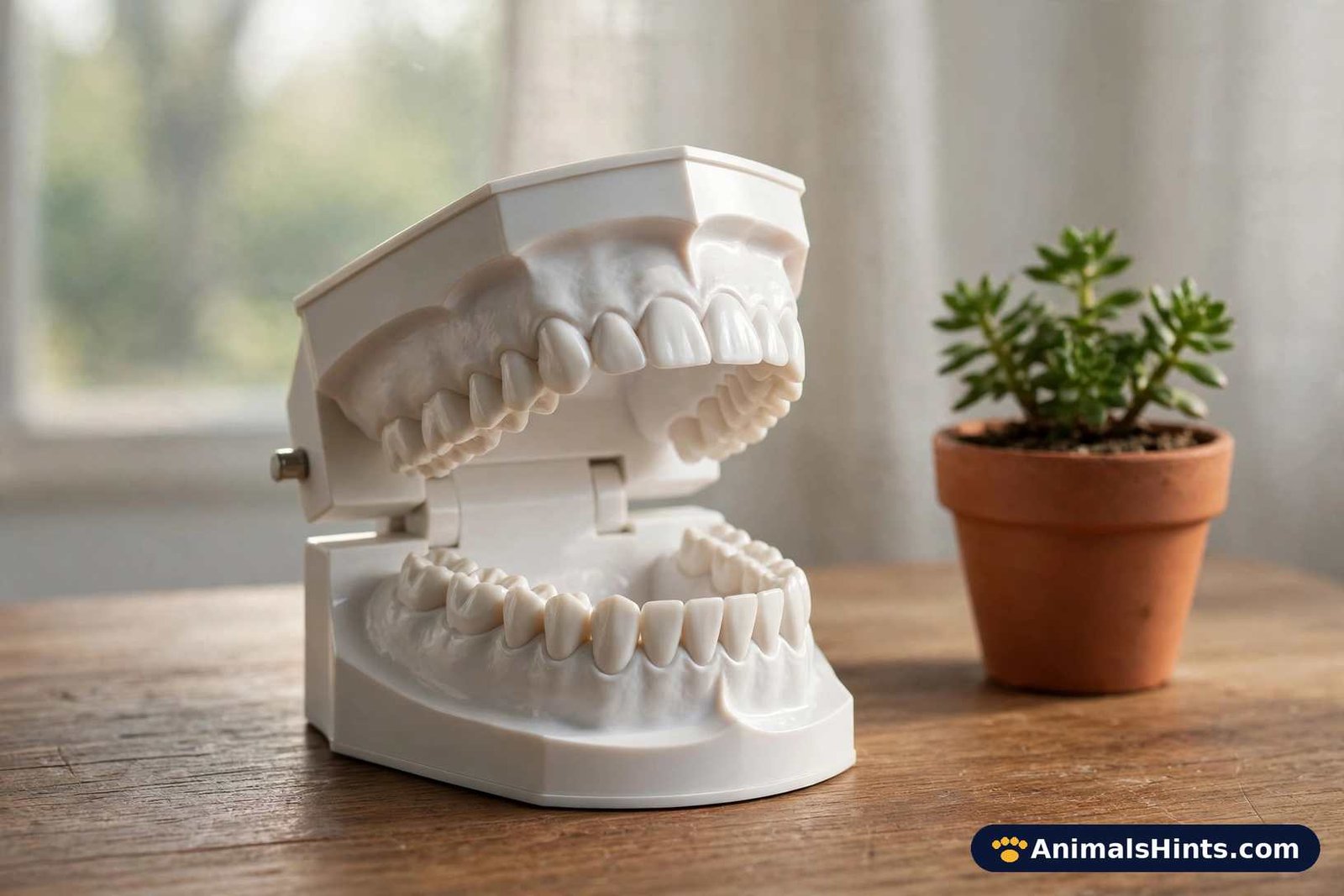
No Wisdom Teeth Spiritual Meaning: 10 Meanings, the Dental Record and the Empty Entry
Most adults grow a third set of molars in their late teens; a large minority never grow some or any of them. The search — no wisdom teeth spiritual meaning — gets typed when that quiet fact about a person’s own mouth starts to feel like it ought to stand for something, and the guide behind this topic answers with ten meanings: innate wisdom, an old soul, a path that skips the usual struggles. This page follows his reading in full, in his order, and then audits it against the three records open to checking: the dental literature, the old omen lists, and the Bible.
The dental record turns out to be the surprise. Missing wisdom teeth are not rare, not a defect and not new: a worldwide meta-analysis puts roughly one person in five short of at least one third molar, and dentistry’s own diagnosis for missing teeth is defined in a way that leaves wisdom teeth out of the count entirely. Underneath the lore, in other words, sits one of the most ordinary variations in the human body.
What the reader gets below is both layers, kept separate. His ten meanings and his myths, cultures and lessons come whole, attributed to the modern spiritual reading that produced them. Then the audits: what a third molar actually is, what the classical lists grade about teeth (dreams, almost exclusively), what the Bible’s fifty mentions of teeth actually say, and the single practical check this trait ever calls for.
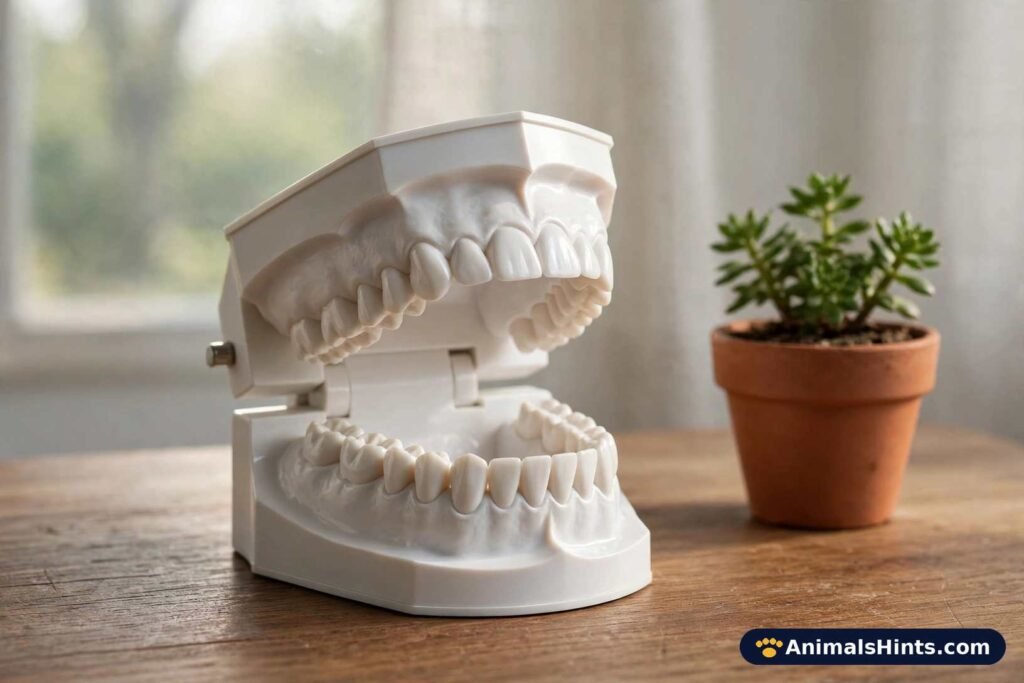
What Does the Absence of Wisdom Teeth Symbolize?
The guide’s answer begins with the old soul. On his reading, a person born without wisdom teeth is someone who has already worked through certain lessons in earlier lives, so the teeth that mark the passage into adulthood never need to arrive. The absence is read as maturity carried in rather than maturity acquired — an inner development that does not depend on the usual physical milestones.
His second strand is timing. Wisdom teeth erupt in late adolescence, in the middle of the roughest transition of a young life, and their non-arrival is taken to show the bearer has already cleared that stage: the growth happened earlier, or elsewhere, and the body simply declines to repeat it. Openness to change belongs to the same strand — a readiness for growth that need not be forced by pain.
His third strand is release. In his frame, wisdom teeth can stand for inherited weight: ancestral patterns, old emotional habits, beliefs that have stopped serving. A mouth that never grows them is read as a life that starts unburdened — clarity and a certain detachment from unnecessary loads, present from the beginning rather than won later. His ten meanings, next, are these three strands opened out one by one.
10 Spiritual Meanings of Having No Wisdom Teeth
1. Innate Wisdom
The first meaning takes the teeth’s name literally and then inverts it. If wisdom teeth are named for the wisdom of the age they arrive at, the guide reasons, then a person who never grows them may be someone whose wisdom was never scheduled to arrive from outside at all — it was present from the start, a built-in understanding that does not need the rite of passage to install it.
In his telling, this shows up as trust in one’s own judgment: a calm internal compass, complexities processed without drama, and a tendency to know things without first having to pay for the knowledge in experience. The path this meaning describes is not about acquiring wisdom but about learning to rely on the supply already there.
2. Accelerated Growth
The second meaning speeds the whole curriculum up. Where the eruption of wisdom teeth coincides with the long transition into adulthood, their absence is taken to show the core lessons of that transition were absorbed earlier, or by a different route — the development is real, it simply did not keep the standard timetable.
The guide’s portrait is of someone who grasps ideas quickly and integrates experience fast, moving forward without lingering over initiations that other people have to sit through. Growth, on this reading, is continuous rather than staged: fewer thresholds, more momentum.
3. Letting Go of the Past
Here the symbolism turns to ancestry. In the guide’s frame, wisdom teeth can represent the patterns handed down a family line — old wounds, inherited beliefs, what his page calls past-life karma awaiting processing. Teeth that never form are read as a clean slate on exactly that ledger: the bearer arrives without those particular weights assigned.
The character this meaning describes faces forward by disposition, aimed at present change instead of excavation. A soul agreement to release the baggage before arriving is his phrase for it, and the practical flavour is lightness — energy spent on the life in front, not the ones behind.
4. Heightened Intuition
The fourth meaning makes intuition the primary instrument. A person without wisdom teeth, on this reading, navigates by gut feeling first and conventional advice second, trusting an internal voice that often seems to speak before the evidence is in.
Insights arriving apparently from nowhere are the signature experience his page describes, and the discipline it prescribes is trusting those signals before the evidence is in. Decisions made this way can look illogical from outside; the meaning frames them as the bearer following a guidance system that simply is not routed through other people’s maps.
5. A Unique Path
The fifth meaning is the trailblazer reading. A dentition that departs from the standard count is taken as the visible token of a life that departs from the standard route: fewer ties to conventional milestones, less interest in society’s definitions of success, and a corresponding freedom to draft one’s own.
In the guide’s telling, this is individuality without apology — spiritual progress measured by exploration rather than by arrival at the recognised stations. The path is uncharted because the person walking it was never issued the common map in the first place.
6. Connection to the Present
Without wisdom teeth standing for the pains of past growth, the guide argues, attention settles more easily in the present moment. The bearer is less burdened by historical and ancestral narratives, and so meets whatever the day puts in front of them with unusual clarity.
Mindfulness is the practical name his page gives this: grounded, responsive, appreciative of the reality being actively created rather than the one inherited. Where meaning 3 releases the past symbolically, meaning 6 describes the attention that becomes available once it is released.
7. Old Soul Presence
The seventh meaning returns to the symbolize section’s opening figure and gives it a full portrait. The absence is read as the hallmark of an old soul: a wealth of experience carried across many lifetimes, surfacing as a maturity that seems beyond the bearer’s years and a familiarity with patterns other people are meeting for the first time.
Other people, in his account, sense the reservoir and come for counsel. The approach to challenges is measured, almost historical — the calm of someone who behaves as though they have seen this before. His page leans harder on this one than on any of the other nine, and the audits below will have the most to say about it, because it is also the one with the longest claimed pedigree.
8. Freedom from Limits
The eighth meaning reads the variation as a licence. A mind housed in a body that skipped a standard feature is pictured as naturally unwilling to accept standard frameworks: traditional constraints on thinking and problem-solving simply bind less tightly.
The guide’s bearer approaches obstacles with creative, unconventional flair and a willingness to make bold choices others avoid — redefining boundaries, building systems that fit the life actually being lived. Life, on this reading, is an experiment in possibility rather than an exercise in compliance.
9. A Simplified Existence
The ninth meaning borrows the language of evolution, and it is worth noticing the borrowing, because the dental section below uses the same science to a different end. From an evolutionary standpoint, his page argues, nature streamlines what is unnecessary — and the person without wisdom teeth is read as living the streamlined version: a journey focused on what matters, without extra clutter.
The temperament described is a low tolerance for drama and complication, a preference for clear and direct routes, and depth achieved through focus rather than through navigating chaos. As a piece of spiritual portraiture it is attractive; as a claim about evolution it will need the audit, since the actual evolutionary literature on third molars tells a story about jaw size and chewing, not about simplified souls.
10. Divine Individuality
The final meaning widens the frame to the whole design. The variation is held up as pointing to a singular role — one specific note in a grand symphony, in his page’s image — and the difference itself is reframed as a feature rather than an error: intentional, individual design within a larger oneness.
His closing note for the set is empathy. A person who understands their own difference as purposeful, his page argues, recognises distinct designs in everyone else too, and expresses their own nature without hesitation. With that, his ten are complete — and the audits can begin.
The Dental Record: Third Molars, and the Three Mouths Hiding Behind “No Wisdom Teeth”
Start with the tooth itself. A wisdom tooth is a third molar — the last of the three grinding teeth in each quarter of the mouth, and the last tooth of all to arrive. The name is a translation of the Latin dens sapientiae, “tooth of wisdom,” given because these molars erupt at an age when a person was presumed to have become wiser than the child whose other teeth came through. Aristotle had already noted the timing in the fourth century BCE: in his History of Animals the last teeth arrive at about twenty years of age, in both sexes — with cases on record, he adds, of their erupting in people past eighty. Eruption most commonly happens between seventeen and twenty-one, generally before twenty-five, and a third molar that has not appeared by twenty-five is generally expected to stay where it is.
The record’s first move on this topic is to split it in three, because “I have no wisdom teeth” describes three different mouths. In the first, the teeth never formed: the tooth buds simply never developed, a state dentists call agenesis. In the second, the teeth formed on schedule and are still there — grown in under the gum or wedged against bone, unerupted and invisible without an X-ray. In the third, the teeth erupted years ago and were extracted, and their owner has forgotten or never counted the procedure as “having” them. Only a panoramic radiograph can tell the three apart, and a fair share of people who report never having had wisdom teeth are describing the second mouth, not the first. Every spiritual reading of this trait, the guide’s included, is written about the first mouth — the one where the teeth genuinely never existed.
For that first mouth, the numbers are now solid. The governing synthesis is a 2015 meta-analysis in the Journal of Dental Research (Carter and Worthington), which pooled 92 studies covering more than 63,000 people and found that 22.63 per cent of people worldwide are missing at least one third molar from birth — roughly one person in five. The individual studies underneath ranged from 5.32 per cent to 56 per cent depending on the population sampled, which is the record’s way of saying the trait is heavily ancestry-dependent: at one extreme, agenesis was recorded as practically absent in Aboriginal Tasmanian samples. Women in the pooled data were about 14 per cent more likely than men to be missing a third molar, and an upper one was about 36 per cent more likely to be missing than a lower one. The commonest pattern is one or two missing; missing all four — the full version of this article’s subject — is the least common pattern in the data, but it is a documented, ordinary one, carried by a real slice of that fifth of humanity. The mechanism is genetic: variants in genes such as PAX9 and MSX1, which help run tooth development, are implicated in which buds form at all.

The profession’s own filing system presses the same case from the opposite side. The formal diagnosis for teeth that never develop is called hypodontia — and it is defined to exclude the third molars. A person missing two premolars has a named dental anomaly; a person missing all four wisdom teeth has, by the profession’s own bookkeeping, nothing at all, because the absence is too common to count as the condition. The missing teeth that do fall under the diagnosis affect somewhere around 2 to 8 per cent of people. The trait this article is about is several times commoner than the anomaly it is excluded from.
Then there is the evolution story, which the guide’s ninth meaning borrows and which deserves printing at its real strength. The scientific version runs on chewing. As human diets softened — first with agriculture, then sharply with industrial processed food — jaws grew under less stress and ended up shorter, leaving less room at the back of the mouth. The documented casualty of that change is impaction: molars that form but cannot erupt became roughly ten times commoner after the Industrial Revolution, and the oldest known impacted wisdom tooth, from a Magdalenian woman of some 12,000 years ago, was a rarity in her world. Notice what the science actually says. It explains why formed wisdom teeth so often fail to arrive; it does not rank the people who skip them as further evolved, and the streamlining it describes is a change in jawbones across populations, not a graduation of souls. The spiritual gloss laid over it — absence as advancement — is modern writing, and it is flagged as modern everywhere it appears on this page.
This site has audited the same pattern on neighbouring rows, because the sheet keeps returning to bodies that were born slightly different. A single long white hair growing among dark ones, a mallen streak — the white forelock some people are born with — and being born with grey hair all drew the same two-layer treatment: a real, documented, genetic variation underneath, and a meaning assigned afterwards. No wisdom teeth belong on that shelf exactly. The variation is genuine, common and inherited. Everything beyond that sentence is interpretation, and everything after this section keeps fact and interpretation apart.
Myths and Superstitions Linked to the Absence of Wisdom Teeth
The guide opens this section with an admission worth keeping: superstitions about wisdom teeth are common, but myths aimed squarely at not having them are surprisingly few. Most teeth folklore attaches to teeth that exist — to their arrival, their loss, their dreams. His section is short because the shelf it describes is short, and the audit below finds the classical record in the same condition.
What his page does report runs in three strands. The first concerns timing: a belief that wisdom teeth arriving late promise a long life, the late tooth read as a down payment on late years. The second concerns keeping: in some tellings, extracted wisdom teeth are carried or kept as good-luck charms, the tooth turned into a token once it is out of the jaw — a cousin of the widespread customs that keep children’s lost teeth rather than discarding them.

The third strand is fear, and it is the one with a checkable record: his page reports that in parts of India, a significant number of people once believed removing an upper tooth could cause blindness, a fear that extended to the wisdom teeth at the back of the upper jaw.
That third strand survives checking, with one correction to its tense. The belief is real, and dental researchers have measured it rather than merely repeated it: in a 2018 survey of a rural population near Mangaluru, 55.5 per cent of respondents believed that extracting an upper-jaw tooth causes loss of vision, and a 2016 survey in Ghaziabad recorded the same belief in about a fifth of those asked. The surveys file the idea where it belongs — as a misconception, one the researchers document precisely because it discourages people from accepting treatment they need; no dental evidence connects an extraction to eyesight. So the belief is not a vanished antique his page can safely put in the past tense. It is a living piece of folklore with survey numbers attached, and the honest version of his strand is stronger than his version: people did not merely once believe this; in the samples measured, many still do.
His section closes by turning the fear around: if teeth carry this much charge in folk belief, then never growing the troublesome set might be read as sidestepping the danger and the omens altogether. That reading is his, and it fairly sums up how his genre works — an absence, in a system built on signs, gets read as the one sign that points away from trouble.
Cultural and Religious Interpretations
The guide’s cultural survey opens in Korea, and on this strand the record backs him completely. In Korean, wisdom teeth are called sarangni — “love teeth” — because they erupt at the age when a person typically experiences first love, the ache of their arrival proverbially matched to the ache of the feeling. His gloss, that the name marks the season of first serious romantic attachment, is the documented one. Hold the Korean strand in mind, because Korea returns in the audit below carrying the oldest teeth superstition of all — and it is, characteristically, about a dream.
His second strand credits Native American traditions with reading these teeth as signs that a person is growing, and as links back to the ancestors. This one does not survive the same checking: no source found for this article documents such a teaching, in any nation, attached to these teeth. It stands on this page as his claim, attributed and unupgraded — the genre repeats it widely, and repetition is all the support it currently has.
His third strand has Eastern philosophies reading an unformed third molar as a mark of advanced spiritual awareness — the physical manifestation unnecessary because the ancestral wisdom is already integrated. That fairly describes what modern spiritual writing says; as a claim about the classical texts behind those philosophies, it was not verified, and the audit below records what the old texts actually grade. His fourth strand, spiritual frameworks linking wisdom teeth to karmic memory and generational guidance — with absence read as a soul operating outside the usual cycles of learning through hardship — belongs to the same modern layer, and it meets its oldest counter-text in the Bible section: the one passage where scripture joins teeth to inherited burden at all.
What the Old Lists Actually Record About Teeth: Dreams, One Lost Tooth, and No Entry for a Tooth That Never Formed
Here the claimed pedigree gets tested, and the test returns a clean result: the classical world wrote about teeth omens extensively, and every line of it is about teeth that exist — teeth dreamt of, teeth lost, teeth that hurt. A tooth that was never formed appears nowhere, for a structural reason this article will state plainly at the end.
The great classical teeth text is a dream manual. Artemidorus of Daldis, the second-century CE professional dream interpreter whose Oneirocritica is the only complete dream book surviving from antiquity, devotes a chapter to teeth, and his scheme maps the household onto the mouth. The mouth, he writes, represents the house, and the teeth are its inhabitants: the upper teeth signify the more important kindred, the lower the lesser; the right side the men, the left the women; the front teeth the young people, the eye teeth those of middle age, and the great teeth — the molars — the old folks. To dream of losing a tooth is to lose the person, or the property, that tooth stands for; by the great teeth, he adds, are meant hidden treasures. Even dreamt toothlessness is graded: for a servant, he says, to have no teeth in a dream is a sign of liberty. Read the chapter closely and its limits are as clear as its detail. Every entry presupposes a sleeper dreaming about a mouth. None of it touches a waking person whose molar count was set before birth.

Antiquity’s most famous waking tooth sign follows the same rule. Herodotus tells how the exiled Athenian tyrant Hippias, landing with a Persian fleet to retake his city, was seized by a fit of coughing that shook a loose tooth out of his mouth onto the beach — and how he read the tooth, buried in Attic soil, as an omen that he would hold only that much of his homeland. It is a vivid story, and it is once again a story about loss: an existing tooth, dramatically parted from its owner, at a loaded moment. The omen tradition needs an event. A bud that never formed is not an event; nothing happened, on no particular day, and so there is nothing for the tradition to read.
The dream map, meanwhile, never died. Folklore archives still collect it in nearly Artemidorus’s own terms: a Korean superstition recorded by the USC Digital Folklore Archives holds that to dream of teeth falling out is a death omen, with the upper row standing for someone older and the lower for someone younger — the household map, alive in the same country whose language calls the real teeth “love teeth.” This site’s own audit of the rotten teeth dream spiritual meaning works the same shelf from the other side: rotten, broken and falling teeth in dreams carry centuries of interpretation, all of it dream interpretation.
Set against that full dream record, the body-sign shelves are silent in a way that can now be stated exactly. The classical lists this series has read in full grade the body by what it does and what it shows: twitches, which are movements; itches, which are sensations; moles and marks, which are visible features. A third molar that never formed does none of these things. It does not move, it does not itch, and it leaves no mark on the surface — most of its owners learn of it from an X-ray, in adulthood, as a piece of information rather than an experience. In the lists consulted for this series, it accordingly holds no entry: not a lucky one, not an unlucky one, none. The old soul and innate-wisdom readings in the guide’s ten meanings are therefore not old. They are recent work, written by the modern genre in the last few decades onto one of the commonest variations in human anatomy, and they are carried on this page at exactly that strength.
Teeth in the Bible: What the Text Actually Says
Scripture is the third record, and it can be counted rather than summarised. Searched end to end for this page, the King James text gives teeth 50 occurrences and tooth 12, tallied separately. The phrase “wisdom teeth” occurs zero times — the category is a Latin-era coinage, millennia younger than the text — and across all fifty occurrences of “teeth,” the word “wisdom” never once stands nearby, in a book that uses “wisdom” 234 times. Whatever the Bible’s teeth are doing, they are never doing it in the company of wisdom.
What they are doing falls into a few clear groups. The largest is judgment: “weeping and gnashing of teeth” tolls seven times through the Gospels’ warnings, teeth as the sound of anguish, as in Matthew’s “there shall be weeping and gnashing of teeth.” The second is law: “tooth for tooth” stands three times in the retaliation formula of Exodus, Leviticus and Deuteronomy. The third is hunger: Amos, listing punishments that failed to turn Israel back, writes “And I also have given you cleanness of teeth in all your cities, and want of bread in all your places” — clean teeth as the Bible’s bleak idiom for an empty table. Around those groups sit the images: a blessing’s “his teeth white with milk” in Genesis; Proverbs’ warning that confidence in an unfaithful man “is like a broken tooth, and a foot out of joint”; and Job, stripped of everything, saying he has “escaped with the skin of my teeth” — the idiom for survival by the narrowest margin, built on teeth as the last thing left.
One passage earns a paragraph to itself: it is the only place in the whole text where teeth meet the idea of inherited burden — the very idea the modern lore builds on. Ezekiel quotes the proverb his audience was using: “The fathers have eaten sour grapes, and the children’s teeth are set on edge.” It is a saying about consequences flowing downhill through a family, and the chapter that quotes it exists to retire it: the prophet’s ruling is that the proverb is not to be used any more, because each generation answers for itself. Put the two next to each other and the old text points the opposite way from the new lore. The guide reads a missing tooth as release from ancestral weight; Ezekiel, eighteen centuries before the genre, cancels ancestral weight for everyone at once — teeth present or absent, the debt does not transfer. No verse in the census grades a tooth’s arrival, its loss outside of dreams the Bible does not interpret, or its absence from birth. On the biblical shelf, as on the classical one, this trait has no entry.
Spiritual Lessons from the Absence of Wisdom Teeth
The guide draws two lessons from his material, and both are about the road not taken. The first starts from what wisdom teeth usually do: for many people they mean pain, impaction or surgery in the middle of the passage into adulthood — a genuine ordeal attached to a rite of passage. Those who skip the ordeal entirely, his page argues, can be read as people whose road runs with less resistance through the work of self-knowledge and the search for truth: the struggle that teaches others was, for them, never scheduled.
His second lesson follows from the first. If wisdom normally has to be forced awake by a painful event, then a person without the painful event is pictured as accessing wisdom internally instead — understanding embodied quietly rather than triggered by crisis. Intuition over ordeal is his summary, and the quiet knowing it produces is, in his frame, a strength of a peculiarly silent kind. Both lessons are carried here as his page gives them: as the modern reading’s own conclusions, drawn from its own premises.
Should I Be Concerned Spiritually?
The guide’s answer to his own question is an unqualified no. Across the interpretations his page surveys, he argues, the consistent theme is positive — grace, readiness, a road carrying fewer of the customary hardships — and his closing move on the subject reverses the deficit framing altogether: what looks like something missing is, on his reading, a fuller endowment of another sort. Medical science, he notes, sees an evolutionary adaptation where spiritual perspectives see a refined consciousness, and the meaning a person assigns the trait finally depends on their own beliefs.
The audits on this page neither confirm the refined consciousness nor find anything to be concerned about, and it is worth being precise about why the answer still lands on “no.” The dental record shows a trait carried by roughly a fifth of humanity, excluded by definition from the profession’s missing-teeth diagnosis; the classical and biblical records show no entry, favourable or otherwise, for a tooth that never formed. There is nothing in any checkable record that grades this mouth as better or worse than another. What remains is the one genuinely practical question the trait can raise — which of the three mouths described above is actually yours — and that question belongs to the next section, not to the spirit.
The One Check Worth Making: What a Dentist Sees That the Mirror Cannot
Everything practical about this trait reduces to a single unknown: whether your wisdom teeth never formed, or formed and stayed buried. The two states feel identical from the inside — nothing hurts, nothing shows — and they ask different things of you. A tooth that never formed asks for nothing at all, ever. A tooth that formed and failed to erupt is a real object in your jaw, and while most such teeth sit quietly for life, a minority cause trouble over the years: inflammation of the gum flap over a partly erupted tooth, decay in a spot no brush reaches, and, in a small percentage of impacted teeth — estimates run from under one per cent to a little over two — a cyst forming around the crown. Dentists estimate that impacted wisdom teeth lead to some pathology in roughly one case in eight. None of that is visible in a mirror, and all of it is visible on one panoramic X-ray.
So the whole of this article’s practical advice is one sentence long: if you do not know which mouth is yours, ask for the picture at a routine check-up, and let the answer close the subject. The British health service’s standing guidance is simply to attend dental check-ups at the interval your dentist sets — somewhere between three months and two years depending on the state of your teeth — and a single image taken at one of those visits settles the wisdom-teeth question permanently. No monitoring schedule, no treatment and no worry attaches to the answer either way; it is information, not a diagnosis.

One boundary is worth drawing while the X-ray is being discussed. If it is not only wisdom teeth that never arrived — if other permanent teeth are missing too, or the pattern runs alongside other differences — that is a different conversation, the one dentistry files under hypodontia, and it is worth raising with a dentist in its own right, because the management of several missing teeth is a real clinical subject. But that conversation is defined, as the dental section noted, on the other teeth. Four missing wisdom teeth on their own remain what the meta-analysis says they are: the commonest absence in the human dentition, and the one that needs nothing done about it. No claim is made on this page about any individual reader’s mouth; the X-ray, not an article, is what answers personal questions.
Final Thoughts
The guide closes where he began: a simple biological fact, he writes, opens a window onto how human beings hunt for meaning in their own physical form, and whether the trait is viewed through science, superstition or spirituality, it testifies that development — physical and metaphysical alike — is not a uniform journey. The audits assembled here support the observation and date its parts. The meanings are modern, and they are genuinely his genre’s: an old soul, a skipped ordeal, wisdom that arrives from inside. The records underneath are older and plainer: a fifth of humanity missing at least one of these teeth, a dream book that mapped teeth onto households, a prophet who cancelled inherited debts, and a name — love teeth in Korea, wisdom teeth in Latin — that tells you what each culture noticed about the age these molars keep.
Nothing in the checkable record makes a mouth without wisdom teeth a message, and nothing in it makes the meanings harmful as meanings, held the way his page holds them — as reflection rather than fact. What the record does supply is the proportion. A person with no wisdom teeth is not a rarity carrying a sign; they are one of hundreds of millions of people whose third molars never formed, in a species still mid-way through changing its mind about whether it needs them. Sit with the trait the way the evidence leaves it: ordinary anatomy, honestly counted, onto which a young tradition has written a kind story — and the kindness, at least, costs nothing to keep.
Frequently Asked Questions
1. What is the spiritual meaning of no wisdom teeth?
Modern spiritual guides read it as innate wisdom and an old soul: lessons learned in advance, growth without the usual painful rite of passage. The older records grade no such meaning — dentistry counts the trait as common anatomy, and the classical and biblical lists hold no entry for it.
2. Are there superstitions about not having wisdom teeth?
Very few attach to absence itself. Teeth superstition mostly concerns dreams, loss and extraction — dreamt tooth loss as an omen is two thousand years old, and surveys in India still record a belief that removing an upper tooth harms eyesight, which dentists file as a myth.
3. Does not having wisdom teeth affect my spiritual journey?
No written tradition says so. The old omen lists grade sensations, marks and dreams, and a tooth that never formed is none of those; the spiritual readings of this trait are modern, and on any account a journey is shaped by practice and choice, not by a molar count.
4. How should I view not having wisdom teeth spiritually?
As a common inherited variant — about one person in five is missing at least one third molar — which modern guides have dressed in meanings you are free to keep as reflection. Dentally it asks for nothing beyond routine check-ups, and one X-ray if you want to know whether yours ever formed.