Single Long White Hair: Superstition, Spiritual Meanings and the Follicle Record
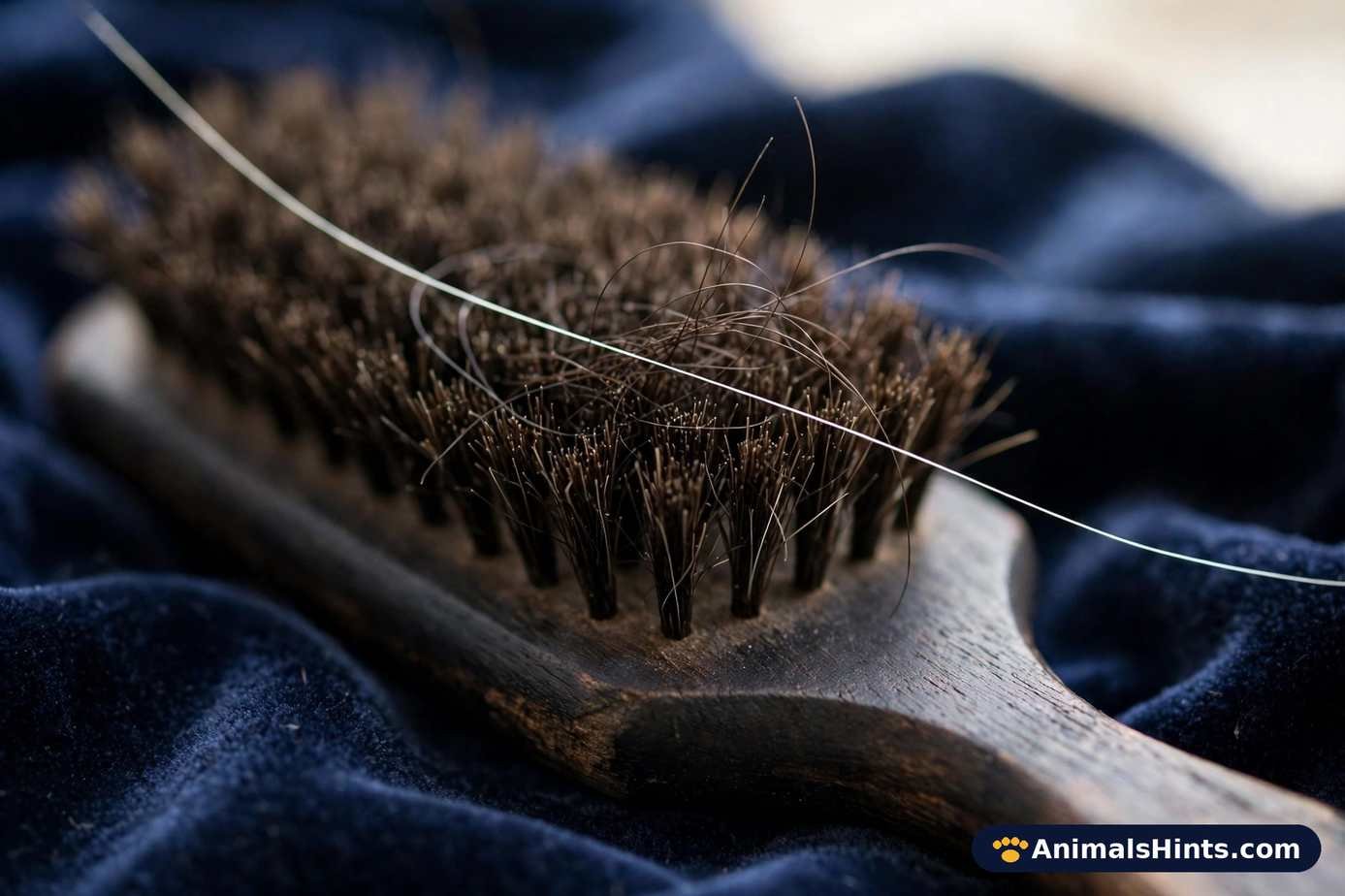
You find it by accident: one strand, pale as thread, lying across the brush or catching the light on your shoulder, longer than everything around it and white from root to tip. The single long white hair spiritual meaning is the question that follows people out of the bathroom, because a lone strand like that does not look like ordinary greying. It looks deliberate.
The traditions that read signs in the body have never treated it as ordinary. Across the lore collected on this page, one white strand is read as wisdom arriving early, as a blessing carried down the family line, as a mark of honour, and — in parts of Asia — as a “longevity hair” that should never be pulled out. Those readings are set out in full below, following the headings of the source page, each one signed by the tradition that holds it.
Underneath the lore sits a smaller, stranger piece of biology. Every follicle keeps its own pigment supply and its own growth clock, and a single follicle can lose the first and overrun the second while its neighbours carry on untouched. Two accounts run through everything below: what people have believed the strand means, and what a follicle is verifiably doing when it produces one.
What Does a Single Long White Hair on Body Symbolize?
In the symbolism of the spiritual pages, a lone white strand stands for rarity given meaning. Ordinary greying arrives gradually and everywhere at once, and the lore largely ignores it. One hair, arriving alone and ahead of its time, is treated the way uncommon signs are treated in most folk systems: as something singled out, and therefore something saying something. The meanings hung on it cluster around four ideas — wisdom, purity, ancestry and protection — and they are unpacked one by one in the meanings list that follows.
Colour does much of the work. White carries purity and light in tradition after tradition, and the strand borrows that whole wardrobe at once: clarity after confusion, a cleansed chapter, an inner light made briefly visible on the body’s surface. Set against the black spiritual meaning — the colour of depth, mystery and the unseen — a white hair reads as its opposite number: something hidden brought into the open.
The strand’s length matters to the symbolism too. A long hair has plainly been growing, unnoticed, for a considerable while, and the lore reads duration into it: a lesson long in the learning, a blessing long on its way, a change that began well before you spotted its evidence. Where the hair appears, and on whom, shifts the reading further — the gender and body-part sections below carry those variations exactly as the tradition gives them.
Why One Hair Turns White and Grows Long: The Follicle Record
Begin with the pigment, because the whiteness is the easier half to explain. Hair colour is manufactured inside the follicle, during growth, by cells called melanocytes. Through the growth phase they make melanin and pass it into the cells building the shaft, which is why a strand leaves the skin already coloured — or, if no pigment was fed in, already white. The hair you can see is dead tissue; its colour was settled before it ever emerged, and nothing that happens to the visible strand can change it.
Those pigment cells are not permanent staff. They are renewed each growth cycle from a small reserve of melanocyte stem cells kept in a sheltered region of the follicle called the bulge. The crucial fact for this page is that every follicle keeps a reserve of its own. Follicles are independent units, each running its own cycle on its own schedule, so one follicle’s reserve can run down — used up over many cycles, worn by accumulated damage, or switched off — while the follicle a millimetre away colours its hair normally for years to come. When a single follicle’s pigment line stops, the next hair it grows comes out colourless, and a colourless hair reads as white, silver or grey depending on the light and the hair around it. The general name for hair losing its pigment with age is canities; a sharply localised patch of white hair, where a group of neighbouring follicles has lost pigment together, has its own clinical name, held for the patterns section below.
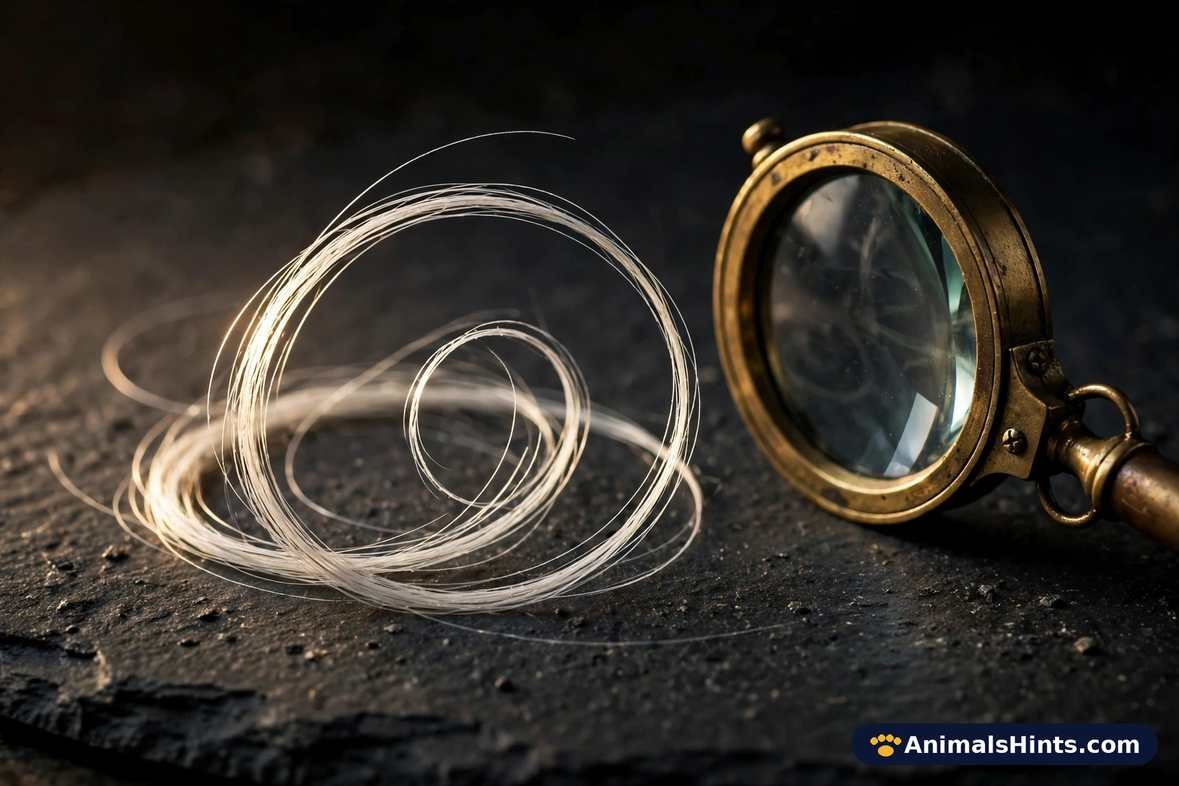
The length has a separate mechanism, and it is just as ordinary once stated. A hair’s final length is set by how long its follicle stays in anagen, the growth phase of the cycle. Scalp follicles hold anagen for years — published ranges run from about two years to six or more — while body hair follicles, on the arms, the trunk, the brows, stay in growth for only weeks or a few months before resting and shedding. That is why head hair can reach your waist and arm hair cannot reach an inch. Britannica’s account of the cycle makes the same point by region: the duration of the active growth phase is what differs, and length follows duration.
Now put the two mechanisms together and the “rogue” strand explains itself. Any single follicle whose growth phase runs long for its neighbourhood — staying in anagen past the point where the hairs around it have rested and shed — will produce one hair conspicuously longer than its neighbours. Nothing exotic is required: follicles vary, cycles drift out of step, and on a body carrying millions of follicles, the occasional overrun is expected. It is the same variation that gives many older men one eyebrow hair, or one ear hair, that outgrows all the rest and has to be trimmed back. Find that overrunning follicle in a place where its pigment reserve has also stopped, and you have the exact object this page is about: one hair, longer than its neighbours, and white.
One Hair, a Patch or a Whole Head: Telling the Patterns Apart
The lore treats every white hair as one sign, but the dermatology record sorts white hair into distinct patterns, and they do not mean the same thing medically. Four are worth separating.
| Pattern | What it looks like | What the record says |
|---|---|---|
| A single white strand | One colourless hair among normally coloured hair | One follicle’s pigment reserve has stopped; the commonest pattern covered here, and the one the whole superstition is built on |
| A white patch or streak — poliosis | A defined tuft, streak or forelock of white hair, often at the front hairline | A group of neighbouring follicles lacking melanin or melanocytes in the hair bulbs; can be inherited (the white forelock of piebaldism is the classic case) or acquired alongside conditions such as vitiligo or alopecia areata |
| Gradual greying — canities | Salt-and-pepper spreading across the whole head over years | The age-related pattern: pigment reserves running down follicle by follicle across the scalp, on a timetable set largely by inheritance |
| Sudden whitening stories | Tales of hair turning white overnight from shock | No mechanism exists by which a grown, dead shaft can lose its pigment; the documented rapid cases involve pigmented hairs shedding, leaving white ones already present suddenly visible |
The distinctions matter for one practical reason. A single strand asks nothing of you. A patch is a pattern a clinician has a name for, and where a patch arrives with pale patches on the skin itself, the NHS record on vitiligo is the relevant one: vitiligo is a long-term condition in which pale white patches develop on the skin through lack of melanin, it can develop where there are hair roots such as the scalp, and the lack of melanin can turn the hair in the affected area white or grey. The health passage in the practical section below draws the line exactly there — single strand on one side, spreading patches on the other.
The colour grey itself carries its own symbolism file on this site, held in the article on the grey spiritual meaning — a strand that reads silver rather than white sits close to that territory, and the two pages treat the boundary honestly rather than raiding each other.
9 Spiritual Meanings of Single Long White Hair
What follows keeps the tradition’s own sequence of nine readings. Every reading is a belief, labelled with its owner; where one rests on something that can be looked up — a verse, a named Buddhist mark — the lookup is shown where it belongs.
1. Wisdom and Knowledge
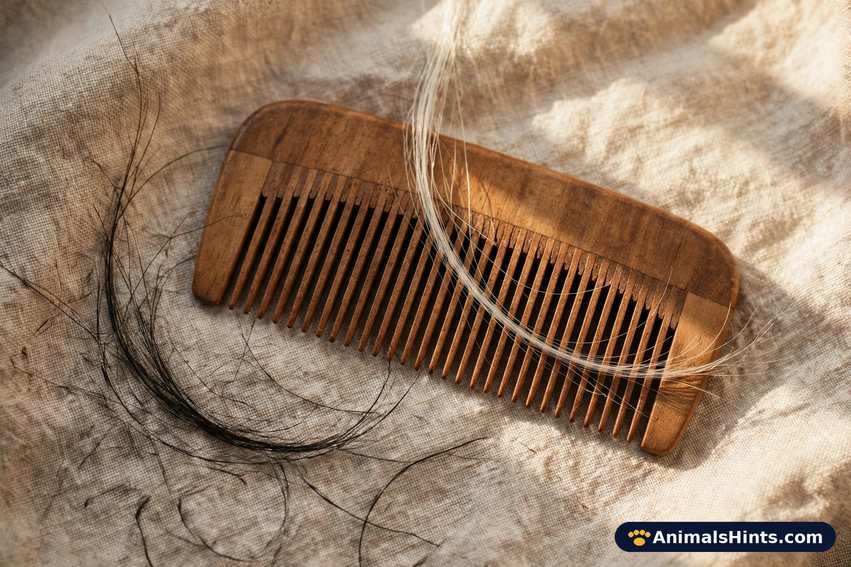
The first and oldest reading: the strand as a certificate of lessons absorbed. White hair belongs, in the human imagination, to elders, and a single strand arriving early is read as the inner life ageing ahead of the body — experience banked, judgement ripened. The reading flatters nobody automatically; it points at what difficulty has taught, and its usual counsel is to trust the knowledge you paid for rather than discounting it because it came the hard way.
2. Spiritual Awakening
The strand as an outward sign of an inward shift. People commonly report finding one during a period of questioning, practice or upheaval, and the lore files the timing as the meaning: the body registering, in its smallest possible print, that the inner weather has changed. In this reading the lost colour is the point — something old quietly leaving the strand as something new takes its place in the person.
3. Purity and Clarity
White’s own symbolism, applied to one hair. The strand is read as evidence of a clearing: a grief finished, a grudge set down, a confused season resolving into a simpler sight of things. The reading is backward-looking rather than prophetic — it claims the cleansing has already happened and the hair is its receipt.
4. Ancestral Blessings
The strand as a thread to the family line. Hair has carried kinship symbolism for as long as it has been cut for mourning, kept in lockets and buried with the dead, and the lore reads one white hair as an ancestor’s touch: protection offered, presence signalled, a pattern in the family’s story closing at last. Of the nine, this is the reading people most often describe as comforting rather than impressive.
5. Life Lessons and Transformation
The strand as a milestone marker. In this reading it tends to be found after a transformation rather than before one — a loss survived, a chapter closed, a self rebuilt — and it is taken as the body’s way of countersigning the change. The meaning overlaps the first, but where wisdom looks at what was learned, this one looks at what was left behind.
6. Sign of Honor and Dignity
The strand as a badge rather than a message. This reading has the strongest paper trail of any on the list, because it rests on scripture rather than folklore alone. The King James Version gives white and grey hair an explicit honour:
The hoary head is a crown of glory, if it be found in the way of righteousness. (Proverbs 16:31)
And again, on the beauty of age:
The glory of young men is their strength: and the beauty of old men is the grey head. (Proverbs 20:29)
Both verses are about a whole grey head, not one strand, and this article does not stretch them further than they reach. What they establish is the root the single-hair reading grows from: in the Bible’s own words, grey hair found in a righteous life is glory, not decline.
7. Old Soul and Intuition
The strand as a tell. In the modern lore, a pale strand on a young head is read as the mark of an “old soul” — someone whose steadiness, depth or intuition runs ahead of their years — and as an invitation to trust the quiet first judgement over the argued second one. This one is the newest of the nine by far — a twentieth-century spiritual vocabulary rather than an old one, and it is labelled as such here.
8. Inner Strength and Resilience
The strand as a scar that shows as silver. White hairs are popularly tied to hard seasons — the exams, the illnesses, the years of broken sleep — and this reading takes the connection symbolically rather than medically: the strand as proof of load carried and not dropped. Its counsel is the gentlest on the list: do not pull out the evidence of what you have come through.
9. Connection to the Divine
The strand as an antenna. Hair has been pictured, in teaching after teaching, as something that reaches — Samson’s strength sat in his, in the Bible’s own account — and a colourless strand is what this corner of the lore reads as the clearest channel of all: an open line, a deepening practice, guidance arriving. It is the most mystical reading here and the least checkable, and it closes the list at exactly that strength.
Single Long White Hair Superstition for Females and Males
For Females
In the folklore as the competitor’s tradition collects it, a woman finding one long white hair — on the face or the arm especially — is holding a lucky object. The strand is read as prosperity on its way and intuition sharpening, and in parts of Asia the advice attached is specific: do not pluck it, because pulling it out is said to cut the blessing off with it. The same strand near the forehead is read, in that tradition, as insight carried from before this life. Underneath the luck sits a plainer observation the lore itself makes: ornament fades and the strand does not, so it stands as a small lesson in which kind of worth lasts.
For Males
For a man, the same find is read in the tradition as maturity of spirit: a turning point, responsibility arriving, a life being lived straight enough to earn the honour reading of the sixth meaning above. Longevity and favour are the strand’s usual companions in the men’s version, and here too the older generations warn against plucking — the hair is said to carry something, and removing it is read as refusing it. The counsel the men’s strand ends on is consistent across versions: slow down, take stock, let the strand do its reminding.
Single Long White Hair on Different Body Parts Superstition
Where the strand grows changes its reading, in the folk system, as much as the strand itself. The body has its own sign-files on this site — the belly button itching spiritual meaning is one neighbour, filed under sensations rather than sightings — and the white-hair tradition keeps a small atlas of its own, five entries long.

1. Arms
On the arm, the strand is read as protection worn openly: unseen help standing between the finder and harm. The Asian strand of the tradition adds prosperity to the arm’s entry — unexpected money, or an ancestor’s blessing delivered by the limb that works and carries.
2. Forehead
The forehead entry is the atlas’s most prized. A white hair at the centre of the forehead is rare even by this page’s standards, and the lore loads it accordingly: awakening insight, a guiding role ahead, and in the older Chinese telling, fortune joined to intellectual power — recognition for what the mind does.
3. Face (Cheeks, Chin, or Near Lips)
On the face, the readings split by the face’s own neighbourhoods — territories this site files separately, in held articles on right cheek twitching, chin twitching, upper lip twitching and nose twitching. The white-hair tradition reads a facial strand two ways at once: as sincerity, the face being where identity shows; and as a summons to reflection — to talk less and watch more for a while. For women it is tied to prosperity and to blessings from the women of the family line; for men, to leading quietly rather than loudly.
4. Eyebrow
The eyebrow strand is the one entry in the atlas with a genuinely documented sacred object behind it. Longevity, wisdom and peace are its folk readings, and its prestige borrows from Buddhist iconography: the ūrṇā, one of the thirty-two marks of a great being in the Lakkhana Sutta’s list, is a whorl of white hair set between the Buddha’s brows, read as the mark of one who sees clearly. The identification is real — the ūrṇā is standard in Buddhist art from the second century onward, usually rendered as a curl or a gem between the eyebrows. Your eyebrow hair is not the ūrṇā, and this article does not pretend otherwise; but the folk reading’s instinct, that a white hair at the brow means vision, has an honourable pedigree. The brow also stands guard over the eye itself, whose own fluttering file — the left eye twitching spiritual meaning — is the longest omen list this site keeps.
5. Back
On the back, the strand is read as burdens lifting: old weight being discharged, a cleansing working through what the finder cannot see — which is also, the lore notes with some wit, exactly where a back hair sits. Protection completes the entry: something watching the one direction you cannot watch yourself.
Cultural and Religious Symbolism
In Asian Traditions
The Asian record is the strand’s home ground. In Chinese and Japanese telling, one long white hair earns a name of its own — the “longevity hair” — and the name carries the whole reading: long life, good fortune, the blessing of those who came before. The standing instruction is to leave it alone; plucking it is said to offend the protective spirits it represents. Hindu thought reaches the strand by a different road: white and silver hair are tied to sattva, the quality of purity, balance and clarity in the classical scheme of qualities, so a single pale strand can be read as that quality surfacing in the body.
In Buddhism
Buddhist symbolism gives white hair its most elevated single image, already met in the eyebrow entry: the ūrṇā, the white whorl between the Buddha’s brows, thirty-first of the great being’s marks, from which Mahayana texts picture light streaming out to illuminate distant worlds. Around that image, white hair in Buddhist telling stands for enlightenment and for looseness from worldly wanting — age’s colour, worn by the one figure who is pictured as beyond age’s grip.
In Western Beliefs
The West keeps no dedicated superstition for one white hair, and none is invented for it here. What it keeps is the elder archetype: the silver-haired sage, the white-bearded judge of fairy tales, wisdom pictured as a head gone pale with years. A single early strand is read, by extension, as the archetype arriving ahead of schedule — plus the biblical honour of the Proverbs verses quoted in the sixth meaning, which are the West’s oldest written word on the subject.
In African and Indigenous Beliefs
In the African and Indigenous strands as the genre collects them, white hair is a mark of the ancestors’ nearness: the old ones leaving a physical sign on a living body, a reminder of protection and of presence. That is how the genre hands it down — as a wide pattern running through many storytelling traditions, not as one tribe’s documented teaching — and it closes the cultural survey where the fourth meaning began: with the family line, watching.
Is a Single Long White Hair a Bad Omen? An Honest Reading
No tradition on this page’s own evidence calls it one. Read the nine meanings again and the pattern is hard to miss: wisdom, purity, blessing, honour, strength — the negative register is essentially absent from the lore, which makes this strand one of the kindest signs in the whole body-sign catalogue. Where anxiety attaches to it, the anxiety is modern and cosmetic, not traditional: the strand is feared as a preview of ageing, not as a forecast of misfortune.
The biology, for its part, is equally unalarming and says less than the lore hopes. One follicle’s pigment reserve stopping is a local event with a local explanation, and a growth phase overrunning its neighbours is a variation, not a symptom. Neither mechanism consults your character, your ancestors or your future. The strand can honestly carry the meanings people give it — as a prompt to notice a life changing, it plainly works — without being evidence for any of them.
What the two records share is a direction of travel. The lore says: do not pull it out in a hurry, take the moment it gives you. The biology says: one strand is one follicle, and there is nothing here to chase. Both, in their own languages, counsel exactly the same unhurried response.
Pluck It or Keep It? What to Actually Do About One White Hair
The traditions vote to keep it, and for once the practical record does not argue. Dermatology guidance on plucking is consistent in substance: pulling a hair out does not make more white hairs grow — the neighbours have their own pigment reserves and take no instructions from the strand you removed — but repeated plucking can injure the follicle itself, and a traumatised follicle can scar, infect or stop producing hair altogether. The folk fear (“pull one out and three grow back”) has the mechanism wrong and the conclusion roughly right: leave the follicle alone.
If the strand troubles you, the harmless options are the barber’s: trim it level with its neighbours, or colour it with the rest when you colour. What a single strand never needs is investigation. It is one of the commonest small events a body produces.
The line is drawn at patterns, not strands. Show a doctor — a GP in the first instance — any of the following: white hair arriving as a spreading patch rather than a strand; pale patches on the skin alongside it, which is the NHS-described presentation of vitiligo, where the skin’s own pigment fails and the hair growing in the same place loses its colour along with it; whitening that comes on rapidly and widely, especially in a child; or any patch accompanied by skin change, inflammation or hair loss in the same place. Those are the presentations the clinical record attaches names to. One long white hair, on its own, is not among them, and the honest sentence is the simple one: a single white hair is common, and on its own it is not a medical event.
Final Thoughts
One strand, two records. In the follicle record, it is a small local accident of timing: a pigment reserve that stopped in a single follicle, a growth phase that ran long, and a hair that came out white and kept coming. In the telling of the traditions, the same strand is wisdom arriving early, an ancestor’s touch, an honour the Book of Proverbs calls a crown of glory, a longevity hair that grandmothers on two continents advise you not to pull.
This site’s recommendation is the one both records can sign. Let it stay, or trim it without ceremony — but let it give you the pause it gave you anyway. The strand means what a life makes it mean; the poliosis pattern it is so often confused with is a different and larger thing, and knowing the difference is the whole article in one line.
FAQs
What does finding a single long white hair mean spiritually?
In the lore, it is read as wisdom arriving, a blessing from the family line, or a sign of inner change made visible. The biology underneath it is simpler: one follicle stopped colouring its hair while its growth phase ran long.
What are the superstitions about finding a white hair?
The main ones are kind ones: luck and longevity in the Asian “longevity hair” tradition, honour in the biblical strand, ancestry and protection in the African and Indigenous tellings. Nearly all of them add the same instruction — do not pluck it.
Is finding a white hair a sign of wisdom?
That is its oldest reading, and the one with written support: Proverbs calls the hoary head a crown of glory. As folklore it is a prompt to value what experience has taught; as biology, the strand itself certifies nothing except one follicle’s timetable.
How should I respond to finding a single long white hair?
However you like, short of worrying. Keep it as the traditions advise, trim it, or dye it — and reserve a doctor’s visit for patches, spreading whitening or skin changing colour alongside it, none of which a single strand is.