Dreaming About Fishing: Spiritual Meaning, Dream Research and the Empty Line
The dream about fishing spiritual meaning is most often looked up in the first minutes after waking, with the dream still close: a rod in your hands, water you cannot see into, and either a catch you can still feel tugging at the line — or a line that stayed empty all night. It is among the calmest dreams in the whole catalogue, and among the most argued over, because nearly every guide agrees it pictures somebody waiting for something, and no two guides quite agree on what.
This page keeps the shelves apart. The traditional readings come first, complete: the meanings the guide tradition lists for this dream, the settings it sorts them by, and the place fishing holds in the Bible and across cultures. Then comes what dream research has actually recorded about dreams of this kind — where they come from, and why this one turns up so often in a life that contains a long, unresolved wait.
One boundary runs through everything that follows. The readings are beliefs, held by the traditions that teach them, and they appear here as beliefs. None of them is a forecast. On the honest record, a fishing dream does not schedule a payday, a pregnancy or a calling — and the sections near the end take those three claims one at a time. What the dream does reliably is show you the shape of something you are waiting for. That turns out to be enough to work with.
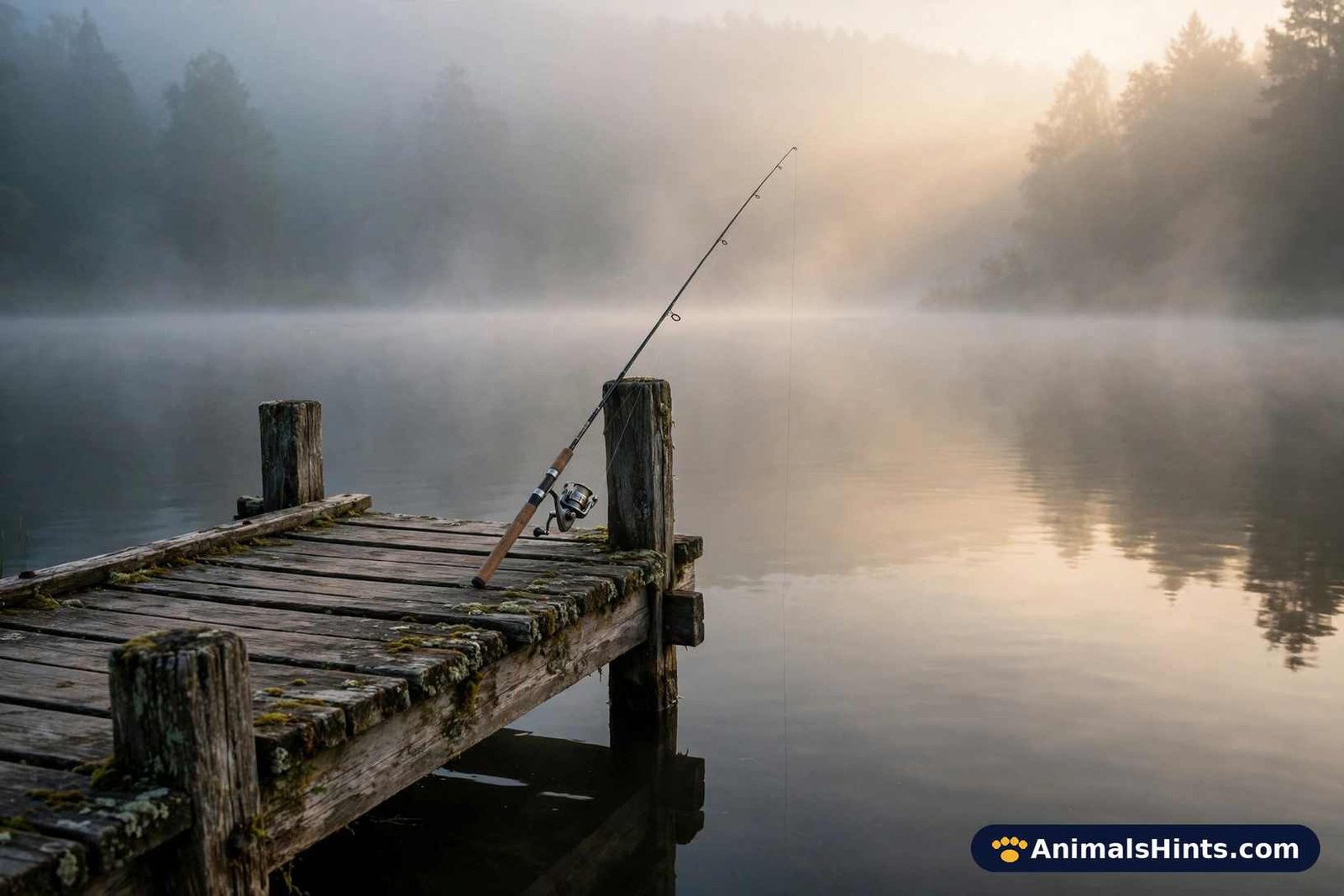
What Does a Dream About Catching Fish (Fishing) Represent Spiritually?
One action sits at the dream’s centre: drawing something up out of hidden water into the open air. In the spiritual reading, that action stands for seeking — for reaching toward something that exists but cannot yet be seen: an answer, a blessing, a piece of understanding, a result that has been a long time under the surface. The dreamer is not shown the thing directly. They are shown themselves fishing for it, which the tradition takes to be the honest picture of how most wanted things are actually approached in waking life: indirectly, patiently, and without any guarantee.
Catching a fish, in this reading, is the search succeeding in the symbol’s own terms. Guides gloss it as success, growth or a moment of clarity — the wanted thing finally in hand. The opposite images carry the opposite gloss. A fish that slips off the hook, or a long session that produces nothing, is read as frustration: effort spent, a chance missed, a result that has not arrived on the dreamer’s timetable. Neither picture is treated by the careful guides as news. Both are treated as portraits of the dreamer’s current position in a search.
The water does half the talking. Across this literature, water stands for the emotional life and the part of the mind below awareness, and its condition colours the whole dream. Calm, clear water is read as a search conducted in settled feelings; rough or muddy water, as the same search conducted through confusion. The catch’s size adds the fine detail — a large fish for a large hope, small fish for modest ones — and the sections below take those details in turn, as the tradition hands them over.
What Dream Research Records About Fishing Dreams
Begin with a small, useful surprise: fishing is not one of the famous dreams. When Tore Nielsen and colleagues gave their dream questionnaire to 1,181 Canadian university students in 2003, the themes people reported most were being chased or pursued (about 82 percent), sexual experiences (about 77 percent), falling (about 74 percent) and school, teachers and studying (about 67 percent). Fishing appears nowhere near the top of that table, and it earns no line of its own in the standard lists of typical themes. A fishing dream is therefore not a set-piece the human mind produces for everyone. It belongs to the personal shelf — and that placement is itself the first clue about where it comes from.
Dream research’s longest-standing explanation is continuity. In 1972, Calvin Hall and Vernon Nordby gave it its name — the continuity hypothesis: what fills a person’s waking hours, its places, faces and preoccupations, is what their dreams are built from, recycled nightly. On that account, a fishing dream needs no messenger. People who fish dream about fishing, the way bakers dream about ovens. And people who have never held a rod dream about it too, because waking life hands the metaphor to everyone: a job application sitting unanswered, a house purchase inching forward, a message you are waiting to receive. The sleeping mind reaches for the most patience-shaped picture it owns. Michael Schredl, summarising decades of this research, adds the sizing rule: dreams typically overdramatise the waking material they borrow, staging a small feeling at full scale. A minor wait becomes a whole night on the water.
The timing evidence points the same way. Dream content draws on the day just passed — the day residue — and, in the pattern researchers call the dream-lag effect, on experiences from five to seven days earlier as well. A fishing trip last weekend, a programme about rivers, a conversation in which somebody said “we’ll see” — all of it is ordinary raw material, arriving on a delay. The neighbouring water shelf learned the same lesson from the other side: the spiritual meaning of flood in a dream is fed, on the record, by waking water — not delivered as an advance warning about it. Fishing dreams themselves remain untested, and this page leaves that gap exactly as visible as it found it.
What happens when a famous theme is tested is worth one paragraph, because it disciplines everything else here. When researchers examined dreaming of rotten teeth, the dream reports tracked irritation in the dreamers’ actual mouths more closely than any hidden distress. The symbol, tested, pointed back at the body and the day. There is no equivalent study for fishing dreams — no laboratory has separated the anglers from the metaphorical waiters — so the research shelf for this dream honestly reads: strong framework, no direct test. The framework says the dream is built from your waking life, and the most common waking material shaped like fishing is a wait.

13 Spiritual Meanings of a Dream About Fishing or Catching Fish
A note on the number in that heading, because accuracy matters more than tidiness here: the heading promises thirteen readings, and the guide tradition this page follows lists eleven. Its numbering stops at 11, and no twelfth or thirteenth meaning appears anywhere in it. Rather than invent two more to make the heading true, this page prints the eleven the tradition actually lists, in the tradition’s order, and leaves the heading standing exactly as published — the shortfall noted, not repaired. (This run met the same gap on a June page: twelve promised, eleven listed.) Every reading below is given as its tradition gives it — something to weigh, never something to deposit.
1. Abundance and Prosperity
The first reading is the full net. Dreaming of catching fish — especially catching them in numbers — is read as abundance: blessings drawn up out of unseen places into ordinary life. At its most careful, the tradition widens the word well beyond money. The catch stands for provision of every kind — enough, arriving — and the inner version of the same picture is a person who feels their life filling rather than draining.
Size does the fine work. A large fish is read as a major opportunity or breakthrough; small fish, as modest but steady provision, with the tradition adding its own small sermon about gratitude for the lesser catch. Read at the strength the careful guides intend, this meaning is encouragement wearing a picture: effort and patience, it says, are not being wasted. What it is not is a dated promise that money is in transit — the promise question is taken up on its own further down.
2. Divine Provision and Rewards
Closely related, this reading stresses where the provision comes from. In traditions that teach a providing God, the fishing dream is read as reassurance during a long, uncertain wait: the work is seen, the sowing is not forgotten, and the harvest belongs to a timetable the dreamer does not control. A net that comes up full after an empty night is the picture this meaning lives on.
The practical counsel inside the reading is endurance rather than technique. The dream, on this account, does not tell the dreamer to fish differently; it tells them the waiting itself is witnessed. Readers who hold the belief find real comfort in it, and this page prints it exactly there: a conviction of faith, not a finding anyone can check.
3. Blessings and Open Doors
The third reading turns on timing. Catching fish is read as doors opening after a stretch in which they stayed shut: the promotion, the relationship, the idea or the opportunity that was hidden under the surface coming within reach at last. The fish is potential made visible — something valuable that existed all along, finally where the dreamer can take hold of it.
The tradition grades this one by effort. A catch that comes easily is read as blessing flowing without a fight; a catch that has to be worked for is read the same way at a slower speed — the door opens, but to persistence rather than to luck. Either way, the reading’s centre is alignment: the sense, inside the belief, that what a person is doing and what they are for have stopped pulling in different directions.
4. Hope and Effort in Life
Strip the dream to its skeleton and this is what remains: somebody casting, waiting, and casting again. The fourth reading takes that skeleton as the whole message. In a dream, fishing is read as faithful endurance — determination to keep going toward a goal whose results have not yet shown themselves, and trust that consistent effort is not being poured into the ground.
The empty line gets its most useful gloss here. In this reading, catching nothing is no verdict on the dreamer; the tradition means it as a nudge — examine the method rather than abandon the water — where the energy is going, whether the spot, the bait or the season wants changing. The harvest language the guides use belongs to this meaning most of all: effort as seed, results on a delay built into the nature of the thing.
5. Spiritual Warning or Loss
Not every catch in the catalogue is a good one. Catching dead, sickly or poor-quality fish is the genre’s warning picture, and it is set down here as exactly that — a belief held inside these traditions, not a bulletin about anyone’s future. In the reading, the spoiled catch stands for something that has lost its vitality: an opportunity let go stale, a practice neglected, a goal being chased for rewards that will not nourish the person who lands them.
The tradition’s own framing is softer than the heading suggests, and it is worth keeping its softness. The guides who print this meaning generally print it as a call to renewal rather than a sentence of doom — an invitation to clear out what has gone off, restore what has been neglected, and reconsider what the line is being cast for. Taken that way, the dead fish is the catalogue’s mirror rather than its threat: it asks what in the current catch is actually worth keeping.
6. A New Spiritual Goal or Growth
A fishing dream often arrives, in the guides’ telling, at the start of something: a fresh direction in a person’s inner life, a decision to go deeper, a lesson that has been circling for a while finally coming within reach. The act of fishing is read as willingness — the dreamer has picked up the rod, which in this symbolism means they have agreed to look beneath the surface of their own days.
Details grade it. A large or vividly coloured fish is read as a significant insight approaching; teaching somebody else to fish inside the dream is read as readiness to pass on what has been learned. Both pictures belong to the growth shelf of the catalogue, and both are stated here as the tradition states them — as encouragements to take the next step seriously, not as certificates that it has been taken.
7. Fertility and Creativity
Fish are among the oldest fertility symbols the cultures own — creatures that multiply beyond counting, in the element everything living came from. Dreaming of catching them is read, in that long tradition, as new beginnings of every kind: a child, in the literal version some folk traditions attach to the dream; a project, a body of work, or a remade self, in the version the modern guides print more often.
The folk version deserves its bound stated in the same breath. In some cultures the fishing dream is counted an omen of pregnancy, and it is carried here as folklore — an old belief, and an unrecorded one, with no evidence standing behind it; the honest section below returns to it. The creativity reading needs no such caution, because it claims less: a mind producing fish in numbers is a mind picturing its own generativity, and the dream’s advice, in the tradition, is simply to give the new thing water and time.
8. Inner Exploration and Insight
This is the reading the psychologists and the guides come closest to sharing. Fishing is a nearly perfect picture of introspection: a line lowered into water you cannot see through, attention held on a point at the surface, and whatever rises coming from the dark below. The tradition reads the catch as insight retrieved — an answer, a memory or a recognition that was in the dreamer all along, waiting for quiet and patience to bring it up.
The near-miss belongs to this meaning too. A fish that surfaces and slips away is read as an understanding approached but not yet held — close, the tradition says, with distraction or fear doing the loosening. Whether a reader files that under spirit or under mind, the practical picture is the same one the research shelf draws: the dream stages the dreamer’s own search, from inside it.
9. Manifestation of Wealth and Spiritual Gifts
Modern spiritual teaching gives this dream its most confident reading: catching fish as manifestation — the things worked toward, in money, peace or ability, becoming visible at last. Multiple fish are read as abundance flowing in quantity; the dreamer’s feeling during the catch does the grading, joy read as harmony between the material and spiritual ledgers, anxiety as doubt about deserving what arrives.
The language of gifts belongs here as well. In this teaching, fish stand for talents surfacing — intuition, empathy, a capacity for healing or making — pictured as catch because they arrive from below awareness into use. This page carries the reading as its teachers hold it, and files it where it belongs: it is a modern doctrine about how wanting works, stated by its believers, and the honest section below separates what it can promise from what it cannot.
10. Spiritual Cleansing and Struggles
In this meaning, the water is the story. Fishing through turbulent, muddy or storm-driven water is read as working inside a hard season: the search for clarity conducted while the feelings are churned up, the line cast anyway. A catch made in those conditions is read as retrieval under difficulty — something worth having, brought up out of a period the dreamer would not have chosen.
The dark water has its own file in the colour catalogue: the black spiritual meaning treats darkness as the unseen and the unprocessed rather than as anything evil, and a muddy fishing dream sits naturally on that shelf. A dirty or unhealthy fish, in this meaning, is read as clutter to be released — old weight the water has finally floated into view. The tradition’s closing note on the whole picture is endurance: the struggle itself is cast as the cleansing, one cast at a time.
11. Calling to Spiritual Mission
The final reading rests on an actual text, which the next section sets out in full. In the Gospels, Jesus calls working fishermen to become “fishers of men,” and the guides build this meaning on that phrase: a fishing dream read as a calling — the sense that a life is being pointed toward serving, guiding or teaching others, toward work whose catch is people helped rather than things gained.
The variations follow the phrase’s logic. A catch divided among others is read as wisdom or compassion meant to be passed on; fishing alongside others, as a mission carried in company rather than alone. This page carries the meaning as the tradition’s — and flags, before the Bible section begins, the distinction the text itself will make: the call in the Gospels was spoken to named men, in waking life, at a specific shore. Reading your own dream through it is an act of devotion the tradition permits itself. It is not something the text does on the dreamer’s behalf.
Biblical Meaning of Catching Fish in a Dream
The Bible’s fish record is large, concrete and entirely awake. Counted for this page on BibleGateway’s King James Version search, the word “fish” returns 68 Bible results, “fishes” returns 26, and “fishers” returns 7 — and across all of them, the fish are literal: food on a table, a catch in a net, a great fish in a prophet’s story, working men at their trade. Fish are what crowds are fed with in the feeding miracles. A fish carries the temple tax in its mouth. Jonah spends three nights inside one. Nobody in the Bible dreams of fishing, and no verse anywhere in it interprets such a dream. That gap is the honest frame for everything in this section, and this page prints it rather than papering over it.
What the record does contain is the phrase the whole genre leans on. Jesus, walking by the Sea of Galilee, finds Simon and Andrew at their nets and says:
“And he saith unto them, Follow me, and I will make you fishers of men.” (Matthew 4:19, KJV)
It is a call, not a dream key: spoken to two named fishermen, about the work they were already doing, redirecting it toward people. The tradition’s “calling” reading of a fishing dream is an application of this sentence to an experience the text never mentions — legitimate as devotion, and labelled here as application rather than as something the verse says about dreams.
The record also contains the Bible’s own empty line, and it is the finest resonance this topic owns. In Luke’s Gospel, Simon has fished through a whole night and caught nothing when Jesus tells him to launch out again:
“And Simon answering said unto him, Master, we have toiled all the night, and have taken nothing: nevertheless at thy word I will let down the net.” (Luke 5:5, KJV)
What follows is the catch the genre quotes: “And when they had this done, they inclosed a great multitude of fishes: and their net brake.” (Luke 5:6, KJV) A second great catch closes the Gospel story — in John 21, the net comes up “full of great fishes, an hundred and fifty and three,” and this time, for all there were so many, the net is not broken. These are narratives about provision and obedience in waking life, told of named people at a named sea. A dreamer who finds their own empty night answered in Luke 5 is standing on a real text and reading it devotionally, which the tradition has always done. What the text will not do — for this dream or any other — is certify that a catch is coming. The Bible’s interpreted dreams, Joseph’s and Daniel’s, turn on other images entirely and were given to named individuals for named situations. No general key converting a fishing dream into a promise is supplied anywhere in it.
What Fishing Actually Asks: Patience, Waiting and Reading the Water
It helps, briefly, to remember what the waking activity actually consists of, because the dream borrows its emotional shape from the real thing. Fishing with a hook and line — angling in the strict sense, from the Old English word for the hook itself — is mostly not catching. It is tackle prepared, a place chosen, a line in the water, and then long stretches in which the correct action is no action at all: watching, adjusting to weather and season, reading the surface for signs of what moves beneath it. Experienced anglers describe the skill as residing exactly there, in the reading and the waiting, rather than in the brief minute of the catch.
The real activity also builds letting go into its ordinary practice. Catch and release is now widely practised by recreational fishers, and size limits in many waters require fish below a set size to be returned alive — the unready catch goes back, by rule and by custom, without the day counting as wasted. An empty creel at dusk is a normal ending to a normal day’s fishing, not a failed one. That is the activity’s own testimony, and it is worth hearing before any symbolism is layered over it: in real fishing, patience is not the price of the catch. It is most of the substance.
Hold that shape and the dream’s pull becomes plain without any dictionary. The sleeping mind, needing a picture for “I am waiting on something I cannot force, and I do not know if it will come,” could hardly do better than a rod, a line and dark water. The dream’s weather — a calm wait or a frustrated one, a catch or an empty line — usually matches the waking wait it is picturing, which is why this page’s closing sections work on the wait itself rather than on the fish.
Different Scenarios of Catching Fish in Dreams
The setting steers the reading as much as the catch does, and the tradition divides the usual waters five ways. The five follow below in that order, at that strength.
1. Catching Fish in a River
A river is moving water, and in the tradition it stands for life in motion: time, change, feeling that will not hold still. Catching fish in a river is read as seizing what the current brings — opportunities taken in passing rather than waited for in stillness, by a dreamer adapting as they go. The river’s condition grades it in the usual way: clear and steady flow as harmony with the pace of things, muddy or racing water as the same chances arriving while the dreamer feels overwhelmed. A catch made despite the turbulence is read as steadiness under motion.
2. Catching Fish in Clean Water
The catalogue’s clarity picture is this one. Fishing successfully in clean water is read as a search conducted with a clear head and clean intentions — intuition unclouded, the dreamer’s inner state in order, the catch standing for insight that arrives without distortion. In the tradition this is among the most favourable settings the dream offers, and its logic is transparency: what is drawn up out of clear water can be seen for what it is, all the way down.
3. Catching Fish in a Lake
A lake is still water, and the tradition holds it as introspection: a contained, quiet surface over depth. Fishing a lake is read as drawing on reserves — wisdom or feeling stored in the dreamer’s own depths, surfacing slowly in a reflective season. A large fish from a lake is read as a significant recognition rising out of that stillness. Catching nothing in a lake gets the gentlest of the empty-line glosses: the tradition reads it either as answers being looked for in the wrong water, or as a result that is present but not yet ready to rise — patience, in this setting, being most of the meaning.
4. Catching Fish in a Pond
The smallest water in the catalogue is the pond, and the tradition takes it as the personal scale: private feelings, the household, the inner life at its most contained. Fishing a pond is read as work done in that small territory — modest water, honestly one’s own. A clear, settled pond is read as emotional balance at home. A murky or stagnant one is read as blockage in the small world, with a catch made anyway standing for growth achieved inside real limitations — the tradition’s reminder that the size of the water is not the size of the meaning.
5. Catching Fish in the Sea or Ocean
The catalogue’s vastness is the sea: the unknown at full scale, mystery, the part of life and of the self that no one sounds to the bottom. Catching fish there is read as exploration rewarded — insight or provision drawn from somewhere far beyond the dreamer’s ordinary range, and courage credited for fishing in deep water at all. Heavy weather grades it as it grades everything in this catalogue: strong waves or dark water read as the same exploration conducted through difficulty, the catch as evidence that the dreamer can work in depths that frighten them.

Cultural and Religious Interpretation
Chinese culture. Fish carry fortune in this tradition on the strength of a sound: the word for fish, yu, echoes the word for abundance and surplus, which is why fish crowd New Year tables and wedding symbolism. A dream of catching fish is read, inside that frame, as fortune being gathered in — prosperity and fresh beginnings pictured as a catch. The reading belongs to one of the oldest and most cheerful symbol systems in the world, and it stands here as that tradition holds it.
Hinduism. The fish stands near the top of this tradition’s sacred story. Matsya, the fish form of Vishnu, saves humanity — in the telling, the sage Manu and the seeds of life — from the great flood, guiding the boat to safety. Fish therefore carry protection, rescue and renewal in the Hindu frame, and a dream of catching one is read there as divine support close at hand: preservation arriving in the form the dreamer can hold. The strand stands here as its own tradition tells it.
Islamic tradition. The classical dream-interpretation books that circulated for centuries in the Islamic world give fish a generous reading: caught fish as provision, gain and knowledge, large fish as the greater reward and small ones as modest benefit. That reading belongs to those books — a large interpretive literature written around dreams — and it is recorded here as theirs. None of it is doctrine: the Qur’an interprets nobody’s fishing dream, and Islam’s own teaching certifies no dream dictionary. The books’ reading is folklore with a long pedigree, held at exactly that rank.
Native American beliefs. In a number of North America’s Indigenous traditions, fish are bound up with water wisdom: intuition, adaptability, the knowledge that lives below surfaces. A dream of catching fish is read in that broad frame as contact with that kind of knowing — guidance arriving through feeling and attention rather than through argument. The strand is stated generally because the traditions are many and distinct; no single nation’s teaching is borrowed here to decorate the point, since none was fetched for this page.
Is Catching Fish in a Dream a Positive Sign?
The tradition’s answer is mostly yes, and it is worth hearing its reasoning before the boundary goes on. In the guides’ reading, the dream pictures effort being met: patience, faith and steady work on one side, a catch on the other. A successful catch is read as readiness — the dreamer aligned with what they are waiting for, their effort acknowledged by the picture itself. It is the catalogue’s most encouraging dream shape, and the guides say so plainly.
The unsuccessful versions are read more gently than their feel suggests. Catching nothing, losing a fish at the bank, or waking frustrated counts, in this tradition, as resistance rather than refusal: a block to be cleared, a focus to be reassessed, a method to be changed — the same nudge the hope-and-effort meaning gives. Nothing in the careful version of this literature treats an empty line as a sentence passed on the dreamer.
The tradition’s own best sentence on the whole question is its mirror image: the dream reflects what you are trying to catch. Wisdom, love, peace, money, an answer — the fish wears the shape of the current wanting, and the dream’s real information is the wanting itself. “Positive,” then, describes the lean of the readings collected here. Whether it says anything about next month is another matter entirely — the one the next section takes up.
Is a Fishing Dream a Promise? An Honest Reading
Three promises travel with this dream, and each deserves a plain answer.
The first is money: catch fish in a dream, the confident version runs, and abundance is on its way to you. There is no record for it — no study, no checked tradition, nothing but anecdotes collected after the fact, from the dreams that happened to precede a good month. The arithmetic argues the other way. Fishing dreams are common; sudden windfalls are not. If the dream scheduled the windfall, the two would keep company far more often than they do. What the record supports is smaller and more believable: a person deep in a financial wait dreams in the shape of the wait.
The second promise is the pregnancy reading, carried in the fertility meaning above as the folklore it is. It has a long history in folk tradition and no evidence behind it at all — no more able to announce a child than the flood dream, elsewhere on this site, is able to announce rain. Readers who hold it as a hope are doing something human; anyone who presents it to them as information is doing something else.
The third is the message reading: the dream as a communication about divine timing, certifying that the answer is coming and the wait is nearly over. Anyone may hold that as faith — faith is not this page’s jurisdiction. But the texts the reading leans on do not underwrite it. The call to be fishers of men was spoken aloud, to named men, in waking life; the great catches were events, not dreams. Nothing in the record converts a night’s fishing into a timetable, and the honest use of the dream is the one both the research shelf and the mirror reading agree on: it identifies the wait. Ask, in daylight, what you are currently waiting on — a decision, a reply, a result, a person — and notice how quickly the answer comes. That answer, and not a forecast, is the dream’s deliverable.
When the Fishing Dream Keeps Coming Back: Plain Steps That Help
One fishing dream asks nothing of you. The fifth one in a month is a different matter — worth a little method, and the method is the same whatever the dream is about, because it works on the shelf the research says dreams are built from: your own waking days.
Put a notebook within reach of the bed. On waking, set the dream down, and beside it the day that fed it: what you did, what crossed your screen, what you went to bed still carrying. A month of entries usually makes the continuity visible in your own handwriting: the dream arrives after the phone call, the application, the conversation that ended in “we’ll see.” The same notebook is this site’s standing advice for dreaming about your ex, and for one reason: it turns “what could this mean?” into “what happened this week?”, a question with checkable answers. Then name the wait in daylight, out loud or on paper, and do one small, concrete thing inside it — send the message, book the appointment, ask the question directly. A wait that is being acted on tends to stop needing a stage.
Keep the nights themselves ordinary in the meantime: regular hours, a dark and quiet room, and the household’s usual arrangements left as they are — including, in many readers’ homes, a cat sleeping above your head, which is its own small literature on this site and no obstacle to anything. And keep the boundary where the clinicians keep it: if yours come back often, leave you wrung out, or began after something frightening that actually happened, treat that as a health matter rather than a symbolism one — recurring distressing dreams are something clinicians recognise and can help with. None of this asks you to believe or disbelieve any reading on this page. The notebook works whichever shelf you keep your dreams on.

Final Thoughts
A fishing dream is the mind’s quietest picture of hope: a line in dark water, held by somebody who has decided the wait is worth it. The traditions read it generously — abundance, provision, open doors, growth, calling — and those readings are carried whole on this page, since they are the reason anyone visits it. The research record tells the plainer story beside them: a personal dream, built out of waking life, that shows up where a long wait lives. A reader need not pick one story and discard the other. Held together, each keeps the other honest — and a dream read with both in view is read better than a dream read with either alone.
End where the waking activity ends. Real angling is mostly waiting done well — attention held, water read, nothing forced — and its ordinary endings include the empty creel, carried home without shame by people who will fish again next week. Let the dream do that same honest job. It cannot tell you when the wait will end. It can tell you, with unusual clarity, what the wait is — and a wait clearly named is already half answered.
Frequently Asked Questions
1. What is the spiritual meaning of a dream about fishing?
In the traditional readings, fishing in a dream stands for searching: reaching toward something hidden — an answer, a provision, an opportunity — with patience as the method. Catching a fish is read as the search succeeding; the setting and the state of the water colour the rest. The readings are beliefs, and the research shelf reads the same dream as the portrait of a wait you are already in.
2. What does it mean to catch many fish in a dream?
The tradition reads a heavy catch as abundance in quantity: provision, opportunity or insight arriving in numbers rather than singly, with large fish graded as major openings and small fish as modest, steady ones. It is the catalogue’s most encouraging picture — an encouragement, on the honest record, rather than a dated promise.
3. What does it mean to fish but catch nothing in a dream?
The genre’s own gloss is kinder than the dream feels: not failure, but a method to examine — the spot, the timing or the approach — or a result that has not yet risen. The Bible’s one empty-line night, Simon’s in Luke 5, ends in the Gospels’ greatest catch; the tradition has always read the empty line as a middle, not an ending.
4. How should I respond to a dream about fishing?
Write it down, with yesterday written beside it, then ask the plain question the dream is picturing: what, at the moment, are you waiting on? Take one small practical step inside that wait. Readers who hold the traditional readings add prayer or reflection at exactly this point — the two responses sit comfortably together, and neither requires a forecast.