Top 18 Animals with Big Eyes (With Pictures)
Big eyes animals are animals with larger eyes than many other species. Their big eyes help them see better in dark or dim places. This special feature helps them find food and stay safe.
Big eyes make many animals look cute and unique. Some live in forests, while others live in oceans or deserts. Their amazing eyes help them survive in different environments every day.
Big eyes animals include tarsiers, owls, bush babies, giant squids, and lemurs. Each animal uses its eyes for different reasons. Their large eyes are an important part of their daily life and survival.
Read this too: 15 Animals with quills
List of Animals with Big Eyes
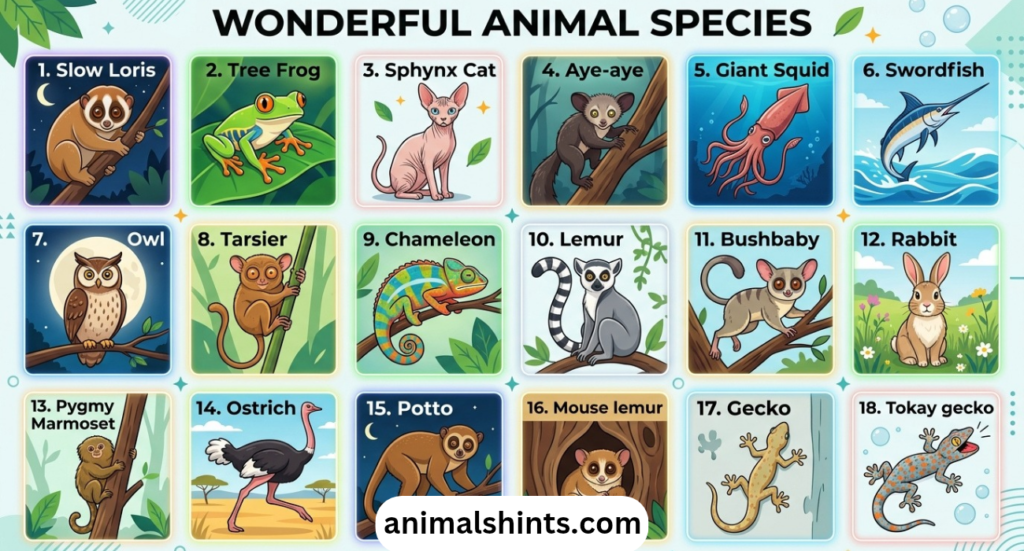
Here is our list of incredible big eyed animals. Each species showcases a remarkable animal eye adaptation. You will learn why eye size in animals matters for their survival.
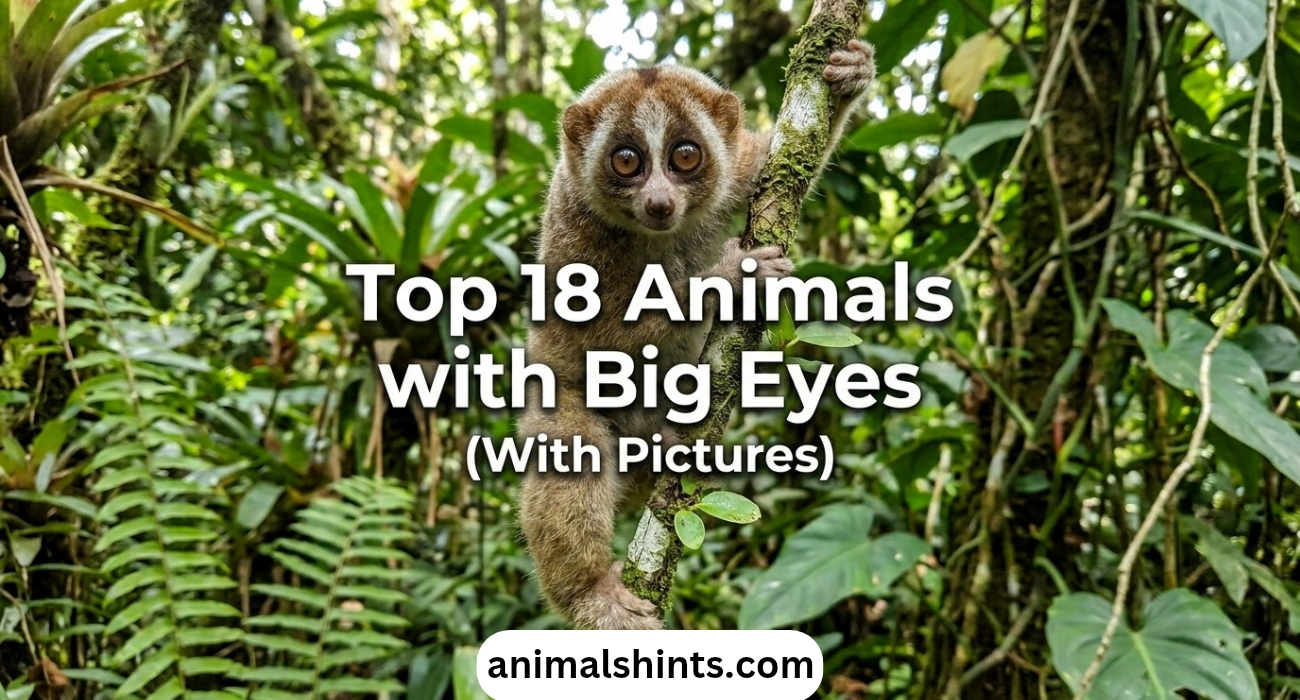
Slow Loris
The slow loris is one of the most enchanting nocturnal primates. This Southeast Asian wildlife species has enormous, round eyes. These features give it a look of innocence. But these eyes are a vital animal survival adaptation. They help the slow loris move through dense, dimly lit forests.
This big eyed animal relies on exceptional night vision. It forages for fruit, nectar, and insects under darkness. The slow loris has a reflective layer behind its retina, called the tapetum lucidum. This enhances its low-light vision. While it looks adorable, it is one of the few venomous primates. It secretes toxins from its elbows. This duality makes it both charming and dangerous.
Threats: The slow loris is a victim of the illegal pet trade. Its cute appearance, driven by its cute animal with big eyes look, makes it a target. Conservation efforts are critical to protect this species.
Tree Frog
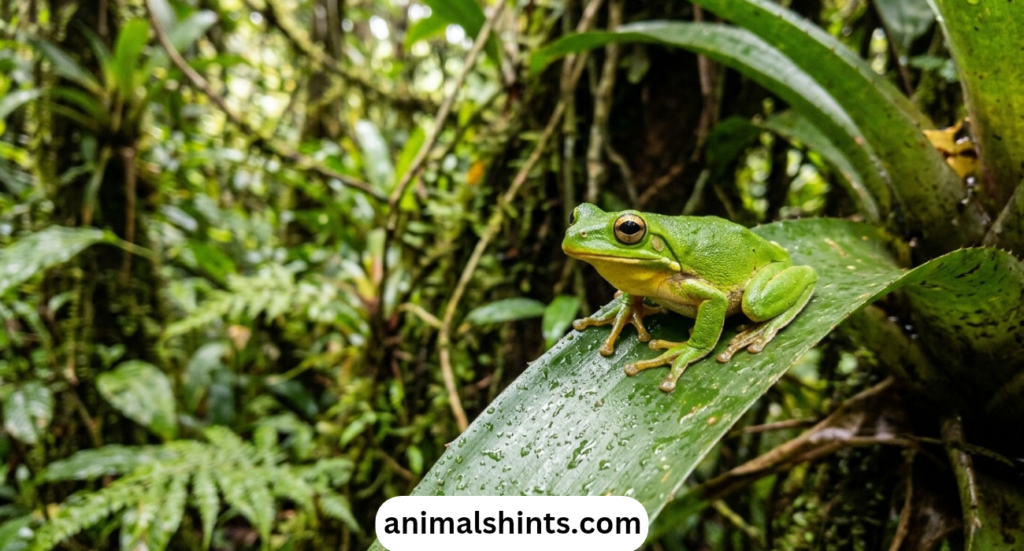
Tree frogs are masters of their arboreal domain. They have remarkably large eyes for their size. These arboreal animals use their oversized peepers to spot predators lurking among leaves. The visual acuity in animals like the tree frog is impressive. They can catch the slightest movement of prey or potential mates.
The red-eyed tree frog is a classic example. Its bright red eyes and green body are striking. The animal camouflage is interesting. The frog’s eye coloration often mirrors its vibrant skin. When perched on a green leaf, its eyes seem to vanish. This makes it harder for predators to focus on them.
Adaptation: Tree frogs have nictitating membranes. These are like clear eyelids. They allow the frog to see even with its eyes closed. This helps them wake up quickly if a predator approaches.
Sphynx Cat
The Sphynx cat is a fascinating big eyed animal. It is known for its hairless body and large, expressive eyes. The contrast between the bare skin and oversized eyes gives it an almost otherworldly appearance. These eyes hint at the cat’s playful personality.
Sphynx cats are known for their curiosity. They are often escape artists in search of adventure. Their animal vision systems are similar to other cats. Their large eyes give them an enhanced ability to track movement. This makes them keen hunters.
Temperament: They are very sociable and friendly. This makes them one of the most popular exotic pets. They are agile and need a lot of attention.
Aye-aye
The aye-aye is one of the strangest Madagascar wildlife species. This unique primate has oversized eyes adapted for nocturnal life. The animal classification places it among the lemurs. But it looks very different. Its large, round eyes help it navigate dense forests in the dark.
The aye-aye uses a specialized foraging technique. This is called percussive foraging. It taps on tree trunks with an elongated middle finger. Its keen eyesight helps it locate insects hiding beneath the bark. This shows a deep connection between physical traits and animal behavior.
Conservation: The aye-aye is endangered. Deforestation is a major threat. Conservation efforts in Madagascar are vital for its survival.
Giant Squid
The giant squid is an elusive inhabitant of the deep ocean. It boasts eyes nearly the size of basketballs. This is an astounding adaptation for life in the abyss. These massive eyes help the marine biology specimen spot prey from great distances. They are also good at detecting bioluminescence. This is the natural glow emitted by many marine animals.
Researchers believe this eye size is an evolutionary necessity. The larger eyes can gather more scant light. This makes it possible to identify threats and opportunities. This adaptation is mirrored in other deep-sea creatures. It highlights a fascinating evolutionary adaptation.
Record: The giant squid has the largest eyes of any living creature. They can measure over twenty-seven centimeters in diameter.
Swordfish
The swordfish is known for its elongated bill. It also has remarkably large eyes. These oversized orbs are finely tuned biological tools. They are positioned to capture as much light as possible. This helps the fish thrive in depths where sunlight barely penetrates.
The large eyes of the swordfish aid in depth perception. This allows them to execute swift, precise strikes. These are essential for catching agile prey. The unique structure provides a broader field of vision. This makes them aware of their surroundings. This predatory animal uses its animal vision to stay at the top of the food chain.
Unique Fact: Swordfish have a special heating system. Certain cells in their muscles produce heat. This stays concentrated around their eyes. It helps their vision in cold, deep water.
Owl
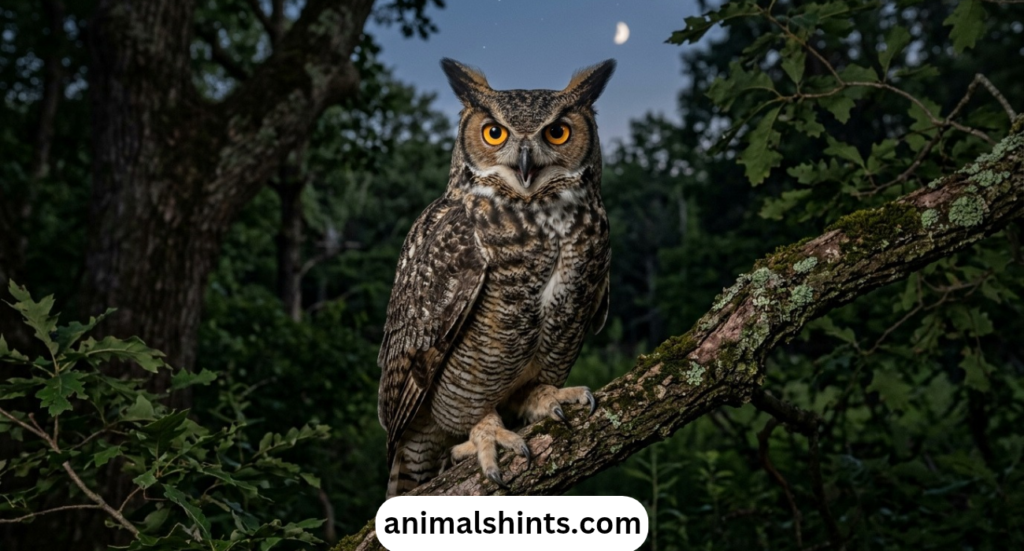
Owls are the quintessential big eyed animal. Their large, forward-facing eyes are built for seeing in the dark. They are a perfect example of nocturnal animals with specialized vision. Their eyes are fixed in their sockets. This means they cannot move their eyeballs. Instead, they turn their entire heads up to two hundred seventy degrees.
The rich number of rod cells in an owl’s retina gives it excellent night vision. This makes them formidable predatory animals. Their animal vision systems provide strong depth perception. This is crucial for hunting in low-light conditions. The great horned owl has eyes that can make up to five percent of their body weight.
Behavior: Owls are skilled nighttime hunters. Their eyes are their main tool for finding prey. They are an important part of the food chain dynamics.
Tarsier
The tarsier is a small primate native to Southeast Asia. It is renowned for its strikingly large eyes. These can measure over sixteen millimeters in diameter. They are one of the largest relative to body size in the animal kingdom. The tarsier holds the record for the largest eye-to-body ratio of any mammal.
These colossal peepers provide crucial adaptations for their nocturnal lifestyle. They have a keen ability to see in low light. This allows them to hunt insects and small vertebrates at night. Their brains have very large visual cortexes. They also cannot move their eyes. They swivel their heads one hundred eighty degrees.
Threats: Habitat loss is the biggest threat. The illegal pet trade also puts pressure on their populations. They are not good pets due to their nature.
Read also: 25 skinny animals
Chameleon
Chameleons are a marvel of evolutionary adaptations. They have some of the largest eyes in proportion to their body size. The animal anatomy of their eyes is unique. They can move their eyes independently. This allows them to have a panoramic view of their surroundings.
This independent movement helps them spot predators and prey. It enhances their survival in the wild. They can look in two directions at the same time. This is a key part of their hunting abilities. Their vision is also crucial for communication. Subtle eye movements can convey their mood to other chameleons.
Vision: They have three hundred sixty degree vision and can even see ultraviolet light. They are one of the reptiles with large eyes.
Lemur
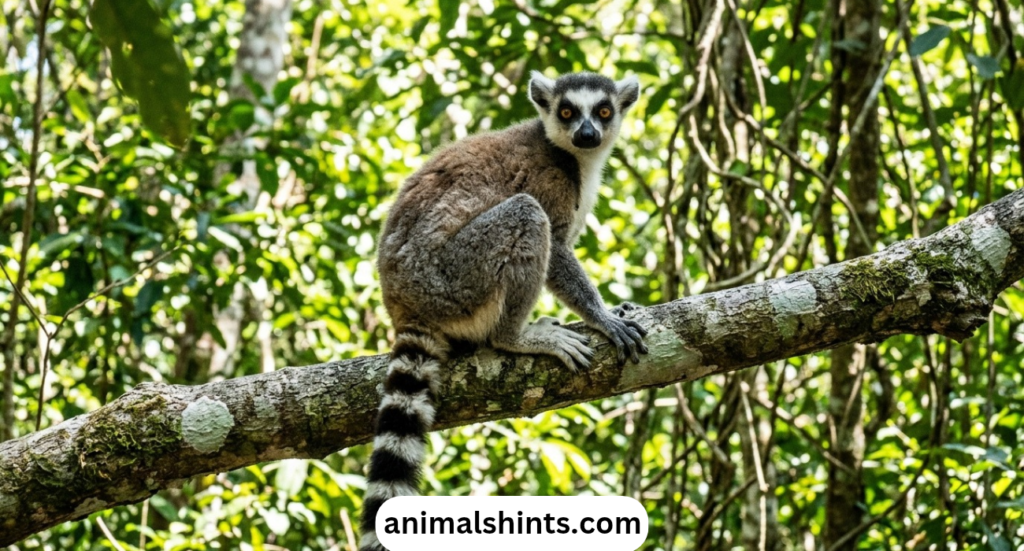
Lemurs are enchanting primates native to Madagascar. They are renowned for their enormous, expressive eyes. These features capture the essence of their playful nature. The large eyes serve a critical role in their nocturnal lifestyle. They have enhanced nocturnal vision. This helps them navigate the forest floor under moonlight.
The prominent, often golden irises create an almost hypnotic gaze. They communicate a wide range of emotions through eye contact. This shows the animal social behavior of these creatures. The lemur’s gaze is a reminder of the beauty of biodiversity. It highlights the importance of habitat conservation.
Social Structure: Lemurs are social creatures. They live in groups. Their large eyes help them stay aware of each other. This is an important part of how they survive.
Bushbaby
The bushbaby, or galago, is a fascinating nocturnal primate. It captivates with its enormous eyes. These large orbs make up almost half of its face. They are adapted perfectly for nighttime exploration. This gives them excellent night vision. They can see in near-complete darkness.
This extraordinary vision is paired with a keen sense of hearing. This allows them to locate insects, fruit, and small vertebrates. The bushbaby is an agile leaper. It can jump distances equivalent to ten times its body length. This helps it survive in a predator-laden environment.
Behavior: They are not highly social. They often prefer solitude. They rely on their exceptional night vision to thrive in the shadows.
Rabbit
Rabbits are celebrated for their large eyes. These oversized orbs serve a critical evolutionary purpose. They are positioned on the sides of their heads. This provides a panoramic view of their surroundings. They can detect predators from a distance. This is a key defensive mechanism.
The expressive nature of their eyes offers a glimpse into their emotional world. When relaxed, their eyes appear bright. When threatened, their pupils dilate. This ability to see in near-total darkness enhances their nocturnal vision. It grants them the advantage of twilight foraging. They are often kept as exotic pets.
Vision: Their eyes provide them with excellent peripheral vision. This is important for avoiding danger.
Pygmy Marmoset
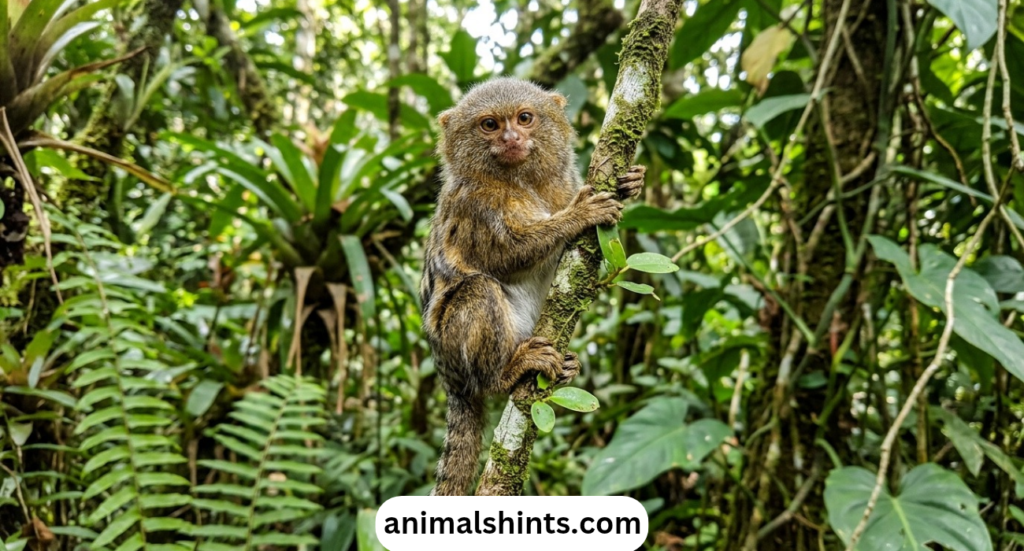
The pygmy marmoset is one of the smallest monkeys on earth. It captivates with its astonishingly large eyes. These expressive orbs are adapted for its rainforest habitat. The eyes help them see remarkably well in low light conditions. This is essential for foraging at dusk.
Their keen sight helps them spot insects and ripe fruits. They live in familial groups. They communicate through high-pitched calls. They use visual cues to coordinate activities. Their big eyes play a crucial role in bonding. They are often called “finger monkeys” because of their tiny size.
Fun Fact: They can jump up to sixteen or seventeen feet. This agility helps them navigate their environment.
Ostrich
The ostrich is the largest flightless bird in the world. It also has the largest eyes of any land animal. These colossal eyes measure about two inches in diameter. This is even bigger than its brain. Their size is a critical animal eye adaptation.
The eyes are positioned high on their heads. This gives them a panoramic view. They can spot predators from far away. They can see up to three and a half kilometers away. This is vital for survival in the open plains. Their vision is complemented by their speed. They can run at speeds over forty miles per hour.
Conservation: Ostriches are classed as least concern. But habitat loss and poaching are threats.
Potto
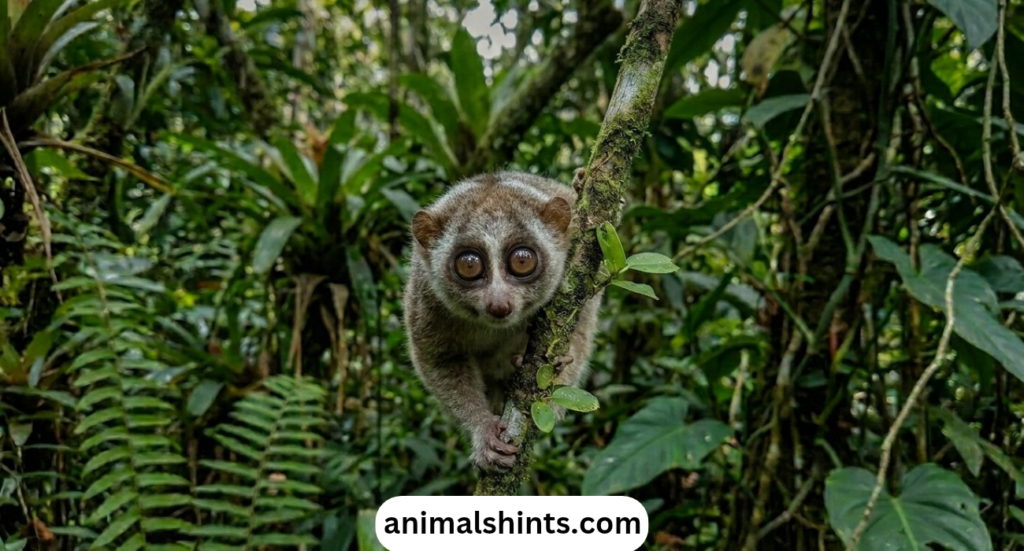
The potto is a slow-moving primate native to Central Africa. It belongs to the same family as lorises and angwantibos. This nocturnal primate has large eyes that help it navigate the dark forest canopy.
These big eyed animals have a deliberate, cautious way of moving through trees. Their large eyes are essential for spotting both predators and prey in low-light conditions. Unlike many social creatures, pottos are generally solitary.
Adaptation: Pottos have a special grip that allows them to hang from branches for long periods. Their large eyes help them stay alert to danger while they rest.
Mouse Lemur
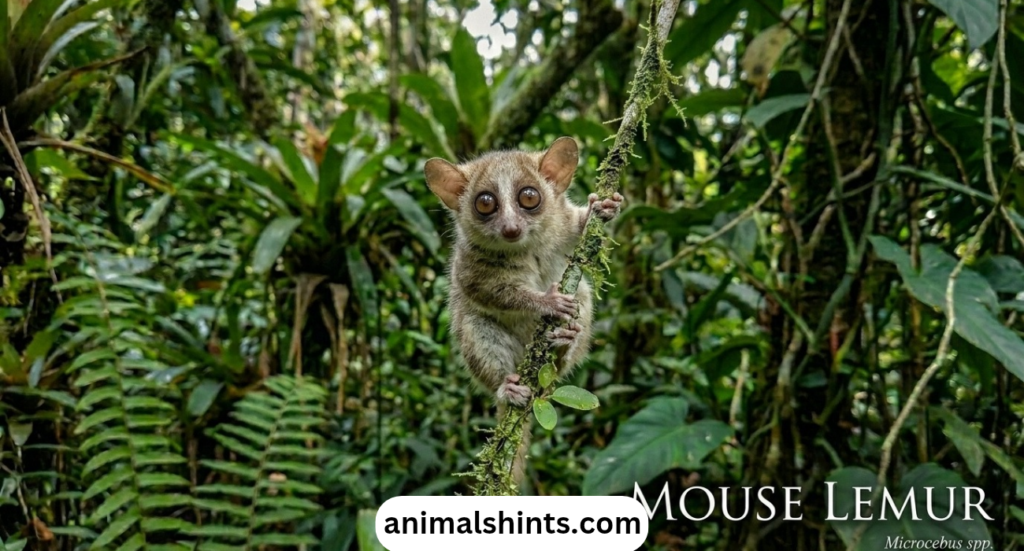
The mouse lemur is the world’s smallest primate. It weighs about as much as a chocolate bar. This tiny creature from Madagascar wildlife has enormous eyes for its body size.
These nocturnal animals have big eyes to gather light and see at night. Their oversized peepers are a crucial animal survival adaptation. They help these small primates navigate the dark forest and find food.
Appearance: Mouse lemurs are considered very cute, with their big eyes and large ears. Their animal vision allows them to be active at night while sleeping during the day.
Gecko
Geckos are a fascinating group of lizards. They have larger eyes on average than any other lizard group. This is related to their history as nocturnal animals.
Their large eyes are advantageous for night vision. Eye size in animals like geckos is greatest among terrestrial nocturnal species. This helps them compensate for a more limited field of vision on the ground.
Unique Feature: Geckos lack eyelids. Instead, they have a transparent covering over their eyes. They use their tongues to clean this covering.
Tokay Gecko
The tokay gecko is one of the largest gecko species. It can grow up to around thirty-five centimeters in length. This big eyed animal has large, prominent eyes with vertically-slit pupils.
These nocturnal primates (though a reptile, they share the nocturnal trait) are native to the rainforests of south and southeast Asia. Their large eyes help them hunt in the dark. They are arboreal animals that live in trees.
Appearance: Tokay geckos have a grayish body with reddish spots. They can change color to blend in with their surroundings. Their large eyes are a key part of their hunting ability.
How Big Eyes Help Animals Survive
Animal eye adaptations are essential for survival. Eye size in animals often reflects their ecological roles. Oversized eyes are not just for looks. They provide real advantages.
Nocturnal Vision
Nocturnal animals have evolved large eyes to gather more light. This allows them to see in the dark. The slow loris, tarsier, and owl all rely on this. They have a high number of rod cells in their retinas. This makes their animal vision excellent in low light.
Predator Detection
Large eyes are often positioned on the sides of the head. This provides a wide field of vision. Rabbits and ostriches use this to spot predators. The predator detection ability is a key survival strategy. It allows them to escape danger.
Hunting Abilities
Predatory animals often have large eyes for hunting. The giant squid and swordfish use theirs to see in the dark ocean. Chameleons use their eyes for depth perception. This helps them target prey with their long tongues.
Why Do Some Animals Have Big Eyes?
The size of an animal’s eyes is directly linked to its environment and lifestyle. Nocturnal animals have evolved large eyes to capture more light in darkness. This animal eye adaptation allows them to see clearly when most other creatures are asleep. Their oversized peepers contain more rod cells. These cells are sensitive to light and movement.
Predatory animals also benefit from large eyes. Their visual acuity in animals like owls and chameleons helps them judge distances accurately. This is crucial for catching fast-moving prey. Eye size in animals often determines their hunting success. Species with larger eyes tend to be better at spotting food from a distance.
See also: Seeing an owl spiritual meaning
How Big Eyes Support Survival in the Wild
Large eyes are not just for hunting. They also serve as powerful defensive mechanisms. Animals with big eyes positioned on the sides of their heads have a wider field of view. This helps them detect predators approaching from any direction. Rabbits and ostriches are perfect examples of this survival strategy.
Animal vision systems also play a role in communication. Many primate species use eye contact to express emotions. Lemurs and bushbabies convey mood through their gaze. This animal social behavior strengthens bonds within groups. It also helps them coordinate activities like foraging and warning each other of danger.
FAQ’s
What animals have large eyes?
Many animals have large eyes, including tarsiers, owls, giant squids, bush babies, and colugos. Large eyes help them see better in low-light conditions and spot predators or prey.
What animal has big eyes?
The tarsier is famous for having the biggest eyes relative to its body size. Each eye is about as large as its brain, giving it excellent night vision.
Which creature has large eyes?
The giant squid is one of the creatures with the largest eyes in the animal kingdom. Its eyes can grow up to 10–11 inches (25–28 cm) across, helping it detect movement in the deep ocean.
Which animal has 28,000 eyes?
The dragonfly is often said to have around 28,000 tiny eyes, but these are actually individual lenses called ommatidia within its two large compound eyes. This gives dragonflies nearly 360-degree vision and excellent motion detection.
Summary
Big eyes animals are some of the most interesting creatures on Earth. Their large eyes help them find food, avoid danger, and move safely in different places. Some live in dark forests, while others survive deep in the ocean. Every species uses its eyes in a special way that supports its daily life and helps it stay healthy.
Learning about big eyes animals helps us understand how nature creates amazing adaptations. From tiny tarsiers to giant squids, each animal has unique features and important roles in its habitat. Respecting wildlife and protecting natural environments will help these wonderful animals continue to live and thrive for future generations.