Mole on Nose Meaning: What a Mole on the Nose Means for Females and Males
Few marks draw the eye like a mole on nose skin: it sits at the exact center of the face, impossible to overlook, and the mole-reading traditions treat it accordingly. In Indian astrology it is read for passion, willpower and fortune; in Chinese face reading the nose is the Wealth Palace itself, so a mole there is read against money — how it is earned, and how well it is kept.
The systems behind those readings grew up independently of each other. Indian mole astrology, drawn from Samudrika Shastra, ties the nose to Mars — drive, desire, courage — and to prana, the breath of life that passes through it. Chinese face reading (Mian Xiang) maps the nose as the face’s central mountain, the seat of wealth and of the peak earning years. Because the systems developed apart, they agree that a nose mole matters — but not always on whether it is lucky, and this page flags the disagreements where they happen, including the Chinese charts that read the very same tip mole the opposite way.
Below you will find the traditions’ own account first: the nine spiritual meanings of a mole on the nose, the female and male readings side by side, and an area-by-area guide — tip, bridge, right side, left side and nostril. After that comes what Chinese face reading maps onto the nose itself, the honest medical explanation of what a nose mole actually is, what to know before removing one, and the places where the traditions flatly contradict each other.

What Does a Mole on the Nose Represent Astrologically and Spiritually?
Start with the feature itself. The nose is the center of the face — the part that enters a room first — and every mole-reading system reads the mark through the feature it sits on. A mole here is therefore read, across systems, for self-presentation: pride, intuition, and how a person puts themselves into the world.
In astrology, the nose is linked to Mars, the planet of action, courage and energy. Mars governs the ability to assert yourself and pursue what you want, and a mole on this area is read as amplifying Mars in both directions — the fiery confidence and the impulsive tendencies together. Samudrika Shastra, the Indian science of bodily signs, reads nose moles among its marks of character, the same system that reads a twitching eye among its bodily omens, as our guide to the left eye twitching spiritual meaning explains.
From a spiritual viewpoint, the nose is also related to prana, the life-force energy carried on the breath that sustains both the physical and the subtle body. A mole on the nose is therefore read as the sign of a soul that thrives on passion, independence and vitality — someone who lives intensely, feels deeply, and influences the people around them through charisma or sheer presence. What refines the message, in all of these systems, is placement and side: which part of the nose, and — in the Indian readings — whether the bearer is female or male. In some traditions the mark is an auspicious sign of luck and sensuality; in others it is read for emotional restlessness or material desires. Both registers run through the meanings below.
What a Mole on the Nose Actually Is: The Medical Explanation
Before the symbolism goes further, the biology — because a nose mole sits on the most sun-exposed point of the whole face, and that makes the medical facts genuinely matter here. Medically, a mole (a nevus) is an ordinary skin growth: Mayo Clinic explains that moles form when melanocytes, the cells that produce melanin — the pigment that gives skin its color — grow in clusters instead of spreading out evenly. Most people have between 10 and 40 moles, most of them appearing during childhood and adolescence, and a typical mole is round or oval and smaller than 1/4 inch (about 6 mm) across. A nose mole is the same growth in a sunnier postcode: on the bridge, the tip or the wing, it is a nevus like any other, and most stay harmless for life.

The nose-specific caution is sunlight. The nose projects out into the sun all day, every day, and no other part of the face collects more of it across a lifetime. Dermatology sources are blunt about what follows: basal cell carcinoma is the most common skin cancer of all (the Skin Cancer Foundation calls it the most frequently occurring form of skin cancer), and the nose is its single most common site. Squamous cell carcinoma, the second most common skin cancer, also favors sun-exposed skin like the nose, and melanoma — the one that can begin in a mole — is less common but the most serious of the three. A pearly or waxy bump on the nose, a sore that does not heal, and a patch that crusts or bleeds are the nose’s warning shapes, and none of them should be waited out.
Mayo Clinic’s ABCDE guide sums up the mole-specific checks: A is for asymmetrical shape, one half unlike the other; B is for border — irregular, notched or scalloped edges; C is for changes in color, or many colors in one mole; D is for diameter, new growth past 1/4 inch; and E is for evolving — any change in size, shape, color or height, or new symptoms such as itching or bleeding. A nose mole has one advantage over most: it sits in the center of the mirror, so checking it deliberately is easy. Mayo Clinic’s advice is plain: make an appointment with a doctor or dermatologist if a mole looks unusual, grows or otherwise changes. Health first, symbolism second — the rest of this page is symbolism.
9 Spiritual Meanings of Mole on the Nose
The mole-reading traditions attach a cluster of meanings to the nose, and the nine below are the set their sources return to again and again. They are given here as the traditions present them — chiefly Indian astrology, with Chinese and modern Western readings — as beliefs to reflect on, not as predictions.
1. You Are Special
A mole on the nose is widely read as a mark of uniqueness and distinction — a symbolic seal of individuality. Spiritually, it is said to set its bearer apart: a soul with heightened awareness or a special life path, someone who feels different from an early age and is drawn toward introspection, healing or creativity. The tradition reads the mark as a doorway between the inner world and the universe, attracting experiences that test emotional depth and intuition, and its verdict is warm: not a random spot, but a gift of potential — a person read as destined to bring light or awareness into their environment.
2. Sensitivity and Self-Awareness
The same mark is read for spiritual sensitivity: emotional intelligence, a high level of self-awareness, and an instinctive feel for the energy of a room. In this strand of the tradition the heightened awareness shows itself through premonitions, vivid dreams, or an intuitive understanding of other people’s emotions before anything is said. The framing is the breath — because the nose carries prana, a mole there is read as a sign of an energy body unusually receptive to subtle vibrations, sensitive even to crowded places, other people’s moods, or the phases of the moon. The reading carries its own built-in lesson: a soul that feels this much has to learn grounding — meditation, breathwork, or time in nature — to keep the sensitivity a gift rather than a weight.
3. Divine Purpose
In many traditions, a mole on the nose is seen as a sign of divine purpose or destiny: a life path that is not purely random but guided by higher forces. People with this mark are read as drawn toward meaningful work — healing professions, or leadership roles that influence others positively — and their lives as mission-oriented, where challenges and sudden redirections are part of the preparation rather than accidents. The same strand frames the mole as the visible reminder of unfinished work from past lifetimes, lessons the soul has returned to complete, usually linked to service, wisdom or compassion. Its practical advice is alignment: self-discipline, faith and gratitude, and attention to the moments of awakening when coincidence starts to look like timing.
4. Financial and Social Status Reflection
Placement does the talking in this reading. A mole on the nose has long been linked to financial and social fortune — how a person attracts wealth, recognition and influence. In some astrological traditions the tip of the nose represents quick financial gains, luck in business and social charm, while a mole on the side of the nose points the other way, toward instability or fluctuating prosperity and lessons in handling material energy wisely. Read as a mirror of the bearer’s relationship with abundance, a center or tip placement is said to denote good fortune, popularity and favorable opportunities, carried by a magnetic personality that draws attention naturally. The tradition’s own balance note follows immediately: a side or downward placement can reflect challenges with money management, superficiality, or dependence on external validation. The lesson underneath is one of value — wealth as energy that must flow rather than stagnate, and discernment between what glitters and what truly matters.
5. Passion and Desire
A mole on the nose has long been viewed as a symbol of passion, intensity and strong life-force energy. The nose is ruled by Mars in astrology — the planet of drive, desire and ambition — and a mole here is read as magnifying that influence into a personality that thrives on action, attraction and deep emotional experience. Such people are said to have magnetic charm: they stand out in a crowd not because they try to, but because their energy radiates confidence, and in relationships they love deeply and express affection openly. Some strands of the tradition frame the same fire as the awakening of kundalini energy, the internal force said to fuel both creativity and desire. The caution is the mirror image — passion unguided becomes impulsiveness and emotional intensity — so the reading’s lesson is channeling: desire steered into art, love or leadership becomes transformative; left unchecked, it becomes restlessness or conflict. Self-mastery is the point of the mark.
6. Impulsiveness and Wit
A mole on the tip of the nose, specifically, is read for quick thinking, humor and impulsive tendencies: a person who acts from intuition rather than overanalyzing, witty and spontaneous, able to decide on the spot — sometimes at the cost of long-term planning. Spiritually, this placement reflects a soul that learns through experience rather than theory, jumping in headfirst and collecting its lessons by trial and error, which builds both resilience and a sharp sense of timing. Astrological interpretations add financial luck and playful energy to the tip mole, alongside a tendency to lose focus in bursts of creativity followed by restlessness. The growth note is balance, not suppression: wit and charm open doors, and grounding habits like journaling or meditation keep the spontaneity pointed at outcomes the person actually wants.
7. Emotional and Social Challenges
A mole on the side of the nose is read more soberly: emotional sensitivity, and struggles in social or romantic relationships — challenges with trust, jealousy or communication, felt deeply but not always expressed clearly, which is where the misunderstandings come from. Spiritually, the placement is framed as karmic lessons around attachment and emotional boundaries: learning to love without losing yourself, or to give without keeping score. Mole astrology, as the tradition’s sources present it, also ties the side placement to financial ups and downs, often traced to emotional decisions or misplaced trust, in a person who is generous but easily influenced by other people’s opinions. The destination of the reading is emotional independence — honor the feelings, but do not be governed by them — with peace and stability in both relationships and finances said to follow the balance.
8. Strong Willpower and Charm
A mole on the nose is also a powerful symbol of inner strength and determination: someone with a strong will who rarely gives up once committed to a goal. The charm that comes with it is part of the same reading — a natural magnetism that draws others in and earns admiration or authority without being chased. Spiritually, the mark reflects a soul born to influence and inspire: the energy of Mars supplying confidence and drive, the magnetism making its bearer an effective leader or motivator. The challenge named by the tradition is ego — learning to lead with compassion rather than control. Luck, leadership and self-belief are the summary, and the closing lesson is the balance between power and humility: true charm, in this reading, comes from authenticity, and strength is meant to be used to uplift others.
9. Relationship and Marital Implications
In Chinese face reading, the area around the nose tip and nostrils is associated with romantic life, fidelity and long-term relationships, so a mole in this region is read for marriage and partnerships. According to Chinese facial mole reading, a mole at the lower end of the nose tip can indicate multiple romantic experiences, or even more than one marriage — strong attraction energy, sometimes producing complex relationships shaped by passion or desire. The same placement is read for financial fluctuations linked to relationships: a love life that affects career or wealth, emotional and material energies pulling on each other. Spiritually, the reminder is harmony between the heart and material life — passionate connections are the gift of the mark, and balance and self-control are what turn them into partnerships built on trust and growth.
Mole on the Nose Meanings for Females Versus Males (Astrology)
The astrological systems split the nose mole’s reading by gender, and the hinge is Mars: since Mars rules masculine energy in these systems, a mole on the nose in males is read as enhancing assertiveness and ambition directly. In females, the same mark is read as introducing a bold, dynamic energy that can challenge traditional expectations — and attract attention and admiration in equal measure.
For Females:
A mole on the nose for females typically reflects confidence, sensual charm and independence. Such women are known in the tradition for strong opinions, emotional depth and magnetism, and the spiritual gloss is a soul learning to balance passion with patience. They are said to attract admiration easily — and, by the same token, to meet jealousy or misunderstandings because of the strength of their presence. The mole can also suggest a karmic link with self-expression: learning to speak the truth without fear of rejection.
For Males:
For males, a mole on the nose represents drive, charisma and worldly success — natural leaders, in the tradition’s telling, driven by ambition and a thirst for achievement. Spiritually, the lesson assigned to them is mastering the ego: learning to act with wisdom rather than impulse. They are also read for fluctuations in luck, especially in love or business, since the fiery nature of Mars brings opportunity and risk through the same door.
The tradition’s own comparison runs:
| Aspect | Females | Males |
|---|---|---|
| Planetary Influence | Mars with Venus blend | Dominant Mars energy |
| Core Traits | Independent, emotionally expressive, charismatic | Ambitious, bold, energetic |
| Spiritual Focus | Balancing passion with peace | Channeling power wisely |
| Challenges | Emotional over-sensitivity, impatience | Impulsiveness, pride |
| Symbol of Luck | Social magnetism, popularity | Financial growth, leadership |
Spiritual Meanings of Mole on Different Areas of the Nose
Zoom in and each small area of the nose carries its own reading. This guide stays on the nose; three sibling guides go deep on their own ground — the whole face, placement by placement, in our mole placement meaning guide, the eye region in our mole on eyelid meaning guide, and the ear in our left ear mole meaning female guide.
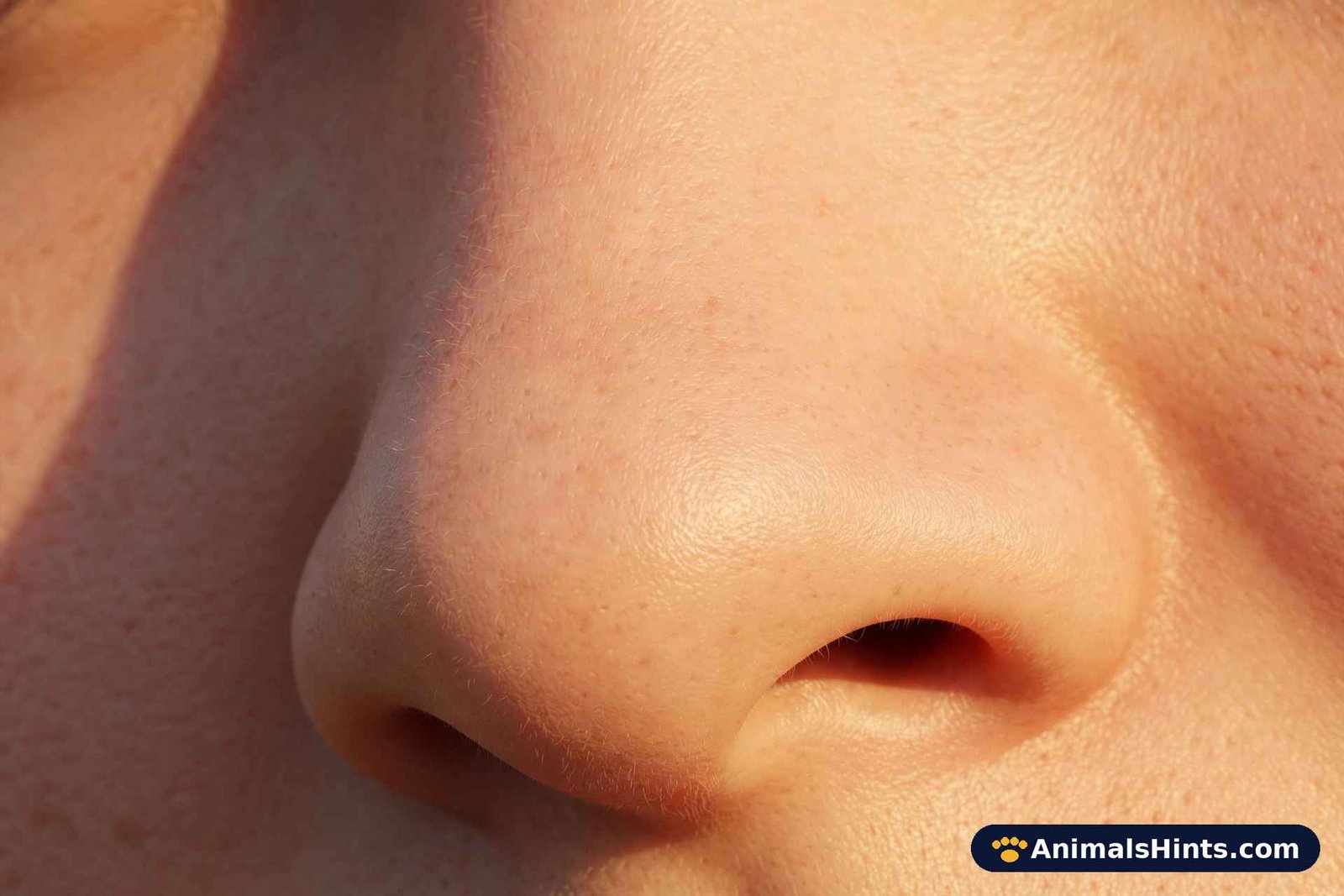
Mole on the Tip of the Nose
The most visible and intense position on the nose. It reflects strong desires and enthusiasm for life: people with this mark often seek excitement and adventure. Spiritually, it suggests a soul learning to control impulses and direct its energy toward meaningful goals.
Mole on the Bridge of the Nose
A mole on the bridge symbolizes intuitive insight and spiritual awakening. It indicates someone deeply connected to their inner world, often guided by a higher sense of purpose. Such individuals may experience vivid dreams or spiritual experiences that shape their path.
Mole on the Right Side of the Nose
The right side is associated with yang energy, representing action and external pursuits. This position shows career success, social recognition and leadership abilities. However, the challenge lies in maintaining humility and emotional balance.
Mole on the Left Side of the Nose
This side connects with yin energy, representing emotions and intuition. People with this mark are sensitive, creative and spiritually inclined. They may be guided by compassion and intuition but sometimes struggle with mood swings or self-doubt.
Mole Below the Nose or Near the Nostril
Such a mole indicates material abundance and family-oriented blessings. It is considered auspicious, symbolizing stability and comfort. Spiritually it points to gratitude, generosity, and the need to enjoy earthly pleasures responsibly.
Cultural or Religious Interpretations
The broad systems each put their own frame around the same small mark:
- Chinese face reading (Mian Xiang): the nose is the “mountain of wealth,” symbolizing fortune, authority and status. A mole here usually signals prosperity and charm, though its meaning varies depending on the side and visibility.
- Indian astrology (Samudrika Shastra): a mole on the nose is tied to Mars and the fire element. It is a symbol of courage and magnetism, but it can also indicate strong desires that must be tamed through self-discipline. Women with this mark are often seen as captivating and independent, while men are perceived as bold but occasionally hot-tempered.
- Western interpretations: in medieval times, facial moles were sometimes interpreted as marks of magic or individuality, linking the person to mystical traits or heightened intuition.
Mole on the Nose in Chinese Face Reading (Mian Xiang)
Chinese face reading deserves a closer look here, because Mian Xiang does not read the nose as a symbol first — it reads it as terrain. The nose is the central mountain of the face, and it carries two of the system’s maps at once. Among the Five Officials — the five features that hold office — the nose is the Discerning Official, read for discrimination, judgment and standing. Among the Twelve Palaces, it is the Wealth Palace (Caibo Gong): the first place a practitioner looks when the question is money, governing the peak earning years of the forties and the whole question of material fortune.
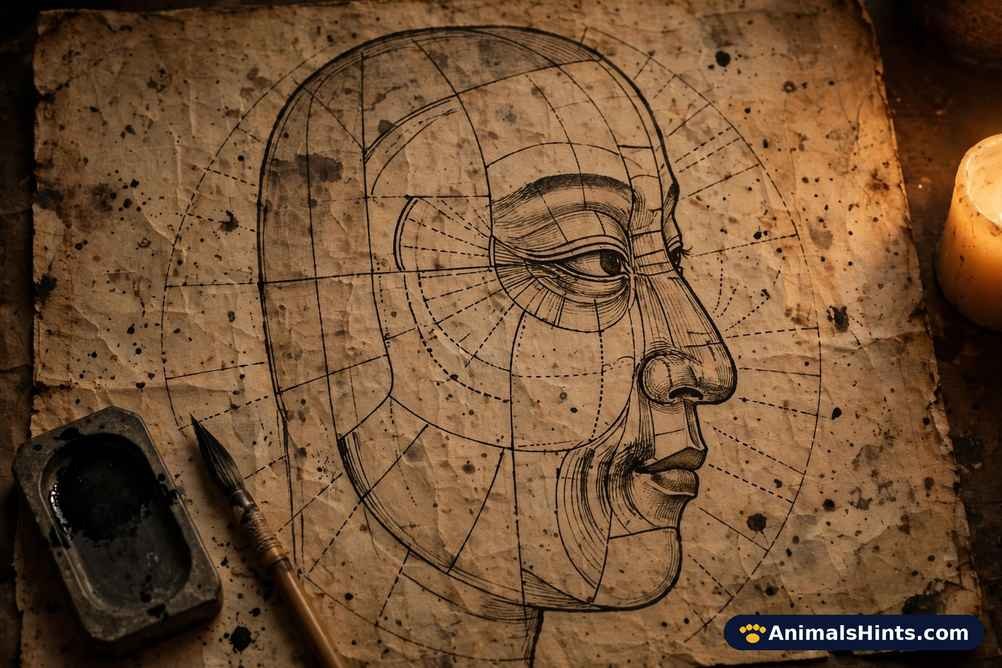
Within that palace, the parts divide the work. The tip of the nose (Zhunti) and the nostrils and wings (Lan Tai and Ting Wei) form the Wealth Palace proper, read for money-making capacity, cash flow and — above all — how wealth is held. The classical ideal is a full, rounded tip and firm wings that quietly conceal the nostrils: earning power with a treasury that keeps. Wings that flare and show the nostrils carry the opposite reading, money that comes in and leaks out. The bridge belongs to a different department: its root, between the eyes, is called Shan Gen — “mountain root” — and it forms the Health Palace (Ji E Gong), read for constitution and setbacks. So in the Chinese frame a bridge mole speaks first about health and the bumps in mid-life fortune’s flow, while a tip or wing mole speaks about money and how it is kept.
The Chinese mole charts then read a mole on the palace as a note written into that department — and here the charts genuinely split, which the verdict section below takes up in full. The widely used chart at YourChineseAstrology reads a mole on the nose tip as “profits pouring in from all sides,” good luck for wealth on a full nose, and a mole at the lower end of the tip as a sign of several marriages and divorces and bad luck for wealth; a mole on the wing it reads as financial loss outright, and a mole by the side of the nose as a drift-minded nature with unstable economics. Other charts, summarizing the classical Book of Moles tradition, hand the tip mole the opposite label — the “Lose Wealth” mole, living above one’s means and finding saving hard — while a mole tucked just beneath or beside the wings becomes its opposite number, the “Save Wealth” guard. What the Chinese sources agree on is the appearance rule this run’s face guide sets out: a round, raised, glossy mole in pure black or clear red is the auspicious form, and a hidden mole is generally read better than one on open display. It is honest to add that Mian Xiang is a family of charts rather than a single one — its manuals do not all draw the nose’s map identically, and no single chart is the whole doctrine.
Myths and Superstitions Associated with Mole on the Nose
Folklore wraps the nose mole in its oldest stories, and the sayings still circulating run like this:
- A mole on the nose tip is said to attract love and attention easily.
- In some traditions, it signals a quick temper or impulsive decisions.
- A mole on the bridge of the nose is thought to bring travel and change in life.
- If it is on the right side, it can indicate financial gains or authority.
- If it is on the left, it may reflect romantic challenges or emotional struggles.
- Ancient folklore often described such moles as marks of past-life intensity, where the soul carried forward unfinished desires.
Is It a Good Sign for Females and Males?
On the traditions’ own terms, the nose mole is best described as a sign of power rather than a simple blessing or warning: neither purely auspicious nor negative, it suggests a person with strong desires, confidence and influence, and its verdict depends on how the individual channels the energy behind it.
- For Females: this mark often brings attention, beauty and individuality. Many women with this feature naturally draw others toward them, reflecting both charm and strength. However, they may need to cultivate patience and emotional calmness to balance their fiery energy.
- For Males: it often leads to success, recognition and authority, but it also demands humility and emotional maturity. Spiritually, it is a reminder that true strength lies not in dominance but in self-control and empathy.
Is a Mole on the Nose Lucky or Unlucky? The Honest Answer
It depends which of the tradition’s own charts you open — and on the nose, the disagreement is not between cultures but inside the same ones, about the very same spots. That is worth stating plainly, because “is it lucky?” is the question most readers bring to this page.
Start with money, the nose’s home department. The astrological readings on this page give the tip mole quick financial gains, business luck and social charm. The Chinese charts — reading the same tip — split down the middle: one widely used chart calls it profits pouring in from all sides, while another strand of the same tradition labels the identical spot the “Lose Wealth” mole, the mark of someone who lives above their means and cannot hold savings. The competitor sources behind this page hold both verdicts at once without remarking on it: their fourth meaning promises the tip mole financial fortune and, two sentences later, warns the side mole of fluctuating prosperity — while their area guide reads the tip purely for desire and impulse control and never mentions money at all.
Romance splits the same way. The Chinese reading carried in the ninth meaning above takes a mole at the lower end of the tip as a sign of repeated marriages and love lives that disturb wealth; the same page’s other sections read the nose mole for charm, attraction and relationship success. One mark, two verdicts — because the underlying logic differs by chart: some readers treat a mole on a palace as an emphasis, power concentrated in that department, while others treat it as a blockage, a leak in exactly the place the palace governs.
That spread is itself the most useful fact here. What every tradition does agree on is the thread underneath: intensity. Passion, willpower, desire, money-salience — the nose mole is read loudly because the nose is read loudly, as the face’s center, its mountain of wealth, its organ of breath and pride. The luck verdict is supplied by whichever chart you open. Enjoy mole on nose readings as folklore and self-reflection, hold the shared thread — a strong, vivid, self-possessed nature — as the character sketch the traditions intend, and let the medical facts handle any nose mole that actually changes.
Can a Mole on the Nose Be Removed? What to Know First

Of all the moles people ask about removing, the nose mole tops the list — it is the one that cannot be ignored in the mirror, and appearance is the commonest reason people give. The removal itself is a routine minor procedure when there is a medical or cosmetic reason, and on the nose it belongs to a dermatologist, for two reasons that compound each other. First, examination comes before removal: a mole with any warning sign should be looked at properly first, and tissue can be sent for testing when a doctor wants certainty — Cancer Research UK’s nurse guidance is explicit that you should not cut moles off yourself, because if a growth turns out to be cancerous, part of it may remain that should have been fully removed. Second, the nose is unforgiving ground for a scar: the skin is tight, the contours are the center of the face, and a home attempt — removal creams, freezing kits, or cutting — risks infection and a permanent mark in the one place it shows most, quite apart from the cancer risk.
The traditions, for their part, disagree about removal for luck — some readers hold that removing an unlucky mole removes its influence, others that the mark is not the mechanism — and no medical authority endorses removal for luck in either direction. The workable order is simple: decide with the dermatologist who examined the mole, for reasons of health or appearance that are yours. A fortune chart should not make the decision, and a checked mole with a clean, planned removal is easy to have, in that order.
Final Thoughts
Read across Indian astrology, Chinese face reading and the Western tradition, a mole on the nose is a mark on the face’s loudest feature, and every system reads it that way: for passion, for willpower, for the luck — good and bad — that gathers around money and desire. The tip, the bridge, the sides and the nostril each add their own verse, the gender readings split along Mars lines, and the systems disagree with each other, and occasionally with themselves, often enough that the wise way to hold a nose mole’s meaning is as inherited belief: rich in cultural detail, worth enjoying as a prompt for reflection rather than a forecast.
Keep the folklore in that place and it earns its keep. But let the last word belong to the one nose-mole reading that is not folklore at all: the nose takes sun all day and skin cancers favor it above every other site, so if a mole there changes, grows, itches or bleeds — or a sore on the nose simply will not heal — skip the charts and read a reliable overview of melanoma, the skin cancer that can begin in a mole, and let a dermatologist, not a destiny map, decide what it means.
FAQs
What is the spiritual meaning of a mole on the nose?
Traditions read it as intuition, independence and personal power: the nose is tied to sensing and self-presentation, so its mole is read for strong will, perceptiveness and leadership. The exact reading depends on the spot — tip, bridge, side or nostril.
Does the meaning of a nose mole differ for females and males?
In the astrological readings, yes: females get charm, intuition and expressive independence; males get drive, leadership and financial ambition. Many modern readings weigh the mole’s position on the nose more heavily than gender.
What does a mole on the tip of the nose mean spiritually?
The tip is the most read spot on the nose: quick wit, strong desire and financial salience. Astrology reads it for quick gains and charm; some Chinese charts instead call it the “Lose Wealth” spot — money that arrives and slips away.
Are nose moles considered lucky or unlucky spiritually?
Most traditions land on lucky — success, recognition, strong intuition. The honest exception is the Chinese wealth reading, where a tip or wing mole can be read as wealth leaking. The verdict follows the chart, not the mole.