Belly Button Piercing Spiritual Meaning: Confidence, Chakras and the Real Record
People look up the belly button piercing spiritual meaning because this is the one piercing that sits on a scar everybody already carries: the mark of the cord that fed you before birth. Modern spiritual writing loads that spot with confidence, feminine power and rebirth — and some of what it claims can be checked, because the navel has a real mythology, a real anatomy and a surprisingly short documented piercing history.
Checked, the record splits cleanly in two. The navel itself is genuinely ancient as a symbol — Hindu tradition really does grow the creator’s lotus out of it. The piercing is not ancient at all: the famous Egyptian story behind it traces to a twentieth-century pamphlet, and the documented practice is a 1970s subculture habit that went mainstream in 1993.
What follows keeps those layers apart: the nine standard meanings in the genre’s sequence, the culture claims tested one by one, the types and the gender readings — with the bodily account put near the front, because a navel piercing is also a slow-healing wound through moving skin, and the aftercare record deserves the same honesty as the symbolism.
What Does a Belly Button Piercing or Navel Piercing Symbolize?
Begin at the spot itself, because every reading on this page grows out of it. The belly button is the scar of the umbilical cord — the place where each of us was once physically joined to our mother and fed through that join. Spiritual writers build directly on that fact: pierce or decorate the scar, the reasoning runs, and you are making a statement at the exact point where your life began — reclaiming it, honouring it, or marking the moment you took charge of the story that started there.
From that root, the standard symbolism branches three ways. The first is identity: the piercing as rebirth or renewed confidence, a visible decision taken after a change of life. The second is the body itself: sexuality, fertility and creative energy, read off the navel’s closeness to the womb. The third is energy: the navel’s neighbourhood is claimed by the chakra system, and a piercing there is said to stir or balance the centre that governs will and self-worth.
One honesty note belongs at the top, because the genre itself cannot keep its map straight. The competitor tradition behind this topic assigns the navel to the sacral chakra in one paragraph and to the solar plexus chakra in the next — its opening lines name the sacral centre, its symbolism section names the solar plexus, and its meanings list uses each in turn. Those are two different centres in the system being invoked: in the classical Sanskrit text, the Sat-Chakra-Nirupana, Manipura — the centre English writers call the solar plexus chakra — sits at the navel’s own root, while Svadhisthana, the sacral centre, is placed lower, at the level of the sacrum, below the navel. Modern charts move Manipura upward, to the soft spot under the breastbone. So a navel piercing sits exactly at the classical Manipura address, just above the sacral centre, and below the modern solar-plexus address — which is why conscientious pages name the classical placement and careless ones alternate. This article uses the classical placement and says so wherever the chakra frame appears.
The Navel Itself: Anatomy, Placement and the Healing Record
The physical facts first, in the order a piercer or a clinician would give them. The navel — clinically, the umbilicus — is a scar, not an opening. It is the closed remnant left where the umbilical cord attached before birth; the cord itself carried oxygen and nourishment from the placenta, and once it was cut, the stump dried, separated and healed into the dimple or small protrusion each person keeps. Its position is steadier than most body landmarks: it typically sits at the level of the junction between the third and fourth lumbar vertebrae, and clinicians use it to divide the abdomen into quadrants. It has no function after birth — which is precisely why its meanings are all assigned rather than discovered.

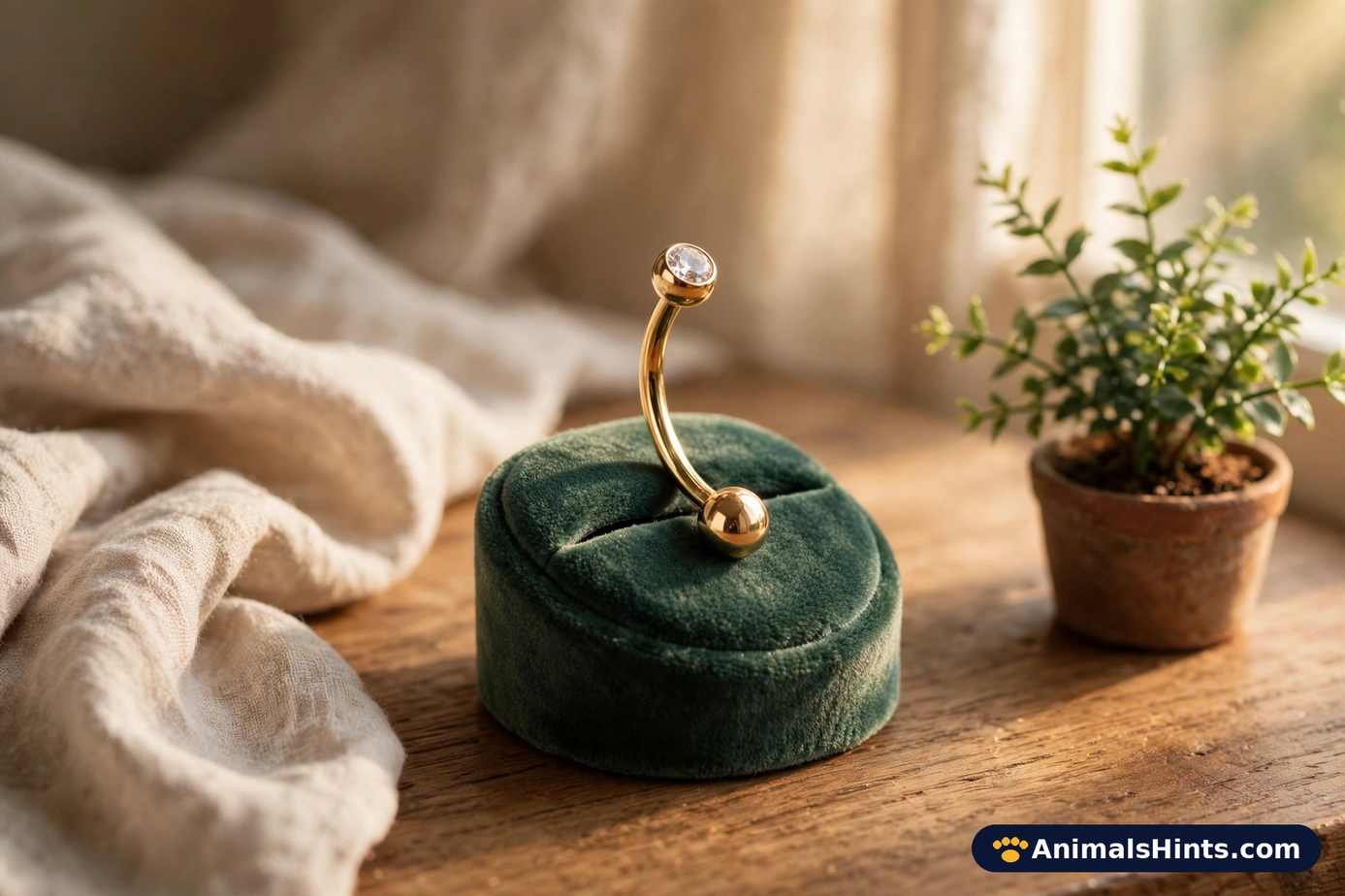
A navel piercing, despite the name, does not usually pass through the scar itself. It passes through the rim of skin around the navel — most often the upper rim — and the jewellery, usually a curved barbell (the trade’s standard is 14 gauge, roughly 1.6 mm thick, in titanium, medical-grade stainless steel, 14-karat gold or niobium, per WebMD’s account), sits with one end inside the navel’s hollow. Variants through the lower rim and the sides exist and are covered in the types section below; a true piercing of a protruding outie is a rare specialist case, and scar tissue itself should not be pierced casually.
Then the part the symbolism pages skip: this is one of the slowest piercings on the body to heal. The reference range is six to twelve months, and some accounts run longer, for a mechanical reason — the piercing sits in skin that bends, twists and rubs against waistbands all day, every day. WebMD’s health account lists what can go wrong across that long window: infection (the navel’s fold shelters bacteria readily), tearing if the jewellery catches, allergic reaction — most often to nickel in cheaper jewellery — thick keloid scarring, and migration or outright rejection, where the body slowly pushes the jewellery out as it would a splinter. None of that makes the piercing a bad idea; it makes it a commitment, and the practical section near the end sets out the published aftercare that keeps the odds favourable.
Keep one neighbouring topic separate while you read, because the search results merge them constantly: a piercing is a deliberate adornment of the navel, while the belly button itching spiritual meaning covered elsewhere on this site is a sensation that arrives uninvited, with its own quite different omen record. The two pages share an address and nothing else — no itch reading transfers to a piercing, and no piercing meaning explains an itch.
9 Spiritual Meanings of Belly Button Piercing
Below are the nine readings in the sequence the modern spiritual genre gives them. Each is a belief, credited to that genre and held at that strength; where a reading leans on something checkable — a chakra placement, a psychology study, an ancient custom — the check is printed with it.
1. Enhances Fertility and S*xual Energy
The fertility reading, kept first in the genre’s order and spelled as its headings spell it. The reasoning is anatomical symbolism: the navel is the visible remainder of the cord, the cord joins a child to the womb, so jewellery at that point is read as honouring the life-giving channel — awakening sensual and creative energy, in the genre’s phrase, and aligning the wearer with the sacral chakra, Svadhisthana, the centre the system assigns to intimacy, emotion and reproduction. The placement note from the opening section applies: Svadhisthana sits below the navel in both the classical text and the modern charts, so this reading works by neighbourhood rather than by exact address. As a claim about energy it is the genre’s to make; as a claim about fertility itself there is nothing behind it, and no fetched source pretends otherwise.
2. Symbol of Femininity and Beauty
The beauty reading: for many women the piercing is a declaration — the navel adorned rather than hidden, the body’s centre treated as worth decorating. The genre frames beauty here as radiance rather than decoration, the outward sign of self-acceptance, and pictures the ring as a small crown set at the body’s middle. Held at its proper strength, this is a fair description of why people actually choose the piercing, and the one piece of research on this page supports the motive if not the metaphysics: the 2022 study discussed under the women’s section below found body-image enhancement to be women’s primary stated reason for getting a navel piercing. The genre’s further step — that adornments of this spot were spiritual emblems in ancient tradition — is examined in the history section, where it does not survive checking.
3. Represents Transformation and Personal Growth
The turning-point reading, and the one wearers themselves report most plainly: the piercing chosen at a hinge moment — after a breakup, a move, a recovery, a decision — as a marker that the old chapter is closed. The genre’s symbolism writes itself here: the navel was your first connection, made for you before you could choose anything; piercing it is presented as the first time you author that spot yourself, a small initiation into the next phase. Marking the body to mark a life transition is a genuinely widespread human pattern, documented across many cultures for many practices; that this particular piercing carries an ancient initiation pedigree is a different claim, and it is the one the record refuses, as the culture section shows.
4. Connection to Divine Feminine Energy
The goddess reading: the navel cast as the home of divine feminine energy — intuition, creation, nurture — and the piercing as a way of honouring that current, or waking to it. The genre ties the centre to the cycles of creation and renewal and reads the jewellery as an acknowledgment worn on the body. One strand underneath it is solid: the navel genuinely does carry a creation story in a major tradition, the Hindu account in which the creator Brahma is born from a lotus growing out of Vishnu’s navel — set out with its sources in the culture section. What that story sanctifies is the navel. No fetched text extends it to piercing the navel, and this article does not extend it either; the divine-feminine piercing reading is modern spiritual writing building, openly or not, on a real and beautiful piece of mythology about the unpierced spot.
5. A Celebration of the Female Form
The body-positivity reading: the piercing as honouring the female form as sacred — curves honoured rather than corrected, the body treated, in the genre’s recurring phrase, as a temple. The competitor tradition supports this meaning with a picture of ancient dancers, priestesses and healers decorating their navels as empowerment. That picture needs its label: no historical record of navel decoration by priestesses or healers turned up in the sources consulted for this article, and the history section shows the one specific ancient claim in circulation collapsing entirely. Stripped of the borrowed antiquity, the meaning still stands as what it verifiably is — a contemporary body-positivity practice, with a contemporary study behind its psychology: the 2022 PLOS ONE research the competitor itself cites found that a navel piercing can significantly improve women’s bodily self-perception, and that the piercing becomes integrated into self-image as an expression of care. Modern evidence for a modern meaning; nothing older is claimed here.
6. A Portal to the Spiritual Realm
The gateway reading: the navel pictured as a portal between the physical and the unseen — once a literal bridge, in the womb, between two states of existence — and the piercing read as opening or honouring that channel, the jewellery serving as a talisman or antenna for intuition. This is the list’s most purely metaphorical entry, and it is printed as metaphor. The one documented “navel of the world” complex in the record is about places, not piercings: several cultures have named a sacred spot the world’s navel — the Greek omphalos at Delphi is the famous case — which shows how naturally the centre-symbolism comes to human beings, without supplying any tradition of piercing one’s own navel as a gateway. Believers who hold this reading hold a modern one, and there is no shame in that, provided nobody sells it as an old one.
7. Enhances Body Image and Self-Perception
The psychological reading, and uniquely in this list, the one with a study behind it. The genre claims that consciously chosen body modification can raise self-esteem and reshape how a person sees their own body — and on this specific piercing, research agrees with the direction of the claim. Coleman and Gillmeister’s 2022 study in PLOS ONE, surveying women with navel piercings, found that enhancing body image was the primary motivation for getting pierced, and that the piercing in turn significantly improved bodily self-perception, becoming strongly and beneficially integrated into the wearers’ self-image. That is a finding about perception, not about spirit, and this article files it exactly there: meaning 7 is the genre’s spiritual framing of a documented psychological effect — the framing is theirs, the effect is measured.
8. Protection and Energy Balance
The shield reading: piercing certain points is said, in various modern teachings, to influence energy flow and guard against negative vibrations, and the navel — at the classical Manipura address, the centre of will — is cast as a sensitive point worth sealing. Metal at the centre is read as grounding: an anchor for prana, the life energy of the yogic frame, steadying emotion and keeping the wearer’s force contained. Two labels belong on it. The chakra half is internally consistent — Manipura really is the will centre, and its classical seat really is the navel. The protection half — jewellery as a seal against outside disturbance — is contemporary practitioner teaching; no fetched classical or folk source assigns a navel piercing a protective function, and the famous protective-piercing stories told online belong to the same pamphlet mythology dismantled in the history section.
9. Honoring the Body as Sacred
The closing reading, and the genre’s gentlest: the piercing as a small ceremony of self-honour — gratitude addressed to the body at the site of its first nourishment, an affirmation that the physical form is not an obstacle to a spiritual life but its vessel. Nothing in this meaning needs an ancient pedigree, and none is claimed for it here: it is a present-day devotional framing of a present-day act, and it loses nothing by being dated honestly. If any entry on this list can be practised exactly as written without believing anything unverifiable, it is this one.
Religious and Cultural Significance
The competitor tradition’s four culture strands follow in his order, each carried only to the limit of what stands behind it — and on this topic the four split sharply: one is real mythology, one is a debunked pamphlet story, and two are attributions no fetched source could stand behind.
In Hinduism, the core claim checks out, and it is the strongest material on this page. Hindu tradition does treat the navel as a cosmic centre: in the Puranic accounts, Brahma the creator is born from a lotus that sprouts from the navel of the sleeping Vishnu — the Srimad-Bhagavatam (1.3.2) describes the lotus stem rising from the navel of Garbhodakasayi Vishnu with Brahma manifest upon it, and the Mahabharata’s Vana Parva tells the same birth, the sun-bright lotus springing from Hari’s navel as he sleeps. The navel as the womb of creation and the divine origin point is therefore a documented sacred image, two thousand years deep in retelling. What it documents is the navel’s sanctity — no Hindu text fetched for this article commends piercing it, and the step from “sacred centre” to “piercing meaning” is the modern genre’s step, labelled as such wherever this article takes it.
In ancient Egyptian culture, the competitor tradition claims that Egyptians of both sexes adorned their navels, that pharaohs held the navel a spiritual gate, and that only royals might decorate it. This is the page’s clearest correction. The Egyptian navel-piercing story — in its usual form, that only the pharaoh could pierce his navel, on pain of death for anyone else — is a documented modern invention: it originates with Doug Malloy, a central figure of the twentieth-century piercing movement, in his pamphlet Body & Genital Piercing in Brief, and continues to be reprinted despite the record. Other sources state the position flatly: there are no records to support a historical practice of navel piercing — no Egyptian art, mummy or text depicts or mentions it. Egyptians demonstrably loved adornment and did pierce ears; the navel chapter of that splendour was written in the 1970s, not the Bronze Age, and this article prints the competitor’s Egyptian strand only to correct it.
In some African and Polynesian tribes, the genre claims navel piercings and markings served as initiation — maturity, fertility, readiness for adult responsibility, alignment with ancestors. Initiation body practices are real and richly documented across both regions for other forms — scarification, tattooing, ear and lip work among them. For navel piercing specifically, no named people, text, collector or artefact was found behind the claim in any source fetched for this article. It is carried, therefore, at summary strength only: a modern attribution in search of a record, printed so readers can see the difference between it and the Hindu strand above, where names, texts and verses can actually be produced.
For Native American cultures, the genre claims the navel represents the centre of the world — grounding, balance, creation, motherhood — while conceding piercing itself was uncommon and the belly was adorned ceremonially instead. Centre-of-the-world symbolism is genuinely widespread in human religion, and “navel of the world” is a phrase several traditions apply to sacred places. But no specific nation’s teaching about the navel was verified behind this summary either, and a claim about hundreds of distinct nations, offered without one nation’s name, is a genre gesture rather than a tradition. Printed as such, and no further.
One gap belongs in this section rather than being papered over: scripture. No verse is quoted anywhere in this article, because no fetched source ties any scripture to navel piercing — the Bible, which does mention jewellery and even the uncut cord of a newborn, nowhere addresses piercing the navel, and no biblical meaning for it is offered here, following the discipline this series applies wherever a “biblical meaning” is searched for but does not exist.
Claimed History vs Documented History: What the Record Actually Shows
Because so much of this topic’s authority rests on a past it does not have, the two histories are set side by side here — the one the genre tells, and the one that can be documented.

The claimed history runs: pharaohs pierced their navels as a royal privilege; priestesses and dancers decorated theirs across the ancient world; tribes on several continents pierced navels at initiation; and the modern fashion is a revival of all of it. Of those four planks, not one is supported by a record that can be produced. The Egyptian plank is traced, by the piercing movement’s own historians, to Doug Malloy’s pamphlet — Malloy alleged, through his colleague Jim Ward’s later account, that navel piercing was popular among ancient Egyptian aristocrats and depicted in Egyptian statuary; the allegation has been reprinted ever since, and the statuary has never been produced. The priestess and tribal planks, as the culture section shows, arrive without names or sources. A history with no artefact, text or named witness on any plank is not a history; it is marketing that has been copied for fifty years.
The documented history is shorter, later and better evidenced. Piercing beyond the ears gathered subcultural momentum in the West after the Second World War; the navel piercing itself first became popular in the early 1970s, among the punk subculture then experimenting with piercing — and the first pierced navels, the record notes, most likely belonged to men, worn with plugs and barbells. Its mainstream moment is datable almost to the month: in 1993, models Christy Turlington and Naomi Campbell revealed pierced navels at a London fashion show, and the same year Aerosmith’s Cryin’ video showed Alicia Silverstone’s character being navel-pierced by piercer Paul King — the depiction credited with popularising the practice. Through the later 1990s, prominent wearers carried it into pop’s centre; a 2005 United Kingdom survey of 10,503 people found navel piercings the most common body-piercing site among respondents. It faded in the 2010s and has been revived in the 2020s by a younger generation of celebrities. Fifty documented years, against five thousand claimed ones — and the documented fifty are quite enough to explain every meaning in this article, all of which were written inside them.
Belly Button Piercing Meanings for Females and Males
The genre’s gender split follows, in its own arrangement — and here, unusually, one half of it can be checked against research.
For Women
For females, the tradition reads the piercing through feminine energy, sensuality and rebirth: chosen at transformation points — after a breakup, a life change, a spiritual awakening — it is read as reclaiming the body, embracing beauty, and honouring fertility and creative power at the body’s centre, with the divine-feminine framing of meaning 4 drawn around the womb. The checkable core of that paragraph is real. The 2022 PLOS ONE study of women with navel piercings found the wish to enhance body image came first among the wearers’ reasons, that self-perception significantly improved afterwards, and that the piercing became integrated into bodily self-image as an act of care — the researchers even record it helping to reduce self-harming thoughts in their sample. Transformation and reclaiming, in other words, are not just the genre’s story about women and this piercing; they are what the wearers studied actually reported, in psychology’s vocabulary rather than spirituality’s.
For Men
For males, the genre reads the same jewellery through confidence, strength and command of one’s own destiny: the navel’s chakra address is invoked — Manipura, the will centre — and the piercing is presented as a declaration of individuality, or of an inward awakening, rather than a fashion choice. History gives this section one dry footnote the genre rarely prints: on the documented record, the first navel piercings of the modern era most likely belonged to men, in the 1970s punk scene, before the 1990s made the piercing a predominantly female fashion. No equivalent body-image study of male wearers was located for this article, so the men’s meanings stand as genre framing alone — plausible as motives, unverified as findings, and labelled accordingly.
Types of Belly Button Piercings and Their Spiritual Meanings
The competitor tradition’s five types follow in his order, kept as the bold-lead paragraphs his page uses. The placements themselves are real — the reference record recognises upper, lower, double and side navel piercings — while the spiritual vibration assigned to each is the modern genre’s own scheme, and is printed as that.
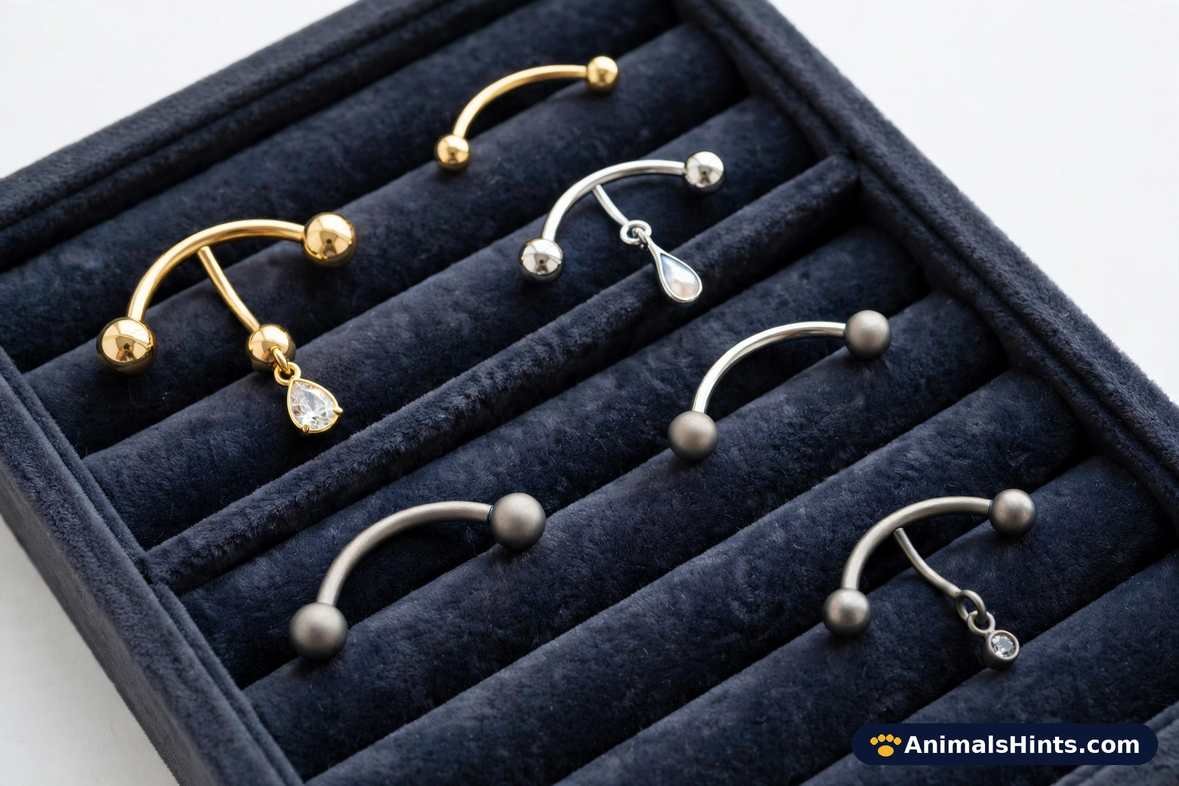
1. Upper Navel Piercing (Traditional Style) — the standard piercing, through the upper rim, and the genre’s balance-and-alignment type: a claimed connection between body and spiritual consciousness, set near the chakra centre and read as boosting confidence and personal power. The placement half is simple fact — this is the piercing most wearers have, done with a curved barbell worn until healing completes.
2. Lower Navel Piercing — through the lower rim, pointing the jewellery downward; the genre reads it toward fertility, creativity and grounded energy, a connection to earth and intuition. The reference record confirms the type is real and less common than the upper, often chosen when a larger piece of jewellery is wanted.
3. Double Navel Piercing (Top and Bottom) — both rims pierced, read by the genre as duality and harmony: light and dark, masculine and feminine, mind and body held in one frame, a state of wholeness. As jewellery it is simply the combination of the two piercings above, each with its own healing clock running.
4. Side Navel Piercing — through the left or right rim; the genre’s uniqueness type, chosen by those who value independence, and read as balancing emotional against rational energy. The record recognises side placements — usually done in pairs — without assigning them a temperament.
5. Inverse or Reverse Navel Piercing — the genre’s transformation type, associated with change, enlightenment and breaking from expectation. A placement note is owed here: in trade usage the inverse or reverse navel piercing is the lower-rim piercing of type 2 under another name, not a fifth distinct anatomy — his list counts one piercing twice, once by its position and once by its nickname. The symbolism differs between his two entries; the hole does not.
Spiritual Benefits of Having a Belly Button or Navel Piercing
The genre’s benefit list follows in his order, each benefit understood as a claimed effect within the spiritual frame — reported, as this whole article reports the frame, without endorsing the mechanism:
- Boosting confidence and self-expression
- Strengthening connection to divine feminine or masculine energy
- Encouraging spiritual growth and self-discovery
- Promoting balance and harmony in the Solar Plexus Chakra
- Attracting positive energy and emotional healing
Sorting the five by what stands behind them: the first has the study — confidence and self-perception genuinely improve for many wearers, on measured evidence. The fourth names a real centre at its classical address, though “balance” in a chakra is a claim inside the yogic frame, not a measurement outside it. The second, third and fifth are the frame describing its own hopes — growth, connection, healing as the genre conceives them — and they are worth exactly what a reader’s own tradition says they are worth. The genre also claims the metal itself conducts and amplifies energy, gold and silver especially; no fetched source outside practitioner writing supports a conductive claim, and it is entered here as practitioner belief, completing the list honestly rather than leaving the strongest claim unexamined.
Spiritual Claims and the Documented Record at a Glance
One table, so the whole topic can be taken in at once: what the genre claims, and what checking found. A claim can be meaningful and modern at the same time — the right-hand column grades its age and evidence, not its worth to the person wearing the ring.
| Claim | What the record shows |
|---|---|
| The navel is a sacred centre of creation | Documented — Brahma born from the lotus at Vishnu’s navel (Bhagavatam 1.3.2; Mahabharata, Vana Parva) |
| Pharaohs pierced their navels; commoners faced death | Modern myth — traced to Doug Malloy’s pamphlet Body & Genital Piercing in Brief; no Egyptian record exists |
| Ancient priestesses and dancers decorated their navels | Unverified — no historical record found in any fetched source |
| African, Polynesian and Native American navel-piercing traditions | Unverified as stated — initiation body practices are real; navel-specific records were not found |
| The piercing improves body image and self-perception | Documented for women — Coleman & Gillmeister, PLOS ONE 2022 (the competitor’s own cited study) |
| The navel is the solar plexus chakra’s seat | Classical placement — Sat-Chakra-Nirupana sets Manipura at the root of the navel; modern charts place it higher |
| The piercing heals in a few weeks like an earlobe | Incorrect — the reference range is 6–12 months, among the slowest piercings to heal |
Read down the right-hand column, the pattern of this whole subject appears: everything solid in it is either about the navel (ancient, textual, real) or about the wearer (modern, measured, real) — and everything shaky is the bridge the genre builds between the two, claiming the piercing inherits the navel’s antiquity. It does not. It inherits the navel’s symbolism, which is a different and perfectly respectable inheritance.
Should I Have Belly Button Piercing?
The competitor tradition’s answer is a personal one, and stripped of its framing it is sound advice in any vocabulary: the decision is yours; ask what the piercing would symbolise for you — reclaiming, freedom, awakening — and let the meaning be the one you actually intend, since a symbol chosen consciously carries the weight its wearer gives it. His page adds, to its credit, that spirituality does not cancel practicality: hygiene, aftercare and a professional service are part of the decision, not footnotes to it.
To that, the documented record adds three questions his page does not ask. Can you give a wound six to twelve months of careful behaviour — loose waistbands, no pools or hot tubs while it heals, no early jewellery changes, hands washed before every touch? Does your health change the odds — diabetes, immune conditions and a tendency to keloid scarring all appear on the medical lists as reasons to talk to a doctor first, and pregnancy is a reason to wait rather than begin? And is the studio’s hygiene up to the stake — sterile single-use needles opened in front of you, reputable materials, no piercing gun? A yes to the meaning and a no to any of those is a no for now. The symbolism will keep; it has waited, on the documented record, only since 1993, and it is in no hurry.
How to Care for a Navel Piercing: Practical Steps That Help
These are the steps the published medical and professional guidance supports, in order — attributed guidance, not this page’s invention, and no substitute for the instructions of the piercer who did the work or the clinician who can see the site:
- Choose the piercer before the jewellery. The NHS’s infected-piercing guidance begins where WebMD’s does: a qualified, experienced, licensed piercer, sterile single-use equipment, and never a home piercing — the NHS states plainly that doing your own raises the infection risk sharply. WebMD adds the material test: the implant-grade and precious metals named in the anatomy section, smooth and nick-free, thick enough — around 14 gauge — that the body is less tempted to reject it.
- Wash hands before any contact. Both authorities put this first among daily habits: unwashed hands are a piercing’s worst enemy, and nobody else should touch the site until it has healed.
- Clean gently, with saline, and do not over-clean. WebMD’s cleaning account: dab the area at least once a day with gauze or a paper towel soaked in sterile saline solution — a commercial wound wash at 0.9% sodium chloride, since home-mixed saline is often too salty and over-dries the site, a point it credits to the Association of Professional Piercers. Dry with a clean disposable paper product, not a cloth towel. Cleaning too often slows healing rather than speeding it.
- Leave the crust and the jewellery alone. A white or pale-yellow fluid that dries to a crust is normal healing discharge, not pus; picking at it causes bleeding and delay. Do not change the jewellery until healing is complete, do not wear dangling charms that can catch and tear, and keep lotions, oils, perfume and peroxide off the site unless a doctor directs otherwise.
- Protect the site from its two enemies: friction and dirty water. Clean, loose, soft clothing over the area; tight waistbands rub the healing channel raw and are a leading cause of irritation. Stay out of lakes, hot tubs and pools while it heals — the NHS’s rule for new piercings starts with no swimming in the first 24 hours, and WebMD’s advice for this slow site is to avoid any water that may not be clean for the healing period.
- Know the infection signs, and act on them fast. The NHS list: the area swollen, painful, hot, very red or dark for your skin tone; blood or pus — white, green or yellow — coming out; or feeling hot, shivery or generally unwell. Its instruction is urgent medical help, jewellery left in unless a doctor says to remove it, and antibiotics may be needed. Cleveland Clinic’s navel guidance runs the same way for this spot: new oozing, swelling, or an area painful and warm to the touch means a medical provider, promptly, because navel infections can spread. The navel’s fold shelters bacteria by design; a healing piercing inside it deserves the vigilance both authorities prescribe.

None of this is guidance for your particular piercing. Someone examining the site in person starts ahead of anything a page can tell you, this page included.
Final Thoughts
A belly button piercing turns out to need no borrowed antiquity to be meaningful, and it is better off without it. The honest record is interesting enough: a scar every human carries, sanctified by one of the world’s great creation stories; a piercing invented, in effect, inside living memory — punk rooms in the 1970s, a fashion runway and a music video in 1993 — and loaded, within a single generation, with meanings about confidence, rebirth, femininity and self-honour. Those meanings are young. Young is not the same as false: the one claim in the whole genre that researchers have tested — that this piercing can genuinely improve how a woman perceives her own body — came back supported.
What does not survive testing is the pedigree. No pharaoh wore this ring; the story that says otherwise was written by a twentieth-century pamphleteer and copied ever since by pages that did not check it, and the priestesses, dancers and tribal initiations dissolve the same way when a name or a source is asked for. Printing that plainly is not an attack on the piercing or its wearers. That is what separates a symbol you chose, knowing what it is, from a symbol sold to you with a forged certificate.
So wear the meaning at its true strength. As a modern rite of self-definition, the piercing has earned its place — millions of wearers, one good study, and a spot on the body that really does mark where your life began. Honour the body there if that is your frame; the navel has carried sacred weight for millennia, even if the jewellery has carried it only since the early 1990s. Just give the wound its due alongside the symbolism — six to twelve months of patience, clean hands, loose waistbands — because the umbilicus is a fold that forgives neglect slowly, and the ring will mean more, not less, for having healed well.
FAQs
What does a belly button piercing mean spiritually?
In the modern genre: empowerment, self-expression and personal power at the body’s centre — the classical Manipura address — with rebirth and new beginnings alongside. The meanings date from the piercing’s own era, the 1990s onward; the navel’s sacred symbolism is far older than the piercing.
What is the symbolism of belly button piercings in different cultures?
Less than the summaries claim. Hindu tradition genuinely makes the navel creation’s source — Brahma from Vishnu’s navel lotus — without addressing piercing. The Egyptian royal-piercing story is a traced modern myth, and the African, Polynesian and Native American navel claims arrive without named records behind them.
Can a belly button piercing affect your energy centers?
Within the chakra frame, its address is the argument: classical texts place Manipura at the navel itself, modern charts move it higher, and the sacral centre sits below — so pages assign the piercing to different centres. That is a question inside a belief system, and it is answered there, not by anatomy.
What should I consider spiritually before getting a belly button piercing?
Your own intention first — what you want the ring to mark — since the documented meanings are personal ones. Then the practical vows the medical record attaches: a licensed piercer, sterile equipment, and six to twelve months of aftercare. A meaning chosen consciously, on a piercing healed properly, is the whole of the tradition that actually exists.