Top 18 Animals With No Tails: Tailless Species, Facts, Habitats & Behavior
Animals without tails are animals that do not have a visible tail. Some are born without one. Others have very short tails that are hard to see.
Many people think every animal has a tail. That is not true. Animals without tails are unique and very interesting to learn about.
These animals live in forests, mountains, rivers, and many other places. They use their strong bodies to move and survive. Each one has special features that help it live well.
Read this too: A stray cat coming to your house
Complete List of 18 Animals Without Tails
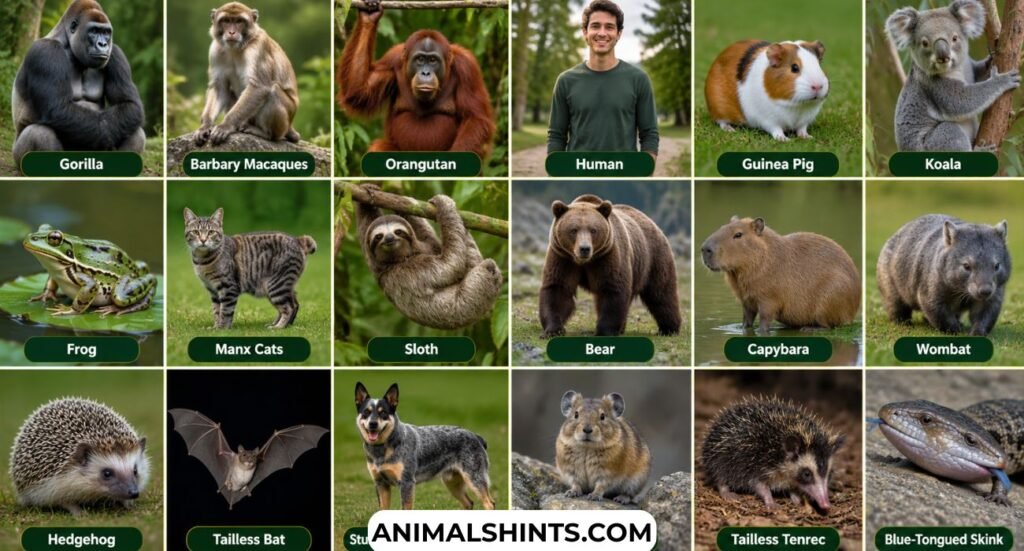
Here is the complete list of 18 animals without tails from different animal classes and habitats around the world.
| Rank | Animal Name | Scientific Name | Class |
| 1 | Gorilla | Gorilla gorilla | Mammalia |
| 2 | Barbary Macaques | Macaca sylvanus | Mammalia |
| 3 | Orangutan | Pongo pygmaeus | Mammalia |
| 4 | Human | Homo sapiens | Mammalia |
| 5 | Guinea Pig | Cavia porcellus | Mammalia |
| 6 | Koala | Phascolarctos cinereus | Mammalia |
| 7 | Frog | Anura spp. | Amphibia |
| 8 | Manx Cats | Felis catus | Mammalia |
| 9 | Sloth | Bradypus spp. | Mammalia |
| 10 | Bear | Ursidae spp. | Mammalia |
| 11 | Capybara | Hydrochoerus hydrochaeris | Mammalia |
| 12 | Wombat | Vombatus ursinus | Mammalia |
| 13 | Hedgehog | Erinaceus europaeus | Mammalia |
| 14 | Tailless Bat | Anoura spp. | Mammalia |
| 15 | Stumpy-Tailed Cattle Dog | Canis familiaris | Mammalia |
| 16 | Pika | Ochotona spp. | Mammalia |
| 17 | Tailless Tenrec | Tenrec ecaudatus | Mammalia |
| 18 | Blue-Tongued Skink | Tiliqua rugosa | Reptilia |
These tailless animals come from diverse backgrounds. Some are great apes. Others are monkey species, rodent species, marsupial species, or feline species. Each one has unique animal behavior and animal survival strategies.
Now, let’s explore each animal without a tail in detail.
Detailed Look at the Animals Without Tails
1. Gorilla
Scientific name: Gorilla gorilla
Class: Mammalia
Diet: Herbivorous animals
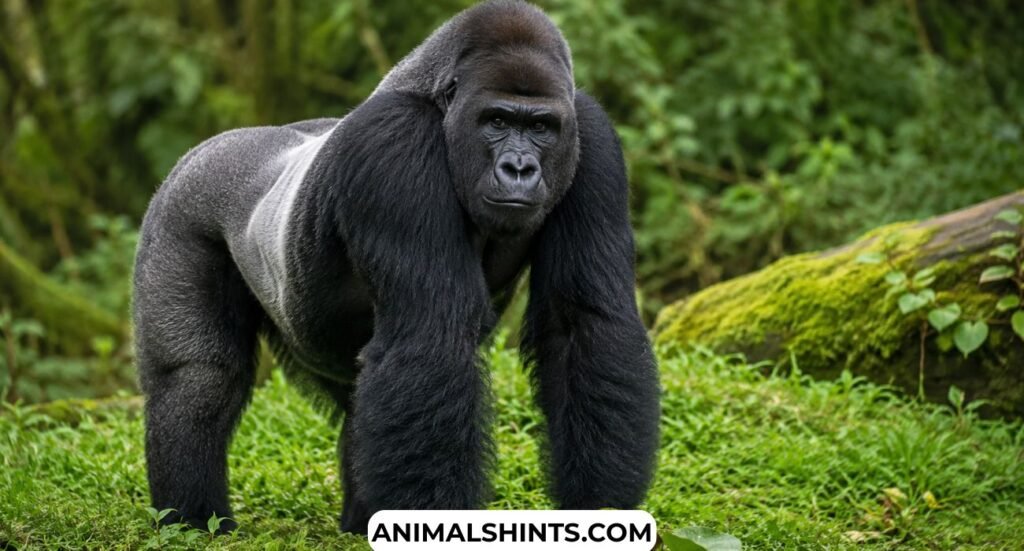
Gorillas are powerful tailless primates. Their spine ends near the hips. This gives them a flat back that supports their upright posture. Gorillas walk using knuckle walking. This protects their hands while moving on the ground.
These tailless mammals are highly social. They live in groups led by a dominant silverback male. Dominance displays include chest beating, loud calls, and facial expressions. Since they have no tail, they rely on body posture and size to show strength.
Gorillas live in Central Africa. Their habitats include mountain habitats and lowland habitats. Countries like Congo, Uganda, and Rwanda have dense forests that provide food and shelter. Gorillas spend most of their time on the ground. However, they can climb trees when needed.
Their animal diet consists of leaves, shoots, stems, and fruits. They eat for several hours each day. A slow digestion process helps them break down tough plant matter. They drink water from streams and forest pools.
Gorillas rest frequently to save energy. Young gorillas learn social behavior in animals through play. Mothers care for their babies for many years. Balance comes from strong hips and limbs, not a tail.
Fun fact: Gorillas share about 98% of their DNA with humans. This makes them one of our closest relatives in the animal kingdom.
2. Barbary Macaques
Scientific name: Macaca sylvanus
Class: Mammalia
Diet: Omnivorous animals
Barbary macaques are unique among monkey species. They are naturally tailless. Unlike other tailless primates, they do not have a visible tail stump. Their strong limbs and flexible spine provide balance.
These tailless animals live in North African habitats. You can find them in Morocco, Algeria, and even Gibraltar. They prefer forest habitats with cedar trees and rocky mountains. They adapt well to harsh terrain.
Barbary macaques eat a mix of fruits, leaves, seeds, and roots. They also eat insects for protein. This makes them omnivorous animals. They forage in the morning and late afternoon.
Animal social structures are important for these macaques. They live in troops of up to 50 individuals. Grooming behavior strengthens social bonds. Since they lack tails, they use vocal communication and facial expressions to interact.
During the day, they move through trees and rocks. At night, they sleep on branches or rocky ledges. Young macaques learn by watching adults. Their climbing ability remains excellent without a tail.
Fun fact: Barbary macaques are the only wild primate species living in Europe (Gibraltar). They are also the closest African primates to humans.
3. Orangutan
Scientific name: Pongo pygmaeus
Class: Mammalia
Diet: Omnivorous animals
Orangutans are large tailless apes. Their bodies are designed for life in the trees. They have long, powerful arms that help them swing from branch to branch. Flexible joints and strong grip keep them steady.
These arboreal species live in Southeast Asia. They are found in Borneo and Sumatra. Rainforest habitats with thick tree cover are essential. Deforestation threatens their homes and movement paths.
Orangutans eat mostly fruit. They also consume leaves, bark, insects, and eggs. When fruit is scarce, they eat tougher plants. They use tools to access seeds and insects. This shows high animal intelligence.
Unlike many tailless animals, orangutans are mostly solitary. Males make deep calls during breeding season to attract mates. Non-verbal communication involves body position and limb placement.
Every day, orangutans build nests from branches and leaves. These nests provide rest and safety. Mothers care for their young for many years. Baby orangutans learn by watching and imitating.
Balance comes from their long arms and slow, careful movement. Sitting posture remains stable. They conserve energy through rest and quiet behavior.
Fun fact: Orangutans have the longest childhood of any primate species. Young ones stay with their mothers for up to eight years.
4. Human
Scientific name: Homo sapiens
Class: Mammalia
Diet: Omnivorous animals
Humans are tailless animals that walk on two legs. Our coccyx or tailbone is all that remains of a tail. This vestigial structure shows our evolutionary past.
People live on every continent. We adapt to urban environments, forests, deserts, and cold regions. Unlike other tailless species, we use technology and shelter to survive. This shows incredible environmental adaptation.
Human anatomy has evolved for bipedal locomotion. Back and leg muscles provide balance. Walking on two legs frees our hands for tools and tasks. This changed animal survival forever.
Our diet varies by culture and location. We eat plants, meat, and processed foods. Cooking improves digestion. Food sharing strengthens social bonds and communities.
Humans communicate through language, expressions, and writing. Facial expressions and body posture show emotions. Without tails, we use posture to express confidence, relaxation, or stress.
We build homes instead of nests. Sleep happens indoors. Learning takes many years. Teaching passes knowledge to the next generation.
The absence of a tail supported human evolution. It helped us walk upright. The coccyx still supports sitting muscles. Evolution favored balance over tail movement.
Fun fact: The human tailbone can still move slightly when sitting. This shows our connection to tailless animals from the past.
5. Guinea Pig
Scientific name: Cavia porcellus
Class: Mammalia
Diet: Herbivorous animals
Guinea pigs are small tailless rodents. Their spine ends beneath thick fur. A low center of gravity helps them stay balanced. Short legs allow quick, jerky movements.
These tailless animals come from South America. Wild guinea pigs live near grassland habitats and forest edges. Today, they are popular pets worldwide. Burrows provide safety from predators.
Guinea pigs eat grasses, hay, and vegetables. They chew constantly to keep their teeth short. Vitamin C is essential for their health. Without it, they become sick.
These domestic animals are very social. They live in groups and make many sounds. Purrs, whistles, and chirps show different moods. Ear positioning and head movement replace tail signals.
Guinea pigs sleep in short periods. They hide when stressed. Clean environments prevent disease. Light helps regulate their sleep patterns.
These animals without tails do not need tail support. Their small body shape works well for ground living. Balance comes naturally from their low stature.
Fun fact: Guinea pigs can make over ten different sounds. Each sound has a specific meaning.
6. Koala
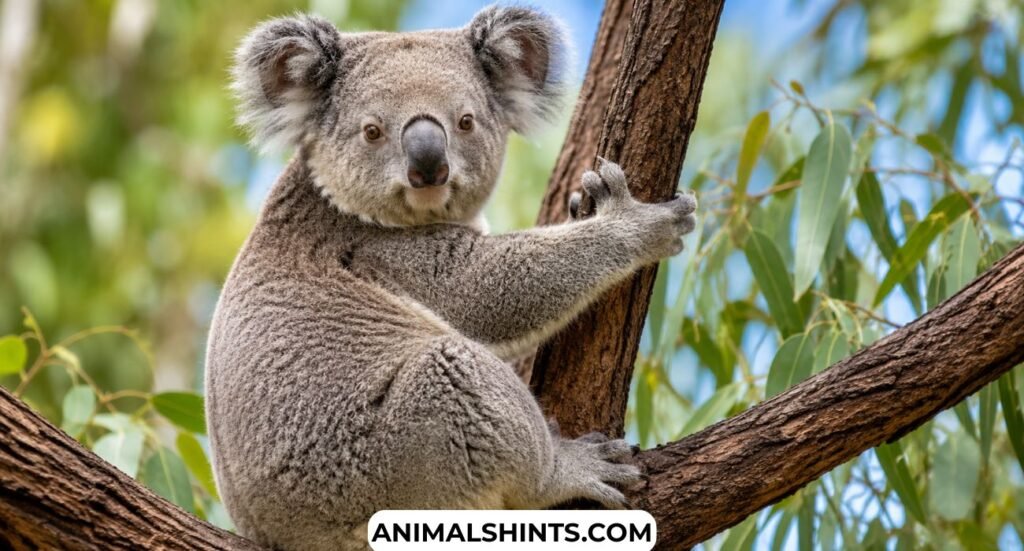
Scientific name: Phascolarctos cinereus
Class: Mammalia
Diet: Herbivorous animals
Koalas are tree-dwelling tailless marsupials. Their tail is hidden under dense fur. Strong, curved claws help them grip tree trunks. They move slowly and carefully.
These tailless animals live in eastern Australia and southern Australia. Eucalyptus forests provide both food and shelter. Koalas stay in small home areas. Habitat loss threatens their survival.
Koalas eat only eucalyptus leaves. These leaves are tough and low in nutrients. A slow digestion process breaks down toxins. Leaves provide most of their water needs.
Koalas are mostly solitary animals. They communicate through vocal sounds. Males make deep calls during breeding. Body posture shows comfort or stress.
Koalas sleep for most of the day. Short active periods occur at night. Mothers carry their young for months. Babies learn by staying close to their mothers.
Animal balance mechanisms come from tree hugging. Powerful limbs replace tail function. Sitting posture keeps them stable.
Fun fact: Koalas have fingerprints that are almost identical to human fingerprints.
7. Frog
Scientific name: Anura spp.
Class: Amphibia
Diet: Carnivorous animals
Adult frogs are tailless amphibians. They lose their tails during metamorphosis. Tadpoles have tails for swimming. Adult frogs replace tails with powerful hind legs.
Frogs live on every continent except Antarctica. They thrive in wetland habitats, forests, and grasslands. Moist skin requires water nearby. Pond ecosystems are important for breeding.
Frogs eat insects, worms, and small invertebrates. Their sticky tongues catch prey quickly. Most frogs hunt at night. They use sight to find moving prey.
Vocal communication is vital for frogs. Males call to attract females. Sound replaces body signals. Without tails, frogs rely on posture for communication.
Frogs breathe and drink through their skin. Clean water is essential. Pollution damages frog populations. During dry seasons, frogs burrow to save water.
Frogs lay eggs in water. Tadpoles hatch and grow tails. Tail loss marks adulthood. Strong legs provide jumping power.
Animal jumping ability in frogs is remarkable. Some frogs jump over 20 times their body length. No tail is needed for this skill.
Fun fact: Some frog species can jump more than 20 times their body length.
8. Manx Cats
Scientific name: Felis catus
Class: Mammalia
Diet: Carnivorous animals
Manx cats are tailless felines. A natural genetic mutation causes this trait. Some have no tail at all. Others have a short stub. Long hind legs help with balance.
These tailless domestic animals come from the Isle of Man. They are now found worldwide. They adapt well to homes, farms, and towns. They enjoy indoor and outdoor living.
Manx cats eat meat-based food. In the wild, they hunt rodents and insects. Domestic cats eat processed food. Protein keeps their muscles strong.
Manx cats are intelligent and social. They bond closely with humans. Animal body language includes ear position, posture, and vocal sounds. Without tails, they communicate differently.
Manx cats have longer hind legs than front legs. This gives them excellent jumping ability. They are active but also enjoy calm moments. Play keeps them healthy.
Some Manx cats have spine defects. Responsible breeding is important. Lifespan matches other cat breeds.
These tailless animals do not need tails for balance. Their muscles and inner ear adapt to provide stability.
Fun fact: Sailors once believed Manx cats brought good luck on ships.
9. Sloth
Scientific name: Bradypus spp.
Class: Mammalia
Diet: Herbivorous animals
Sloths are slow-moving tailless mammals. Their spine ends in dense fur. Curved claws and strong grip provide balance. They spend most of their lives hanging upside down.
These tailless animals live in tropical rainforests. They are found in Central and South America. Trees provide food and shelter. Sloths rarely come down to the ground.
Sloths eat leaves, buds, and shoots. Digestion is extremely slow. It can take weeks to digest a meal. This low-energy lifestyle helps them survive.
Animal energy conservation is key for sloths. They sleep for most of the day. Short active periods occur at night. Mothers carry their babies for months.
Sloths are solitary animals. Communication is limited. Body posture shows comfort or stress. Hanging posture reduces energy use.
Sloths come down once a week to defecate. This behavior is risky. It may help nutrients cycle in the forest.
No tail is needed for balance. Hanging is supported by strong claws. Powerful limbs replace tail function.
Fun fact: Sloths can turn their heads nearly 300 degrees. This helps them see predators without moving.
10. Bear
Scientific name: Ursidae spp.
Class: Mammalia
Diet: Omnivorous animals
Bears are large tailless mammals. Their tail is short and covered with fur. Strong legs and broad paws provide balance. They walk flat-footed for stability.
Bears live in many habitats. They are found in North America, Europe, Asia, and South America. Forest habitats, mountains, and tundra all support bear populations. They move seasonally to follow food.
Animal diet varies by bear species. They eat plants, insects, fish, and meat. Foraging takes many hours each day. A strong sense of smell guides their hunting.
Bears are mostly solitary animals. Body posture shows their mood. Standing on two legs shows danger or interest. Shoulder and head movement replaces tail signals.
Some bear species hibernate. They store fat for long rest periods. Cubs are born during winter rest. Mothers provide all the care.
Bears move with power and control. They can run fast despite their size. Some species can climb trees.
These tailless species survive well without tails. Their bulky bodies rely on limb strength. Weight distribution provides natural balance.
Fun fact: Bears can smell food from miles away. This helps them find food across large territories.
Read also: The Spiritual Meanings Of Seeing a White Pigeon
11. Capybara
Scientific name: Hydrochoerus hydrochaeris
Class: Mammalia
Diet: Herbivorous animals
Capybaras are tailless rodents. Their spine ends in thick skin. Sturdy legs and wide feet provide balance. They move easily on land and in water.
These tailless animals live in South America. Wetland habitats and rivers are essential. They stay near lakes and slow-moving rivers. Water helps them escape predators.
Capybaras eat grasses, aquatic plants, and bark. They feed in the morning and evening. Teeth grow constantly. Chewing keeps them short.
Capybaras are highly social animals. Groups can have dozens of members. Body posture shows dominance or comfort. Scent glands near the nose help with communication.
These semi-aquatic mammals sleep during humid periods. Shade and water reduce heat stress. Young capybaras stay close to adults.
No tail is needed for balance. Water buoyancy and strong limbs provide support. Energy conservation is important for these large rodents.
Fun fact: Capybaras are the largest rodent species in the world. They can weigh up to 140 pounds.
12. Wombat
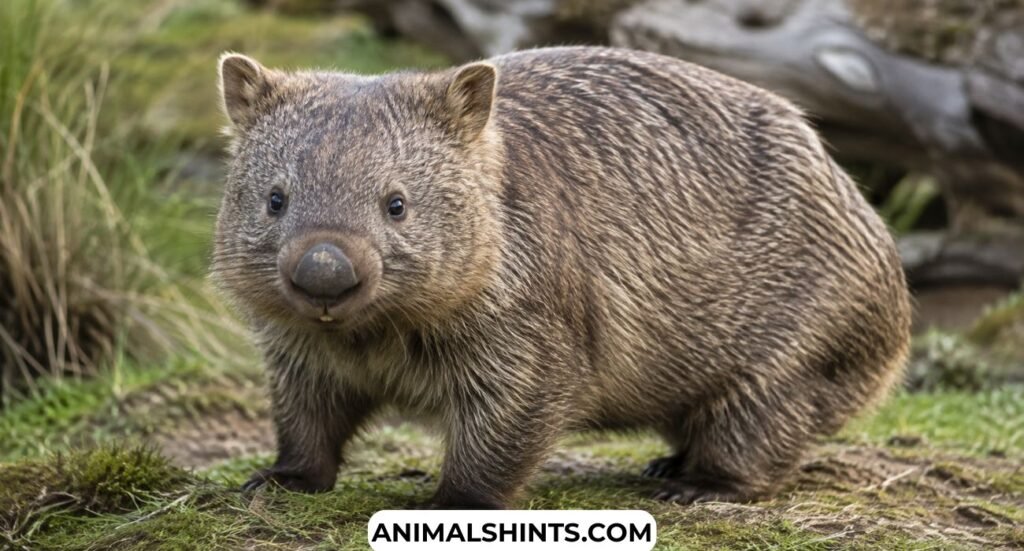
Scientific name: Vombatus ursinus
Class: Mammalia
Diet: Herbivorous animals
Wombats are stocky tailless marsupials. Their tail is short and hidden in fur. A low body and powerful limbs provide balance. They are excellent diggers.
These tailless animals live in Australia. They thrive in forest habitats, grasslands, and mountains. Burrows provide shelter and temperature control. Soil type affects burrow depth.
Wombats eat grasses, roots, and bark. They feed mostly at night. Digestion is slow. Food takes days to pass through their bodies.
Wombats are mostly solitary animals. Scent marking shows territory. Without tails, they use their rear body for defense. Thick skin protects them from predators.
Rest happens inside burrows. This avoids daytime heat. Mothers care for young for many months. Babies learn food selection by watching.
No tail is required for wombats. Their compact shape suits their burrowing adaptations. Strong hips and legs replace tail balance.
Fun fact: Wombat droppings are cube-shaped. This unusual shape keeps them from rolling away.
13. Hedgehog
Scientific name: Erinaceus europaeus
Class: Mammalia
Diet: Omnivorous animals
Hedgehogs are small tailless mammals. Their tail is hidden under spines. Short limbs and a rounded body provide balance. Movement is slow but steady.
These tailless animals live in Europe, Asia, and Africa. Grassland habitats, woodlands, and gardens are common. Leaf piles and burrows provide shelter. Human settings are often home to hedgehogs.
Hedgehogs eat insects, worms, fruits, and small animals. They feed at night. A strong sense of smell guides their hunting.
Hedgehogs are solitary animals. Defensive behavior includes curling into a ball. When scared, their muscles tighten. Spines rise to protect them.
In colder areas, hedgehogs hibernate. Fat stores support long rest. Body temperature drops. Heart rate slows significantly.
Baby hedgehogs are born with soft spines. These harden within days. Mothers provide short-term care.
No tail is needed for these tailless mammals. Their defense strategy uses curling. Small size helps them survive.
Fun fact: Hedgehogs can eat thousands of insects each year. This makes them helpful for garden pest control.
14. Tailless Bats (Genus Anoura)
Scientific name: Anoura spp.
Class: Mammalia
Diet: Nectarivorous
Tailless bats belong to a fascinating group of leaf-nosed bats found across Central and South America. These remarkable tailless mammals either completely lack tails or have extremely short ones measuring just a few millimeters. Their name comes from Greek words meaning “without a tail,” which perfectly describes their unique anatomy.
These animals without tails have elongated snouts and specialized tongues for collecting nectar from flowers. Unlike most bat species that use tails for flight maneuvering, tailless bats rely entirely on their wing structure and body positioning for aerial navigation. They consume nectar, pollen, and insects, playing a vital role in pollination across tropical rainforests and forest habitats. Their animal adaptations demonstrate that tails are not essential even for flying mammals that need precise aerial control.
15. Australian Stumpy-Tailed Cattle Dog
Scientific name: Canis familiaris
Class: Mammalia**
Diet: Carnivorous animals
The Australian Stumpy-Tailed Cattle Dog is a tailless domestic animal bred specifically for herding cattle across the Australian outback. These dogs naturally have no tail or a non-functional tail shorter than a few centimeters. Their taillessness is a natural genetic trait, unlike many dog breeds where tails are surgically removed.
These tailless animals have long legs and pricked ears, making them excellent working dogs with incredible agility. Their animal locomotion relies on powerful hind legs and a compact body shape for quick turns while herding livestock. Without a tail for animal communication, they depend more on vocal communication, ear positioning, and body posture to express themselves and respond to commands. This breed proves that animals without tails can be just as agile and effective as their tailed counterparts in demanding working roles.
16. Pikas (Tailless Hares)
Scientific name: Ochotona spp.
Class: Mammalia**
Diet: Herbivorous animals
Pikas, also known as tailless hares or mouse-hares, are small tailless rodents that differ from typical hares and rabbits in several ways. They have short rounded ears, relatively shorter hind limbs, and no visible tail at all. These charming creatures inhabit cold regions and deserts across Central Asia, Siberia, and parts of North America.
These animals without tails are highly active and produce piping or whistling calls to communicate with each other. Their animal adaptations include hairy soles on their feet and soft, thick fur for surviving in harsh cold environments. Pikas store grass in small heaps for winter use, showing complex animal foraging behavior and planning skills. Their tailless condition does not hinder their animal survival strategies in extreme climates. They live either among rocks or in burrows, using their compact bodies for efficient movement in tight spaces.
17. Tailless Tenrec
Scientific name: Tenrec ecaudatus
Class: Mammalia**
Diet: Omnivorous animals
The tailless tenrec is a unique tailless mammal endemic to the island of Madagascar, known for its hedgehog-like appearance. This animal without a tail has also been introduced to surrounding islands in the Indian Ocean. All species in this group superficially resemble hedgehogs with their spiny coats and rounded bodies.
These tailless animals have evolved without tails as part of their evolutionary adaptations to life on the forest floor. Like hedgehogs, they rely on their spines and defensive behavior for protection against predators. Their animal anatomy includes a compact body shape perfectly suited for navigating dense forest floors and digging burrows. Tailless tenrecs are omnivorous animals that consume insects, small vertebrates, and plant matter. Their territorial behavior and animal communication depend on scent marking and vocal sounds rather than any tail signals.
18. Blue-Tongued Skink
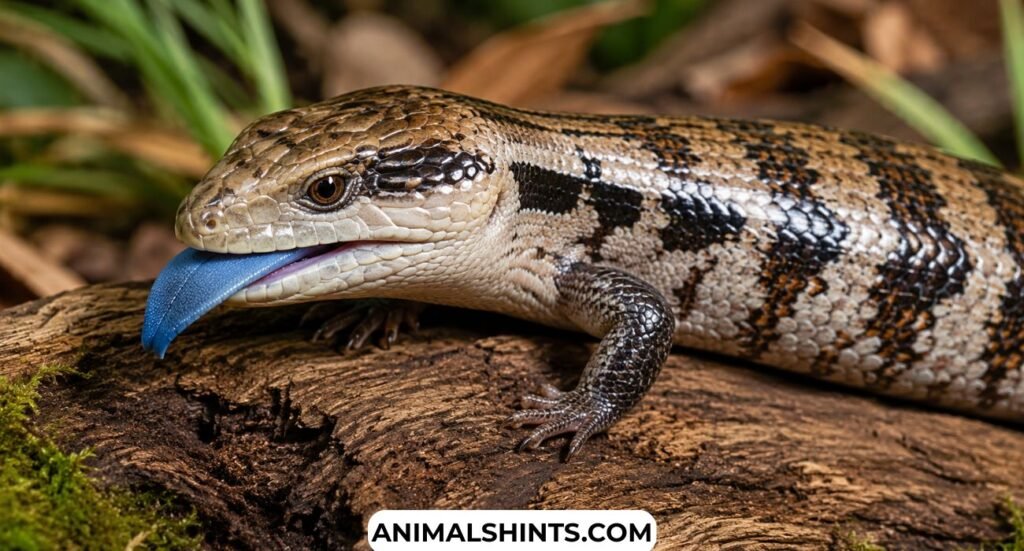
Scientific name: Tiliqua rugosa
Class: Reptilia**
Diet: Omnivorous animals
The blue-tongued skink is a tailless reptile species native to Australia that has adapted remarkably to life without a functional tail. While most reptiles use prominent tails for balance and defense, this lizard has an extremely short, thick tail that resembles its head. This clever adaptation confuses predators about which end is which, giving the skink a survival advantage.
These animals without tails can grow to about two feet in length and are easily recognized by their striking blue tongues. Their animal defense mechanisms include displaying their vivid blue tongue to startle predators and their patterned bodies for animal camouflage. Without a functional tail for balance, they rely on their strong limbs and low body posture for stability while moving through Southern and Western Australia’s diverse landscapes. Their animal survival strategies show how reptiles can adapt effectively to taillessness through other physical and behavioral traits.
Why Do Some Animals Have No Tails?
Evolution of tailless animals happened for different reasons. Some species lost their tails through natural selection. Others never developed tails at all.
Tails serve many purposes. They help with balance, communication, and defense. But tailless species have found other ways to survive.
Balance Without Tails
Animal balance mechanisms come from strong limbs. Limb strength in animals replaces tail function. Flexible joints and body weight distribution keep animals steady.
Animals without tails use different strategies:
- Primate species use long arms and slow movement
- Rodent species use a low center of gravity
- Amphibian species use powerful hind legs
- Marsupial species use gripping claws
Communication Without Tails
Animal communication changes without tails. Vocal communication becomes more important. Facial expressions and body posture replace tail signals.
Tailless animals use:
- Sounds and calls
- Scent communication through glands
- Eye contact and head movement
- Dominance displays with body size
Survival Without Tails
Animal survival strategies adapt to taillessness. Animal locomotion depends on other body parts. Animal foraging behavior continues without tail support.
Tailless species show that tails are not essential. Evolution finds creative solutions for survival.
Where Do Animals Without Tails Live?
Tailless animal habitats cover the globe. These tailless animals live in many environments.
Forest Habitats
- Gorilla facts show they live in African habitats
- Orangutan characteristics connect to Asian habitats
- Sloth lifestyle depends on tropical rainforests
- Koala behavior is tied to Australian habitats
Grassland Habitats
- Guinea pig care relates to South American grasslands
- Barbary macaque information links to North African plains
- Hedgehog characteristics appear in European fields
Wetland Habitats
- Capybara facts show South American wetlands
- Frog species need pond ecosystems
- Wombat information includes Australian woodlands
Other Environments
- Human anatomy adapts to urban environments
- Manx cat breed thrives in domestic environments
- Bear species survive in mountains and tundra
Animal distribution shows that tailless species are found everywhere. Habitat mapping reveals their wide range.
Are Animals Without Tails Rare?
Tailless species prevalence is not rare. Many common animals have no tails. Animal kingdom diversity includes many tailless animals.
Tailless mammals are common:
- Primate species often lack tails
- Rodent species include tailless types
- Marsupial species have tailless varieties
- Feline species include tailless breeds
Animal population statistics show:
- Humans are the most common tailless primates
- Guinea pigs are popular tailless domestic animals
- Frogs are widespread tailless amphibians
- Manx cats are rare but not endangered
Animal conservation efforts protect tailless species. Habitat conservation helps preserve tailless animal habitats. Species protection ensures these animals continue to thrive.
Taillessness in animals is a natural adaptation. It is not a weakness. Evolution has shaped these creatures for success.
How Tailless Animals Maintain Balance Without Tails
Animals without tails have developed remarkable animal balance mechanisms that rely on powerful limbs and flexible spines. Tailless mammals like gorillas and orangutans use their strong arms and legs to stay steady while climbing or walking. Their body weight distribution and low center of gravity keep them stable during movement. These animal adaptations show that tails are not essential for balance when other body parts compensate effectively.
Instead of tails, tailless species depend on limb strength in animals and precise body posture for stability. Primate species like humans use bipedal locomotion and musculoskeletal system adjustments to stand upright. Rodent species like guinea pigs maintain a low center of gravity for quick movements. Even amphibian species like frogs use powerful hind legs for jumping balance. These animal survival strategies prove that evolution finds multiple solutions for staying steady.
Communication Methods Used by Tailless Animals
Animal communication in tailless animals relies heavily on vocal communication, facial expressions, and body posture instead of tail signals. Tailless primates like gorillas and barbary macaques use chest beating, sounds, and scent communication to express emotions and establish dominance. Social behavior in animals without tails often involves more grooming behavior and physical contact to strengthen bonds within groups.
Animals without tails also use non-verbal communication through ear positioning, head movement, and dominance displays to convey messages. Tailless mammals like bears show mood through shoulder movement and standing posture. Domestic animals like Manx cats rely on vocal sounds and body language to interact with humans. These animal communication methods are just as effective as tail signals in maintaining animal social structures.
See also: The black cat spiritual meaning
Evolutionary Journey of Tailless Animals
The evolution of tailless animals occurred through natural selection and genetic mutations over millions of years. Some tailless species like frogs lose their tails during developmental stages through metamorphosis, while others like Manx cats are born tailless due to genetic mutations. Primate evolution led to tail loss in great apes, supporting bipedal locomotion and freeing hands for tool use. Vestigial structures like the human coccyx provide evidence of ancestral tails in tailless mammals.
Animal adaptations to environment have shaped tailless species to thrive without tails. Marsupial evolution produced koalas and wombats that use strong claws for tree life and burrowing. Rodent evolution created capybaras and guinea pigs adapted for ground living. Amphibian evolution resulted in frogs that replace tails with powerful jumping legs. These evolutionary adaptations demonstrate how biological diversity allows animals without tails to succeed in various habitats.
FAQ’s
Which animals have no tails?
Several animals naturally have no visible tails, including apes (gorillas, chimpanzees, orangutans, and gibbons), frogs, and some dog and cat breeds.
What is the animal with no tail?
Apes are the best-known animals with no tails, as they naturally lack external tails unlike most monkeys.
Which animal did not have a tail?
Apes, such as gorillas, chimpanzees, orangutans, and gibbons, evolved without tails millions of years ago.
What animal has 4 legs and no tail?
A tailless ape like a gorilla or chimpanzee has four limbs and no tail, while some dog breeds (such as the French Bulldog) may also naturally have very short or no tails.
Final Words
Animals without tails come in many shapes and sizes. Some, like gorillas, chimpanzees, and gibbons, never grow tails. Others have very short tails because of their breed or body shape. Each animal uses its body in a special way to climb, walk, swim, or stay safe. Learning about these animals helps us understand nature better.
Animals without tails show that every species has unique features. Their bodies fit their homes and daily lives. Some live in forests, while others live near water or on land. By studying these amazing animals, we can respect wildlife and protect their habitats. Every animal plays an important role in keeping nature healthy and balanced.