Nail Biting Spiritual Meaning: 12 Meanings, the Personality Traits, and What the Record Shows
It happens at the desk, in the traffic jam, halfway through a difficult conversation — the hand rises on its own and the teeth find the nail before the mind has noticed either. People who search for the spiritual meaning of nail biting are usually looking at that small, half-hidden habit and asking what, if anything, it signifies.
This guide keeps his twelve meanings, his personality traits, his myths and his readings from four religions, and then goes where his page never goes. The habit has a clinical name and a clinical file, and the omen lists of the old books turn out to have no entry for it at all, though they grade twitches, itches and throbs for nearly every part of the body — an absence with a reason behind it.
Take the meanings as the modern tradition that repeats them, take the audit sections as checking work, and read the medical section first if your nail folds are ever red, swollen or sore. Biting is an act, not a sign, and that single fact organises everything below.
Psychological Reason Why People Bite Their Nails
His page opens with the psychology, and the psychology is the solidest ground it stands on. The habit is classed among the body-focused repetitive behaviors — self-grooming actions a person repeats even though they can damage the body — and it usually starts in childhood, carried into adult life by people who find their feelings hard to regulate in the moment.
The triggers his list names are the ones the clinics name too: anxiety, boredom, perfectionism, anger that has been swallowed, and fear of getting things wrong. The bite buys a few seconds of relief, and relief is a teacher — a behavior that pays out calm, however briefly, is a behavior the brain files under “works” and reaches for again. Like yawning, it runs ahead of decision: the body performs it before the person has consciously chosen anything.
Underneath the loop, his page puts a need for control. When the day will not be managed, the hands still can be; the nail is the smallest available territory. And because the feelings driving it are so often unspoken, the habit becomes their overflow pipe — which is where his psychological account hands over to the spiritual one.
What Nail Biting Actually Is: The Name, the Damage, and the Fence
Medicine calls the chronic form onychophagia, and files it with its cousins. Cleveland Clinic’s account of the body-focused repetitive behaviors describes a family of conditions in which self-grooming actions unintentionally harm the body: skin picking and hair pulling are the two the current diagnostic manual names outright, and nail biting sits in the wider list alongside nail picking, skin biting, lip biting and cheek chewing — not individually specified in the manual, but diagnosable as a related disorder when it causes real harm or distress. The clinic’s description of the pattern will be familiar to anyone who has it: an intense, hard-to-resist urge, and a brief feeling of satisfaction when the behavior is performed. Between half a percent and just over four percent of people carry a clinical diagnosis in this family — and the true figure runs higher, the clinic notes, because most never take the habit to a doctor at all.
The wider record puts ordinary nail biting in roughly a fifth to a third of the whole population, rising to more than a third among children and teenagers — which puts it among the commonest habits on earth, and one of the least ominous things a body can do. Most of it is not pathology. The line the clinicians draw is not between biters and non-biters; it is between a habit and a habit that is hurting you.
The damage, when it comes, is mechanical and microbial rather than mysterious. Biting breaks the skin of the cuticle, and broken cuticle skin is an open door: the nail fold can redden and infect — the condition clinicians call paronychia — and saliva itself can redden and infect the skin around the nail. Years of severe biting can, in rare cases, deform the nail by destroying the bed it grows from. The mouth pays a share too: gum injury and wear on the front teeth are both recorded, and whatever lives under a bitten nail travels. The emotional bill is documented in the same literature — guilt and shame about the habit, a lowered quality of life, hands hidden in company and handshakes avoided.
The fence is plain. A nail fold that stays red, swollen, warm or painful, any sign of pus, redness that spreads, or biting that has torn the skin and will not heal belongs to a doctor or dermatologist, not to a meanings list — and anyone whose habit distresses them, or who has tried repeatedly to stop and cannot, is describing exactly the presentation the clinics treat. There is no approved medication for this family of behaviors; the treatments that work are behavioral, and they are set out in the “How to Stop” section below. This section is a map of the territory, not a diagnosis of any reader; it marks where interpretation stops and care starts.
What Does Nail Biting Symbolize?
His symbolism starts from the nail itself: a small plate of armour. Nails protect the fingertips, and in the symbolic vocabulary his page uses they stand for protection, boundaries and personal strength — the body’s own tools for gripping and for defense. To bite them away is therefore read as weakening one’s own boundary, a person dismantling their protection with their own teeth.
From there his reading turns inward. The habit is taken as internalised stress and a kind of self-consumption — energy that should move outward, into speech or action, circling inside instead and feeding on the self. His short list of what the symbol is said to carry runs:
- Fear of making mistakes
- Suppressed emotions
- Self-criticism
- Inner restlessness
- Difficulty trusting life
His page ties the pattern to two energy centres of the modern chakra scheme — the throat, seat of expression, and the solar plexus, seat of will — arguing that when expression is blocked, the pressure finds a physical outlet. That mapping comes from the modern spiritual vocabulary rather than from any older record; this article reports it as his frame, no more, and the audit of what the older records actually contain waits in its own section below.
12 Spiritual Meanings of Nail Biting Behavior
His list runs to exactly twelve, and all twelve are carried in his order. They are the modern genre’s readings — assembled from anxiety psychology, chakra vocabulary and astrology — and each is reported as the tradition states it, with the audit kept for the record section that follows his cultural readings.
1) Anxiety and Inner Turmoil
The lead meaning is the one the other eleven keep returning to: the bite as the visible tip of an unsettled inner state. In his framing, a mind that cannot settle discharges its static through the hands, and the habit’s timing — deadlines, arguments, waiting rooms — is the evidence offered. As a reading it is unfalsifiable but not useless: it points the biter at the worry underneath rather than at the nail.
2) Inner Conflict
Second, the tug-of-war reading: two pulls inside one person — fear against desire, comfort against growth — acted out on the smallest available stage. The nails become the battleground because they are always within reach, and the habit is read as the subconscious rehearsing a fight the waking mind keeps postponing.
3) Unexpressed Emotions
The third meaning widens the second: feelings that were never said — anger, grief, frustration — do not vanish, and in this frame they look for the body’s exits. The bite is the pressure made visible. His page’s implied remedy is expression itself: journalling, counsel, anything that gives the feeling a mouth other than the one doing the biting.
4) Desire for Control
Control again, now as a numbered meaning in its own right. When circumstances refuse management, the reading runs, a person manages what is unquestionably theirs. The nail is tiny, tangible and entirely within jurisdiction — which is why this reading pairs the habit with transitions and overwhelm, the seasons when jurisdiction elsewhere has lapsed.
5) Deep Insecurity
The fifth reading is the tender one: the habit as the body’s flinch. A fear of being judged, measured against childhood experience and other people’s standards, keeps the hands busy defending a self that feels exposed. His page answers it with self-compassion rather than discipline — rebuild the confidence, it argues, and the coping mechanism loses its job.
6) Self-Destructive Tendencies
His darkest psychological entry reads the bite as a small, deniable self-punishment — guilt and low self-worth turned against the nearest available target, which happens to be the biter’s own body. It stands here as his reading, with the boundary the medical section drew kept in view: the clinical literature files this habit under grooming behaviors, not self-harm, and anyone who recognises actual self-punishment in themselves deserves a professional conversation, not a meanings list.
7) Past Life Trauma
The seventh meaning belongs to the traditions that work with karma: the habit as an echo, an old fear carried into a new life, surfacing in the hands while the soul still has it unfinished. It cannot be tested and is not presented as fact — it is the reading his page offers to readers inside that frame, with past-life work and meditation as its suggested tools.
8) Release of Negative Energy
Here the biter is cast as the sensitive instrument: someone who absorbs the emotional weather of rooms and other people, and discharges the accumulation through the hands. The reading’s practical tail — grounding, clearing the space, protecting one’s attention — is the standard kit of the modern energy vocabulary, offered as his page offers it.
9) Lack of Grounding
The ninth reading is the eighth’s plainer sibling: restlessness and scattered thought read as a spirit insufficiently anchored, with the nail as a tactile anchor of last resort — something solid for the body to hold while the mind drifts. His suggested counterweights are the grounding classics: bare feet on earth, breath, attention returned to the present room.
10) Planetary Imbalance (Rahu Influence)
The astrological entry: in the Vedic astrology his page draws on, nail biting is laid at the door of Rahu, the shadow planet of illusion, restlessness and confusion, whose influence is said to stir the mind into exactly the turbulence the habit expresses. This is the modern astrology genre’s attribution, printed as such; no classical omen list consulted for this article grades the habit under any planet, and the record section shows what those lists were busy grading instead.
11) Perfectionism
The eleventh reading is the most clinically neighbourly of the twelve: an intolerance of imperfection, turned on the self. A ragged nail edge is itself an imperfection, and the perfectionist bites at it to make it smooth — and makes it worse, in the loop every biter recognises. His page’s answer is practice in self-acceptance; the clinics’ answer, habit reversal, arrives in the practical section.
12) Chakra Imbalance
The list closes where his symbolism section began: the energy centres. His page seats this entry at the root and sacral chakras — stability and emotional expression — arguing that blockage at either shows up as a physical habit of release. As with the throat and solar plexus mapping above, this is the modern rainbow scheme’s vocabulary, a twentieth-century system applied to a very old habit; the classical chakra texts assign the centres colours, elements and letters, and say nothing about nails at all.
Personality Traits of Individuals with a Habit of Biting Nails
His trait list is carried as he gives it — six patterns, some of them strengths wearing the habit as a side effect. Each lead is his; the sentence after it is the caution the audit adds.
- They are highly sensitive. They register other people’s weather early and carry it long — which the genre counts a gift, and which also explains the overload the habit discharges.
- They are self-critical. High standards, harshly policed; the bite arrives in the moment the inner review turns hostile.
- They are mentally active. Replay, analysis, anticipation — a mind that rarely idles will give the hands something to do while it works.
- They seek control. The trait his fourth meaning is built on: when outcomes cannot be managed, the body becomes the managed thing.
- They are emotionally restrained. What is not said is swallowed, and the habit is the swallowing made visible.
- They are resilient. His closing trait, and the one the clinical record quietly supports: most biters function, work and cope for decades with the habit riding along — adaptability, even when the emotional bill goes unpaid.
A caution belongs over the whole list: these are the genre’s character sketches, not findings. The research record links the habit to situations — stress, boredom, concentration — far more firmly than to any personality type, and plenty of phlegmatic, easy-going people bite their nails through long meetings.
Myths and Superstitions
His folklore section is short, and its claims are the stern kind: that biting the nails draws negative energy and bad luck, because the nails hold a person’s energy and damaging them leaks protection; and that the habit shortens life, invites poverty and blocks prosperity — warnings he himself notes were often aimed at children, to frighten the habit out of them.
This section needs a label his page never gives it: no folklore collection, proverb dictionary or superstition archive consulted for this article records these as documented old beliefs with a place, a people or a date attached. They circulate on modern pages, attributed to “some traditions” and no one in particular. That does not make them invented out of nothing — the fear underneath them, that a self-directed habit is a small self-destruction, is genuinely old — but as records they are unsourced, and they are printed here at exactly that strength.
Cultural and Religious Interpretations of Biting Nails
His tour of the religions runs to four strands, carried in his order as bold-lead paragraphs, each with the bound the record sets on it.
Hindu philosophy: His page reads the habit as rajasic — the restless, agitated quality in the Hindu scheme of the three gunas — a mind ruled by worry and unfulfilled wanting. The guna vocabulary is genuinely classical; its application to nail biting is the modern genre’s, and no classical Hindu text consulted grades the habit itself.
Islamic teachings: His line is that the habit is not sinful but is discouraged, as a failure of self-discipline and bodily awareness. The documented Islamic record on nails is more specific than his gloss, and it is about cutting, not biting: the Prophet’s teaching counts clipping the nails among the five acts of fitrah, the natural cleanliness of the human being (Sahih al-Bukhari 5891; Sahih Muslim 257), with a companion report setting forty nights as the longest the nails should be left uncut (Sahih Muslim 258). Biting sits against that cleanliness teaching by implication — which is as far as the record honestly goes.
Buddhist thought: His strand reads the repetitive habit as attachment wearing a small disguise: a loop of discomfort, craving and brief relief that rehearses, in miniature, the machinery of suffering. A genuinely Buddhist frame, applied here in the modern manner; no Buddhist text consulted addresses the habit by name.
Christian interpretations: His strand ties the habit to anxiety and to a failure of surrender — fear held in the body instead of handed over in trust. The Bible’s own nail record is taken up next, and it is stranger and more interesting than his gloss suggests; biting is nowhere in it.
What the Old Lists and the Bible Actually Record About Nails
This is the section his page does not have, and it is the reason this article is organised the way it is. The classical omen lists of the body — the Indian angasphurana tradition and its cousins, the lists preserved in works like the Sakuna Sastra, the Pearl of Wisdom and Chawdhri’s tables — are generous catalogues. They grade the twitching of the chin and the itching of the navel; the navel even has its own graded entries, as the belly button itching record shows, and the twitch lists run to hundreds of lines, of which the left eye twitching entries are only the most famous. Itching has its own graded shelf in the same books — the back itching entries among them — and burning, as the nose burning audit found, has none.

For biting, every one of those shelves is empty, and the reason is structural rather than accidental. The lists grade signs: things the body does on its own — a muscle firing, a surface itching, a throb arriving uninvited — which a watcher can read. Biting is not a sign in that sense at all. It is an act, something a person does, and a catalogue of involuntary omens has no shelf for voluntary behavior. No classical list consulted for this article — Indian, Islamicate or Western — grades nail biting, under any planet, chakra or heading. The twelve meanings above are therefore a modern construction, assembled in our own era from anxiety psychology and energy vocabulary. That is not a dismissal; it is a date and a provenance, and a reader deserves both.
Scripture tells the same story with better scenery. A fresh census of the whole King James text gives the word “nail” eight occurrences and “nails” ten. Almost all of them are hardware: the tent peg Jael drove through Sisera’s temples in Judges, the nails David stockpiled for the Temple doors, the fifty shekels’ weight of gold nails in Solomon’s sanctuary, idols fastened down so they cannot topple, a beast in Daniel’s vision with nails of brass, and Thomas in John’s Gospel demanding to see “the print of the nails” before he will believe. Exactly two passages touch a human being’s fingernails at all. In Deuteronomy, a captive woman brought into an Israelite household is instructed: “she shall shave her head, and pare her nails” — a rite of mourning and transition, the nails trimmed, not bitten. And in Daniel, the humbled Nebuchadnezzar lives like a beast “till his hairs were grown like eagles’ feathers, and his nails like birds’ claws” — nails grown long and wild, the opposite of bitten. Neither testament says a word about biting nails, as a sin, a sign or anything else. That silence is itself the finding.
Is Nail Biting a Bad Omen? The Record’s Answer
No list says so. That is the whole verdict, and it is brief. The bad-luck and poverty warnings in the myths section arrive without a source; the classical lists never took the habit up, because it is an act rather than a sign; scripture, which mentions nails eighteen times, mentions biting them never. If nail biting is a message, it is not one any old authority sent.
What the habit can honestly offer is a reflection. The modern meanings — anxiety, control, swallowed feeling, perfectionism — work the way mirrors work: not by predicting anything, but by giving a person a vocabulary for what they already half-know about their own week. Used that way, lightly, the twelve readings above are harmless and occasionally useful. Used as omens, they borrow an authority the record does not lend them. And the one message the habit does carry reliably is the body’s own: ragged cuticles, sore folds and hidden hands are information, and the medical and practical sections are where that information belongs.
Spiritual Approaches to Stop the Habit of Biting Nails
His programme for stopping is a spiritual one, and it is carried as he gives it. It begins with conscious observation: catching the urge in the act and asking, before the teeth close, what feeling is actually in the room — anxiety, boredom, frustration, fear. Meditation follows, even five minutes a day, to slow the nervous system and widen the gap between urge and act. Breathwork is his third tool, slow breathing to settle the body so it stops reaching for its own coping mechanisms.
Energy practices come next in his list — chakra balancing, Reiki, grounding exercises — offered as ways of releasing stored tension. Affirmations follow, spoken replacements for the inner critic’s script. And journalling closes his programme: triggers written down become triggers that can be seen coming. His summary of the whole approach is the gentlest line on his page — “the aim is not to fight the habit but to understand it” — and the clinical programme in the next section, built from different premises, lands surprisingly close to the same place.
How to Stop: What the Clinics Add
The behavioral record adds three tools his page does not carry, and they are the ones with trials behind them. The first is habit reversal training, the standard therapy for this family of behaviors: learn to notice the urge and the situations that grow it, then answer the urge with a competing response — an action the hands can perform instead, held until the urge passes. In the research literature it has beaten both placebo and simple object manipulation in children and adults. The second tool is stimulus control: identify the settings, screens and stresses that trigger the biting and change what can be changed about them, so the urge is starved rather than fought.
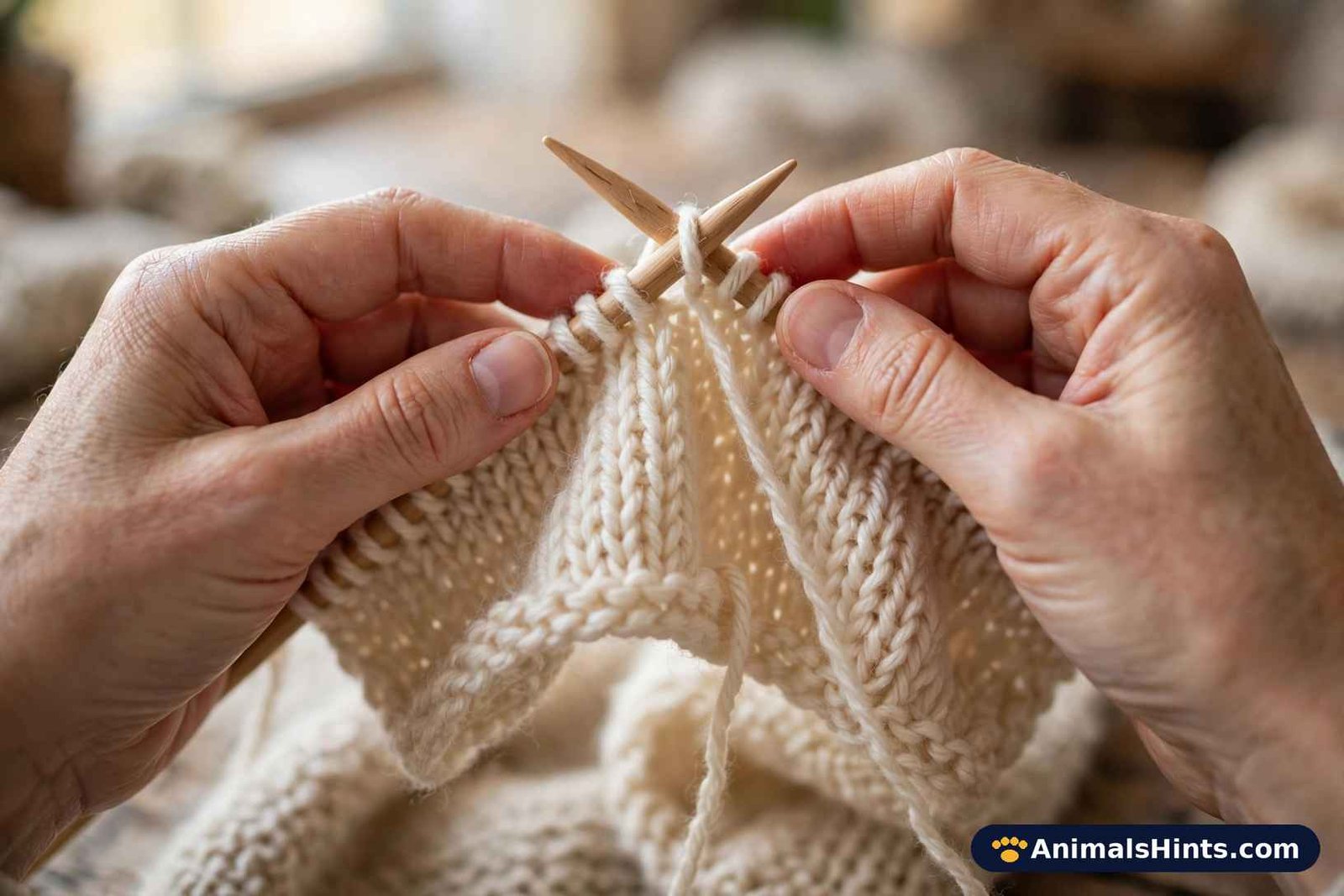
The third is the oldest and cheapest: a clear, bitter-tasting polish on the nails — the standard preparation uses denatonium, the bitterest compound known — which makes the unconscious bite announce itself the instant it happens. Around those three, the practical small change does quiet work: keep a smooth stone, a pen or a ball of yarn where the hands idle. Give the hands a job and the mouth loses its errand. And keep the medical section’s fence in view throughout: torn, infected or persistently sore nail folds go to a clinician, and a habit that causes real distress and refuses every attempt to stop it is, by the clinics’ own definition, a treatable condition rather than a character flaw.
Final Thoughts
One habit, three honest descriptions. First, a modern list of twelve readings — lively, recent, and assembled from psychology and energy vocabulary rather than inherited from any old book. Second, a blank space in the classical record: the omen lists grade the body’s twitches, itches and throbs in hundreds of entries and never once grade this, because biting is something a person does, not something that happens to them. Third — and most days the only description that matters — a grooming behavior with a clinical name, a known relief loop, and a short list of physical costs that deserve more respect than the omens do.
Keeping the three descriptions separate makes each of them stronger. The meanings earn their keep as a vocabulary — words for anxiety, control and swallowed feeling — provided nobody lends them an authority the old books never gave them. The clinic earns its keep by remembering that a habit carried by a third of the human race is mostly just a habit. And the work of changing it can start from both ends at once: his awareness programme and the clinics’ competing responses point, from opposite directions, at the same few seconds between urge and teeth.
So the honest summary is a calm one. Your hands are not sending you a prophecy; they are showing you a pattern, and patterns can be read without being feared. Notice what the urge is standing next to — the deadline, the boredom, the unsaid sentence — give the hands another job, keep the nail folds whole, and let onychophagia, the unglamorous clinical name, do the one useful thing a name can do here: remind you that this is a studied, common, treatable behavior, and not a verdict on your soul.
FAQs
What is the spiritual meaning of nail biting?
In the modern lists: anxiety and inner turmoil first, then control, unexpressed emotion and insecurity — twelve readings in all on his page. The older record grades no such meaning at all; the lists are a recent construction, best used as a prompt for reflection, not as an omen.
What personality traits are linked with nail biting?
His genre’s sketches: sensitivity, self-criticism, a busy mind, a wish for control, emotional restraint and resilience. The research record ties the habit to situations — stress, boredom, concentration — much more firmly than to any personality type.
Is nail biting related to anxiety spiritually?
His page says yes, and the psychology half-agrees: anxiety is one of the habit’s documented triggers, alongside boredom and perfectionism. The spiritual reading adds a frame — held fear asking for trust — and that frame is the tradition’s contribution, not evidence.
How can I address nail biting from a spiritual perspective?
His programme: notice the urge and name the feeling under it, meditate, breathe slowly, journal the triggers, and meet the habit with self-compassion rather than shame. The clinics add habit reversal and a bitter polish — the two programmes combine without quarrelling.