Brown Eyes Spiritual Meaning: 15 Meanings, Myths and Personality, Checked Against the Record
Ask the symbolism guides what brown eyes mean and they answer in the language of earth: grounding, loyalty, warmth, a nature as steady as soil. The brown eyes spiritual meaning, in that tradition, is the meaning of the colour itself — the shade of earth, bark and dark wood — transferred to the person whose irises wear it, who is then read as dependable, warm-hearted and hard to shake.
Brown is also, by an enormous margin, the colour most human beings actually have. More than half the world carries it, and on some ways of counting the share runs far higher. That plain fact shapes everything on this page. Where a rare colour collects omens the way a magnet collects filings, a common one collects something else: a portrait of the ordinary virtues, drawn from the material the whole species shares.
So the article below keeps two ledgers and does not let them mix. The first is the folklore ledger — the fifteen meanings, the personality portrait, the myths, the dreams, the omen question — printed as what it is, the teaching of a tradition, attributed throughout and never promoted into fact. The second is the record ledger: the pigment science, the population counts, the studies that have genuinely been run, and the one book that mentions brown four times without ever putting it in an eye. An iris colour is fixed before birth; it cannot arrive as a message. Read with that boundary in place, both ledgers stay interesting.

Define Brown Eyes
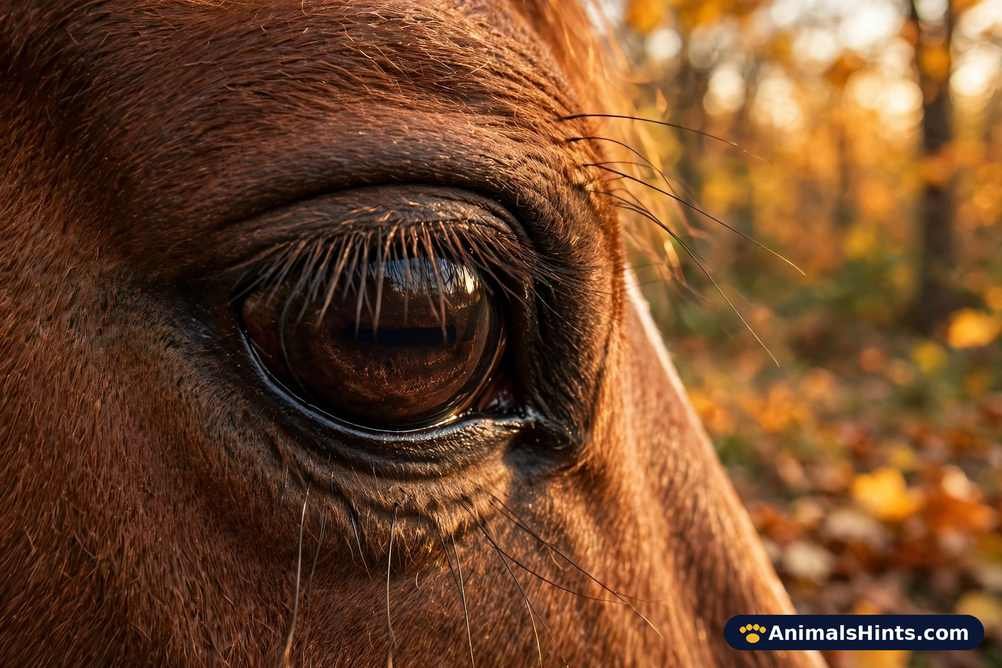
A brown eye is an iris whose front layer carries a heavy load of melanin, the pigment that also colours skin and hair. Load enough of it in and the eye stops reflecting much of anything back: incoming light is swallowed by the pigment, and what the viewer receives is the pigment’s own colour, anywhere along a range that runs from pale honey and caramel through chestnut to a brown so deep it borders on black. The guides that open with a definition usually open with this one, and on the mechanism they and the clinics agree — more melanin, darker eye.
The tradition then makes its characteristic move: it reads the eye through the colour, before it reads anything else. Brown, in the colour symbolism the guides work from, belongs to earth — to soil that holds, wood that bears weight, ground that stays where it is put. This site keeps that colour record on its own page, the color brown spiritual meaning, and the eye tradition borrows from it wholesale: whatever brown means standing alone, brown eyes are said to lend to their owner. Warmth, steadiness and a nurturing streak are not, in this system, observations about brown-eyed people. They are the colour’s dictionary entry, applied to a face.
One more piece of the definition matters for everything that follows. Brown is where the human eye starts. The account the American Academy of Ophthalmology repeats in its public materials holds that brown was the original colour of the species — at one time, in its phrase, all humans had brown eyes — and every lighter shade is a later reduction of the same pigment. The fifteen meanings below are therefore readings of the ancestral colour, the default setting of the human face, which may be exactly why the tradition loads it with the default virtues: the ones a community runs on.
Brown Is the Full Dose: The Pigment Science Behind the World’s Commonest Eyes
Begin with what the colour physically is. The iris has two relevant layers. Behind everything sits a dark pigmented sheet that nearly every eye carries, whatever colour it shows. Ahead of that sheet lies the stroma — a clear, fibrous layer — and it is the stroma’s melanin load that the genes decide, the dial everything else follows. In a brown eye the dial is turned high. The stroma is packed with melanin — most of it eumelanin, the brown-to-black member of the pigment family — and pigment at that density does the simplest thing light can meet: it absorbs it. Blue and green eyes are optical constructions, assembled from scattering; a brown eye is a substance. What you see is the pigment itself.
That single difference explains brown’s behaviour. A colour made of absorbed light has no scattering trick to reverse, so brown eyes hold their shade across rooms and weather far more stubbornly than the structural colours do — the question of whether they can change at all gets its own section below. It also explains the range. Turn the stromal dose down somewhat and the brown thins toward honey and amber — a solid golden shade some authorities file inside the brown family and others list separately. Turn it down further and unevenly, and the eye lands in hazel territory, brown and gold and green sharing one iris. Keep turning and the scattered light starts to win: the spiritual meaning of green eyes occupies the narrow middle band of the dial, and at the far end, where the stroma holds almost nothing, the eye reads blue or the grey spiritual meaning takes over. Brown is not one point on that scale. It is the whole upper half of it, which is why its internal variety — caramel to espresso — exceeds every other colour’s.
At the very top of the scale the brown deepens until, as Cleveland Clinic’s eye-colour survey puts it, it can be hard to tell where the iris ends and the pupil begins. That near-black register is where the brown tradition shades into the black spiritual meaning, and the optics justify the overlap: both are what a maximal dose of the same pigment looks like.
The genetics behind the dial are not the schoolbook’s single switch. Eye colour is polygenic — Cleveland Clinic’s summary speaks of dozens of genes and variants now known to play a part — with the heavy work done by two neighbours on chromosome 15: OCA2, which helps build the pigment machinery, and HERC2, which carries a regulatory stretch that throttles how hard OCA2 works in the iris. Brown usually dominates in a family, but “usually” is doing real work in that sentence: two brown-eyed parents can produce a lighter-eyed child, because what is inherited is a setting assembled from many parts, not a single brown token passed hand to hand.
How much of humanity sits at the brown setting? Count carefully, because the honest answer is a range with a method attached. The figure the American Academy of Ophthalmology repeats most often is the conservative floor: more than half the world’s people have brown eyes, and Cleveland Clinic prints the same floor. Estimates that weight the count by where people actually live — the vast brown-eyed populations of East and South Asia, Africa, the Middle East and Latin America, against the lighter-eyed pockets of northern Europe — push the share to roughly 70 to 80 percent. The gap between the floor and the ceiling is mostly a story about who got surveyed first: early eye-colour counts leaned on European and North American samples, where brown is a minority, and the correction has been travelling through the literature ever since. Either way the ranking is not close. Brown is the human eye’s standard issue, and every other colour is a regional variation on it.

Facts and Characteristic Features of Brown Eyes
The guides’ factual opening makes three claims that survive checking, and they are worth separating from the interpretation layered over them. First, distribution: brown is the majority colour across Asia, Africa, the Middle East, Latin America and southern Europe, and the single most common colour on earth — the record in the science section supports that in full. Second, equipment: a melanin-rich iris absorbs light rather than passing it around inside the eye, which is why brown-eyed people are, on average, less troubled by glare and bright sun than the lightly pigmented — the pigment is doing in the eye what it does in skin, soaking up radiation before it can scatter. Third, expression: brown eyes are often described, even by writers with no symbolism to sell, as easy to read and warm in repose. That third claim is not biology. It is a claim about audiences — about what onlookers bring to a face — and the studies section below shows what happened when researchers tried to measure it.
What the factual shelf should not carry — and the better guides mostly avoid — is any claim that the colour confers a temperament. Dependability, calm and reassurance are things observers say they perceive in a brown-eyed face. Perception is a fact about audiences. It is not a fact about the person being watched, and the distance between those two statements is the distance this whole page is built to keep visible.
15 Spiritual Meanings of Brown Eyes
The guides attach fifteen readings to this colour, printed below under the tradition’s own headings and in its own sequence. A pattern announces itself early: groundedness, steadiness and loyalty recur under heading after heading, because the set was not designed as fifteen separate discoveries. It is one colour’s symbolism — earth’s symbolism — unfolded fifteen ways by many hands. Each entry is carried as the tradition’s own reading; none of it is a finding about any living person.
1. Brown eyes symbolize warmth, groundedness, and deep perception
The opening reading is the colour’s whole dictionary compressed into one entry. Warmth comes from the shade itself — brown is a warm tone, the colour of firelit rooms and turned earth — and groundedness from what the colour names: soil, the thing that stays underfoot. The guides then add the entry’s one distinctive claim, depth of perception. Brown-eyed people, in this telling, notice what a conversation is doing underneath its words; they register the pause, the shifted tone, the motive nobody announced. Protectors in old stories are drawn dark-eyed, the guides note, because the portrait needs someone who sees trouble early. It is a flattering first entry, and like all fifteen it describes the symbolism of a colour, not the measured abilities of its carriers.
2. Brown eyes reflect strength and resilience across cultures
The second reading locates brown’s strength in endurance rather than force. The guides’ brown-eyed figure does not win by striking harder; they persist — through a hard season, a family’s bad year, a community’s lean decade — and are still standing, organised and calm, when the pressure lifts. Several cultural story traditions are cited in support, casting dark-eyed heroes whose victories arrive by determination instead of violence. Stripped of the colour language, the claim is that stamina is a kind of power the loud kinds are not; the tradition simply assigns that power an eye colour, and the assignment is the folklore, printed here as the folklore it is.
3. Brown eyes represent stability and a strong earth-element connection
Here the elemental system does the talking. Traditional schemes sort the world into elements, and brown is filed under earth — the element of structure, patience and slow accumulation. An eye in earth’s colour is therefore read as an eye belonging to earth’s temperament: practical, unhurried, suspicious of shortcuts, loyal to routines that work. The guides extend the reading to domestic life, where this figure is said to build the long way — long friendships, kept habits, a home arranged for permanence — and to lend rooms a steadiness other people lean on without noticing. It is the system’s neatest entry, and its neatness is the tell: real temperaments are never this tidy, but symbols are allowed to be.
4. Brown auras, similar to brown eyes, indicate caretaker qualities and tolerance
The fourth reading steps sideways into the aura system, where brown also appears — as the colour the aura guides attach to caretaking, responsibility and a tolerance for other people’s unfinished states. The eye tradition borrows the aura portrait entire: the brown-eyed person as the one who feeds people, remembers the appointment, talks a friend down from a ledge of their own making, and does it without keeping a ledger. Readers who want that system on its own terms will find it in the brown aura meaning, which this site treats separately; here it is enough to note the borrowing, and that a borrowed portrait is still a portrait, not a measurement. Patience of this order certainly exists in the world. Its address is not written in anyone’s iris.
5. Brown eyes carry an energy of trustworthiness and reliability
Trust is the fifth reading, and the one with the longest paper trail outside the guides — a later section examines the laboratory version of it. Inside the tradition, the reasoning is associative: dark eyes are read as sincere eyes, a direct gaze in a dark iris as the look of someone with nothing arranged behind it. The brown-eyed figure of this entry says what they will do and then does it, holds a confidence, keeps a rota, pays a debt on the day named. Leadership, where it appears, arrives by that route — authority accumulated out of kept promises rather than seized. The tradition is describing an ideal of reliability and pinning it to the commonest eye colour on earth, which is one way of saying the ideal is meant to be common too.
6. In face reading, brown eyes represent fertility, endurance, creativity, and energy
The sixth reading imports a different system: face reading, the family of practices that treats features as a chart of the life. In that chart, brown eyes are assigned the generative portfolio — fertility in the wide sense, meaning children where children are meant, but also projects, ideas, gardens, businesses: things started and then sustained. Endurance is the portfolio’s second half, the energy that does not spike and quit but meters itself across years. The guides are fond of the pairing because it flatters twice — the brown-eyed person as both originator and finisher. Face reading is a tradition with its own long history, and its readings are carried on this page strictly as its own; no part of the system has ever been through a controlled test and come out of one.
7. A brown aura may indicate imbalance, revealing deeper emotional layers
The seventh reading is the set’s shadow entry, and it comes from the aura side of the family again. In that literature a brown field is not always the comfortable colour of the fourth reading; a clouded or muddy brown signals congestion instead: feelings suppressed rather than processed, routines hardened into ruts, responsibilities accumulated past the point of rest. The eye tradition imports the caution along with the compliment: the same steadiness that makes this figure reliable can, in the reading, curdle into heaviness and overthinking. To the tradition’s credit, the entry ends in self-knowledge rather than doom — the heaviness, faced honestly, is said to convert into patience and maturity. It remains a symbolic vocabulary for a familiar human weather pattern, and it is filed at exactly that strength.
8. Brown eyes carry a strong connection to nature, grounding, stability, and intuition
The eighth reading returns to the earth portfolio and takes it outdoors. Brown-eyed people, the guides say, settle in natural settings the way other people settle in company — woodland, farmland, mountainsides restore them — and they carry the outdoors back in as an inner steadiness, a rhythm that does not hurry. Intuition enters through the same door: a person tuned to weather and season is imagined as tuned, by the same instrument, to the emotional weather in a room. The reading is the third meaning’s earth connection with the emphasis moved from temperament to appetite. Nothing in it is checkable as stated, and the guides, to be fair, rarely pretend otherwise; it is a devotional geography, not a psychology.
9. Brown eyed individuals are seen as wise and intuitive, with strong perceptive qualities
Where the first reading claimed perception, the ninth claims the reputation for it. This is the entry about the brown-eyed adviser: the relative, colleague or friend whose counsel gets sought because their past readings of situations turned out well. The guides describe the method as quiet — long observation, little commentary, then a judgment offered plainly and late. Whether any given brown-eyed person deserves the reputation is a question about that person; the entry’s real content is sociological. Communities hand the adviser role to somebody, and a tradition that codes dark eyes as wise gives the role a casting rule. The rule is folklore. The need it answers — somebody in every circle must be the one who watches carefully — is not.
10. Brown eyes carry an aura of protection and emotional security
The tenth reading casts the brown-eyed figure as a shelter. In the guides’ telling, people relax around this presence the way they relax in a well-built house: the steadiness is structural, felt before it is understood. The protection described is almost never physical. It is the emotional kind — a person who stays calm when a room panics, who can be telephoned at the worst hour, whose dependability functions as a wall between their people and the weather. Families, in this portrait, promote such a person to guardian without ever voting on it. As with the trust entry, the tradition is honouring a real social role and assigning it a colour; the honour is intelligible, the assignment is the myth.
11. Brown eyes carry cultural myths tied to warding off harmful energy and symbolizing inner strength
The eleventh reading is the openly mythic one, and it reaches for the oldest material in the colour’s file: the belief, reported across several folk traditions, that dark eyes deflect — that envy, ill will and the dangerous admiring glance slide off a brown-eyed person rather than landing. Earth colours were protective colours in those systems, the reasoning runs, because earth itself was the great absorber, the thing that takes everything in and is not poisoned by it. The guides gather the strand into a general emblem of inner strength: the brown-eyed hero of folk story protects the village less by fighting than by being unmovable. These are story-registers, repeated here at story strength; no ward was ever tested, and none is claimed.
12. Brown eyes relate to groundedness, patience, loyalty, and dependable behavior
The twelfth reading is the composite in miniature — the four virtues the whole set keeps circling, stated together without ornament. Patience as a method: conversations allowed to finish, reactions postponed until they are accurate. Loyalty as a duration: bonds measured in decades, commitments that survive inconvenience. Dependability as the social result of the other three. The guides concede the shadow inside the portrait — a temperament this committed to a stable rhythm can resist a necessary change past the point where resistance helps — and the concession is worth keeping, because it is the moment the composite admits it is describing a trade-off rather than a saint. Fifteen virtues with no cost attached would be advertising; this entry, at least, names the cost.
13. Some teachings connect brown eyes to karmic lessons involving patience and grounding
The thirteenth reading is the set’s most explicitly doctrinal, drawn from teachings that sort souls by the lessons their features announce. In that sorting, brown eyes mark a curriculum: patience, responsibility, the discipline of staying centred while circumstances do their worst. The brown-eyed life, in this telling, keeps presenting the same examination in new costumes — the provocation that must not be answered in kind, the long project that must not be abandoned in the middle — until the lesson is learned. Readers inside those traditions will recognise the framework; readers outside it should know it for what it is, one belief system’s filing method, with no more claim on a stranger’s biography than any other entry on this list.
14. Brown eyes symbolize a practical, easygoing nature that accepts imperfections
The fourteenth reading relaxes the portrait. Here the brown-eyed figure is the pragmatist of the circle: interested in progress rather than perfection, willing to call a thing good enough and mean it as praise, quick to forgive because grudges are inefficient as well as unkind. The guides present this as the temperament’s social dividend — rooms get easier around someone who is not keeping score of flaws — and pair it with adaptability, the practical person’s habit of solving the problem in front of them with the materials actually available. It is the plainest entry in the fifteen, which may be why it reads as the most plausible; plausibility, though, is not evidence, and the label stays where it belongs: attributed tradition.
15. Brown eyes express a deep connection to emotional strength and healing qualities
The set closes where the fourth reading began, with care — but pitched as gift rather than duty. The guides’ brown-eyed figure is a natural consoler: someone whose way of speaking lowers the temperature of a distressed room, who notices the unspoken injury under the spoken one, and whom people consequently confide in early and often. The strength named in the heading is the strength to stay present during other people’s worst moments without flinching or fleeing into advice. Healing, in this vocabulary, is not a technique but a by-product of that presence. The fifteen thus end as a piece of counsel wearing a description’s clothes — be the steady one — and the page leaves it, like the other fourteen, in the tradition’s own name.

Personality Traits of an Individual with Brown Eyes
Gathered into one portrait, the guides’ brown-eyed temperament runs as follows. Confidence without display stands first: an assurance that asks for no audience, surfacing as calm in a crisis and a refusal to be hurried into other people’s panics. Discipline stands beside it — responsibilities taken seriously, tasks finished, long goals held across years — and emotional intelligence beside that: feelings read accurately in others, and expressed plainly enough in oneself that people relax. Creativity appears in its practical form, imagination yoked to execution, and resilience closes the list, the capacity to absorb a setback, reorganise, and continue without drama.
It is a coherent portrait, and its coherence should be noticed for what it is. Every trait in it is a virtue a settled community depends on; the tradition has essentially described the ideal neighbour and assigned the description to the majority’s eye colour. Real populations of brown-eyed people contain the impatient, the unreliable, the chaotic and the cold in the same proportions as every other population — a fact the portrait cannot accommodate, because it was never drawn from populations. It was drawn from a colour. The section that follows sets beside it the much smaller, stranger set of things researchers have actually measured.
What the Studies Actually Found: Pain, Alcohol and a Vanishing Trust Effect
Start with the verdict, because it is short: no study has ever produced credible evidence that iris colour predicts personality. Not warmth, not loyalty, not patience, not any trait in the portrait above. That shelf is folklore, full stop. What the research literature does contain is a handful of studies about neighbouring questions — how brown-eyed faces are judged, how bodies with different eye colours handled one medical situation, how eye colour distributed inside one genetic database — and they are interesting precisely because they show how far a real result is from a horoscope.
The judging study first, since the guides cite its headline so often. In 2013, a Czech research group published in PLoS ONE an experiment in which volunteers rated photographs of eighty students for trustworthiness. Faces with brown eyes scored higher than faces with blue. Then the team performed the control that decides the matter: they recoloured the irises in the photographs — same faces, swapped colours — and rated them again. The brown advantage disappeared. What had been travelling with the colour was not the colour; it was the shape of the faces that happened, in that sample, to accompany it. The study the tradition quotes as proof that brown eyes inspire trust is, read whole, a demonstration that the iris was innocent.
The pain study is smaller and stranger. At the American Pain Society’s 2014 meeting, a University of Pittsburgh team reported on 58 healthy pregnant women — 24 with brown or hazel eyes, 34 with blue or green — assessed before and after childbirth. The light-eyed group reported tolerating labour pain better, with less anxiety and less broken sleep; the dark-eyed group reported more pain and, tellingly, got more relief from an epidural, a pattern the researchers read as greater pain sensitivity. The lead researcher said plainly, in the same coverage, that a sample that size could not settle anything and that the work was a reason to look further. It is a conference report about pain physiology in one narrow situation. It says nothing about temperament, and its authors never claimed it did.
The alcohol study is the largest of the three and the most misquoted. In 2015, geneticists at the University of Vermont published an analysis of 1,263 European Americans drawn from a psychiatric-genetics database, all of them alcohol-dependent, and found light eyes over-represented among them — blue most strongly, dark brown least — compared with the database’s non-dependent remainder. The eye-colour genes and alcohol-use genes sit in interacting neighbourhoods of the genome, the authors noted, and then wrote the sentence the headlines dropped: they did not know the reason for the association. A statistical shadow inside one ancestry group, with ancestry itself a standing confound, is a prompt for geneticists. It is not a character reference for anyone’s eyes, in either direction.
That is the entire shelf of real findings, and its shape is the lesson. Perception studies measure beholders. Pain and genetics studies measure bodies and databases. None of them measures a personality, and the one that came closest to the tradition’s favourite claim acquitted the iris on re-examination. An iris reports pigment and ancestry. A temperament reports a lived life. Research, like this page, files the two reports separately.
Superstitions, Myths and Folklore Associated with Brown Eyes
The folklore under the modern guides is older, wider and less uniform than the guides’ summary suggests. Protection is its loudest theme — brown-eyed figures in the story traditions of several regions are cast as people ill luck cannot easily land on, their dark eyes imagined as earth imagined: absorbing, neutralising, outlasting. Love is the second theme; a strand of the folklore treats brown eyes as the binding kind, the eyes of the partner who stays, with the superstition running in some tellings that the darker the eye, the deeper the commitment. Ancestry is the third: brown-eyed people appear in some traditions as the ones the family’s dead watch through, their colour a literal share in the soil the ancestors are buried in, and their intuition explained as messages along that root.
The guides repeat these strands mostly warm, and two cautions keep the record honest. The first is sourcing: what survives in the popular literature are motifs, rarely pinned to a named people, a dated text or a collected tale, and they are repeated here at motif strength — as the stories the genre tells, not as ethnography of any specific culture. A second caution runs the other way: the surviving record also has a colder side, which the guides prefer to skip. In some tellings the very depth of the colour bred suspicion — eyes too dark to read were eyes with something behind them — and the mysterious-stranger strand of the folklore runs on brown eyes as often as the faithful-neighbour strand does. A colour carried by most of humanity was bound to collect every kind of story there is. It did.
The Bible’s Only Brown: Jacob’s Sheep, and Eyes It Never Colours
Scripture gets asked to underwrite this colour as it gets asked to underwrite all of them, so its actual contents are worth stating completely — they can be, because the file is four verses long and none of them is about a person. The word turns up in exactly four verses of the King James text, every one of them inside Genesis 30, in the scene where Jacob sets his wages with Laban. Jacob proposes his pay in livestock: “all the brown cattle among the sheep” (Genesis 30:32, quoted word-exact) are to be his hire. The remaining three verses repeat the word as the flocks are sorted. Brown, in the Bible, is a colour of sheep and goats — a mark in a breeding arrangement — and it is never once the colour of skin, hair or eyes.
The eyes the Bible does describe, it describes without colour, and the two passages the eye traditions reach for show the boundary clearly. Of Leah it says only, “Leah was tender eyed; but Rachel was beautiful and well favoured” (Genesis 29:17, KJV, quoted word-exact) — tender is a quality, its exact sense debated by translators for centuries, and a colour is precisely what it cannot be made to say. David enters his story as a boy who “was ruddy, and withal of a beautiful countenance” (1 Samuel 16:12, KJV) — ruddy names a complexion, a healthy outdoor colouring of the whole face, and the iris is nowhere in the sentence. Ancient writers, it turns out, looked at eyes constantly and recorded their expression, their health and their beauty. Recording their colour was apparently not something the text ever thought to do.
The conclusion matches the one reached on this site’s other colour pages: the brown-eyes shelf is an extra-biblical construction, assembled by later symbolism out of the colour’s earthly associations, and being labelled accurately costs it nothing. Jacob’s brown sheep are real verses. A biblical meaning of brown eyes is not a verse at all.
Interpretations of Dream About Brown Eyes
The dream tradition reads a brown-eyed figure the way the waking tradition reads a brown-eyed person, translated into the grammar of dreams. Eyes in that grammar stand for perception and truth — the sense by which things are known — and brown colours the figure with the waking shelf’s whole portfolio: steadiness, protection, counsel that can be trusted. A watching pair of brown eyes is glossed, in the guides’ dream lore, as guidance available in the dreamer’s life and perhaps underused; a comforting pair, as reassurance during a stretch that demands patience. Where the dreamer sees their own eyes turned brown, whatever their waking colour, the lore reads a pull toward balance — a wish to return to first principles and firmer ground.
This page prints the dream material at the only strength the genre itself can bear — a low one, honestly labelled. Dream glossaries are vocabularies, not instruments; no reading of a dream has ever been checked against anything outside the system that produced it. What a dream of brown eyes documents beyond dispute is more modest, and still worth noting: the colour, and everything the dreamer’s culture has hung on it, was already at work in the dreamer’s mind before sleep got there.
Is It a Good Omen to Have Brown Eyes?
Asked directly, the tradition answers directly: yes. Brown eyes are read across the guides as a fortunate endowment — the earth colour standing for stability that lasts, wisdom that accumulates, and a spirit built to persist. The protection strand joins in: the pigment that physically shields the eye from light is doubled, in the symbolism, into a shield against ill intention, and the trust that brown-eyed faces attract in other people is counted as part of the blessing, a life made easier by being believed. Judged inside its own system, the verdict is unusually unanimous; this is the one eye colour the omen literature has almost nothing bad to say about.
The page’s standing boundary applies to the verdict as much as to the meanings. An omen needs an occurrence to fasten on, and a birth trait is not an occurrence — it arrives with the child, before a single deed could earn a fortune of either kind. What the unanimous verdict really documents is the tradition’s comfort with the familiar: the majority colour, read by the majority, was always likely to be acquitted. Enjoy the acquittal as the folklore it is.

Do Brown Eyes Change Colour in Adult Life?
Mostly, they do not — and the reason is the mechanism from the science section. A structural colour can flicker because it is rebuilt by every change of light; a pigment colour is a substance, and the substance stays. An adult’s brown iris at sixty is, barring interference, the iris they had at twenty, which is why brown-eyed people are often surprised to hear the question asked about lighter eyes at all.
What does change is appearance, and the distinction is worth keeping. A pupil that dilates in dim light squeezes the iris into a narrower, denser-looking ring, and the same eye photographs darker at dusk than at noon. Clothing, cosmetics and the colour of a room lend the iris their own tints by contrast. Hazel and green eyes, holding less pigment and a scattering effect besides, swing visibly under these influences; brown, saturated, barely moves — its apparent changes are the smallest of any colour’s, which the tradition, characteristically, reads as one more proof of steadiness. It is not steadiness. It is saturation.
Genuine change in an adult iris has a short list of documented causes, and the best evidenced is a medicine. The prostaglandin-analogue drops used against glaucoma — latanoprost is the standard example — stimulate the iris’s pigment cells to produce more melanin, and over months of use they can gradually brown an eye that was green-brown or hazel to begin with. The trial literature documents the effect thoroughly: mixed-colour irises are the most susceptible, the change creeps rather than jumps, and patient guidance from sources such as Mayo Clinic warns it may not reverse when the drops stop. Brown eyes themselves, already at full dose, have almost nowhere darker to go, which is why the effect belongs mostly to the middle of the dial. Injury and inflammation inside the eye complete the documented list. A new difference between your two eyes, or a change arriving with pain, redness or altered vision, is therefore not a sign in the omen sense at all; that is a prompt to book an eye examination, the one appointment this page recommends without any symbolism attached.
Final Thoughts
Brown eyes are the human default, and the tradition built on them has the shape of a default: not marvels, not warnings, but the virtues a species runs on — warmth, patience, loyalty, the willingness to stay. Fifteen meanings deep, the guides are really describing the neighbour everyone hopes for, and they pinned the description to the colour most neighbours have. There is something almost honest in the circularity. The majority colour was read by the majority, and it read itself kindly.
Against that kindness the record sets its smaller, harder facts, and they hold up well enough to stand beside the folklore without embarrassment. The colour is a dose of pigment — eumelanin, the brown-black form of melanin, packed into the front of the iris until light gives up and absorbs. The genes that set the dose are many, the count of its carriers is most of humanity, and the studies that went looking for its personality came back with findings about faces, pain and databases instead. None of that empties the colour. It only returns it to its true size: the oldest eye colour our species owns, still doing its quiet work in most of the faces on earth, needing no omens to be worth the looking.
FAQs
1. What is the spiritual meaning of brown eyes?
In the guides’ tradition: grounding, stability, loyalty and warmth — the symbolism of the colour brown, earth’s colour, applied to the person wearing it. That is the folklore’s answer, attributed as such. The Bible never gives an eye a colour, and research attaches no temperament to an iris.
2. What personality traits are associated with brown eyes?
The tradition’s composite: calm confidence, discipline, patience, loyalty and a practical creativity, with a stubborn resistance to change admitted as the shadow side. That portrait is the tradition’s, carried here as tradition — the tested record attaches no trait to an iris at all.
3. Are there myths about brown eyes in different cultures?
They do. Story traditions cast brown-eyed figures as protected and protective, as the partners who stay, and in some tellings as the ones the ancestors watch through. A colder strand read unreadable dark eyes as secretive. The motifs survive as motifs; few are pinned to a named, dated source.
4. Are brown eyes considered special spiritually?
The tradition says yes, and on its own terms the commonness is the point: brown is the ancestral, majority colour, and its meanings celebrate the ordinary virtues at species scale. The specialness is the symbolism’s verdict, offered as such — the record underneath it is pigment, ancestry and a great many faces.