Blue Butterfly Meaning: Spiritual Symbolism, Signs and the Real Species
A blue butterfly meaning is, in the traditions that read animal encounters for signs, one of the gentlest messages a wild creature can carry: transformation, calm, hope, and the courage to speak your truth. Blue is a rare color in the living world, and a blue butterfly — whether a great morpho in a rainforest or a thumbnail-sized blue in a meadow — stops people in their tracks.
Those readings are beliefs, held across many cultures rather than proved by any of them, and this page treats them that way. Butterflies have been tied to the soul since the ancient Greeks used one word, psyche, for both “soul” and “butterfly,” and the blue ones add their own layer: in modern spiritual writing, blue is the color of clear skies, deep water, honesty and peaceful communication.
Below you will find the twelve meanings the tradition returns to most, how different cultures and religions have read the blue butterfly, what a visit or a landing is taken to mean, what it signifies in love and in dreams — and, woven through it all, the real blue species behind the symbol and the honest biology of that impossible color.

What Does Seeing a Blue Butterfly Symbolize?
Start with the layer every butterfly carries. Across cultures, butterflies symbolize transformation, because their lives are transformation: egg, caterpillar, chrysalis, and then a winged adult that looks nothing like what it was. A butterfly crossing your path is read, in that shared tradition, as a sign about change — that you are in the middle of one, or that one is coming, and that the awkward middle stage is not the end of the story.
The blue layer is what the color adds. In modern spiritual symbolism, blue is the color of calm, clarity and honest expression — the color of a clear sky and of deep, still water. Writers in this tradition link blue to the throat chakra, the energy center they associate with communication, so a blue butterfly is often read as a nudge toward truth: say the thing you have been holding back, and say it peacefully. Others read the same sighting as healing — a sign that grief, fear or self-doubt is loosening its grip — or as hope, the feeling that prayers and intentions have been heard.
The soul connection is the oldest layer of all. In ancient Greek, psyche meant both “soul” and “butterfly,” and Psyche herself was pictured with butterfly wings; the Greeks imagined the soul leaving the body the way a butterfly leaves the chrysalis. That is why, in so many of the readings that follow, a blue butterfly is treated less as a decoration and more as a messenger — a small, bright visitor people connect with guidance, comfort, and the presence of those they have lost.
Real Blue Butterflies: The Species Behind the Symbol
Before the symbolism goes further, the animal itself — because the blue butterfly of the readings is a real creature, and its real story is stranger than most of the omens. True blue pigment is almost absent from the animal kingdom. Nearly every blue butterfly you will ever see is blue by optics, not by chemistry.
The most famous is the blue morpho of Central and South American rainforests — Morpho peleides and its close relative Morpho menelaus. The Smithsonian’s National Museum of Natural History explains the trick plainly: morpho wings are actually pigmented brown, but they are covered in microscopic scales whose tiny grooves scatter light so that only blue hues are reflected. There is no blue pigment in the wing at all; grind it up and the powder is brown. The effect is a metallic, shifting blue across a wingspan the University of Florida puts at roughly 5 to 8 inches (13–20 cm) — among the largest butterflies in the world. The underside stays camouflage-brown with eyespots, so a flying morpho seems to flash blue and vanish, blue and vanish, as its wings open and close.
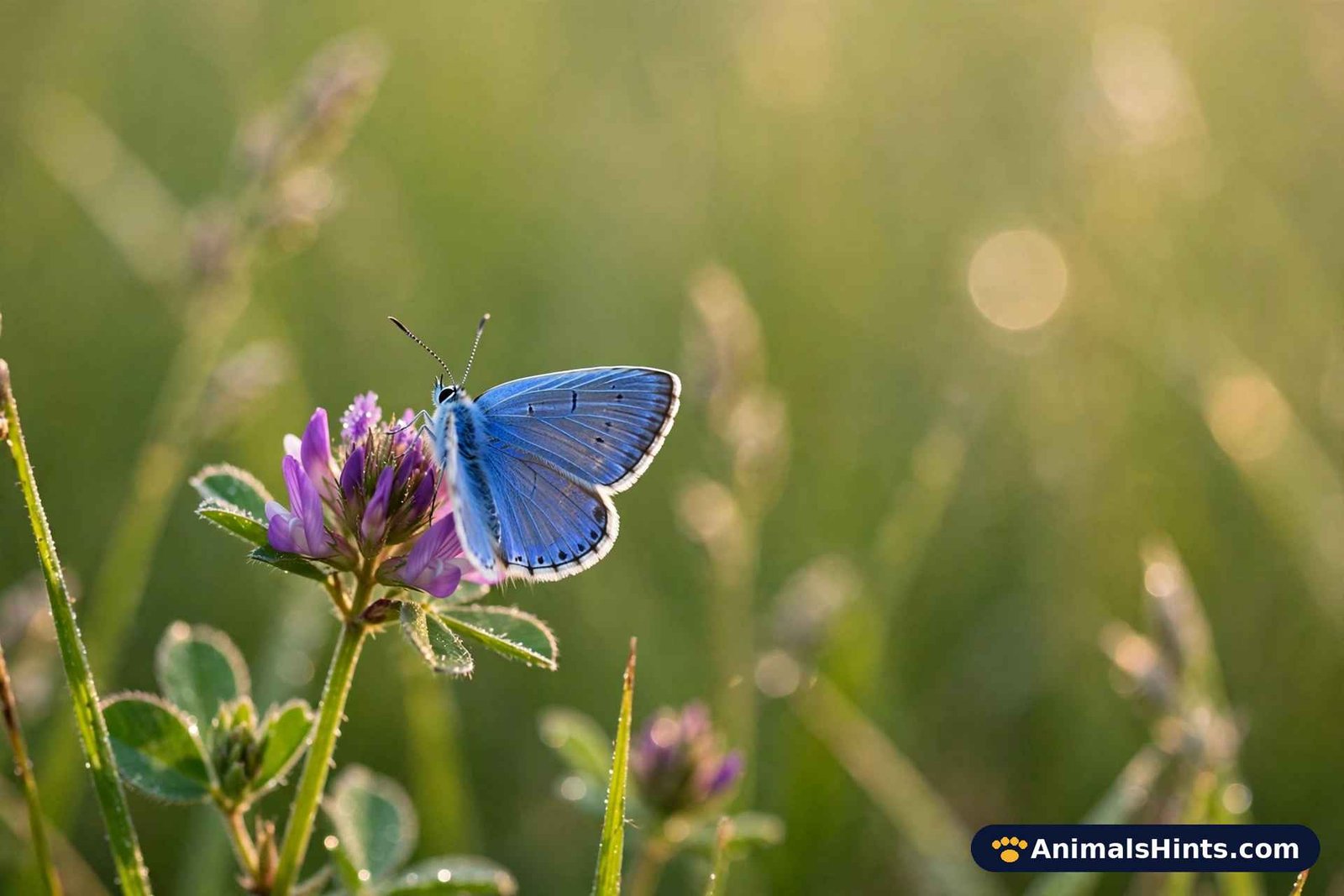
At the other end of the scale is the common blue (Polyommatus icarus), the most widespread blue butterfly in Britain and Ireland according to Butterfly Conservation, and found across Europe and temperate Asia. It is a small meadow species — wingspan about 29–36 mm — whose males are violet-blue above with a dark border and white fringe, while females are mostly brown with a dusting of blue and a row of orange spots. Its caterpillars feed on bird’s-foot-trefoil and other legumes, which is why it turns up in flowery grass, road verges and gardens in its range.
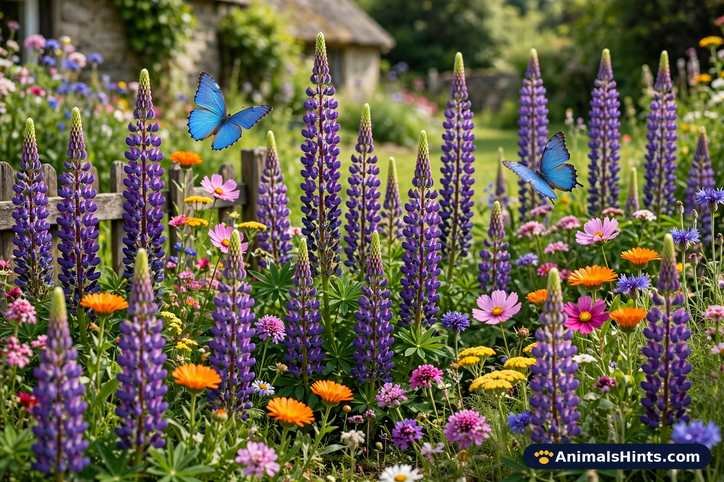
North America’s emblematic blue is the Karner blue (Plebejus samuelis), a butterfly only about an inch across with one of the most demanding diets in nature: its caterpillars feed exclusively on wild lupine (Lupinus perennis), in the oak savannas and pine barrens of the Great Lakes and Northeast. The U.S. Fish and Wildlife Service listed it as endangered on December 14, 1992, after habitat loss erased most of its range; surviving populations hang on in parts of Wisconsin, Michigan, New York, New Hampshire and Ohio, and it is New Hampshire’s state butterfly. It carries a literary footnote, too — it was scientifically described by Vladimir Nabokov, the novelist, who was also a serious butterfly scientist. Most “blue butterflies” an American reader will ever meet are small gossamer-winged species like these — which is part of why a sighting feels rare even when the species itself is simply local and seasonal.

12 Spiritual Meanings of Blue Butterflies
The twelve readings below are the set the modern tradition returns to again and again. They are given here as that tradition presents them — beliefs to reflect on, not predictions — and each is rooted in the two facts that anchor all butterfly symbolism: the metamorphosis, and the color blue.
1. Transformation and Metamorphosis
The blue butterfly is read, first of all, as transformation in progress. Just as the caterpillar has to surrender its old form entirely before it can fly, a sighting is taken as a sign that you are in — or entering — a period of deep change: old habits, beliefs or fears being shed for a newer version of yourself. The blue softens the reading. Where change alone can feel frightening, the blue butterfly is said to promise a serene change, one to trust even before you can see where it leads.
2. Rebirth and New Beginnings
Closely tied to the first, this reading treats the blue butterfly as the start of a chapter rather than the middle of one. Its bright color is compared to spring after a long winter: a turning point where you are ready to leave behind what no longer serves you. In this tradition, a blue butterfly crossing your path at a moment of decision is read as encouragement — the ending in front of you carries the seed of a beginning.
3. Spiritual Connection and Guidance
In many spiritual traditions, blue butterflies are regarded as messengers — from angels, ancestors or spirit guides, depending on the belief system. Blue is the color of sky and heaven in this symbolism, so the butterfly becomes a sign of open communication between the physical and spiritual worlds: prayers heard, guidance offered, a quiet reassurance that you are not walking unwatched. People often report these sightings at moments of confusion or loneliness, which is precisely when the tradition says to expect them.
4. Hope and Optimism
Few symbols carry hope as gracefully. The blue butterfly’s flight — fragile, brief, and beautiful anyway — is read as a reminder that difficulty is temporary and that joy returns. For some, a sighting is taken as answered prayer or a long-awaited blessing on its way; for others it is simpler, a prompt to look toward the light. Either way, the tradition’s message is the same: keep going, better days are coming.
5. Healing and Self-Love
Blue is the color the tradition associates with calm and soothing — ocean, sky, deep breath — so the blue butterfly is also read as a sign of emotional healing under way, sometimes quietly, beneath the surface. It is linked with self-love in the plain sense: acceptance of who you are now, forgiveness of yourself and others, and the patience to let a wound close at its own speed rather than on a deadline.
6. Communication and Truth Expression
This is the meaning the color blue owns outright. In modern chakra teaching, blue is the color of the throat chakra, which governs expression and truth — so a blue butterfly is read as an invitation to speak: to clear a misunderstanding, voice a feeling you have been swallowing, or share the creative work you have kept private. The tradition is specific about the manner as much as the act: true communication, in this reading, comes from the heart, and the butterfly’s gentleness is part of the instruction.
7. Joy and Beauty
Sometimes the reading is deliberately simple. The blue butterfly is a symbol of joy — the uncomplicated happiness of a bright creature on a bright day — and of beauty found in fleeting moments. In this tradition it is a nudge to notice what is already good: sunlight on water, laughter, a garden in flower. Joy, the butterfly suggests, is not a destination to chase but a way of seeing the world you are already in.
8. Personal Growth
Where transformation is the event, personal growth is the road. A blue butterfly is read as a mirror for how far you have come — and as reassurance when progress feels slow. Every stage of the butterfly’s life, including the unglamorous ones, is necessary to the wings; the tradition applies the same patience to people. Slow growth is still growth, and the sighting is taken as a sign that you are becoming more attuned to your own purpose.
9. Life and Change
Butterflies live briefly and completely, and the blue butterfly is read as a reminder of life’s rhythm: fragile, beautiful, ever-changing. In this reading, a sighting during a career shift, a move, or a relationship transition is a sign to accept impermanence rather than fight it — to shed the old version of yourself the way the caterpillar does, and to let each ending make room for what comes next.
10. Divine Feminine Energy
In modern spiritual writing, the blue butterfly is also linked with what writers call divine feminine energy — intuition, compassion, creativity and receptivity — an essence they describe as available to everyone, not a matter of gender. A sighting is read as a call to balance doing with being: to listen to emotion and instinct alongside logic, and to remember that strength does not always roar; sometimes it lands softly, like a butterfly on a hand.
11. Spiritual Purpose and Flow
A deeper reading treats the blue butterfly’s effortless flight as a picture of alignment — a life moving with its purpose rather than against it. A sighting when you feel lost or disconnected is taken as a sign to trust intuition over pure calculation, to release white-knuckled control, and to let timing unfold. In this tradition, the butterfly does not fight the wind; it works with it, and the suggestion is that a person can do the same.
12. Wishes and Good Luck
In folklore, the blue butterfly is a wish-carrier. A widely retold legend — often attached to Native American tradition, though its exact origin is untraceable — says that if you whisper a wish to a butterfly and release it, the butterfly will carry the wish to the heavens, because a butterfly cannot speak and so can never betray the secret. Blue butterflies, the rarest-looking of all, gather the strongest version of the luck reading: a sighting is treated as a small blessing, a moment to hold a hope clearly and let it go.
Significance of Blue Butterflies in Different Cultures and Religions
1. Native American Beliefs
In a number of Native American traditions, butterflies are spirit messengers, and a blue one — the color of sky — is read as bringing good news, healing after hardship, or a promise of brighter days. The wish-whispering story told in the twelfth meaning above is usually attached to this tradition in modern retellings: hopes confided to a butterfly are carried upward to the Creator. These beliefs vary from nation to nation and are best received as they are offered — as living traditions of story and prayer, not as one single doctrine.
2. Chinese Culture
In Chinese symbolism, butterflies stand for joy, freedom and romantic love — and China owns the most famous butterfly love story on earth. The Butterfly Lovers, one of China’s Four Great Folktales, tells of Liang Shanbo and Zhu Yingtai, two young scholars kept apart in life, whose spirits rise from the grave as a pair of butterflies and fly away together, never to be separated. A pair of butterflies in Chinese tradition accordingly reads as love that outlasts circumstance, and a blue one adds the modern associations of peace and renewed happiness after sorrow.
3. Celtic and European Folklore
In Celtic and especially Irish folk belief, butterflies are connected with the souls of the departed — a butterfly appearing near a home or at a significant moment is read as a loved one’s spirit nearby, offering comfort or guidance. The connection runs through the Greek psyche idea as well: the soul as a winged thing. In parts of Europe, folk readings add a gentler note — a blue butterfly visiting a garden is taken as the start of a peaceful phase, a new beginning arriving quietly.
4. Christianity
Christian tradition reads the butterfly through its life cycle: the caterpillar, the stillness of the chrysalis, and the winged creature that emerges have long been used as a picture of resurrection and new life in Christ. It is worth saying plainly that the Bible itself never mentions butterflies — the resurrection reading is a later teaching tradition built on the insect’s real metamorphosis, not a biblical text. Within that tradition, the blue butterfly specifically is read in modern devotional writing as heavenly grace and divine comfort: reassurance, at a hard moment, that the soul lives on and that no one is unwatched.
How the Blue Butterfly’s Meaning Differs From Other Colors
Color is the variable in all of these readings, so it helps to see the blue butterfly against its siblings. In the same modern symbolism tradition, a white butterfly is read for purity, innocence and the visiting spirits of loved ones — our guide to the symbolism behind seeing a white butterfly covers that reading in full. A black butterfly is more often read for endings, mystery and the shadow side of change, while an orange one is read for warmth, energy and encouragement. Blue’s territory is distinct from all of them: calm rather than purity, truth rather than mystery, peace rather than fire.
That is also why the blue sighting so often lands as a communication sign where a white one lands as a presence sign. If the white butterfly is tradition’s way of saying someone is near, the blue butterfly is its way of saying something needs to be said — or that, having been said, peace is on its way.
What Does It Mean When a Blue Butterfly Visits You or Lands on You?
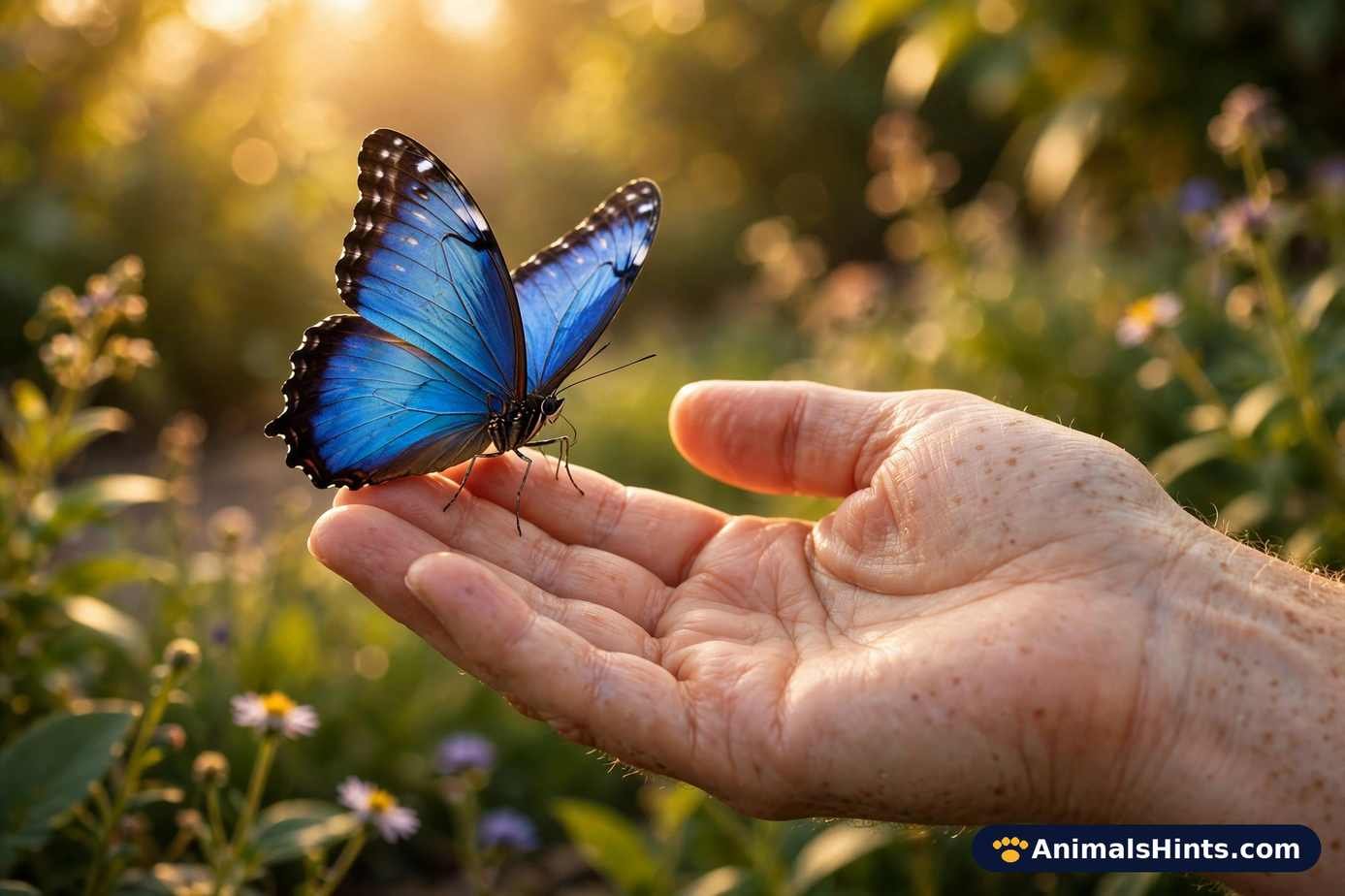
A visit is read as more personal than a passing glimpse. In the tradition, a blue butterfly that comes to your home or garden is taken as peaceful energy entering your life — often, people report, just as they are finding balance after a storm. A landing is read as more personal still: a blessing delivered directly, a sign that you are aligned with your path, or, for the grieving, a hello from someone lost. Many people describe an inexplicable calm in the moment itself, and the tradition takes that feeling as part of the message.
There is also a plain natural footnote worth knowing, because it makes the moment no less remarkable: butterflies taste with their feet and are drawn to salts and minerals, and the salt in human sweat can genuinely attract a landing. The biology explains how the butterfly chose your hand — a warm, sunlit, slightly salty perch. What the moment means to you is the part the traditions have always left to the person it happened to.
What to Do When You See a Blue Butterfly
The traditions are consistent on the practical response, and it is mostly a matter of attention. Pause. Notice what you were thinking about when it appeared — in the omen-reading frame, the thought and the sign belong together. If you hold the wish folklore, this is the moment for the wish: hold it clearly, and let the butterfly go about its business.
Two honest additions from the natural side. First, watch, photograph, enjoy — but do not chase, catch or handle it. Butterfly wings are covered in the tiny scales that make their colors, handling rubs them away, and a caught butterfly’s moment of freedom is the whole point of every story told about it. Second, if blue butterflies keep appearing in your life, the likeliest reason is a happy one: you are spending time in flowery, sunny places in the right season. Making more of those places — the next section’s subject — is the most traditional response of all.
Blue Butterfly Symbolism in Love, Relationship, and Twin Flame
In love, the blue butterfly is read through its color: deep emotional connection, honesty, and calm communication. In the tradition, a sighting during a confusing patch in a relationship is taken as a sign of renewal — a reminder that love, like the butterfly, has to keep transforming to stay alive, and that growth is something partners allow in each other. For the single, it is read as preparation: a partnership rooted in authenticity may be approaching, and the work in the meantime is becoming someone who can speak and hear the truth kindly.
Twin Flame Connection
Within the modern twin-flame belief system — a contemporary spiritual framework, not an ancient tradition — the blue butterfly is read as a sign of alignment and communication between the two souls: the connection strengthening, healing progressing during a separation, distance being outweighed by purpose. Read it as that community reads it: as encouragement that both people are growing in their own timing, and that the bond, whatever form it takes, is carried by something larger than geography.
What It Means to Dream About Blue Butterflies
Dream readings belong to modern dream-interpretation tradition rather than to any ancient text, and within that tradition a blue butterfly is among the most welcome images a dream can offer — generally read for growth, peace and a transformation already under way in the dreamer’s inner life. The common scenarios are read like this:
- A single blue butterfly — clarity or truth emerging from confusion; insight into a problem or an emotional situation is on its way.
- A blue butterfly flying freely — liberation; you are letting go of something that once held you back.
- A blue butterfly landing on you — blessing and protection; in the dream frame, guidance is close and personal.
- A blue butterfly trapped or injured — emotional struggle or resistance to change; a nudge, in the tradition’s language, to heal and move forward.
Because blue is tied to the throat chakra in the same tradition, a blue butterfly dream is often read as being about voice: something true that is ready to be said, or a creative voice asking for room.
Seeing a Blue Butterfly: Good or Bad Omen?
On the traditions’ own terms, this one is not close: across cultures, the blue butterfly is read as a good omen — blessings, renewal, good timing — and almost never as a warning. No major tradition attaches ill luck to it. Blue’s associations run toward calm and higher wisdom, so even the more serious readings (speak your truth, face the change) arrive as guidance rather than threat.
The honest frame matters here too. An omen is a belief, not a measurement; no butterfly can certify your future, and this page reports the readings because they are what people have long believed, not because they can be verified. If a sighting leaves you uneasy rather than comforted, the tradition itself says to trust your own reading of your own moment — sometimes, readers say, the butterfly has simply drawn your attention to a truth, a healing or a decision you have been avoiding, and that is a good omen working the way good omens do.
How to Attract Blue Butterflies to Your Garden
The surest way to see more blue butterflies is to garden for the whole life cycle, not just the winged stage. Adult butterflies need nectar flowers in succession across the season; caterpillars need their specific host plants, and without the host plant there is no next generation. Which blues you can attract depends entirely on where you live — morphos are rainforest butterflies you will meet in a butterfly house, not a backyard — but the principles travel.
- Plant the host plants of your local blues. In the common blue’s range, that is bird’s-foot-trefoil and its legume relatives. In Karner blue country — the Great Lakes and Northeast — it is wild lupine, Lupinus perennis, the native sundial lupine; buy it from a reputable native-plant nursery, because the big garden lupine sold everywhere is a different, western species that Karner caterpillars cannot use.
- Keep nectar coming. A succession of flowers from spring to fall, in sunny, sheltered beds, gives adults a reason to stay rather than pass through.
- Skip the pesticides. Insecticides do not distinguish between the insects you want and the ones you do not, and butterfly caterpillars are among the most sensitive casualties. Tolerate some chewed leaves; they are the price of wings.
- Offer sun and minerals. Flat stones in the sun for basking, and a shallow damp patch of soil or sand — butterflies gather at such spots to sip salts and minerals, a behavior called puddling.
- Observe, never collect. Some blues are protected by law — the Karner blue is federally endangered, and disturbing or collecting it is illegal — and every blue is fragile. A photograph keeps the moment without costing the butterfly anything.
Final Thoughts
Read across its traditions, the blue butterfly carries a rare and gentle charge: transformation with peace in it, change that arrives as a blessing rather than a blow. Its wings have made it a soul-symbol since the Greeks gave the soul a butterfly’s name, and its color has made it a byword for calm, honesty and hope in culture after culture — the wish carried upward, the lovers reunited on the wing, the quiet sign that healing is under way.
Hold the folklore in that place and it earns its keep: as a prompt to pause, to speak the truth kindly, to trust a change you did not choose. But the deepest fact about this creature needs no folklore at all. A blue butterfly is blue without a drop of blue pigment — its color is light itself, rearranged — and it reaches those wings only by surrendering its first form entirely, through a complete metamorphosis of egg, caterpillar and chrysalis. Whatever a sighting means to you, the animal underneath it is already the best version of the story: proof, on the wing, that becoming something new is what living things are built to do.
FAQs
What does a blue butterfly symbolize spiritually?
In spiritual tradition, the blue butterfly symbolizes transformation, peace, clarity and honest communication. It is read as a sign of guidance and protection, and of change carried out with grace rather than fear.
What is the significance of the blue butterfly in different cultures?
Cultures read it through their own frames: a spirit messenger and wish-carrier in Native American tradition, love and joy in Chinese symbolism — home of the Butterfly Lovers — a soul of the departed in Celtic folklore, and resurrection and comfort in Christian tradition.
What does it mean when you see a blue butterfly?
Tradition reads a sighting as peace and clarity arriving: change under way, a truth ready to be spoken, or guidance close at hand. Many people simply take it as a prompt to pause and pay attention to the moment it interrupted.
How should I respond to seeing a blue butterfly?
The traditional answer is attention: notice the moment, hold a wish or a gratitude if you are so inclined, and let the butterfly be. Watch and photograph it if you like — but never chase or handle it, since its wings are easily damaged.