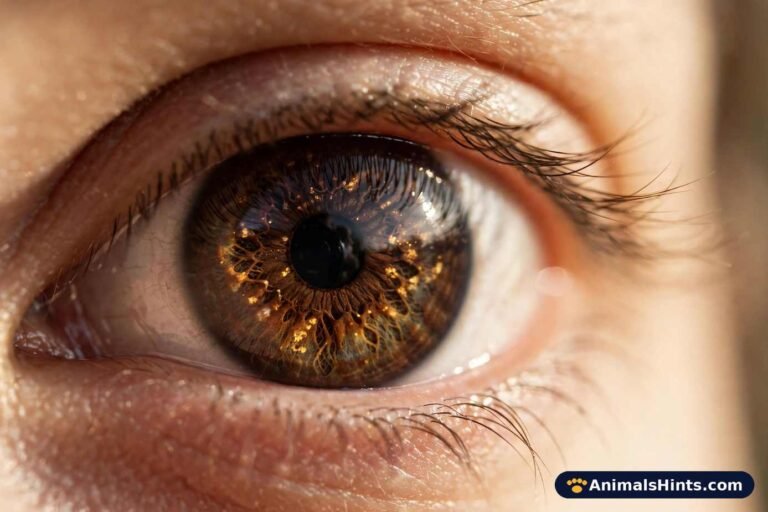
Mole on Eyelid Meaning: What a Mole on the Eye Means for Females and Males
The mole on eyelid meaning depends, in every tradition that reads it, on exactly where the mole sits: Indian astrology reads a mole on the upper eyelid as a sign of fortune and recognition, a mole below the eye as emotional depth and sensitivity, and one at the eye’s corner as charm in love. Few placements on the face are read more closely, because the mark sits on the very feature these systems use to judge a person’s character.
The readings come from systems that grew up independently of each other. Samudrika Shastra in India reads moles as karmic marks among its bodily signs, Chinese face reading (Mian Xiang) maps the eye region into palaces of property and children, and Western interpretation ties an eye mole to intuition and second sight. The systems agree that a mole on or around the eye matters — they do not always agree on whether it blesses or warns, and this page says so plainly where they split.
Below you will find the traditions’ own account first: the 11 spiritual meanings of a mole on the eye, the separate readings for females and males, right eye against left, and an area-by-area guide running from the eyebrow to below the eye. After that comes what Chinese face reading maps onto the eyelid itself, the honest medical explanation of what an eyelid mole actually is, the warning signs that deserve a doctor rather than a fortune chart, and what to think through before having one removed.

What Does a Mole on the Eye Symbolize Astrologically and Spiritually?
In the astrological traditions, a mole is more than a spot. It is treated as a karmic mark — a sign carried into this life that is believed to sketch something about character, fate or a past life’s unfinished business. Placed on the eye, the mark is read through the eye’s own symbolism: sight, truth and the inner life. A mole here is therefore read, across systems, for wisdom, insight and emotional depth — how a person sees the world, and how clearly they see themselves.
The position refines the message. In these readings the right and left eyes carry different charges, the upper and lower parts of the eye answer different questions, and some traditions tie an eye mole to past-life karma around perception — to having judged, deceived or seen too much in another life. In Samudrika Shastra, the Indian science of bodily signs, moles are one mark among many the system interprets — the same tradition that reads a twitching eye as an omen, as our guide to the left eye twitching spiritual meaning explains. What follows in the next two sections is that shared tradition’s account, presented as the belief it is.
What a Mole on the Eyelid Actually Is: The Medical Explanation
Before the symbolism goes further, the biology — because a mole on an eyelid is one body sign where the medical facts genuinely matter, and where this page’s advice differs from a mole almost anywhere else. Medically, an eyelid mole is a nevus: the same cluster of melanocytes — the cells that make melanin, the pigment that colors skin — that forms an ordinary mole anywhere on the body. Eye specialists describe eyelid nevi as common and usually stable for years, and the large majority of all eyelid growths are benign: cysts, skin tags, blocked glands and ordinary moles like this one.
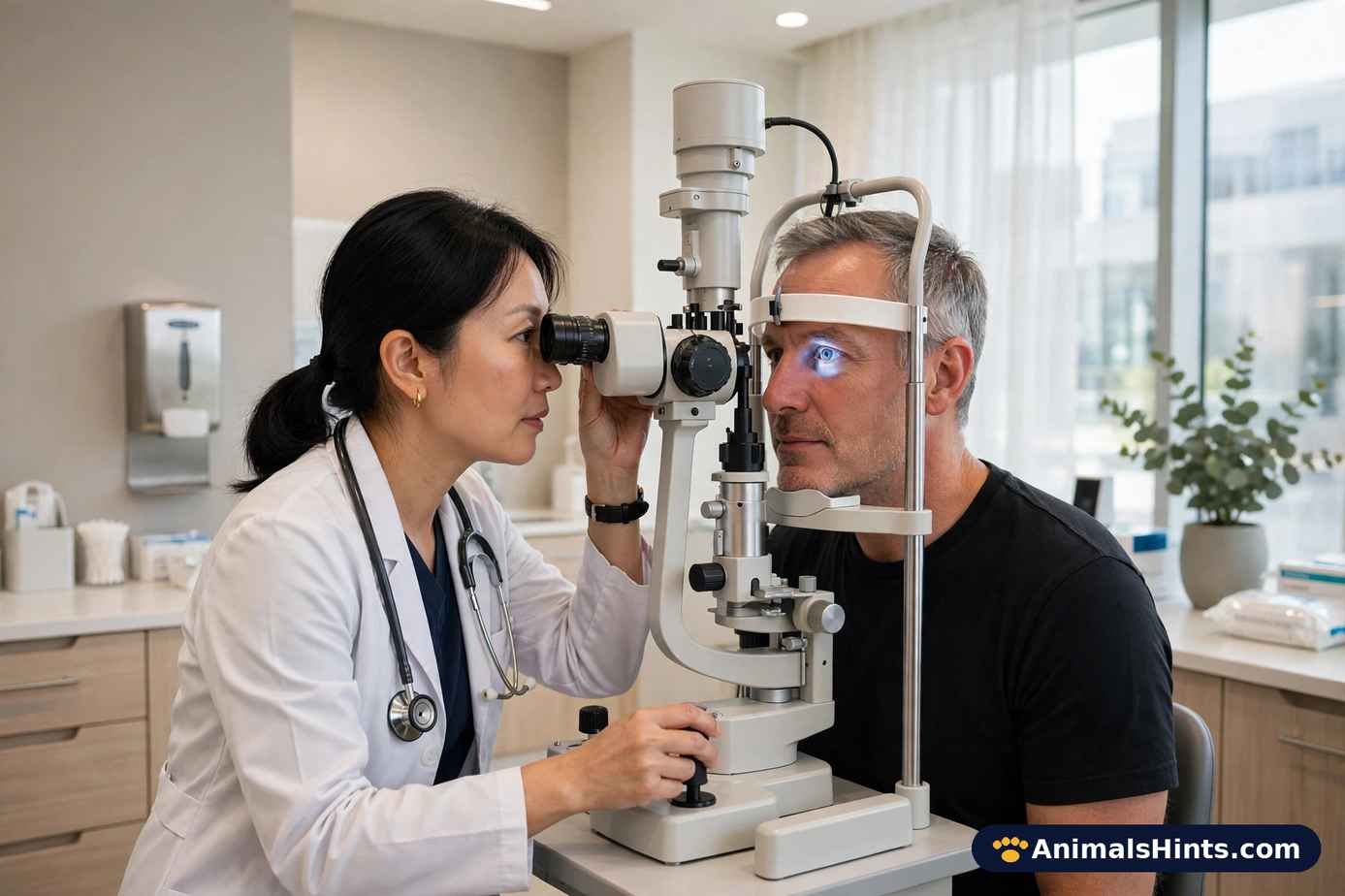
Stable is the key word. The warning signs that should take an eyelid mole to a doctor — an ophthalmologist or a dermatologist — are changes and damage: the mole grows or changes in size, shape or color; it develops irregular borders; it ulcerates, crusts or bleeds, or a sore on the lid will not heal; or the eyelashes around it fall out and do not regrow (doctors call this madarosis, and it is one of the classic red flags on an eyelid). A “stye” or chalazion that keeps returning in exactly the same spot belongs on the same list. These checks matter because the eyelid is a place where skin cancer does occur: eye specialists note that basal cell carcinoma accounts for more than 90% of malignant eyelid growths, and it is far easier to deal with when caught as a small, changing spot.
One more distinction this page will keep returning to: a mole on the eyelid is on skin, but a spot on the eyeball itself is a different thing. A brown spot on the white of the eye is usually a conjunctival nevus, a spot on the colored iris is an iris freckle or iris nevus, and a spot at the back of the eye is a choroidal nevus — the American Academy of Ophthalmology treats all three as “eye freckles,” usually harmless, but belonging to eye exams rather than home judgment. None of these — and no eyelid mole either — should ever be treated, frozen, burned or picked at home: the eyelid is thin skin millimetres from the eye it protects, and a professional’s examination is the only safe first step. Health first, symbolism second — the rest of this page is symbolism.
11 Spiritual Meanings of Mole on the Eye
The mole-reading traditions attach a cluster of meanings to the eye area, and the eleven below are the set the tradition’s sources return to again and again. They are given here as the traditions present them — chiefly Indian astrology, with Chinese and modern Western readings — as beliefs to reflect on, not as predictions.
1. Good Fortune, Prosperity, and Strength
The upper eyelid carries the tradition’s brightest reading. Sources in the Indian tradition associate this mole with happiness and spiritual abundance, while Chinese readings, as those sources present them, tie it to the sun’s energy — vitality, growth and material prosperity. The same placement is read for inner strength: resilience, the grit to take setbacks and rise from them. Read together, the upper-eyelid mole is the tradition’s good-fortune mark, promising abundance in money, relationships and recovery alike.
2. Honesty, Trust, and Industriousness
A mole on the right eye is read in Indian astrology as the mark of a person others rely on: honest in speech, steady in values, the friend whose word settles an argument. The same placement is read for industriousness — diligence as a character trait, the steady worker whose effort eventually draws recognition in career and personal life. The lesson the tradition attaches to it is balance: stay true to your principles without letting ambition crowd them out.
3. Arrogance and Pessimism
The left eye carries the cautionary counterpart. In Indian astrology, a mole here is read as a tendency toward arrogance or a pessimistic cast of mind — seeing the glass half empty, resisting feedback, letting pride cloud judgment. The tradition itself is careful to frame this as a warning to work with, not a verdict: the mark is an invitation to self-awareness, humility and deliberate optimism, and the same sources hold that recognizing the tendency is most of the cure.
4. Luck and Strong Family Bonds
Eye moles in general are read for luck — fortunate meetings, timely opportunities — and for strong family bonds: loyalty to loved ones and a gift for making a house feel like a home. The right eye is said to amplify the luck side of the reading, tying it to ambition and material success pursued with tenacity. The spiritual counsel attached to this meaning is to draw strength from family while chasing personal goals, on the theory that luck in this tradition flows through relationships.
5. Honesty and Hard Work
The tradition’s sources return to the right eye a second time — the repetition itself is part of the lore, underlining how central this placement is to the system. Beyond honesty, the second pass adds effort and perseverance: a life shaped like a farmer’s, sowing steadily toward a later harvest, with a standing warning against overwork and burnout. It is read as a favorable mark for roles built on trust — teaching, leadership, counsel — where others sense sincerity.
6. Wealth and Fame
A mole on the eyelid — the right eyelid in particular — is read in Indian astrology for wealth and fame together: not money alone but recognition, a person marked out to be noticed for their talents and drawn toward creative or leadership roles. The tradition pairs the promise with a caution of its own: fame without purpose is fleeting, and the mark’s bearer is advised to anchor ambition in values that outlast attention.
7. Charm and Global Success
A mole at the outer corner of the eye is the charm placement. Astrological tradition reads it for a magnetic personality — warmth that forms close bonds easily, especially in love — and, distinctively, for success abroad: the suggestion that this person’s opportunities open up when they venture beyond their homeland into other cultures. The corner mole is treated as a compass mark, pointing its bearer toward connection and exploration.
8. Deep Purpose
In broader spiritual interpretation, a mole near the eye is read as a signpost of purpose: a marker that the person is meant to live with heightened awareness and to keep asking what their role is. This is the most inward of the eleven meanings — less a promise about fortune than an instruction toward introspection, meditation and creative searching, trusting that purpose reveals itself to those who keep looking for it.
9. Seeing Beyond the Surface
Modern spiritual communities read an eye mole as a gift of perception — a “third eye” suggestion that the person is meant to see beyond surfaces: reading unspoken emotions, spotting truths others miss, sensing the currents under a calm situation. The practices the tradition recommends for sharpening the gift are ordinary ones — mindfulness, journaling, attention — and the meaning is usually framed as a responsibility to use insight with compassion rather than suspicion.
10. Charismatic and Attractive Personality
Closely related to the corner reading, a mole near the eye is widely read as a beauty and charisma mark: a presence that lights a room, draws people in and stands out. The spiritual framing insists the appeal is not merely surface — it is read as inner confidence and warmth made visible — and attaches the same responsibility as the charm reading: influence used to uplift and connect, not merely to attract.
11. Protection and Spiritual Connection
A mole near the tear duct or in the eye socket is read, in several cultural traditions, as a guardian mark: protection from harm, an ancestral or divine watchfulness over the person. The same placement is read for spiritual connection — an affinity for the unseen, vivid or meaningful dreams, and comfort drawn from prayer or meditation. Of the eleven, this is the meaning most often described as the mole working quietly in the background of a life.
Mole on the Eye Meanings for Females Versus Males (Astrology)
The astrological systems split the eye mole’s reading by gender, and the split follows the cultures’ traditional expectations: for females the readings lean toward the emotional and relational life, for males toward judgment, ambition and the balance between the two.
For Females
For women, a mole near the eye is read chiefly for deep emotional intelligence and compassion: nurturing, soft-spoken, intuitive, quick to read a room and to sense when something is wrong. The shadow side the tradition names is the cost of that sensitivity — vulnerability to emotional pain, betrayal and overthinking. The mole’s appearance refines the reading: a bright, round mole is read for good fortune, loyal relationships and artistic creativity, while a darker mole is read toward inner struggles and excessive empathy.
For Males
For men, the same placement is read for sharp observation and a logical yet emotional nature: responsible, ambitious, strategic, weighing situations carefully before trusting. Side matters most in the male reading — a mole on the right eye is read for success through careful choices, while one on the left is read for emotional complexity and possible conflicts in love. The tradition’s counsel to men with this mark is to balance intellect with emotion rather than suppressing either.
Meaning of Mole on the Right Eye and Left Eye
Side is the single strongest variable in the whole system, and the tradition organises it around the sun and the moon: the right eye is the sun’s — strength, vitality, outward and worldly significance — and the left eye is the moon’s — intuition, emotion, dreams and inner, karmic lessons. The female and male readings divide along the same line:
| Eye Side | Meaning for Females | Meaning for Males |
|---|---|---|
| Right Eye | Emotional balance, positive karma and clarity in relationships; good judgment and wisdom | Intelligence, career success and practical decision-making; prosperity and fame |
| Left Eye | Emotional intensity, creativity and deep compassion; may attract both admiration and jealousy | A complex love life, occasional misunderstandings, and strong intuition guiding choices |
Read against the eleven meanings above, the pattern is consistent: the right eye collects the tradition’s worldly promises — honesty rewarded, work recognised, wealth and fame — while the left eye collects its inner-life readings, both the gifts (intuition, depth, creativity) and the cautions (pride, pessimism, complicated love).
Spiritual Meanings of Mole on Different Areas of the Eye
Zoom in further and each small area around the eye carries its own reading. This guide stays on the eye; for the rest of the face — forehead, nose, cheeks, lips and chin — our full guide to mole placement meaning gives each position’s traditional reading.
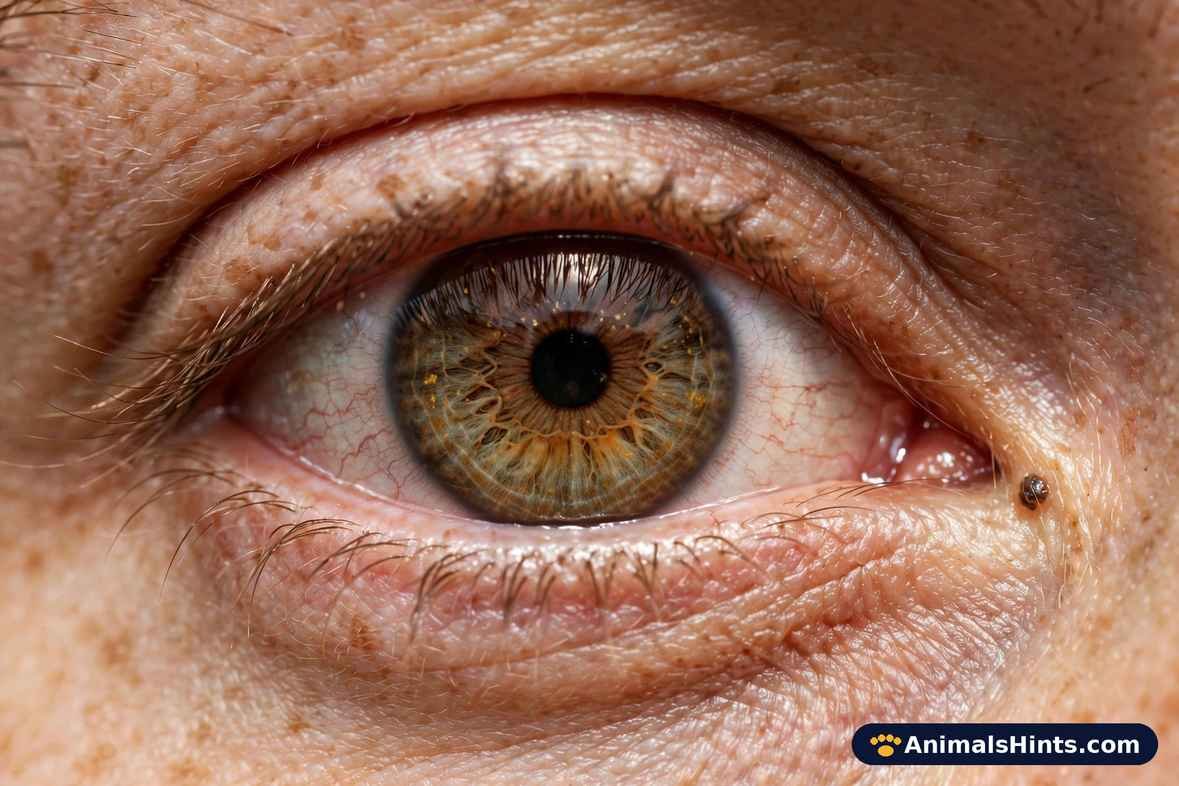
1. Mole on the Eyebrow
A mole on or close to the eyebrow is read for leadership, ambition and charm: a person who attracts admiration and succeeds through communication, sees opportunities clearly and makes strong connections. In Chinese reading the brow zone also neighbours the hidden-mole premium — a mole tucked inside the eyebrow hair is prized in that tradition as a “hidden pearl,” a point the face guide above covers in full.
2. Mole on the Eyelid
Here the area-by-area tradition strikes a notably different note from the fortune readings in the eleven meanings. Read strictly by area, a mole on the eyelid is said to reflect emotional restlessness and attachment issues — frequent changes of mood or relationship — balanced by adaptability and creativity: a person who recovers quickly from setbacks. This page will not smooth that over: the same tradition that calls the upper eyelid a fortune mark elsewhere reads the eyelid itself as restless, and the honest verdict section below takes up the contradiction directly.
3. Mole on the Corners of the Eye
A mole at the corner — the outer edge above all — is read for romantic intensity and deep emotional experience: meaningful relationships, with heartbreak the named risk for those who trust too easily. The lesson the tradition attaches is discernment in love: compassion kept, self-boundaries kept too. Chinese charts put the outer corner in the Marriage Palace, so the reading lands on partnership from that direction as well.
4. Mole on the Sclera (White Part of the Eye)
A mark actually on the white of the eye is rare, and the tradition reads it as spiritual protection: a warning mark that steers its bearer away from deceit and hidden dangers, backed by strong intuition. The medical fact deserves equal billing: a spot here is usually a conjunctival nevus, an “eye freckle” the American Academy of Ophthalmology describes as the most common pigmented spot on the eye’s surface, usually harmless — but a spot on the eyeball itself, especially a new or growing one, should be examined by an eye doctor rather than read.
5. Mole on the Iris
A mole on the iris is read for heightened awareness and intuitive sight: visionary ideas, strong imagination, a clear sense of purpose, a felt connection to unseen things. Medically, the small dark flecks most people have here are iris freckles, which the AAO describes as harmless melanin flecks that do not develop into melanoma; a larger, deeper spot is an iris nevus, usually benign but one an eye doctor monitors over time — again, exam territory, not chart territory.
6. Mole on the Wall (Inner Corner or Between Eyes)
The competitor tradition’s “wall” of the eye — the inner corner and the bridge between the eyes — is read for family-related karma and ancestral ties: strong emotional attachment to loved ones, sometimes bringing sacrifices or responsibilities taken on young. The reading’s heart is the balance between love and duty. Chinese reading adds its own weight to the neighbouring spot: the space between the brows is the Life Palace, the governing palace of the whole face in that system.
7. Mole on the Back of the Eye
No one can see this placement without instruments, and the tradition reads it accordingly — symbolically, as past-life wisdom: a mark of spiritual maturity and a pull toward philosophy and esoteric questions. The medical counterpart is the one placement where the check-up matters most: a spot at the back of the eye is a choroidal nevus, found at dilated eye exams in roughly 5% of US adults by retinal specialists’ estimates. The American Society of Retina Specialists puts the chance of one turning into melanoma at about 1 in 9,000 per year — small, but the reason eye doctors photograph and monitor it. If an eye exam has ever found one in you, the follow-up appointments are the meaning that counts.
8. Mole Below the Eye
A mole below the eye is a classic symbol, across the traditions, of sensitivity, artistic talent and compassion: a person who feels deeply, may cry easily, and expresses love and empathy beautifully — “a heart that sees beyond appearances,” in the tradition’s phrase. Chinese face reading independently gives this exact ground to the Children Palace, which is why the under-eye mole so often picks up readings about children and what a person brings into the world.
Cultural or Religious Interpretations
The broad systems each put their own frame around the same small mark:
- Hindu Face Reading (Samudrika Shastra): a mole near the eyes indicates sharp perception and emotional intelligence. The right eye represents success and respect; the left eye may bring emotional ups and downs — the karmic, character-based reading that runs through most of this page.
- Chinese Astrology: the eye mole is linked to wealth and relationships — a mole on the right eye brings fortune and charm, while one on the left shows inner wisdom and deep thinking. (The specifically Chinese discipline of face reading adds a map of its own, covered in the next section.)
- Western Spiritual Views: the mole is connected to “third eye” energy — psychic vision, awareness and intuition — which is where the modern “seeing beyond the surface” reading comes from.
- African and Middle Eastern Traditions: moles around the eye can signify divine protection, or the presence of ancestral spirits guiding the person’s path — the source of the guardian reading in the eleven meanings.
Mole on the Eyelid Meaning in Chinese Face Reading (Mian Xiang)
Chinese face reading deserves a section of its own here, because Mian Xiang does not read the eye as one symbol — it lays a map of twelve palaces over the face and reads each patch of ground separately, and the eyelid lands on a specific square of that map. In the standard twelve-palace scheme (set out, among modern references, in the Wudang Tai Chi & Qi Gong association’s face-reading overview and classical-manual summaries), the upper eyelids are the Property Palace (Tian Zhai Gong): the department of land, home and settled assets — what a person owns, where they live, and the emotional shelter of their household.
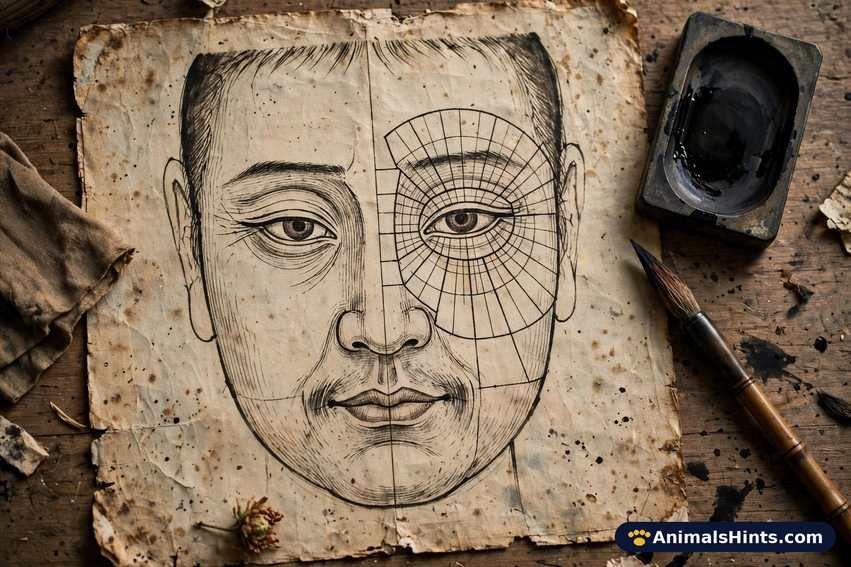
That placement changes the Chinese reading of an eyelid mole. Where the Indian tradition reads the upper eyelid for fortune in general, a Mian Xiang reader asks a narrower question: what is happening in this person’s home-and-property department? Classical manuals prize a Property Palace that is wide, smooth and unblemished, so stricter readers treat a dark mole sitting in it as a complication or blemish in that department — a caution about home and assets — rather than a blessing. Other readers soften it: a mole in a palace is news about that palace, and news can cut either way. The neighbouring ground matters too: the area directly under the eyes is the Children Palace, which is why under-eye moles gather family readings, and the eyes themselves hold one of the Five Officials’ posts — the Inspector — read for spirit (shen), vitality and honesty above any single mark. It is also honest to add that the palace maps themselves vary between schools and manuals; Mian Xiang is a family of charts, not a single one.
Myths and Superstitions Associated with Mole on the Eye
Folklore wraps the eye mole in its oldest stories. In some of them it is the sign of an old soul — someone who has seen much in previous lives and carries the depth of it. In others it marks a person of unusual emotional range, destined for both great love and great sorrow, the two arriving through the same sensitivity. Regional superstition keeps the side rule in its simplest form: right eye for luck and leadership, left eye for challenges in relationships.
Modern spiritualists, by and large, decline both the blessing and the curse. The contemporary reading treats the mole as a symbolic reminder — of life lessons in emotional clarity, perception and compassion — rather than a fate. That may be the folklore’s own verdict on itself: the stories survive because the reminder is useful, not because the forecast is reliable.
Is It a Good Sign for Females and Males?
On the traditions’ own terms, mostly yes — with the placement, the mole’s shape and the person’s overall “energy” deciding the balance. The summary the sources give runs:
- For Females: it often signals emotional intelligence, loyalty and inner strength. Such women are said to connect deeply with others and inspire trust — and to need guarding against emotional burnout, the cost of feeling everything.
- For Males: it shows analytical thinking, balance and wisdom in leadership. These men usually make smart choices but may struggle to express feelings openly.
Spiritually, the tradition’s own bottom line is that the mole is neither good nor bad in itself — it is a marker of soul evolution, a reminder of lessons in perception, truth and compassion. The eyelid specifically, though, is where that tidy answer wobbles, as the next section shows.
Is a Mole on the Eyelid Good Luck or Bad Luck? The Honest Answer
Both readings exist — and for the eyelid, they exist inside the same tradition, sometimes on the same page. Indian astrology’s collected meanings call the upper eyelid a fortune mark twice over (good fortune and prosperity; wealth and fame), while the area-by-area guide in the same body of lore reads the eyelid itself as emotional restlessness and attachment trouble. The left eye is a caution in Indian reading and a gentler mark of wisdom in Chinese reading. The Chinese palace map adds a third voice: a mole in the Property Palace, read strictly, is a blemish on the home department. Verdicts flip by side, by gender, by school and by which of the tradition’s own lists you open.
That spread is the honest answer. A sign whose meaning reverses between the sources that teach it is best held the way this page has presented it: as inherited folklore — rich, interesting, worth reflecting on — and not as a forecast you should plan, spend or worry by. The one reading of an eyelid mole that rests on evidence is the medical one, and it is short: an unchanged mole is ordinary, and a changing one deserves a doctor.
Can a Mole on the Eyelid Be Removed? What to Know First

People ask about removal for two reasons — appearance, and the luck readings above — and the practical facts are the same either way. An eyelid mole that a doctor agrees should come off is removed as a minor procedure, and on an eyelid it belongs with an ophthalmologist, an oculoplastic surgeon or a dermatologist: the skin is the thinnest on the body, the lash line and the lid’s closing mechanism sit in the same few millimetres, and the eye itself is directly underneath. A stable, ordinary nevus often needs nothing at all — eye specialists routinely simply observe eyelid nevi that are not changing — while a mole with any warning sign (growth, lash loss, ulceration, irregular pigment) should be examined first and, where there is doubt, biopsied rather than merely trimmed away, so that tissue can be tested.
Two firm don’ts follow. Never use home mole-removal creams, freezing kits or home remedies on an eyelid: products that burn or freeze skin have no safe margin millimetres from an eyeball. And do not let a fortune chart make the decision in either direction — some readers hold that removing an unlucky mole removes its influence, others that the mark is not the mechanism, and no tradition’s answer is evidence. If a mole bothers you, decide with the doctor who examined it, for reasons of health or appearance that are yours.
Final Thoughts
A mole on or around the eye collects more interpretation than almost any other mark on the face: fortune on the upper lid, honesty on the right, caution on the left, charm at the corner, protection at the tear duct — and, in the Chinese map, a question about home and property sitting in the Property Palace. The traditions disagree with each other, and on the eyelid they sometimes disagree with themselves, which is exactly why this page has kept every reading attributed to the system that teaches it. Held as folklore, the mole on eyelid meaning is a prompt to reflect on how you see — other people, and yourself.
Keep the folklore in that place and it earns its keep. But let the last word belong to the one authority here that deals in evidence: if a mole on your eyelid or a spot in your eye is new, growing or changing, skip the charts and read the American Academy of Ophthalmology’s plain-language overview of the eye nevus, the “eye freckle” — and let an eye doctor, not a destiny map, decide what it means.
FAQs
What is the spiritual meaning of a mole on the eye?
Traditions read an eye mole as a sign of perception, insight and spiritual vision — strong intuition and the sense of seeing the world differently. The exact reading depends on the placement, the side and the system doing the reading.
Does the meaning of an eye mole differ for females and males?
Yes, in the Vedic-based readings: females get emotional intelligence, compassion and intuition; males get observation, wisdom and leadership. Many traditions weigh the side — right versus left — more heavily than gender.
What does a mole on the eyelid mean spiritually?
The sources split: Indian astrology reads the upper eyelid for fortune, prosperity and fame, while the area guides read the eyelid as emotional restlessness balanced by adaptability and creativity. Chinese face reading places the eyelid in the Property Palace, tying it to home and assets.
Is a mole on the eye considered lucky?
Often, yes — its rarity is read as significance, and the right eye and upper eyelid carry the luckiest readings. The left eye and the stricter Chinese reading are more cautious, so the traditions’ full answer is “lucky, with exceptions.”