Explore Top 17 Animals with Shells (With Images)
Animals with shells are creatures that have a hard outer covering. The shell protects their soft body from danger. These animals live in the sea, on land, and in freshwater.
Some animals have smooth shells, while others have rough or colorful ones. Can you guess which animals use their shells as a safe home? You may be surprised by how many different species have shells.
Animals with shells include turtles, snails, clams, oysters, and crabs. Their shells help them stay safe and survive in nature. Each species has unique features and an important role in its habitat.
Read this too: Top 18 Small Monkey Breeds In The World
Why Do Animals Develop Shells?
Nature is brilliant. Over millions of years, animals have evolved natural defense mechanisms to stay alive.
Shells are one of the most successful survival tools on Earth.
Here are the main reasons animals develop shells:
- Protection from predators: A hard shell is tough to crack. Many predators simply give up.
- Environmental defense: Shells shield animals from harsh weather, drying out, and extreme temperatures.
- Structural support: Shells give the body shape and a place for muscles to attach.
- Buoyancy control: Some marine animals use their shells to float or dive.
Interestingly, shells are made from different materials. Mollusks use calcium carbonate. Insects build chitinous exoskeletons. The Nine Banded Armadillo grows bony plates under its skin.
This variety shows how evolutionary adaptations occur across different animal groups.
Now, let’s meet the stars of our list.
List of Animals with Shells
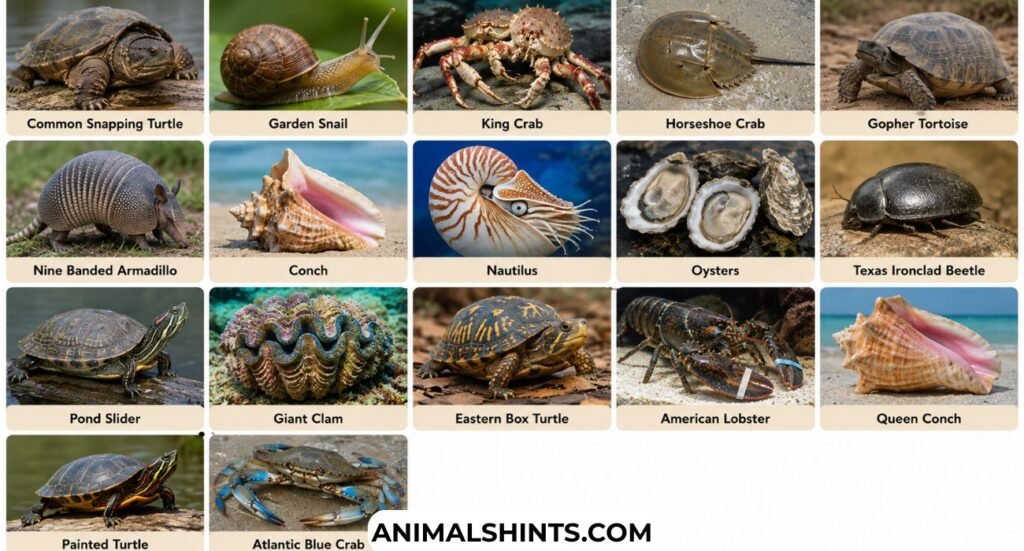
Here are 17 remarkable shell creatures from around the world.
| Number | Animal Name | Class | Diet |
| 1 | Common Snapping Turtle | Reptilia | Omnivore |
| 2 | Garden Snail | Gastropoda | Herbivore |
| 3 | King Crab | Malacostraca | Omnivore |
| 4 | Horseshoe Crab | Merostomata | Carnivore |
| 5 | Gopher Tortoise | Reptilia | Herbivore |
| 6 | Nine Banded Armadillo | Mammalia | Omnivore |
| 7 | Conch | Gastropoda | Herbivore |
| 8 | Nautilus | Cephalopoda | Carnivore |
| 9 | Oysters | Bivalvia | Filter feeder |
| 10 | Texas Ironclad Beetle | Insecta | Detritivore |
| 11 | Pond Slider | Reptilia | Omnivore |
| 12 | Giant Clam | Bivalvia | Omnivore |
| 13 | Eastern Box Turtle | Reptilia | Omnivore |
| 14 | American Lobster | Malacostraca | Carnivore |
| 15 | Queen Conch | Gastropoda | Herbivore |
| 16 | Painted Turtle | Reptilia | Omnivore |
| 17 | Atlantic Blue Crab | Malacostraca | Omnivore |
Let’s explore each one in detail.
Common Snapping Turtle
Scientific name: Chelydra serpentina
Class: Reptilia
Diet: Omnivore
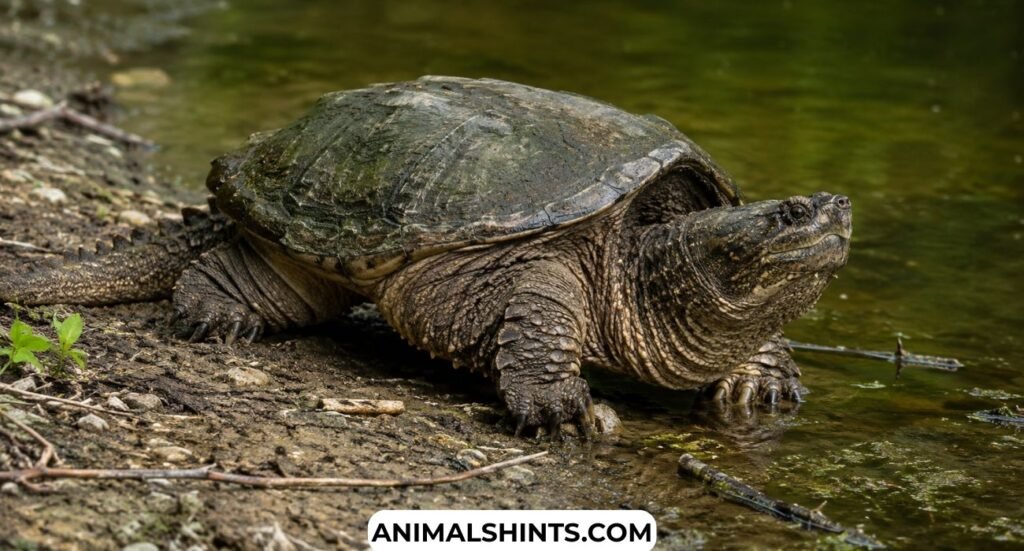
The Common Snapping Turtle looks like a creature from prehistoric times. Its powerful beak and strong jaws make it a formidable predator.
You will find these turtles in freshwater habitats across North America. They live in ponds, lakes, and slow-moving rivers.
Their shell structure is unique. Unlike other turtles, their shell is not overly heavy. This allows surprising agility underwater.
They are opportunistic feeders. They eat aquatic plants, fish, frogs, and even carrion.
As scavengers, they play a vital role in their ecosystem. They help control population control by eating dead animals. This keeps the water clean and healthy.
Here is an interesting fact. Snapping turtles can hold their breath for over an hour. This helps them ambush prey without being detected.
Their camouflage is remarkable too. Their shells blend perfectly with riverbed debris. This makes them nearly invisible to both prey and predators.
Garden Snail
Scientific name: Cornu aspersum
Class: Gastropoda
Diet: Herbivore
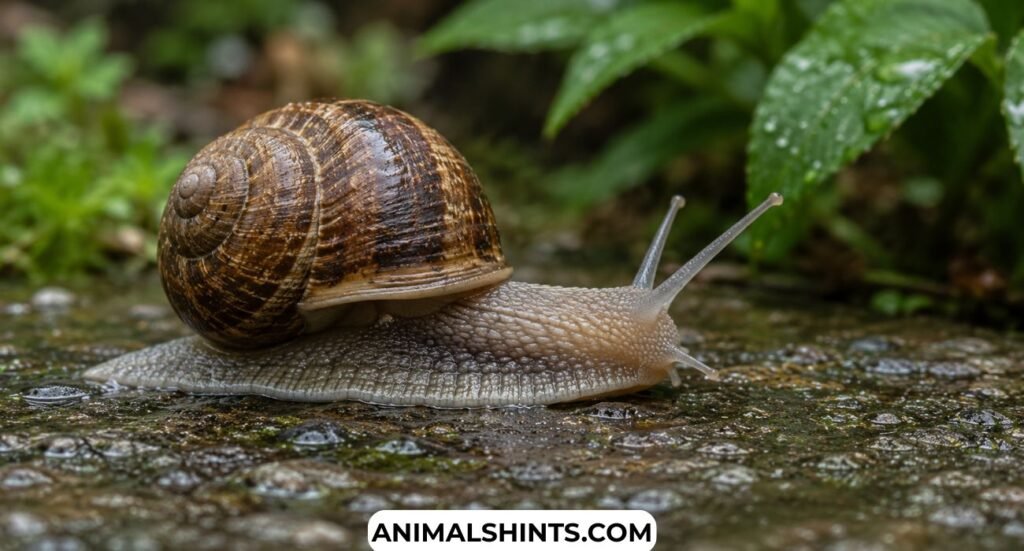
The Garden Snail is one of the most familiar shell creatures. You have probably seen one after a rainy day.
Its coiled shell is a masterpiece of natural engineering. Made of calcium carbonate, it provides strong protection.
But the shell does more than just defend. It also helps the snail retain moisture. This is essential for survival in dry conditions.
Garden snails are herbivores. They feed on decaying plant material. This makes them important for nutrient cycling in gardens.
They have a surprisingly good sense of smell. This helps them locate food from a distance.
Snails are also social creatures. They communicate through chemical signals in their slime trails. Each trail tells a story that only other snails can read.
When conditions get tough, snails enter a state of dormancy. They seal themselves inside their shells with mucus. This amazing survival tactic helps them wait out dry spells.
King Crab
Scientific name: Paralithodes camtschaticus
Class: Malacostraca
Diet: Omnivore
The King Crab is a giant of the ocean. It is famous for its delicious meat and impressive size.
These crustaceans live in the cold waters of the Bering Sea. They are an important part of Alaska’s fishing industry.
Their massive, spiny shell provides excellent protection. The red-orange color offers perfect camouflage against the rocky seafloor.
King crabs are opportunistic feeders. They eat almost anything they find on the ocean floor.
They also display fascinating social behavior. During mating season, males perform elaborate courtship rituals. They show off their strength to attract females.
As scavengers, king crabs help maintain ecological balance. They clean up dead matter from the seafloor.
Their armored exterior is both strong and flexible. This allows them to move quickly when hunting or escaping predators.
Horseshoe Crab
Scientific name: Limulus polyphemus
Class: Merostomata
Diet: Carnivore
The Horseshoe Crab is a true living fossil. It has existed for over 450 million years.
Despite its name, it is not a true crab. It is more closely related to spiders and scorpions.
Its horseshoe-shaped shell is one of nature’s toughest armors. This shell protects it from predators like sharks and sea turtles.
But the most remarkable feature is its blue blood. The blood contains hemocyanin, a copper-based protein.
This blue blood is incredibly valuable to medicine. It can detect bacterial infections in vaccines and medical equipment.
Horseshoe crabs play a crucial role in the marine food web. Their eggs are a vital food source for migratory birds.
Every spring, they come to shore to spawn. Thousands of eggs provide nutrition for birds along the Atlantic coast.
Their reproductive strategies ensure the survival of their species. Females lay up to 20,000 eggs in a single nesting season.
Gopher Tortoise
Scientific name: Gopherus polyphemus
Class: Reptilia
Diet: Herbivore
The Gopher Tortoise is a true architect of the animal kingdom. It digs deep burrows that provide shelter for many other species.
You will find this tortoise in the southeastern United States. Florida, Georgia, and Alabama are home to these amazing creatures.
Their shells are dome-shaped and brownish-gray. This provides excellent protection from predators.
But their most impressive feature is their burrows. These tunnels can stretch up to 40 feet long.
Over 350 other species use these burrows for shelter. Rattlesnakes, rabbits, and burrowing owls all find safety inside.
This makes the Gopher Tortoise a keystone species. Its presence supports an entire community of animals.
As herbivores, they eat grasses, leaves, and berries. Their grazing habits help maintain the health of their terrestrial habitats.
Sadly, they are threatened by habitat destruction. Conservation efforts are crucial for their survival.
Nine Banded Armadillo
Scientific name: Dasypus novemcinctus
Class: Mammalia
Diet: Omnivore
The Nine Banded Armadillo is the only mammal on our list. It is also the only armadillo species found in North America.
Its shell is made of bony plates covered by a tough, leathery skin. This armor provides excellent protection against predators.
You will find these animals across the southern United States. Texas, Florida, and other southern states are their primary habitats.
When threatened, they can roll into a ball. But they have another amazing ability. They can dig incredibly fast to escape danger.
Their reproductive strategies are unique. Females give birth to identical quadruplets. This ensures a high survival rate.
As omnivores, they eat insects, grubs, and small plants. This makes them important for soil aeration. Their digging helps improve soil quality.
They can also hold their breath for up to six minutes. This helps them cross streams and rivers.
Conch
Scientific name: Strombus gigas
Class: Gastropoda
Diet: Herbivore
The Conch is famous for its beautiful, spiral shell. Its vibrant colors and intricate patterns make it a favorite among beachcombers.
These gastropods live in tropical and subtropical waters. You can find them in the Florida Keys and the Caribbean.
Their shells are made of calcium carbonate. This creates a strong, durable home that protects them from predators.
Conchs are herbivores. They graze on algae and seagrass. This helps maintain healthy seagrass beds.
Their life cycle is fascinating. Young conchs start as floating larvae. They drift with ocean currents before settling on the seafloor.
This journey highlights the importance of ocean currents in their survival.
Conchs also have a unique way of moving. They use their muscular foot to “leap” along the seafloor.
Sadly, overfishing has threatened many conch populations. Conservation efforts are now in place to protect them.
Nautilus
Scientific name: Nautilus pompilius
Class: Cephalopoda
Diet: Carnivore
The Nautilus is another living fossil. It has survived for over 500 million years without major changes.
Its spiral shell is a marvel of natural engineering. The shell is divided into gas-filled chambers.
These chambers provide buoyancy control. The nautilus can adjust the gas in each chamber to float or dive.
Unlike its fast-moving relatives like squid and octopus, the nautilus is slow. It glides through the water with grace and patience.
It lives in the dark, mysterious depths of the ocean. This underwater ecosystem is home to many unique creatures.
As carnivores and scavengers, they feed on fish and crustaceans. Their tentacles help them capture prey.
The nautilus shows that survival is not always about speed. Sometimes, patience and adaptation are enough.
Oysters
Scientific name: Crassostrea virginica
Class: Bivalvia
Diet: Filter feeder
Oysters are more than just a seafood delicacy. They are environmental heroes.
These bivalves live in coastal habitats along the Atlantic coast and Gulf of Mexico.
A single oyster can filter water up to 50 gallons per day. This removes impurities and improves ocean health.
Their shells form complex reefs. These reefs serve as breeding grounds for fish and crustaceans.
Oysters also have fascinating reproductive strategies. Many species can change their sex. This helps them adapt to changing environmental conditions.
As filter feeders, they play a crucial role in water filtration. They help maintain the health of estuaries and coastal waters.
Sadly, overfishing and pollution have devastated oyster populations. Conservation efforts are working to restore their numbers.
Read also: Animals without tails
Texas Ironclad Beetle
Scientific name: Zopherus nodulosus haldemani
Class: Insecta
Diet: Detritivore
The Texas Ironclad Beetle is one of the toughest creatures on Earth.
This insect lives in the dry landscapes of Texas. Its chitinous exoskeleton is incredibly strong.
In fact, it can withstand forces up to 39 times its own body weight. This makes it one of the hardest shell creatures in existence.
Unlike many animals, it does not flee when threatened. It relies on its armored exterior to survive attacks.
Its matte black appearance is not just for show. It helps the beetle blend into its arid landscapes.
As a detritivore, it feeds on dead wood and fungi. This contributes to nutrient cycling in its ecosystem.
The Texas Ironclad Beetle is a perfect example of durability in nature. Its resilience is a testament to evolutionary success.
Pond Slider
Scientific name: Trachemys scripta
Class: Reptilia
Diet: Omnivore
The Pond Slider is one of the most common turtles in North America.
You will find them in urban ponds, lakes, and slow-moving rivers. They are highly adaptable to different environments.
Their shells are smooth and rounded. Many of them have colorful markings, including a distinctive red patch behind the eye.
These turtles love to bask in the sun. They can often be seen on logs or rocks warming themselves.
They communicate through body gestures and subtle water movements. This challenges the idea that reptiles are solitary.
As omnivores, they eat plants, insects, and small fish. This helps maintain ecological balance in their freshwater habitats.
Pond sliders are also known for their adaptability. They can thrive in many different conditions. This has helped them spread across the United States.
Giant Clam
Scientific name: Tridacna gigas
Class: Bivalvia
Diet: Omnivore
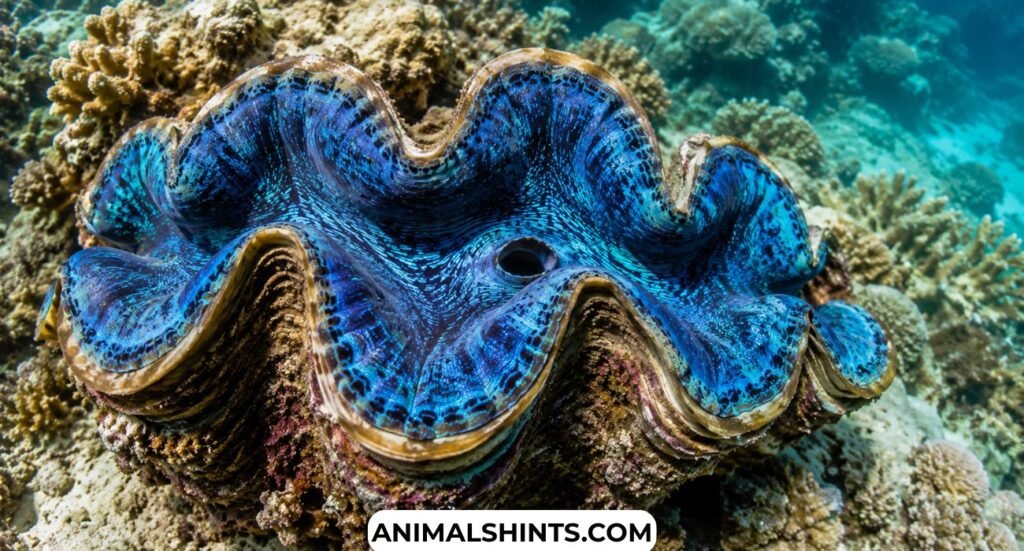
The Giant Clam is the largest shell creature in the world.
It can reach up to four feet in length. Some weigh over 500 pounds.
These clams live in the warm waters of the Indo-Pacific. Their shells are incredibly strong and thick.
But the most amazing thing about giant clams is their relationship with algae. They host symbiotic algae inside their tissues.
The algae produce food through photosynthesis. This provides the clam with most of its energy.
Their shells are also homes for tiny organisms. This makes them small ecosystems in themselves.
Giant clams also filter water. They help maintain the health of coral reefs.
Sadly, they are threatened by climate change and overfishing. Conservation efforts are essential for their survival.
Eastern Box Turtle
Scientific name: Terrapene carolina
Class: Reptilia
Diet: Omnivore
The Eastern Box Turtle is a beloved reptile in the eastern United States.
Its shell is highly domed and often has beautiful patterns. The lower shell has a hinge that allows it to close completely.
This gives the turtle its “box” name. It can seal itself inside its shell for protection.
These turtles live in forests, meadows, and wetlands. They are long-lived and can survive up to 100 years.
Also, they are territorial. They spend their entire lives within a small home range.
As omnivores, they eat berries, mushrooms, insects, and earthworms. This makes them important for seed dispersal.
Sadly, habitat destruction has reduced their numbers. Wildlife protection is crucial for their future.
American Lobster
Scientific name: Homarus americanus
Class: Malacostraca
Diet: Carnivore
The American Lobster is a symbol of New England’s fishing industry.
These crustaceans live in cold Atlantic waters. The Gulf of Maine is home to a large population.
Their shells are smooth and cylindrical. In the wild, they are dark blue-green or black.
Their large claws serve different purposes. One claw is for crushing. The other is for tearing.
Lobsters molt their shells to grow. This leaves them vulnerable until their new shell hardens.
They are scavengers that clean the ocean floor. They eat fish, mollusks, and other small marine animals.
Lobsters can live for over 100 years. They continue to grow throughout their lives.
Queen Conch
Scientific name: Aliger gigas
Class: Gastropoda
Diet: Herbivore
The Queen Conch is a close relative of the common conch. It is famous for its beautiful pink shell.
You can find these shells washed up on Florida beaches. Their large, flared lips are instantly recognizable.
The pink-orange lip makes them highly prized. They are often used in jewelry and decorations.
Queen conchs are herbivores. They graze on seagrass and algae. This helps maintain healthy marine ecosystems.
They move by “leaping” on the seafloor. Their muscular foot pushes them forward in short jumps.
Commercial harvesting of queen conch is now banned in Florida. This helps protect wild populations from overfishing.
Painted Turtle
Scientific name: Chrysemys picta
Class: Reptilia
Diet: Omnivore
The Painted Turtle is the most widespread native turtle in North America.
It lives from Canada to Mexico. You can find it in slow-moving freshwater bodies.
Its shell is smooth and olive-green to black. Bright yellow and red stripes decorate its head and legs.
These turtles are social creatures. They often bask together in large groups.
Painted turtles have a remarkable ability. They can survive freezing temperatures. They do this by supercooling their blood.
As omnivores, they eat aquatic plants, insects, and carrion. This helps maintain water quality.
They can absorb oxygen through their skin. This allows them to stay underwater for long periods.
Atlantic Blue Crab
Scientific name: Callinectes sapidus
Class: Malacostraca
Diet: Omnivore
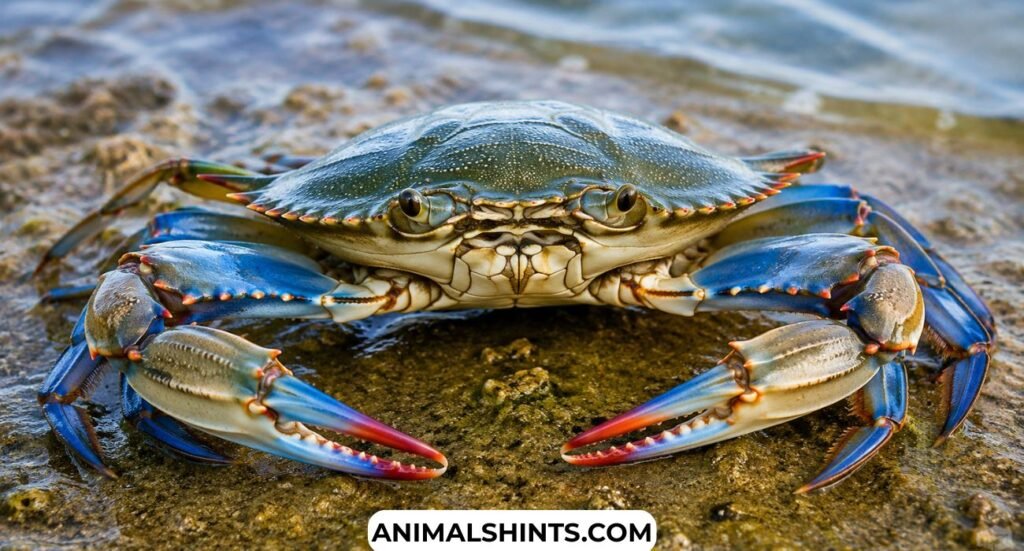
The Atlantic Blue Crab is an icon of the Chesapeake Bay region.
Its shell is a beautiful bluish-green color. Its claws are a distinctive bright blue.
These crabs are excellent swimmers. Their paddle-shaped rear legs help them move through the water.
They are aggressive and opportunistic feeders. They eat almost anything they can find.
Blue crabs are important to the marine food web. They help control populations of smaller marine life.
They are also a major economic resource. The Chesapeake Bay supports a large blue crab fishing industry.
Male blue crabs are called “Jimmies.” Females are called “Sooks” or “Sallys.” These names are part of local maritime culture.
The Ecological Importance of Shelled Animals
Animals with shells are not just interesting to look at. They are essential to the health of our planet.
Water filtration is one of their most important roles. Oysters and other bivalves filter huge amounts of water. They remove pollutants and improve water quality.
Habitat creation is another vital function. Oyster reefs and tortoise burrows provide homes for many species.
Nutrient cycling keeps ecosystems healthy. Snails and beetles break down organic matter. This returns nutrients to the soil.
Soil aeration improves plant growth. Animals like the armadillo dig into the ground. This helps roots grow and water to penetrate.
Food web support is critical. Horseshoe crab eggs feed millions of migratory birds. This supports biodiversity hotspots along coastlines.
These shell creatures are interconnected with other species. Their survival is linked to the health of entire ecosystems.
How to Help Protect Shelled Animals
Many shelled animals face serious threats. Climate change, pollution, and habitat destruction are taking their toll.
Here are ways you can help:
Practice responsible seafood consumption. Choose sustainable options. Look for certifications like MSC or ASC.
Support conservation programs. Many organizations work to protect turtles, crabs, and mollusks. Your donations can make a difference.
Reduce pollution. Avoid using plastic. Dispose of trash properly. This prevents animals from ingesting harmful materials.
Be careful on roads. Help them safely reach the other side.
Preserve natural habitats. Protect wetlands, seagrass beds, and coastal forests. These are essential for the survival of many species.
Spread awareness. Share information about these amazing creatures. Education is the first step toward environmental stewardship.
Unique Shell Structure of Different Animal Classes
Shells come in remarkable variety across the animal kingdom. Mollusks like snails and clams build their homes from calcium carbonate. This mineral creates strong, layered shells that grow with the animal. Crustaceans such as crabs and lobsters have chitinous exo-skeletons. These shells are shed and regrown as the animal expands. Reptiles like turtles grow shells fused to their skeletons. These provide lifelong protection without the need for molting.
Mammals like the Nine Banded Armadillo take a different approach. Their shells consist of bony plates covered by leathery skin. This allows some flexibility while maintaining defense. Insects such as the Texas Ironclad Beetle have the toughest shells relative to size. Their chitinous exoskeleton can withstand incredible pressure. Each class has evolved unique solutions to the same survival challenge. This diversity shows nature’s endless creativity.
The Role of Shell Creatures in Maintaining Ecosystem Balance
Animals with shells are vital for healthy ecosystems worldwide. Oysters and other bivalves perform essential water filtration. They remove toxins and excess nutrients from coastal waters. This improves ocean health and supports marine life. Gopher Tortoises create burrows that shelter hundreds of species. These tunnels provide safety from predators and extreme weather. Without such keystone species, entire ecosystems would collapse.
Horseshoe Crabs contribute through their eggs. These feed millions of migratory birds along the Atlantic coast. Garden Snails and beetles support nutrient cycling by breaking down organic matter. Snapping turtles act as scavengers, cleaning up dead animals from waterways. Every shelled animal plays a specific role. Their collective efforts maintain ecological balance across terrestrial habitats, freshwater habitats, and marine ecosystems. Protecting them protects nature’s delicate harmony.
See also: Spiritual Meanings Crow Cawing at You
Conservation Challenges Facing Shell-Bearing Animals Today
Many shell creatures face serious threats in the modern world. Climate change is causing ocean acidification. This weakens calcium carbonate shells of mollusks and corals. Rising temperatures also disrupt breeding grounds and migration patterns. Overfishing has devastated populations of King Crabs, conchs, and American Lobsters. Pollution harms coastal habitats and reefs where these animals live and reproduce.
Habitat destruction is another major concern. Wetlands are drained for development. Seagrass beds are damaged by boat propellers. Forests where Gopher Tortoises live are cleared for agriculture. Conservation efforts are underway to protect these animals. Marine protected areas, fishing regulations, and breeding programs offer hope. Environmental stewardship requires action from everyone. Supporting wildlife protection initiatives can make a real difference. The future of these ancient species depends on our choices today.
FAQ’s
What is an animal that has a shell?
An animal that has a shell is any creature with a hard outer covering that provides protective armor against predators and environmental threats. Examples include turtles, snails, crabs, oysters, and armadillos.
What animals live in a shell?
Animals that live in a shell include mollusks like snails, clams, and conchs, as well as crustaceans like crabs and lobsters. Turtles, tortoises, and armadillos also carry shells as permanent parts of their bodies.
What animal uses a shell?
Many animals use shells for protection, camouflage, and buoyancy control. The nautilus uses its shell for floating, while hermit crabs use empty shells as portable homes for defense.
What animals have shells on their body?
Animals with shells on their bodies include turtles, tortoises, snails, clams, oysters, crabs, lobsters, armadillos, and beetles like the Texas Ironclad Beetle. These shells are made of calcium carbonate, chitin, or bony plates.
Final Thoughts
Animals with shells are truly remarkable creatures. They live in oceans, rivers, forests, and deserts. Their shells provide safety from predators and harsh weather. These animals clean our water, build homes for other species, and keep nature in balance. Every shelled creature plays an important role in its environment. We must appreciate these wonderful animals and the benefits they bring to our world.
Many animals with shells now face serious dangers. Climate change, pollution, and habitat loss threaten their survival. We have a responsibility to protect these creatures and their homes. Simple actions like reducing waste and supporting conservation make a real difference. By caring for animals with shells, we protect the health of our entire planet. Their future depends on our choices today.