Bird Poop on a Car: Spiritual Meaning, Good Luck and the Paint Record
You come back to the car park and there it is — a white splash across the windscreen of a car you washed yesterday. The spiritual meaning of bird poop on car, in the folklore that has gathered around this exact moment, is surprisingly kind: luck arriving, money on its way, protection over the journey, a blessing delivered in the worst available wrapping. That is the tradition’s reading, and this page carries it in full — as a tradition, attributed to the people who hold it.
What makes the car version of the sign its own topic is the target. A car, in the genre’s symbolic vocabulary, is never just metal: it is movement, direction and the road a life is taking, so a mark left on it comes to be read as word about the journey rather than the body. The readings multiply from there — ten meanings, six cultural strands, a special file for the windshield, and a dream form of the same event.
Alongside the folklore, this guide also covers what the meaning pages leave in the glovebox: why certain parked cars get hit again and again, what a dried dropping genuinely does to paintwork according to the people who tested it, how to get the stuff off without scoring the finish, and what the Bible’s single bird-dung verse actually records. Belief first, then the evidence — each kept in its own lane.
What Does Bird Poop on Car Symbolize?
Begin with the two symbols that collide in this event. The bird, in story after story, belongs to the sky: a creature that moves between the ground-bound human world and whatever lies above it, and therefore a natural carrier for messages travelling between the two. The car belongs to the road: it is the household’s instrument of movement, the thing that carries its people toward work, family and everything next. A dropping joins the pair — something falls out of the messenger’s world and lands, precisely, on the vehicle of the journey.
Inside that frame, the genre builds its symbolism on interruption. The splash arrives uninvited, at a moment of the bird’s choosing, and it stops the day for exactly as long as cleaning takes. That forced pause is what the tradition fastens on: a comic little checkpoint planted across the route, making the driver look up from the itinerary and notice where the journey currently points. The fortune strand rides on rarity. One car, in one street, under one bird, out of a whole sky — the odds feel personal, and in the logic of omens a coincidence that feels personal has already become a message.
One boundary is worth drawing at the start, because the two signs are constantly confused in search results. When the same delivery lands on a person rather than on their vehicle, the tradition gives it a separate shelf: the bird pooping on you spiritual meaning readings work through a grid of body locations — head, shoulder, hand — and a cleanup that is mostly a laundry problem. The car version aims the same folklore at a different object. Nothing lands on the skin; what gets marked is the journey, the machine and, in the paint section below, the finish — which turns out to have evidence of its own, of a kind the body version never needs.
Why the Same Cars Keep Getting Hit: Roosts, Wires and Colour
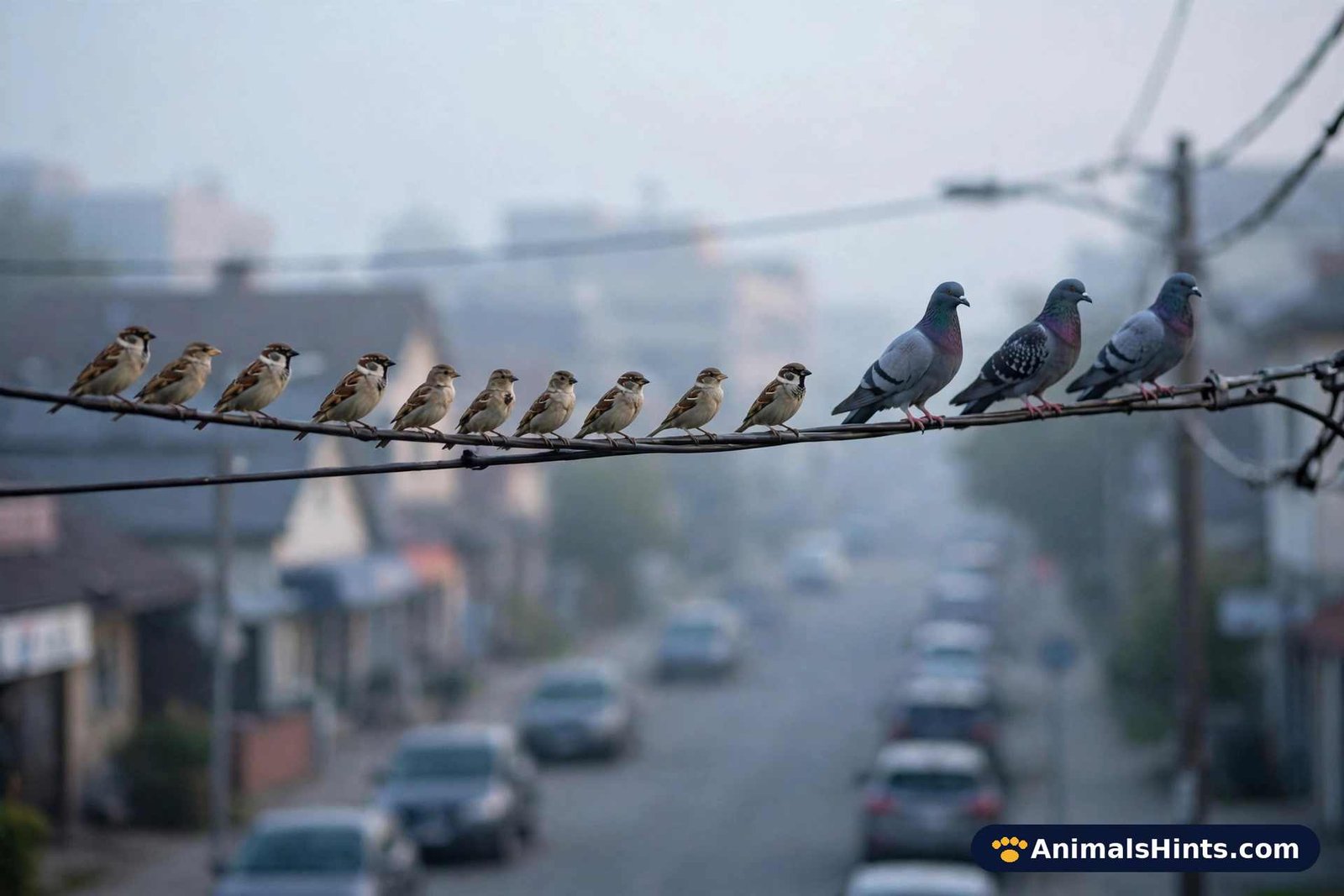
Before any meaning is assigned, the distribution deserves a look — because it is not random, and the pattern explains most repeat victims. Birds spend their stationary hours in predictable places: tree canopies, overhead wires, ledges, roof ridges. A car parked beneath any of them is parked under a toilet. Birds also lighten themselves around roosting and before flight, which is why the car left overnight under a street tree collects what the car two streets away, under open sky, never sees. Most “targeted” cars are simply parked, night after night, in the drop zone of a popular perch.
Colour may play a smaller part, and here there is an actual count to lean on. In 2012 the British retailer Halfords recorded droppings on 1,140 cars across five cities — Brighton, Glasgow, Leeds, Manchester and Bristol — over two days. Red cars topped the table at 18 per cent of marked vehicles, then blue at 14, black at 11, white at 7, grey and silver at 3, and green last at 1 per cent. The count comes with honest caveats, and this page keeps them attached: the survey published no breakdown of how many cars of each colour were in the sample to begin with, and the British Trust for Ornithology was openly cautious about how much colour alone can explain. Where you park almost certainly matters more than what shade you park — but the table is real, and red’s lead in it is large. Colour symbolism itself is kept on a separate shelf of this site; the black spiritual meaning guide covers the shade that placed third in that survey.
Shine is the third factor. Polished paintwork and mirrors are reflective, and territorial birds in the breeding season are well known for fussing at their own reflections in windows, mirrors and bright bodywork — the same gleam sits behind the bird flying into a window encounters this site records elsewhere. A freshly detailed car under a tree is, from the bird’s side of the arrangement, simply the most noticeable object in the street. The folklore calls that being singled out. The natural history calls it parking.
10 Spiritual Meanings of Bird Poop on Your Car
Ten meanings are promised in his list, and ten are what it delivers — the count was checked heading by heading before a word of this page was written. All ten follow below in his sequence, freshly worded throughout, and all ten carry the same label: readings the tradition makes of an event, not predictions handed to any reader.
1) Good Luck Sign
First and most famous comes the reading the whole belief is known by. As the genre tells it, the splash is fortune’s calling card: something good is travelling toward the car’s owner, and it has announced itself in the least glamorous way available. The logic underneath is the sky-gift logic — a thing that falls from above, from a creature that lives between earth and heaven, is read as a delivery rather than debris. Drivers who hold this belief tend to report the same emotional sequence: irritation first, then the laugh, then a small, stubborn lift in the day’s expectations. That lift is the sole part of the mechanism anyone can verify, and the tradition, to its credit, rarely claims more on paper than that the sign is a good one.
2) Financial Boost
The second reading narrows the luck to money. Folk tellings in Slavic and South Asian circulation link a bird’s mark with abundance arriving unannounced — wealth pictured, in the idiom, as something that drops into a life from above. On a car the reading sharpens: the vehicle is where money moves, in commutes, deliveries and journeys to work, so the genre files the windscreen splash as prosperity aimed at the owner’s earning road rather than at their doorstep. It is presented as folklore throughout, at the strength folklore can bear. No dropping has ever been shown to move a bank balance; what the reading moves is the owner’s attention toward the opportunity they might otherwise have driven past.
3) Travel Protection
Because the car stands for the journey, the third reading is a guard posted over it. Birds are the sky’s long-distance travellers — migrants cross continents on routes older than any road — and the genre casts them as escorts of wayfarers. A mark left by such a creature on the vehicle is read as a watch kept over the trips that vehicle makes: the commute, the school run, the long drive home. Drivers meet the moving form of the same sky-traffic in the birds flying in front of your car while driving readings, where the escort appears in motion; the parked version filed here is that same reassurance with the engine off. Like every entry on this list, the protection rests on belief rather than findings — the seatbelt remains the evidence-based kind.
4) Humility Reminder
Entry four is the list’s small sermon. Few possessions are polished with the pride a clean car gets — washed, waxed, parked to be seen — and few corrections arrive faster than a dropping on that shine, delivered by a creature that has never heard of either. The genre reads the moment as a leveller: a reminder that presentation is not control, and that the world retains the right to interrupt any finish. It pairs naturally with the lighthearted entry near the end of this list; humility, in this telling, is simply what the laugh is made of. Nobody’s character has ever been measured by a windscreen, and the reading works best held lightly — as a nudge about perspective, not a judgement dropped from a height.
5) Impending Change
Suddenness is the fifth reading’s whole argument. The car was clean at breakfast and marked by lunch; nothing about the event built up gradually. The genre, which treats abrupt events as punctuation in a life’s sentence, reads the splash as a transition marker — the outward sign that one arrangement is ending and another has not yet taken shape. On a vehicle the metaphor writes itself: a route is about to change, a destination revised. The honest bound, the one applied on every page of this run, is simple: change does come to every driver eventually, which is precisely why a symbol can always be found to precede it. It is offered purely as the tradition’s framing of a jolt, not as intelligence about anyone’s future.
6) Energy Release
The sixth reading works from the bird’s own bookkeeping. A bird sheds waste because carrying it costs altitude; flight is easier on the far side of letting go. The genre borrows the physics as a picture: emotional and mental clutter — the grudge, the stale worry, the errand list that never shortens — is weight of the same kind, and the marked car becomes a prompt to set some of it down. Cleaning supplies the ritual. Wiping a windscreen clear is a small, completable act of removal, and the tradition makes the wipe the outward form of an inward one: as the glass clears, imagine the clutter going with it. The metaphor is the genre’s; the clean windscreen, at least, is verifiable.
7) Direction Check
Where the change reading looks at timing, the seventh looks at heading. A dropping makes a driver stop, walk around the car, and look at it properly — often the first unhurried look in weeks. The genre builds its meaning on that pause: an interruption that asks whether the route the car travels daily is still the route its owner would choose. Commutes calcify; so do careers and habits. The splash is read as a milestone that asks a question rather than giving an answer — are you driving toward the things that matter, or merely along the grooves? No bird can answer that for anyone, and at its best moments the tradition never pretends the bird tries.
8) Nature’s Abundance
The eighth reading steps outside the car entirely and looks at what a dropping does in the world once nobody is offended by it. In the ecosystem, droppings are fertiliser and transport: nutrients returned to soil, and seeds carried in a bird’s gut from the fruit they were eaten with to ground they could never have reached alone. Whole hedgerows stand where birds have, in this sense, planted them. The genre reads that generativity back into the event on the car: a reminder that the natural world’s economy runs on giving things away, and that abundance, in its oldest form, is a cycle rather than a stockpile. Of the ten, this one stands on the solidest factual floor — the enrichment is real; only the addressing of it to a particular driver belongs to belief.
9) Lighthearted Nudge
Entry nine is the tradition’s pressure valve. Life supplies genuine troubles in quantity; a bird’s opinion of your paintwork is not one of them, and the genre files the splash as the universe’s reminder to keep the categories separate. The comedy is structural — the smallest creature in the street has vetoed the largest machine in it — and the laughter it produces is treated, in this reading, as the actual message: perspective, restored by farce. Psychologists of humour would call it benign violation; the folklore simply calls it a nudge. Either way, the driver who laughs has received everything this meaning has to give.
10) Universal Acknowledgment
The last of the ten is also the most playful. Some holders of this belief describe the event as a wink from the order of things — an acknowledgment, delivered at the exact moment the driver was deep in a decision, a worry or a run of progress, that the journey has been noticed. It is the least testable entry on the page and is printed at exactly that weight: a story people tell about timing, whose charm is its improbability. The tradition itself usually keeps a smile on this one. A universe that acknowledges its travellers by means of a sparrow is, at minimum, a universe with a sense of humour — and a driver willing to be acknowledged on those terms is most of the way to the humility the fourth reading prescribed.
Cultural and Religious Significance of Bird Poop on Car
His page gives the belief a six-strand cultural map, and all six strands appear here in his order. The shape is consistent — the luck reading is a European and Mediterranean folk possession first, extended eastward by the genre — and each is given no more weight than its record carries.
1. European Folklore
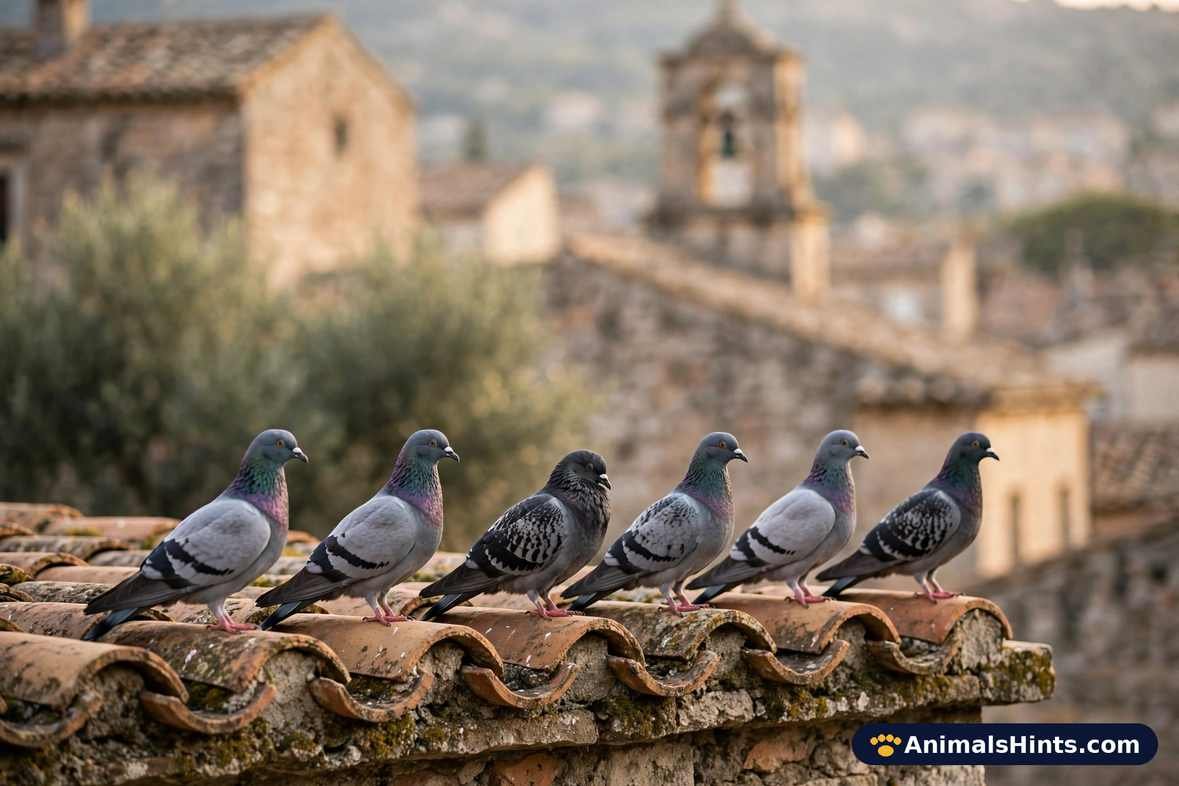
The broad European strand is the belief’s home ground. In the folk speech of much of the continent, a bird’s mark is simply lucky — money luck especially — and the telling his page repeats most fondly belongs to sailors: a dropping received at sea, where a bird overhead is one of the few events in a watch, was read as fortune boarding the ship. From the ports the belief travelled inland and attached itself to whatever a household travelled in — cart, carriage, and in time the car. It remains folk-level belief, carried in sayings and jokes rather than in any church’s teaching, and this page sets it down at that strength: widespread, old in its seafaring form, and nowhere official.
2. Russian Superstitions
Russia holds the money version at its most specific. The Russian folk saying ties the event directly to income — a bird has marked you, and money follows — and the car has inherited the saying whole: a decorated windscreen in a Moscow car park draws the same joke it would have drawn on a shoulder a century ago. His page adds the tradition’s favourite intensifier, that the more startling the hit, the better the fortune attached. The lottery-ticket purchases that follow a good hit are part of the record too, reported everywhere the belief lives, half jest and half hope. As with the European strand, this is documented folklore — a saying in vigorous daily use — and not a finding about finance.
3. Turkish Beliefs
The Turkish strand frames the event as blessing rather than payment. In the popular belief his page records, birds move under divine guidance, and what a bird delivers — however unglamorous — arrives as something placed rather than something dropped: a small, unasked favour from above, acknowledged with thanks before it is cleaned away. The car fits the frame without alteration; the blessing lands on the traveller’s vehicle as readily as on the traveller. It is recorded here the way his page and the wider folk record give it: a living popular belief about providence, distinct in flavour from the Russian money saying, and no more a mechanism than that.
4. Hindu Cultural Views
His page’s fourth strand places birds inside Hindu symbolism, where birds genuinely do carry sacred weight — as divine messengers, as the mounts of gods, and as emblems of the soul’s movement between worlds. From that standing, the genre extends a reading to droppings: a mark left by a sacred messenger on a person’s belongings is interpreted, in modern Hindu cultural writing of the popular kind, as a karmic signal — a small notification from the moral order. The caveat belongs in plain sight: that extension is contemporary popular writing built on a real symbolic foundation, not a doctrine fetched from a Hindu text, and no scripture is quoted for it here because none was found that makes it. The strand is carried at exactly that strength.
5. Mediterranean Traditions
Around the Mediterranean the luck reading takes a traveller’s form. Fishermen and voyagers of the region, in his page’s telling, treated a bird’s mark received before a journey as a promise the trip would go well — the same seafaring logic as the European strand, kept closer to the water. The modern heir of that belief is the pre-holiday windscreen: the car marked on the morning of a long drive, read by the family as the journey blessed in advance. It is the strand that explains why the car, of all objects, holds the belief so comfortably today — the car is simply the vessel this generation travels in, and the omen has always belonged to vessels.
6. Ancient Roman Interpretations
Rome’s strand is where the record runs richest and the claim needs the firmest bound. The Romans really did read birds officially: augury, the taking of signs from birds’ flight, calls and feeding, was a state practice performed by priests before public business, and its records survive. What augury’s texts do not contain is a doctrine of droppings. No Roman source fetched for this page reads a bird’s waste as a sign of anything; the dropping gloss is the modern genre extending Rome’s genuine bird-watching backward onto a substance Rome left uninterpreted. The strand therefore stands in two parts, both printed: Rome’s attention to birds is documented history, and its application to this topic is a modern borrowing — interesting, and labelled as such.
Superstitions and Myths about Bird Poop on Cars
Around the core belief, his page collects the smaller superstitions that decorate it, and they follow the usual folk logic of more: more mess, more meaning.
The size rule comes first — the bigger the splash, the bigger the fortune it announces. Its oldest source is the joke itself, and it stands in this file as the genre’s embroidery. The location grid is more elaborate. In his page’s version, a dropping on the hood speaks of money, and one on the roof of travel success; the wider location lore adds the windshield for vision and the road ahead, the side mirror for how the driver is seen and the company they keep, and the roof again, in some tellings, for the home the car returns to. These grids disagree with each other cheerfully between sources, which is the surest sign of what they are: a living folk game of interpretation, not a code anyone inherited whole.
The liveliest dispute in the whole file is about cleaning. One camp holds that washing the mark off at once washes the luck away with it, and counsels leaving the blessing in place a while. The other answers that cleaning is how the blessing is received — respectfully, the way a gift is unwrapped. This page is not neutral in that dispute, and the reason is not spiritual: the paint record set out below shows that a dried dropping left sitting in the sun is the one version of this event that can genuinely cost money. Wash the car. Whatever luck the folklore promises has survived soap on every other surface it has ever landed on.
Spiritual Meaning of Bird Poop on the Car’s Windshield
The windshield earns its own section on his page, and the reasoning sits inside the glass itself: the windshield is the part of the car the driver looks through, so in the symbolism it stands for vision — how clearly the road ahead, and by extension the life ahead, is being seen. A dropping there is read as a smudge on that clarity: temporary confusion, a distraction sitting exactly where attention needs to pass, a season in which the way forward is harder to make out than it was.
The remedy is the meaning. A windshield is the one panel of a car its owner cleans as a reflex, wipers and washer fluid before anything else, and the genre reads that reflex spiritually: clarity is restored by a small deliberate act, not awaited as a mood. Clean the glass, in this telling, and you have rehearsed the larger version — clearing the distraction that sits between you and the route. As symbolism, it is tidy, and it has the practical section’s full support: of every panel on the car, the windshield is the one where prompt cleaning is also a matter of being able to see.
Spiritual Interpretations of Dreams About Bird Poop on Car
The event has a dream form, and his page gives it a section of its own. Dream interpretation is a folk art rather than a clinical discipline; the readings below belong to the dream dictionaries, and are labelled as theirs.
In the commonest dream reading, droppings on the dreamer’s car picture a disruption arriving in the dreamer’s plans — the journey interrupted by something outside their control, in the same shape as the waking event. The dictionaries usually soften it in the same breath: the interruption carries a hidden benefit, an inconvenience that reroutes the dreamer somewhere better. A second strand reads embarrassment into the scene — the car is the self the dreamer shows the world, and to dream it soiled is to dream of being seen at less than one’s best. A third takes the car at its symbolic value and reads the dream as a flexibility lesson: the route was never as fixed as it felt, and the splash is the dream’s way of loosening the dreamer’s grip on the itinerary. All three are the genre’s dream-work, printed as such; a dream that recurs and genuinely troubles its dreamer belongs, like every recurring dream, in a conversation with a professional rather than in a dictionary.
What the Bible Actually Records About Bird Droppings
Readers regularly ask whether the luck belief has any footing in scripture, and the honest answer requires the census this run keeps for every topic. In the King James Bible, bird dung appears exactly once — in a passage about the price of food in a starving city, not about omens at all.
The verse is 2 Kings 6:25, quoted word-exact: “And there was a great famine in Samaria: and, behold, they besieged it, until an ass’s head was sold for fourscore pieces of silver, and the fourth part of a cab of dove’s dung for five pieces of silver.” The setting is Ben-hadad’s siege of Samaria. The verse is an economist’s detail, not a prophet’s sign: it measures the famine by its market, a donkey’s head at eighty pieces of silver and a small measure of dove’s dung at five, bought and sold because a besieged city eats what it can. Whatever the commodity precisely was, the text records a transaction under starvation.
That is the entirety of the record. No KJV verse calls such a dropping lucky, unlucky or significant in any way; no text addresses droppings on possessions, journeys or anything else a modern reader could map onto a car. Scripture’s bird world is rich — doves, ravens, sparrows, watched and fed and offered throughout — and droppings appear in it a single time, as goods in a famine market. The luck belief therefore stands where this page has kept it from the first paragraph: on folklore, which is genuinely old, genuinely widespread and entirely sufficient for the belief’s survival. It does not need a verse, and this page declines to lend it one.
Bird Poop on Your Car: Is It Good Luck?
Every search on this topic is really this one question, and it has two answers that do not compete, because they are answers in different registers.
As folklore: yes — emphatically, and across more of the map than most superstitions manage. European sailors, Russian sayings, Turkish blessing, Mediterranean travellers and the modern genre all file the marked car under fortune, and the belief shows no sign of retiring. As fact: no mechanism has ever been found that connects a dropping to its owner’s prospects, and nothing on this page should be read as a forecast. The event’s causes are known and are set out above — a roost, a wire, a red paint job, a bird being a bird.
What the belief demonstrably does is editorial. It takes the day’s most irritating small event and re-files it as a present, on the spot — and drivers who perform that re-filing report the rest of the drive going better, which is the one benefit in the entire file that requires no faith at all. The story may stay, if it pleases you. Just do not let it talk you out of the car wash: the next two sections are about the one way this event really can reach your wallet, and it is not through luck, good or bad.
What a Dropping Actually Does to Car Paint
The popular account is simple and mostly wrong: bird droppings are acidic, the story goes, and the acid burns through paint. The white fraction of a dropping is indeed uric acid — Ford’s paint-testing release calls it “the bird equivalent of urine” — so the claim starts from a real ingredient. But when the car-care manufacturer Autoglym put the acid theory to a laboratory test, it failed. Autoglym’s researchers applied bird-dropping substitutes of strongly acidic, neutral and strongly alkaline kinds to paint panels and found negligible difference in the damage each caused. The variable that mattered was texture — the grain-to-liquid content of the deposit, grainier droppings marking worse — and the mechanism they identified was not corrosion at all.
It was heat. In direct sun, paint lacquer softens and expands; the same heat bakes a fresh dropping dry and hard on top of it. When the panel cools — overnight, typically — the lacquer contracts and, in contracting, moulds itself around the hardened deposit’s uneven underside. What remains after the deposit is washed away is that moulding: a dull, etched-looking patch where the surface no longer reflects like the paint around it. Time is the multiplier: the longer a deposit sits, and the hotter the panel cycles, the harder it sets and the deeper the moulding. A peer-reviewed coatings study reached a neighbouring verdict by a different route, finding that enzymes within real droppings did most of the etching in its tests and that the damage grew as temperatures rose toward 60°C. Ford, for its part, ages synthetic droppings on test panels in ovens at 40, 50 and 60°C to qualify its paints — manufacturers, at least, take the substance seriously.
Two practical conclusions survive every version of the research. First, the enemy is the calendar, not the chemistry set: a dropping removed the day it lands is a non-event, and one left through a hot week can leave a permanent mark that only polishing will lift. Second, wax is a partial defence with an honest limit — Autoglym found that wax and polish treatments give limited protection against the moulding effect itself, though a waxed panel releases a deposit more easily when cleaning comes. The folklore’s size rule, it turns out, had the shape of the truth and the wrong reason: a bigger deposit is worse news, not because the fortune is greater, but because there is more grain for hot lacquer to mould around.
How to Remove Bird Droppings Without Harming the Finish
The method below is the one the manufacturer research supports, short enough to keep on a phone. The governing principle comes straight from Autoglym’s testing: get the deposit off at the earliest opportunity, and let water and time do the work that scrubbing would do damage attempting.
- Act the day it lands. Heat and time are the damaging variables; a fresh deposit is a wipe, a week-old one in summer can be a polish job. Speed, not product, is the whole secret.
- Soften before you touch. A fresh deposit lifts with a moist cloth, gently. A dried one must not be dragged: leave a wet cloth or soaked paper towel resting on it for ten minutes first, until it softens — Autoglym’s own figure — then lift it away.
- Lift, never scrub. Dried droppings carry grit, and a scrubbing motion grinds that grit across the lacquer in arcs. Lift the softened deposit off in one direction, fold the cloth, and use a clean face for any second pass.
- Wash the panel, then your hands. Rinse or wash the area so no residue sits in the panel’s texture, and bin the cloth or wipe rather than keeping it — Autoglym’s guidance ends with the reminder that bird lime can harbour disease, and that hands should be washed carefully afterwards.
- Keep wax on the car. A maintained wax coat will not prevent the heat-moulding effect, but deposits release from a waxed panel more readily — the difference, often, between a wipe and a soak.
- Park out of the drop zone where you can. A cover, a carport, or simply the far side of the street from the roosting tree removes the cause rather than the symptom — the only entry on this list that works while you sleep.
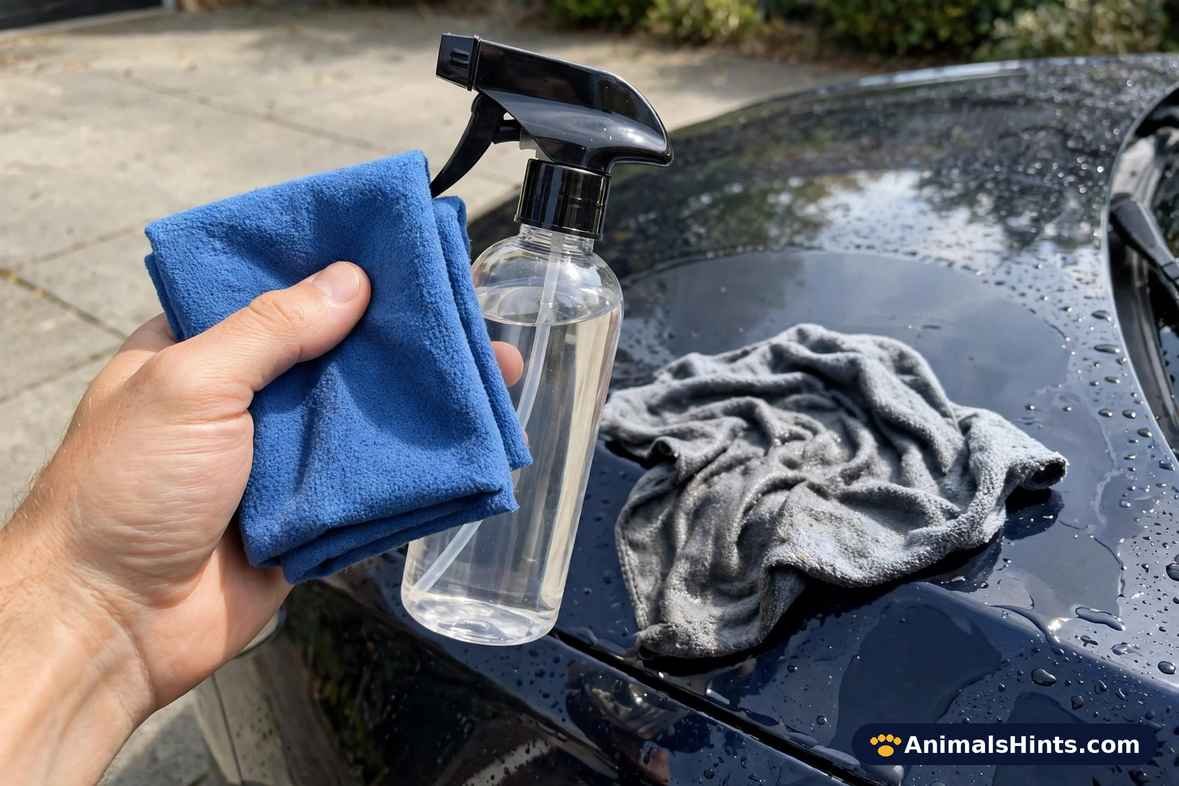

None of this requires a specialist product; water, a soft cloth and promptness cover the whole method. A mark that survives proper cleaning — the dull patch still visible when the panel is dry — has already moulded the lacquer, and at that point the remedy is a polish, not another wash: a detailer’s machine polish, or a body shop’s advice, at the owner’s judgement.
Final Thoughts
The car version of this old sign turns out to be two stories sharing one splash, and the two have been kept apart here, as promised at the start. The first story is folklore, and it is good folklore: a sky-messenger’s mark on the vehicle of the journey, read from European ports to Russian car parks as luck, money, protection and a wink — ten meanings deep, six cultures wide, and sturdy enough to have survived every debunking aimed at it, because its real subject was never the bird. It is a story about how to receive an irritation: as a gift, with a laugh, on the way somewhere.
The second story is shorter and has footnotes. A car gets hit because it sleeps under a roost, gleams at territorial birds, or wears the colour a British survey found at the top of the table. What lands on it is uric acid and grit, and what damages the paint is not the acid but the sun — lacquer swelling in the heat and setting, as it cools, around whatever the heat has hardened. Scripture, checked for the purpose, mentions dove’s dung a single time — priced, in a besieged city, as famine food — and says nothing about luck at all.
So the honest closing advice is the folklore’s own advice, translated into the second story’s terms. Take the sign in good humour; tell the money story if it improves the drive. Then, the same day, take a damp cloth to the windscreen — and keep the finish the sign landed on protected with a maintained coat of carnauba wax, the hard palm-leaf wax that has gone into car polishes for generations: it cannot stop hot lacquer moulding around a deposit, but it gives the deposit less to grip, the owner a head start, and the next blessing — if blessing it is — a far easier landing.