Red Butterfly Spiritual Meaning: 13 Meanings, Cultures, Dreams and Courage
The red butterfly meaning, as folk and spiritual traditions hand it down, is never a quiet one. Red is the loudest color a wing can wear — the color of blood, fire and ripe fruit — and the butterfly is transformation made visible. Put the two together and the tradition reads urgency in the meeting: passion stirring, courage being summoned, a change that will not arrive gently and does not intend to wait. Where a white butterfly whispers and a brown one counsels patience, the red one, in this reading, insists.
Underneath the symbolism sits an actual insect, and the insect lives up to it. Red butterflies are not painted in camouflage or in the borrowed shimmer of structural light. Their red is true pigment, laid down in the wing scales by chemistry the insect builds from its own body — and across the temperate world the sighting usually resolves into a handful of bold, strong-flying species: a black-winged admiral banded in scarlet, a rusty peacock flashing false eyes, a garden tortoiseshell in fox-red. These are butterflies that migrate, hibernate, defend territories and feed on fermenting fruit. They live at full volume, and the folklore has simply learned to listen at the same volume.
What follows is a full tour of the subject: the core symbolism first, then an introduction to the real species behind most sightings, then the thirteen traditional meanings one by one. After those come the landing, the black-and-red form, love and twin flames, dreams, the Bible’s actual position, and a verdict on the omen question. Throughout, checked biology is stated as biology, and belief is stated as belief — the two are never dressed in each other’s clothes.
What Does a Red Butterfly Symbolize?
At its core, a red butterfly symbolizes passion with a spine: energy, transformation and spiritual awakening, all of it felt at full strength. Metamorphosis gives every butterfly the same basic symbolism — a life dissolved and rebuilt into wings — but color sets the temperature, and red turns the heat up. In the modern spiritual symbolism this tradition uses, red belongs to the root chakra, Muladhara, the energy center placed at the base of the spine and concerned with survival, grounding and the raw will to live. A red butterfly is therefore read as change arriving at the foundation: not a redecoration of your life, but something moving in its roots.
Red carries a symbolism of its own before any wings are involved — vitality, courage, desire, protection, and the distinction of being the first color named after black and white in language after language. Our companion guide to red spiritual meaning treats the color on its own terms. Here the subject is narrower and stranger: those same meanings, airborne. The tradition’s headline readings for the red butterfly gather into five:
- Passion and desire — the sighting is read as the heart’s fire being pointed at something: a person, a calling, a creative work asking to be wanted properly.
- Courage and action — red is read as the color of doing rather than waiting, and the butterfly as a nudge to move while the moment is warm.
- Transformation at full strength — change in the red key is rarely gradual; the reading is of shedding, awakening and becoming, felt in the body as much as the mind.
- A loved one’s presence — in folk traditions that cast butterflies as carriers of souls, a red one is read as love that has survived death, visiting with its warmth intact.
- Luck and protection — the vivid wings are said, in this tradition, to turn aside negativity and convert it into confidence.
All five are interpretations, not findings — symbolism offered for reflection, in the spirit the tradition itself intends. The findings start in the next section, with the animal.
The Real Red Butterflies Behind the Symbol
“Red butterfly” is not one species, and — this is the fact that sets this color apart from the blues and greens of its sibling guides — its red is not a trick of light. Blue and green butterflies build their colors from microscopic architecture, because their pigment palette cannot make those hues. Red needs no such workaround. The pigment families butterflies actually own — the ommochromes above all, built from the amino acid tryptophan — run from yellow through orange to true red, and the red scales of the great red species carry exactly those pigments, with the depth of the shade set by how much pigment each scale holds, and black scales beside them filled with melanin. A red butterfly is red the straightforward way: dyed in its own chemistry. Four species carry most of the world’s red-butterfly sightings.
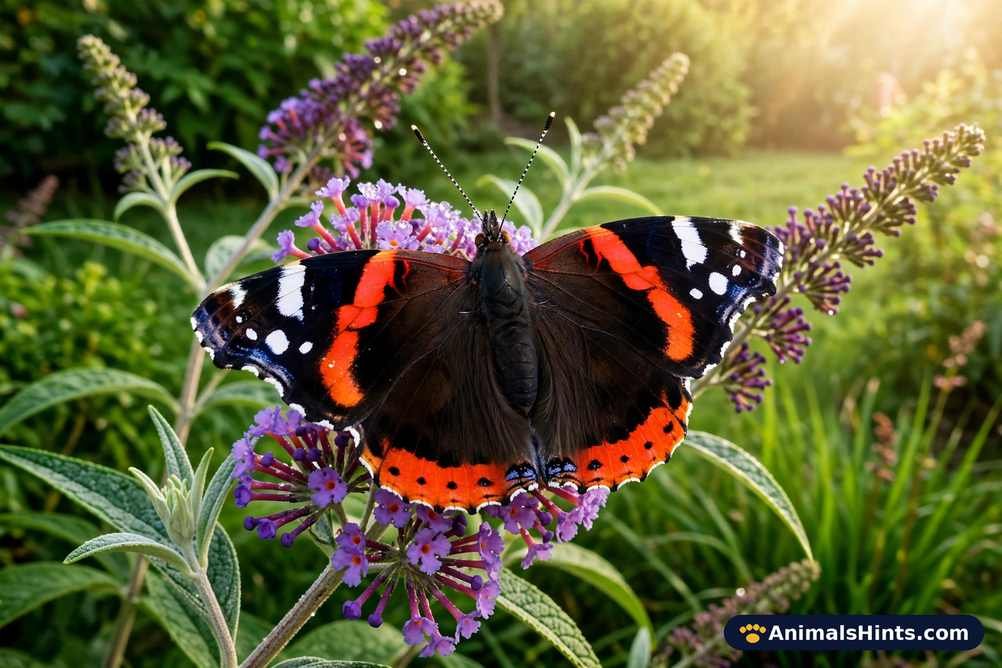
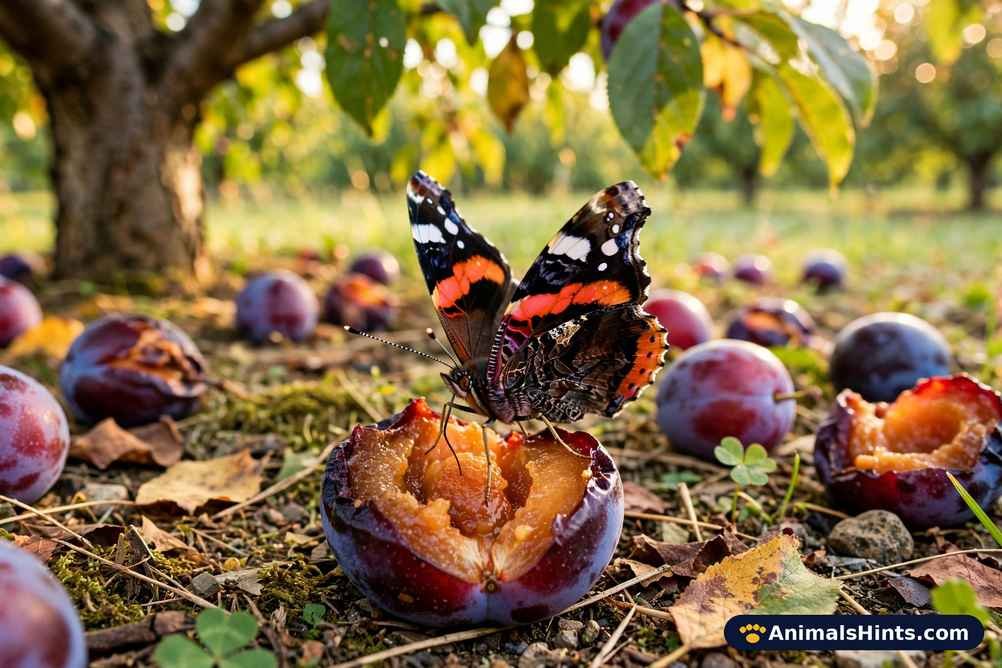
The red admiral (Vanessa atalanta) is the red butterfly of the competitor’s own meanings — it appears by name in two of the thirteen below — and it is the species most temperate readers will actually have seen. It is a strong, medium-sized butterfly, black above with a diagonal scarlet band across each forewing, a red marginal band on each hindwing, and white spots toward the forewing tips; its wingspan runs roughly 44–64 millimetres depending on the source and the generation. It is one of the world’s great migrants: resident only where winters are warm, it pushes north every spring across Europe, Asia and North America, recolonising gardens far beyond the range it can overwinter in, and in northern Europe it is among the last butterflies still flying before winter, feeding on ivy flowers on sunny days. Its caterpillar’s main foodplant is the stinging nettle, and the adults are famous for a taste that sounds like folklore and is simple fact: they drink from overripe, fermenting fruit as happily as from flowers. Males hold afternoon territories, perched and waiting, and will dart out at almost anything that flies past.
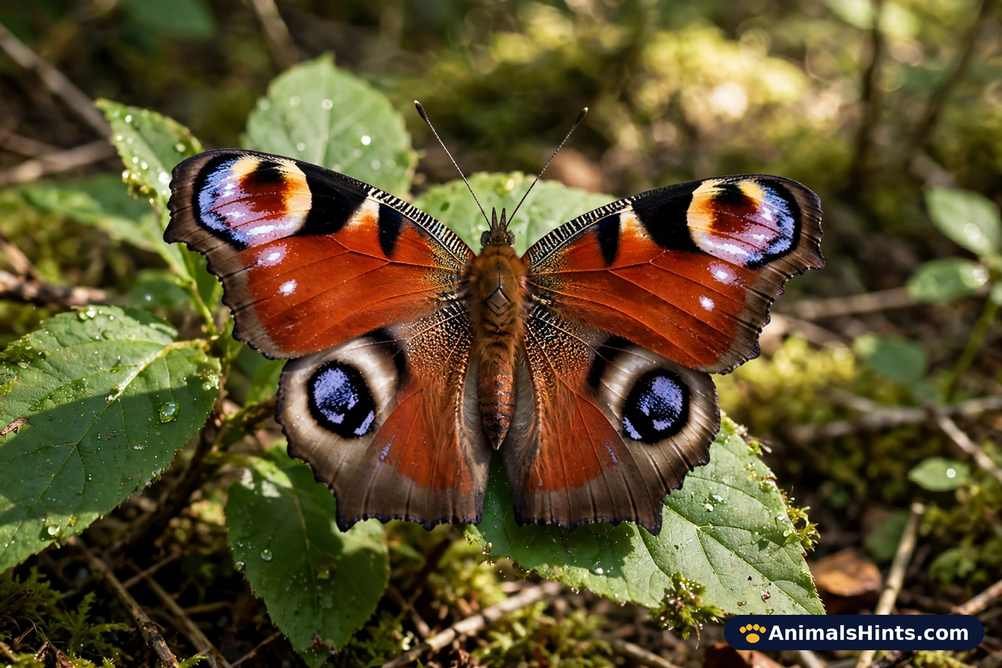
The peacock (Aglais io) wears the deepest red of the common European species. Its upperside is a rusty, brick red, and at each wingtip sits a large eyespot of black, blue and yellow — a false eye, grown in the scales, that the butterfly deploys as a weapon of surprise. With its wings closed the peacock is a dull dark shape, dead-leaf plain; threatened, it snaps the wings open, flashes the eyes, and can add a hissing sound made by rubbing its wings together, and experiments with avian predators show birds hesitate measurably longer before attacking a peacock that displays than one whose eyespots are covered. It is a large butterfly — wingspan roughly 63–69 millimetres in Butterfly Conservation’s figures, females larger — found across Europe and temperate Asia to Japan, and it hibernates as an adult, in hollow trees, sheds and woodpiles, emerging on the first warm days of spring with its red already on. Its caterpillars, like the admiral’s, feed communally on nettles.
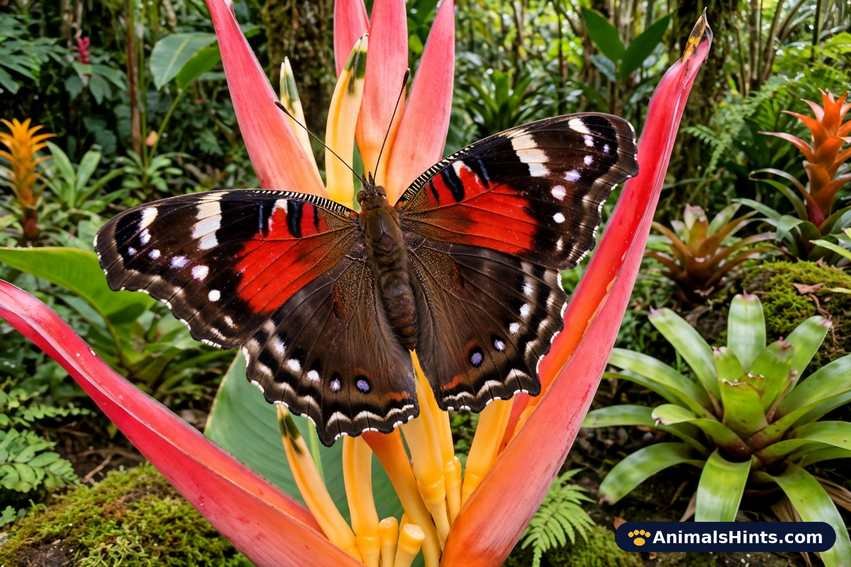
The scarlet peacock (Anartia amathea), also called the red peacock or red anartia, is the tropics’ entry — the reddest butterfly in this guide. A lightly built South and Central American species of about 4 centimetres across, found from Panama to Argentina and on Caribbean islands including Trinidad and Barbados, it is dark brown to black above with three large red spots near the base of the hindwings and a bold band running across both wing pairs: scarlet red in the males, noticeably more orange in the slightly larger females. Researchers who painted over the males’ red bands, and reddened the females’ orange ones, found courtship proceeded regardless — a useful reminder, printed plainly here, that a color can matter enormously to human readers while the butterfly conducts its own business by other cues entirely.
And the small tortoiseshell (Aglais urticae) is the red butterfly of ordinary gardens — mainly reddish orange, in the older descriptions a bright foxy red, with black and yellow markings on the forewings and a border of blue crescents around the wing edges. Its wingspan is about 4.5–6.2 centimetres; it ranges across temperate Europe and Asia wherever its caterpillars’ food grows, which is, once again, the common nettle; and adults hibernate through winter, sometimes in houses, so that a red butterfly blundering around a curtain in February is usually this one, woken early by central heating. Its red has a documented job: the species-account literature records the bright red coloration as a cautionary signal about the butterfly’s poor taste — a warning written in pigment, which is the thread this guide picks up again in its closing pages.
So the world’s red butterflies divide not by trick but by temper: the migrant, the flasher, the tropical scarlet, the garden regular. All four wear their red as pigment, all four are bold where their green and brown cousins are shy, and the tradition that reads them as urgent messengers is, whatever else it is, an accurate reading of their behavior.
13 Spiritual Meanings of Seeing Red Butterflies
Thirteen readings make up the traditional set for this butterfly, and they are reproduced below in the tradition’s own order, under its own headings. Treat them the way their holders do — as material for reflection, not as forecasts. Two anchors hold the whole set together: a life cycle that rebuilds a crawling animal into a flying one, and a color no one has ever called neutral.
1. Spiritual Transformation
The first meaning is the foundation all the others stand on. A red butterfly is read as a sign of spiritual transformation in its most concentrated form: an inner awakening in which old layers of fear and self-doubt are shed and something truer is revealed underneath. The red is what distinguishes this reading from the gentler transformation of other colors. This is change with heat in it — the kind that rearranges priorities, not just habits.
The competitor’s telling ties this meaning to kundalini, the energy that some yogic teachings picture as a coiled serpent resting at the spine’s base, whose awakening is said to bring courage, vitality and heightened awareness. That is a living teaching inside its own tradition, and it is reported here as such — a spiritual framework, not an anatomy lesson. What needs no framework is the animal’s own demonstration, available to anyone: a creature that has dissolved its first body and rebuilt it as wings is transformation you can watch, and the red species live that change at migratory, continent-crossing scale.
2. Presence of a Passed Loved One
The second meaning is the one received most often through tears, and this color gives it a particular warmth. Folk belief in many places casts butterflies as carriers of the soul — Greek gives the game away: soul and butterfly shared a single word, psyche — and a butterfly that turns up after a bereavement is widely received as a call from the person who has gone. A red one is read as love with its temperature kept: affection, devotion and emotional connection that the tradition holds to continue past the physical separation.
The sightings, as believers tell it, tend to land on charged days — an anniversary, a graveside visit, the first garden afternoon of spring. The tradition reads meaning into that timing; a skeptic reads heightened attention in grief. The practical counsel is the same either way, and it is kind: let the comfort count. In this framing, love does not end at the grave. It changes its form, and its visits wear the color of the heart.
3. Strengthening Faith
The third meaning is about holding on. A red butterfly is read as a summons to trust your spiritual strength precisely when life is testing it — when patience, hope or belief is being stretched thin. The butterfly’s own flight is the tradition’s picture for this: unhurried and impossible to schedule, arriving on its own timing, and the lesson drawn is surrender of control rather than surrender of faith.
Red does quiet work in this reading too. It is the survival color, the root color, and the sighting is read as a nudge to return to whatever practice actually steadies you — prayer, meditation, gratitude, honest reflection — rather than to demand that the uncertainty resolve first. Faith, in this teaching, is not the absence of a hard season. It is the discipline of remembering your own strength inside one.
4. Positive Life Change
The fourth meaning is the set’s optimist. A red butterfly crossing your path is read as encouragement to embrace change with courage — the announcement that a period of stillness or struggle is giving way to something more alive. The butterfly’s whole existence underwrites the reading: nothing in its story suggests that the winged stage regrets the chrysalis.
The red key matters here as well. The change this butterfly is said to announce is not drift but ignition: a new role, relationship or awakening that asks for passion and creativity rather than mere adjustment. Attached to the reading is a piece of emotional housekeeping the tradition repeats — release the old pain and resentment first, because transformation carried at full weight flies badly. Happiness, in this telling, tends to arrive just after discomfort, and the butterfly is its advance notice.
5. Spiritual Unity and Peace
The fifth meaning widens the lens from the individual to everyone. Butterflies cross borders no human institution issues passports for — the red admiral on this page migrates between continents as a matter of biology — and in many traditions the butterfly is accordingly read as a universal messenger, a reminder of the connectedness of living things. The red form is read as that unity felt as a shared heartbeat: love, compassion and understanding running underneath the divisions of culture and creed.
The teaching attached is inward before it is outward. Peace, in this reading, begins as an inside condition and ripples: the sighting is received during meditation, prayer or healing work as a sign of alignment, and its counsel is empathy practiced at close range — in relationships and communities first, where unity is actually built.
6. Overcoming Fear
The sixth meaning is the one people quote at crossroads. A red butterfly carries, in this tradition, the energy of courage, and its appearance is read as an invitation to confront whatever has been keeping you small — not because the fear is imaginary, but because fear is described here as the final barrier standing immediately before freedom, which makes it a landmark rather than a verdict.
The tradition is careful about what courage means in this reading. It is not fearlessness, and it is not recklessness. The caterpillar does not know what it will become; it proceeds anyway, on instinct and something the tradition is content to call faith. The recommended method is observation rather than combat: notice the fear, let it lose its anonymity, and move with it informed rather than obeyed. People report this sighting most often, the tradition says, on the edge of big decisions — and read it as reassurance that the moment requires courage, not perfection.
7. Rewriting Limiting Beliefs
The seventh meaning turns the transformation inward, onto the stories a person tells about themselves. A red butterfly is read as appearing when someone is ready to break from limiting beliefs — the inherited scripts of not good enough and people like me can’t — and to choose a new account of what their life is for. The metamorphosis is the whole argument in one image: the creature’s second form was never limited by the first form’s resume.
In the energy-healing frame the competitor uses, this meaning is linked to the root and solar plexus chakras, the centers that frame attaches to security, confidence and personal power; that is the framework’s own language, reported as its followers use it. Outside any framework, the reading’s practical core stands on its own: transformation is not only something that happens to circumstances. It happens in thoughts, in confidence, and in the beliefs a person finally gives themselves permission to retire.
8. Following Passions
The eighth meaning is a summons to want things properly. A red butterfly is read as permission — more than permission, encouragement — to pursue your passions openly: its radiant color taken as the visible form of fire, creativity and vitality, the qualities people report feeling when they are doing the work that actually lights them. The sighting is said to arrive at crossroads, between the safe path and the exciting one, and its message is unambiguous about which it favors.
Two qualifications keep this reading honest, and the tradition includes both. The first is timing: the butterfly is also read as a sign about when, reassuring the hesitant that the season for a long-deferred idea may simply be now. The second is that passion, here, is not self-indulgence — the reading frames creative fire as something that aligns a person with purpose, and the alignment, not the applause, is the prize.
9. Passion, Energy, and Courage
The ninth meaning names the red admiral outright, and this guide can meet it on factual ground, because the admiral’s real life is a study in exactly these three words. Its deep red bands on black wings are read, in the tradition, as passion, energy and courage made visible — qualities said to awaken in the watcher during seasons of personal growth or emotional challenge. The biology agrees about the energy, at least: this is a butterfly that crosses mountain ranges on migration, defends a territory all afternoon, and is still feeding on ivy when the year is nearly out.
Energetically, the tradition connects the admiral to the element of fire, and reads its repeated appearances as guidance toward boldness — pursuing the goal, rekindling faded motivation, standing up in your own defense. For the emotionally drained, the same sighting is read as healing energy: a reminder, in the tradition’s phrase, of the life force itself, and an invitation to live at something closer to full temperature.
10. Cultural Symbolism of Direction
The tenth meaning is the set’s most unusual, and this guide prints it at the strength the record supports. Some modern tellings make the red butterfly a compass — a sign about direction and guidance, with red linked in Eastern framings to the rising sun, beginnings and life energy, and in Western framings to the setting sun, completion and the closing of a chapter. Read both ways, the butterfly becomes a sign about cycles: beginnings and endings as natural rhythm rather than interruption.
One documented anchor exists beneath the modern gloss, and it is worth having precisely. In the Chinese five-phase system — a real, long-recorded scheme — red belongs to fire, and fire belongs to the south and to summer. That much is record, not invention. The wider claim that red simply means east or west depending on the culture is the modern guides’ framing, and it is reported here as theirs. What survives every version is the compass itself: a creature that navigates continents by the sun, read as guidance by people who feel lost. Traditions have built on thinner coincidences than that.
11. Call to Follow Your Passion
The eleventh meaning is the eighth’s sterner sibling, and the tradition keeps both because they are pitched differently. Where meaning 8 gives permission, meaning 11 issues a call: the red butterfly’s sudden appearance, often at a moment of hesitation between intuition and caution, is read as a direct summons to go after the thing you love — to align your actions with your desires rather than your defenses.
The reading is explicit that this is not recklessness. Living truthfully is its stated aim, and it carries a communal turn the eighth meaning only implies: your passion, answered, may be meant for other people — through art, teaching, healing or leadership, the gift is expected to be shared. Freedom, in this telling, is what authenticity feels like from the inside, and purpose and abundance are described as what follows it.
12. Personal Growth and Resilience
The twelfth meaning returns to the red admiral, and again the tradition and the field guide shake hands. The admiral is read as an emblem of personal growth and resilience precisely because of what it demonstrably does: it thrives across climates, migrates over great distances, and recolonises the cold north every single year from southern survivors. Read as a personal sign, its appearance is taken to mark emergence — a difficult period ending with the person stronger than the version who entered it.
The red contributes the grounding half of the teaching: survival, rootedness, staying yourself while everything else changes. Emotional healing is folded into this meaning — heartbreak, loss and self-doubt named as the terrain growth actually crosses — and the reading’s arithmetic is encouraging without being false: small steps count as progress, endurance compounds, and the breakthrough is usually closer, the tradition says, than the person standing in the hard part believes.
13. Divine Connection and Messages
The thirteenth and last meaning is the set’s capstone. A red butterfly is read as divine communication: a sacred signal whose vivid color works as a beacon, capturing attention at exactly the moments reassurance is most needed. Many spiritual circles treat butterflies as go-betweens for angels or for ancestors, and the red form — bound to vitality and love — is held to carry messages of encouragement, faith and awakening.
The tradition’s instruction for receiving this one is attentiveness. Notice what you were thinking, asking or praying about when the butterfly appeared; the timing is treated as part of the message. And its final counsel slows everything down: divine energy, in this telling, speaks through signs, nature and coincidence rather than through noise — so slow down, pay attention, and let yourself believe you are supported in ways you cannot see.
Significance in Cultures, Religions, and Mythologies
Six cultural strands make up the competitor’s account, and they are set out here in its order, in the bold-lead form its own page uses. Each is reported as its holders hold it — belief and custom, never upgraded into established fact.
In Chinese culture, the butterfly stands for longevity, love and happiness, and the red variety is welcomed as a bringer of luck and passion — prosperity and vitality, particularly in relationships and personal endeavors. The red half of that reading stands on deep ground: red is China’s great celebratory color, the color of weddings, New Year envelopes and lantern light, and in the five-phase scheme recorded above it belongs to fire, the south and summer. A red butterfly, in that world, is two luck-bearing systems arriving on the same wings.
Among some Native American tribes, the butterfly is a sacred messenger from the ancestors, and red — the color of the life force, of courage and of strength in war — makes the red form a figure of ancestral protection: a spiritual warrior walking with you through a hard stretch. No single version of this is shared by every nation, and none should be imagined: what is set out here is the common framing, offered as the living teachings of particular peoples rather than a pan-tribal doctrine.
In Celtic folklore, the butterfly was a soul-carrier — a creature believed to bear the spirits of the dead — and a red one was read as a particular visit: someone loved, returning in the color of the heart to bring comfort or counsel to the grieving, and to suggest that the soul persists somewhere beyond reach. The soul-carrying core of the belief is authentically old: Irish folk tradition in particular binds butterflies to the departed, and the red layer reads, in that world, as the visit wearing the color of the heart’s blood.
In Japanese symbolism, the red butterfly is tied to feminine energy, to joy and to marriage: a pair seen together stands for harmony between partners, a lone one for self-discovery worked through emotional depth. Butterflies in Japanese symbolism carry long meanings of their own — the soul, womanhood, and marital happiness among them — and the paired-butterflies emblem is an old and genuinely documented motif of wedded joy, into which the red form fits as naturally as a color can.
In African spiritual traditions, the butterfly figures as an emblem of transformation and a channel to the ancestors, and red carries strength, protection and endurance of spirit — so the red form is expected, in this framing, at moments when emotional resilience is what the situation demands. Africa holds thousands of distinct traditions rather than one, and this strand is reported at the general strength the competitor gives it: a modern summary of themes that recur across many of them, not a doctrine any single people would state in exactly these words.
Even in modern spirituality, the red butterfly is treated as one of the stronger omens — a sudden sighting read as the universe’s encouragement: act, speak honestly, chase what you love without flinching. This strand needs no historical costume: it is the living, contemporary synthesis the thirteen meanings above are drawn from, and it is reported here as exactly what it is, the tradition in its present tense.
What Does It Mean When a Red Butterfly Lands on You?
There is a difference, in this tradition, between a butterfly that crosses your path and one that lands on you. The crossing is a sign you witness; the landing is a sign you receive, addressed — so the reading goes — to you personally, with every meaning in this guide narrowed to a single recipient. The general question is treated at length elsewhere on this site, in our guide to what it means spiritually when a butterfly lands on you. What follows is the red-specific version.
Directness is the heart of it. The landing is taken as a sign of emotional awakening under way — divine reassurance, in the tradition’s phrase, that you are on the right path even while the path feels uncertain or intense. A second, older reading runs alongside it: the visitor is a departed loved one, and the red intensifies the message into deep love and enduring connection, presence rather than mere remembrance. A third reading is about the person landed on rather than the visitor: your energy is said to be aligning with your purpose, your aura carrying the warmth and readiness the butterfly is imagined to answer. And if the butterfly lingers, the tradition reads the delay as emphasis — embrace your inner strength; finally say the unsaid thing.
Every version of the tradition gives the same practical instruction for the moment itself, and it happens to be the only defensible way to treat the animal: keep still, never close a hand around it, and let it decide when to go. The scales that carry a butterfly’s colors sit loose on the wing like dust, and a grab costs it some of its red.
Biology offers a plainer account of the visit, and it deepens rather than deflates it. Butterflies need salts and minerals that flowers do not supply, and warm skin — skin damp from a garden afternoon especially — offers both at once. Naturalists call the behavior puddling; a butterfly settled on a hand is frequently, among other things, having a drink. With the red admiral there is a second ordinary explanation: a species that feeds on fermenting fruit and tree sap investigates anything sweet or salty at close range, including you. Folk tradition has always been comfortable with signs having bodies. So is this guide.
Black and Red Butterfly Spiritual Meaning
Black and red is not an exotic variation — it is, as the species section above shows, the standard uniform of the world’s red butterflies. The red admiral is black with scarlet bands. The scarlet peacock is black-brown with a red band and red spots. The peacock’s eyespots sit in black. So the subject here is the ordinary, real-world form of the red butterfly, darkness included — and the tradition does not treat the black as a flaw in the red. It treats it as the context that gives the red its meaning.
Here is the reading. Red stands for the fire: passion, vitality, life force at full temperature. Black stands for everything transformation passes through in the dark — mystery, endings, protection, the sealed hours of the chrysalis. Together they are read as rebirth earned through emotional healing: a chapter closing so another can open, old patterns and fears released, with the red in the wings standing as assurance that the transformation ends in empowerment and renewed energy rather than in the dark. The same form is read as balance work — light and shadow integrated rather than at war — and, for some, as a protective totem, a warding presence on the path while the change is under way.
The biology underneath cooperates almost impudently. On the real wings the black is melanin, the same pigment family that darkens the scales between the red ones, and the contrast is functional: black borders make the red bands read at distance, the peacock’s dark underside hides it completely at rest, and the admirals’ pattern is the one predators and rivals learn fastest. Two colors, one wing, each requiring the other to do its work. Folklore reads the combination as strength that has come through pain. The wing itself says something close: the brightness only registers because the darkness frames it.
How the Red Butterfly’s Meaning Differs From Other Colors
Each color in this family of guides bends the butterfly’s basic symbolism a different way, and red is easier to place once its neighbors are on the table. White, in the shared modern tradition, belongs to purity, innocence and the spirits of loved ones paying visits — the full treatment is our guide to the symbolism behind seeing a white butterfly. Blue belongs to calm, to truth, and to healing that starts with honest speech — see our blue butterfly meaning guide. Orange is the fire at its friendliest: warmth, creativity, encouragement — see our orange butterfly spiritual meaning guide. Green is renewal and the heart reopening at a garden’s pace — see our green butterfly meaning guide. Brown is the earth end of the family: grounding, patience, change at walking pace — see our brown butterfly spiritual meaning guide.
Red’s territory is distinct from all of them: not the heart healing, as with green, but the heart insisting — desire, courage and the will to act before the moment cools. Where white asks after presence, blue after truth, orange after beginnings and green after growth, red asks what you actually want, and whether you are willing to be brave about it. Sign-readers rarely find this one soothing, and that is the point of it: in the traditional grammar of butterfly colors, red is the entry written in the imperative mood.
Meaning in Love, Relationships, and Twin Flames
In matters of the heart, this is the color family’s most romantic entry, and the tradition reads it at full temperature. Where green is love growing and orange is warmth arriving, red is love felt: romantic passion, emotional intensity and soul connection. For couples, the sighting is read as rekindled passion or as a reminder with work in it — nurture emotional honesty, let love flow rather than trying to control it, and attend to the connection before it needs rescuing. The butterfly’s own terms are built into the reading: its life is short and radiant, and the tradition takes the hint — meaningful experiences do not need to last forever to matter, but the ones that are alive now deserve to be lived now.
For those not yet in a relationship, the reading reverses the direction: spotting a red butterfly is taken as a sign of emotional readiness, self-love grown strong enough to draw in a healthy, passionate connection built on mutual respect. The counsel is the color’s own — become the warmth you are hoping to meet.
Twin-flame teaching — a contemporary spiritual framework, not an old tradition — gives the red butterfly its own assignment, and it is reported here in the framework’s own terms. Within that teaching, the red form marks the alignment stage: two people who have come through separation and done their separate healing are said to be drawing back into resonance, hearts converging, in the framework’s vocabulary, in vibration. Hold it as its followers hold it. Beneath the system sits a plainer observation that asks for no framework at all: red wings turning up around a love look like feeling that has come through its winter intact — which is, in the end, what most people mean by a love that lasts.
Dream About Red Butterflies
Dreams run on symbol already, so a butterfly in one arrives pre-interpreted — or so dream tradition, which treats the sleeping mind as a native speaker of images, tends to assume. Dream interpretation of this kind is folk practice, not validated psychology — professional psychology endorses no fixed dream dictionary — and within that practice the red butterfly is usually read as follows. Red, in every version, adds urgency:
- A red butterfly flying freely is read as release: emotional limitations breaking, confidence or creative expression opening up, the dreamer stepping out of an old enclosure.
- A red butterfly landing on you in the dream imports the waking landing’s meanings and turns them inward — word from a loved one who has died, or an emotional breakthrough on its way to you personally.
- A red butterfly distressed or trapped is read as a mirror: the dreamer’s own sense of being penned in by fear or by feelings never resolved, with release of what no longer serves growth as the dream’s counsel.
- Several red butterflies together amplify the waking readings toward abundance — love and opportunity arriving from more than one direction — while a single red butterfly is read as the pivotal case: one personal awakening, sharply defined.
The through-line is simple. In this tradition the dream butterfly’s behavior is a progress report on the dreamer’s own passion, courage or transformation — and the report, red says, should not be filed unread.
Red Butterfly Meaning in the Bible
Start with what the text does not contain: no butterfly appears anywhere in the Bible, in any translation — the competitor concedes this at the head of its own section, and the concession is correct. What later Christian teaching built on that absence is an analogy, openly held as one: a caterpillar’s earthbound life, the sealed stillness that follows, and a winged creature walking out of its own grave-clothes made an irresistible picture of the resurrection, and of new life in Christ, and preachers have used it for centuries. The red form simply inherits the picture and warms it.
Red itself, though, is genuinely and heavily present in Scripture — it is the color of blood, and therefore, in the Bible’s imagery, of life, sacrifice and redemption. Isaiah’s promise is cast in a dyer’s colors: “though your sins be as scarlet, they shall be as white as snow” — scarlet and crimson being the deepest reds the ancient world could dye, chosen precisely because they were understood to be fast, permanent, impossible to wash out by ordinary means. Christian devotional reading of the red butterfly builds on exactly that ground: the red is connected with Christ’s sacrifice, divine love and redemption, and the butterfly’s metamorphosis is read as the believer’s journey from suffering to spiritual rebirth, with the red hue amplifying the reading toward strength and vitality drawn from divine love. To state the position plainly — as this guide tries to state every tradition’s position — the red-butterfly reading is a modern devotional construction resting on genuine verses about scarlet and on a real insect’s life cycle. It is not a biblical mention, and it should never be quoted as one.
Is a Red Butterfly a Good Omen?
In this tradition, yes — with one honest qualification that makes the yes more useful. Almost nothing in the red butterfly’s traditional portfolio is ominous: its thirteen meanings run from transformation through a loved one’s presence to courage and divine messages, and even its most demanding readings — face the fear, rewrite the belief, answer the call — are instructions rather than warnings. The competitor’s own FAQ set reaches the same verdict, and this guide’s FAQ below keeps its question verbatim.
The qualification is temperature. A red sighting, in this tradition, is a good omen of the bracing kind — closer to a coach’s hand on your shoulder than to a lullaby. It is read as encouragement with an assignment attached: good things, arriving by way of your own bravery. Some of the verdict comes from the color itself, which few symbolic systems on earth treat as neutral: it is the shade of blood and fire, of being unmistakably alive. Some of it comes from the animal’s sheer conspicuousness. A red butterfly cannot be half-seen, and folk systems have always read unmissable creatures as unmissable messages; this one’s whole biology — pigment, bands, territories, migration — is conducted in the open. Read by its nature, it is good news that refuses to whisper.
How to Welcome Red Butterflies to Your Garden
Suppose the readings above have done their work and you would like the visitors to return on purpose. The recipe is plants, sunlight and one glorious patch of weeds. The real red species are nectar generalists with nettle-eating caterpillars and a weakness for ripe fruit, and each of those appetites can be catered for.
- Keep a nettle patch. The red admiral, the peacock and the small tortoiseshell all raise their caterpillars on nettles — common nettle above all. A sunny, out-of-the-way corner of nettles, left unsprayed and unstrimmed through summer, is a nursery addressed to all three by name.
- Remember the stage nobody notices. Before there is a butterfly there is a caterpillar doing the eating, and the transformation’s first half deserves its own attention — our caterpillar spiritual meanings guide is devoted to exactly that stage.
- Plant nectar across the whole season. Buddleia for high summer, thistles and marjoram alongside it, and — the admiral’s particular lifeline — flowering ivy in autumn, when almost nothing else is open and the migrants are fuelling for the journey south.
- Leave the windfalls. Fallen, fermenting fruit is not garden waste to a red admiral; it is a feeding station. A few ripe plums left under the tree will be found, and used, and remembered.
- Give them sun and shelter. Red species bask to warm their flight muscles and hold territories in sunny, sheltered spots — a warm wall, a fence line out of the wind, stones that hold the afternoon heat.
- Skip the insecticides. Spraying for insects means arranging the garden against butterflies in every stage of their lives, from egg to adult.
- Let some of them stay the winter. Peacocks and tortoiseshells hibernate as adults in sheds, woodpiles and hollow trees. A butterfly found torpid indoors in winter is not lost; it is asleep. The kind move is a cool, sheltered spot outdoors — not a heated room, which wakes it into a season with no flowers.

Nettles, ivy and windfalls: keep those three and you have not merely lured in a symbol. You have rebuilt the working economy — nursery, fuel station, winter quarters — that the world’s boldest butterflies actually run on.
Final Thoughts
Folklore, handled honestly, is a tool for noticing — and few creatures reward noticing like this one. The red butterfly’s meanings — passion, courage, transformation at full temperature, a loved one’s warmth surviving its change of form — amount to the tradition’s long attempt to describe an animal that genuinely lives at the vivid edge of the world. A sighting put to work as a prompt — act, want honestly, begin — is a sighting well spent. And the best of the story needs no folklore behind it at all: the familiar red species wear their color as actual pigment, ommochrome chemistry brewed from tryptophan and laid into the scales inside the dark of the chrysalis. On the peacock, that red ground carries the feature this whole family is famous for: the eyespot, four false eyes of black, blue and yellow that turn a resting insect, in one snap of the wings, into something that looks back at its attacker.
If a red butterfly crosses your path this season, accept the tradition’s warm word — and then spare a thought for what the color is actually doing out there in the wild. On the small tortoiseshell, the bright red is documented as a cautionary signal, a warning about poor taste addressed to birds. On the peacock, it is the backdrop for the bluff of the eyes. On the admiral, it is a flag flown by a migrant that will be in another country by next month. Passion, warning, display, endurance — the folklore chose its themes better than it knew. The butterfly was already saying all of it, in pigment, at full volume.
FAQs
What does a red butterfly symbolize spiritually?
In the tradition’s reading, the red butterfly stands for passion, for transformation, and for life changes with real force behind them. Red loads the butterfly’s ordinary metamorphosis message with extra energy and vitality; the same tradition adds courage, love, and — for many — the sense of a visit from someone who has died.
What does it mean when you see a red butterfly?
It is read as a sign that something important is moving in your life — most often a passionate transformation touching love, creativity or purpose. Some receive it as a message of love from a deceased loved one; others as encouragement to pursue a dream more boldly. The tradition holds that the reading sharpens with your own situation and what you were thinking when it appeared.
Is a red butterfly a good omen?
Yes — in most traditions it is read as a positive omen: love, courage and encouraging transformation, with support from the universe implied. It is a bracing good omen rather than a soothing one — good news that usually arrives holding an assignment.
How should I respond to seeing a red butterfly?
Tradition’s answer is reflection first: pause, consider what changes you have been weighing, and ask whether you are ready to pursue them with more passion or courage. Look at your relationships, express gratitude for the sighting if the reading moves you, and plant nettles if you would like the visitor to come back with its whole family.