Brown Butterfly Spiritual Meaning: 10 Meanings, Cultures, Dreams and Good Luck
The brown butterfly spiritual meaning, in the traditions that read animal encounters for signs, is the quietest message in the whole butterfly family: grounding, patience and transformation that happens without a spotlight. Brown is the color of soil, bark and fallen leaves, and a brown butterfly is the one that blends in rather than showing off. Tradition reads that plainness itself as the teaching — strength that does not need to be seen to be real.
Those readings are beliefs, held as folklore and modern spiritual symbolism rather than proved by anyone, and this page treats them that way. Underneath them sits a real and enormous animal group: the browns, a whole subfamily of butterflies whose caterpillars feed on grasses and whose adults are built for camouflage, shade and long, steady seasons. The symbol was always going to be about endurance, because the animal is.
This guide gives the brown butterfly at home, all ten spiritual meanings exactly as the tradition hands them down, and the readings of different cultures and religions. It covers a butterfly flying around you, the love, money and death readings, brown butterflies in dreams, and whether a sighting is good luck. Where biology exists, it is named and checked. Where a claim is tradition rather than fact, it is labeled as tradition, so you can hold every part of this butterfly at its proper weight.

What Does Seeing a Brown Butterfly at Home Symbolize?
A home is the most grounded place in a person’s life, and tradition reads a brown butterfly’s visit to it in exactly that key. Where a bright butterfly indoors is read as excitement, a brown one is read as protection and settling: the household’s foundations strengthening, its energy calming, its people being reminded that safety is built slowly and kept quietly.
One strand of the reading is ancestral. In the folk traditions that treat butterflies as soul-carriers — an association as old as the Greek word psyche, which meant both “soul” and “butterfly” — a calm brown visitor inside the home is sometimes received as a sign that loved ones who have died remain near, watching over the household rather than haunting it. It is offered in this guide as that tradition holds it: a comfort people report, not a claim anyone can verify.
The other strand is change inside the walls. A butterfly anywhere is a transformation symbol, and a brown one at home is read as transformation of the domestic kind: relationships maturing, a household healing after a hard stretch, a new phase beginning on a stable footing rather than in chaos. In modern chakra teaching, brown is linked with the root chakra, the energy center that teaching associates with security and belonging — a spiritual framework, not anatomy, and the reading belongs to that framework. The natural footnote is ordinary and worth keeping alongside: brown butterflies genuinely do come indoors, especially shade-loving species and evening fliers drawn to shelter and light as the weather cools. The tradition reads the timing. The open door explains the route. Both can be true at once.
The Real Brown Butterflies Behind the Symbol
“Brown butterfly” is not one species. It is a whole branch of the butterfly family tree, and it is one of the largest branches there is.
Entomologists group most of the world’s plain brown butterflies in the subfamily Satyrinae — literally nicknamed “the Browns” by British naturalists. Reference works put the group at more than 2,400 species worldwide, and with very few exceptions their caterpillars feed on monocots: grasses and bamboos. That single diet explains the whole look of the group. A butterfly whose young eat grass, and whose adults rest on bark, soil and dead leaves, is under constant pressure from birds to be invisible, and brown is what invisibility looks like in a woodland or a meadow.
The brown itself is real pigment, not a light trick. Where the blue morpho of run guide fame is blue only by optics — its wings are pigmented brown underneath the architecture that reflects blue — the browns wear their color chemically: eumelanin, the same brown-black pigment family that colors human skin and hair, laid down in the wing scales. Melanin browns and blacks also absorb heat efficiently, which is why dark-winged butterflies can be active on dull, cool days when brighter species stay grounded.
Four brown butterflies carry most of the sightings behind this page’s traditions:
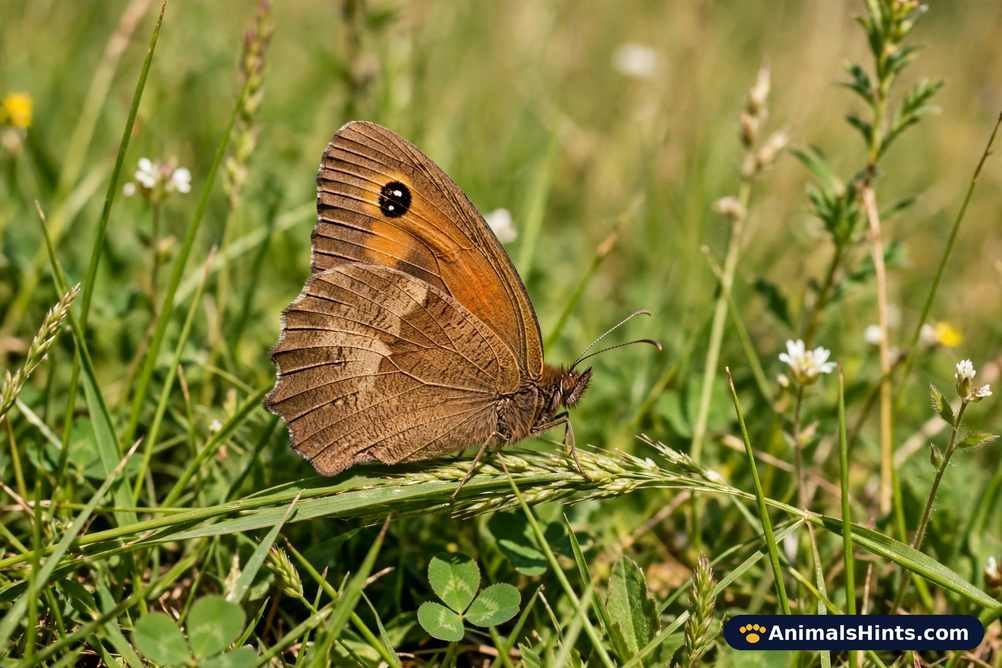
The meadow brown (Maniola jurtina) is the archetype — a medium-to-large grassland butterfly of Europe and temperate Asia, drab brown above with a single black eyespot near each forewing tip and, in the larger females, a splash of orange around it. Its wingspan runs roughly 40–60 mm, its caterpillars feed on meadow grasses such as Poa species and fescues, and it is among the most abundant and most studied butterflies in its range, flying even in dull weather thanks to those dark, heat-absorbing wings.
The ringlet (Aphantopus hyperantus) is its shade-loving cousin: almost black-brown when freshly emerged, fading to deep brown, with the decoration kept on the underside — a row of small ringed eyespots, black with white pupils and pale rims, that give the species its name. It haunts damp grassland, woodland rides and hedgerows across Europe and temperate Asia, flies in cloudy weather and even light rain, and its caterpillars feed on coarse grasses such as cock’s-foot.
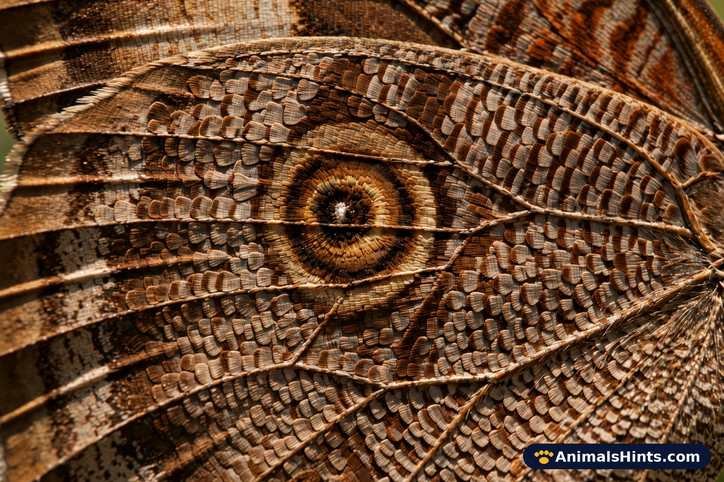
The common evening brown (Melanitis leda) shows what brown camouflage can really do. This crepuscular satyrine of Asia, Africa and Australia rests by day in leaf litter — and it changes its uniform with the seasons. Wet-season adults carry large, conspicuous underside eyespots; dry-season adults shrink the eyespots, sharpen the wing outline and turn into some of the most convincing dead-leaf mimics in the insect world, variable brown patterns that disappear against fallen leaves while the butterfly sits out the inactive season. One species, two browns, each fitted to its season’s background.
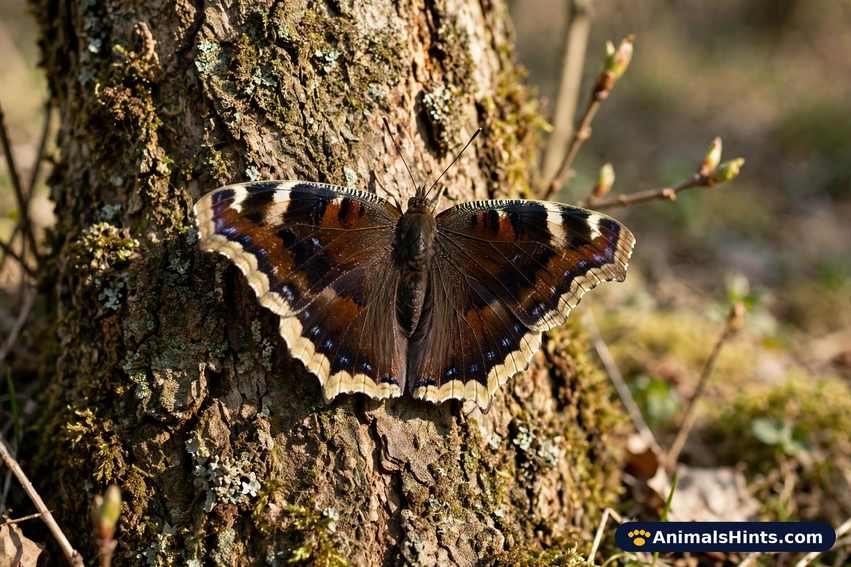
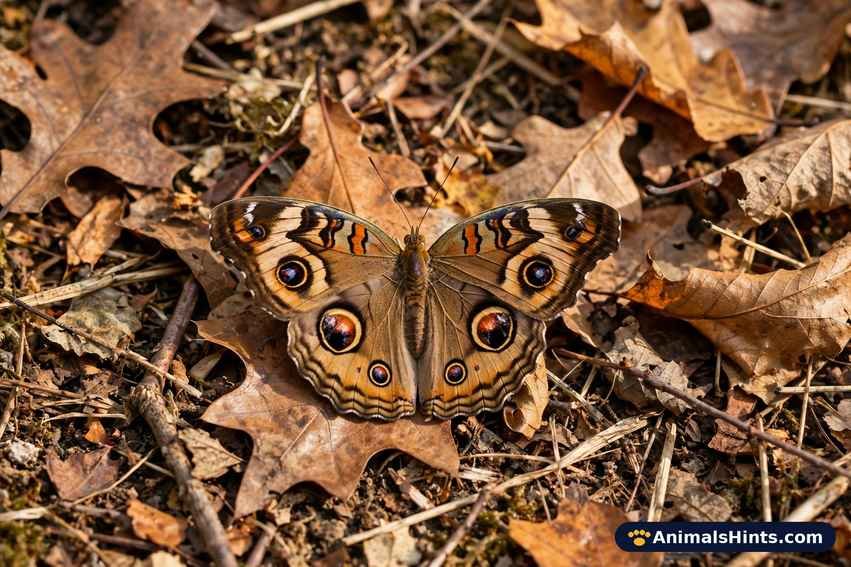
And two brown butterflies from other branches of the family deserve their places here. The mourning cloak (Nymphalis antiopa) — the Camberwell beauty in Britain — wears deep maroon-brown wings edged with a ragged cream-yellow border and a row of blue spots. It is one of the longest-lived butterflies in the north: instead of passing the winter as an egg or chrysalis, the adult itself hibernates under loose bark and in tree cavities, living up to ten or eleven months, and its dark, striated underside is bark camouflage for exactly that purpose. It is consequently one of the first butterflies on the wing in spring — a fact the good-luck section of this guide returns to. The common buckeye (Junonia coenia) of North America is brown of a showier kind: warm brown wings carrying large, bold eyespots and two orange bars on each forewing, its underside tan-brown in summer and rose-red-brown in its autumn form. Its eyespots are thought to startle or deflect predators — the plain brown butterfly’s one piece of theater, flashed only when hiding has failed.
10 Spiritual Meanings of Brown Butterflies
The ten readings below are the set the modern tradition returns to again and again for this butterfly. They are given here as that tradition presents them — beliefs to reflect on, not predictions — and each is rooted in the two facts that anchor all butterfly symbolism: the metamorphosis, and the color brown.
1. Transformation and Renewal
Every butterfly meaning starts here, but the brown butterfly owns a particular version of it. Its transformation is read as the quiet kind: renewal that happens in the background, at nature’s pace, without announcement. Where a monarch’s change looks like a parade, a brown butterfly’s is read as the change most human lives actually contain — old patterns shed gradually, a more authentic self emerging slowly, nothing about it performed for an audience.
The tradition’s reassurance follows from that. A brown butterfly sighting in a hard season is read as a promise that the difficulty is a stage, not a destination: the creature in front of you has already been an egg, a caterpillar and a still chrysalis, and the winged form is simply what the process was always heading toward.
2. Grounding and Stability
This is the meaning the color itself dictates. Brown is earth, soil and rooted things, and in modern spiritual symbolism the brown butterfly is the grounding sign: a call to come back to your body, your home ground and your foundations, especially when life has felt scattered or unreal. Writers in this tradition link it to the root chakra, the energy center their system associates with security and belonging — again, a symbolic framework rather than a medical one.
Received practically, the reading is an instruction to slow down: time outdoors, feet on actual ground, attention to food, sleep and the simple physical bases of a life. The tradition’s point is that stability is not the opposite of spiritual growth but its precondition — the root system under the wing.
3. Spiritual Omen of Life Change
A brown butterfly is also read as an omen of approaching transition — a chapter closing, a decision ripening, a move, a new role or a new family shape on the horizon. What distinguishes the brown version of this omen, in the tradition, is its temperament: the change it signals is expected to be practical and durable rather than dramatic, an evolution rather than an explosion.
People who work with this reading often report the sightings clustering around genuine thresholds, which the tradition takes as confirmation and a skeptic would call attention doing its work. Either way, the counsel the reading carries is the same: do not resist a change that is arriving at walking pace. Walk with it.
4. Symbol of Security and Good Harvest
The oldest layer of the brown butterfly’s symbolism is agricultural. In the folk traditions of farming cultures, an earth-colored butterfly over the fields was read as the soil’s own messenger: fertility, a working season, a harvest that would hold. The reading survives in modern symbolism widened beyond crops — the “harvest” is whatever a person’s patient work has been growing: a career, a savings habit, a relationship, a recovery.
Security is the other half of the meaning. The brown butterfly is read as a sign that material and emotional needs will be met — not by windfall, but the way a harvest meets them: because something was planted, tended and given time. Gratitude for what is already in hand is this meaning’s standing instruction.
5. Connection Between Physical and Divine
The brown butterfly is read, fifth, as a bridge: earth-colored wings on a creature of the air, a body that walks on bark and a life that ends in flight. In this reading it stands for the interweaving of the physical and spiritual lives — the claim, common to many traditions, that the sacred is not elsewhere but runs through ordinary days, meals, work and weather.
The soul strand of the symbolism belongs here too. Through the old psyche link, butterflies have been pictured as souls and soul-carriers for two thousand years, and a brown one — the earth-toned one — is read in this tradition as a messenger whose home ground is the boundary itself: ancestors near, guidance available in unremarkable moments, the cycle of life and death turning quietly underneath everything.
6. Message of Good Luck and Prosperity
In many tellings, the brown butterfly is a luck-bringer — but its luck has the color’s character. It is not the sudden, flashing fortune of a gold or blue sign. It is steady luck: opportunities that arrive through work already done, blessings that last because they are built on something, prosperity that behaves like soil rather than weather.
A landing or a close visit is read in this tradition as the personal form of the sign — intentions heard, a stagnant area of life beginning to move. The meaning’s own instruction is gratitude again: recognize the abundance already present, the tradition says, and you position yourself for the rest of it.
7. Encouragement to Ground and Take Action
The seventh meaning is the tradition’s antidote to its own dreaminess. The brown butterfly is read as a motivational sign: stop circling the plan and take the grounded step. Its color stands for practicality in this system, and its appearance is taken as a nudge to balance dreaming with doing — the phone call made, the form filed, the first small, unglamorous action taken today rather than someday.
The manner matters as much as the act. The butterfly’s own transformation is not rushed and cannot be; it is built from thousands of small, correctly ordered biological steps. The reading borrows that tempo: calm, consistent, one step at a time — action as a discipline, not a panic.
8. Symbol of Personal Growth
Closely related to the first meaning, but turned inward: the brown butterfly is read as the sign of personal growth in progress — outgrown habits, beliefs being revised, emotional patterns loosening. (One correction this guide makes to the usual telling: a butterfly does not grow inside a cocoon — that is a moth’s structure. A butterfly’s resting stage is a chrysalis, and the growth this meaning celebrates happens there, in stillness, which is rather the point.)
The brown coloring adds the meaning’s distinctive note: this growth is rooted rather than impulsive. It may not be visible yet — most real growth is not — and the tradition reads the sighting as encouragement to be patient with a process that is happening beneath the surface, and to mark the small milestones as they come.
9. Reminder to Prioritize Stability and Authenticity
A muted butterfly cannot be accused of showing off, and the tradition reads that as a teaching: prioritize stability and authenticity over display. The brown butterfly is received as a reminder to live in alignment with your actual values, to stop performing for approval, and to let a life be quieter and truer rather than louder and hollower.
Stability, in this reading, is explicitly not stagnation. It is the firm foundation from which creativity and growth can actually flourish — the root system again. And authenticity is the foundation’s twin: the tradition holds that a person pretending to be something else is spending on the performance the energy the growth needed.
10. Sign of Fresh Start and Good News
The tenth meaning is the hopeful one. After a period of struggle, reflection or closure, a brown butterfly is read as the sign of a fresh start — a new chapter opening on a stable foundation, built from lessons actually learned rather than wished away. The news this butterfly is said to carry is the grounded kind: progress, relief, clarity arriving in a form that will keep.
The tradition’s counsel for receiving it is patience and openness — the breakthrough, when it comes, tends to come the brown way: undramatically, on an ordinary day, in a shape you recognize only afterward as the turning point.
Significance of Brown Butterflies in Different Cultures and Religions
1. Native American Beliefs
In a number of Native American traditions, butterflies are spirit messengers and symbols of change, and modern retellings read the brown one in the earth key: grounding, endurance, protection during personal growth, and a reminder to slow down and reconnect with the natural world. These beliefs vary from nation to nation, and this guide reports the general framing as it is commonly offered — as living traditions of story and teaching, not as one single doctrine shared by all Native peoples.
2. Chinese and Eastern Symbolism
In Chinese symbolism, butterflies stand for joy, freedom and romantic love — and China owns the most famous butterfly love story on earth. The Butterfly Lovers, one of China’s Four Great Folktales, tells of Liang Shanbo and Zhu Yingtai, two young scholars kept apart in life, whose spirits rise from the grave as a pair of butterflies and fly away together, never to be separated. Within that symbolism, modern writers read the brown butterfly as love in its mature form: not the first flash, but the deep, steady bond that has withstood time. In Feng Shui writing, the brown butterfly is likewise associated with home harmony and grounding energy — a modern application of that practice’s color language, offered here as it is taught by its practitioners.
3. Celtic and European Traditions
In Celtic and especially Irish folk belief, butterflies are connected with the souls of the departed — a butterfly appearing at a significant moment is read as a loved one’s spirit nearby — and the brown, earth-toned one fits that tradition’s soil-and-cycle side: fertility, the turning seasons, the dead held close to the living ground. In medieval and early farming Europe, folk readings tied brown butterflies to the practical year: good harvests and settled weather, the two things survival most depended on. Both strands are folklore — genuinely old in the Irish case, genuinely held in the farming one — and are reported here as belief, not as history of anything except what people believed.
4. African Spiritual Views
Across a number of African traditions and their modern retellings, butterflies carry meanings of transformation and renewal, and the brown butterfly is read in the earth register: grounding, perseverance, and strength returning after hardship. In some of those tellings, a brown butterfly visiting after a death is received as the presence of a loved one who has completed their journey and remains near with wisdom and comfort. Africa holds thousands of distinct cultures, and no single butterfly doctrine covers them; this guide reports the framing in the general, attributed form in which the tradition itself usually presents it, and invents no tribe, rite or saying to fill it out.
5. Christian Symbolism
Christian tradition reads the butterfly through its life cycle: the caterpillar, the stillness of the chrysalis, and the winged creature that emerges have long been used as a picture of resurrection and new life in Christ. It is worth saying plainly that the Bible itself never mentions butterflies — the resurrection reading is a later teaching tradition built on the insect’s real metamorphosis, not a biblical text. Within that tradition, the brown butterfly is read in modern devotional writing for humility and gratitude: transformation through faith at its least showy, and a quiet sign, at a doubtful moment, that prayers are heard and that divine presence is found in everyday life rather than only in marvels.
How the Brown Butterfly’s Meaning Differs From Other Colors
Color is the variable in all of these readings, so it helps to see the brown butterfly against its siblings. In the same modern symbolism tradition, a white butterfly is read for purity, innocence and the visiting spirits of loved ones — our guide to the symbolism behind seeing a white butterfly covers that reading in full. A blue butterfly is read for calm, truth, healing and the thing that needs to be said — our blue butterfly meaning guide gives that reading its own page. An orange butterfly is read for warmth, energy and encouragement — our orange butterfly spiritual meaning guide covers the fire end of the family. A black butterfly is more often read for endings, mystery and the shadow side of change.
Brown’s territory is distinct from all of them: earth rather than sky, roots rather than fire, patience rather than purity. If the white butterfly asks who is near, the blue asks what is true, and the orange asks what is beginning, the brown butterfly asks what is holding — what ground you are standing on while all the changing happens, and whether it is solid.
What Does It Mean When a Brown Butterfly is Flying Around You?
A butterfly that circles you, returns, or stays near is read as more personal than one that simply crosses the garden. In the tradition, a brown butterfly flying around you carries three layered readings. The first is protection: grounding energy close at hand, a stabilizing presence at a moment when you have been feeling unsettled or unsure of the future. The second is tempo: the butterfly’s own flight is calm and deliberate, and the reading borrows it — slow down, trust the timing, let the transformation unfold at its natural pace instead of forcing it. The third, for many people the one that matters, is presence: in the soul-carrier tradition, a brown butterfly that will not leave is received as a deceased loved one staying close, its earth color read as the sign that the connection remains grounded in love and memory rather than lost.
The dedicated question of a landing has its own page on this site — our guide to what it means spiritually when a butterfly lands on you — and the brown version of a close encounter follows its pattern with the color’s emphasis added: the message is meant for you specifically, and it is about your foundations.
There is a plain natural note worth knowing here too, because it makes the moment no less interesting. Butterflies are drawn to salts and minerals and will circle and settle near sweat, damp soil and even tears; shade-loving browns also work the edges of clearings where people sit still. The biology explains the route the butterfly took to you. What the encounter means is the part the traditions have always left to the person it happened to.
What to Do When You See a Brown Butterfly
The traditions are consistent on the practical response, and it is mostly a matter of attention. Pause. Notice what you were thinking about when it appeared — in the omen-reading frame, the thought and the sign belong together. If the sighting came at a decision point, the brown butterfly’s whole tradition points the same way: choose the option you can build on.
Two honest additions from the natural side. First, watch, photograph, enjoy — but do not chase, catch or handle it. Butterfly wings are covered in the tiny scales that carry their colors and patterns, handling rubs them away, and the browns in particular survive by being left alone in plain sight. Second, if brown butterflies keep appearing around your home, the likeliest reason is a happy and useful one: you have grass, leaf litter, shade and shelter — exactly the habitat the whole brown subfamily lives on. The final sections of this guide take up what to do with that fact.
Brown Butterfly Symbolism for Love, Money, and Death
Love
In love, the tradition reads the brown butterfly as the opposite of a whirlwind. Where red is read for passion and orange for warm beginnings, brown is read for the love that lasts: deep emotional grounding, trust, stability, affection that has become companionship without going cold. A sighting around an established relationship is read as that relationship entering its mature, peaceful phase — depth increasing, drama decreasing. For the single, the reading is a prediction of temperament rather than timing: the partner this sign points to brings security and steadiness rather than fleeting excitement, and the tradition counts that a good trade.
Money
In money matters, the brown butterfly’s reading is the harvest meaning wearing work clothes: stability rather than sudden gain, consistent progress, responsible decisions compounding quietly. A sighting before a major financial decision is read as counsel to proceed with patience and caution — steady growth over quick reward, the option with foundations under it. For someone under financial stress, the tradition offers the butterfly as a reminder rather than a promise: abundance in this system flows from balance and gratitude, and the efforts already made are the seeds the eventual fruit comes from. No butterfly, this guide adds plainly, is a financial instrument; the reading is a prompt toward the patient behavior that actually works.
Death
The death symbolism of the brown butterfly is, in its traditions, entirely about comfort. Butterflies have been pictured as carriers of souls since antiquity, and the earth-toned butterfly is read as the gentle form of that carriage: a soul returning to the earth, the life cycle completing a turn rather than ending. A brown butterfly seen after a bereavement is widely received — in the folk traditions that hold this reading — as the loved one’s spirit visiting: unhurried, undramatic, simply near. The tradition’s verdict is consistent: this butterfly does not symbolize an ending to fear. It symbolizes a transformation to grieve through, with company.
What It Means to Dream About Brown Butterflies
Dream readings belong to modern dream-interpretation tradition rather than to any ancient text — and psychologists do not endorse fixed dream dictionaries — but within that tradition the brown butterfly is read along consistent lines, always in its earth key:
- A brown butterfly flying freely — emotional release with stability under it: burdens being set down, a transformation that feels calm rather than chaotic.
- A brown butterfly landing on you in the dream — guidance addressed to you personally; in the tradition’s language, reassurance that your current path is a secure one.
- A brown butterfly emerging from its chrysalis — personal growth becoming visible; an inner change stepping into the open.
- A brown butterfly in or around the home in a dream — the household strand of the symbolism: family, ancestors, memory, wisdom handed down between generations.
Across all four, the dream teaching matches the waking one. The brown butterfly in a dream is read as the grounded messenger: whatever it is doing in the dream is what your foundations are doing in your life, and the dream is asking you to look at them kindly.
Is It Good Luck to See a Brown Butterfly?
On the traditions’ own terms, yes — with the color’s characteristic qualification. The brown butterfly’s luck is not the lottery kind. It is read as good fortune of the durable sort: stability, endurance, long-term blessing, protection quietly in place. A sighting is taken as a sign that current choices are aligned with a sustainable direction, and that what is coming will last because it is rooted.
One piece of genuine folklore belongs here. In British and European folk tradition, the first butterfly you see in spring was held to foretell the character of your year — and a brown one, in the usual telling, promised a steady, grounded year rather than a glittering one. The natural history underneath the folklore is real: the first butterflies of spring in northern regions genuinely are brown ones, because the mourning cloak — dark-winged, bark-camouflaged — spends the winter as a hibernating adult and flies on the first warm days while other species are still caterpillars or chrysalises. Generations of watchers met a brown butterfly first each year and built the omen out of the meeting. The tradition, as so often, observed the animal correctly and read it in its own language.
How to Welcome Brown Butterflies to Your Garden
If the readings in this guide have made you want brown butterflies closer rather than merely explained, the welcome is mostly a matter of leaving the right things alone. The browns are the least demanding butterflies in the garden and the most often evicted by tidiness.
- Let some grass grow long. The whole Satyrinae subfamily — meadow browns, ringlets, and their hundreds of relatives — feeds as caterpillars on grasses. A patch of unmown, tussocky grass is not neglect; it is a nursery. The humblest stage of the story has its own guide on this site — our caterpillar spiritual meanings page reads it on its merits.
- Leave the leaf litter. Fallen leaves are the brown butterflies’ camouflage ground, overwintering shelter and, for dead-leaf mimics like the evening brown, the entire point of their design. A raked-bare garden removes the habitat; a corner left littered keeps it.
- Keep shade and edges. Ringlets and evening browns are woodland-edge creatures. A hedgerow, a shaded fence line, bramble at the margin — these are brown butterfly country in a way a bare sunny lawn is not.
- Offer sap, fruit and damp ground. Mourning cloaks famously prefer tree sap and fermenting fruit to flowers; many browns sip salts and minerals from damp soil, the behavior called puddling. A shallow damp patch and a dish of overripe fruit in season will do more for this family than another flower border.
- Skip the insecticides. A garden sprayed for insects is arranged against butterflies at every life stage, egg to adult — and against grass-feeding caterpillars most of all.
A garden that keeps grass, litter and shade has not just attracted a symbol. It has kept faith with the unglamorous ground the symbol was always standing on.
Final Thoughts
Read across its traditions, the brown butterfly carries the deepest and least showy charge in the butterfly family: transformation with roots in it, change that arrives at walking pace and stays. Its color has made it a byword for grounding in culture after culture — the harvest messenger of farming folklore, the mature love of Chinese symbolism, the nearby ancestor of the soul traditions, the steady year promised by the first spring sighting — and its life cycle has made it, since the Greeks gave the soul a butterfly’s name, a standing picture of how living things actually change: slowly, in the dark, and completely.
Hold the folklore in that place and it earns its keep: as a prompt to pause, to tend your foundations, to trust a change you did not choose and cannot hurry. But the deepest fact about this creature needs no folklore at all. A brown butterfly is invisible on purpose — its wings are colored with honest melanin pigment and patterned to vanish against bark and leaf litter, a survival strategy so effective that its subfamily numbers its species in the thousands and its individuals beyond counting. Brown is not the absence of color in a butterfly. It is camouflage perfected over millions of years — proof, on the wing, that the quiet way of being in the world is also one of the most successful ever flown.
FAQs
What does a brown butterfly symbolize spiritually?
Spiritually, the brown butterfly symbolizes grounding, stability and practical transformation — change that happens quietly and lasts. The tradition also reads it for patience, security and connection between the physical and spiritual worlds.
What does it mean when you see a brown butterfly?
It is read as a prompt to stay grounded through a change already underway: slow down, tend your foundations, and trust the process. Many people also receive it as a comforting sign of protection or of a loved one’s nearness.
Is a brown butterfly a sign of grounding?
Yes — grounding is this butterfly’s central meaning in the tradition. Its earth color is read as a call to reconnect with your body, your home ground and the simple physical bases of your life, especially in unsettled times.
How can I work with the energy of a brown butterfly?
Tradition’s answer is practical: take the grounded step, spend time in nature, practice gratitude for the stable things already in your life — and, if you have a garden, leave grass and leaf litter standing for the real browns.