Mole on Chin Meaning: Spiritual, Astrology, Female, Male & Lucky Sign
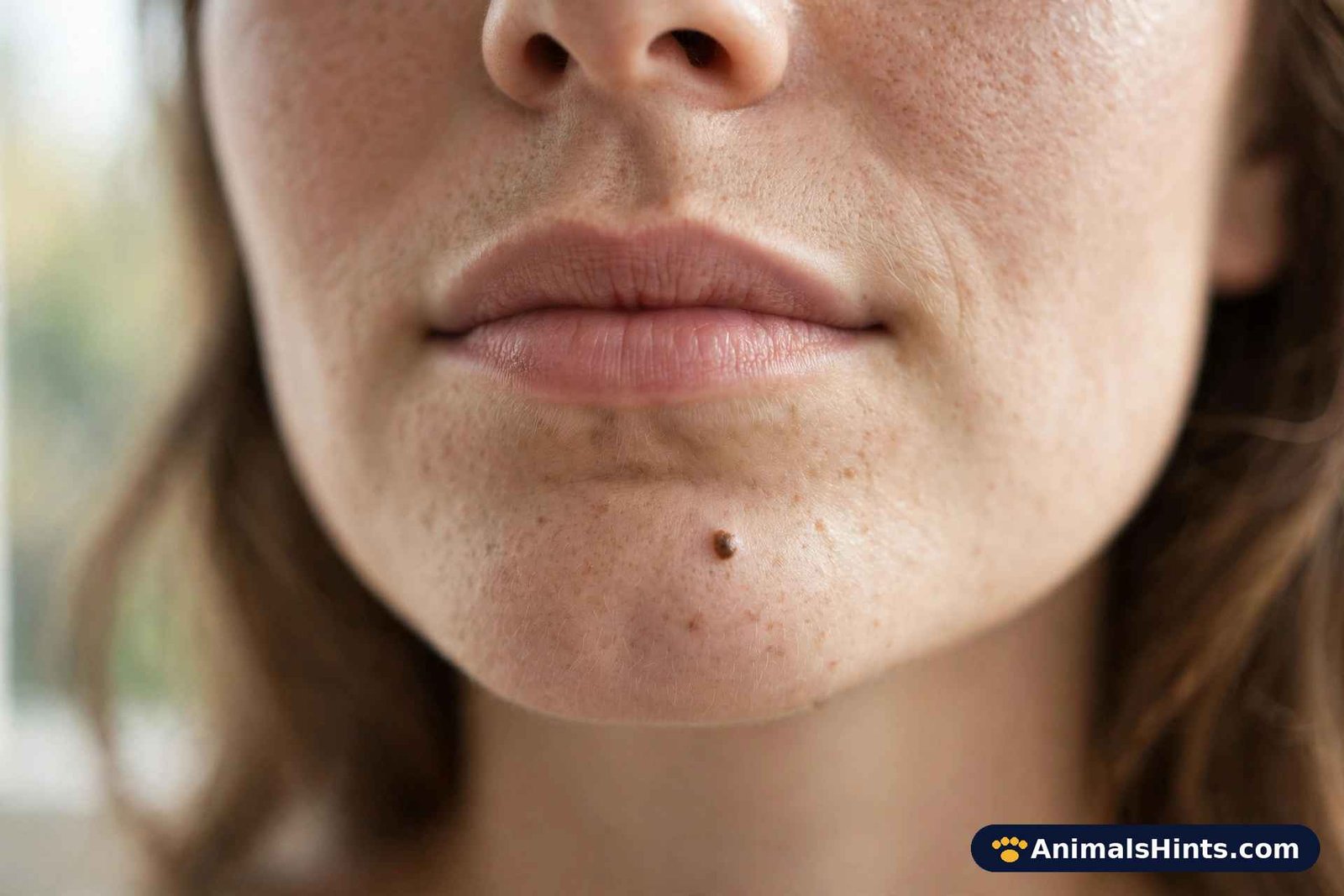
If you have searched for the meaning of a mole on chin female readers carry, the old face-reading charts give the chin one of their strongest answers. The chin is the foundation of the face, the part every expression rests on. A mole planted there is traditionally read as a mark of willpower, money sense and a secure later life.
The readings split by exact position. A mole on the right of the chin is read for logic and career, a mole on the left for feeling and honesty, and a mole in the center for balance and control. Each system also separates what the mark means for a woman from what it means for a man.
This guide walks through all ten spiritual meanings, the female and male readings side by side, and the right, left, center and under-chin placements. It then sets the Chinese and Indian charts against each other honestly, and closes with what a chin mole actually is in medical terms, so you can enjoy the folklore without missing anything your skin is telling you.
What Does a Mole on the Chin Symbolize Astrologically and Spiritually?
In astrology and mole reading, the chin stands for determination, endurance and material security. It is the face’s anchor point, so a mole here is believed to concentrate those qualities in one visible spot. The traditional symbolism divides by position:
- Right Side: Logic, practical thinking and career focus. A right-chin mole is read as the mark of someone who plans before acting.
- Left Side: Emotion, intuition and sensitivity. A left-chin mole is read as feeling-led, honest and quick to sense a room.
- Center: Balance and stability. A center-chin mole is read as self-control, the mediator’s mark.
Face readers treat the whole face as one connected map, which is why the same small mole changes meaning completely depending on the ground it sits on. Our complete guide to mole placement meaning walks through that full map position by position. On the chin, the map’s message is consistent across systems: this is the placement of staying power, the mole of someone expected to build something that lasts.
What a Mole on the Chin Actually Is, Medically
Before the folklore, the dermatology. Medically, a mole is a melanocytic nevus: a cluster of pigment-producing cells called melanocytes that have grown together in the skin instead of spreading evenly through it. That is the whole explanation for the mark on your chin. Moles can be flat or raised, rough or smooth, and some grow hairs. Most appear during childhood and the teen years, most are harmless, and having anywhere between 10 and 40 of them is entirely normal.

The chin gives an ordinary mole a slightly harder life than most placements. It sits where hands rest while you think, where the skin gets picked at absent-mindedly, and, for men, where a razor passes every day. None of that makes a chin mole dangerous by itself. It simply means a chin mole is more likely than most to get nicked, irritated or knocked, and a mole that keeps getting injured deserves a professional look, partly for comfort and partly because repeated damage makes the mole harder to monitor.
One chin-specific point matters especially for women: not every dark mark on the chin is a mole at all. Melasma, a harmless pattern of flat brown pigmentation driven by sun and hormones, commonly settles on the chin and along the jawline, and it can be mistaken for a sprinkling of new moles. A nevus is a distinct spot; melasma is a patch. Only an in-person examination can sort one from the other reliably, which is another reason a new or changing chin mark is worth showing to a dermatologist rather than diagnosing from a photograph.
What actually matters medically is not where a mole sits but whether it changes. Dermatologists teach the ABCDE guide for exactly this. A is for asymmetrical shape, one half unlike the other. B is for border, edges that are irregular, blurred or jagged. C is for color, shades of tan, brown or black, sometimes with white, red or blue mixed in. D is for diameter, larger than about 6 millimeters, roughly a pencil eraser, though melanomas can be smaller. E is for evolving, any change in size, shape, color or elevation, or a new symptom such as itching, crusting or bleeding. If a mole becomes painful, itchy, crusty or starts bleeding, or simply looks different from all your others, show it to a doctor promptly. A changing mole should always be evaluated in person, and no meaning chart, this one included, is a substitute for that check.
10 Spiritual Meanings of Mole on the Chin
1. Charisma, Creativity, Financial Success, and Good Fortune
The first and most repeated reading makes the chin mole a luck mark. Spiritually, it is said to sit at the base of the face like a seal on everything the person builds above it. The charisma in this reading is the grounded kind: not sparkle, but the steadiness that makes people trust you with responsibility and money. Creativity enters because the chin governs follow-through in these charts, the quality that turns an idea into a finished thing.
The financial-success strand is unusually specific in the older charts. A traditional Chinese mole guide reads the chin mole as wealth held mainly in property: land, fields and houses, the kind of fortune you live inside rather than the kind you spend. The same reading suits the mark to investment and to inheriting or holding ancestral property. Good fortune, in other words, arrives here as foundations. Some strands add that a mole hidden in the beard or under the jaw works more quietly than a visible one, its luck unfolding in private rather than in public view.
2. Strength of Will, Adaptability, and Leadership
The second meaning reads the chin mole as the signature of a strong-willed person. The chin juts forward when someone refuses to back down, and the charts take the hint: a mole here marks determination, resilience and the ability to lead without needing to dominate. Adaptability belongs in the same reading because the jaw is built to absorb pressure and keep working.
In practice, tradition pictures this person as the one a group quietly reorganizes itself around during a crisis. They are not necessarily the loudest voice. They are the one still standing at the end, and the reading holds that a chin mole’s owner tends to be promoted, followed or leaned on precisely when circumstances get difficult.
3. Stability, Affection, and Openness to New Experiences
The third meaning softens the picture. A chin mole is read as emotional stability joined to genuine affection: someone warm in close relationships, loyal once committed, and steady rather than dramatic in love. The apparent opposite, openness to new experiences, is part of the same tradition rather than a contradiction of it. The reading is that a secure base makes a person braver, not more cautious.
This is also where the travel strand enters the chin’s story. Several charts describe the chin-mole person as someone who loves movement, new places and new faces, and the Indian readings below say the same in almost the same words. The stability is internal. The address, the job and the scenery are allowed to change.
4. Persistence, Hard Work, and an Adventurous Spirit
Fourth comes the work ethic. A chin mole is traditionally read as a mark of persistence: someone who finishes what they start, who treats obstacles as errands rather than verdicts. It pairs naturally with the adventurous spirit in the same heading, because the charts picture this person working hard in unfamiliar places rather than in a settled routine.
Tradition is honest enough to attach a cost. The same restlessness that reads as adventure can show up as frequent changes of job, home or direction, and the stricter charts below treat constant moving as the unlucky version of this exact mole. Whether the wandering reads as adventurous or unstable turns out to depend, in the charts’ own logic, on the mole itself. That mechanism is explained in the seventh meaning.
5. Money Management and Personality Insights
The fifth meaning is the chin mole’s reputation with money. The center of the chin, in the old Book of Moles tradition, marks a conservative money manager: careful, deliberate, someone who counts before committing and dislikes waste. Broader chin readings agree in softer form, describing practical intelligence and a talent for turning modest resources into security over time.
The personality footnotes are less flattering and worth hearing. The same Book of Moles strand warns that the center-chin person loves a good argument and will debate a point long after everyone else has moved on. The fuller picture, then, is not a saint of finance but a stubborn, careful, persuasive person whose money sense and whose debating habit grow from the same root: they do not let go of a position easily.
6. Wealth, Prosperity, and Longevity
Sixth, the chin mole is read for the long game: wealth that accumulates, prosperity that holds, and a life long enough to enjoy both. The longevity strand makes structural sense inside face reading, because the chin belongs to the face’s lowest and latest zone, the part of the map that governs the second half of life. A strong mark there is read as a strong ending.
Face readers usually look to the ears first for a person’s lifespan, which is why the left ear mole meaning is built almost entirely on wisdom and longevity. The chin earns its own version of the reading differently: not years counted in advance, but the material comfort those years are lived in. In the Chinese charts especially, a well-formed chin mole promises that the later years will be housed, provided for and surrounded by family rather than spent in want.
7. Stability Versus Instability: The Shape and Color Connection
The seventh meaning is the key that unlocks the contradictions everywhere else in this guide. Chinese mole charts judge a mole by its form before they judge its position. A mole that is round, raised, glossy and pure in color, deep black or red, is classed as a good-type mole, and on the chin it promises exactly what this placement advertises: a stable life, good luck and a prosperous family as the person grows older.

A mole that is gray, dull, flat or untidy in shape flips the verdict. The same charts read a bad-type chin mole as an unsettled life: no fixed residence, frequent job changes or house moves, frustration after middle age and worry over children. Stability versus instability is therefore not two competing opinions about the chin. It is one chart reading two different moles, and the shape and color are what decide which reading you get.
8. Tenacity, Determination, and Stubbornness
Eighth is the shadow side of the second meaning, and the charts refuse to separate them. Tenacity and stubbornness are the same grip, judged by whether the thing being gripped deserves it. A chin mole is traditionally said to mark someone who digs in: determined in a worthy cause, immovable in a pointless one, and slow to admit a mistake either way.
The face itself teaches the reading. The jaw is where the body clenches. Readers took the mole on that hinge as a sign that its owner sets like cooling cement, and the superstitions below return to this trait more than any other. The practical wisdom inside the folklore is real enough: the chin-mole person’s great strength and great weakness are the same habit of not letting go.
9. Divine Support and Fortunate Circumstances
Ninth, the spiritual reading proper. In several traditions a well-placed mole is treated as a sign of divine favor, a small mark that the person is watched over. On the chin, that support is pictured as practical rather than mystical: fortunate circumstances arriving as the right landlord, the right job offer, the house that becomes available at the moment it is needed. Help, in this reading, tends to come through property, family and foundations.
This is also the meaning that most clearly belongs to belief rather than to any chart. No tradition can test it, and the honest way to hold it is the way believers themselves describe it: as a feeling of being carried through the years when the chin’s zone of the face, the later years, finally arrives.
10. Determination, Leadership, and Ambition
The tenth meaning closes the list where the second began, with drive, but aims it forward. A chin mole is read as ambition with patience: leadership sought not for applause but for the authority to build something durable. Where the second meaning described the crisis leader, this one describes the founder, the person whose determination is measured in decades.
Tradition adds one specific flourish for the mole at the very bottom of the chin. The Book of Moles strand reads a mole there, on any part of the chin’s underside, as a sign of fame and glory: recognition arriving late, after the work, which suits a placement the charts reserve for life’s second half.
Mole on the Chin Meanings for Females Versus Males (Astrology)
The charts split the chin reading by sex, because the same placement is set inside different expected lives. For a woman, the chin mole is read through marriage, family security and the management of a household’s fortune. For a man, it is read through career, provision and public standing. The core traits, willpower, money sense and staying power, are shared. What each sex is expected to do with them is not.
For Females:
For a woman, tradition reads the mole on chin female charts single out as one of the luckier female placements on the whole face. Indian Samudrika listings place the chin among the spots that promise a woman comfort, stability and a smooth, happy married life. She is read as strong-willed and decisive, a natural manager of money and people, affectionate underneath a practical surface, and likely to become the person her family organizes itself around in later life. The cautions travel with the gifts: the same charts warn of bluntness in speech, a love of argument, and restlessness that can unsettle a settled home if the mole is of the dull, gray type described in the seventh meaning.
For Males:
For a man, the chin mole is read as the provider’s mark: leadership, financial ambition and the determination to secure his household. The charts picture professional success earned slowly, respect that arrives with age, and a man whose word carries weight because he rarely gives it carelessly. The warnings mirror the woman’s in a different key: stubbornness mistaken for strength, money caution tipping into suspicion, and a debating habit that can wear down the people closest to him. In both charts the chin mole matures well. It is a placement whose reading improves with age, for either sex.
| Placement | Females | Males |
|---|---|---|
| Right Side of the Chin | Logical, diplomatic, thinks before she speaks; read for career success and careful judgment | Goal-oriented and career-driven; read for advancement and professional respect |
| Left Side of the Chin | Honest, emotional and intuitive; read as loyal, though blunt to the point of tittle-tattle in the stricter charts | Sensitive but determined; read for financial ups and downs that persistence eventually steadies |
| Center of the Chin | Balanced, self-controlled and fair-minded; read for harmony at home and a prosperous family in later life | Stable, disciplined and authoritative; read as a conservative money manager who loves a good argument |
Meaning of Mole on Different Area of the Chin
Right Side
The right side of the chin is read for the rational life: logic, diplomacy and career. The Times of India’s mole guide describes the right-chin person as diplomatic, and the Samudrika readings agree, adding that they think before speaking and deliberate before deciding. It is the placement of the negotiator. Tradition reads it for professional success achieved through judgment rather than force, and for wealth built by calculation. Of the four areas, the right chin carries the fewest warnings.
Left Side
The left side of the chin is read for the emotional life: intuition, honesty and feeling. The Indian guides describe the left-chin person as honest and straightforward, loyal and unable to hide what they think. The stricter charts sharpen the same trait into a warning: one reading adds that the left-chin person may slip into tittle-tattle, and another warns that someone who talks this directly will not always be liked for it. Honesty and bluntness are the same left-chin gift, and the charts know it.
Center
The center of the chin is the balance point, and it collects the most layered readings of the four. The popular guides read it for self-control, fairness and inner peace: the mediator’s mole. The Book of Moles tradition agrees about the stability, promising a settled life and a prosperous family in old age, then adds its famous footnote: the center-chin person manages money conservatively and loves to argue. Read together, the center chin is the diplomat with a debating habit, calm on the surface and immovable underneath.
Below the Chin (Under the Jawline)
Below the chin, under the jawline, the mole leaves the face’s main map and enters the chart’s later-life territory. The Book of Moles strand reads a mole on the underside of the chin as a sign of fame and glory, recognition that arrives after the work is done. Chinese readers connect the under-chin and jaw to the care a person receives in old age: a well-formed mole here is read as support, descendants and a household that holds together. Because this mole is also the most hidden on the chin, some strands treat it as private luck, fortune that protects its owner without ever being displayed.
The Chin in Mian Xiang: The Earth Pavilion and the Fortune of Your Later Years
Chinese face reading, Mian Xiang, gives the chin a formal address. The chin is the Earth Pavilion, Di Ge (地閣), the ground floor of the face, and the whole lower face belongs to the Lower Stop, the earth third of the chart, which governs roughly the years from age 51 onward. The chin and jaw also carry the Servants and Subordinates Palace, Nu Pu Gong (奴僕宮), the zone read for the support a person commands: the people who work for them, stand under them and, in old age, care for them. The chart’s age map runs its final band, about ages 61 to 75, across the chin and jaw.

Read the chin on its own terms and its message is consistent: a full, firm, well-set chin promises resolve, endurance and a comfortable, settled old age, because the Lower Stop is where the face stores its ending. Property enters the chin’s reading through the earth itself. The lower face is read as a whole for the stability of a person’s later-life property, and the traditional chin-mole chart makes the connection explicit, reading the mark as wealth held mainly in land and houses. One distinction is worth keeping straight, because charts online often blur it: the face’s dedicated Property Palace, Tian Zhai Gong (田宅宮), actually sits on the upper eyelids, which is why a mole on the eyelid carries the direct property reading. The chin’s link to land and homes is real in the tradition, but it runs through the earth element and the later-life reading, not through that palace.
The Chinese mole charts then judge the mark itself. A chin mole of the good type, round, raised and pure in color, is read as a stable life, good luck and a prosperous family as the years advance. A gray or badly shaped chin mole reads as the opposite pattern: an unsettled life without a fixed residence, frequent changes of job or home, frustration after middle age and anxiety over children. In Mian Xiang, in other words, the chin mole is never just lucky or unlucky. It is the later-life chart written early, and its form tells you which version of the ending the reader expects.
Cultural or Religious Interpretations
- Chinese (Mian Xiang): The chin is the Earth Pavilion, Di Ge, inside the Lower Stop that governs life after about 51, and it carries the Servants Palace, the zone of support and care in old age. A good-type chin mole promises stability, property and a prosperous family in the later years; a gray, badly shaped one warns of moving, unsettled work and worry after middle age. The chin mole is the tradition’s most property-minded facial mole, its wealth read as land and houses.
- Indian (Samudrika Shastra): The chin mole marks an affectionate, caring person headed for a balanced, successful life, with a marked love of change and travel. The right chin reads diplomatic and logical, the left honest to the point of bluntness. For women, the chin ranks among the luckiest placements in the female charts, promising comfort, stability and a happy married life.
- Middle Eastern: In the mole lore carried across the Middle East and the Mediterranean, a mole on the face is widely treated as a beauty mark and a sign of distinction, preserved rather than hidden. Chin and jaw moles in this strand belong to the face’s public character: they are read as marks of presence and strong personality, the kind of feature a portrait keeps.
Is a Chin Mole Lucky or Unlucky? The Honest Verdict
Hold the charts side by side and the chin mole argues with itself in three places, and the honest answer is that the traditions resolve two of the arguments and leave the third to you.
The first argument is stability against restlessness. The chin is the face’s foundation, yet its mole is read for travel, relocation and changing jobs by the Indian guides, by the Western list above and by the Chinese charts’ own warning side. The Chinese system resolves this one internally: the deciding factor is the mole’s form. Round, raised and pure in color, the mole anchors a stable life and a prosperous old age. Gray, dull and badly shaped, the same position predicts a life of moving house and changing work. The charts are not contradicting each other about the chin. They are reading two different moles.
The second argument sits in the center of the chin. The popular guides read the center mole as balance, fairness and mediation. The older Book of Moles tradition agrees about the stable, prosperous outcome, then adds that this person manages money conservatively and loves an argument. Both can be true of the same personality, and the older source is simply less polite about it.
The third argument is the left chin, and this one stays open. Within the Indian strand alone, the left-chin mole is read as honesty and loyalty by some guides and as blunt talk that makes its owner disliked by others. Nothing in the charts settles whether directness is the virtue or the flaw. It probably depends, as it does in life, on who is listening.
Body signs get read both ways everywhere, and the chin is not special in that. An eye twitch is a lucky omen in one country and a warning in the next, as our guide to left eye twitching spiritual meaning shows in detail. The fair summary for the chin mole is this: for women, the Indian charts rank it among the luckiest placements on the face. For everyone, the Chinese charts rank it among the most conditional, its promise decided by the mole’s own shape and color. Lucky, then, with the chart’s terms and conditions attached.
Myths and Superstitions Associated with Mole on the Chin
Every famous placement collects superstitions, and the chin’s are mostly about money, movement and the second half of life.
The most durable myth is the money myth: a mole on the chin means its owner will never be poor, because the mark locks wealth into the foundation of the face. The charts behind it are more careful, promising property and later-life security rather than riches at every age, but the superstition prefers the shorter version.
A second superstition reads the chin mole as a traveler’s mark, a sign that its owner will never settle in one place. It survives because it borrows real authority: the wandering reading genuinely exists in the charts, attached to the badly formed mole, and folklore quietly drops the condition.
A third myth claims a chin mole can be read like a clock, its exact spot naming the age at which fortune turns. It grows out of a real feature of Mian Xiang, the age map that runs its final band across the chin and jaw, stretched by retelling into a precision the charts themselves never claim.
The last superstition is the warning against removal: that taking a mole off the chin removes the luck with it. It is a belief, not a finding, and it has caused real harm when it stopped someone from having a changing mole examined. The medical section below is the answer to it. A mole that needs a doctor’s attention needs it regardless of what any chart says the mole means.
Removing a Mole on Your Chin: What Dermatologists Actually Do
If a chin mole bothers you, cosmetically or because it keeps catching on a razor or a collar, removal is a dermatologist’s procedure and nothing else. The Mayo Clinic’s guidance is blunt: do not try to remove a mole yourself. Cutting or burning a mole off at home can cause infection and permanent scarring, and there is a sharper danger underneath. If you remove part of a mole that turns out to be cancerous, cancer cells can remain and spread without you ever knowing what the spot was.

In a clinic, the dermatologist first examines the mole, because examination comes before removal in every legitimate version of this procedure. The standard methods are surgical excision, cutting the mole and a small margin of skin away and closing the wound with stitches, and surgical shave, using a blade to shave the mole down to the level of the surrounding skin. On the chin, which is among the most visible ground on the body, the choice between them is partly a scarring decision, and it is exactly the kind of judgment you are paying a specialist to make.
Removed tissue can be sent for laboratory examination, and any mole that looked at all unusual should be. That pathology step is the quiet reason self-removal is so dangerous: it throws away the diagnosis. Expect the area to heal over days to a couple of weeks depending on the method, expect a mark of some kind to remain possible, and expect the dermatologist to want to know if the site changes afterward. If a chin mole is changing, growing, itching or bleeding, skip the cosmetic question entirely and book the examination first. Meaning charts can wait. Skin cannot.
Is It a Good Sign for Females and Males?
On the evidence of the charts, yes, with the chin’s usual conditions attached. For females, the verdict is the strongest anywhere in this guide: the Indian tradition places the chin among the luckiest female placements, promising comfort, stability and a happy married life, and the Western spiritual lists read the woman’s chin mole for leadership, financial success and good fortune. The female reading is not the diluted version of the male one. In several charts it is the better one.
For males, the chin mole is read as a good sign of a slower kind: the provider’s mark, promising career endurance, money sense and a secure old age rather than early brilliance. Both sexes are warned about the same shadows, stubbornness, bluntness and the unsettled pattern of the gray, badly formed mole. As a sign, then, the chin mole is good the way its placement is good: built for the long term, strongest in the second half of the story, and most reliable in the people patient enough to let it finish.
Final Thoughts
A mole on the chin sits at the base of the face, and every tradition that reads it builds upward from that fact. The spiritual lists make it a mark of willpower, money sense and good fortune. The Indian charts make it, for a woman especially, one of the luckiest placements on the face, and the Chinese charts make it the later-life chart written early: an Earth Pavilion promise of property, support and a prosperous family in old age, conditional on the mole’s own form. Where the systems disagree, about bluntness, restlessness and the love of argument, they are usually describing the same character from different sides, and there is something honest in that. Few of us are only the flattering version.
Hold the meanings as what they are: a tradition, enjoyable to read and occasionally uncomfortably accurate about personality, but not evidence about your future. The one reading of a chin mole that carries real-world weight is the medical one. A mole is a cluster of pigment cells, normally harmless, and the only interpretation that can protect you is watching it for change, because a mole that changes can be an early sign of melanoma. Enjoy the folklore. Let the chart flatter you. And let a dermatologist, not a meaning list, have the final word on the mole itself.
Frequently Asked Questions
What does a mole on a woman’s chin mean spiritually?
Spiritually, a woman’s chin mole is read as willpower, money sense and divine support, and in the Indian charts it ranks among the luckiest female placements. It promises comfort, stability and a strong, secure later life.
Is a mole on the chin a lucky sign?
In most traditions, yes, with conditions. A round, raised, pure-colored chin mole is read as stable luck, property and a prosperous family in old age. A gray or badly shaped one is read as an unsettled life instead.
What does a mole in the center of the chin mean?
The center chin is read for balance, self-control and fairness, the mediator’s placement. The older Book of Moles tradition adds a famous footnote: a conservative money manager who loves a good argument.
Should a mole on the chin be removed?
Only by a dermatologist, and only after examination. Never remove a mole yourself: home removal risks infection, scarring and missing a cancer. A mole that changes, itches or bleeds should be checked first, whatever it means.