
Mole Placement Meaning: What Moles on the Face Mean for Females and Males
Mole placement meaning is the heart of an old face-reading art: in the mole-reading traditions of China and India, where a mole sits on your face is believed to sketch your character, your luck and even the path your life may take. A mark on the forehead is read for leadership, one beside the lips for charm and a way with words, and one on the chin for staying power.
The systems behind these readings grew up independently of each other. Chinese face reading (Mian Xiang) treats the face as a map of life zones, Vedic astrology in India ties moles to the planets and to karma, and Western readings treat prominent moles as marks of a bold, expressive nature. Because the systems developed apart, they sometimes agree — and sometimes flatly disagree, and both cases are flagged on this page.
Below you will find what a mole on the face symbolizes across traditions, the honest medical explanation of what a mole actually is, and a placement-by-placement guide — forehead, scalp, temples, nose, ears, eyes, cheeks, lips, chin, tongue and neck — with the female and male readings side by side. You will also learn how a mole’s color, size and shape change its reading, whether any of this counts as good or bad luck, and what to think through before removing a mole for luck’s sake.
What Does a Mole on the Face Symbolize Across Different Traditions?
Every mole-reading system starts from the same assumption: the face is not random, and a mark on it means something. The practice itself is sometimes called moleosophy — the reading of character and fortune from the position of moles. What each system does with that assumption, though, is its own.
In Vedic astrology of India and Nepal, moles are linked to planetary influences at birth and to karmic results carried into this life. Traditional sources describe Mars as producing fiery marks — a mole on the nose read for temper and drive — while Venus is said to mark the lips with passion and charm. The readings sit inside the wider Indian science of bodily signs, Samudrika Shastra, which interprets moles the way it interprets other marks and involuntary signs on the body — the same system that reads a twitching eye, as our guide to the left eye twitching spiritual meaning explains.
In Chinese face reading (Mian Xiang), the face is a “map of destiny” divided into zones and palaces that stand for life stages, wealth, reputation, family and relationships. A mole takes its meaning from the zone it falls in: readers link a mole near the temple to travel luck, one near the mouth to prosperity through food, property or communication, and the nose — the face’s wealth zone in many charts — to money and willpower.
In Western astrology and interpretation, moles are read as expressions of cosmic energy showing through the physical form. People with prominent facial moles are conventionally described as expressive, bold and marked out for unusual life paths — the West’s famous beauty marks are remembered as signatures of glamour rather than entries in a fortune chart.
In Japan, the same impulse survives as hokuro uranai, mole fortune-telling, which reads the lips for love, appetite and communication, among other placements. The details differ from the Chinese and Indian charts; the underlying idea — that a small mark can carry a readable message — is shared by all of them.
What a Mole Actually Is: The Medical Explanation
Before the symbolism, the biology — because a mole is one body sign where the medical facts genuinely matter. Medically, a mole (a nevus) is an ordinary skin growth: Mayo Clinic explains that moles form when melanocytes, the cells that produce melanin — the pigment that gives skin its color — grow in clusters instead of spreading out evenly. Most people have between 10 and 40 moles, most of them appearing during childhood and adolescence, and a typical mole is round or oval and smaller than 1/4 inch (about 6 mm) across, roughly the size of a pencil eraser.

Most moles are harmless, and most stay harmless for life. Rarely, though, a mole becomes cancerous — melanoma is the main complication doctors watch for — which is why the one reading of a mole that carries real weight is change. Mayo Clinic’s ABCDE guide sums up what to watch: A is for asymmetrical shape, one half unlike the other; B is for border — irregular, notched or scalloped edges; C is for changes in color, or many colors in one mole; D is for diameter, new growth past 1/4 inch; and E is for evolving — any change in size, shape, color or height, or new symptoms such as itching or bleeding.
Mayo Clinic’s advice is plain: make an appointment with a doctor or dermatologist if a mole looks unusual, grows or otherwise changes, and get prompt attention for a mole that itches, hurts, oozes or bleeds. None of that cancels the traditions on this page — it simply sets the order of operations. Health first, symbolism second.
Meaning of Moles on Different Parts of the Face (for Females and Males)
Each placement below is given as the traditions present it — chiefly Vedic astrology and Chinese face reading, with Western readings — with the female and male versions side by side where the systems split them. These are beliefs handed down by those traditions, offered for reflection and curiosity, not as predictions.

Mole on the Forehead Meaning
| Forehead Area | Meaning for Females | Meaning for Males |
|---|---|---|
| Center | Leadership, strong intuition, success in public roles | Ambition and fame, with ego clashes to watch |
| Right Side | Prosperity through marriage or career, family respect | Financial stability, wise decisions, charm |
| Left Side | Emotional sensitivity, artistic talent | A deep thinker who may meet career obstacles |
A mole at the center of the forehead is the classic authority mark in these readings: wisdom, judgment and a clear sense of purpose. Tradition adds a placement nuance — a mole near the hairline is read for sudden changes in fortune and for relocation opportunities, a foretaste of the travel reading the temple carries below.
Mole on the Scalp Meaning
Hidden moles carry special weight in Indian astrology, and the scalp is the most hidden placement of all. A scalp mole is regarded as highly auspicious: hidden fortune, protection from challenges, and success that arrives unexpectedly at crucial moments — often later in life, through inheritance, a business venture or sudden recognition of an overlooked talent. For females, tradition adds blessings from ancestors, a harmonious married life and strong family support. For males, it points to intelligence, a calm and composed nature, and wealth accumulated slowly over the long term.
Mole on the Temple and Hairline Meaning
Chinese face reading links a temple mole to luck through travel and relocation: opportunities abroad, fortunate trips, and good things arriving through movement. For females, readers add social recognition and connections with influential people; for males, ambition, adventure and the chance of success in foreign lands. A mole on the hairline itself is read differently — hidden intelligence and deep thinking, an introspective, analytical personality that stays calm under pressure and spots opportunities others miss. That fits the wider Chinese rule, covered in the color and shape section below, that hidden moles are the fortunate ones.
Mole on the Nose Meaning
The nose sits at the center of the face — and in Chinese charts it is the wealth zone — so nose moles collect strong readings for money, will and energy:
- On the tip of the nose: intense energy and a quick temper, with a talent for active careers that reward initiative, boldness and fast decisions.
- On the side of the nose: fluctuating financial luck — earnings rise and fall, but strong intuition helps with timing and choices.
- Near the bridge of the nose: ambition, courage and determination; recognition earned through perseverance.
For females, nose moles are read as enhancing charm, social influence and willpower. For males, they signal leadership and initiative, with a caution about impulsive decisions.
Mole on the Ear Meaning
Ears symbolize intelligence, destiny and life potential in these systems, and ear moles are widely counted among the luckier placements:
- Right ear: wisdom, wealth and longevity, with support arriving from mentors, family or authority figures.
- Left ear: creativity, independence and emotional intensity — a mark readers tie to artistic and musical pursuits.
- Behind the ear: hidden talent and success that stays quiet until later in life, then surfaces as unexpected recognition.
Traditional Chinese reading adds that an earlobe mole is a blessing sign — comfort, kindness and a long life, luckier still if it is hidden. For females, ear moles are tied to artistic and musical talent and social charm; for males, to strong family support, social respect and professional success through determination.
Mole on the Eye Meaning
A mole near the eye is read for emotional depth, intuition and interpersonal impact:
- Under the right eye: strong attachment to family and loved ones, empathy and emotional intelligence — with a vulnerability to emotional stress as the shadow side.
- Under the left eye: passion and intensity in relationships; deep feeling that can tip into over-sensitivity but connects profoundly with others.
- On the eyelids: opportunity through movement or change — travel, relocation or career transitions — plus a natural social charm that draws attention.
Chinese charts place the outer corner of the eye in the Marriage Palace, so a mole there is read straight into a person’s relationships. For females, eye moles are said to deepen emotional understanding and intuition; for males, to bring popularity, social appeal and relationship experiences that teach as much as they delight.
Mole on the Cheek Meaning
A cheek mole is read for strength of character, determination and social influence, and the side matters. A right cheek mole symbolizes leadership, authority and respect — careers involving influence, management or public roles, with recognition and support from mentors. Chinese reading agrees in its own vocabulary, tying the right cheek to wealth accumulation and public success. A left cheek mole reflects creativity, independence and a sensitive personality: emotional highs and lows channeled into art, writing or personal projects. For women, cheek moles indicate social grace, resilience and harmonious relationships; for men, ambition and authority, sometimes with a tendency to assert control.
Mole on the Lip Meaning
Lips govern communication, sensuality and desire, so lip moles are read into speech, charm and appetite for life:
- Upper lip: kindness, persuasion and charm — success through negotiation, diplomacy and social influence. Chinese tradition counts the upper-lip mole auspicious in its own right, linking it to a good salary, wealth and social support.
- Lower lip: creativity, generosity and emotional depth; careers in food, the arts or caring professions, and a reputation for supporting others.
- Corner of the mouth: luck in business, entertainment or creative ventures, and an ability to influence people subtly through speech or performance.
For females, lip moles are read as magnetism and persuasive communication; for males, as eloquence, charisma and leadership, with a note to guard against overconfidence.
Mole on the Chin Meaning
The chin stands for stability, endurance and determination — how a person weathers challenges and builds a long-term life:
- Center of the chin: a balanced mind, persuasive power and a stable domestic life; good decision-making at home and at work.
- Right side: adaptability and flexibility, success across multiple ventures — a mark readers give to entrepreneurs and leaders.
- Left side: emotional sensitivity and a lesson in self-discipline; consistency may need work, but reflection and growth follow.
Chinese reading converges here rather than conflicts: the chin is associated with property, stability and security in later life. For females, chin moles indicate resilience, practical intelligence and a balanced personal life; for males, determination, endurance and strategic thinking.
Mole on the Tongue Meaning
A tongue mole is the rarest placement on this page, and the traditions treat it as a powerful one: influence, eloquence and sharp intelligence, carried in the organ of speech itself. For females, it is read as charm, communication talent and sensitivity — success in teaching, counseling or artistic expression, and a natural ability to sway people with words. For males, it signals intellect and leadership exercised through communication — law, politics or management — with the standing caution to balance directness with tact.
Mole on the Neck Meaning
The neck joins mind and body, and its moles are read for the balance between action and emotion, and for how a career unfolds:
- Front of the neck: creative energy, wealth earned through effort, romantic attraction and recognition for talent.
- Back of the neck: patience and inner strength — success that is delayed but significant, arriving after challenges are overcome.
- Side of the neck: emotional sensitivity and adaptability; someone who adjusts well to new circumstances.
For females, neck moles are read as beauty, elegance and a natural ability to inspire others, drawing support and admiration. For males, they suggest ambition, a calm temperament and strategic thinking suited to leadership.
Do Mole Color, Size and Shape Change the Meaning?
Yes — in Chinese face reading, placement gives the topic and appearance gives the verdict. The traditional rule of thumb: the fortunate mole is dark (pure, bright black, or clear red, the “cinnabar” mole), round, smooth, slightly raised and glossy. The less favorable mole is dull, gray or muddy in color, flat, sprawling or faded at the edges. Readers in the Vedic tradition weigh a mole’s color and character too, though their charts differ in the details.
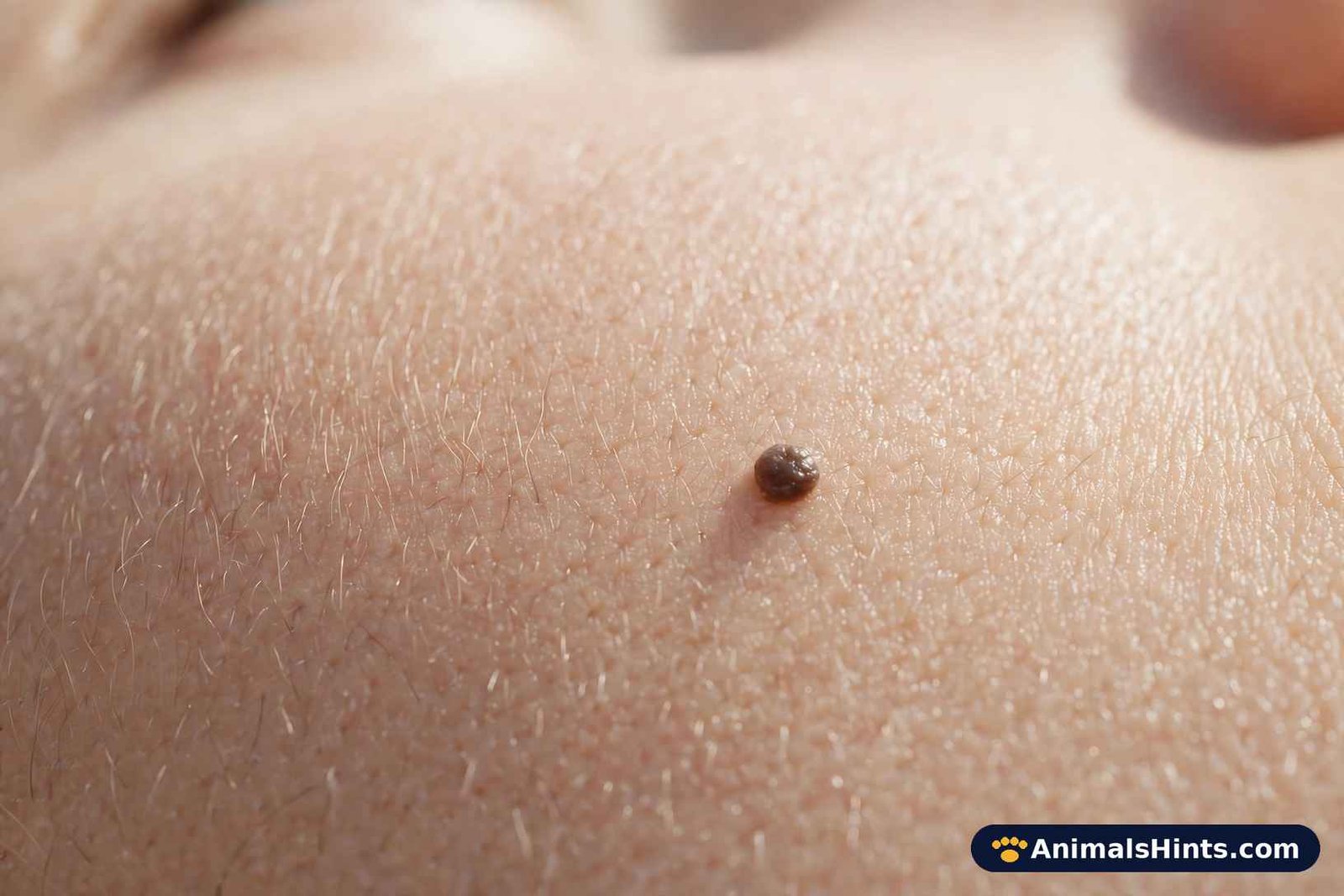
The second rule surprises most people: hidden beats visible. A mole tucked inside the eyebrow is called a “hidden pearl” and read for quiet talent, intelligence and unexpected wealth; moles hidden in the hair or the ear carry the same premium. A mole on open display in a sensitive zone, by contrast, is read more as a caution flag for that area of life than as a blessing. Even a single hair growing from a mole has a traditional reading — the mole is “alive” and carrying good energy — which is why old texts advise against plucking it.
Hold the two rulebooks side by side and one honest point emerges. The changes the medical ABCDE guide watches for — a mole shifting color, growing, changing shape — are changes in exactly the features tradition reads for luck. If your mole evolves, the traditions may debate what it means, but medicine does not: evolving is the E in the guide, and it is a reason to book a skin check, not a consultation with a fortune chart.
Is Mole Placement Meaning Good Luck or Bad Luck?
Both — and the honest answer is that it depends on the system, the spot, the mole’s appearance and, in the Vedic readings, the person’s gender. The same forehead placement that one chart reads as leadership, another reads alongside a caution about ego. Gender flips are built into the Indian system: the forehead table above gives the same right-side mole a marriage-and-career prosperity reading for a female and a financial-stability reading for a male.
The systems also genuinely conflict, and this page will not pretend otherwise. Take a mole between the eyebrows: some popular charts read it as one of the luckiest marks on the face — wisdom, wealth, leadership. Classical face reading, however, prizes that exact spot — the Life Palace — clear and unmarked, and reads a mole there as an obstruction to work through rather than a prize. Both readings circulate inside the same broad tradition.
That spread is itself the most useful fact here. A sign whose verdict flips between charts, genders and borders is a mirror of the cultures that made it, not a reliable forecast — enjoy mole placement meaning as folklore and self-reflection, and let the medical facts handle any mole that actually changes.
Should You Remove a Mole for Luck? What to Know First

It is one of the most common questions readers bring to this subject, and the traditions themselves do not agree on the answer. Some face readers hold that removing an unlucky mole removes its influence with it. Others warn that a reading is a map, not a mechanism — removing the mark does not rewrite the chart — and that taking off a mole your tradition counts as lucky is asking to lose the luck with it. No tradition’s answer is evidence, and no medical authority endorses removal for luck.
The practical side is simpler. Mole removal is a routine procedure when there is a medical or cosmetic reason, and it belongs in a dermatologist’s office: a changing mole should be examined first, and tissue can be sent for testing when a doctor wants certainty — something no home remedy can offer. If a mole bothers you, decide with a dermatologist, for reasons of health or appearance that are yours. Just do not let a fortune chart make a medical decision, in either direction.
Final Thoughts
Read across Vedic astrology, Chinese face reading and the Western tradition, a facial mole is a small piece of writing on the body’s most public page: the forehead for leadership, the lips for words, the ears for wisdom and years, the chin for staying power. The systems disagree with each other — and occasionally with themselves — often enough that the wise way to hold mole placement meaning is the way this page has presented it: as inherited belief, rich in cultural detail, worth enjoying as a prompt for reflection rather than a forecast.
Keep the folklore in that place and it earns its keep. But let the last word belong to the one mole reading that is not folklore at all: if a mole changes, grows, itches or bleeds, skip the charts and read a reliable overview of melanoma, the skin cancer that can begin in a mole — and let a dermatologist, not a destiny map, decide what it means.
FAQs
What is the spiritual meaning of moles on the face?
In the mole-reading traditions, a facial mole is a sign about character and destiny whose message depends on its exact placement — the forehead for leadership, the lips for communication, the chin for determination. The readings are cultural beliefs, attributed to their traditions, not established facts.
Do moles on different face locations have different meanings?
Yes — every system assigns each zone its own theme: the nose is read for wealth and will, the cheeks for social influence, the ears for wisdom and longevity. Color, shape, size and whether the mole is hidden then refine the reading.
Does the meaning of facial moles differ for females and males?
In Vedic-based readings, often yes: the same placement may carry a career reading for a male and a family or relationship reading for a female, reflecting the cultures the system grew in. Chinese face reading splits more by placement and appearance than by gender.
How should I interpret moles on my face?
Start with the placement, then note the side, the color and whether the mole is hidden, and read the traditions as reflection rather than forecast. And if the mole itself changes, interpret that medically instead — book a dermatologist.