Birds Chirping at Night: Biblical Meaning, the Real Night Singers and the Honest Record
The biblical meaning of birds chirping at night is a question that usually arrives at about two in the morning, when a bird outside the window starts singing into the dark and the sound feels too pointed to be an accident.
This article takes the question in the order it deserves: what the bird is actually doing, what the traditions have made of the sound, and — because the question names the biblical record directly — what a full-text search of scripture genuinely contains.
The honest headline, up front: the Bible never interprets birdsong at night, and the word chirp does not appear in it at all. Everything after this point is arranged around that finding, not against it.
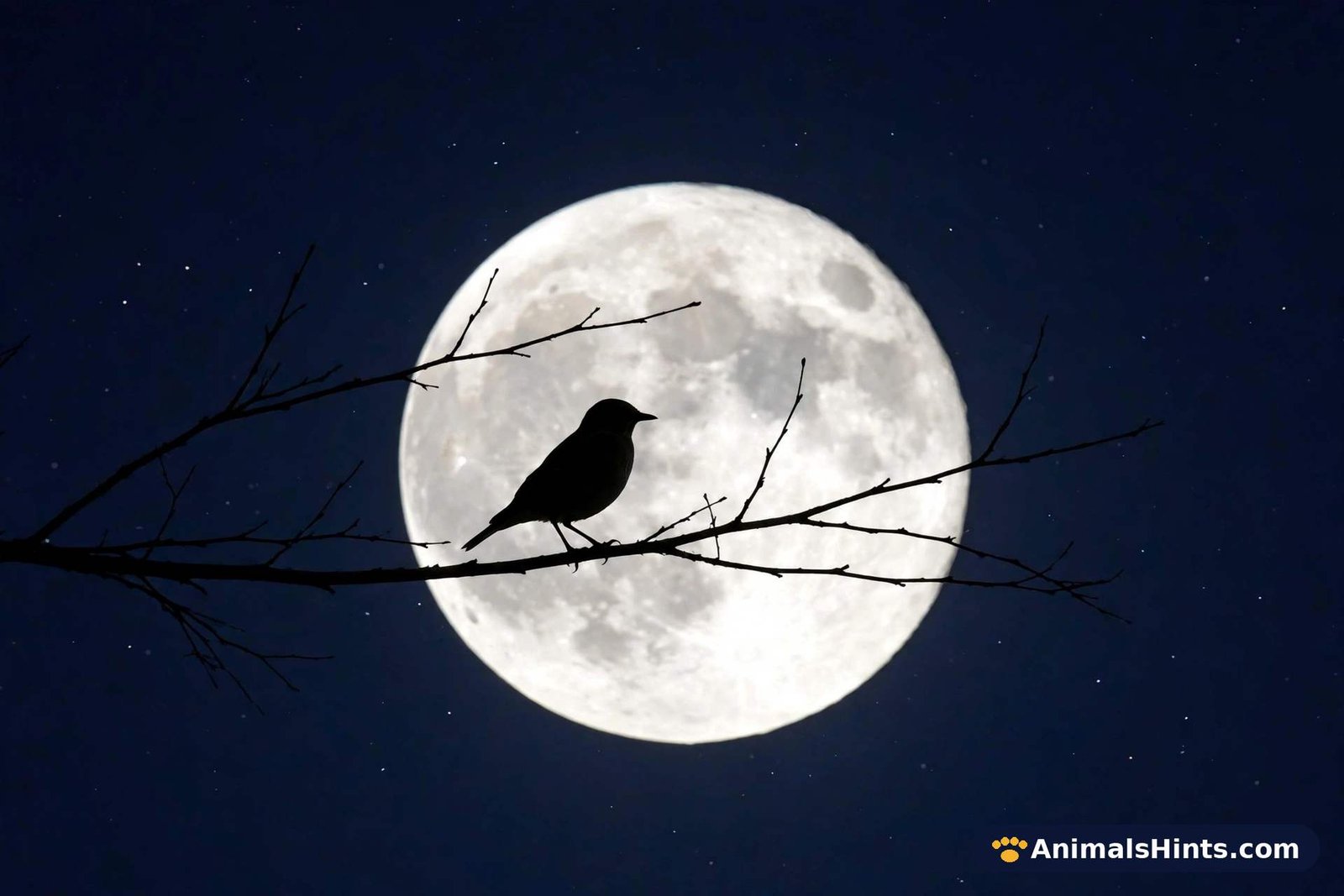
Why Do Birds Chirp at Night?
Most birds are daytime singers, and the competitor page this article follows is right about the short list of reasons a bird breaks the rule. Some species are built for the night shift and sing after dark by design. Some daytime birds sing at night because the modern night is no longer dark or quiet enough to sleep through. And some chirping is not song at all but alarm — a roost disturbed by a predator, a cat under the tree or a passer-by under the branch erupts in sharp calls until the danger moves on.
His page also names the reason most often missed: an unmated male advertising. In several species the night singer is a bachelor, singing the hours away because the song that carries in the cool, still night air is his best chance of being heard by a mate — and in the best-studied case, below, the singing stops the moment it works.
What follows keeps the two halves of the subject separate, as this run’s encounter files always do. The real birds and the measured record come first, in this section and the next. The meanings the traditions have laid over the sound come after, labelled as tradition throughout.
The Birds Actually Behind the Sound: Night Singers and City Robins
Before any meaning is read into a night chirp, it is worth knowing which birds actually produce one, because the identity of the singer explains most of the mystery. Four names cover the great majority of cases.
The mockingbird is the usual suspect in North America. Cornell’s All About Birds account of the species says northern mockingbirds “sing almost endlessly, even sometimes at night”, and that a male can learn around 200 songs across his lifetime, copying ten to fifteen other species along the way. A bird running through a dozen borrowed songs from a rooftop at midnight is almost always this one — and, as with the nightingale, the all-night singer is usually an unmated male.
The nightingale is the classic night singer of Europe and Asia. The best field study of the behaviour (Amrhein, Korner-Nievergelt and Naguib, Animal Behaviour, 2002) found that nocturnal song in nightingales is sung mostly by unmated males: it ceased after pairing, and males whose mates left resumed it. The researchers’ reading is that the night song is aimed at females migrating overhead in the dark. The most romantic sound in the hedgerow is, on the record, an advertisement.
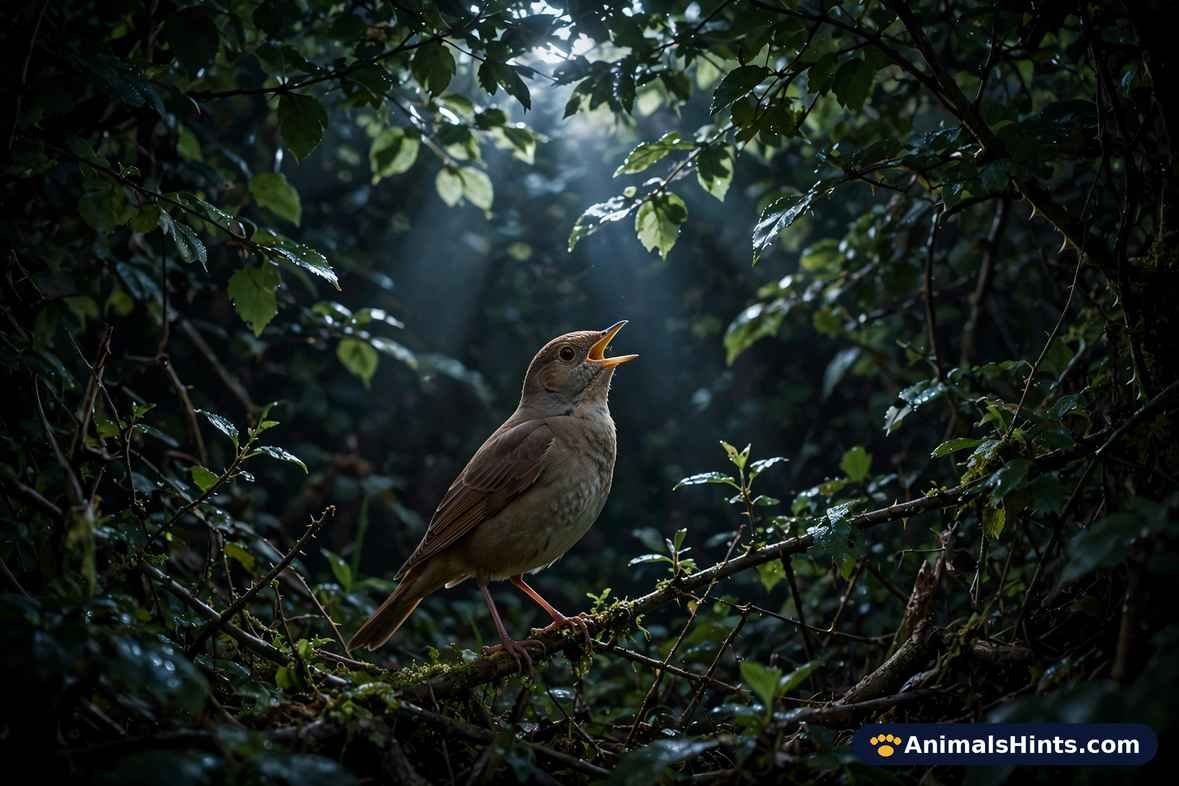
The city robin is the documented modern case. A study of European robins in Sheffield, England (Fuller, Warren and Gaston, Biology Letters, 2007) found that robins sang at night at sites where daytime noise was high — an average of about 62 decibels where night singing happened, against about 52 where it did not — and that daytime noise predicted night singing far better than artificial light did. The birds were not confused; they were relocating their song to the quiet hours because the day had become too loud to sing over. Light plays a supporting part: a five-species study (Kempenaers and colleagues, Current Biology, 2010) found that males of four of the five songbird species studied began their dawn song significantly earlier near street lights — in robins, around eighty minutes earlier. A bird singing outside a lit, noisy street at 2 a.m. is a bird whose timetable the street has moved.
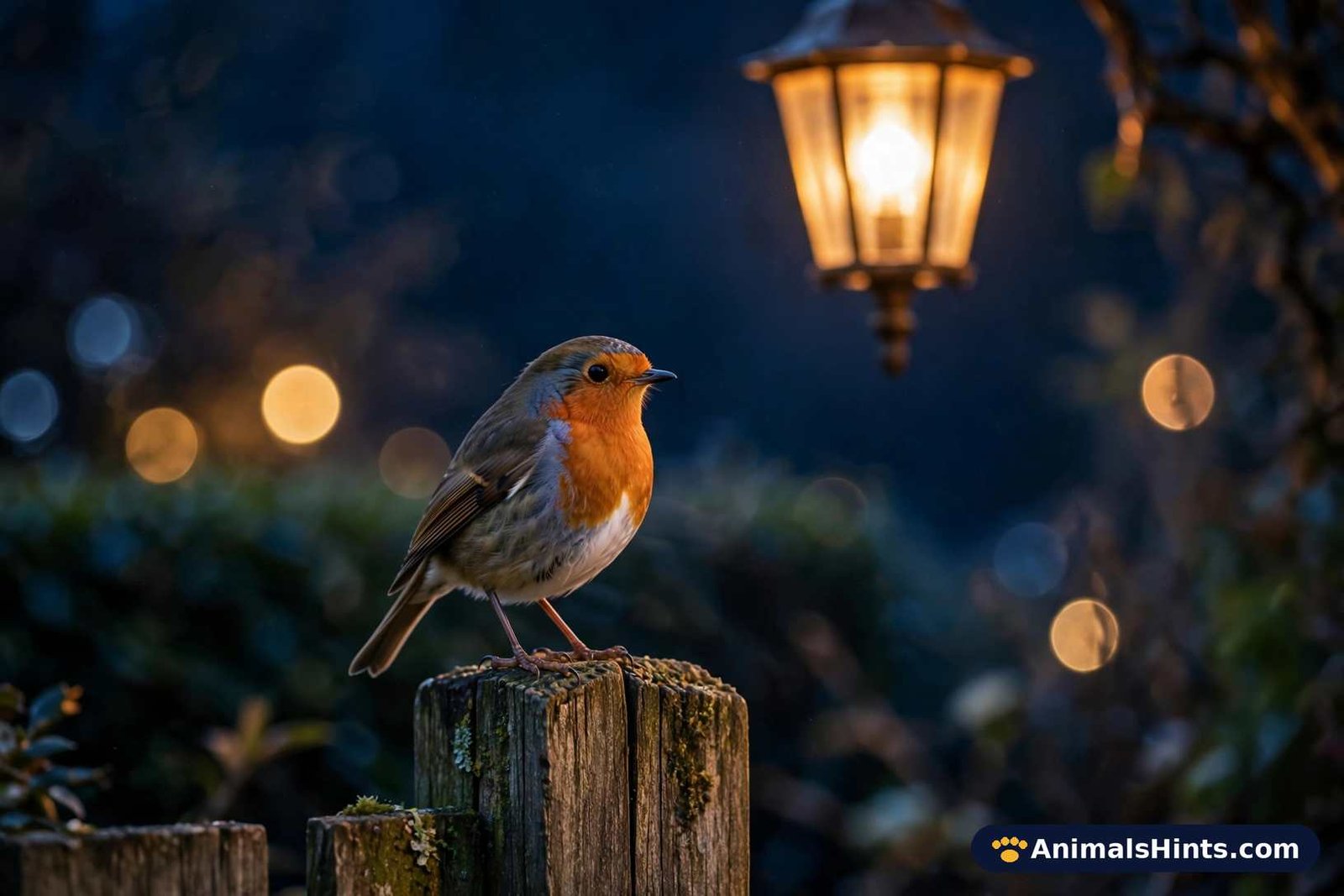
The nightjars are the true night birds. Whip-poor-wills and their relatives are nocturnal by build — they feed on night-flying insects and rest by day — and the male whip-poor-will’s repeated, name-saying call carries through breeding-season nights, strongest on moonlit ones. An owl, by contrast, does not chirp at all: owls hoot, screech and hiss, and a reader who hears neat chirping is not hearing an owl, whatever the folklore shelf says — a distinction that matters again in the types section below.
That is the real record in full, and it is enough: nearly every night-chirping event resolves into an unmated male advertising, a day bird displaced by noise or light, a genuinely nocturnal species, or a brief alarm. The meanings follow, carried as what they are — tradition, not ornithology.
What Does Bird Chirping at Night Symbolize?
The competitor page gathers the symbolism under four heads; his terms for them are kept here, before the fuller list of meanings below.
A sign of hope. In the symbolism he collects, a voice in the darkness stands for light arriving in a hard season — the sound is read as evidence that the night is not empty.
A message from God or the spirit world. Because the sound is unusual, it is widely treated as a delivery rather than a coincidence: guidance, comfort or warning arriving from beyond the visible.
A call to awaken spiritually. The chirp is read as an alarm clock for the inner life — a prompt to pray, reflect or pay attention to what has been neglected.
A sign of protection. A guardian presence is the fourth reading: the night watcher is heard as watched over.
These are the tradition’s symbol claims, stated as the tradition states them. Whether any of them is also true of a given night is a question the symbolism itself cannot settle — which is why the biblical half of this article, further down, is handled by counting rather than by collecting.
10 Spiritual Meanings of Birds Chirping at Night
The competitor page lists ten meanings under this heading. All ten are carried below, verbatim in his numbering and titles, each given the tradition’s reading and, where one leans on scripture or on the real record, the honest bound this run’s files always print.
1. Spiritual awakening
The first meaning reads the unexpected song as a summons: the soul is being woken the way the sound wakes the sleeper. As tradition it is coherent and old — night watches and vigils are built on the idea that the dark hours are when a person is most reachable. As a claim about any particular bird, it remains a reading laid over an event the species file above explains without one.
2. A message from the divine
The second meaning treats the chirp as a delivery: heaven speaking in the only voice available at that hour. The tradition is entitled to the reading, and this article does not mock it. The bound is the one the biblical section below establishes by counting: scripture itself never once uses a night-chirping bird as a message, so the meaning is a devotional reading, not a biblical one.
3. Hope in difficult seasons
A song in the darkest part of the night is heard as a promise that the dark part ends. This one needs no supernatural machinery at all: it is a metaphor doing honest work, and the pre-dawn singer makes it literally true most nights — the bird is frequently singing because its dawn has been brought forward.
4. Encouragement to trust your path
The fourth meaning hears the bird’s confidence — singing unseen, unanswered, for hours — as a model for the listener’s own perseverance. Read as encouragement rather than information, it is harmless and often genuinely helpful; read as a verdict on a decision, it would be carrying weight a birdsong cannot bear.
5. Protection from unseen forces
The night singer is cast as a sentry: something awake and calling while you sleep is heard as something standing guard. The tradition is widespread and understandable. The real record adds a small, pleasing footnote rather than a contradiction — a roost that erupts in alarm calls at a passing predator really is an early-warning system, and gardens have slept behind it for centuries.
6. Reminder to stay alert
The sixth meaning has a genuine biblical neighbour. The New Testament’s own night-bird text is a wakefulness text: “Watch ye therefore: for ye know not when the master of the house cometh, at even, or at midnight, or at the cockcrowing, or in the morning” (Mark 13:35, KJV). The bird in that verse is a rooster and the subject is readiness, not chirping — but of the ten meanings, this is the only one whose theme a night-bird verse actually touches.
7. Confirmation of answered prayers
Hearing the sound during or after a season of prayer is read as a reply. The honesty this file owes the reader is the same one the rooster verse supplies in reverse: the one night bird the Gospels give a speaking part announces a failure foretold, not a prayer answered — “before the cock crow, thou shalt deny me thrice” (Matthew 26:34, KJV). The tradition may still read its own nights as it wishes; it should not claim the text does.
8. Inner transformation
Night song as the sound of change: the bird is between days, and so is the listener. As symbolism it belongs to the same family as the site’s other threshold readings, and it is recorded on this page as exactly that — a meaning people find, in a season when finding one is the point.
9. Communication from a departed soul
The most tender of the ten, and the one his page phrases most carefully: a soft chirp outside the window at night is felt by many grieving people as a loved one checking in. This site files the same register at the bird flying into a window, and the discipline is identical in both places: the feeling is real, common and deserving of respect; a mechanism by which the dead speak through birds is not something any source this article can fetch establishes, and none is claimed.
10. A call to reflect and pray
The list closes where the first meaning began, one step quieter: not an awakening announced but an invitation issued — use the waking. It is also the one a reader can act on without believing anything unproven, and a fitting place for the tradition’s list to end, before the records take over again.
Cultural and Religious Significance of Birds Chirping at Night
The competitor page walks seven traditions in a set order. They follow below as bold-lead strands in his order, each attributed to the tradition it belongs to and none of them printed as this article’s own finding.
Native American traditions. In the strands his page collects, birds are messengers between the human and spirit worlds, and a night chirp can carry guidance from ancestors or stand as a warning to stay alert — the sound’s meaning turning on the moment and the listener.
Ancient Greek tradition. Night birds in the Greek world were bound up with wisdom and with omens: a call in the dark could be read as a sign from the gods, favourable or otherwise, and bird-sign reading was a formal art rather than a superstition at the margins.
Chinese tradition. His page records birdsong as a carrier of luck, prosperity and harmony, with night chirping read in some strands as an announcement of change or of a coming message — the sound as herald rather than warning.
Celtic tradition. In the Celtic material he gathers, birds move between this world and the Otherworld, and their night voices can be messages from spirits or ancestors — the thin-hours reading, in which the dark is when the boundary is most permeable.
Hindu tradition. Birds in Hindu thought are tied to the soul and to divine messages, and his page reads night chirping within that frame: a prompt toward prayer, reflection and attention to one’s spiritual duties.
Islamic tradition. His page presents birds as signs of God’s creation and a reminder of divine presence, their sounds read as part of the praise the created world offers — a frame in which the night song needs no special decoding to be meaningful.
African traditions. Across the strands he collects, night bird sounds are read with unusual seriousness in both directions — as ancestral communication and blessing, or as a warning, including of death — the widest spread of readings on his list, and a reminder that “tradition says” always needs the follow-up question: which tradition, where?
Seven traditions, and no two assign the sound quite the same weight. That spread is itself the finding of this section: the chirp is a screen onto which cultures project what they already believe about the night.
Is There Any Biblical Meaning of Bird Chirping?
The competitor page deserves credit for conceding the central point in its own biblical section: the Bible nowhere directly explains nighttime bird chirping. That concession is correct, and it is rarer in this genre than it should be. What his page then does is gather the nearest bird texts in scripture and read the night sound in their light. The three it names are quoted below in King James wording, as this run always quotes, each labelled with what it is actually about.
The first is the sparrow at the altar: “Yea, the sparrow hath found an house, and the swallow a nest for herself, where she may lay her young, even thine altars, O LORD of hosts, my King, and my God” (Psalm 84:3, KJV). It is a verse about nearness to God, spoken of daytime temple birds. Nothing in it sings, and nothing in it is at night.
The second is the Lord’s own bird text: “Behold the fowls of the air: for they sow not, neither do they reap, nor gather into barns; yet your heavenly Father feedeth them. Are ye not much better than they?” (Matthew 6:26, KJV). It is a verse about provision and anxiety, and it says nothing about song at any hour.
The third is the one genuine night bird in the Gospels — and it is not a songbird. “Verily I say unto thee, That this night, before the cock crow, thou shalt deny me thrice” (Matthew 26:34, KJV). The cock’s crow is a time marker and a foretold grief, not a chirp and not an omen offered for decoding.
So his section, read carefully, already contains the answer its heading asks for: the biblical meaning of bird chirping at night is not a hidden code the page has failed to find — the category itself is absent from the text. The next section proves that absence the way this run proves all its scripture claims: by counting the whole book.
The Biblical Record, Counted in Full
The whole King James text was searched word by word for this article, on the same discipline as the colour and object censuses elsewhere in this run. The controls reproduce the run’s record exactly — white 75, blue 50, purple 48, grey 1, red 53, glass 9, nail 8 — so the new counts can be trusted on the same instrument. Here is what the search returns.
The King James Bible contains no form of the word chirp at all — not chirp, chirping, chirped or any older spelling; every form counts zero. The bird words themselves are present but modest: bird appears 29 times and birds 25 times across the whole book. The near relations are just as thin: peep once and peeped once, both in Isaiah and both about wizards and a besieged king, not songbirds; chatter once, in Isaiah 38:14, where the dying Hezekiah compares his own mourning to a crane and a swallow — “Like a crane or a swallow, so did I chatter: I did mourn as a dove”. The Bible has no vocabulary of birdsong because birdsong is simply not one of its subjects.
The closest verses, gathered honestly, show how near the text ever comes. An old man’s failing senses are pictured by rising “at the voice of the bird” (Ecclesiastes 12:4, KJV) — dawn, not night, and a picture of age, not an omen. Ruined Nineveh is the one place a bird voice sounds after a city’s fall: “their voice shall sing in the windows; desolation shall be in the thresholds” (Zephaniah 2:14, KJV) — cormorant and bittern in the ruins, a picture of desolation. Daytime song gets exactly one joyful line: “By them shall the fowls of the heaven have their habitation, which sing among the branches” (Psalm 104:12, KJV), matched by spring’s arrival in the Song: “the time of the singing of birds is come, and the voice of the turtle is heard in our land” (Song of Solomon 2:12, KJV) — the turtle there being the turtledove. And the night’s one song verse is not about birds at all: “Where is God my maker, who giveth songs in the night” (Job 35:10, KJV) — the songs are God’s gift to people in affliction.
The crow count completes the picture: crow appears seven times, and every single instance is the rooster of the Passion story (Matthew 26:34 and 26:75; Mark 14:30 and 14:72; Luke 22:34 and 22:61; John 13:38), with cockcrowing once more as a named watch of the night in Mark 13:35. The only bird sound the Bible ever loads with meaning is that crow — and its meaning is fixed by the story around it, not offered as a pattern for reading other nights.
That is the whole census, and it is the spine of this article: no verse describes birds chirping at night, and no verse interprets birdsong at any hour as a sign. A page that told you otherwise would be inventing the very thing it claimed to look up. What the traditions make of the sound, they make themselves — which the rest of this article has said, and will keep saying, in the open.
Meanings of Different Types of Birds Chirping at Night
The competitor page closes its meanings with five birds. They follow in his own sequence, each as a bold-lead strand, with the real-record and scripture bounds this run’s type files always print.
Owls. His page reads the owl’s night call as wisdom and, in some traditions, a warning of change. The bound comes first: owls do not chirp — they hoot, screech and hiss — so an owl belongs on this page by folklore, not by sound. In King James wording the owl (10 mentions, with owls at 6 more) is a bird of ruined and desolate places, which is nearly the opposite register from the wisdom reading; both facts belong on the page, and the reader can watch the traditions disagree in plain sight.
Mockingbirds. His page reads the mockingbird’s night singing as joy, expression and messages. The real record underneath is the strongest on his list: this is the bird most likely to actually be singing outside a North American window at 2 a.m., copying ten to fifteen other species, usually an unmated male. The scripture bound is geographic and total — the mockingbird is a New World bird and appears in the Bible exactly zero times, as do all the Americas’ species.
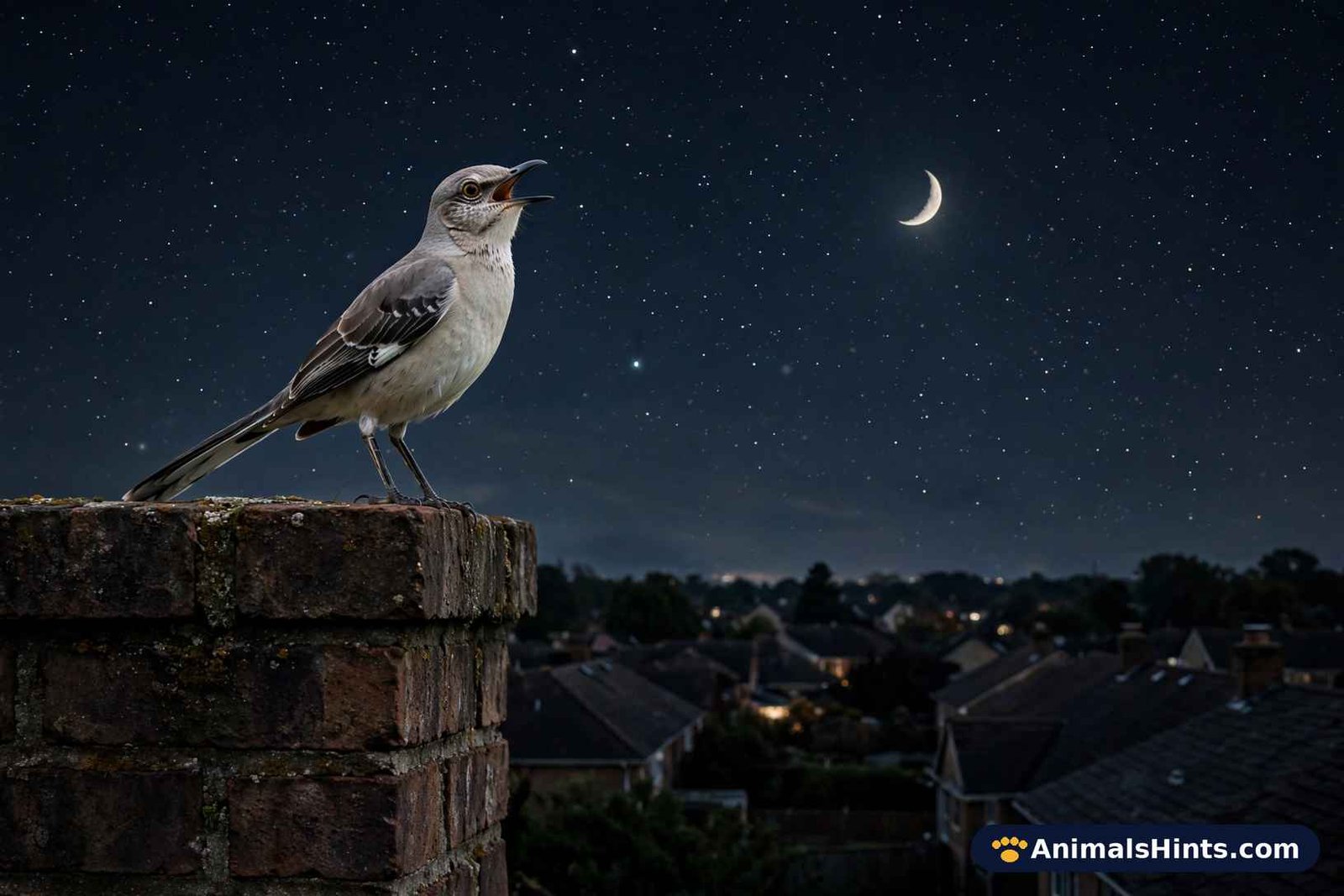
Nightingales. Beauty, love and longing are his page’s readings, and the nightingale has carried exactly those meanings in European poetry for centuries. The record beneath: the night singer is usually an unmated male whose song stops when it succeeds. The scripture bound mirrors the mockingbird’s in a different way — the nightingale is an Old World bird that was present in the biblical lands, yet the King James text never names it: zero mentions.
Crows. Mystery and messages from the spirit world are his readings for the crow. Two bounds apply. A crow’s night call is a croak or caw, not a chirp, and crows are day birds that roost silently at night unless disturbed. And the King James word crow, counted above, is never this bird at all — all seven instances are the rooster. The black bird of his list is therefore a folklore entry from first to last, with the raven (six mentions, beginning with the bird Noah sent from the ark) as its nearest biblical relative.
Sparrows. His page reads the sparrow as humility, community and divine care, and here the tradition and the text finally overlap — partly. The sparrow is one of only two birds the New Testament prices (“Are not two sparrows sold for a farthing?”), and its two King James mentions include the altar verse quoted above and the loneliest bird line in the Psalms: “I watch, and am as a sparrow alone upon the house top” (Psalm 102:7, KJV). Divine care, yes; chirping at night, still no — the sparrow is a day bird, and neither of its verses has it singing after dark.
Five birds, and the pattern across them is the article in miniature: where the bird really sings at night, scripture is silent about it; where scripture speaks of a bird, it is not singing at night. The two records never meet, and no honest reading can join them.
What Does It Mean When You Dream About Birds Chirping?
The competitor page gives the dream its own short section, and its frame is kept as he gives it: a dream of birds chirping is read as a peaceful sign — freedom, joy, new beginnings, or a message arriving from the dreamer’s own depths, with the feelings inside the dream doing most of the interpreting.
The bounds this run’s dream files print apply unchanged. No verse of scripture interprets a dream of birdsong; the Bible’s interpreted dreams are royal and specific, and none involves a chirping bird. And modern dream research treats dream content as the mind working over waking material — a week of being woken by a real mockingbird is quite enough to stock the dream, no delivery required. Readers who keep the symbol for comfort are doing what the symbol is for; the record simply declines to certify it.
Is Hearing Bird Chirp Spiritually Good?
The competitor page ends its argument with three questions, and his wording for them is kept before this article’s own verdict.
Are all bird sounds at night positive? His answer, and the traditions disagree too widely for a single one: the same sound is blessing on one continent and warning on another, as the cultures section showed. The sound itself carries no fixed charge.
Does the type of bird matter? In the traditions, entirely — the types section is built on it. In the records, it matters differently: the type tells you the cause (an unmated mockingbird, a displaced robin, a nightjar by design), and the cause is usually the whole explanation.
Should I pay attention when I hear it? His page says yes, in the sense of noticing what the moment stirs. This article agrees with the modest version: the sound is a legitimate prompt to reflect, pray or simply listen — the uses meanings 1 and 10 made of it. It is not, on any record fetched for this page, a bulletin that must be decoded before it expires.
For the register contrast this run’s files like to print: a living voice in the dark sits at the opposite end of the shelf from the dead bird file, and readers who meet the two in the same season feel the difference without being told. One is the garden still working; the other is the garden stopped. The night chirp belongs, on every record available, to the first of those.
Is a Night-Chirping Bird a Warning? An Honest Verdict
Most visits to this page are really asking this question, so it gets its own section and a plain answer. On the biblical record: no. The census above is the whole evidence, and it contains no warning delivered by birdsong at night — the single night-bird text, the cock’s crow, warned one man of one named act on one named night, inside a story, and offers itself as no one’s pattern.
On the natural record: also no, with one practical exception. A sudden eruption of alarm calls can mean a predator is moving through the garden — which is information about the garden, not about your future, and it settles within minutes. Everything else the night singer does is courtship, displacement or design.
On the traditional record: mixed, honestly reported — some traditions do file night bird sounds under warnings, as the cultures section showed, and a reader raised inside one of those traditions will hear it that way. This article’s verdict is narrower than any tradition’s: the sound is real, its causes are known, scripture assigns it nothing, and a warning that no record supports should not be allowed to cost anyone their sleep — which is the one genuine harm in this whole subject, and the subject of the final section before the close.
Readers who know this site’s other bird-encounter files will recognise the shelf this verdict sits on: the same discipline that reads birds flying in front of your car while driving by the bird’s behaviour first, and the omen second, reads the night singer the same way. Behaviour first is not a refusal of meaning; it is the order that keeps meaning honest.
When the Chirping Keeps You Awake: Practical Steps
Meanings aside, a bird singing outside the bedroom window at 2 a.m. is a sleep problem before it is anything else, and it deserves practical answers at the same fetched strength as the rest of the page.
Identify the singer first. A long, varied, repeating repertoire from a rooftop or chimney is a mockingbird; a rich fluting from deep in a hedge is a nightingale; a robin’s thinner song near a lit street is the displaced day singer. Identification decides everything else, because each has a different clock.
Wait out the bachelors. The mockingbird and nightingale cases are courtship, and courtship ends: the nightingale study above found the song ceases once the male pairs, and mockingbird night singing likewise fades as the season settles. Most night-singer problems are measured in weeks, not months.
Reduce what you control. For the robin case, the drivers are light and daytime noise; a garden that goes properly dark at night removes one of them. For your own sleep, the standard defences — earplugs, a fan or white-noise machine, a bedroom across the house from the singer — work regardless of species.
Leave the bird alone. Night singers are protected wildlife in most jurisdictions, nests and roosts are not to be disturbed, and the bird is not trespassing: it is doing, loudly, the thing it is for. If the roost sits over the driveway, the household’s other bird problem is the one this site files under bird poop on car — a cleaning problem, and a smaller one than it looks.
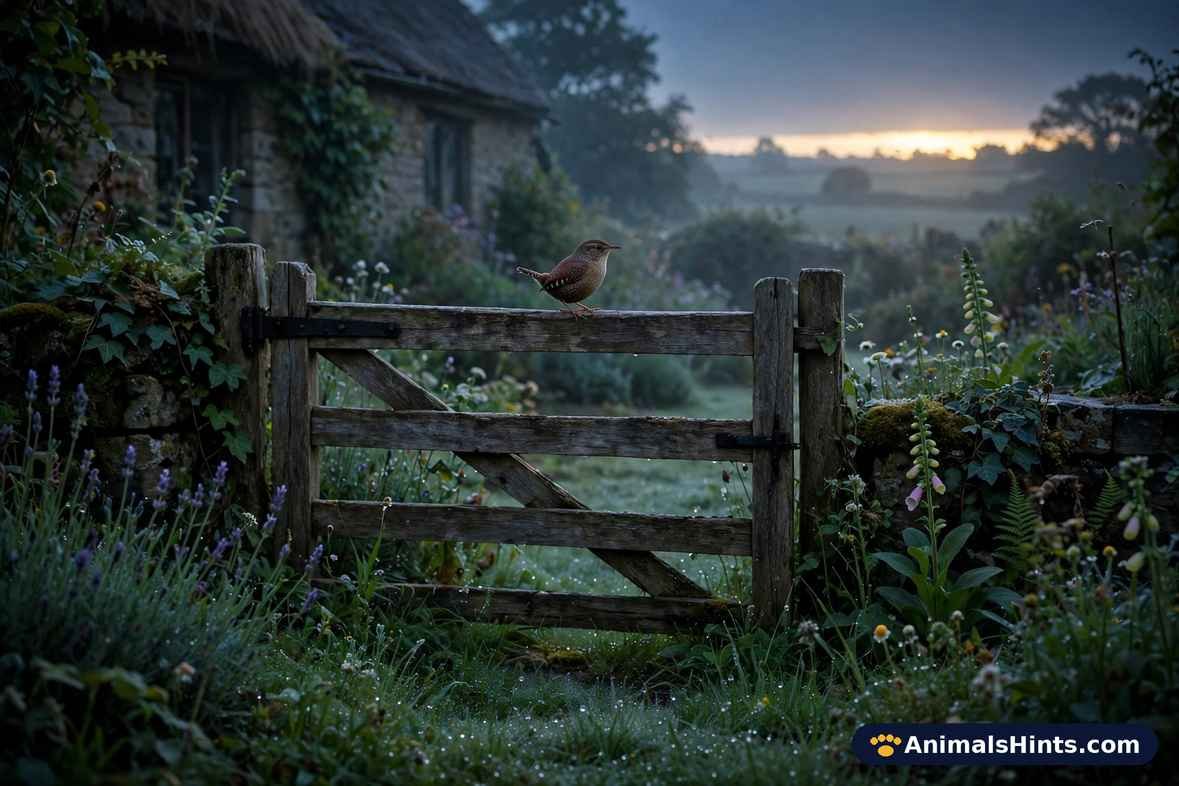
Listen once, on purpose. The last step costs nothing and several readers of pages like this one report it changes the sound’s character entirely: go out once, find the singer, and hear a whole performance knowing what it is. A known bird is far easier to sleep through than a mysterious one.
Final Thoughts
Birds chirping at night are really two different subjects sharing one sound. The first is a small, well-documented piece of natural history: unmated males advertising into the quiet, day birds pushed into the night by our noise and our lights, and a few species built for the dark outright. The second is a very human hour — two in the morning, half awake, listening — in which the species has always heard messages.
This article has kept the two subjects separate on purpose, because the question in its title demands it. Asked for the biblical meaning of the sound, the honest answer is the one the census gives: the word chirp is not in the book, no verse interprets birdsong at night, and the traditions that fill the silence are doing their own work, openly labelled as such on this page. A meaning does not have to be biblical to be held gently; it only has to stop claiming to be.
So hear the bird kindly. If it is a mockingbird on the chimney, it is a bachelor with two hundred songs and a deadline. If it is a robin under the lamp, it is a neighbour whose day got too loud. Either way, the night is not sending a coded warning — it is just, briefly and beautifully, not as quiet as we thought.